




Unprecedented Gains Mark End of Ford UAW Strike, Setting New Standards for Auto Industry Wages

It has been a dramatic twist in the American automotive industry with Ford Motor Company and the United Auto Workers (UAW) union having agreed on a tentative labor agreement. Not only does this historic agreement mark the first agreement between the Big Three automobile manufacturers after a six-week strike, but it also sets a new standard of worker compensation and rights in the industry. The decision ends a spell of intense industrial action and is a decisive point in the labor and corporate strategy.
This historic deal, announced on October 26, 2023, is especially remarkable because of its heavy financial terms. It contains a 25 percent wage growth over the four-and-a-half-year term of the contract, starting with an instant 11 percent increase to UAW members at Ford. This base growth is an indicator of a strong direction on the earnings of the employees, which is a sign of a strong initiative to improve the economic welfare of the employees.
In addition to the overall wage increment, the provisional agreement covers certain groups of employees with impressive profits. The most underpaid temporary employees, who have been the target of labor discourse, will see their pay increase more than 150 percent during the contract. This is a transformational change that highlights the aspect of fair pay, with the objective of making a tremendous improvement in the quality of living of the individuals at the bottom of the labor hierarchy of the company.
Empowering Worker Wages and Benefits
The agreement further guarantees that the highest wage rate of workers will rise by over 30 percent, and finally more than 40 per hour. Moreover, the initial wage will increase by 68 percent to over 28 per hour, which is a significant increase in the minimum wage. All these provisions are directed towards ensuring that all employees of Ford UAW have a more rewarding and financially secure environment.
More importantly, the new contract restores considerable benefits that had been repealed in the tough economic environment of the Great Recession. These include the reinstatement of Cost-of-Living Allowances (COLA) and a three-year Wage Progression. These factors are meant to cushion the purchasing power of the workers against inflation and offer them a clear career ladder on promotion, tenure and experience.
Another equally effective aspect of the deal is the abolition of contentious wage levels. This is a strategic approach to an old area of contention in the union, which has created more unity and equity in the workforce, as employees doing similar jobs are paid and given similar benefits. The agreement also greatly enhances the retirement benefits of existing retirees, pension holders and workers in the 401 (k) plans providing them with greater security in their golden years.
The right to strike in the future plant closures is one of the most revolutionary successes of this negotiation. It is an unprecedented addition to a UAW contract giving the union a strong weapon to defend jobs and shape corporate decisions concerning manufacturing plants. It represents a radical change of power, where workers have a direct say in the strategic direction of their job.
Corporate Response and Union Strategy
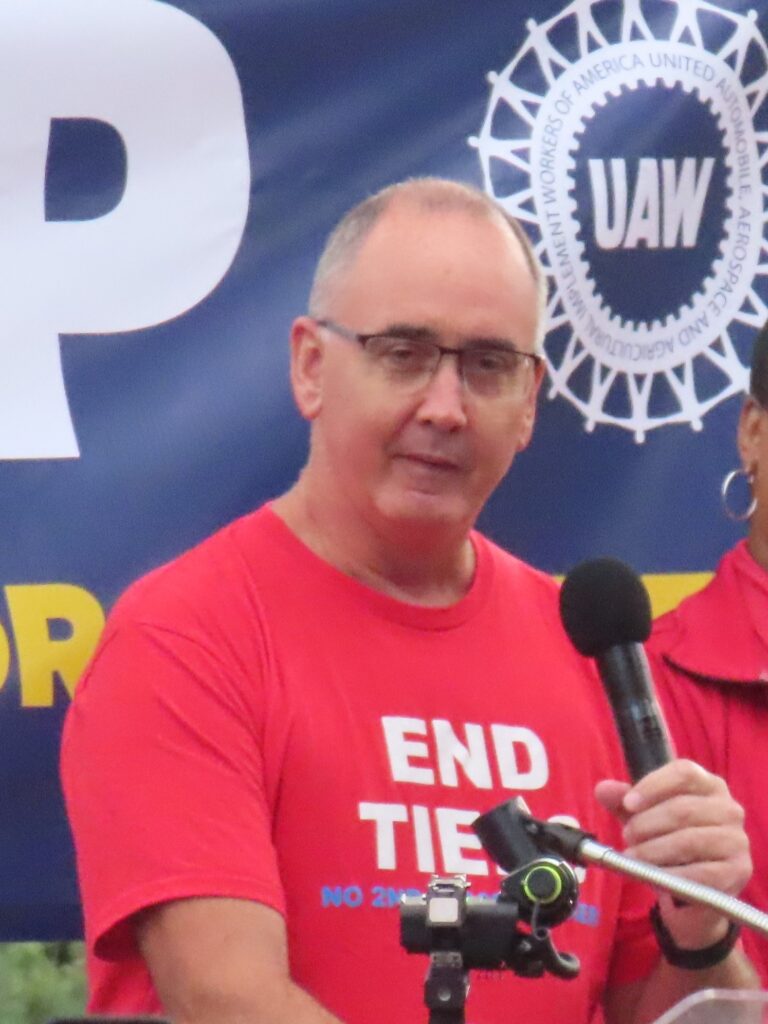
UAW President Shawn Fain explained the victory of the union saying, we made Ford pony up and they did. He pointed out that the Stand-Up Strike has paid off, pointing out that since the strike began, Ford had offered 50 percent more. This aggressive approach that started in three plants on September 15 quickly grew into a national movement, compelling the Detroit automakers to address union demands.
The strategy of the union was to focus on the most lucrative factories of the Big Three. This encompassed the Kentucky heavy-duty pick-up factory of Ford, its Michigan Assembly Plant, the Assembly Plant of Chicago of Ford, as well as the Arlington, Texas assembly plant of General Motors and the Ram pickup plant of Stellantis in Sterling Heights, Michigan. This strategy was aimed at putting the maximum economic pressure and accelerate negotiations, which proved the calculated strength of the union.
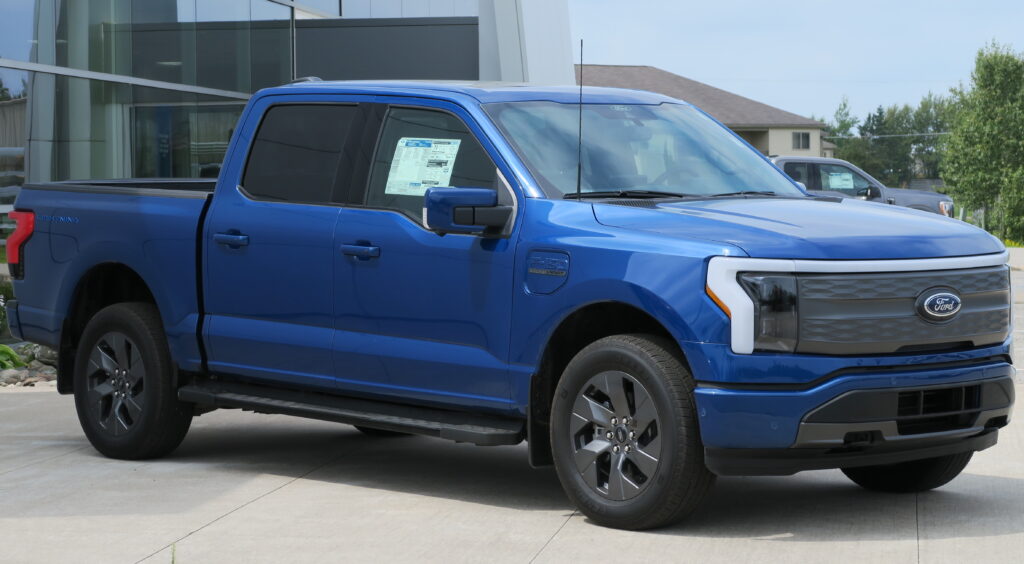
Ford Chief Executive and President Jim Farley were also pleased with the tentative agreement saying, “We are happy to have reached a tentative agreement on a new labor contract with the UAW that covers our U.S. operations. He emphasized the immediate attention of the company to restarting Kentucky Truck Plant, Michigan Assembly Plant and Chicago Assembly Plant, recalling 20,000 Ford workers to work, and delivering our complete line-up to our customers once again.

Ford estimated that the cost of the strike was about 1.3 billion in pretax profits to the company, and about 900 in labor costs to every vehicle made. Nevertheless, the company earned much more money, as the revenues amounted to slightly more than 130 billion in the first three quarters of 2023 and almost 5 billion in profits. The resolution will enable Ford to resume full production and meet customer demand.
Greater Implication on the Auto Industry and Negotiations
The move by the UAW to strike the Ford workers back to work during the ratification process is a significant departure of the past labor actions. This tactical action, as UAW Vice President Chuck Browning described, is to keep the Stellantis and General Motors under pressure to conclude such deals. Their last thing is to see Ford back on full capacity as they play around and fall behind, which is the competitive dynamic at play, Browning said.
The deal with Ford has become a key template to further negotiations with General Motors and Stellantis, who had also been affected by the concerted strike action of UAW. Both GM and Stellantis had already provided wage increases of about 20-23 percent prior to the Ford deal and are currently feeling significant pressure to match or even surpass the packages that Ford employees had obtained. On October 28 and October 30 tentative deals were also made with Stellantis and General Motors respectively, following the Ford deal.
US president, Joe Biden, praised the provisional agreement, as he saw its importance to the American workforce. He confirmed that it will offer an increase in record raise to auto workers who have made so many sacrifices to make sure that our iconic Big Three companies remain on the top of the world in terms of quality and innovation. The comments made by the President highlighted the national significance of the agreement to both the labor and the international status of the automotive industry.
The strike, which began on September 15, was historic because it was the first in the 88 years of the UAW to strike all three of the large car manufacturers at the same time. The union had initially demanded an increase in wages of about 40 percent in four years which the companies initially considered to be harmful to their long-term investment potential. The final 25 percent rise, along with the reinstatement of benefits, is a credit to the bargaining strength of the union and its strategic determination.
Historical Background and Economic Consequences
This deal is also an indication of reversal of concessions by the union in contracts since 2007, when GM and the former Chrysler were on the brink of bankruptcy, and Ford used assets to survive. This was emphasized by UAW President Shawn Fain who said that the deal will transform lives. This historical background highlights the cyclic character of labor negotiations and how the union has been successful in regaining lost grounds.
All in all, the overall economic losses associated with the strike by the auto workers amounted to an estimated 9.3 billion dollars, as reported by the Anderson Economic Group, which depicts the massive magnitude of the industrial action. GM alone incurred weekly expenses of 200 million dollars as a result of plant stoppage. Although expensive, the strike eventually led to these major gains to workers and a new era in labor relations.
According to Marick Masters, a Wayne State University expert on labor and business matters, employees believed they needed to strike because the companies had made huge profits over the last few years, and GM, as an example, made 10 billion dollars in 2021 and 14.5 billion dollars in 2022. The members of UAW felt that they were entitled to a record contract due to their contribution to these record profits and they were inspired by the philosophy of the labor leader Walter Reuther who believed that the workers should be given a fair share of the corporate plenty.
The future consequences of this deal go beyond the short-term monetary benefits. Ford CEO Jim Farley later said that the relationship has evolved, and the strikes were a watershed moment in the company and that the company needs to think hard about our footprint in terms of future vehicle production locations. Such remarks are an indication of a tentative reconsideration of the manufacturing policies, possibly considering such alternatives as more manufacturing in Mexico because of cheaper labor.
Looking Forward: Future Struggle and Greater Impact
There are also still concerns about new joint-venture electric vehicle battery factories. These are facilities, which are usually owned by different corporate entities, and were not part of this round of bargaining. UAW President Fain had earlier complained that jobs in Detroit Three combustion powertrain plants would be lost to non-union battery work over the years, which highlights the continuing difficulty of unionizing such new areas of the auto industry.
Nevertheless, labor professor Harley Shaiken of the University of California, Berkeley, sees the deal with implications that are far-reaching, implying that gains in Detroit would be perceived and copied by numerous other industries in the economy. This viewpoint emphasizes the possibility of the Ford-UAW accord to motivate other labor movements and contract bargaining in other industries, as it was an indicator of the rest of the working population.
Finally, the temporary contract between Ford and the UAW is a radical change in the American labor environment. It does not just guarantee unparalleled financial and structural gains to autoworkers but also restores the authority of collective bargaining in a new economy. This historic resolution establishes a strong precedent on other industries and builds up on the principle that record profits must actually translate into record contracts, and this is the beginning of a new phase of labor relations that puts the equity of the worker and economic security first. The future is uncertain, yet this deal is definitely a giant step in the right direction towards a more balanced and successful future of the American auto industry and its loyal employees.
A Defining Turning Point of American Autoworkers
The provisional contract between Ford and the UAW is a pivotal point that transforms the relationship between the workers and the auto industry. It is a new anticipation that those who drive large companies should have a significant share in their prosperity, particularly at times of historic profitability. This agreement shows that coordinated labor, tactical pressure, and concerted action can result in transformative benefits that not only influence wages, but also long-term organization of employee rights.
In addition to the direct impact, the agreement is an indicator of a change in the overall economic environment, as it affects the negotiation in other sectors and determines the way companies will make future investments and plan their workforce. It is a new dawn where workers have a greater voice and it is a standard of fairness and economic stability. With the auto industry moving through new technologies, international competition, and the changing workforce, this moment serves as a great reminder that change is not just made by innovation but also by the people who make the industry continue to move.