



Canoo Files for Bankruptcy, Highlighting the Steep Challenges and Regulatory Pressures Facing EV Startups

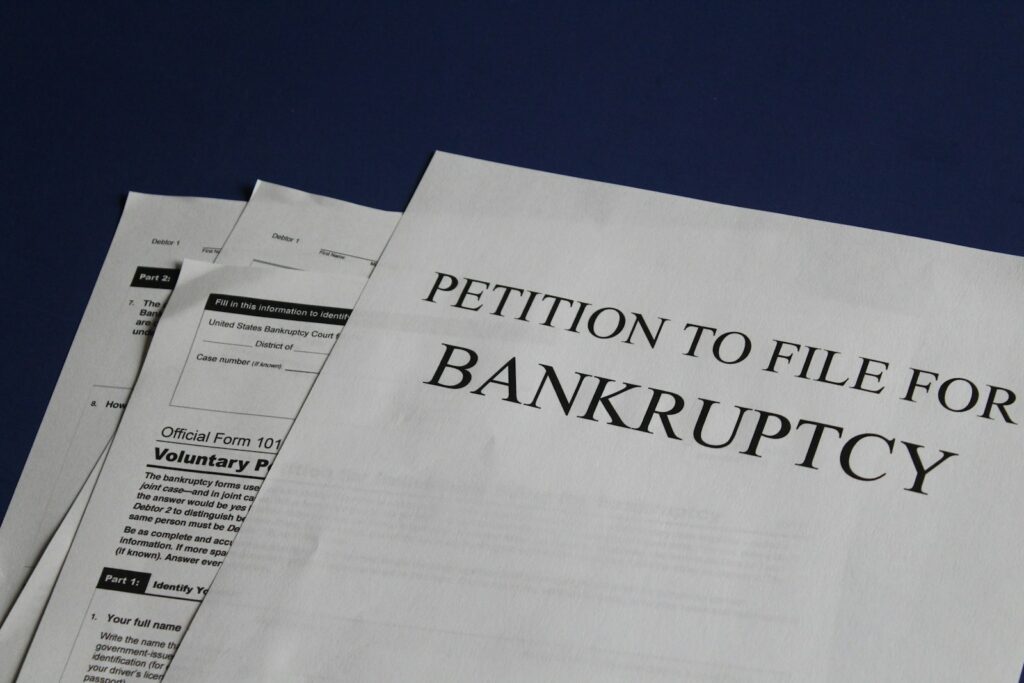
The electric vehicle (EV) market, an industry that has been frequently touted as a source of innovative potential and climate change solution, is still going through a turbulent phase with many startups trying to find the minefield between idea and financial feasibility. The latest and high-profile victim of this changing environment is Canoo, an EV company that has already filed Chapter 7 bankruptcy. This bold step is an indication of the immediate suspension of its business and the sale of its assets, and it is a sharp conclusion to the active way of its enterprising path in the automotive industry.
The petition was filed in the U.S. Bankruptcy Court in Delaware, and this started a process in which a federal Bankruptcy Trustee will see the company being dismantled. The move taken by Canoo will have an impact on a large number of stakeholders, including investors, employees, and even its former high-profile partners. The team of the company has shown its intentions to work hand in hand with the trustee appointed by the court and help in the complicated process of liquidating the assets.
Although the company started off with an upward trend, delivering products to such prestigious customers as NASA, the U.S. Department of Defense, the U.S. Postal Service, and the State of Oklahoma, and having signed contracts with retail giants like Walmart, Canoo was constantly struggling with severe financial issues. These strong head winds eventually became unbearable, and it was forced to go into bankruptcy. The attempts to attract the much-needed foreign capital in the recent past failed and this had a direct effect on the hard decision of the board to declare bankruptcy.
One of the major causes of the financial troubles that Canoo faced was its failure to attract the attention of the U.S. Department of Energy Loan Program Office, a source that has been instrumental in providing the much-needed capital to emerging energy and transportation projects. By mid-November 2024, the cash reserves of the company had reduced to only $700,000, which would greatly restrict its operational capabilities and its capacity to deliver vehicles. This dire need highlighted the weak financial situation that had been accumulating over a period.
Financial Analysis and Operational Problems
Reports by TechCrunch have indicated that Canoo has gone bankrupt, including its subsidiaries, and this means that the company owes hundreds of creditors, and its liabilities are greater than 164 million dollars with assets amounting to about 126 million dollars. Individually, the seven-year-old company also revealed in its bankruptcy filing that it had less than 50,000 assets, as opposed to liabilities between 10 million and 50 million it owed to less than 49 creditors. These statistics clearly explain the deep financial imbalance that eventually led to the downfall of the company.
The bankruptcy of Canoo is preceded by a set of worrying signs, such as employee furloughs and the closure of its Oklahoma plant in the previous month. The firm that came up with a unique modular electric van framework had been publicly listed in December 2020 after a merger with Hennessy Capital Acquisition Corp., a move that initially raised about 600 million dollars. But the prospect of this initial capital infusion did not translate into long-term sustainable success, which resulted in this ultimate corporate action.
The key factor in the collapse of Canoo, and the focus of regulatory attention, was a fine of 1.5 million dollars imposed by the U.S. Securities and Exchange Commission (SEC) in 2023. This fine was based on what the SEC termed as failure to report on matters that were associated with overly optimistic revenue forecasts that ended up deceiving investors. The resolution of this court case highlighted the need to be transparent and accurate in financial reporting in the rapidly growing EV market.
Executive Accountability and Regulatory Scrutiny
The misleading practices were clearly depicted by the accusations of the SEC. In a lawsuit filed by the SEC specifically against former senior board members, CEO Ulrich Kranz and CFO Paul Balciunas, the two were accused of their roles in reporting unrealistic revenue figures to investors. The SEC argued that Kranz and Balciunas had told investors that Canoo was expected to make $120 million in 2021 and 250 million in 2022 when they allegedly knew that these figures were completely unrealistic in the context of the company operations.
The consequences of these excessively optimistic projections were rapid and harsh. The stock of Canoo ultimately fell by more than 20 percent when the company finally declared in the spring of 2021 that it would fail to achieve its projected revenue projections. Canoo shares have suffered a sharp decline since it was listed publicly in December 2020, having lost their original value of 20.28 and plummeted to just 60 cents, which indicates the extent of loss of investor trust.
Ulrich Kranz, a personality who had previously worked on the BMW i3 and later with Faraday Future before joining Canoo, was also accused by the SEC of failing to disclose over 900,000 dollars in income he had received by two investors to guarantee his future employment with the company. This supposed oversight also made the story of corporate governance and transparency at Canoo even more difficult at a very crucial stage of its development.
Lessons and Settlement to the EV Industry
Both Kranz and Balciunas have settled with the SEC and have taken huge fines to their actions. Kranz has accepted a three-year ban on being an officer or director of any company that is publicly traded, as well as a fine of 125,000. Balciunas, in his turn, will be banned two years, fined 50,000 dollars, and will have to pay back 7,500 dollars in profits that he earned, which will strengthen the regulatory body in its efforts to make executives accountable in terms of financial misrepresentations.

Such lawsuits against Canoo and its former executives are a powerful lesson on the importance of transparency and accuracy in financial reporting. Shareholders rely on accurate and honest data in order to make wise choices about their funds. The examples of companies giving inaccurate revenue forecasts may result in significant losses to shareholders and a serious lack of confidence in the market, which is why regulatory supervision is of great importance in ensuring market integrity.
The experience of Canoo can be seen as a part of a larger trend of high-profile failure in the electric vehicle startup ecosystem. The industry observers are well aware of the fact that most startups, especially those that opted to use Special Purpose Acquisition Company (SPAC) as the entry point to the public markets, grossly underestimated their capital needs, which in most cases was in billions of dollars. Such systematic underestimation of financial requirements has led to a difficult situation environment where numerous aspiring EV manufacturers find themselves struggling to survive.
Market Environment and Industry Dilemmas
In fact, the problems go way beyond Canoo. Auto Forecast Solutions, a leading industry research and forecasting firm, reported that at least 30 EV firms have either halted their operations, gone dormant or were on the verge of bankruptcy in the past ten years. This figure highlights the stiff competition and the capital requirements that are very high when it comes to setting up a new car company, even in a fast-growing industry such as electric cars.
Mark Wakefield, one of the managing directors at AlixPartners, provides an insightful view on the financial reality of this industry. He mentions that Tesla, not of Chinese origin, is sort of the first car manufacturer to begin in 50 years. He also demonstrates the economic disparity between established businesses and start-ups by noting that Rivian and Lucid are more or less the next two closest of the Western ones. They have both eviscerated $10 billion. It is interesting to observe these other small startups, who raise 1 billion or 2 billion dollars, and they believe that is all they need. It’s not even close.” This professional observation underscores the exceptional financial resources that are needed to compete favorably in the automotive field.
Nevertheless, in spite of the existing challenges, the market of electric vehicles has been growing significantly, with the help of the governmental incentives that focus on meeting the climate goals and gaining significant interest of Wall Street. One of the industry pioneers, Tesla, has been incredibly successful, which is why a significant number of critics describe its stock as a cult stock because of its cult-like investor base. In the U.S. EV market, the company controlled a majority of the market, with a share of over 50 percent, selling more than 650,000 vehicles, and it earned a total of over 82 billion in vehicle sales worldwide in 2023.
Growth Prospects and Market Realities
As of 2023, electric vehicles made up 8 percent of all new car sales in the U.S., a number that is expected to increase dramatically even though some segments are being adopted at a slower rate than expected. According to industry projections, EVs may represent 46 percent of new vehicle sales in 2030 or almost 8 million vehicles. This illustrates the huge potential and perceives large addressable markets which, according to Pavel Molchanov, managing director at Raymond James, are frequently venture capital pitch slide No. 1.

Nevertheless, the beauty of the big market usually meets the ugly scenes of implementation in the automobile industry. Mark Wakefield of AlixPartners explains this dichotomy, saying that it is more appealing now to start a car company than it was 10 years ago. However, as compared to launching a new social media application or a new consumer service or something that simply does not burn billions before you even begin, before you even get your first dollar of revenue. It is tough.” This honest evaluation highlights the high level of capital intensity and competitiveness of the industry.
In fact, even other industries that have well-financed companies that had invested in automotive development have ended up withdrawing after realizing the peculiarities of the sector. Examples of tech giants who notoriously cancelled a project that was ambitious are Apple, which has since scuttled its electric car plans, and British appliance maker Dyson, which has scuttled its electric car plans. These instances of deep-pocketed companies represent the strong barriers to entry and long-term success in the vehicle production, despite the heavy financial support and technological knowledge.
Strategic Insights and Parallels with History
In a great number of ways, the modern EV market resembles the initial stage of the American auto industry at the beginning of the 20th century. At the time hundreds of small automakers and parts suppliers were scattered throughout Detroit and its environs. The 10 years of fierce competition, mergers, and numerous bankruptcies eventually narrowed the list, with only the few large companies that are known today in the U.S. (Ford, General Motors, and Chrysler (now Stellantis)) surviving.
According to John Paul MacDuffie, a professor at the Wharton School of Business at the University of Pennsylvania, the companies that eventually succeeded in the said historical consolidation did not just consolidate but also greatly incorporated their supply chains internally. This is reoccurring in the present EV segment. MacDuffie points out that the most successful modern EV companies, such as Tesla and China-based BYD, are defined by the level of vertical integration, which is similar to the one used by General Motors in its rise to the top of the industry.
MacDuffie assumes that, although there may be a flurry of and a ferment of a lot of new firms at the moment, history would tell us that this would not be long term. According to this historical view, the existing proliferation of EV startups will probably experience the same cycle of consolidation and attrition, with only the strongest and most strategically aligned companies surviving.
Industry Responsibility and Regulatory Control
In addition to financial reporting, the regulatory agencies are also increasing their attention on operational transparency in the overall automotive technology industry. In the case of Cruise autonomous vehicle division of General Motors, the National Highway Traffic Safety Administration (NHTSA) recently fined the company 1.5 million dollars due to the failure to report a pedestrian crash completely. This accident, which happened on October 2, 2023, made Cruise halt its driverless services across the country because California regulators considered its vehicles to be a hazard to the general population, and its license was later suspended in San Francisco.

Cruise responded to this major regulatory measure by recalling all its 950 cars to make software updates and must now submit a corrective action plan outlining how it will ensure it complies better with its standing orders on automated driving system crashes. The necessity to make the industry safer was emphasized by NHTSA Deputy Administrator Sophie Shulman, who said, “Companies working on automated driving systems must focus on safety and transparency at the outset. This feeling can be echoed in all high-tech car projects, including EV startups, and it focuses on a universal need to be accountable.
Cruise chief safety officer Steve Kenner admitted that the regulatory agreement was a new chapter in Cruise and stated, “Our agreement with NHTSA is a new step in a new chapter of Cruise, which builds on our progress under new leadership, better processes and culture, and a strong commitment to increased transparency with our regulators. He also said, “We are also eager to maintain a close working relationship with NHTSA as our operations advance, in the service of our common purpose of making the roads safer. This dedication to greater transparency and safety is a sign of an industry-wide awareness of regulatory need.
Canoo and Future Outlook
The shutdown of the operations of Canoo and its legal problems with SEC give the electric vehicle industry a sobering case study. It highlights the colossal difficulties of building a successful auto company, particularly one that is dependent on emerging technologies and high growth expectations. Undercapitalization, stiff competition, and the necessity to have transparent and accurate financial reporting are a daunting challenge to any would-be player.
The experience of Canoo and the industry in general will certainly be reflected in the approaches of newcomers in the industry and the demands of investors and regulators in the future. The road to the electrification of transportation is covered with innovation, yet it is also full of high requirements of operational excellence, financial responsibility, and an uncompromising adherence to corporate governance and safety in the community. It is only those firms that will be able to master these multidimensional challenges that are likely to sail through the turbulent waters to success.