

Ford’s Strategic Play: Keselowski Reveals Data’s Role in Logano’s Chicago Ride and Deegan’s New Path

NASCAR is a fast-paced, strategic, split-second decision-making world on and off the track. With teams always in search of the final advantage, each driver team and each strategy is subject to the scrutiny of both fans and pundits. AM Racing made a recent landmark decision, just before the high-speed Chicago event, which certainly caused a lot of debate, particularly in the distribution of major driving positions.
Although most spectators were looking forward to seeing the potential talents compete on the tough open roads in Chicago, one of the major changes was the introduction of a familiar face to the No. 15 car. This tactical move clarified the delicate equilibrium between pure driving potential and the constantly increasing use of sophisticated data analytics in contemporary motorsports. It is a dynamic that highlights the extent to which teams will go to ensure that they are maximizing every available metric to achieve optimal performance.
With all these interesting turns of events, Brad Keselowski, a veteran member of the Ford camp, emerged to give invaluable information about the reasoning behind these risky decisions. His description created a clear image of the painstaking procedures that inform major team decisions, especially on who drives the car during important races. The open comments made by Keselowski were a glimpse of the intricate combination of talent, technology and strategic vision that is the success in NASCAR today.
Keselowski, who had the technical knowledge of the sport, shed light on a situation that left many fans puzzled. He came out right to explain why Joey Logano, a driver with enormous pedigree, was finally selected among others to race in Chicago. The solution, which might seem to be a rather anti-climactic one at first, was deeply entrenched in the world of advanced analytics and strategic need: data.
Logano is a very important, specialized member of the Ford Camp, the one who is designated as the reserve driver in the road course events. This is not just a title, but it is accompanied by serious obligations that are related to the constant striving to achieve the highest performance. He was in the No. 15 car at Chicago, not to fill a seat, but to accomplish a very important technical mission.
Information, Simulation and the Value of Experience
Keselowski stressed that the involvement of Logano was of critical importance of a very specific, high value. His main job was to drive the cars on the real tracks which was a crucial linking point between the virtual world of simulation and the real world of real performance. Such practical association of simulator data with live track data is an essential procedure to any team that aims to achieve a competitive advantage of the highest level in the highly competitive Xfinity Series.
In order to get a complete picture of the scope of the role played by Logano, it is important to know the advanced equipment that is used by modern NASCAR teams, such as Ford. They use extremely sophisticated computer programs that simulate the driving conditions in the real world in a very precise way. These simulators convert all the twists, turns, and accelerations into a flood of information and engineers and drivers analyze this information to make vital decisions on race day.
Nonetheless, as Keselowski was quite open to admit, even the most advanced digital models are not flawless. The information that these simulators produce, though very useful, cannot be implicitly trusted always without validation in the real world. This natural constraint results in the necessity of a seasoned factor simulation driver a role that Logano fits like a glove to offer that much needed verification.
Keselowski gave a very interesting example of this process, telling the press: “It is necessary that he should race the car occasionally to be able to correlate what is important and what is not important. He is more or less the factor simulation driver too. He went on, explaining the immediate and actual feedback that Logano offers and just having him here yesterday, walking the track and being able to say, the simulator is way off in this corner. Dispose of everything we learned to that, but it is dead in this corner. You can trust that data here.’ Those are great things to us indeed. It is this specific feedback loop that enables a team to refine its strategies with a lot of confidence.
The subtleties of the input by Logano cannot be overemphasized. Consider a group that spends hours and hours in a virtual world, carefully planning their attack on every corner of a difficult road circuit. In the absence of a driver of the caliber of Logano to feel those corners firsthand and offer instant and professional confirmation, there is a significant risk of misinterpreting or misapplying simulator data.
Competitive Evaluation and Organization Impact
This is where the richness of the experience that Logano had comes out. He not only presents driving ability to the table, but a keen sense of the way a car ought to feel, respond, and behave in a race. This gut instinct, coupled with his technical skills, allows him to clearly identify the points at which the virtual representation in the simulator is in perfect agreement with the reality and, what is more important, where it does not. These revelations are gold dust to engineers who are working round the clock to squeeze out every fraction of a second out of their machines.
Moreover, this process of continuous correlation is not a single occurrence, but rather a process of continuous, repetitive refinement. Each time Logano sits behind the wheel to either take a test or a particular race outing he is adding to a greater body of knowledge that is benefiting the whole Ford organization. He is contributing to the calibration and tuning of the same tools that will be used by the future drivers so that the simulator will be more and more a reliable and accurate predictor of the performance in the real world. This is a long-term vision that is strategic and forms the basis of many of the decisions made at the top of NASCAR.
The visit of Logano in Chicago was a great success in its purpose. He perfectly knew where the simulator was right, and, no less importantly, where it was wrong. Such a careful evaluation gives an invaluable road map to the engineering teams, enabling them to decide which of the elements in their preparatory data they can safely rely upon, and which must be seriously modified.
Keselowski reminded us of the huge amount of value that Logano has in the organization and he said, “He presents us with a great opportunity to essentially re-baseline where we are as an organization with proven talent that has really been proven. He understands what it takes.” This quote is a strong one that highlights the exceptional quality of Logano in being able to compare the performance of the team to a standard of excellence and steer the engineers in a better direction to understand the potential and constraints of their car.
The experiences that were learned through the drive of Logano enable the team engineers to make much more informed decisions in the preparation of the next race. They can now be assured of basing their race strategies on a platform of verified data, and at the same time they are aware of where they need to offset the errors of the simulator.
Team Realignment and Transitions of Drivers
It is on this background of complex technical strategy that we should recognize the experience of Hailie Deegan in her first season with AM Racing. Although her enthusiasm and skill cannot be denied, the situation explains why she did not give the most impressive records before the Chicago event. She had not scored any victory or even the best result, being ranked 28th in the NASCAR Xfinity Series.
Such statistics are bound to make teams consider and make tough strategic decisions in the cutthroat business of professional racing. It was, thus, nearly natural that AM Racing was forced to make a call and replace a two-championship-winning driver to play Chicago instead. This move, though challenging to any motorist, is indicative of the unremitting quest of competitive advantage that characterizes the highest of the high motorsports.
As any ambitious team, AM Racing is motivated by the necessity to be on the top. To hire a driver with a proven championship record like that of Logano to a particular data-gathering operation was a data-supported strategic decision that was meant to bring the whole organization to the next level. It was not an evaluation of the potential of Deegan, but a calculated move to make the most of a rare chance of technical growth and strategic knowledge.
After these strategic changes, the collaboration of Hailie Deegan and AM Racing unfortunately ended in an unexpected way. On July 8, Deegan herself said that she was leaving the team immediately, citing a lack of alignment in goals. This is a major development that is a new beginning to the gifted driver as well as the racing organization.
The consequences of this parting of ways do not end with the driving seat of Deegan. Joe Williams, the crew chief of the NASCAR Xfinity Series program of AM Racing since its inception, was also requested to leave in May.
Moving Forward
The departure of Hailie Deegan has seen AM Racing reveal its strategy to go through the rest of the season in a dynamic manner. This will be followed by the team using a rotating pool of drivers of the No. 15 Ford Mustang, which indicates an adaptable approach that will help to experiment with different talents and possibly receive a wide range of feedback. This is an adaptive strategy that will ensure that the team remains competitive and responsive to the changing needs of the Xfinity Series.
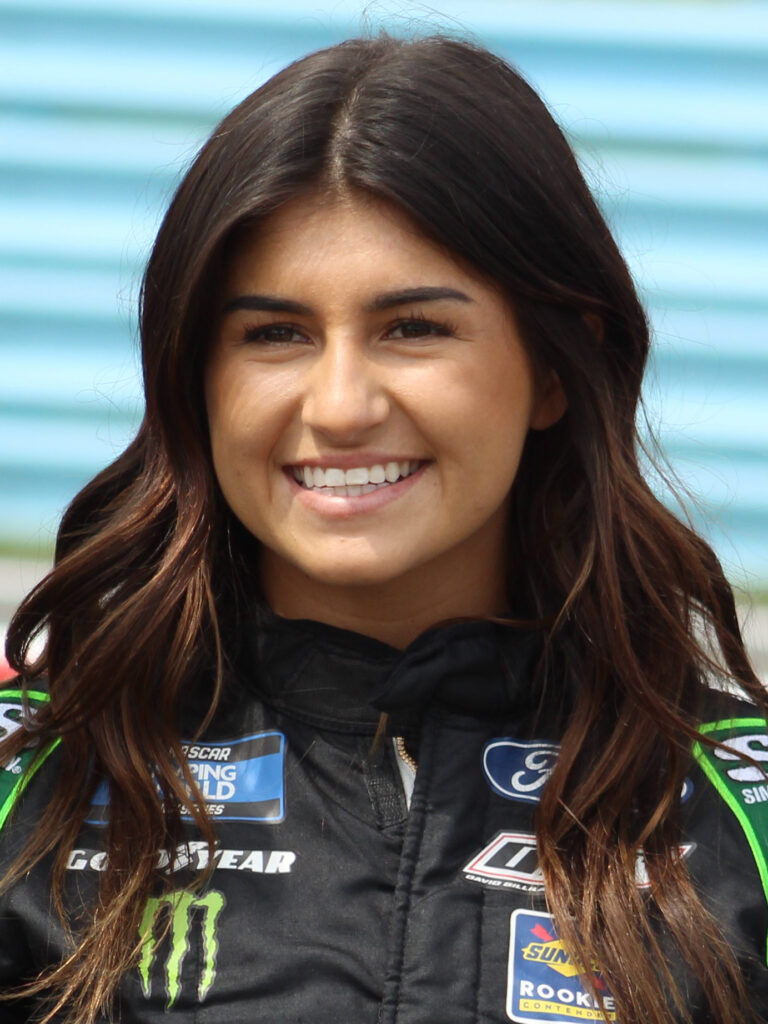
Josh Berry is stepping into this new rotation, and he is ready to take the spotlight. Berry is currently under the Stewart-Haas Racing and is set to drive the No. 15 in the next races. Although his last season in the Xfinity Series was winless, his long experience in the series makes him an interesting candidate to replace Deegan. This is an exciting shake-up move to the fans because all eyes will surely be on Berry to see how he will fit in his new position and how he will work to make his own unique mark on the track.
Despite these changes, the incredible tale of Hailie Deegan remains inspirational. This seventeen-year-old Californian, Temecula, has always been considered as a pioneer, who wants to shatter more glass ceiling in the world of racing. Her experience represents a strong statement of persistence and ambition to all young women all over the world who want to overcome male-dominated professions.
Hailie Deegan is not a driver, but a strong change agent and inspiration in NASCAR. Her influence goes way beyond the timing charts and championship standings, and her story is felt by a generation of would-be athletes who can see in her the potential of realizing their wildest dreams.