







10 Garage Essentials for Motorcycle Maintenance and Care
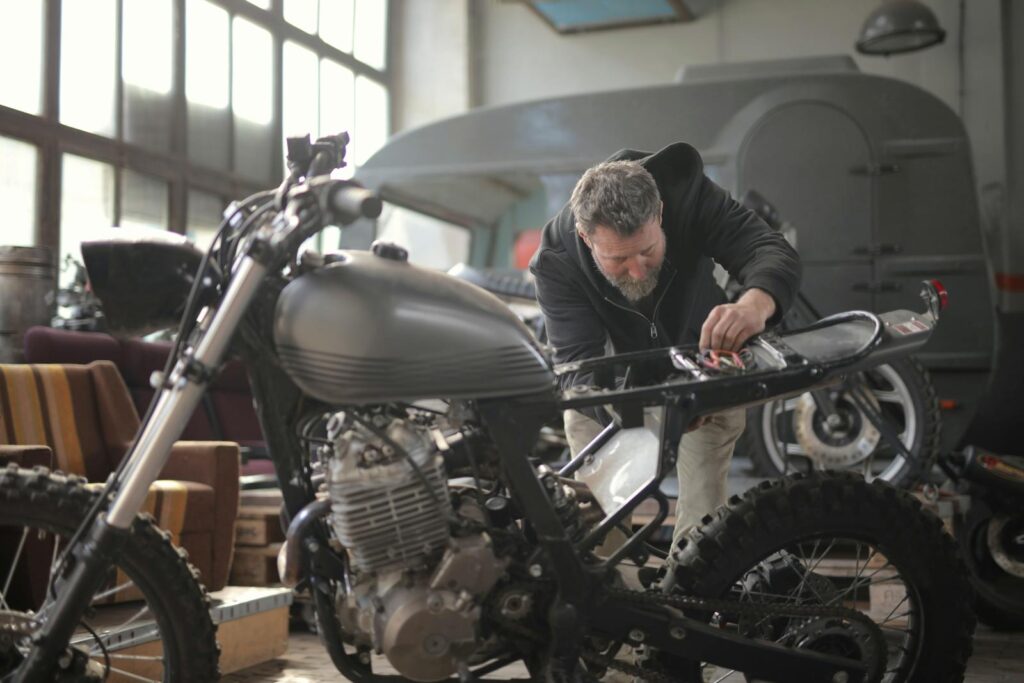
For a motorcyclist, a garage is a great deal more than merely a spot to put a bike at the end of a day. It becomes an individual’s sanctuary over time, as the bond between rider and machine gets closer. It often functions as a place of work, planning, and quiet retreat, where riders can focus on maintaining, understanding, and improving their motorcycle without distractions from others around them.
Why the Garage Matters to Any Rider
- A dedicated space builds consistency in maintenance habits
- Safety is improved by allowing regular inspections
- It encourages learning and mechanical confidence
- It saves money on labor and service costs
- It strengthens the emotional bond with the motorcycle
A properly equipped garage supports safety and satisfaction. Organization and accessibility of tools and equipment enable riders to find minor issues before they become expensive or hazardous problems. Over time, the garage will turn into a stable command center, supportive of rides from commuting in the locality to long-distance adventure tours.

1. Prepare for Every Maintenance Scenario
Whether the rider is doing something as simple as an oil change or is conceptualizing a full custom build, preparation makes all the difference. A well-equipped garage will mean common maintenance can be easily done and in a minimum amount of time. It also reduces reliance on external workshops, allowing riders to confidently work on their own schedule.
Advantages of a Well-Prepared Home Workshop
- Routine maintenance activities get done faster.
- Reduced reliance on professional workshops
- Better preparation for unexpected mechanical failures
- Improved seasonal storage preparation
- Greater peace of mind before a long ride.
Maintenance goes from being a chore to a relaxed, almost pleasant experience, when one has the right tool for the job. In everything from pre-ride checks to winter storage routines, having a prepared garage enables riders to be proactive rather than reactive in ensuring the motorcycle operates flawlessly throughout the year.

2. A heavy-duty motorcycle stand
It is a pain to work on a motorcycle while it sits on its side stand, not to mention highly unsafe. A good motorcycle stand provides the needed stability that one wants when performing maintenance with confidence. By holding the bike upright, it allows for better access to the most important components like the chain, wheels, and brakes. This makes routine tasks much safer and more efficient.
Why You Need a Motorcycle Stand
- Improves Safety during Maintenance
- Provides full access to key components
- Making cleaning and lubrication easier
- This reduces the risk of accidental tipping.
- Compensates for the lack of centre stands
Stand designs will differ for different motorcycles. Paddock stands suit bikes with swingarm spools while panel stands and scissor lifts work better for cruisers and off-road machines. A scissor lift is especially versatile: it raises the bike to a comfortable height and reduces physical strain during longer maintenance sessions.
3. A Complete Tool Kit
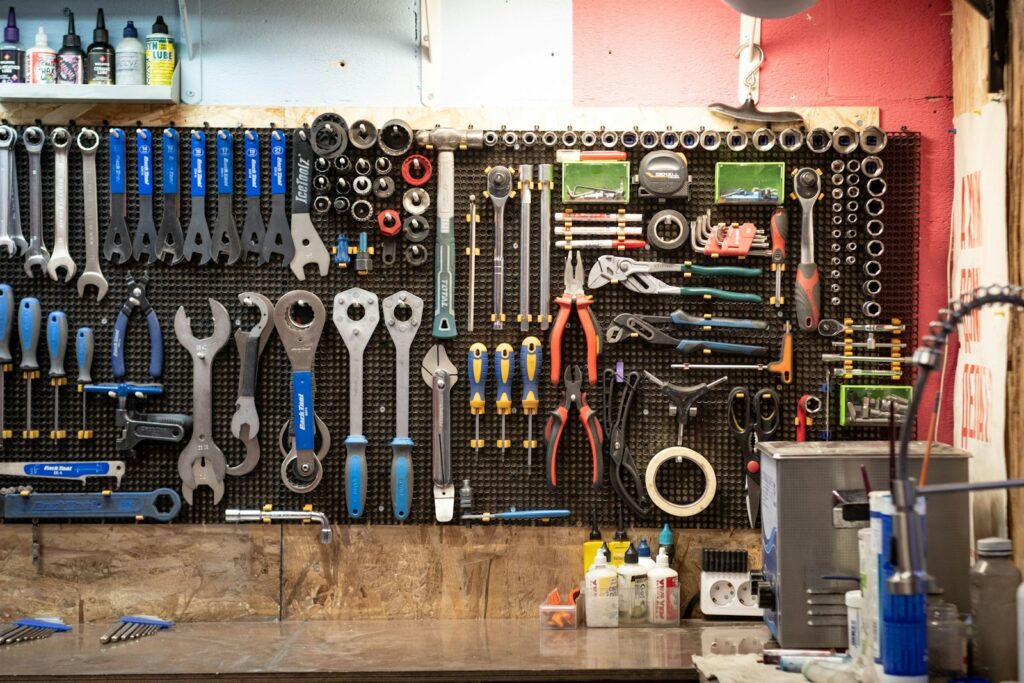
No motorcycle garage is complete without a good tool kit. Specialized tools will be added in due course, but a comprehensive foundation set provides a good base for a rider to handle most routine maintenance tasks. This would usually cover wrenches, sockets, ratchets, screwdrivers, and hex keys that would normally be used across all modern motorcycle designs.
Core tools for any rider
- Wrench sets – metric & imperial
- Socket and ratchet combinations
- Screwdrivers: Flathead and Phillips
- Complete hex key set
- Quality tool storage case
The torque wrench is one of the important tools inside the kit. Proper torque prevents threads from being stripped and fasteners loosening, which could be hazardous while riding. A breaker bar added will equally help in loosening such stubborn bolts without using excessive force that might lead to the damage of components and even tools.
4. Tire Maintenance Gear
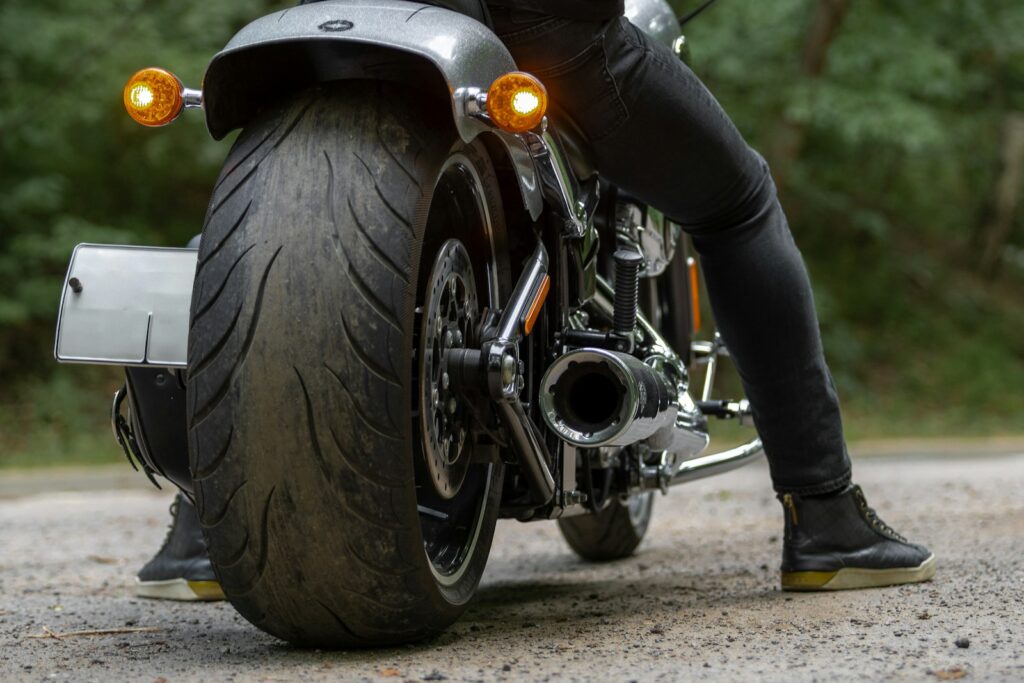
Tires are the only motorcycle point in direct contact with the rider and the road; thus, their condition is absolutely vital. Proper tire pressure maintains handling, braking, and stability. Because temperature or load can affect pressure, regular monitoring is called for in order to ride safely.
Key Tools for Caring for Tires
- Accurate Tire Pressure Gauge
- Portable tire inflator or air compressor
- Tread depth gauge
- Valve stem caps and tools
- Tire Pressure Reference Chart
While a gauge can show pressure issues, an inflator allows the rider to immediately rectify them at home. A tread depth gauge keeps tires within their legal and roadworthy limits. Assembled, these tools confer confidence in the preparation of the motorcycle for everything from a trip to the corner store to a cross-country cruise.
5. A Chain Maintenance Kit
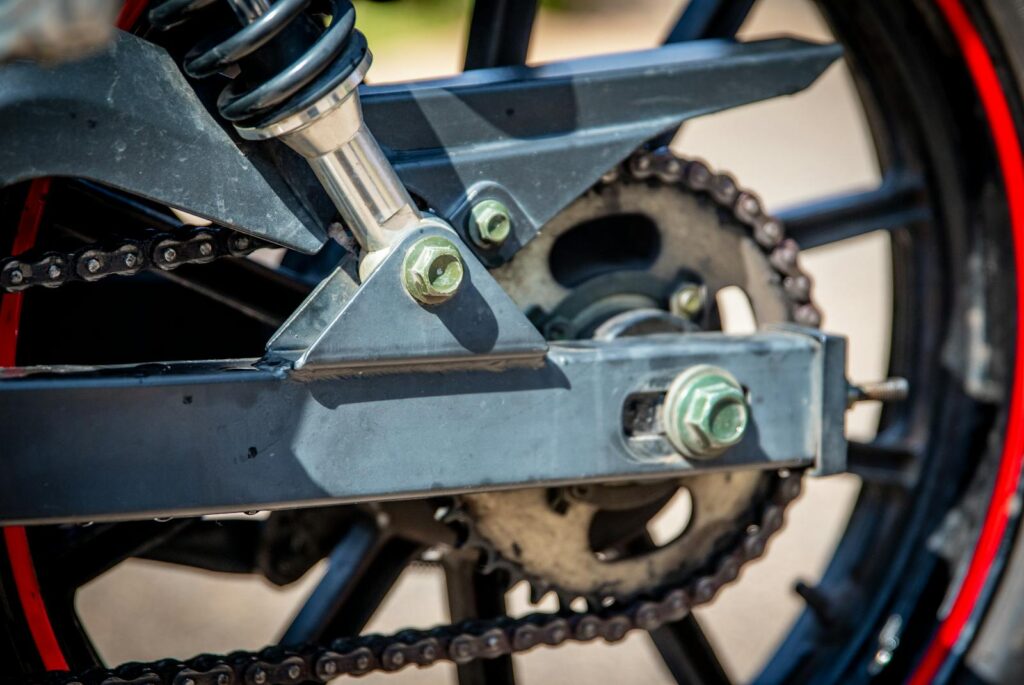
Basic chain maintenance is critical not only for performance but also for safety on chain-driven motorcycles. A neglected chain will wear out more quickly, damage the sprockets prematurely, and can even break in a very bad way. A proper chain care kit ensures correct cleaning and lubrication to prolong component life and refine power delivery.
Essentials of Chain Care
- High-quality chain cleaner
- Suitable chain lubricant
- Dedicated chain brush
- Clean rags or towels
- Protective Gloves
This chain should be maintained every 300 to 600 miles, even more so in off-road riding. When the bike is placed on a stand and in neutral, one can easily manually rotate the rear wheel so that cleaning and lubrication of the entire chain can be achieved during this. Advanced riders may also want to invest in chain breaker and rivet tools for purposes of repairs or replacements.
6. A Battery Tender and Charger
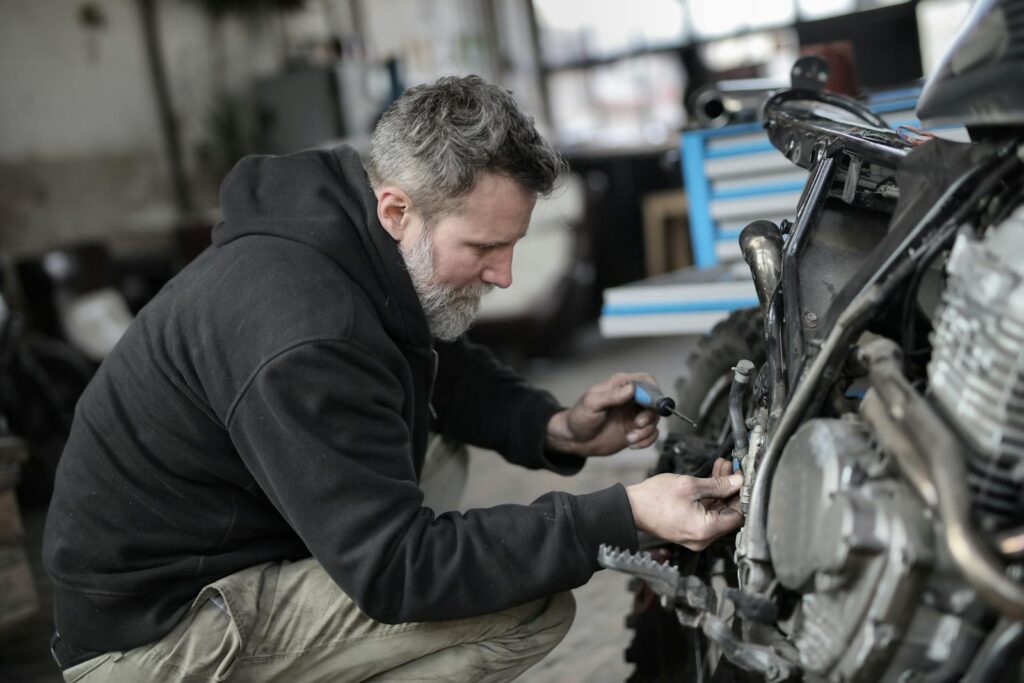
This is because one of the most common reasons why motorcycles would not start up, especially after very long periods of storage, is due to battery failure. A battery tender will keep the battery healthy during periods of inactivity with a steady, low-amperage charge.
Essential Battery Care
- Smart Battery Tender
- Full-capacity battery charger
- Proper connection leads
- Surge protection outlet
- Battery health monitor
While a tender has the sole purpose of maintaining the health of batteries, a charger works towards reviving batteries that have been completely drained. Having one of each means riders are prepared for seasonal storage and unexpected battery drain, reducing downtime and frustration when it’s time to ride.
7. An Oil and Fluids Management System
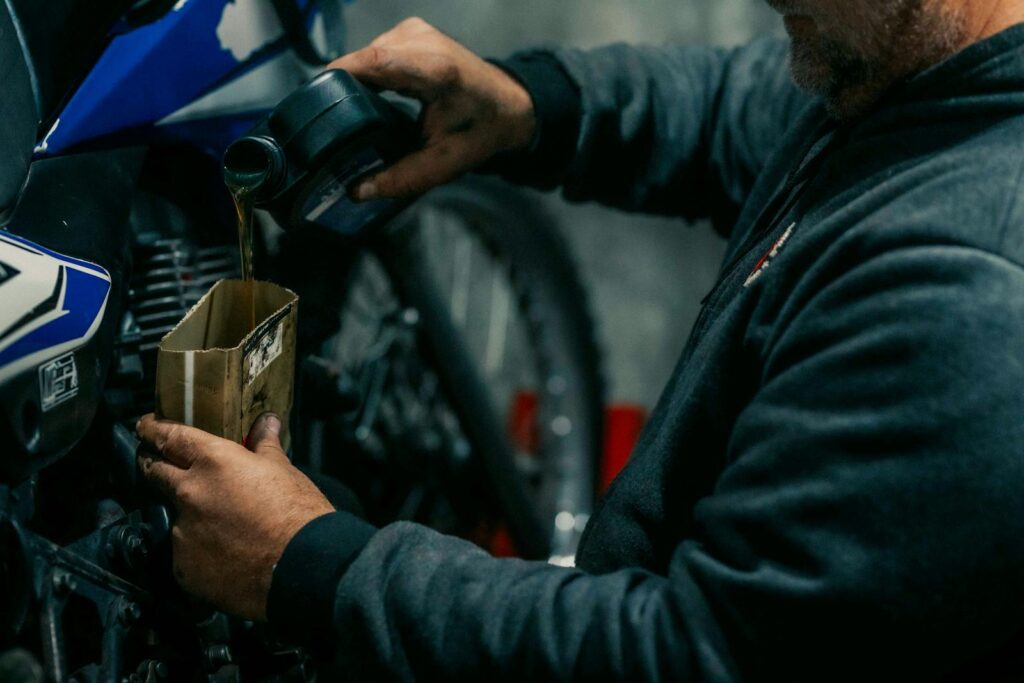
There are three major fluids that keep a motorcycle running properly and safely: engine oil, brake fluid, and coolant. All of these must be observed for replacement at specific times recommended by the manufacturer. Having them easily accessible prevents urgent repairs and encourages servicing on time.
Fluids to Stock in Every Garage
- Manufacturer-approved engine oil
- Brake fluid of the correct specification
- Coolant suitable for the engine
- Funnel for clean refilling
- Sealed Containers for Storage
Catch old oil cleanly, and make fluid changes easy with an oil drain pan. Low-profile designs easily slide under motorcycles to minimize spills. A long-neck funnel makes oil changes go quicker, cleaner, and a lot less stressful.
8. Special cleaning supplies
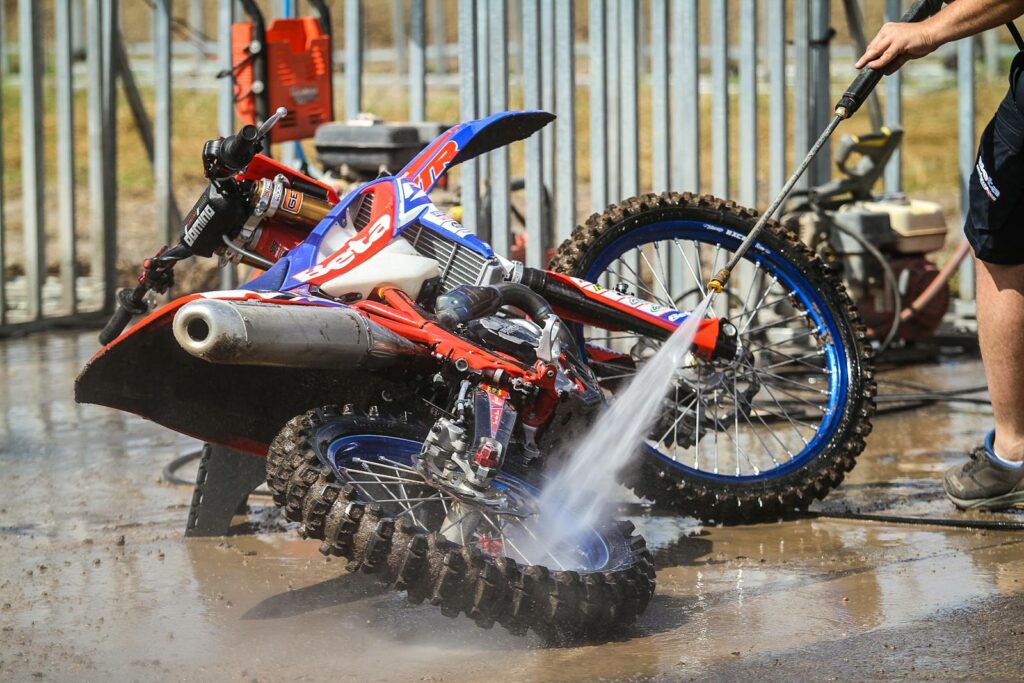
Cleaning a motorcycle is not all about the appearance. Dirt and grime camouflage leaks, loose fasteners, and worn parts that are easily overlooked. Regular cleaning acts almost like a visual inspection, letting the rider find problems early while continuing to keep the bike in its best possible appearance.
Cleaning equipment essentials
- Motorcycle-specific cleaning soap
- Microfiber cloths
- soft detailing brushes
- Degreaser for engine areas
- Dedicated chain cleaner
Using the right products prevents damage to paint, rubber, and finish. A good cleaning routine prolongs life and enhances safety, thereby making maintenance a habit rather than a reaction to visible problems.
9. A proper workbench with good lighting
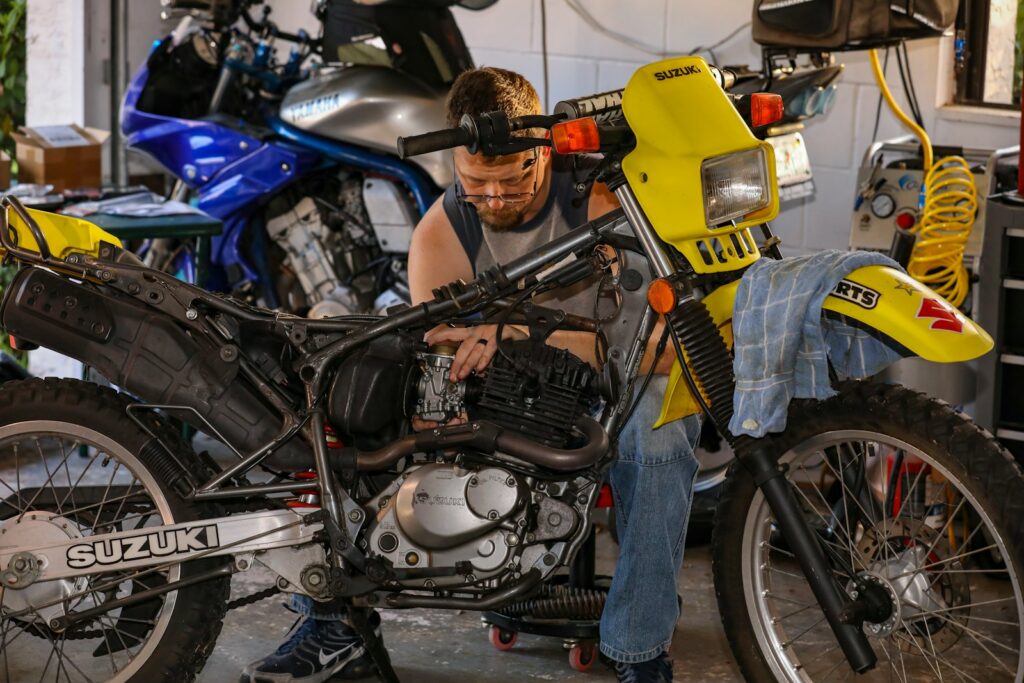
Soon, working directly on the garage floor with a motorcycle becomes uncomfortable and parts get lost. A good, sturdy workbench provides a central workspace for the organization of tools and laying out components; this allows for performance of detailed tasks at comfortable heights.
Why a Workbench Improves Efficiency
- Reduces physical strain
- Keeps parts organized
- Improves focus on tasks.
- Supports detailed work
- Improves overall workflow
Equally important is the lighting. LED task lights with adjustability take away the shadows, consequently improving the visibility in tight areas and reducing mistakes, hence making the work safer. In the end, it makes sessions of maintenance more pleasant and accurate.
10. Smart Storage Solutions
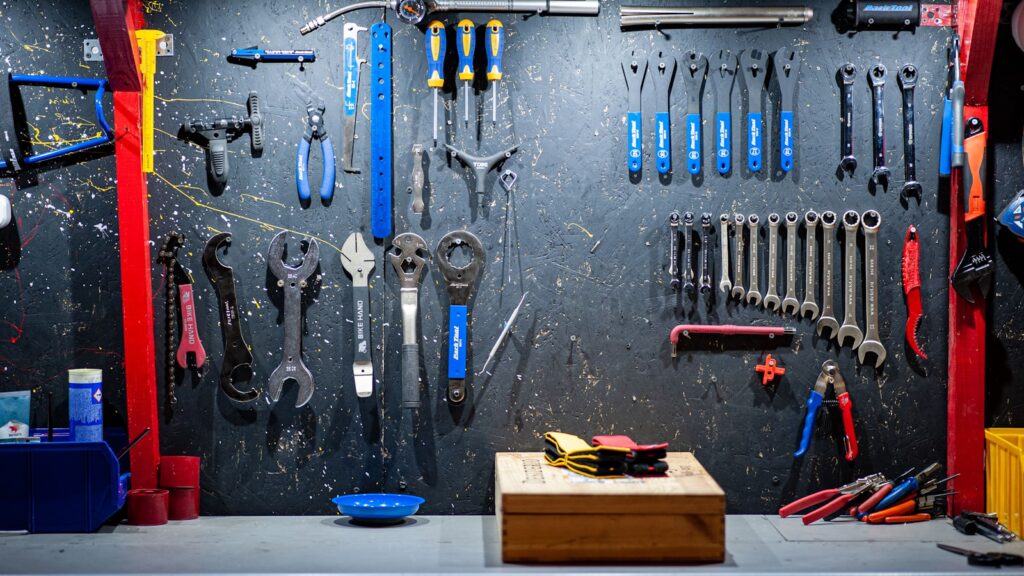
All types of motorcycle gear and tools can very quickly clutter up a garage if not stored appropriately. Smart storage keeps everything accessible, protected, and readily found to save both time and frustration.
Effective Storage Options
- Tool organisers.
- Wall-mounted shelving units
- Gear hooks for riding apparel
- Helmet holders
- Labelled storage bins
Proper storage protects expensive gear from damage, while it ensures that the work area remains functional and clutter-free.
11. A Well-Stocked First-Aid Kit and Final Thought
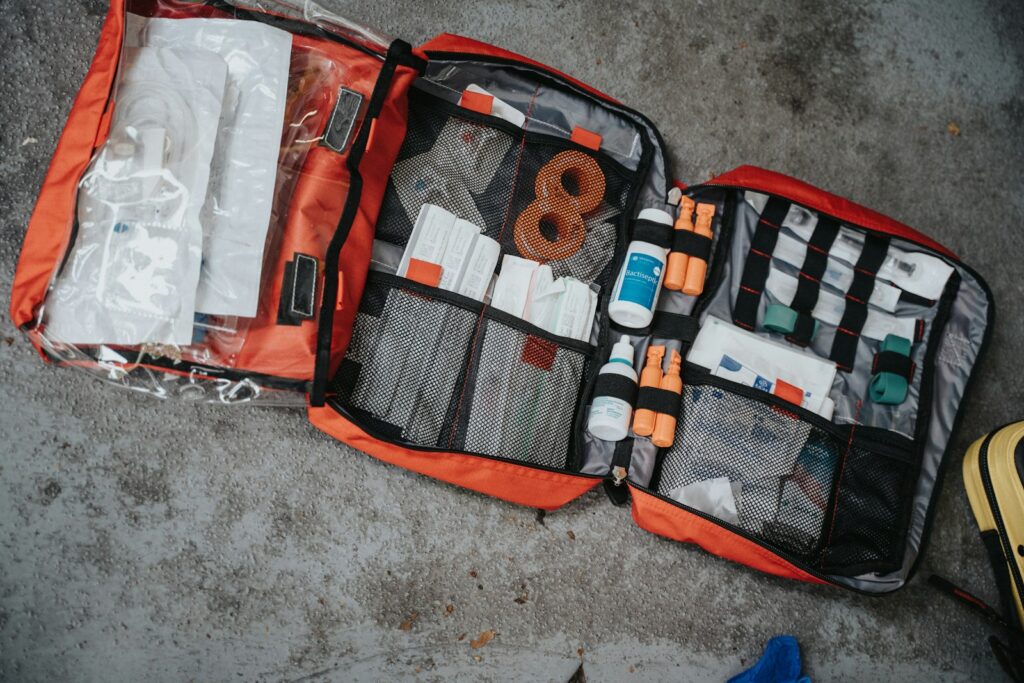
A Well-Stocked First-Aid Kit and Final Thoughts Motorcycle maintenance entails sharp edges, heavy components, and stubborn fasteners. Minor injuries can be common thus, every garage should have a first-aid kit. Having one nearby enables the riders to treat small injuries instantly and safely. What a Garage First-Aid Kit Should Include: Industrial-grade bandages, Antiseptic wipes, Gauze and medical tape, Disposable gloves, Burn and cut treatments.
Equipping a motorcycle garage is an investment in safety, confidence, and passion. Each tool reinforces the rider’s connection with his machine, forging a deep bond that prepares them for future adventures. Slowly but surely, the garage will be no longer just a workplace but the starting point of every unforgettable ride.