







A Practical Guide to Eliminating Smoke Odor in Your Vehicle

The smell of smoke in a car is not only unpleasant, but rooted and acute. It eventually adheres to almost every surface forming a climate that is not comfortable and stuffy. The invasive smoke odor is greatly underrated by many vehicle owners and most of them tend to use quick-fixes that would not effectively solve the problem but rather cover up the real issue that lies covered by fabrics and surfaces.
The irritation tends to be due to the continuous unsuccessful attempts at getting rid of the smell. Due to the fact that the smoke particles are deposited on a microscopic scale, the solutions on the surface level are only temporary. The odor soon comes back, and the problem seems to be endless and exhausting to the owners of the cars without resolving the root cause.

1. Knowing the Science of Smoke Particles
Smoke odor remains to a significant extent due to their very minute sizes. These particles are 0.3 to 0.5 microns in size and they enter into carpets, upholstery, foam padding and even headliners. Their size enables them to infuse deep within materials as they can go beyond the surface cleaning to make them incredibly hard to remove fully by applying the traditional cleaning methods.
Upon embedding, these particles continuously emanate the odor molecules into the air. The smell can be triggered even by the heat or humidity even when a vehicle appears clean. That is why smoke smell is likely to appear days or weeks after a simple house cleaning, which justifies the necessity of an elaborate plan.

2. The Place of Nicotine Residue and Thirdhand Smoke
Other than smoke particles, nicotine residue contributes significantly to lingering odors. The residue accumulated is a sticky goldenish film which covers the dashboards, windows and door panels. With time, it is harder to extract, and it still smells. The thirdhand smoke, which comprises potentially harmful chemicals is also linked to this film.
Nicotine Residue When Inside the Car
- Sticky film on hard surfaces
- Continuous odor emission
- Difficulty with increased cleaning
- Potential health concerns
- Skyrocketing interior discoloration
The leftover of thirdhand smoke is not merely the problem of smell; it is the health factor. The chemicals are also stuck on surfaces even after cessation of smoking. This residue should be removed not only to make the interior comfortable but also to increase the cabin air quality and sustain a long interior life.

3. Airing Out the Vehicle: The First Move
The most forgotten but the simplest process of odor removal is good ventilation. Fresh air in the car allows the volatile organic compounds that are trapped to be diffused. A large decline in the concentration of odors in the air can be attained by parking in an open, safe space and opening the doors and windows during a few hours.
Although airing out without any improvements is not going to resolve the problem, it sets a clean beginning point. Getting rid of garbage and trash in the process ensures that there is no reabsorption of odor. This measure will provide a more efficient level of deeper cleaning and that more time will not be squandered later on in the course of the process.
4. Deep Vacuuming to eliminate loose particles
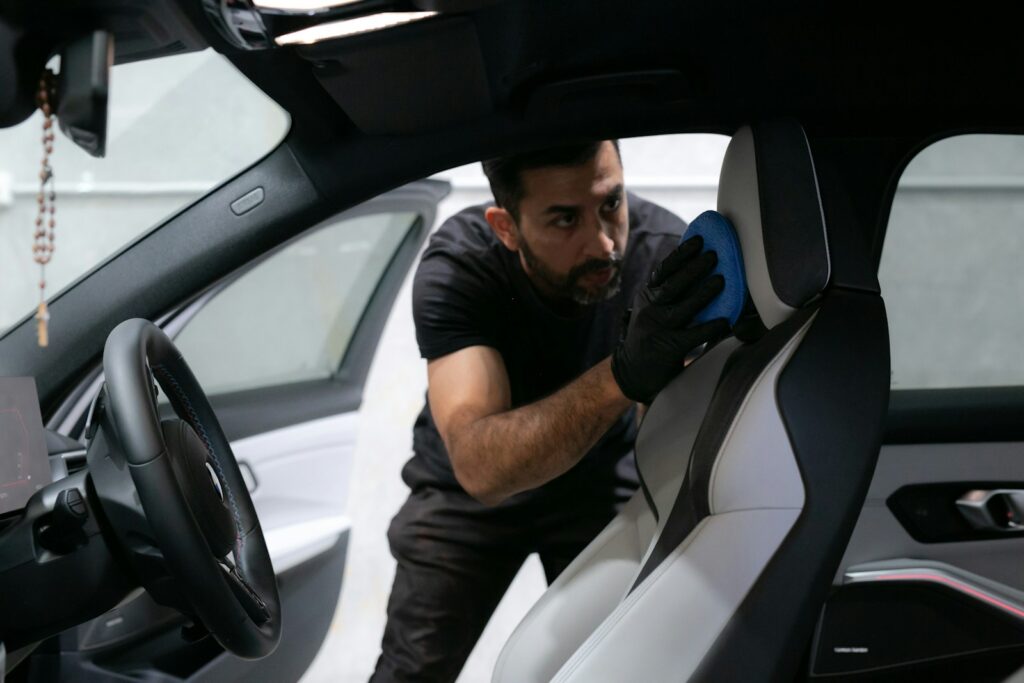
Vacuuming is an essential procedure, and it is way beyond the five-minute surface cleaning. The particles and ash are very deep and become lodged in the carpets, seats, and crevices. Attached vacuum tools that are used to clean underneath seats, along seams and crevices stump out a significant percentage of odor forming objects even prior to the wet cleaning process.
spaces that should be given attention through vacuuming
- Seat seams and crevices
- Under-seat flooring
- Trunk carpeting
- Floor mats
- Upholstery foam edges
The removal of particles that are loosely suspended may remove as much as 80 percent of the sources of odor on the surface. Leaving it out will help the particles to be dispersed in subsequent cleaning. A complete vacuuming exercise is done to have the interior well prepared to use chemical or natural ways of cleaning afterward.
5. Washing Hardsurfaces to take away the sticky film
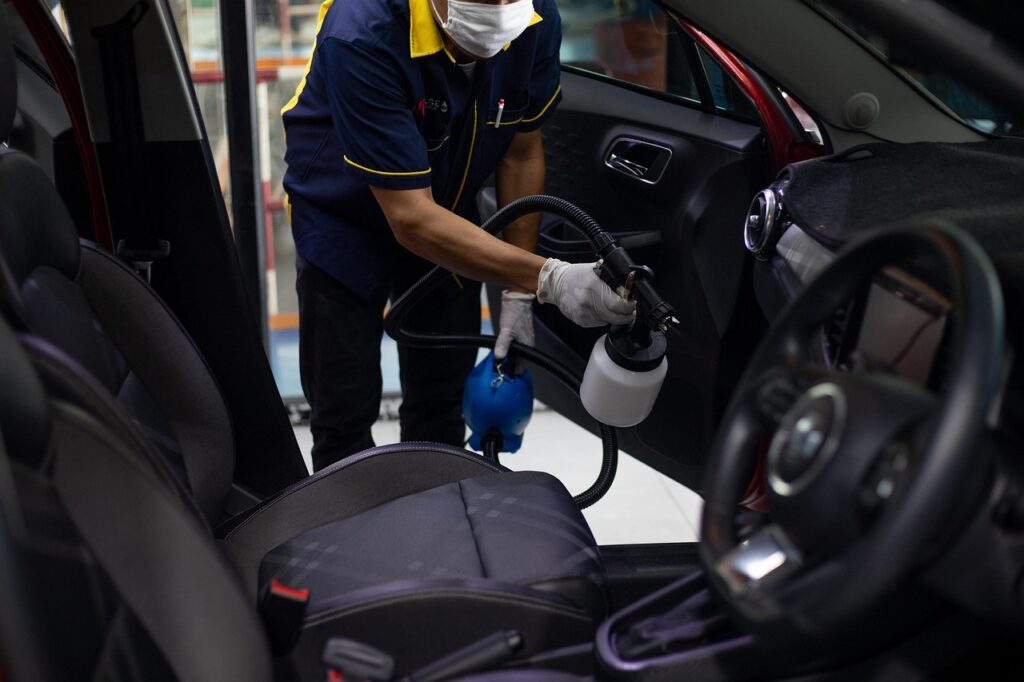
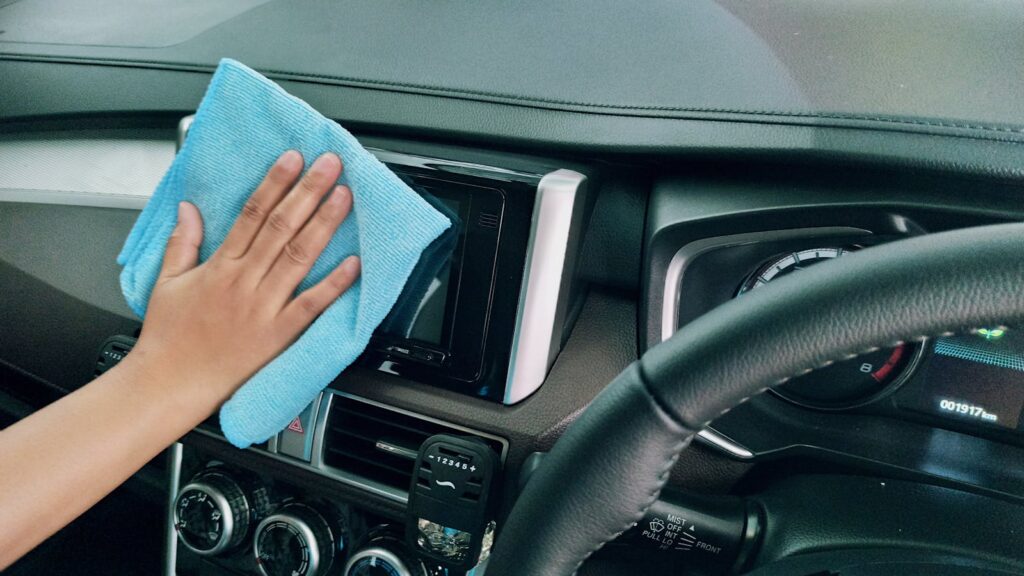
The interior of the car has hard surfaces where the nicotine deposits which would otherwise not be cleaned by standard cleaners. Special purpose interior cleaners that are auto specific are programmed to dissolve tar and nicotine. There should be a clean wiping of dashboards, door panels, center consoles and windows to get rid of the invisible film that causes lingering odor.
This step will significantly enhance the way it looks and smells. The elimination of the residue eliminates the continuous release of odor molecules. Adequate cleaning of surfaces also amends interior materials making them look and feel cleaner and more pleasurable to handle and maintain.
6. Applying Vinegar as a Natural Smell Remover
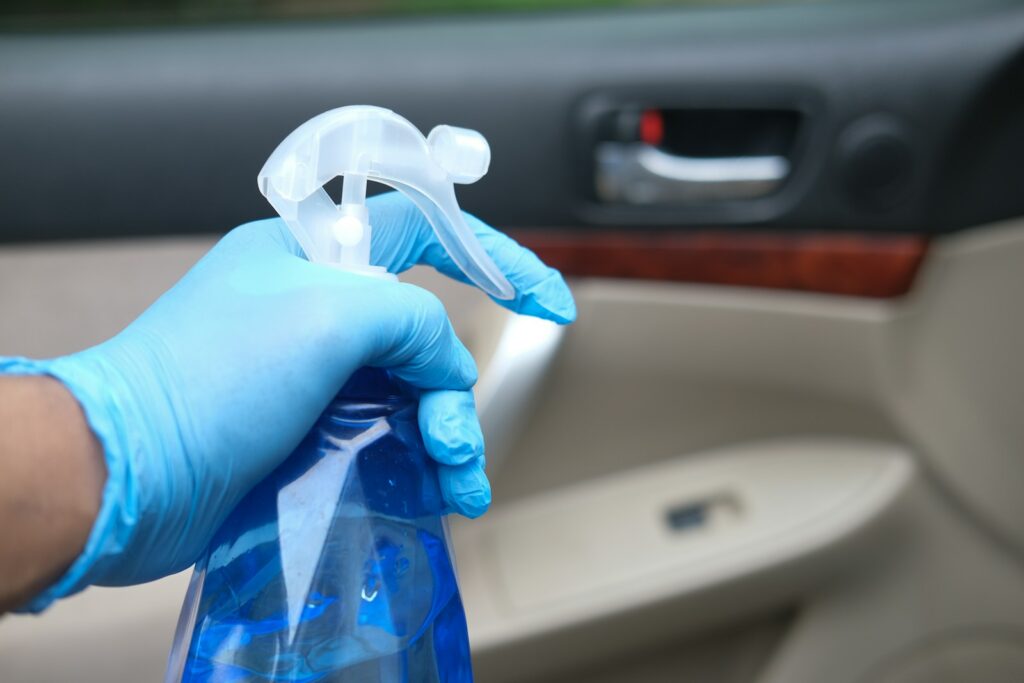
White vinegar will also have strong odor-cancelling effects to those who choose natural remedies. It detoxifies nicotine and tar substances rather than covering them. To remove the residual smell, a solution of vinegar and water in equal measure can be sprayed on the surface lightly and wiped to create an effective solution.
How the vinegar helps to remove smoke smell
- Cancels the odor causing substances
- The breakdown of nicotine residue
- Absorbs lingering smells
- Non-toxic on the majority of interior surfaces
- Affordable and accessible
Besides cleaning the surfaces, vinegar can passively take up smells in the air. The vinegar bowl, which is left in the car overnight, aids in neutralizing the persistent smells and is therefore a useful and convenient item in the odor removal procedure.
7. Baking Soda to Take the Stale out of Carpets
Baking soda is the best at absorbing odors in the fabric materials. When sprayed abundantly on carpets and other upholstery, it will attract odor molecules instead of masking them. Leaving it to sit a few hours after will make sure that it is fully absorbed before it is vacuumed away.
This is an effective way of enhancing the freshness of the interior when it is applied correctly. Baking soda works best when used with vacuuming and cleaning the surface. Although it is not a full solution, on its own, it can be very useful in the process of odor elimination, which can only be achieved in a multi-step process.

8. Carpet and Upholstery Cleaning
The odor of smoke tends to penetrate into the carpets and seat cushions and has to be treated even more aggressively. Carpet extractors and steam cleaners involve heat and moisture to remove embedded residue in fibers. It does not only eliminate odor, but also sanitizes material by killing bacteria and germs.
Advantages of Steam Cleaning and Extraction Cleaning
- Pierces dense layers of fabrics
- Removes embedded residue
- Sanitizes upholstery
- Restores fabric appearance
- Enhances freshness in the long-term
After deep cleaning, it should be dried properly. Water that gets left behind will generate new smells or promote the growth of molds. Proper ventilation and drying period guarantee that the interior is not stale or has a secondary problem.
9. Discussing Cabin Air Filter and Odor Absorbers
Cabin air filters contribute significantly towards the circulation of interior air. It constantly brings in odor when polluted in smoke. The performance involves changing it, which is a cheap and a very efficient process. Adding some charcoal or grounds of coffee to this step also captures the lingering air smells.
The porous structure of the activated charcoal makes it particularly useful. It prevents masking of the odor molecules but traps them, which guarantees a longer period of freshness. These equipment operate silently with time, and they strengthen the outcomes of previous cleaning processes.
10. Professional Solutions and Prevention in the long term
In extreme situations, professional detailing can be required. Industrial equipment and ozone treatment are applied by the detailers to remove the odor at the molecular level. Ozone generators use odor-causing compounds and destroy them permanently instead of concealing them.
Smoke odor prevention long-term guidelines.
- Enforce a no-smoking policy
- Clean the interiors regularly
- Washable mats and seat covers should be used
- Replace filters routinely
- Addressing spills and rubbish
The best solution is prevention. The odor will never come back by keeping the inside clean and avoiding the exposure to smoke. Regular maintenance will keep your car clean, comfortable and a pleasure to drive.