







A Breakdown of a $45,000 Car Loan Payment

The task of car financing calculations may seem daunting, especially if the amounts involved are quite high and involve technical terms that one may not be familiar with. Nevertheless, if one considers that one may possibly take out a $45,000 car loan, one of the first things that may pop out in one’s mind is the issue of how much one may be able to afford on a monthly basis. Based on one of the more likely assumptions, the answer to this question may not be all that complicated. The monthly installments on a $45,000 car loan over five years at 5.875% interest would be approximately $867.36.
What are some important details about your monthly payments?
- Loan Amount: $45,000
- Length of loan: 5 years (60 months)
- Interest rate: 5.875%
- Estimated monthly payment: $867.36
- Amount paid overall for the loan: $52,041.78
This is just a single number for a single monthly payment, and while this number is important, it is only the tip of the iceberg. In order to make an intelligent financial decision, it is important to see just what goes into that number. Over the life of the 60 payments that comprise a five-year loan, you would be responsible for atotal of $52,041.78. This is comprised of the original price tag of $45,000, as well as an interest charge of$7,041.78. The interest is essentially the price that is paid for borrowing this money, providing a reward to the lender for their time and taking on this financial risk.

1. How Your Monthly Payment Changes Over Time
When you examine your monthly payments, you should be aware that there is a split between two portions: the repayment of the principal, or the initial amount borrowed, and the repayment of the interest on the principal. This split will vary as you pay the debt, in a manner known as amortization. When you are initially paying the debt, a higher portion of the monthly payments will be directed toward the interest portion. Thus, in the initial payment of the $45,000 debt, the initial payment of $867.36 in fact pays $220.31 in interest and the remaining $647.05 is directed to the principal.
Amortization Process
- Early payments are mainly about interest
- The principal balance decreases slowly at first. Conversely, when
- Interest portion reduces every month
- Principal portion: It tends to increase as time progresses
- Final Payments are largely given for Principal
As you continue with payments, the ratio of payment of interest and capital will keep changing. Every month, the ratio will show that a slightly smaller amount of the payment will go toward the payment of interest, and a slightly larger amount toward the reduction of the capital. By the time you make your final payment, the difference in the ratio will be stark. Your 60th payment will consist of only $4.23 in interest, while the remaining $863.14 will be toward the reduction of the capital. This will enable you to gain possession of your vehicle over the lifetime of the loan.

2. How Loan Term and Interest Rate Impact Repayments
Your monthly repayment for a car loan will largely depend on two aspects: the term of the car loan as well as the interest rate. Normally, the longer the term of the loan, the lower your monthly repayment will be, as well as generating more total interest. Contrary to that, a shorter term will lead to higher monthly repayments as well as reduced total interest. For instance, with a 6 percent interest rate for a $45,000 loan for a 7-year term, your monthly repayment will be $657.38.
Understanding Term and Interest Rate Effects
- The longer the term, the lower the monthly payments
- Longer terms mean increased total interest payments
- If loan terms are shortened, more payments have to
- Short-term. Terms of this kind will mean that the total
- It heavily affects the monthly cost
On the other hand, if you choose the shorter term of 3 years with the same rate of 6%, your monthly payment will be much higher at $1,368.99. In this scenario, you can see that in order to make smaller monthly payments, you could be paying more in interest over the longer term.

3. More Than Just the Monthly Payment: What Else to Consider
Knowing your payment amount is a crucial piece of the puzzle, but it’s only part of the whole financial strategy involved in purchasing a car. There are many other costs associated with purchasing a vehicle that could raise your overall expense level quite high. Some of these costs include taxes, registration, and insurance.
More Car Buying Charges to be Aware Of
- State sales tax (variable)
- Documentation and processing fees
- Title fees and vehicle registration fees
- Destination Fee for car Shipping
- Required Auto Insurance Premium Payments
Sales taxes are an addition that can be significant, depending on the state, with Alaska and Oregon not charging any sales taxes for automobiles, while the others do. Apart from the sales taxes, you will have to pay additional fees for the vehicle, which could be destination fees, which vary between $900 to $1,500 to ship the vehicle from the manufacturer’s plant to the destination. Automobile insurance coverage is essential for those who wish to drive the vehicle lawfully in the U.S., as the financier always demands that the vehicle be fully covered for insurance when considering the loan.

4. Selecting an Appropriate Financing Choice: Direct Finance vs. Dealership Finance indispensable
One of the very first major decisions you will have to make in the process of financing a car is to opt for either direct or dealership financing. When you opt for direct financing, you obtain the financing from a bank or a credit union. One of the most effective approaches in this regard is to opt for pre-approval on the financing of the car before you visit the dealership.
Comparing Financing Options
- Direct Lenders: banks, credit unions
- It Increases Bargaining Power
- Dealership financing is convenient
- Dealership promotions may provide low rates
- Always compare offers carefully
The reason dealership financing can be a convenient option is that all the transactions can be conducted at the same time, and the dealers might be associated with lenders who have links with certain brands of automobiles. Such lenders may have certain financing offers like 0%, 0.9%, or 1.9% APR. But you should always check this against the deal offered by the lenders to make sure you have the best terms.
5. Credit Score Effect On Your Loan
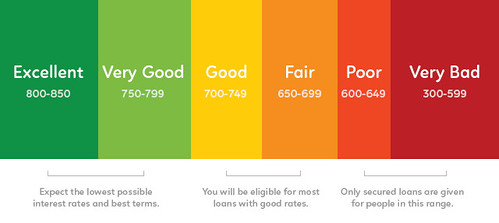
Your credit score is one of the most influential tools that lenders consider when approving your loan applications as well as deciding how much interest you are eligible for. It indicates your creditworthiness based on your past and current credit performance. People who have a credit score that is considered exemplary are eligible for an interest rate that is low, which translates to reduced monthly payments.
Credit Score Details
- Higher scores result in better interest rates
- A lower score, that the rates are higher or the loan will be rejected.
- Credit history increases lender trust
- Credit history plays
- Boosting your score = better loan terms
- Check your credit before shopping
If your credit rating is not so good, it could be advantageous to work on optimizing this before getting a loan. Even a small improvement to your credit rating could save you hundreds or thousands of dollars compared to current interest levels. It is important to have information regarding your credit rating and to optimize this before negotiations for loans.

6. How a Trade-In Can Lower Your Expenses
Trading in your old car can be an intelligent move if you are buying a new car. The value of trading in the car is deducted when buying the car, which reduces the amount that has to be financed for the vehicle purchase. In most states where sales tax has to be paid, you end up paying the sales tax based only on the difference between the value of the new car and the car that has been traded in.
There are several
- The loan amount required is reduced
- Decreases monthly payments and interest
- Sales tax is imposed on price difference in many states
- Certain states tax full new car price regardless
- Know Your State’s Trade-in Tax Laws, Lawyers USA
However, some states like California and Maryland require payment of sales taxes on the total price of the new vehicle regardless of what you are trading in. In fact, knowledge of how sales taxes work for each state can help you take full advantage of your trade-in value and save money.

7. Understand that dealerships are required by law to disclose
Locking in a good auto loan rate means more than just being aware of your monthly payments. It means having done your homework, being well-informed, and taking the time to review all aspects of the loan. It also means taking all aspects of your finances into consideration, so you can make an informed decision that suits your pocket.
Tips on Savvy Car Loaning
- Fix credit scores before purchasing
- Obtain pre-approval for loans
- Comparison of direct lender offers and dealer offers
- Factor in all fees and taxes in setting your budget
- Avoid Chasing the Lowest Payment
Avoid focusing only on making Being informed and prepared will keep you from being surprised and will boost your confidence when negotiating your financing. You can walk off the car lot with confidence that you have made the best decision financally that you can make.