






Corporate Profits or Economic Pressure: The Real Story of Your Rising Bills

Going to the supermarket and the petrol station is a weightier experience with every trip. The cost of goods continues to rise, and it appears that one’s salary is no longer keeping up with it. What was once a manageable expense now requires pinpoint calculation and threatens to upend one’s daily spending decisions. The phenomenon of inflation is now a part of public discourse, no longer a theoretical construct for economists but a reality that is evident every day in one’s wallet.
While costs escalate, there has been an assortment of reasons cited. These range from government expenditure, disruptions to supply, and labor market. These are definitely among the reasons that led to inflation. But, inevitably, another reason has risen to the fore, which sees a different purpose among firms that are a result of the actions that appear to take advantage of an economic constraint to drive costs higher.
This conversation has escalated beyond the realm of theoretical discussion and into the public psyche because the chasm between corporate profits and domestic pain seems so pronounced. “Families are cutting costs while corporations are posting record profits it’s like two different worlds,” Princeton University Professor of Economics Justin Wolfers told CNN. “There is inflation because of the supply and demand of GDP. It’s the overall economy that is the issue.”

1. Understanding the Concept of “Greedflation”
Greedflation has become popular because it asserts something quite intuitive. The idea here is that certain firms are increasing prices above and beyond the rise in costs. Rather than delivering price cuts in proportion to the reductions in costs, the prices are kept high to preserve the profit margins.
This view rings especially true in relation to inflation because it corresponds with observations made by many consumers. Pricing tends to escalate rapidly in times of crisis. When conditions normalize, however, it tends to normalize very slowly, if at all. This could indicate inflation serves as a convenient excuse.
According to proponents of this approach, greedflation neither needs coordination nor any form of conspiracy. All the firms need to understand the fact that consumers are ready to accept the increased prices. This enables the firms to increase prices with ease.

2. How the Automotive Industry Reveals Pricing Reality
From the auto industry emerges a level of insight into how companies set pricing and precisely what factors are involved in those decisions. In this industry, the leaders have publicly declared that they are willing to achieve greater profitability rather than greater unit sales volume. These are not suggested intents but statements that have been clearly and directly asserted as observations of priorities and preferences. Such observations are important and valuable because they clarify priorities and strategies regarding pricing and profitability.
What This Transparency Reveals:
- Margin-first pricing strategy
- Volume traded for profit
- Executive-level acknowledgment
- Deliberate price positioning
- Consumer willingness testing
The significance of these comments lies in their openness. When organizations reveal that prices are chosen rather than being forced higher, it changes the manner in which it was thought inflammation was to be considered in all its forms. The story no longer revolves around the external forces an organization may be subjected to in terms of increased costing. This indicates market toleration in whatever manner that may be in the auto market.

3. Strength of Demand and Price Acceptability
A reason why companies are able to preserve their high prices is because of consumer demand. Many sectors see little resistance in consumers when prices are raised. A major factor that works against lowering prices is the strength of consumer demand.
This gives a feedback mechanism. As long as the consumers are buying products at the increased prices, the effect is that the companies feel vindicated in their pricing model. There is no resistance to the idea of maximizing the margin.
From a business perspective, this practice may seem logical. As a customer, this practice comes across as exploitative, particularly if prices are raised without subsequent enhancements in value or salary.
4. Profit Increases Outpace Cost Increases
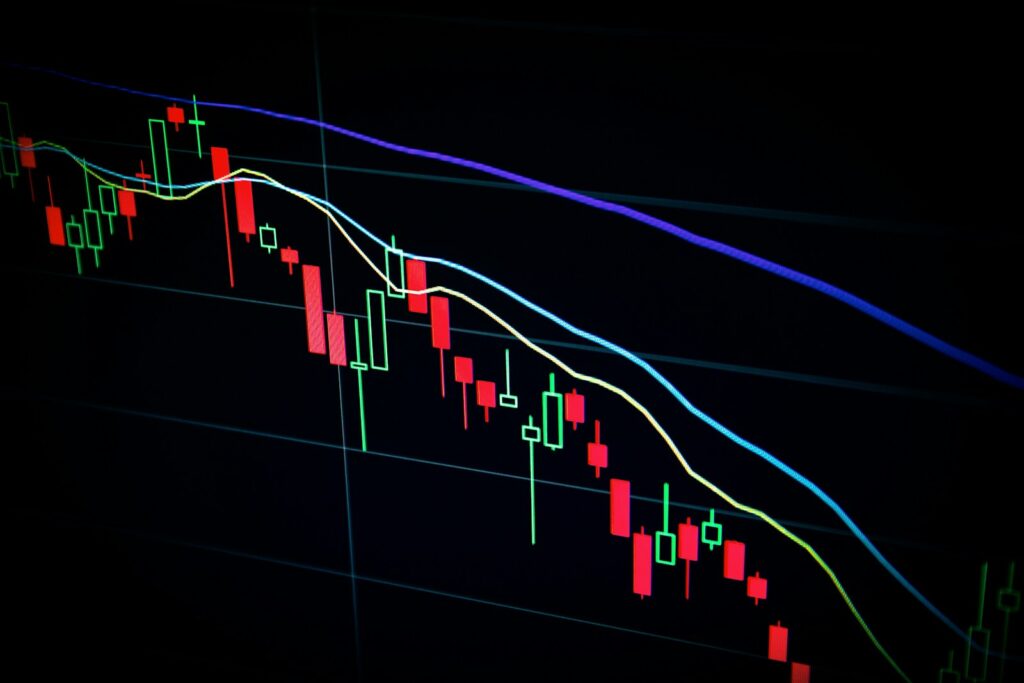
Why greedflation retains its limelight is the speed at which the profit margins are rising. In many sectors, the rate at which the profits have been rising has been greater than the cost incurred. This indicates the pace at which the prices are rising has been beyond the cost incurred. This leads several questions to be raised when the pace at which the prices are rising is greater than the cost incurred.
What Fuels These Concerns:
- Profits exceeding costs
- Prices remaining high
- Temporary expenses becoming permanent
- Margin expansion versus recovery
- Consumer affordability pressure
“When prices like commodities or transport costs come down, prices do not move,” reported the Article One columnist. “The corporation usually pockets the difference rather than reducing prices.” A short-term problem becomes an enduring source of profits. This pattern challenges the assertion that CPI is a byproduct of purely cost-related mechanisms. The result is an increasing chasm between corporate profits and personal finances. For the ordinary consumer, the difference creates ongoing financial woes.
5. The Data Supporting the Corporate Profit Explanation
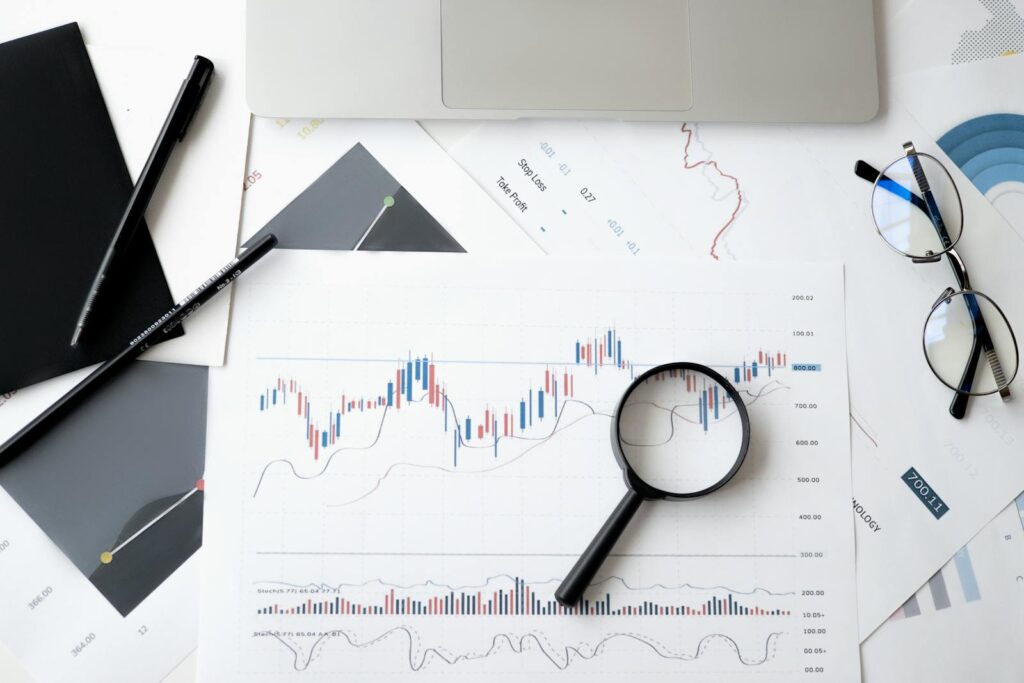
Independent studies have provided more insight regarding the debate about inflation being profit-based. Studies drawn from government statistics illustrate that profits had a larger share of inflation lately. This is a remarkable change from the way things were before. It is no longer the case that price rises are attributed to wages or labor. Rather, the evidence suggests that profits are playing a larger role. This information reflects the experiences of many consumers.
What the Data Indicates:
- Higher profit-share ratio of inflation
- departures from the past
- Margin-driven price increases
- Decrease in cost
- Shifting inflation trends
This does not mean that profits are the only driver of inflation. Pressures and supply chain interruptions are still important factors. But it seems that prices are given more weight than previously. Strategic decisions impact inflation to a greater extent than before. This represents a paradigm shift. This has implications for blame and accountability too.

6. Public Perceptions and the Growing Distrust
The ongoing increase in inflation has also led to a shift in public opinion. The public is today focusing on business community actions as one of the causes of rising inflation. This opinion is widespread, covering all sections, including different political leanings. Whenever a public opinion is as widespread as this, it assumes importance. Losing trust is not easily regained.
Why Trust Is Eroding:
- Persistent high pricesHigh prices
- Clear profit growth
- Absence of price relief
- Community consumer frustration
- It is generally perceived by African Americans
The loss of trust is an issue wider than any purchasing choice. It implies how individuals see businesses, governments, and economics in general. Inflation ceases to be a mere economics topic; it becomes an ethical one. The individual feels not only pressured but also cheated. Such an emotional reaction fuels dissatisfaction. Pressures of financial issues blended with a sense of unfair treatment create a lasting impression on confidence.

7. Counterargument from Economic Research
However, not all economists agree that the story of greed inflation. There are studies that show that the total price markup in the corporate economy has indeed remained stable over the long period.
In this approach, the rise of prices in some industries during the boom is not a proof of a systemic transition but a normal phenomenon when the economy recovers. The activities of companies are driven by supply and demand, and the behavior of companies during a cycle is consistent because it aims at gaining profits.
This argumentative stance stresses that firms are placed in a system in which growth is rewarded and stagnation punished.” An expectation of firms working against this system’s incentives might appear very hard to achieve without proper structural intervention.

8. Cost Pressures Businesses Face
Companies are not protected from inflation. An increase in wages, transport, or energy prices affects the bottom line. This is something that companies need to factor if they want to remain in business.
Moreover, the losses because of theft, inefficiency, and logistics place additional burdens. With margins at risk, the end result is often the escalation of prices.
The above understanding helps to bring realism into the debate. Inflation is not a tool imposed by corporations alone, though a few corporations exploit the situation to their advantage.

9. Politics, Blame, and Economic Narratives
Inflation is fast becoming a political issue too. Those politicians who find themselves under fire for rising prices tend to emphasize the actions of firms as a known and compelling factor.
Critics state that this instead draws policymakers’s attention away from larger decisions and systemic faults. Supporters instead state that failing to address corporate responsibility leads to those with influence circumventing accountability. Both approaches also help to determine inflation talk and policy. The narrative used affects expectations, policy, and trust in institutions.

10. Where This Leaves Households and the Economy
As for families, the debate gives them neither comfort nor relief. Spending leeway is steadily decreasing. This is because the cost of everyday life is high. This situation means that families are increasingly borrowing money but still unsure of what the future entails. Inflation is not just a theoretical economic concept for families. Inflation is a reality for families in the cost of goods and services.
What Households Are Facing:
- Reduced disposable income
- Growing reliance on debt
- Limited financial breathing room
- Rising everyday expenses
- Ongoing uncertainty about the future
Ongoing uncertainty about the future The bigger picture suggests that the forces behind the rise in inflation are numerous and interwoven. These factors include supply chain disruptions, policy actions, consumer behavior, and business strategies. None of these factors alone are responsible for the situation prevailing in the marketplace. The phenomenon of inflation is the result of the interplay between these factors and their impact at different points in time.
This understanding is important because it changes the mindset of the debate and moves it towards accountability and long-term remedies rather than being mere rhetoric and arguments of blame, accusation, and defense. “The thing that leaps out, though, is the imbalance. The company is making record profits, and there are people out there struggling to make ends meet. The challenge that the greed inflation conversation raises may not lead to one right answer, but it leads us to the right questions about how prices are set and where the price will be paid.”