


Elon Musk’s High-Stakes Gambit to Control Tesla’s Future
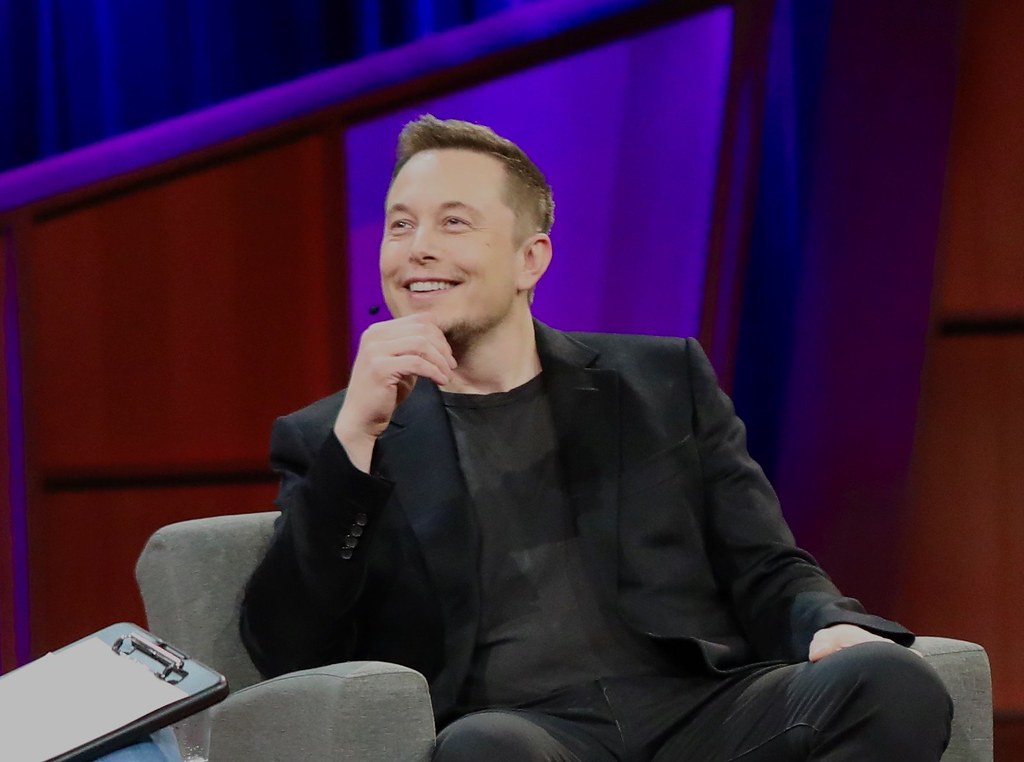
Elon Musk is a man of bold ambitions and grandiose visions in the high-stakes world of technology and car manufacturing. He is now on what may be his greatest gambit to date, of not conquest of Mars, but taking a firmer hold on Tesla, the electric car company he is in charge of. The central issue is control. Musk has made his intentions clear, in a post on X he said he was looking to gain 25 percent of the voting power in the company, which would effectively put the future of the automaker in his hands.
It is not merely a corporate game, but Musk has positioned this need to have more control as necessary in the development of Tesla. He has publicly declared that in the absence of such influence, he would rather create products not under Tesla, a thinly disguised threat to bring his visionary projects in artificial intelligence and robotics to other companies. This threat has put strong boundaries between investors and analysts, dividing the people who consider Musk essential and those who believe his demands are a dangerous game. His ownership was only slightly increased by a recent 1 billion share buy of Tesla, which highlights that the real route to his objective is in a complicated and controversial new remuneration package suggested by the board.
To a considerable number of Tesla devotees, the reasoning is straightforward and effective. According to Dan Ives, a managing director at Wedbush, Musk is Tesla and Tesla is Musk and AI is a key to the future of Tesla. In this sense, it is important to make sure that Musk is kept as engaged and empowered as possible to create such key technologies as full self-driving internally. Ives and others feel that the board and Musk can find a compromise that will please both sides, and that they have the opportunity to get a tech visionary to lead what they consider as the new age of AI technology to come to Tesla. The demand by Musk is viewed as a necessary measure to defend the innovative advantage of the company in this camp.
Nonetheless, there is a large chorus of critics who look at the situation with great trepidation. They claim that giving in to the demands of Musk is a bad precedent and it will enable a CEO who, in less than a year, sold a large portion of his shares to finance his purchase of X. Gordon Johnson, CEO of GLJ Research, presented a very straight forward evaluation and said that Musk is holding the company at ransom. Johnson feels that the demand is a scapegoat to a possible exit, and that Musk is reading the writing on the wall due to product recalls and falling profit margins. This view is shared by Craig Irwin, an analyst at Roth MKM, who reckons the demand to have greater control is an indication that Musk is evidently concerned about something, possibly an imminent confrontation with shareholders regarding the direction of the company.
The New Compensation Plan Structure
The core of this strategic drive to control is a new, epic compensation plan that will span 10 years. The package is designed in the form of a sequence of 12 tiered grants, which act as a safety deposit box and two keys are needed to open it. The former is a market capitalization benchmark, beginning with an ambitious figure of 2 trillion and increasing in 500 billion steps up to an astounding 8.5 trillion. To put it into perspective, such a peak valuation is 70 percent bigger than the 5 trillion valuation Nvidia recently reached, becoming the most valuable company in the world.

The second milestone is the achievement of one of a dozen milestones of operation. These objectives are separated into sales and profitability objectives. Four of them include cumulative sales of vehicles, humanoid robots, commercially active robotaxis, and full self-driving software subscriptions. The remaining eight are pegged to Ebitda, starting at a high of $50 billion and going up to nearly unimaginable levels of up to $400 billion. Whenever Musk manages to turn a key of valuation and a key of operation, he gets a grant of 35.312 million shares, which contributes to his existing share about 1%.
The headline-making number is the possibility that Musk will become a billion-dollar stockholder in case he hits the grand slam: not only the market cap of 8.5 trillion but also all 12 operational goals. This historic move would grant him 424 million shares, which would raise his ownership to approximately 28 percent. This would comfortably go over his stated objective of being in the mid-20s to make sure that he has enough voting controls to have a strong influence. The plan provides him with a period of ten years to achieve this corporate miracle with shares vesting in 2033 or 2035, based on the time of earning.
On a more detailed look at the architecture of the plan, however, one can find what some analysts refer to as a betwixt and between problem. Although the final objectives are apparently moonshots, many of the first ones also look quite achievable. The clouds might cover the top of this mountain, but the foothills seem to be within easy reach. This design sets a situation in which Musk may end up enjoying one of the biggest payoffs in the history of corporations without achieving the revolutionary growth that the plan apparently requires.
Aggressive Targets and Analyst Misgivings
A good number of the top-level operational objectives are outrageous. A commercial robotaxi fleet is planned to reach 1 million active vehicles, as an example. In comparison to that, Waymo, the existing industry leader, has a fleet of just 2,000. Even the lowest Ebitda range of $50 billion would force Tesla to increase its current run rate by about five times on the profitability front. This is when the company has been registering dwindling profits, and it is a herculean task in itself to reverse this trend.
Equally, the milestones of valuation are a daunting challenge. The Tesla stock is already considered by many to be highly overvalued, and its multiple of 375 times its core earnings in its auto and battery business. There is already a huge progress that has not yet been realized that has already been baked in the current valuation. Even to achieve the second-lowest market cap target of $2.5 trillion, it would require an 85 percent increase in its share price. With all these in consideration, the chances of Musk reaching the pinnacle of the plan are far-fetched.
Although the final goals are challenging, there is a very viable route that Musk can take to a beautiful payoff. He has a fair shot at accomplishing the two easiest milestones in the package the lowest valuation of $2 trillion and the least demanding level of operation of selling a cumulative total of 20 million vehicles. The board has already provided him with a running start on the valuation target, the package credits him with the appreciation of the stock as the plan was announced in September and has already increased the market cap by lifting the market cap to $1.35 trillion, which was previously at $1.12 trillion. The first box would be checked by another 48 percent rise.
This is where the special set of skills of Musk is involved. He has already demonstrated himself to be an expert at taking Tesla stock to the moon through big promises of future technology such as robotaxis, full self-driving, and robots. These promises have speculative frenzies in the past even without complete commercialization. Further announcements of forthcoming innovations would not be hard to create the hype required to keep a valuation of $2 trillion alive over the six-month duration.
The Shareholder Risks and the Most Achievable Goals
The most obvious and the most conspicuously attainable objective, though, is the operational objective of vehicle deliveries. This target is a cumulative figure across the whole history of Tesla, not a zero-point figure, according to an SEC filing. The filing reads: 20 million Tesla Vehicles Delivered: Increasing Tesla vehicles fleet of 8 million EVs, which it has today, to 20 million will increase its adjusted Ebitda. This is an indication that Tesla need not do much more than sell another 12 million cars to reach the target since it has already sold 8 million cars. With an average of approximately 2 million cars annually, Tesla would achieve this target in half a decade with a small annual increase.
This raises two important wrinkles in the plan that are highly biased towards Musk. The former is the very low vehicle sales requirement. The second and, probably, more important is a provision that safeguards his accomplishments. The SEC filing clearly says, that upon the accomplishment of a Market Capitalization Milestone or any specific Operational Milestone, it will be considered to have been accomplished forever, as regards to the eligibility of the Tranches to become Earned Shares. This implies that when Musk overvalues the stock to $2 trillion and holds it at that valuation over six months, it will be permanently fixed at that valuation regardless of what occurs to the share price later.
This poses a risky position to shareholders. Suppose that in the next ten years, Musk can realize these two low hanging objectives. He manages to hype the stock to the 2 trillion level in six months, and the company sells its 20 millionth car. But following this boom, the stock levels off and at the end of the 10 years, the stock market is pegged at a market value of 1.95 trillion, or 585 per share. Shareholders who invested when the scheme was devised would make only 5.9 percent a year-a pathetic growth stock investment.
Even in this case, Musk would get a massive windfall. Since the grants are in form of options, he receives the appreciation of the stock price at the time of granting the option (334). His gain would be 251 per share at a final price of $585. He would make 8.86 billion in a single swab multiplied by the 35.3 million shares of the first tranche. That is almost 900 million a year on average, which is almost a quarter of the compensation of other top CEOs such as Tim Cook (75 million), Satya Nadella (79 million), and Mark Zuckerberg (27.2 million).
How Musk Triumphs When Shareholders Do Not
Musk still wins even in a worst-case scenario, when the stock is below the target he had momentarily reached. In case the stock closes out the decade at 1.8 trillion, the shareholders would still receive returns slightly above inflation, but Musk would still receive a payout of 727 million dollars. This structure seems to cushion Musk against the long-term performance risk that shareholders have to take and compensate a short-term stock spike rather than long-term value creation.
The recent open-market stock buy by Musk is also a good revelation of his strategy. He made an audacious decision of spending 1 billion to buy 2.6 million shares. It was a sensational amount, but it moved the ownership needle very little, raising his ownership by only 0.1 percent, to 12.7 percent. This basic arithmetic shows how pointless his attempt to purchase his way to 25 percent control is. Tesla is currently valued at a valuation of 12.2 percent, so obtaining the extra 12.2 percent he is looking to would cost over 150 billion. The buying spree would also be bound to increase the stock price significantly, which would make the undertaking even more costly.
This economic fact explains why the new compensation package is the option that Musk prefers and possibly the only way he can achieve the kind of influence he wants. It is not just a pay plan it is a carefully designed tool of corporate domination, which is intended to use the stock of the company itself to provide the voting power that he wants. It is a big gamble, not only on the future of Tesla, but on his capacity to control its narrative, and by extension, its valuation.
This polarizing and complicated plan has become the new path that Tesla has to follow. It shows a future in which its leader might be rewarded in a fantastic way in case he or she manages to show a growth that is merely at the very bottom of the scale, and the really transformative offers, which are the ones that are making the market buzz, will be just beyond his or her reach. In their turn, shareholders are requested to underwrite a system where their long-term returns are not necessarily going to match with the huge payday of their CEO. This structure may even flatten investors as they watch the same idol that the scheme is supposed to empower turn into a disappointed and half-motivated leader in case, he does not win the big prize. Whether this is a stroke of genius to inspire a miracle, or a bad design that makes a man rich at the cost of many, time will tell in the coming years.
What the Next Chapter of Tesla Means to its Future
This is a period of uncertainty that Tesla has never faced with higher stakes. The company is at the intersection of ambitious ambition and increasing doubt, and the consequences of the demands of Musk might alter the path of the company over the next several years. It will be a matter of balancing between ambitious ambitions and achievable results that will make this strategy either the driver of the unprecedented innovation or the burden that will overstretch the investor trust. The only thing that is evident is that the choices that are made today will reverberate long after the financial charts, and will shape the culture, leadership, and long-term identity of a company that has already changed the face of the global automotive industry.