




Ford Reimagines Its EV Future Amid Billions in Losses
The transformation of the Ford Motor Company towards the production of electric vehicles is among the most ambitious ever undertaken by the company. As a legacy car producer, the Ford Motor Company is faced with the challenge of years of expertise in the production of internal combustion engine vehicles and the new challenges presented by the world of electricity in the future. Such a transformation has been very costly and complicated.
Important Forces Affecting Ford’s Transition to EVs
- High development and production costs
- Ever-changing demand from the consumers of electric vehicles
- Competition from EV-native manufacturers
- Pressure to sustain conventional car sales
- Long-term profitability issues
Contrary to pulling back, it seems that Ford is reshuffling its plans and adjusting its strategy to suit reality. It appears that the company’s original EV plan had some areas that needed tweaking. It is refreshing to note that the company is showing a realistic attitude, understanding that the journey to electric vehicles is not a linear one. It is good to see Ford prioritizing sustainability and cost-effectiveness.

1. Restructuring Ford: Creating Three Strategic Business Units
Ford Motor Company rearranged its business structure into three units for greater focus and greater transparency. Ford Blue covers the conventional gasoline and hybrid models, Ford Pro covers the commercial lines and services, and Ford Model e takes care of all electric models in development. This helps the investor clearly identify where the profits are being made versus where the investments are being placed.
Reasoning behind the Three-Division Structure of
- Isolates Costs of EV Investment
- Identifies profitable business segments
- Enhances accountability and transparency
- Facilitates focused product strategies
- Enabling the electrification plans for the
Through this restructuring, Ford Model e, as a startup inside a established business, gets reshaped. By this, Ford aims to set correct estimates regarding profitable operations of electric vehicles. Sometimes, companies tend to conceal their losses through this restructuring, so Ford, through this restructuring, avoids such acts and discloses such losses as investment losses. It gets clearer through this restructuring, and Ford gets proof of their devotion to establishing a strong electric vehicle business.

2. The Financial Reality of Ford Model e Losses
The Ford Model e has registered a substantial amount of losses as it expands its business in electric vehicles. The segment was expected to incur around $3 billion in losses in 2023, in addition to expenses incurred in 2022 and 2021 that reached $2.1 billion and $900 million, respectively. Such short-term losses have accumulated over $13 billion in less than three years.
Important Financial Figures for Model e
- Loss of $900 million in 2021
- $2.1 billion loss in 2022
- Projected $3 billion loss for 2023
- Over $13 billion cumulative losses
- continue to be a challenge. Adding more
Quarterly performance data further illustrates the difficulties facing the Company,” Ford wrote in the Austin case. In the third quarter, the losses for the model e were $1.4 billion with $1.8 billion of revenue, with margins being severely negative.These losses indicate the significant investments being made in battery technology, plants, and engineering development.The Ford management has reiterated in the case that the above losses are investments, not failures of operation.
3. Ford’s EV Startup Mindset and Long-Term Vision
The Ford leadership has always posited Model e as an electric vehicle startup that is incorporated into a global automaker. This was reinforced by the company’s Chief Financial Officer John Lawler, who noted that electric vehicle startups are normally incurring losses as they scale, learn, and gain market presence. This approach puts them in line with the norm among automakers.
Why Ford Classifies its Model e as a Startup
- EV platforms demand new skills
- Battery supply chains have many more twists
- Scale has to be achieved to minimize costs per unit
- A market share has to be developed over time
- Learning Curve Causes Initial Inefficiencies
This start-up approach gives Ford the flexibility to focus on long-term competitiveness instead of short-term profitability. The firm believes that the current losses are investment losses. By incurring this cost at this time, the company can be better positioned for long-term profitability in the EV market in the second half of this decade.
4. Strategic Change for More Accessible and Compact EVs
Market feedback prompted a change in the EV plans of Ford, and this company is shifting its EV lineup to include smaller, more affordable vehicles. Some of their bigger electric vehicles have had their development plans reduced, while their development investments have been switched to more cost-effective platforms. This is due to their buyers holding back purchases of costly electric vehicles.
Factors Leading to a Shift in Ford’s Product Strategy
- Falling demand for the bigger EV models
- Consumer affordability issues
- Cost of batteries and materials
- Lower adoption rates of electric vehicles
- Increased desire for hybrids
Such an adjustment represents a major rebalancing rather than a step backward. Ford is aiming to produce cars that will meet the customers where they are rather than where they were projected to go. Smaller EVs and extended range solutions make it more feasible to get customers into an EV while retaining usability.
5. The F-150 Lightning: An Uncertain Future
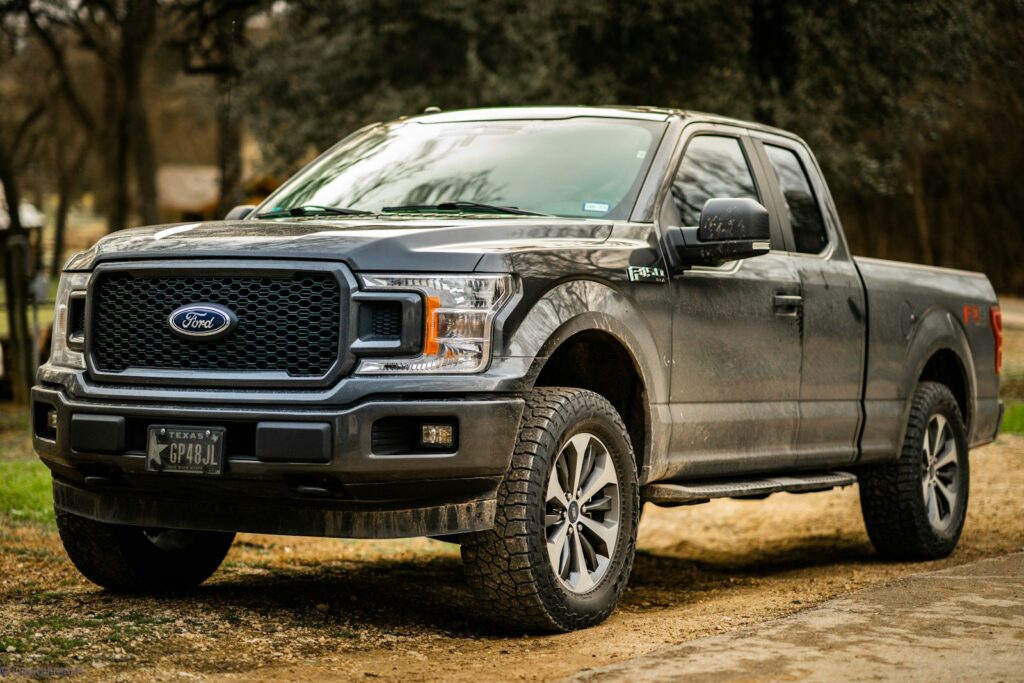
One such product, which finds itself at the epicenter of all this strategic reassessment, is the F-150 Lightning, Ford’s electric pickup truck lineup. Ford is now assessing the possibility of turning the F-150 Lightning into an extended-range electric vehicle powered by an auxiliary gas generator. Ford executives also consider suspending the F-150 Lightning lineup at this point in time.
Variables That Influence F-150 Lightning Outputs
- High Production Costs
- Reducing the demand for pickup electric vehicles
- Supply chain disruptions
- Aluminum shortages
Although there was a lot of interest in Lightning at first, Lightning sales have been falling steadily. This has been further exacerbated by production cuts due to supply chain-related issues in a scenario that has seen many twists in the fate of this model introduction by Ford.

6. Hybrid Vehicles As Ford’s Bridge Strategy
Hybrids have turned out to be a key positive point in the Ford lineup. Although the demand in the EV sector started to decline, the sales of hybrid vehicles proceeded to increase. It is currently Ford’s plan to see a combined 50% sales contribution from Hybrids/Range EVs and EVs by the end of 2030, compared with the existing 17%.
Why Hybrids Matter to Ford’s Future
- Reduce adoption barriers for consumers
- Less range anxiety
- More affordability
- Strong market acceptance
This hybrid-dominating strategy forms a link between classic vehicles and the entirely electric ones. This will help the firm continue cutting emissions and, simultaneously, remain profitable and meet the requirements demanded by its customers. The hybrid vehicles, on the other hand, help finance the development of electric vehicles without straining the firm’s finances.
7. External Challenges Affecting the Demand for EVs from
There have been some external pressures on Ford’s EV unit. One of the main pressures is that the federal tax credit expired, resulting in a significant fall in EV sales. Ford Motor Co. saw a significant fall in EV sales after its record third quarter, which justified its concerns about the sensitivity of EV sales to incentives.
External Pressures Confronting Ford EVs
- Removal of National Tax Incentives
- Rising interest rates
- High cost of battery materials
- Economic uncertainty
- Lower consumer confidence
On the contrary, the trend in hybrid sales is strengthening, which is an affirmation of the new strategy being adopted by the company. Battery prices are still very high, and affordability issues have become a cause for concern among potential consumers.

8. External Challenges Impacting Ford’s EV Demand
Ford’s strategic shift demands radical changes in the company’s production infrastructure. The company has forecast that it will take a hit of around $19.5 billion in charges, which includes a write-off of $8.5 billion in connection with Model e. Various electric vehicle-focused facilities are being redeployed for the production of gas-powered or hybrid vehicles.
Major Manufacturing Adjustments
- Tennessee EV Center repurposed
- Ohio plant retooled for hybrids
- Workforce redeployment plans
- EV production delays
- Capital reallocation
These measures come with a price tag, however, and are imperative for the company to make its production meet the demand as well as avoid potential risks in the long run. The utilization of the plants helps the firm to stick to its workforce and productive capacity, accommodating the slower adoption rate of EVs than expected.

9. Profitable Divisions for Ford’s EV Strategy
Although Model e incurs severe losses, the legacy Ford divisions perform well. Ford Blue is forecasted to make EBIT of $7 billion, while Ford Pro is anticipated to provide a contribution of around $6 billion. The two successful business segments essentially fund Ford’s EV initiatives.
There are analysts warning Ford to deliver what consumers desire in terms of electric vehicles in the coming years, and others commending Ford for being so prudent in this new venture. Ford’s change and evolution may be a delicate dance between being innovative and being practical at the same time.