



Kyle Busch Proposes ‘Idiot Award’ for SHR’s Costly Penalty
The truth is, in the world of NASCAR, success is never happenstance. Every lap, every adjustment, and every element of a race car is the result of untold hours of planning, testing, and high-pressure decision-making. Organisations function within a context where margins of minute improvement can be the difference between success and obscurity. These efforts to optimize performance often leave the organisation in a constant mental struggle between innovation and regulatory compliance.
The more modern era of the sport has brought all of this into a state of even heightened tension. With a stricter regulatory system and standardized parts on which parity can be achieved, the margin in which speed can be optimized continues to shrink. But when these margins are stretched cautiously, the end product can be brilliant engineering. But when they are stretched recklessly, the ramifications can be dire.
This reality became apparent after one of the toughest punishments doled out in recent memory involving Stewart-Haas Racing. An issue that could have been passed off as a simple technicality quickly became something that would turn the season on its head. It also prompted perhaps the honest reaction the garage has heard in several years, courtesy of a driver who has never been afraid to speak his mind.
1. The Thin Line Between Innovation and Violation
One of the things that has always been part of the NASCAR culture is pushing the limits. NASCAR racing teams have been encouraged to be creative, come up with ways to read the racing rules to a T, including all exceptions, in a bid to find some loophole, no matter how minute.
Issues will arise if this creativity dares to turn into an assumption. The distinction between an approved change and an unlawful change may in some cases boil down to one decision made while operating in conditions of time constraint. If teams feel they are wrong about where this line is placed, they face serious repercussions.
The Stewart-Haas Racing incident illustrated how quickly that gap had become intolerable. What was probably meant to be a helpful measure ended up in illegal territory, making what could have been considered strictly technical into something definitive.
2. The Inspection That Changed Everything
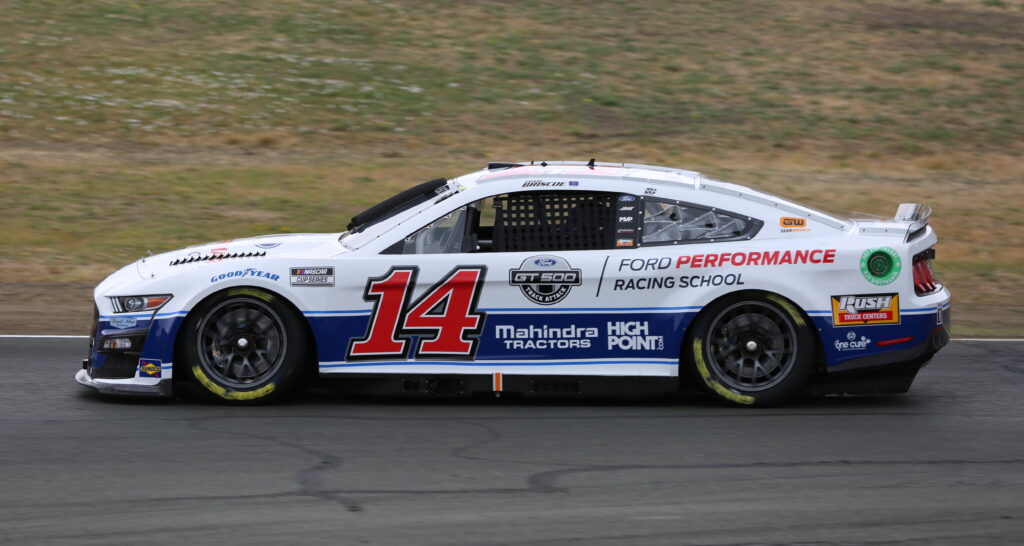
The events unfolded as Chase Briscoe’s No. 14 vehicle was chosen for a scru- tiny inspection. Although an inspection after the completion of the NASCAR event is a standard practice, the results of those inspections can be highly galloping. Most of the time, the results are just tweaks. However, in this scenario, the inspection led officials down a different path altogether. Something that could have been considered routine was now left with a ditch to climb.
Inspection Turning points
- Post-race inspection selection
- Regular review process
- Unforeseen violation of rules
- Discovery of counterfeit components
- L3 Infraction Categor
- Enforcing escalation trigger
The situation escalated when NASCAR realized that the problem was not a simple mistake in compliance. The triggering of enforcement actions was a result of a counterfeit part that was detected. This was a process reserved for faults of critical nature. The error was under L3. This was a category that indicated serious or inexplicable non-compliance. This eliminated any possibility of a mistake or misunderstanding. An occurrence of the fault set off a series of events that changed the season of the team. The inspection was a point where ambition and regulatory powers clashed.

3. The Penalty That Struck All Sides of the Team
The effects of the decision had far-reaching and dire consequences for the No. 14 team. The team had lost a mind-boggling number of driver and owner points, undoing all the good work gained in such a long time. In fact, the championship structure was based on accumulation and consistency, and for the No. 14 team, it was a disaster.
Playoff implications added fuel to the fire. With precious playoff points taken away, the chances of redemption were all but gone. For a driver struggling to qualify for the playoffs, this penalty shut the door.
Additional problems arose due to financial punishments. Large sums of money deducted as fines, coupled with a suspension for key management, destabilized not only racing events but also internal organization.
4. Public Display and a Message to the Garage
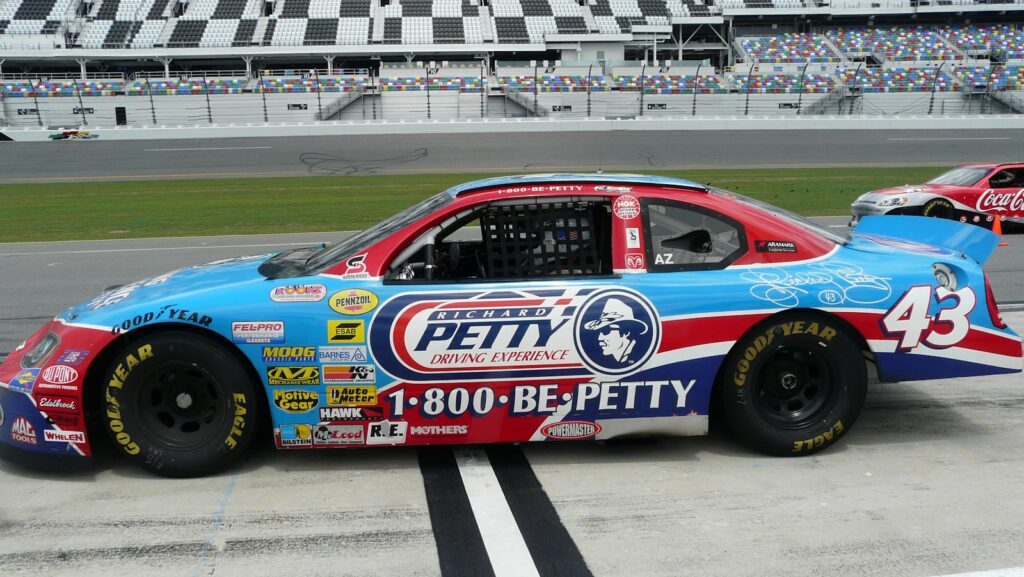
One of the most astonishing parts of this event was the fact that NASCAR chose to showcase the illegal component. It was indicative of the fact that it marked the transition towards being transparent and holding someone accountable.
The device itself seemed fairly benign, although its implications clearly aren’t. This is because the device violates the single-source policy with regard to car parts and is in contravention of their car platform. The single-source policy is in place to ensure fairness and prevent cost escalation and grey area R&D.
By putting the piece in full display, NASCAR made it unmistakably clear to all teams: The policy will be enforced strictly, and it will be visible for all to see.
5. Kyle Busch’s Reaction Cut Through the Noise
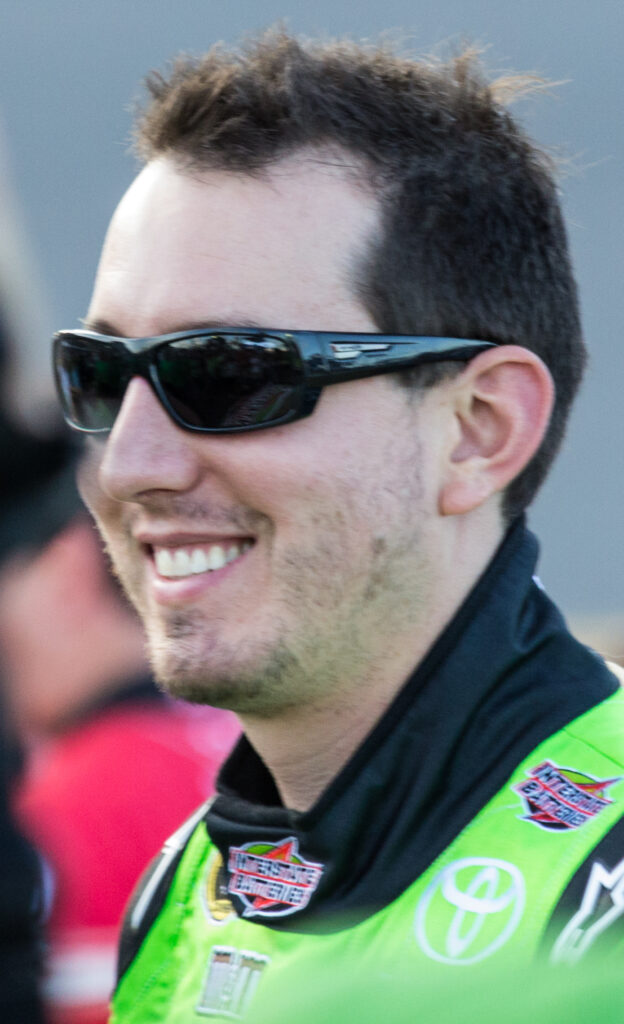
Kyle Busch’s answer was appreciated because it went back to basics. It did not carry on about details or speak in terms of language used in announcements. It spoke of judgment.
His now-famous remark, where he expressed the wish for an “idiot award,” summed up the frustration that had only been expressed behind closed doors at the garage. The trouble wasn’t necessarily that the rule had been violated, it’s that it seemed like it wasn’t even necessary.
Busch pointed out how easily the situation could have been avoided. This was especially true for a community where communication between teams was prevalent. It was simple; all it needed was a conversation to avoid a massive penalty.

6. Risk vs. Reward in Modern NASCAR
Every game-related choice comes with a consideration of risk versus reward. In this particular scenario, there existed a huge imbalance within both. The risk versus the possible advantage related to air resistance was disproportionate.
Busch’s words echoed the importance of that. The cost of the crime far outweighed any possible benefit the event might have provided. Points, money, and integrity have been lost for something that gave very little in return.
This one-sided dynamic was precisely the frustrating part of the scenario. This had less to do with a calculated move that went south and more about a mistake that snowballed into a season-changing moment.
7. A Wider Reflection on Garage Culture
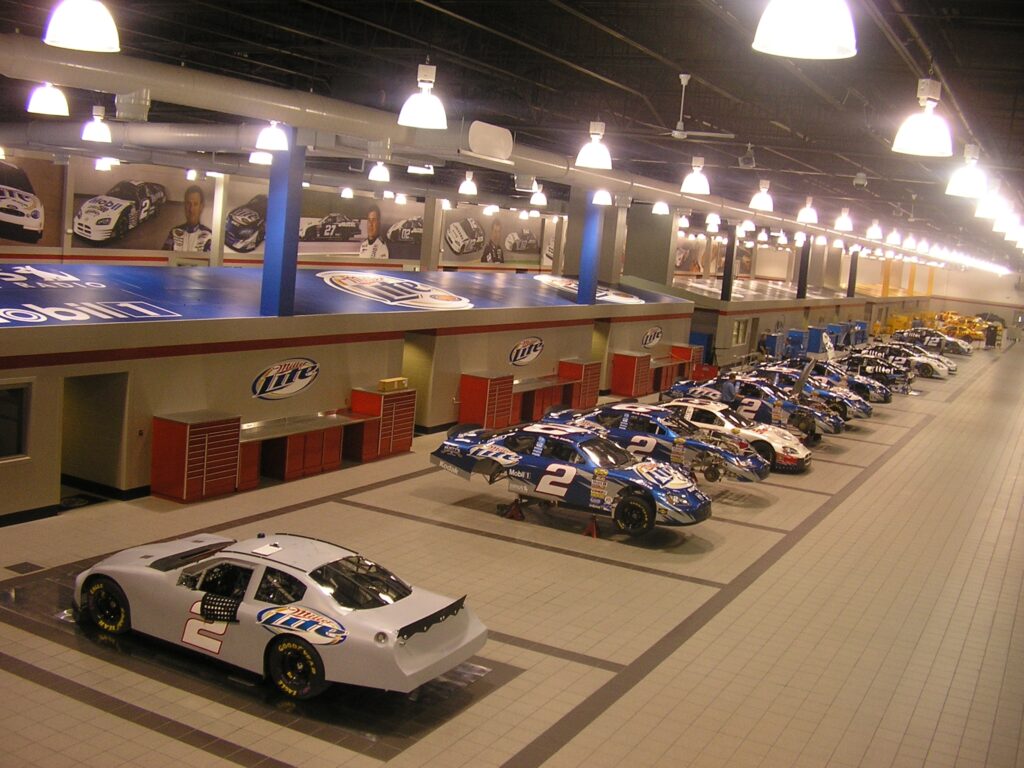
Although the punishment was leveled against a single team, the debate was soon broadened to encompass the entirety of the garage, or at least, the garage as it relates to experimentation. Busch freely admitted a truth that many people in NASCAR likely already knew.
Teams are always trying out boundaries, tweaking elements, configurations, and interpretations. It’s a matter of the degree of care in these experiments.
The Stewart-Haas Racing scenario became one of those examples of how things fall apart when the process fails. This was not simply an incident and definitely a warning signal.
8. Transparency as a Deterrent
Veteran figures in the world of racing generally approved of the actions taken by NASCAR with regard to dealing with the issue. The fact is that making them accountable in public was necessary in order to keep their sport free from the negative influences of cheating. In other words, making them accountable in a public manner demonstrates to them that cheating will be made public as well. This takes the consequences out of the backroom agreements. The blame is right out in the open.
Impact of Transparency
- Public accountability measures
- Public accountability
- The enforcement of open rules
- Improved competitive integrity
- Increased Team Focus
- Risk Deterrent Effect
- Fan trust reinforcement
Through the openness of the violation, NASCAR can encourage a team to think twice about violating the rules. The addition of the presence of the spotlight in the violation carries more weight than just a fine and a suspension. The openness can also serve a purpose for the fans, who can see more clarity into the interpretation of the rules and the enforcement of the rules.Fans can also build confidence in the enforcement of the rules by understanding the rationale behind it.
9. Internal Questions for Stewart-Haas Racing
For Stewart-Haas Racing, the incident led them into deeper internal analysis. The penalty led them into questions that went further than the initial infraction. Questions of communication, internal testing, and governance became part of the picture. Calling it an issue of quality control could explain how the mistake happened but not why. In top-level racing, one must practice all forms of discipline even in the smallest details.
Domains of Internal Review
- An internal Quality control processes
- Communication gaps within the team
- Oversight accountability systems
- The International Enterprise
- Architecture Education
- Risk management protocols
The scale of the fallout indicates that this is not simply an isolated incident. Micro-failures in such an elite setting could snowball rather quickly. Stewart-Haas Racing is faced with walking this thin line in terms of recovery and assessment. The rehabilitation of momentum goes well beyond simply putting this penalty in the rearview mirror. This is also an opportunity to re-evaluate and revamp internal procedures that led to such a mistake.
10. A Lesson That Will Linger
NASCAR will remember this incident in its recent past for a long period of time. It just goes to show that sound judgment is just as important as creativity. Kyle Busch’s candid description struck a chord, though, in that it is a reality the garage knows all too well. Not all an advantage, particularly at such a high cost for failure.
In the pursuit of better performance, this particular period at Tottenham stands out as a warning. Just because the players could move quicker does not mean the club had to be the ones that the league learns from.