

The Unforeseen Twist: Why a Legal Battle Forged the Iconic ‘911’ Name for Porsche’s Legendary Sports Car
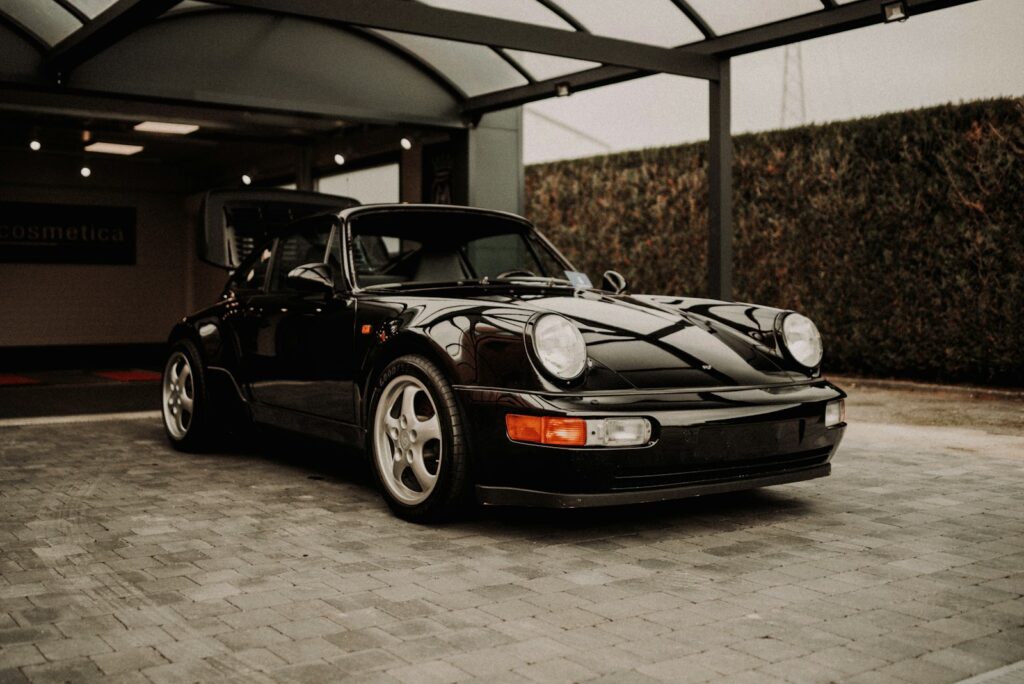
There are few names in the proud history of sports cars that can carry with them the reverence and the pure passion that the Porsche 911 has. This masterpiece of engineering and design has attracted fans all over the world and sold more than a million units in its numerous variations in more than seventy years. Its history is not only the history of volume, but of unsurpassed quality and performance, with Porsche boasting that more than 70% of all the 911s ever manufactured are still on the road today. The racing tracks have also been conquered by this legendary machine that has won more than half of the 30,000 races won by the whole Porsche brand, which is a testimony to its mighty power.
With this legendary and glorified life, one can only imagine that it is a true surprise to many that this iconic car nearly had a different name altogether. Even the name that today is associated with the high-performance sports cars, namely, 911, was not the original plan of Porsche. In fact, immediately before its grand debut, a chain of unexpected incidents and a quite sharp judicial objection permanently changed the history of its naming and established the now-notorious numerical name in the annals of automotive history.
We shall go back to the year 1963, which was a year full of expectation at the Zuffen hausen plant of Porsche. It was now time to launch a new revolutionary car, which was to replace the old 356 model of the company. This new generation car, which was internally known as the Porsche 901, was a major step ahead, and was the brainchild of the genius Ferdinand “Butzi” Porsche in 1959. He had a vision; to create a car that was more powerful, larger and provided a higher degree of comfort than its predecessor, a real evolution of the brand.
The Naming Crisis and the Birth of 911
The team was very excited and was carefully organizing its splashy debut at the 1963 Frankfurt International Motor Show. The design was highly developed and the 901 name was carefully incorporated in all parts of the car presentation and further branding. This was not just a place holder, this was the name, which was to be embossed by a golden coating of paint on many surfaces, such as the dashboard and the back of the car. These letters had already been manufactured. So, they had the ‘9.’ They possessed the number one, as the video by Porsche itself explains, and it indicates how serious they were about the original name. The metallic letters were already punched out that were to be placed on the rear of the car.
But just as the company was about to launch its business, a bombshell came in the shape of a friendly yet separate letter by another carmaker: Peugeot. This letter brought a shocking, and then, devastating revelation: it seemed that Peugeot had legal naming rights in France on all three-figure numerical car model names that had a zero in the middle. Naming like 802, 703 and most importantly 901, were according to Peugeot, out of the legal scope of Porsche.
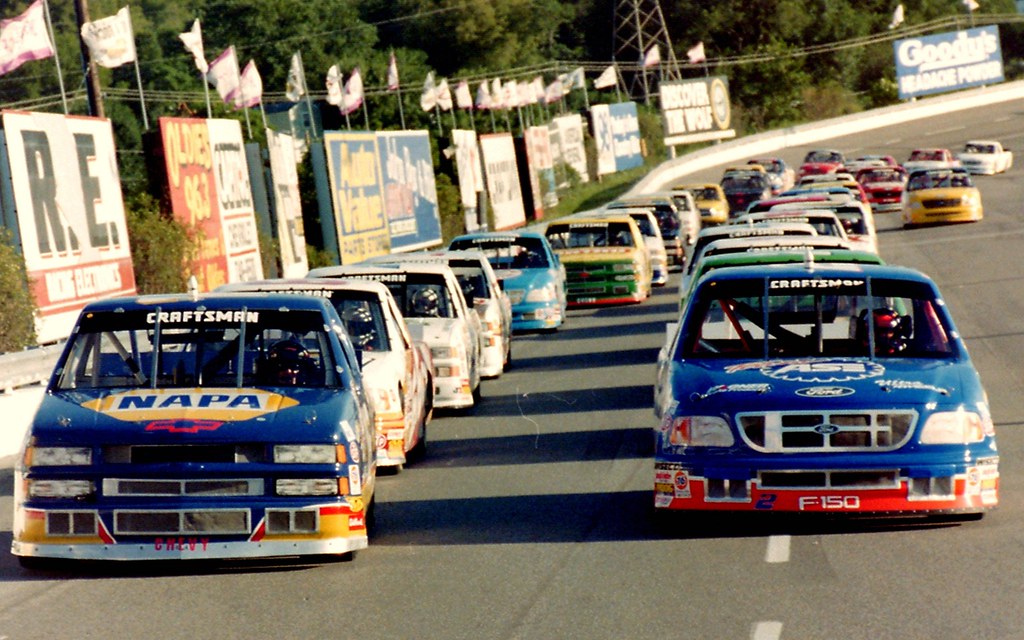
This legal battle of model names being too close together was even at the time not a totally new experience in the highly competitive car industry. Examples given in the context include the 2011 lawsuit of Ford against Ferrari on the F150 name of its race car on the basis of similarity to the popular F-150 truck of Ford. Porsche had done its research well to make sure that there was no other vehicle in the market that bore the 901 commercial name. Their fortune, however, failed them not through any direct coincidence, but by reason of a technical branding regulation, a local legislation which specially safeguarded the numerical sequencing of Peugeot in France. The principle of the middle zero: a three-digit number containing a zero in the middle is claimed by Peugeot. They are the legal owners of all such number sequences in France, Porsche clarified, and even a name such as 910 would have infringed copyright and trademark protection legislation in France.
This brewing legal challenge came at the worst possible time as the German automaker termed it. The entire branding and marketing collateral, including the famous logo, pamphlets, and posters, with the now-dropped 901 name, were all ready. A sense of optimism and excitement bordering almost on euphoria had been blowing through the Zuffen hausen plant, when the bombshell of the numerical copyright shield of Peugeot struck, like a wrecking ball, and threatened to derail the whole launch.
However, out of this crisis at the eleventh hour came one of the real strokes of genius, which was the invention of the chief designer himself, Ferdinand Alexander Porsche, fondly called F. A. His brilliant and very simple solution saved the day. He just doubles the one in the name. What a symbolic gesture. The zero becomes a one. The 901 becomes the 911. And the 911 is a legend, Porsche recounted eloquently. It was a time of great resourcefulness, and it was a great challenge that was converted into the basis of a long-standing icon. Reflectively, there was also an unplanned, but a great phonetic benefit: the name of nine eleven is much easier to say than the relatively dull name of nine oh one, an accidental bonus that squarely fell in the favor of Porsche.
Early Engineering and Design Foundations (1964-1967)
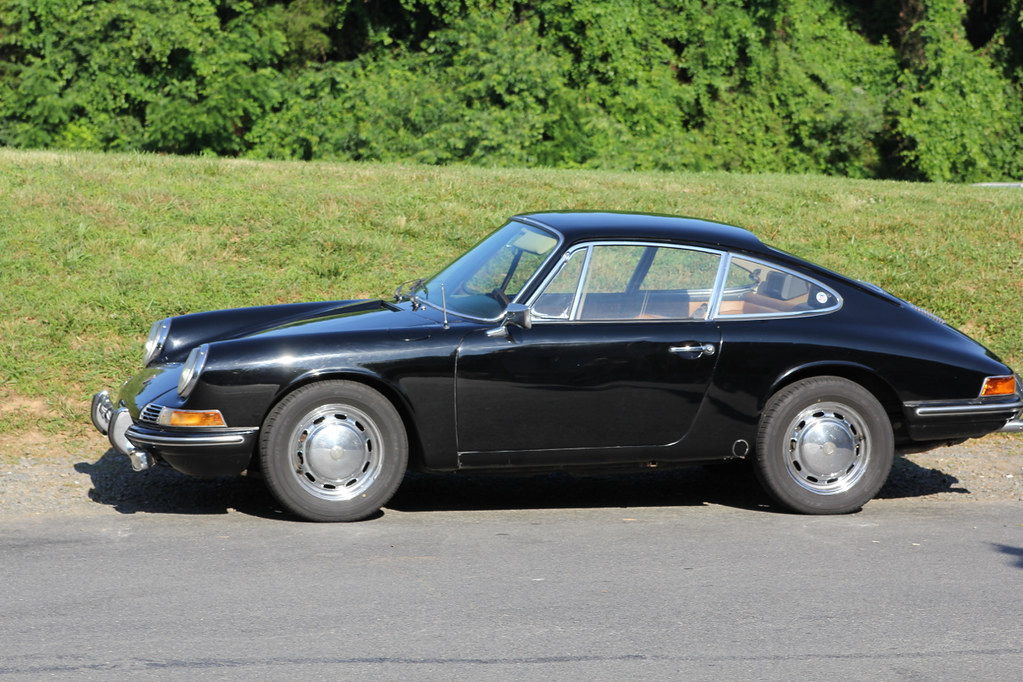
The name crisis was avoided, and the new Porsche 911 was produced in September 1964. The first models were driven by a rear-mounted 130 PS (96 kW; 128 hp) Type 901/01 flat-6 engine, in the unusual boxer layout, as used in its predecessor, the 356. This engine was an air-cooled 1,991 cc (2.0 L), which is quite large in comparison with the four-cylinder 1,582 cc (1.6 L) engine of the 356. The original body design was a 2+2 coupe, but the rear seat was provisional, which is indicative of its sports car orientation. It also had a performance ambition as a four or five-speed Type 901 manual transmission was an option.
The styling that has become easily identifiable was mostly written by Ferdinand “Butzi” Porsche. His early drawings in 1959 formed the basis and he particularly came up with the front and rear design on a prototype T7 body, which was built on a stretched 356B Karmann Hardtop. Erwin Komenda, the head of the development team of the T6 body to replace the T5 in 1962, was also instrumental in ensuring a smooth transition of the T7 style to the new engine, steering, transaxle, and suspension systems, creating the recognizable silhouette that we have today.
In 1965, the end of 356 production was reached, but there remained a market in the US and elsewhere in the world that wanted a four-cylinder Porsche. To satisfy this need, Porsche came up with 912 the same year as a direct replacement. It cleverly used a de-tuned variant of the four-cylinder, 1,582 cc (1.6 L), 90 PS (66 kW; 89 hp) boxer four Type 616/36 engine in the 911 bodywork. Combined with a Type 901 four-speed manual (five-speed optional), the 912 offered a relatively affordable gateway to the Porsche experience.
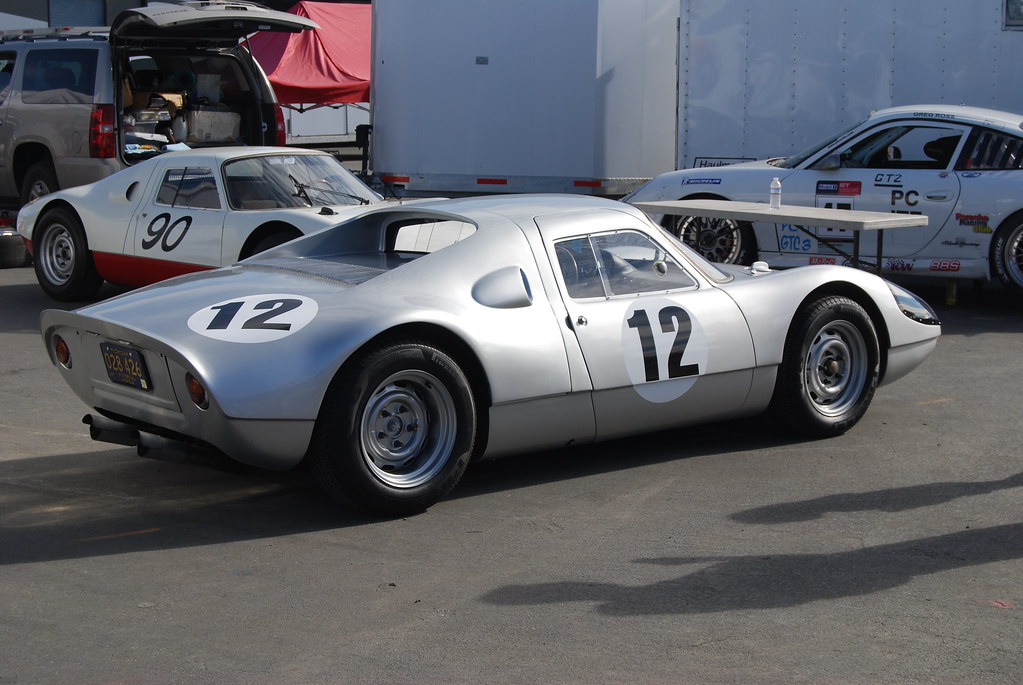
Innovation and performance remained on the positive course. In 1966, Porsche introduced the more robust 911S that had its Type 901/02 engine with a healthy power output of 160 PS (118 kW; 158 hp). The model was also the first to feature the now-famous forged aluminum alloy wheels of Fuchsfelge, in their five-spoke design. At the same time, the engine of the 911 was actively worked on motorsport, becoming the Type 901/20 with a higher power of 210 PS (154 kW; 207 hp), which was used in the mid-engine 904 and 906 race cars. Subsequent versions of the 906 and 910 did obtain a fuel-injected Type 901/21, with power increased to 220 PS (162 kW; 217 hp), which heralded the 911 racing background.
In August 1967 the A series went into production, with important safety and performance improvements, including dual circuits of brakes and wider (5.5J-15) wheels, with Pirelli Cinturato tires still. The gasoline-powered heater that was previously standard was an optional feature, a change in the features. It was also a year of much awaited introduction of the Targa version. The Targa, which is also known as the plate in Italian, had a unique roll bar that was made of stainless steel. Automakers were influenced by this design choice because they feared that the rollover safety standards that were proposed by the US National Highway Traffic Safety Administration (NHTSA) could make it challenging to sell fully open convertibles in the US, which is a highly profitable market.
Expanding Innovation, Growing Variants (1967-1969)
The Targa was also available as a road-going car with a removable roof panel and removable plastic rear window, although a fixed glass version was subsequently made available since 1968. In 1967, Porsche expanded the 911 range again, introducing the 911T with its Type 901/03 engine with 110 PS (81 kW; 110 hp). The current 130 PS (96 kW; 128 hp) model was renamed as the 911L, now powered by the Type 901/06 engine, with ventilated front disc brakes, first introduced on the 911S. To the extreme racing fans, the ultralight 911R was introduced in small quantities, and only 20 cars were produced. This race car, with a 901/22 engine, produced 210 PS (154 kW; 207 hp) and had thin fiberglass reinforced plastic doors, magnesium crankcase, and twin overhead camshafts, emphasizing the fact that Porsche was a company that valued competition.
Another interesting new choice that Porsche tried in the fall of 1967 was the clutch less semi-automatic Sportomatic. This new system was an integrated system that incorporated a torque converter, an automatic clutch and the usual four-speed transmission that was intended to provide a new driving experience. Nevertheless, the Sportomatic was not to last long and in fact, it was canceled after the 1980 model year, partially because it lost one of its forward gears, which left it with a three-speed unit.
The ongoing development of the 911 core mechanics was ongoing. The B series was introduced in August 1968, and it substituted the 911L with the more sophisticated 911E, which had fuel injection. The 911E was also advantaged with broader tires on 6J-15 wheels, which increased the grip and stance. This model was in production until July 1969 when it was replaced by another series of improvement.
In August 1969, the C series was launched with a major improvement of an increased 2.2-litre engine (84 mm bore x 66 mm stroke). Most importantly, all 911 and 912 models had a wheelbase that was raised to 2,211-2,268 mm (87.0-89.3 in). This was a strategic change that was a direct solution to the slightly nervous handling of the car at the limit, and it shows that Porsche is committed to constant improvement of the driving experience. The length of the car did not change, although the length of the wheelbase was longer since the rear wheels were merely shifted further back in the existing bodywork. A characteristic of the modern performance, fuel injection, came to the 911S (901/10 engine) and to a new middle model, the 911E (901/09 engine).
The 2.2 and 2.4-Litre Evolutions (1970-1973)
Between August 1970 and July 1971, the D series was made, with the 2.2-litre 911E (Type 911/01 engine) having a power output of 155 PS (114 kW; 153 hp) at 6,200 rpm and the 911S (Type 911/02) having 180 PS (132 kW; 178 hp) at 6,500 rpm. The 911E was also reported to be faster in acceleration to 160 km/h (99 mph) than the S, despite having lower peak power, and with this performance, a strong performance case was made.
The 1972-1973 model years (August 1971 to July 1972 production) saw the introduction of a new larger 2,341 cc (2.3 L) engine, usually known as the 2.4 L engine, although its displacement was actually nearer to 2.3 liters. The 911E (Type 911/52 engine) and the 911S (Type 911/53) both used Bosch mechanical fuel injection (MFI) in all markets. In 1972 the 911T (Type 911/57) was still in the carbureted form, with the exception of the US and a few Asian markets, which also had MFI (Type 911/51 engine), raising the power to 140 hp (130 hp in European models), giving it the nickname 911T/E.
Along with these power and torque increases, the 2.4-litre cars were also equipped with a newer and stronger transmission, which was referred to as the Porsche type number 915. This strong gearbox, which was based directly on the 908-race car, made the shift much better by foregoing the dogleg first gear layout of the 901 transmissions in favor of a more familiar H pattern. Another unusual though brief design modification in the E series was the removal of the dry sump oil tank behind the right rear wheel and placing it in front of it, an effort to move the center of gravity slightly forward to enhance handling. This left it with a strange oil filler behind the right-side door, with an additional oil filler/inspection flap on the rear wing, which gave it its catchy name: “Oil Klapper,” “Olklappe” or “Vierte Tur (4th door). Such novelty, however, was problematic, and many complaints were made by gas-station attendants who accidentally filled the gasoline into the oil tank.
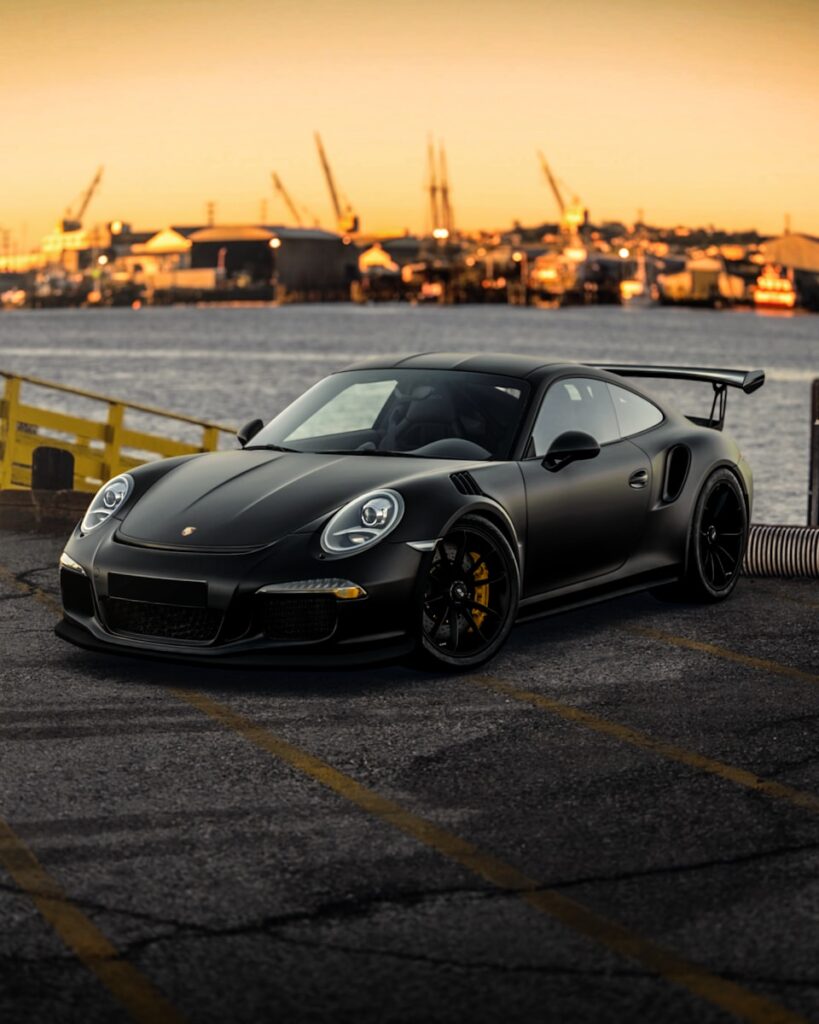
This was quickly corrected with the F series, which was made between August 1972 and July 1973, with the oil tank returned to its original, safer position behind the wheel. In January 1973, the US 911Ts were again improved, with the new K-Jetronic CIS (Continuous Fuel Injection) system of Bosch replacing the Type 911/91 engine. At the same time, 911S models received a minor but successful small spoiler in front bumper, which was introduced to enhance stability at high speed. These vehicles had an optimum weight of 1,050 kg (2,310 lb.), which indicates that Porsche continues to seek the best power-to-weight ratios.
In all these initial stages, Porsche was determined to continue racing. This commitment was demonstrated by the 911 ST, which was made in limited quantities between 1970 and 1971 with the express purpose of racing. They had engines of 1,987 cc (2.0 L) or 2,404 cc (2.4 L) capacity and could produce a very impressive 270 PS (200 kW; 270 hp) at 8,000 rpm. The 911 STs, reduced to 960 kg (2,120 lb.) in weight, were very successful in the track, especially at the Daytona 6 Hours, the Sebring 12 Hours, the 1000 km Nurburgring and the difficult Targa Florio. This motorsport history solidly placed the 911 not only as a luxurious sports car, but a serious competitor, a legacy to its original engineering and the versatility that would mark its legendary history over the decades to come. It was a legal requirement that gave the car its unusual name, which ironically introduced a car that would be adored worldwide, the testament to its timeless design and the innovative spirit that never stopped pushing its limits in these critical formative years.
The Carrera RS and Racing Dominance (1972-1974)
With the initial years of the Porsche 911 firmly in place with its engineering capabilities and racing potential, the early 1970s were the beginning of a new age of specialization and performance, and the legendary Carrera RS led the way. This model was a successful revival of the “Carrera” name, which has a long history in motorsport, as Porsche had won the Carrera Panamericana races, a long-distance motorsport event, with the 356 Carrera.
The Carrera RS, abbreviated Rennsport (German: Rennsport) was not just a simple upgrading of the Carrera, it was a custom-designed model that had to be homologated to the FIA Group 4 category. The Carrera 2.7 RS was a track refined beast compared to a normal 911S. It had a higher 2,687 cc engine, carefully adjusted to release 210 PS (154 kW; 207 hp) with a complex Bosch (Kugel Fischer) mechanical fuel injection system. It had an entirely revised and stiffened chassis, larger brakes, wider rear wheels and fenders, with the wider rear wheels and fenders designed specifically to fit the 185/70VR15 and 215/60VR15 tires required in the front and rear respectively. The iconic visual representation was the ducktail rear spoiler that immediately communicated its performance ambitions.
The Porsche RS was available in two versions, and the priorities of the enthusiasts were considered. The RS Touring model, which nevertheless was powerful, weighed 1,075 kg (2,370 lb). To those who require the best of the best in lightweight performance, the Sport Lightweight version reduced this weight by about 100 kg (220 lb), by using thin-gauge steel in some body shell parts and thinner glass. Overall, 1,580 pieces of the Carrera 2.7 RS were made, which made it one of the most sought-after collector items and a legitimate racing car. To have an even more extreme track experience, Porsche created 49 Carrera RSR cars, with 2,808 cc (2.8 L) engines with an impressive 300 PS (221 kW; 296 hp) and pushed the limits of what a 911 could do on the circuit.
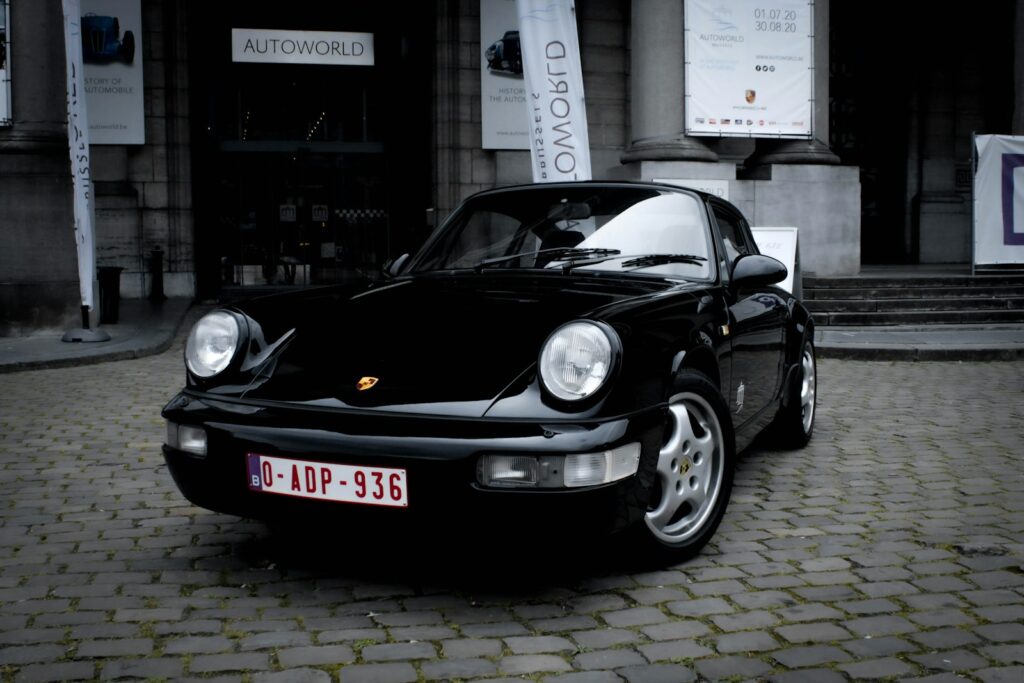
The 1974 year was a turning point in the history of the 911 line, as it introduced what is commonly known among enthusiasts as the G-series, although it is a popular myth that all 911s of 1974-1989 are now considered the G-series, with H, J and K series following in 1974, 1979 and 1982 respectively. This was a time that witnessed many major changes, which were mainly influenced by the changing legislative demands of impact safety and emissions in different markets of the world, especially in the United States. Among the main improvements was the engine size, which was raised to 2,687 cc, which gave the engine more torque throughout the range. New impact bumpers were smoothly incorporated to meet the low-speed protection requirements and the use of K-Jetronic CIS Bosch fuel injection was made standard in two of the three models: the 911 and 911S.
International and 2.7-Litre Variants (1974-1976) Expansion
These 911 and 911S models, which still featured the narrow rear arches that characterized the earlier 2.4-liter cars, now had the powerful 2.7-liter engine. The regular 911 attained 150 PS (110 kW; 148 hp) and the 911S had a strong 175 PS (129 kW; 173 hp). In the 1976 model year, the standard 911 was upgraded to 165 PS (121 kW; 163 hp) and the power difference between the two 911 models was reduced to just 10 hp, both using the long-lasting K-Jetronic 2.7-liter engine. In the course of its existence, the 911S 2.7 was able to retain its 175 PS rating.
North American markets were given the Carrera 2.7 CIS which was powered by the 175 PS 911S engine whereas other markets around the world were given the more spirited Carrera 2.7 MFI. This was based on the high-performance 210 PS (154 kW; 207 hp) RS 911/83 engine, including the Bosch mechanical fuel injection pump of the legendary 1973 Carrera RS, and made it mechanically identical to its famous predecessor. These 2.7 MFI models were manufactured between 1974 and 1976 and were an unadulterated racing experience to a wider audience. The Carrera 2.7 models initially had the same characteristic welded-on rear RS flares and later changed to the SC-stamped rear flares in the middle of the 1974 production year. The Coupes of the Carrera 2.7 weighed 1,075 kg (2,370 lb.), the same as the 1973 Carrera RS Touring.
Spoilers remained an important part of the 911 aerodynamics and design. The 1974 model year Carrera 2.7 came with the famous ducktail rear spoiler that was standard in the North American markets. In other regions it was still available, with a notable exception of Germany, where the ducktail had been controversially banned by the TUV road homologation department. This regulatory limit led to the launch of the more aggressive whale tail rear spoiler that would soon be an option on the 1974-75 Carrera 2.7 models and would feature prominently on the new 930 Turbo. Another 113 limited-run, 1976 Carrera 2.7 MFI coupe was commissioned by the German market, still with the powerful 911/83 RS engine, and an extra 20 narrow-bodied 1976 Carrera MFI 2.7 Targas were ordered by the Belgian Gendarmerie, the last of the 911s to be mechanically fuel-injected by Porsche using the highly regarded 1973 RS engine.
Another short-lived revival of the four-cylinder Porsche was the introduction of the 912E in the 1976 model year. This model was only made to the U.S. market and was a four-cylinder version of the 911, similar to its 912 predecessor which had been out of production since 1969. It used the I-series chassis with the help of the well-known Volkswagen 2.0-liter engine that was also used in the Porsche 914 in the period between 1973 and 1975. The 912E was replaced by the front engine Porsche 924 as the 1977 model year, and the experiment with the four-cylinder 911-bodied Porsche ended with 2,099 units produced.
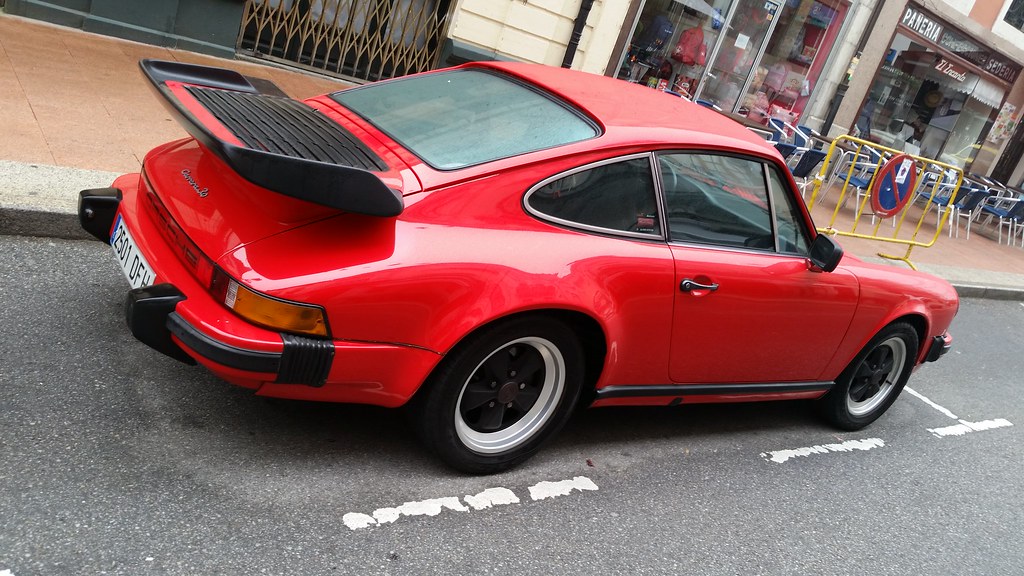
At the same time, Porsche introduced the 1976 model year Carrera 3.0, which was sold in all markets except North America. This generation introduced broad rear flares, the choice of the iconic whale tail spoiler and a plethora of other luxury choices that further solidified the 911. The engine that was used to power the Carrera 3.0 was a variation of the powerful 930 Turbo 2994 cc engine, but without the turbocharger. This engine, dubbed the 930/02, with K-Jetronic CIS, produced a strong 200 PS (147 kW; 197 hp), a minor reduction of the performance of the older Carrera 2.7 MFI, but it was still very impressive.
The Carrera 3.0 and a New Direction to Durability (1976)
Another major reliability improvement on the Carrera 3.0 was the replacement of magnesium by aluminum on the crankcase and gearbox housing. This modification solved the problem of thermal expansion/contraction that had bedeviled magnesium cases as engine displacement and heat production rose, which had offered better life and strength. Although the weight had risen by 45 kg (99 lb), raising the total to 1,120 kg (2,470 lb.), the new engine, with larger intake and exhaust valves and higher torque, saw the Carrera 3.0 achieve the same performance values as the last Carrera 2.7: 0-100 km/h (0-62 mph) in a quick 6.1 seconds and 0-200 km/h (0-124 mph) in 27 seconds and a top Carrera 3.0 was available in Targa (1,125), and Coupe (2,566) models, with a 4 or 5-speed manual transmission (Type 915), or a 3-speed automatic transmission (Sportomatic). The number of production units reached 3,691 manual cars and 58 Sportomatic versions, which proves its timeless popularity.
The real game-changer was however released in the 1975 model year: the first production turbocharged 911, the powerful 930 Turbo. In Europe it was merely known as the 930 Turbo and in North America it was rather evocatively called, 930 Turbo Carrera. This was not a car but an expression. Its violent body form embraced.
Ultimately, the Porsche 911 is not merely a tale of an engine configuration or a sketch design that has defied the odds, it is a dream that would not relinquish. Since its very design to the heritage it has today, the 911 demonstrates that the real icons are not made in a single day; they develop, they change, and they stand their ground when everything in the world changes. And as the chapters keep on unraveling, one thing remains definite: the 911 did not only leave a mark in the history of sports-cars, it left a mark that everyone is still trying to reach.