






Titan Inquiry Uncovers Ignored Warnings and Critical Hull Flaws
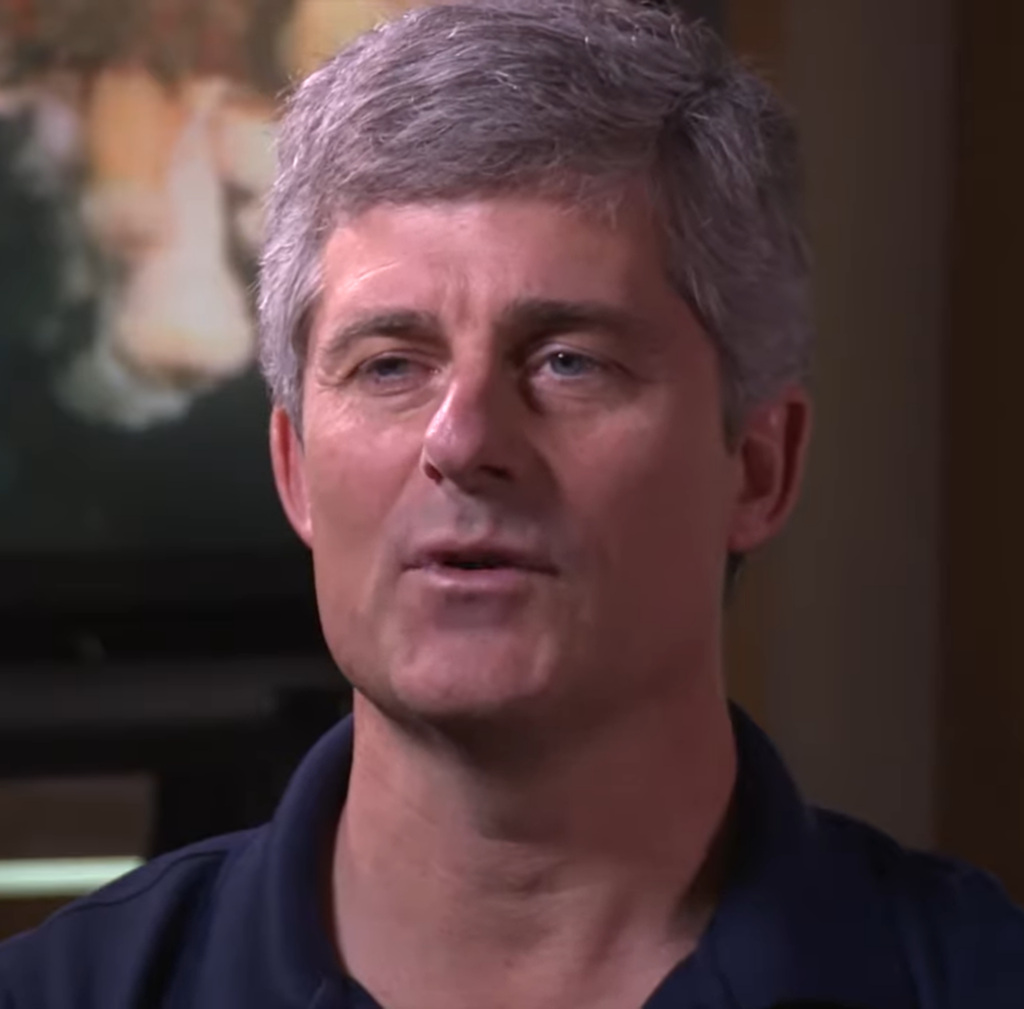
The accidental disaster that happened on OceanGate Titan submersible on June 2023 is one of the saddest stories ever in the history of deep-sea exploration. What was meant to be an adventure trip by a group of tourists to see the wreck of the Titanic at a depth of 3,800 meters below the water turned out to be a case of five lives lost instantly: OceanGate CEO Stockton Rush, French dive explorer Paul-Henri Nargeolet, British adventurer Hamish Harding, and Pakistani businessman Shahzada Dawood and his 19-year-old son Sulaiman.
The current hearings by the U.S. Coast Guard Marine Board of Investigation have gradually shown a worrying trend not of an isolated tragedy of errors, but a chain of purposeful neglect of professional recommendations, an organizational ethic whose goal has long been speed, cost-saving, and innovation at the cost of established safety procedures. The testimony given by engineers of great institutions such as Boeing and NASA as well as former staffs of OceanGate inject straight into reality on how the seeds of the disaster were sown many years back.
1. The Fallacy of the improperly selected Hull of Carbon-Fiber
Deep-sea submersibles worked with virtually no other designs than variations of the spherical pressure hull composed of titanium or high-strength steel materials whose behavior in the extreme hydrostatic pressure available at the depth of Titanic was well understood. OceanGate took a very different route and constructed the Titan, having a hull that was cylindrical, made of carbon-fiber composite. The concept was to make a lighter, which might be more spacious ship, able to carry more passengers at reduced cost, but the choice was accompanied by risks most other experts thought would be unacceptable were it to be operated by man in extreme depth.
The hull as witness has too plainly shown, had grave flaws of manufacture, in its very inception. Several layers displayed progressive wavy and wrinkling, porosity way beyond the acceptable levels, and gaps between the bonded sections. By the time the ring was salvaged, the hull had disintegrated disastrously into three distinct concentric shells, and was neatly split along the adhesive lines of the visual evidence of how the composite structure could not work under the strain it was never designed to withstand.
Another crucial hull design and material concern is identified:
- Constructed at a very thin depth of 5 inches as opposed to 7 inches, which was recommended.
- Successive waviness and wrinkles in various layers.
- 4 times greater porosity than design.
- Large gaps between five layers of the wound.
- In three completed delaminated shells wreckage was found.
2. Disregarded Boeing Expert Warnings
OceanGate contracted Boeing in 2013 to do a pre-feasibility study of the idea of a carbon-fiber hull deep-diver. Boeing provided a detailed report which acted as an early warning model indicating that they were faced with a major challenge such as manufacturing defects, bonding issues, and during the curing process, they were faced with thermal stresses. Above all, Boeing advised that any working hull must be at least 17.8 cm (7 inches) in thickness to offer a suitable safety margin in the event of an extreme pressure.
The hull of the Titan constructed by OceanGate was just 12.7 cm (5 inches) thick, too few of the recommended tests were done, or not done satisfactorily, and proceeded, in large part because doing everything Boeing recommended would have required more time and more money. Boeing pulled out all subsequent support after the preliminary research, which is a clear indication that they were not interested in remaining associated with the project. The Coast Guard subsequently referred to a report by Boeing as a roadmap of possible points of failure upon which OceanGate has avoided following to a large degree.
Key Boeing Recommendations Not Accounted:
- Thickness of the hull must measure 17.8 cm (7 inches)
- Solve manufacturing defects and bonding issues.
- Control thermal stresses in the curing process.
- Carry out extensive non-destructive tests.
- OceanGate went ahead without taking most of the advice.

3. Fraudulent Procurement of Carbon fibers and Boeing Discount vouchers
A single especially disturbing test witness was related to the assertions that the carbon fiber in the hull of the Titan was purchased by Boeing at a high discount since it had moved beyond its aerospace shelf life. Arnie Weissmann, the editor-in-chief of Travel Weekly, and a would-be passenger who had been booked a dive in the same period of time just prior to the disaster, described a face-to-face meeting with Stockton Rush. Rush was also accused of boasting how he got the material at a low price, sweeping away any concerns by saying shelf-life was being over-conservative and that the shelf-life had been established too soon.
Boeing has firmly refuted that a such sale has ever occurred and have no history of providing composite material to Oceangate or Rush as an individual. The company insisted that it had no hand in designing or building the Titan. This mismatch shows that OceanGate could have exaggerated or lied about material sourcing to facilitate its pioneering method, which casts new doubts on the quality of the hull base and its ability to sustain repeated deep dives.
Principal Arguments of Carbon Fiber Sourcing Issues:
- Discounted acquisition of outdated Boeing aerospace carbon fiber claimed.
- Rush discounted the shelf-life issues as being too pessimistic.
- Boeing ascertains that there was no record of any sale to OceanGate.
- Points to possible material integrity compromise.
- Adds to the suspicion of the entire quality of hulls.
4. Minimal NASA Consumption and Exaggerated Collaborations
OceanGate often made reference to NASA in promotional material and even discussion of the development of the Titan implying that the space agency had a significant involvement in the design of the carbon-fiber hull. Justin Jackson, a NASA materials engineer, testified that the agency was not as much involved as it was made to seem. An agreement on the possible manufacturing and testing assistance, signed as a Space Act in 2020, was interrupted nearly instantly due to the COVID-19 pandemic.
The work done by NASA seemed to be limited to one third costly consultations on a mockup, and no actual work on the final full-scale hull. Jackson also indicated that he was uncomfortable with the wording of press releases used by OceanGate, that there was a risk of some words sounding too close to approval, and that NASA needed to move back. This testimony highlights a larger trend of the company using high profile names to create credibility without the significant support that such organizations offered.
Main Aspects of NASA’s Limited Role:
- 2020 agreement disrupted by pandemic
- Only remote advice on scale mockup
- No manufacturing or testing of final hull
- NASA objected to near-endorsement language
- Overstated collaboration in public messaging
5. Manufacturing Defects and Hull Anomalies Revealed by NTSB
The National Transportation Safety Board (NTSB) provided some of the most technical and damning evidence through engineer Donald Kramer, who examined both manufacturing remnants and recovered wreckage. The hull, built in five separate wound and cured layers by contractors Electroimpact and Janicki Industries after an earlier version cracked in 2019, showed clear signs of imperfection. Analysis revealed waviness and wrinkles that worsened from inner to outer layers, along with porosity four times above allowable limits and voids between sections.
Recovered pieces from the seafloor displayed extensive delamination, separating into three distinct shells at the adhesive joints described as peeling apart like onion layers under extreme pressure. Materials expert Roy Thomas from the American Bureau of Shipping explained that such defects (voids, porosity, blisters) can severely weaken carbon fiber, accelerating failure when exposed to the crushing hydrostatic forces at Titanic depth.
Critical Manufacturing Defects Identified:
- Progressive waviness and wrinkles in layers
- Porosity exceeding design limits by four times
- Voids and gaps between bonded sections
- Extensive delamination in wreckage
- Defects weakened structure under pressure
6. The Ominous 2022 Acoustic Bang and Dismissed Data
In July 2022, during a successful dive to the Titanic (known as Dive 80), the crew and passengers heard a loud bang shortly after the Titan surfaced. Acoustic sensors and strain gauges onboard captured the event, showing a sudden, concerning shift in the hull’s strain data something that echoed patterns seen just before a previous scale model failed during testing. Phil Brooks, then OceanGate’s director of engineering, later testified that this shift raised red flags for him, as it resembled failure precursors he had observed in controlled tests.
Despite the alarming noise and data, Stockton Rush attributed the sound to an external metal frame or sled, downplaying any hull-related issues. No in-depth inspection followed; instead, the sub was left docked outdoors in Newfoundland over the winter without being transported back for proper examination, partly due to cost concerns. Brooks and others pushed for bringing it to headquarters for crack checks, but the idea was rejected as too expensive amid the company’s financial strain.
Key Details of the 2022 Incident:
- Loud bang heard post-dive with sudden strain data shift
- Similar to patterns before prior model failure
- Rush dismissed as external frame issue
- No further investigation or hull inspection done
- Sub left outdoors in harsh conditions over winter

7. Company Culture Prioritizing Profit Over Safety
Former OceanGate staff painted a consistent portrait of a workplace driven primarily by financial goals rather than rigorous science or safety. David Lochridge, the ex-director of marine operations who clashed frequently with Rush over concerns, testified that the “whole idea behind the company was to make money” with “very little in the way of science.” He described a push to reach the Titanic quickly for revenue, often at the expense of thorough engineering and testing.
This mindset contributed to a pattern where safety voices were sidelined. Employees who raised issues sometimes faced pushback, and the company lacked independent oversight. Lochridge and others felt their warnings were dismissed in favor of keeping operations moving and costs down, creating an environment where ambition overshadowed caution.
Core Elements of OceanGate’s Profit-Driven Culture:
- Focus on revenue from Titanic expeditions
- Minimal emphasis on scientific rigor
- Safety concerns often overridden by cost and speed
- Pressure to generate income quickly
- Limited independent safety checks or oversight
8. Dismissal of Regulations and Lack of Oversight
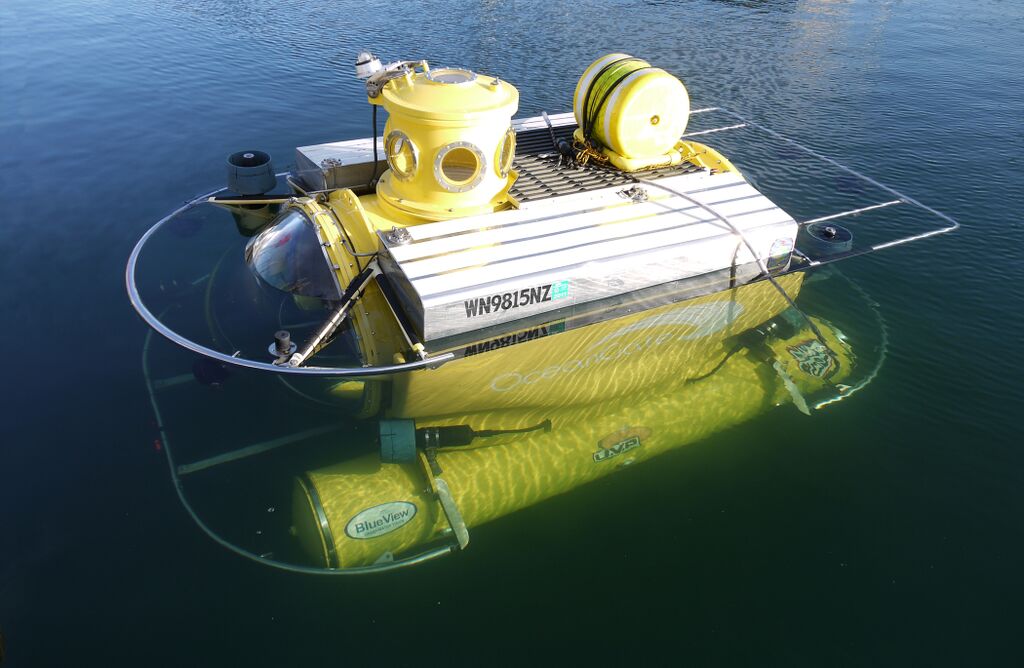
Stockton Rush openly viewed traditional regulations as barriers to progress, telling Coast Guard marine inspector John Winters on multiple occasions that “regulations were stifling his innovation process.” Despite working with the Coast Guard on certifications for earlier vessels like Antipodes and Cyclops 1, OceanGate never sought inspection or guidance for the Titan Winters wasn’t even informed of its existence beyond a casual mention.
The sub carried paying “mission specialists,” which likely would have required classification as a small passenger vessel under Coast Guard rules, subjecting it to formal inspections. By avoiding this framework, OceanGate operated in a regulatory gray area, bypassing established protocols that could have caught issues earlier. This approach reflected Rush’s belief that innovation justified going it alone, even as experts warned of the risks.
Major Regulatory and Oversight Shortcomings:
- No Coast Guard inspection requested for Titan
- Rush viewed regulations as innovation barriers
- Likely should have been classified as passenger vessel
- No formal certification or classification society involvement
- Operated without standard regulatory oversight

9. Stockton Rush: Charismatic Visionary or Reckless Leader?
Stockton Rush was often described as the driving force behind OceanGate a bold, charismatic entrepreneur who compared himself to innovators like Elon Musk and saw regulations as unnecessary hurdles holding back true progress. Former employees and experts testified that he repeatedly expressed frustration with traditional safety standards, believing his engineering approach could safely push boundaries faster and cheaper than established methods. This mindset led him to override concerns from qualified staff and experts who urged more caution with the Titan’s experimental design.
Investigators and witnesses highlighted how Rush’s leadership created an environment where dissent was minimized and profit timelines took priority. He personally piloted many dives, including the fatal one, and made key calls on operations despite lacking formal qualifications in some areas. The Coast Guard’s findings ultimately pointed to his negligence as a major contributor, noting that he misrepresented the vessel’s safety to passengers and ignored clear signs of risk in pursuit of his vision for accessible deep-sea exploration.
Key Characteristics of Rush’s Leadership Style:
- Viewed regulations as barriers to innovation
- Prioritized speed and cost over thorough safety protocols
- Personally dismissed expert warnings and employee concerns
- Misrepresented submersible safety to build credibility
- Created a culture where profit goals overshadowed caution
10. The Final Dive and Lasting Lessons from a Preventable Tragedy
On June 18, 2023, the Titan began its descent from the support ship Polar Prince with all five men aboard: Rush at the controls, alongside Paul-Henri Nargeolet, Hamish Harding, Shahzada Dawood, and his son Sulaiman. Contact was lost less than two hours in, with one of the last messages simply stating “all good here.” A massive international search followed, but debris confirmed a catastrophic implosion had occurred almost instantly near the Titanic site, claiming all lives in a fraction of a second under immense pressure.
The full investigation, culminating in the U.S. Coast Guard’s 2025 report, concluded the disaster was entirely preventable. It stemmed from systemic failures in design, testing, maintenance, and oversight, compounded by a profit-focused culture and inadequate regulations for novel submersibles. The tragedy has prompted recommendations for stronger safety frameworks, better whistleblower protections, and international standards to ensure future deep-sea ventures prioritize human life above ambition.
Essential Lessons and Aftermath Highlights:
- Implosion confirmed as instantaneous and fatal
- Last communication: “all good here” before loss of contact
- Debris field found 300 meters from Titanic bow
- Coast Guard deemed the tragedy fully preventable
- Calls for updated regulations on experimental submersibles