


Unveiling the Realities of EV Truck Towing: The F-150 Lightning and Silverado EV on the Road
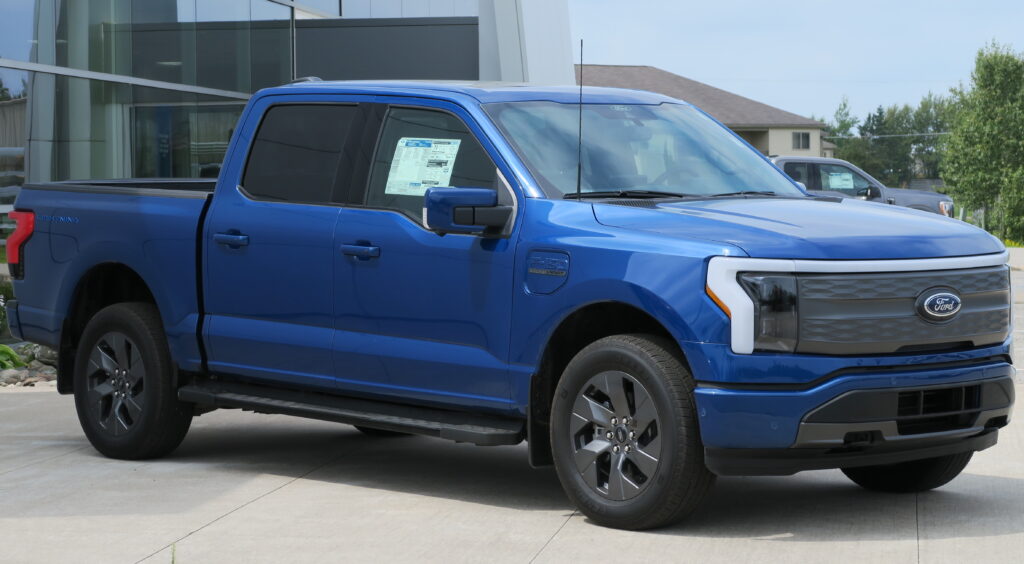
The sphere of electric vehicles is developing fast, and it is accompanied by new possibilities and, of course, new doubts, in particular, in relation to such challenging activities as towing. The test of our new Ford F-150 Lightning towing capability took place recently and the results were a complicated image of great strengths and unexpected weaknesses when challenged by the diverse topography of California. The first impressions were, however, very remarkable.
Our trip, with a round trip of 90 miles, began in north Orange County, California and was planned to take us 45 miles south to San Clemente State Beach. This distance was apparently within the 90 miles of range our test crew had already noted to be pulling a lighter 7,200-pound unit in Michigan. But California has hills to be crossed, and our present trailer was a little heavier. Then, after setting the weight-distributing hitch and getting the green light of the Smart Hitch function of the truck, which calculates tongue weight using onboard scales, we were off.
The Lightning was an incredibly capable tow vehicle, as it was originally. Its strong motors allowed it to accelerate away at a stop nearly as fast as when empty. An important software update has now enabled the one-pedal drive regenerative braking option to be available in Tow/Haul mode, which would be of great help in stopping the whole process in a fast and safe manner. The tongue weight of the trailer did not have much effect on the suspension of the truck, and its weight (almost 7,000 pounds) had a positive influence on the directional stability. This has made the first stage of towing a more comfortable affair than when we had our previous F-150 Raptor, and it was like trailering with a three-quarter-ton pickup.
Range Recalibration and initial Power Limitations
The trip however, revealed its intricacies. A fight to get a full charge the night before, three attempts needed, maybe a premonition of difficulty. The Lightning had an overstated 310-mile range estimate at its launch with a full charge battery. As soon as the trailer was connected, the range of the truck was re-calibrated to 157 miles. Only five miles into towing, another message appeared, and the electric range was cut down to 98 miles, specifically because the trailer was there.
Although such range reduction messages were anticipated, the effect of the performance on the initial uphill climb was not. As we turned onto the Highway 73 in California, we faced a fairly gentle 4 percent grade, which brought us almost to the sea level up to approximately 800 feet. The power output meter on the truck started to gray out immediately, and fell to only 62 percent of its full output, even though the state of charge was good at 79 percent. It was all throttle to keep up the hill at 66 mph. During the trip back, the motor power was also cut down to 59 percent on the same hill with a speed of 62 mph.
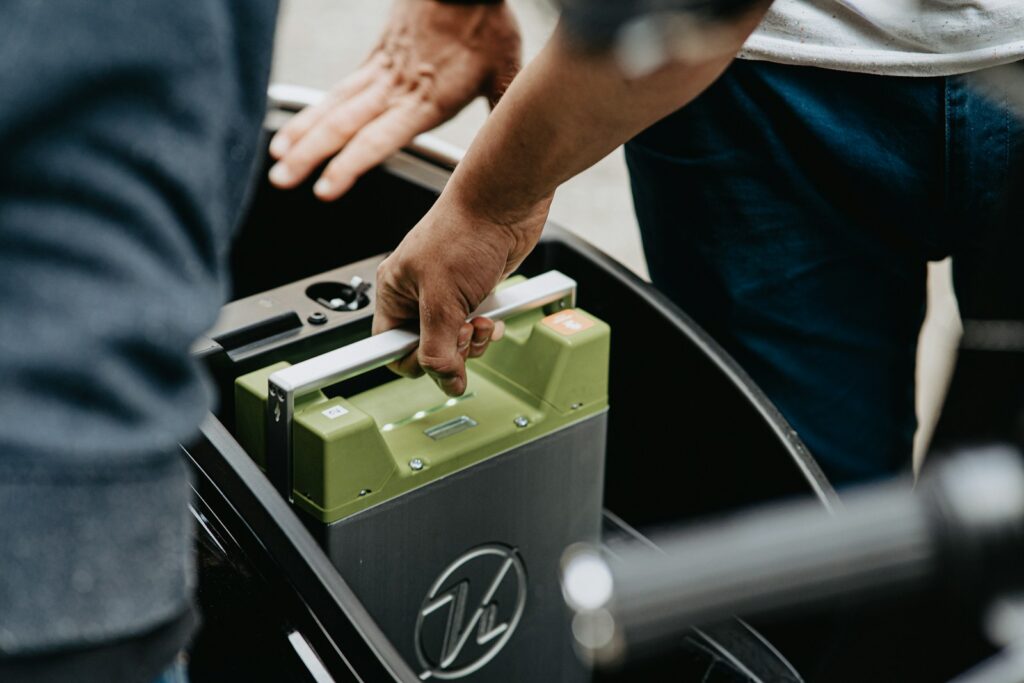
This loss of power seemed to be directly correlated with increasing battery temperatures, the indicator gauge changed to orange and moved out of the normal operating range. Although the motor temperature also rose slightly, it was not enough to be considered alert. When the grade was topped and the descent commenced everything soon came back to normal.
Fears of Long-Distance Towing on Rough Ground
What was really frightening about this experience was not the loss of power or the increase in temperature, but the fact that it happened on such a small hill on an otherwise calm, sunny and bright day of 62 degrees. This cast serious doubts on the ability of the Lightning to work in more demanding conditions. Such passes as the Tejon Pass (Grapevine) and Cajon Pass, which rise about 3,000 feet in elevation and have a maximum grade of about 6 percent, are infamous. They experience temperatures in excess of 100 degrees during summer and below freezing during winter with a lot of wind being very severe. The Grapevine alone is 50 miles and gives a continuous demand quite beyond our test hill.
On the basis of this brief, though instructive experience on a smaller hill, the future of towing in those more taxing passes does not bode well of uniform work. It points out that even though the Lightning is a tow vehicle in most respects, its range and power output at sustained uphill loads should be considered with caution when undertaking ambitious towing trips.
Although the first experience of EV towing with the Lightning was a bit of a surprise, it is important to note that most of the popular beliefs about electric trucks and heavy loads do not match the actual situation. The doubt about the electric vehicle towing, especially short to medium hauls, is largely unjustified. Quite on the contrary, contemporary electric trucks such as Chevrolet Silverado EV and Ford F-150 Lightning are becoming incredibly useful in these daily situations with their large batteries and strong structure.
Favorable Real-World EV Owner Experiences
Their performance has attracted a lot of debate and positive reviews in the online community which represents the other side of EV towing as opposed to the long-range, high-speed stories commonly depicted. In fact, many EV owners post excessively positive reviews about their electric trucks. One Reddit user, Jturkish, was excited to talk about his 2023 F-150 Lightning as a dream tow rig to go camping in, noting that it was easy to power on and that he did not feel stressed about the engine RPMs or transmission/oil temperatures. He described the experience as being quiet, smooth and simply very relaxing, something that was very different than his past gas cars.
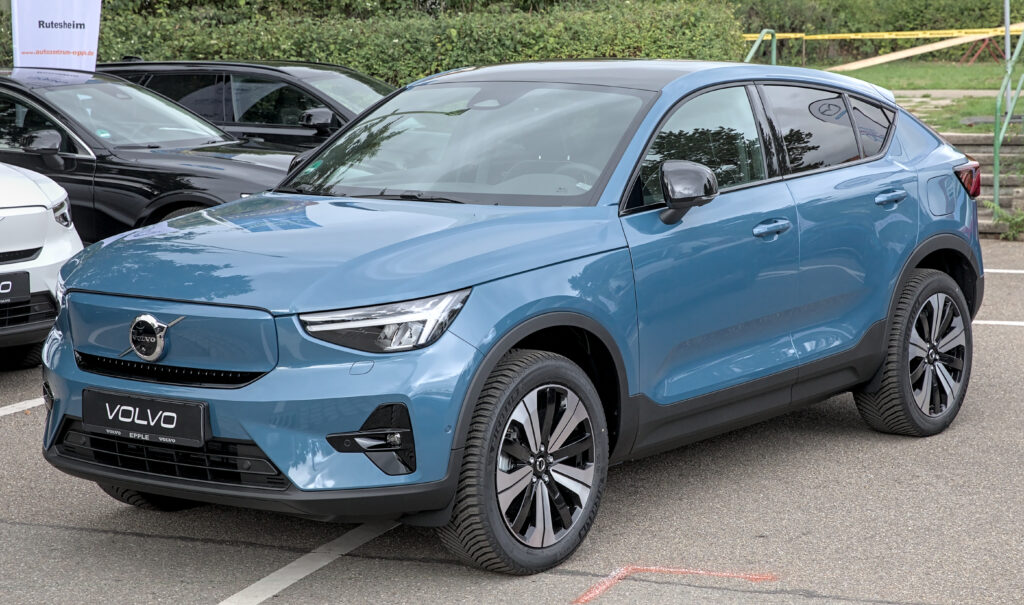
This was also reflected in the sentiments of Terrh who pointed out the commercial possibilities where contractors had to tow small trailers approximately 100 miles per day around a city and how these trucks could nearly cover the payments through the savings in fuel alone. Even Script That mentioned that it was feasible to tow a 2-horse trailer with a “regular” EV such as a Volvo C40 Recharge, confirming that it is indeed possible to find a nice (“regular) EV that can be used to pull trailers.
The most common myth is that payload weight causes an EV to be crippled in terms of range. But the experience of real-life testing tells otherwise. Aging Wheels, a widely used YouTube channel, did a very informative test with the Chevy Silverado EV, adding a significant load of 1,600-pound of shingles to the vehicle to make it feel like it is carrying its full capacity. The efficiency loss over a steady 60-mile highway circuit at 75 mph was only 4.3 percent a loss so small that it is virtually imperceptible in everyday driving.
Aerodynamics vs. Weight: The Real Range Killer
Interestingly enough, the removal of the bed cover in fact created a slightly greater aerodynamic drag, implying that any slight change in air resistance can be more significant than hundreds of pounds of cargo. A test on a gas-powered F-150 with a 5.0L V8 also indicated no statistically significant impact of the added weight on the fuel efficiency, conclusively proving that payload is not a significant factor that negatively affects the efficiency of either an electric or a gas truck in the highway.
It turns out that it is not mass but aerodynamics that is the real culprit in efficiency. The resistance to wind came out as the undisputed game-changer in these tests. Towing a half-empty trailer alone made the process less efficient than unladen driving. The situation became extremely bad when the cargo was moved to form a sail-like surface- in one extreme case, the test truck had almost depleted its charge after hauling a homemade air brake at highway speeds. This is a very convincing argument that makes one come to a definite conclusion that although weight can be heavy, it is the air that makes the range go down.
This understanding was cemented by further series of tests of trailers with different types and shapes of cargo. It was clear that it is not the weight of what you are pulling that kills your range but the form of the same. As an example, a 4,500-pound Polestar on a flatbed had a minimal effect on efficiency, but a tall, boxy shape on the same trailer reduced the range by almost half. This trend was confirmed by another test, in which an even heavier F-150 was put on the trailer: a vehicle vertical profile is a greater threat to efficiency than mass. This observation is essential to any person intending to tow an EV, and it is important to note that aerodynamic designs of trailers are important.
The Benefits of Charging Speeds, Costs, and Regenerative Braking
Other than efficiency, the ability to charge fast and the ability to tow are the most important. The max pack of the Silverado EV has the quickest DC charge rate of any electric truck on the market, with up to 160 miles of towing range added in 40 minutes at peak power of 370 kW, assuming climate control is disabled. This is almost twice the capability of some of its competitors in the same time period, which is usually because of smaller batteries or slower charge curves. Interestingly, a direct comparison of the Silverado and a Rivian R1T showed that the Rivian was much more efficient without a trailer, but the results were almost the same when pulling the same trailer.
This brings up a very important fact: trailers are the great equalizer, but the bigger battery of the Silverado still provided it with a practical advantage in overall towing range. EV towing is also very different in terms of economics based on charging habits. Silverado EV will cost only a third of the price of filling up the F-150 with gasoline at the average home electricity rates of about 9C/ per kWh to drive 100 miles. The Silverado was the most fuel-efficient even in the most demanding towing conditions that were ever tested, as compared to the F-150 (powered by a 5.0L V8).
Nevertheless, the script turns the other way around when it comes to rapid charging: at 40C/ per kWh, towing the Silverado is more costly than driving the gas truck. This highlights the extreme significance of home charging in order to sustain the economic benefits of owning electric trucks. Last but not least, the regenerative braking increases the complexity of the EV towing equation. Acceleration tests of 0 to 70 mph and then deceleration to 0 indicated that the regenerative braking could be even more effective with additional weight.
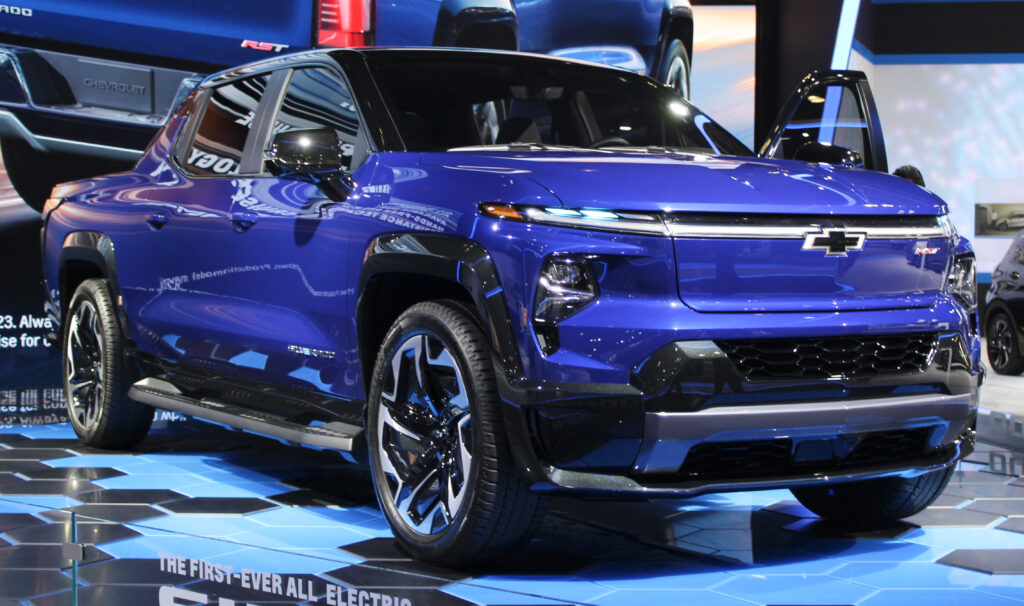
The Silverado used a little less net energy during deceleration when it was loaded with a heavy load, indicating that the system recaptures more power when there is more mass to decelerate. In the end, these findings conclusively dispel the popular misconceptions about electric trucks and towing, and prove that it is wind resistance, rather than weight, that kills range. EV trucks such as the Silverado can easily tow, particularly when they are in their optimal range and with the convenience and economy of home charging that cannot be ignored.
The Real Potential of EV Towing
The entire breadth of testing, field trials and community response creates a much more balanced image of electric-truck towing than the sensational headlines tend to imply. Although the F-150 Lightning revealed some real issues when subjected to sustained uphill loads, particularly during warm weather and with heavier trailers, it also revealed advantages that conventional trucks cannot provide, including ultra-smooth delivery of torque, better stability and much-improved regenerative braking. When coupled with the changing abilities of such trucks as the Silverado EV, it is evident that electric towing is neither a sham nor a side experiment. It is an emerging fact that is performing well in the daily lines where majority of the owners are in actual operation.
With manufacturers improving cooling systems, charging networks, and aerodynamics taking a larger role in trailer design, the next generation of electric trucks will overcome the shortcomings of the first-generation models. What comes out of this is a new realization, EV towing is not determined by any one test or any one hill, but by how fast the technology is improving and how well it already fulfills the demands of thousands of actual users. The future of towing is evolving, and electric trucks are gradually showing that they belong on that road.