





Why Alaska Airlines Axed Its New Airbus Fleet
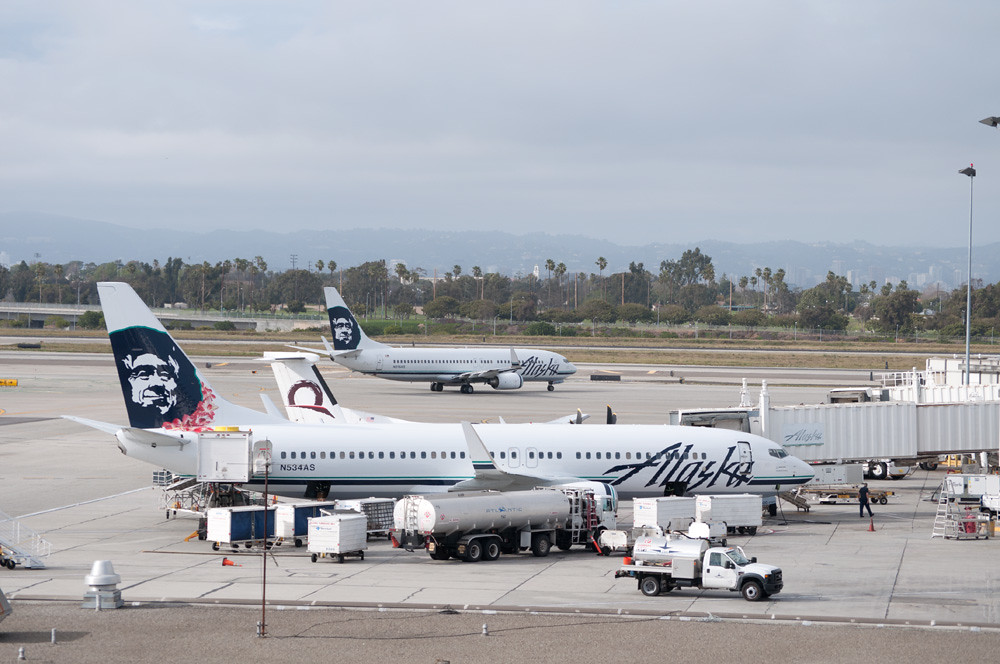
In 2023, Alaska Airlines’ move to put dozens of jets with an average of five years of service life to rest raised eyebrows in the commercial aviation industry. The last flight of an Airbus A321neo for Alaska Airlines took place on September 30, 2023. This was a strategic shift in which the airlines systematically discarded its fleet of almost 70 Airbus aircraft and returned to its original form as an all-Boeing mainline carrier.
This was not a move that was made on performance grounds or a sudden rift with the European manufacturer. Rather, it was the last in a complicated history of mergers, operational effectiveness, and long-term financial policy. The process of returning to be proudly all Boeing was an intentional, and admittedly costly, one. The reason as to why Alaska Airlines would pay a premium to dispose of young and high-demand airplanes is an interesting case study in the insistence in fleet simplification.
The Airbus aircraft case in Alaska Airlines was never a matter of choice but a matter of inheritance. The Seattle-based airline started its association with the A320 family of jets not by an actual order placed with Toulouse, but by a historic merger. In a transaction that was concluded in 2018, when Alaska purchased Virgin America, it not only inherited routes and brand of its competitor, but also its entire fleet, which was solely Airbus.
A Hereditary Fleet That Never Met the Eye
Suddenly, an airline that had developed its identity and operational model based on the Boeing 737 was left to operate 72 Airbus jets, the A319, A320, and the newest A321neo. These aircraft were initially an inconvenience of strategy. Although contemporary and competent, they were a completely new system of training, maintenance, and parts. This new mixed fleet was a challenge to an airline that took pride in the efficiency that uniformity brings.
Even the 10 A321neo jets, which were delivered between 2018 and 2019, when the merger was already finalized, were an order that was initially made by Virgin. Alaska received delivery since it could not easily get out of the contract, yet the planes had never been part of its long-term vision.
The Airbus jets were almost seen as a burden almost immediately after the acquisition. They made a complex fleet mix that had long been established and heavily dependent on the 737 family of Boeing, which had been carefully developed. When dealing with two types of mainline fleets, there is a lot of friction in the complicated calculus of airline operations.
The Price of Complexity in Everyday Business
All the business processes, including pilot scheduling and certification, stocking of spares, and tools used by mechanics, are duplicated. The result of this complexity in operations is increased costs and decreased flexibility. The pilots who are qualified to work in a Boeing 737 cannot just jump into an Airbus A321neo cockpit and the other way round.
This generates training backlogs and constrains the capability of the airline to smoothly replace aircrafts and crews to address scheduling disturbances. Maintenance crews have to be conversant with two systems, and inventory expenses are inflated to maintain two fleets. Alaska Airlines did not view these problems as a one-time obstacle, but as a chronic threat to its financial results and business flexibility.
The move to streamline was made official in late 2020, during the disruption of the COVID-19 pandemic across the industry. The weakened demand was an opportunity that the airline could seize to hasten a change that was inevitable.
Wagering on the Future of the Boeing 737 MAX
The intention was obvious: to go back to one mainline fleet of Boeing jets. This plan entailed the gradual elimination of the entire 72 Airbus fleet, with the last A319 and A320ceo models being retired by January 2023, and the final phase-out being the 10 newest A321neos.
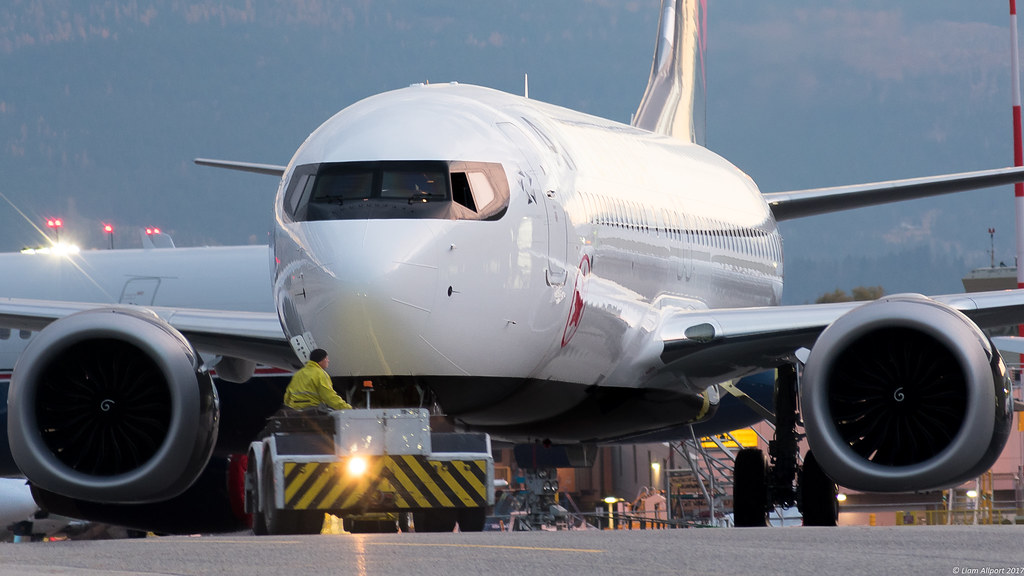
This radical step was triggered by the unwavering faith of Alaska in the next generation of its favorite aircraft the Boeing 737 MAX. The airline does not simply see the MAX as a replacement, but as a better tool to achieve its particular network and growth goals.
The carrier reckons that the MAX is especially beneficial in that it has the range and efficiency to completely substitute the A321neo, especially on longer, transcontinental flights. This was a critical requirement to enable the single-fleet strategy to work. Alaska Airlines has invested in its strategy and has placed solid orders of 105 Boeing 737 MAX jets to be delivered up to 2027 with options of 105 more by 2030.
The Cost of Strategic Clarity
This huge investment is an indication of a strong dedication to the Boeing platform as the future of the company. The leadership of the airline is of the view that this will open the door to massive economic gains. According to its 2023 annual SEC filing, a single fleet of Boeing MAX aircraft will greatly enhance the per-seat economics due to the larger gauge and higher fuel efficiency.
It is not merely a question of saving money, but it is a positioning question. The filing goes on to state, “This strength will be the foundation of high-margin capacity expansion in the coming few years. This was emphasized by the CFO of the airline Shane Tackett who stated that this transition would lead to reduced maintenance expenses and increased staff utilization. In the case of Alaska, the MAX is a road to a more lucrative and sustainable future, and the pain of the Airbus retirement in the short term is a worthwhile investment.
Naturally, it was a costly operation to disentangle itself with the Airbus fleet, especially the young A321neos which were locked up in long term leases. Turning an Exit into an Opportunity.

Aviation lease agreements are complicated and binding and may last several years. The A321neo jets had lease expiration dates of up to 2029 and 2031 according to its SEC filing. Early termination of such contracts is usually accompanied by huge penalties and exit charges.
The leadership of Alaska was open on the cost. Tackett said that due to the acceleration, the carrier will incur about 300 million to 350 million in special fleet transition costs by the end of the year. This is an astronomical amount, the cost of strategic purity. Nonetheless, the financial department of the airline estimated that this was a one-time blow that was better than the other. In an earnings call, Nathaniel Pieper, the VP of fleet and finance in Alaska, explained the reasoning.
A Tongue in the Cheek Story of the Fleet
The plot had an awesome irony just as Alaska Airlines was celebrating its re-entry into a simplified all-Boeing mainline operation. The airline has made a big acquisition of Hawaiian Airlines which also has a substantial fleet of Airbus planes namely the widebody A330 and the narrowbody A321neo.
These jets are re-entering the wider Alaska Airlines Group portfolio after years and hundreds of millions of dollars to eliminate the A320 family of its operations. This new development brings a new interesting dimension to the fleet strategy of the company. Although the Airbus planes will still operate under the Hawaiian brand and will not be part of the mainline fleet of Alaska, they will be under the financial and operational care of the group once again.
This is in stark contrast to the remark on the power of one fleet, how fast strategic priorities may change in the airline industry. This acquisition proves that fleet simplification is a very effective tool, but it is not a dogma.
A Strategy That is Still Developing
The whole saga provides an interesting perspective of the chess game of airline fleet management, which is a high stakes game. The choice of one type of aircraft has unquestionable advantages in efficiency and cost management. Nevertheless, it also has its own risks, the most prominent of them being the notion of putting all your eggs in a basket.

The case of Alaska Airlines moving out of Airbus and returning to Boeing was a masterpiece of long-term strategic implementation. It was an expensive and complicated process, which was motivated by an underlying assumption that operational simplicity is a major contributor of profitability and growth. The airline decided to take a huge financial blow in the short term in favor of a future situation that it considered to be more efficient and beneficial. However, that is not the end of the story. The story changes with the purchase of Hawaiian Airlines, and it is clear that fleet strategy is never that stagnant in the ever-changing world of aviation.