




Factory Fury vs. Tuner Titan: Two C8s Redefine Drag Racing
Right away, once General Motors allowed Team Corvette to craft a mid engine model, everything shifted quietly but deeply across U.S. high performance cars. Over years, fans had asked what if the Corvette ever mirrored how top European models were built? The arrival of the C8 didn’t just reply it exploded the idea wide open. That move went far beyond changing shapes or adjusting small parts under the hood. Instead, it launched a fresh direction entirely, lifting America’s favourite two seater into sharper territory no one saw coming. Suddenly, the rules felt rewritten without warning.
Key Ideas
- Mid engine Corvette change
- American sports car evolution
- Improved traction design
- Supercar level performance
- Drag strip popularity
- New Corvette expectations
One thing stands out when you look at American motorsports lately the C8 is everywhere. Hit any drag strip, weekend race meet, or open track session, and there they are Corvettes in shapes nobody expected years ago. Not just one flavour either Stingrays rolling stock, Z06s screaming past with wild redlines they’re all turning up where speed matters most. Put the motor behind the seat? That tiny shift changed everything. Suddenly grip improved, weight settled right, launches got cleaner and stopwatches started telling new stories from coast to coast.
Right when folks thought they had the car figured out, Chevy dropped something new that changed the game again. Out came the 2025 C8 ZR1, showing the mid engine Corvette still had chapters left to write. Instead of leaving them parked and shiny, drivers took these cars straight to actual tracks. What happened there showed this model wasn’t only about speed it shifted how fast cars are supposed to feel. People realized it wasn’t chasing records, it was setting them.
1. The Mid Engine Revolution
With the mid engine set up when the C8 Corvette was introduced, it was one of the most radical design changes to date in the American performance cars. Past generations were satisfied with a conventional front engine design that nonetheless offered good performance, yet engineers never felt that the platform could not be further developed. Placing the engine in the rear of the driver created an additional opportunity with weight distribution, handling accuracy and acceleration consistency.
Key Features
- Rear engine weight balance
- Enhanced acceleration traction
- Better launch stability
- Modern supercar layout
- Enhanced driving control
- Engineering that is performance oriented
The new design traction became one of the most exciting benefits to the drag racing fans. It is never an easy task to launch a potent rear wheel drive vehicle, and when hundreds of horsepower have to move to the pavement immediately, it is extremely difficult. The closer the engine was to the driven wheels, the more the Corvette could be putting all the weight on the area in which it is needed directly and consequently, the tyres could have a better grip on the track.
The mechanical advancement created instantaneous material outcomes. The drivers all over the nation were starting to notice how regularly the C8 would jump off the starting line. Even the relatively stock models could deal with quite impressive quarter mile times without having to be tweaked too much.
2. A New Challenger Appears
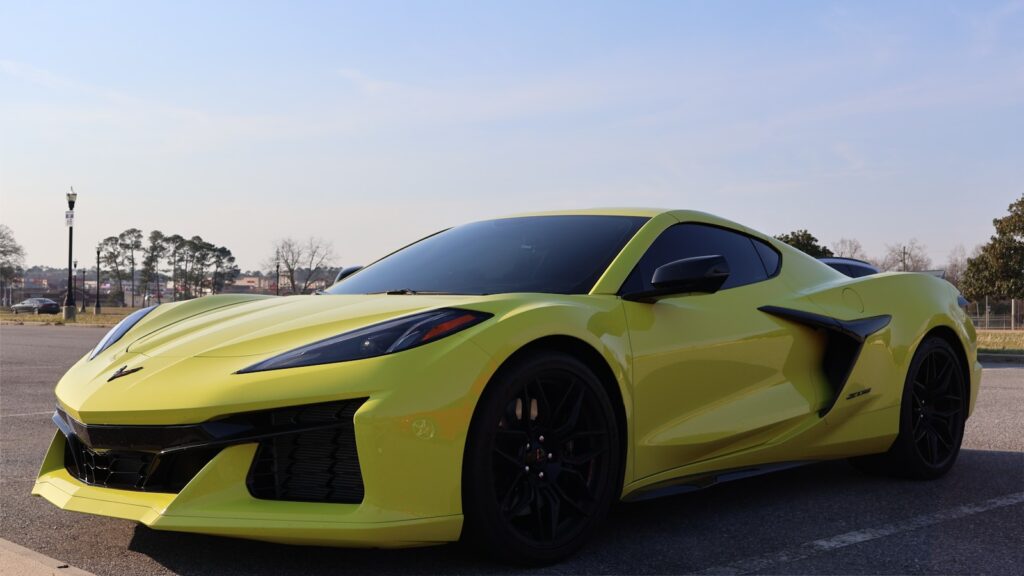
Its unveiling of the 2025 C8 ZR1 soon made the performance community buzz. Having only a number of these cars being literally handed over to their new owners, people were intrigued of the way these cars would perform in the real field of racing. Among the first examples is one that was presented at Carolina Dragway in South Carolina, where a newly delivered ZR1 instantly attracted the attention of racers and spectators.
Track Preparation
- Dyno tested high horsepower
- Drag radial tyre setup
- Track night testing
- High performance launch
- Quarter mile evaluation
- Drag strip excitement
The car was already dyno tested and made over 1,000 horsepower at the wheels which is a staggering figure considering that the car was only out of the show floor. With the drag radials fitted and under the heading that it was going to have a serious test at night, the Corvette was positioned on the starting line as curious onlookers awaited to see what it could accomplish.
Since it was my first experience of using the track, my expectations and indeed my expectations were met after a number of passes down the track. Corvette had an awesome time of 9.33 seconds with a speed of 151.56 mph. The formal time clock also recorded a slightly better time of 9.303 seconds. In the case of a brand new street legal supercar with a factory warranty, those figures were a sign of how far the modern performance engineering had gone.
3. Exceeding Expectations Performance
A nine second range in the quarter mile has long been viewed as a huge achievement in drag racing. Numerous serious racing programmes take years to achieve such a level of performance by making meticulous adjustments and a lot of tuning. The sight of a new production car with almost no miles on it produce such an outcome immediately attracted the attention of enthusiasts all over the world.
Performance Highlights
- Nine second quarter mile
- Good factory acceleration
- Strong launch stability
- Modern tyre technology
- High horsepower capability
- Same drag performance
The great run also demonstrated the effectiveness of the engineering of the Corvette. Although the car was about 3,800 pounds including a driver in the car, it started smoothly and also accelerated in an incredibly stable manner. Its high horsepower coupled with the advanced tyre technology enabled it to transform the raw power into forward motion without over spinning the wheels.
These were some numbers that could not be overlooked by experienced drag racers. The Corvette was not merely fast as compared to other street cars but was venturing into areas traditionally the preserve of specialised race cars. The existence of that reality led to a new discussion concerning the ways such strong factory vehicles could be incorporated into the current racing regulations.
4. Meeting the ZR1X
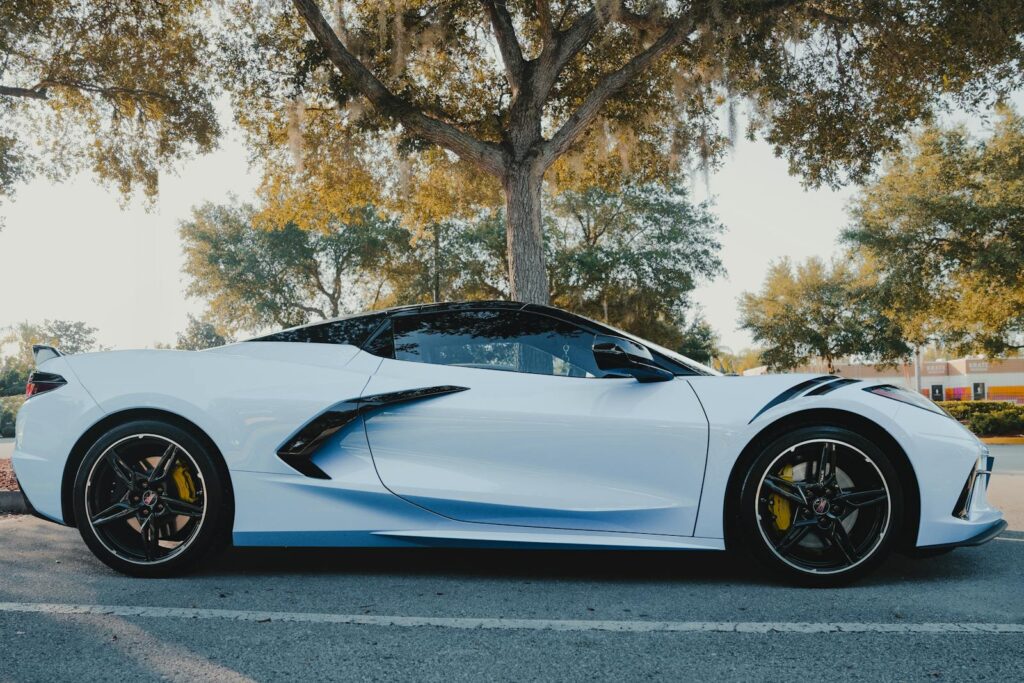
Although the ZR1 had already made an impact on the enthusiasts, focus now changed to a more extreme version of the car. The C8 ZR1X soon gained a reputation of providing an experience so great that even the professional automotive reviewers could not find words to explain it.
Driving Experience
- Sensations of extreme acceleration
- Powerful engine response
- Intense mechanical sound
- Supercar level excitement
- Memorable driving experience
- Raw performance character
Automobile journalists recounted the initial experience they had with the car using the language that is traditionally linked with such life altering experiences. Full throttle acceleration created automatic responses which the drivers could not control. Some of the observers felt like they were observing some gigantic natural phenomena or the launching of a rocket in their initial encounter.
The ZR1X showed the reasons why it can invoke such emotions during the hard acceleration. Rather than a gentle and genteel rush of velocity, the vehicle provided an uncivilized mechanical energy that bordered on the explosion. The vibration and sound were the cause of an undoubted feeling that massive forces were operating literally behind the driver.
5. When Speed Meets Regulation
Extreme performance usually comes with new challenges as far as organised racing events are concerned. The National Hot rod Association develops rigid rules that are aimed at ensuring that the drivers and spectators remain safe even as the speed is enhanced.
Racing Safety Rules
- NHRA safety regulations
- Quarter mile time limits
- High speed restrictions
- Racing safety equipment
- Organised drag competition
- Track event guidelines
These rules require production vehicles that run faster than nine seconds in the quarter mile to install more safety equipment. The same is the case with cars that have a speed of more than 150 mph on a pass. These laws keep cars with excessive speed under manageable circumstances in the racing fields.
The incredible performance of the ZR1X put it in that high performance domain. The owner testing results of Chevrolet gave show that the car has covered the quarter mile in 8.675 seconds at almost 160 mph. That implied that a fully stock example would be technically in excess of the limits that would be permitted in entry into the street.

6. The Factory Outlaw
This was a peculiar circumstance which actually put the Corvette in the nature of a factory outlaw. It was an impressive feat to drive a car straight out of the dealership that could be viewed as being excessively fast to drive in certain racing classes. Similar results were obtained in independent testing even when the conditions were less than perfect. There are the data of quarter mile passes in the low nine second range at speeds far above 150 mph in some drivers showing the high potential of the car.
Unexpected Performance
- Factory supercar speed
- Outlaw drag capability
- Acceleration record time
- Street legal performance
- High tech production engineering
- Modern supercar power
These findings became the topic of debate among the racing organisations on how to manage the production cars that were more powerful. With the manufacturers constantly coming up with faster cars, there is a possibility that in future the governing bodies will have to make a change to the regulations to keep pace with the new engineering advancements.
7. Tuners Enter the Arena
Although the figures of performance at the factories were quite impressive to the eyes of many, the tuning community saw them as the first step in the story. The C8 platform was also a promising prospect to the builders eager to push machines to their breaking point.
Aftermarket Potential
- Performance tuning configurations
- Personal tuning of engines
- Advanced electronic tuning
- High power experimentation
- Creative engineering in amateurs
- Culture of performance development
The Corvette became a favourite among tuners who wanted to see the actual performance of the car. The factory figures were regarded by many as a point of departure and not the ultimate destination. The innovation and perseverance were needed to achieve new performance milestones. C8 platform involves complicated electronics and tightly space models, that is, engineers had to develop new approaches in order to reach the maximum potential of the product.
8. The Historic Eight Second Breakthrough
The team at Fuel Tech was able to make one of the greatest contributions to the development of the platform. They had already been trying to bring the C8 into new performance places long before the ZR1X came into the limelight.
Historic Racing Moment
- Eight second milestone
- High speed drag run
- Performance world record
- Sporting success in the profession
- Excessive acceleration is achieved
They reached the climax of their effort at the Orlando Speed World where the team made a historic run. The timing board recorded an elapsed time of 8.973 seconds at 160.9 mph, and this was the first officially recorded eight second time on a modified C8 Corvette. This success was reflective of the immense potential that was therein concealed in the platform. It also accentuated the value of the aftermarket business in finding new performance opportunities.
9. Engineering the Ultimate C8
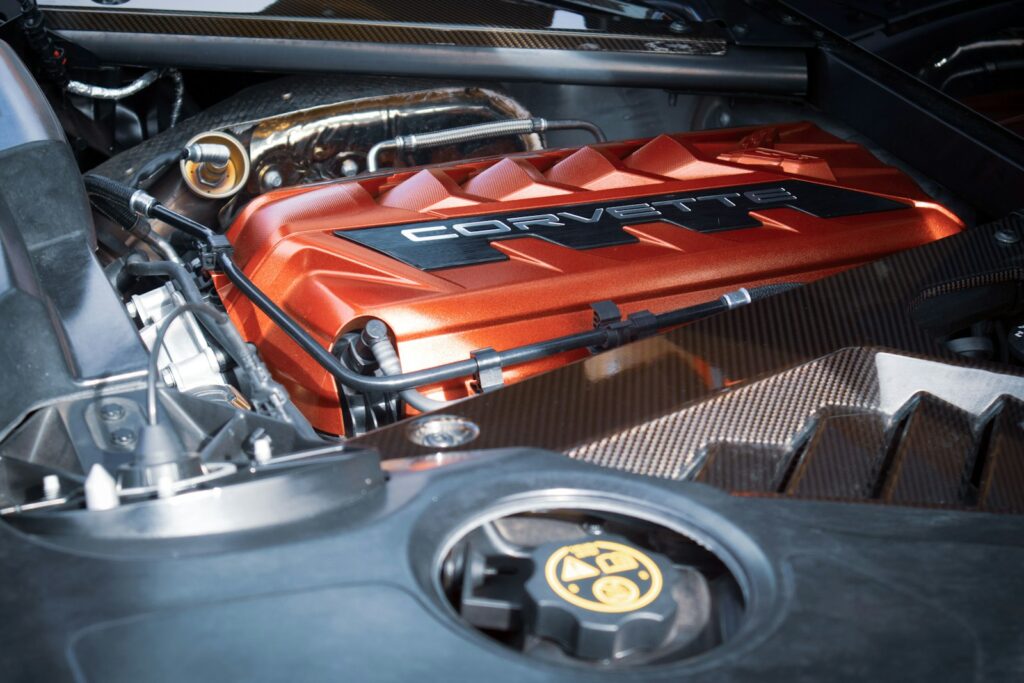
It took the total overhaul of the mechanical systems in the car to reach such extreme performance. The project was based on a reinforced LT2 engine fitted with twin Garrett G35 900 turbochargers. Engine management was very crucial in management of the huge power output. The FuelTech FT600 system was integrated with the factory computer to ensure that the engineers could have the system as a close control over engine behaviour as possible.
Advanced Build Components
- Twin turbo engine setup
- Advanced ECU tuning
- Improved grippers on the driveshafts
- High performance fuel system
- Precision engine control
- Extreme horsepower build
The car was also successful in the fuel delivery strategies. It was a dual fuel system that enabled normal driving in normal usage and switching to methanol in full power performance. Nitrous power was used to provide rapid acceleration as it moves away the starting line.
10. The Culture of Heart of Drag Racing
In spite of the amazing results of professional teams, the actual spirit of C8 platform is often revealed in local drag strips throughout the nation. Race fans create a group that comes together on a weekend to test the upgrades and pursue quicker times. A great number of drivers record their progress on the internet, sharing the lessons and celebrating their gains. Such working atmosphere promotes the spread of knowledge to the individuals that are passionate about speed and engineering.
Community Racing Spirit
- Local drag racing events
- Performance based culture of enthusiasts
- Weekend track competitions
- Driver skill importance
- Racing community passion
- Personal record chasing
The unforeseen results are the most unforgettable sometimes. During one of the matches at Island Drag way, a modern C8 was to race against an older C5 Corvette. Although the car that was newer was more technologically advanced, the more experienced C5 driver was able to win due to the faster reaction times and therefore nothing has changed; skill is still important in drag racing.