






Titan’s Final Dive: A Detailed Account of the Warnings Ignored
The saga of the Titan submersible is one of the clearest examples of how human hubris, technological trials and errors and the ruthless reality of the deep sea converge. The most notorious shipwreck in history was tragically ended on June 18, 2023, when a vessel that was meant to explore the shipwreck took the lives of five individuals and sent the world into shock. What was to be an ambitious venture became a cautionary tale, bringing into question safety, regulation, and the boundaries of human invention.
Deep-sea exploration has always been a magnetically attractive practice over the years, a mixture of adventure and science. The Titanic sinking, which lies almost 3,800 meters in depth, is a particularly important attraction. The Titan submersible was an innovation of new era of personal exploration to these extreme areas and was guaranteed to bring close to the past and new experiences. But, like this tragedy showed, ambition that lacks strict precautions may be disastrous.
Behind the headlines and the dramatic images of the search mission, there is a narrative of neglected warnings, engineering risks and a culture that put more emphasis on the exploration rather than on caution. The death of the Titan is a chilling reminder that though we live in a technologically advanced world, still forces of nature are overwhelming, and human life is delicate in the crushing atmosphere of the deep ocean.
1. The Crew and their trip
The Titan hosted five people who were curious and adventurous. The mission was led by Stockton Rush, the CEO of OceanGate and pilot of the vessel. The crew was rounded out with French deep-sea expert Paul-Henri Nargeolet, British businessman and aviator Hamish Harding, and Pakistani-British businessman Shahzada Dawood and his 19-year-old son Suleman. They left St. Johns, Newfoundland on the support vessel MV Polar Prince with the intention of being the first to see the Titanic wreck.
Details of Titan Expedition Crew:
- Stockton Rush- OceanGate CEO and pilot
- Paul-Henri Nargeolet-Expert on Titanic
- Hamish Harding-Businessman and aviator
- Shahzada Dawood & son Suleman
- Leaving St. Johns, Newfoundland
Routine communication started with text messages and positioning pings but communications stopped after only 1 hour and 33 minutes of descent. An international search and rescue mission was initiated when the submersible did not surface and included the U.S and Canadian Coast Guards. Naval ships, remotely operated vehicles, and military aircraft were in the remote waters of the North Atlantic.
It was four anxious days before it was feared that the crew would run out of oxygen and die. Sadly, on June 22, the search revealed a debris field that proved that all five occupants had died. Initially a more or less adventurous journey became a world tragedy, which made it possible to see the dangers of deep-sea exploration.
2. Finding of the Debris
The debris of the Titan was found about 500 meters away at the bow of the titanic. The tail cone and titanium end bells of the pressure chamber were among the vital components scattered all over the seabed. Specialists verified that the destruction was caused by a disastrous breakdown of the pressure chamber and the explosion occurred at such a high rate that the crew was unable to feel it.
Key Findings of Titan Debris:
- Wreckage 500 meters off Titanic bow
- Tail cone & titanium pressure end bells
- Catastrophic implosion confirmed
- Crew that cannot perceive event
- Sound fault observed by the U.S. Navy
A sound detection system that was used by the U.S. Navy detected something wrong around the time of the implosion. This was withheld at first, but later informed the search efforts. When the debris was discovered, it proved a tragic end to the crew and transformed a voyage that had set out to discover the world into a fatal event.
The technicalities of the explosion highlight the very high risks of deep sea operations. The harsh environment and the inability to make mistakes under extreme pressure and unforgiving conditions in the bottom of the ocean are a reminder of the dangers that the exploration of the deepest points of the ocean can have.
3. The building and construction of the Titan
The Titan was 6.7 meters in length, and constructed using a mixture of carbon fiber and titanium. Its controls were unusual and this was because Stockton Rush had his own preference of using innovative methods rather than the traditional method. The submersible was publicized as having the input of major scientific and aerospace organizations, but these organizations later denied that they were involved in anything beyond a token contribution and did not involve themselves in making important engineering decisions or in the ultimate testing.
Considerable Design features include:
- Length of 6.7 meters
- Construction made of carbon fiber and titanium
- Unconventional control systems
- Minor participation of the scientific institutions
- Creative but circumvented conventional safety
The philosophy of Rush was based on innovation and readiness to break the rules of regulation. He made a speech attacking safety rules as being too restrictive, and considered risk to be a natural aspect of exploration. This attitude affected the design decisions by bypassing the normal safety certifications. Although the Titan was highly engineered in certain aspects, it also captured the fine margin between ambition and prudent operation.
The construction of the vessel underscores the role of individual vision and risk-taking in determining engineering projects that require high stakes. It is a reminder that even the most advanced designs can be accompanied by a risk, and in particular, when conventional safety measures are violated in favor of something new.
4. Absence of Regulatory Control
The experience of the operation of the Titan demonstrated one of the key gaps in maritime safety: the lack of independent certification. Since it was in international waters, it did not receive the same regulatory scrutiny as vessels that were in national jurisdictions. Passengers were dubbed mission specialists and charged hefty sums and signed extensive waivers accepting the experimental nature of the submersible and risk.
Regulatory Loopholes and Safety Issues:
- No certification needed
- Working in international waters
- Waivers were signed by passengers
- Experimental craft with inherent risks
- Safety could not be guaranteed by legal protection
These waivers covered a legal responsibility, but did not do anything to mitigate technical vulnerabilities. The Titan was more or less a test ship to make its way in one of the most adverse conditions on the planet, without an independent check of its strength or safety measures.
The absence of regulation highlights the risks of uncontrolled experimentation without regular controls. It shows that legal agreements cannot substitute the intensive engineering inspection, particularly in extreme and unforgiving conditions.

5. Early Warnings Ignored
Before the Titan finally went down some people who knew what they were talking about were saying that something was very wrong. They were warning everyone about a safety problem. The experts and people who worked with the Titan were pointing out some weaknesses. If someone had listened to them and fixed these weaknesses the bad thing that happened might not have occurred. The Titan might have been okay if they had taken care of these problems.
Ignored Concerns and Safety Issues:
- 2018: Viewport rated only 1,300m
- Hull warnings were too late
- Scientists condemned experimental design, commercial application
- Rush disregarded recommendations, exaggerated safety compliance
- McCallum likened dives to Titanic claim
These frequent warning signals indicate that the disaster was not an isolated accident, but a product of structural risks exacerbated by overconfidence and ignoring of best engineering practice. The tragedy of Titan highlights the importance of safety over innovation and marketing and demonstrates the possibility of fatally serious results when the risky conditions are not taken into account, and the initial warnings are disregarded.
6. Operational Challenges
The Titan was experiencing continuous challenges in its operations. The technical issues were minor failures as well as structural issues that were a threat to the submersible and its crew. These problems underscored the experimental quality of the vessel and the difficulties of deep-sea exploration, in which any minor mistakes could be disastrous. Operations went on despite constant caution and accidents, revealing the conflict between ambition and safety in extreme environments. Human will coupled with untested engineering had the effect of repeatedly pushing the boundaries of what was possible under the surface of the ocean.
Key Operational Challenges:
- Thruster installed astern, making her move erratically
- Critical components were damaged by battery failures
- Small accidents made day-to-day business difficult
- High-acoustic event was a sign of severe damage
- Delaminated structural integrity is permanently weakened
The missions of the Titan have since become more risky after the acoustic event in July 2022. Every plunge had the risk of being disastrous, and engineers and pilots had to juggle between experimental technology and operational needs. These accidents illustrated the guile, as well as the hazards of pushing mechanical and human limits in extreme conditions.
The technical problems never brought the crew down, as they improvised and changed to make the submersible work. But the damage accrued and the experimental character of the vessel implied that with each following dive there were increased risks. An account of how Titan had difficulty in its operations is a dramatic example of how vulnerable the balance between innovation and safety is when exploring the deep seas.
7. Final Communications
The last message written by a person sent by the Titan was on June 18, 2023; it merely said, “dropped two wts” and probably this was a routine buoyancy adjustment. The last automated positioning signal was received some moments later followed by complete silence. The crew did not demonstrate any anticipation of the oncoming disaster, which underscored the abrupt and inexcusable nature of deep-sea environments. These last messages point out the importance of how even small messages can have vital content in extreme situations.
Key Final Communications:
- Final report said routine buoyancy check
- End signal to the automated receiver, and quiet
- Crew not ready when there was an explosion
- There is no room in extreme environments
- Life or death was a matter of milliseconds
The short communications depict the vulnerability of human activity in hazardous settings. Even the experienced people are not always able to foresee and take action to some sudden disaster as the final moments of the Titan demonstrate. These messages, despite being very brief, demonstrate the usual workflow and the extreme susceptibility of deep-sea exploration.
The abrupt termination of the signals of the Titan emphasizes the risks of experimental missions. The incident is a bitter experience in terms of planning, technology and how unforgiving the deep ocean is. It emphasizes the necessity of strict safety precautions when it comes to the loss of human life in such harsh circumstances.
8. International Search and Recovery
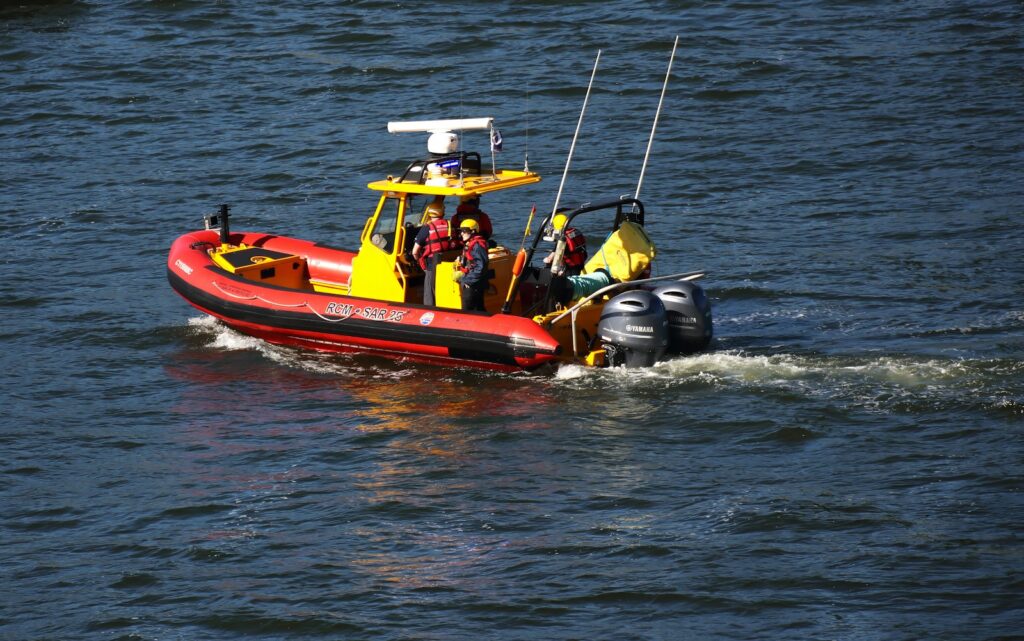
A massive multinational search and recovery operation was initiated after the disappearance of the Titan. Both the military and the civilian forces participated, and they used the latest technology such as remotely controlled vehicles. The operation entailed specific coordination, technical know-how, and stamina in the rough oceans. Eventually, the Horizon Arctic recovered major pieces of the submersible, such as the tail cone, landing frame, and titanium end caps. The forensic examination of presumed human remains was collected with a sad ending to the mission.
Important Search and Recovery Operations:
- Multi-national search was involved
- State-of-the-art remotely controlled vehicles put into operation
- Horizon Arctic recovered major submersible parts
- Forensic analysis collected presumed remains
- Activities emphasized severe tasks in the ocean
The recovery highlighted the extreme challenge of finding objects at a great depth under water. Every operation was meticulously planned, involved specialized equipment, and required cooperation among countries, indicating the stakes involved in the deep-sea operations. The endeavor also demonstrated that technology, dexterity and human will in harsh circumstances intersect.
These activities demonstrated the remarkable resources involved in conducting deep-ocean recovery. They also emphasized the emotional burden of such missions besides the technical obstacles since the teams had to instill a sense of closure following a sad demise. It is an international struggle that is a reminder on the strength and weakness of man in the depths of the ocean.
9. Investigations and Lessons Learned
After the tragedy of the Titan, several investigations were initiated to identify the real causes of the explosion. Technical failures, human choices, and regulatory loopholes were investigated by agencies such as the U.S. Coast Guard and the Transportation Safety Board of Canada. Such investigations are necessary to know how the disaster happened and prevent the same in future.
Most important Investigations and Lessons:
- Formal inquiry headed by U.S. Coast Guard
- Involved: Transportation Safety Board of Canada
- Detailed technical failures
- Human decisions reviewed for accountability
- Future safety regulations are guided by lessons
The studies also emphasized the wider roles of the private exploration organizations. In extreme environments, engineering is not the only critical aspect to be ethically and managerially monitored in cases where human lives are at stake. These reviews demonstrate the significance of clear-cut protocols, transparency, and readiness in experimental missions.
These research works offer useful insights on future deep-sea missions by looking at the underlying reasons and the flaws in its operations. They remind both the industry and the population at large that advanced exploration involves certain risks that should be well handled and a balance between ambitions and safety should be taken.
10. Legacy of the Titan Tragedy
The Titan tragedy is a reminder that we need to be careful when we try to do things. We have to make sure we are safe while we are trying to achieve our goals. The Titan tragedy was very sad for the families of the people who died. It also made people around the world think about how we should explore new places and try new things. We need to remember that we have to be prepared and respect the dangers of going to extreme places. The story of the Titan tells us that we have to be brave and curious. We also have to be safe.
Key Legacy Lessons:
- Ambition must balance with caution
- Safety cannot be overshadowed by curiosity
- Tragedy affected families and society
- Lessons influence future exploration practices
- Respect nature’s unforgiving forces
The Titan incident will be remembered for a time as a reminder of what can go wrong when we take too many risks. It shows us that people want to explore and discover things but we have to be careful. The story of the Titan teaches us about the importance of being safe and responsible not, about technology and innovation.
The legacy of the Titan tragedy is a reminder of how brave and curious people can be. It also reminds us of the dangers of nature and how we have to be careful. The Titan tragedy teaches explorers, engineers and all of us that we have to be prepared, careful and responsible when we try to do things. The Titan tragedy is a lesson that will stay with us for a time.