




Ten Iconic German Aircraft That Defined Aviation History
Germany’s aviation legacy includes some of the most innovative and influential aircraft ever built. From early fighters and enormous flying boats to revolutionary helicopters and the first operational jet fighter, German engineers repeatedly pushed aircraft design in new directions. Choosing only ten is difficult because many worthy aircraft could have been included, but this selection focuses on significant machines rather than other historic German craft such as airships.
The aircraft covered here range from famous workhorses to less familiar designs. Some were defined by speed, others by versatility, engineering innovation, scale, or their influence on future aircraft. Together, they demonstrate the ambition and technical creativity that shaped different eras of aviation history.
1. Focke-Wulf Fw 187
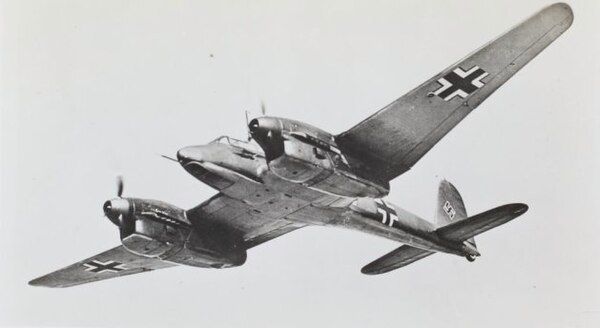
The Focke-Wulf Fw 187 was a single-seat twin-engine fighter aircraft designed by Kurt Tank. The designer intended to create a fighter capable of matching the performance of a single-engine fighter plane but with the increased fuel efficiency and combat capabilities. It was the Fw 187’s sleek design that allowed this aircraft to handle high speeds while minimizing the aircraft’s drag. In addition, the Fw 187’s cockpit’s placement and reduced complexity of the design contributed to the overall superb handling of this fighter.
Fw 187 Performance Highlights:
- Single-seat twin-engine fighter design
- Prototype reached 326 mph
- Later reached 394 mph
- Armed with six weapons
- Only nine aircraft built
Fw 187 was designed to host two cannons and four MGs, making it a potential rival of the Messerschmitt Bf 109. However, the project was terminated due to the political pressure, which favored the Me 210. Moreover, the later prototypes were modified to carry two seats, in order to compete with the Bf 110. Ultimately, the Focke-Wulf company canceled the Fw 187 project and focused on the Fw 190 design.
2. Dornier Do X
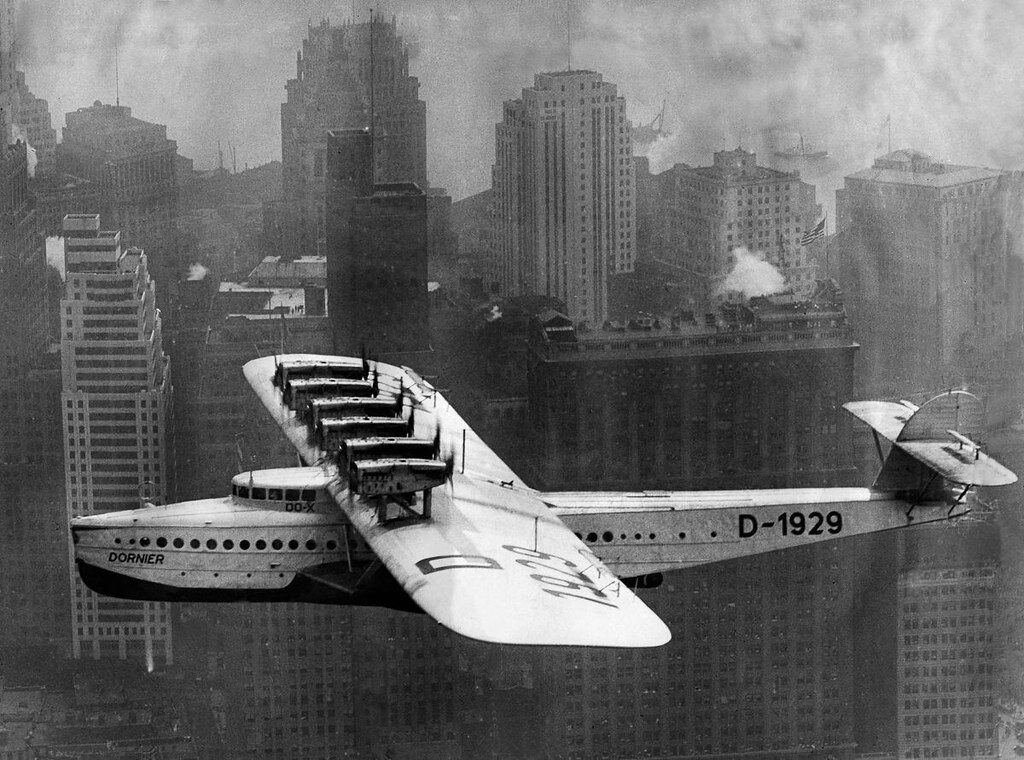
Designed and built in Germany, the Dornier Do X was a monster of a flying boat. When it was introduced in 1929, the Dornier Do X was the largest and heaviest aircraft in the world. The 1929 prototype had a wingspan of 47.8 meters and length 40.05 meters. In addition to the imposing size of the Do X, its complexity was also remarkable. Due to the Versailles Treaty, the official Dornier factory was located in Switzerland, and the Do X prototype was assembled there as well. Eventually, the Do X was equipped with twelve Curtiss V-1570 engines on top of the wings, developing a total power of 7,200 hp.
Dornier Do X Scale Highlights:
- Largest flying boat in 1929
- Twelve engines powered aircraft
- Produced 7,200 horsepower combined
- Carried 169 people aboard
- Only three aircraft built
Moreover, the Dornier Do X flew with 169 passengers during its demonstration in 1929. The Do X could be described as a luxury cruise liner for the skies. Nevertheless, such an aircraft could not gain popularity with its ambitious design and unique features. During the production process, there were a number of accidents, and the airline industry’s demands changed as well, further affecting the development of this project. Ultimately, only three aircraft were built between 1929 and 1932.
3. Junkers Ju 88
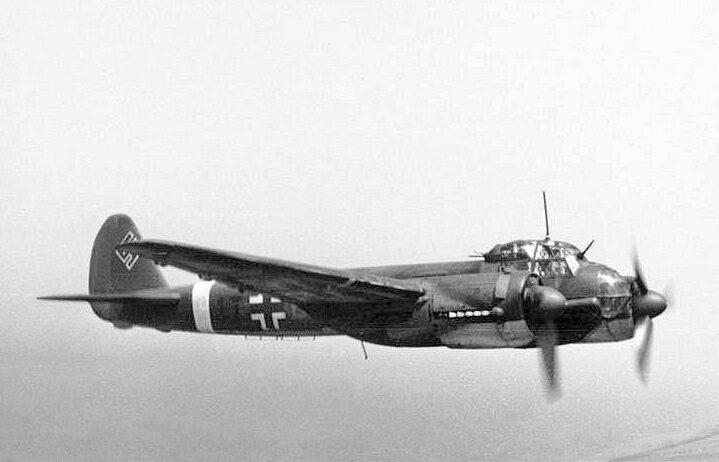
Fast, versatile and powerful, Junkers Ju 88 saw the most extensive use during the Second World War and became one of the most iconic aircraft of the Luftwaffe. Ju 88 was one of the few twin-engine bombers capable of withstanding attacks at virtually all altitudes, which in turn allowed it to see action as a night-fighter, reconnaissance aircraft, dive-bomber, torpedo-plane, transport, and even a heavy fighter. Ju 88’s special variants could carry a 75 mm PaK 40 anti-tank gun as well as a unique set of flying bombs guided by another fighter plane.
Junkers Ju 88 Versatility:
- Originally designed as fast bomber
- Adapted for numerous combat roles
- Used radar for night fighting
- Over 15,000 aircraft manufactured
- Production continued through 1945
The flexibility of the Ju 88 design is what delivered its overall success. This aircraft was able to be upgraded with different equipment and weaponry, in order to fulfill a variety of missions. Over 15,000 aircrafts of this type were built and used during the war, which speaks of its popularity and efficiency.
4. Focke-Wulf Fw 190
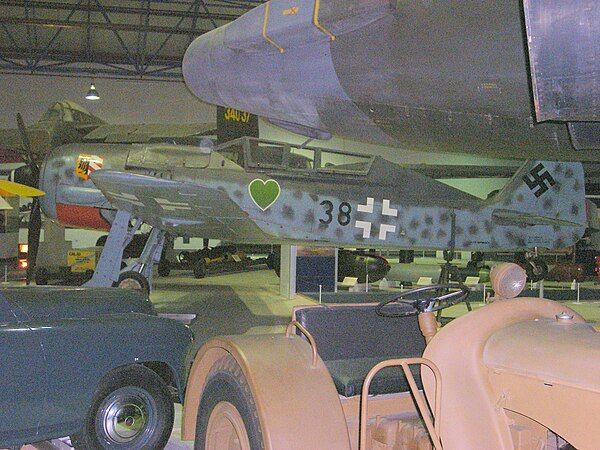
Focke-Wulf Fw 190A was a fighter aircraft, which appeared in the 1941 and changed the dynamic of the aerial warfare. Prior to introducing this project, German Luftwaffe and RAF were using Bf 109 and Supermarine Spitfire, while the two nations’ aircrafts were rather evenly matched in terms of performance. When Fw 190A appeared, it immediately outnumbered Spitfire Mk V. It could climb faster and had a better roll performance than its rivals.
Fw 190 Combat Advantages:
- Arrived during 1941
- Outperformed Spitfire Mk V
- Faster across different altitudes
- Reduced pilot workload significantly
- Over 20,000 aircraft built
Fw 190A could be described as a very pilot-friendly fighter, due to its excellent visibility and reduced workload. During the WWII, Fw 190 received numerous upgrades, which ultimately made it heavier and more powerful. It was used as a ground-attack aircraft and heavily fought in the airspace of Germany. More than 20,000 Fw 190 aircrafts were built.
5. Messerschmitt Me 262
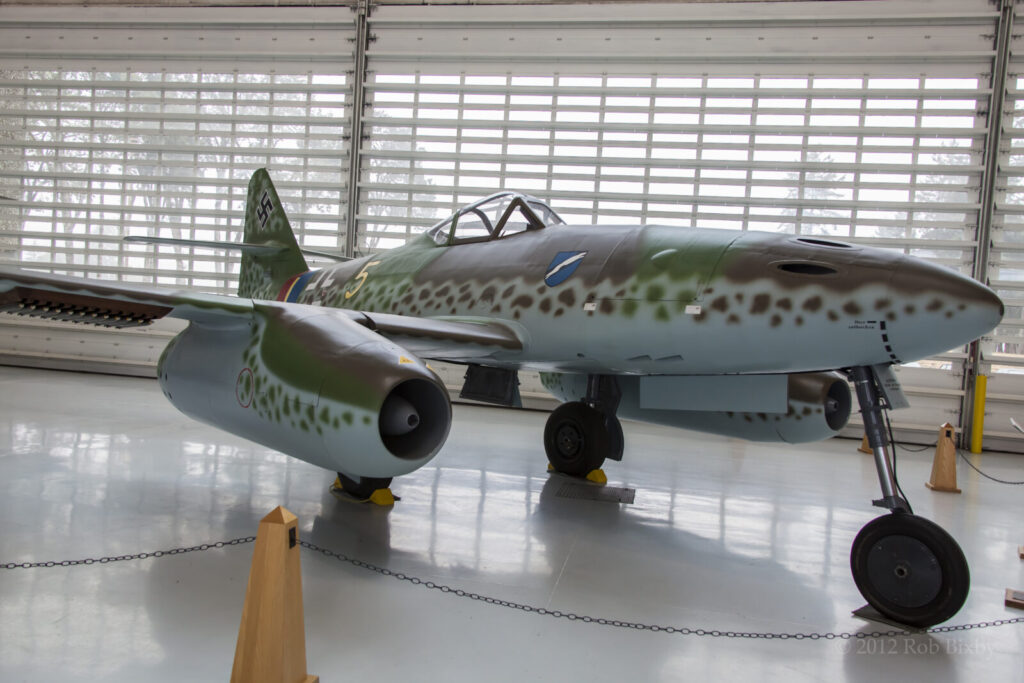
The Messerschmitt Me 262 was the first jet fighter aircraft to see combat and it truly was a thing of the future. While most of the WWII aircrafts had a top speed of around 450 mph, the Me 262 could achieve 560 mph. Thus, it was significantly faster than most of the fighters of that time, which gave it a considerable advantage on the battlefield. However, the Messerschmitt Me 262’s power and speed were defeated by the relentless enemy fire.
Me 262 Jet Age Advantages:
- First operational pure jet fighter
- Reached approximately 560 mph
- Carried up to four cannons
- Could carry unguided rockets
- Destroyed around 550 Allied aircraft
Me 262 was armed with four 30-mm automatic cannons and could carry unguided rockets on its fuselage. The production of the Me 262 aircrafts was severely limited due to the material shortage, caused by the strategic bombing of the German manufacturing facilities. The latter issue, along with the changes in the tactical doctrines and the superior numbers of the enemy aircrafts, led to the failure of the Me 262 project. Nevertheless, the Messerschmitt Me 262 was the fastest fighter of WWII and the first jet aircraft to see combat.
6. Albatros D.III
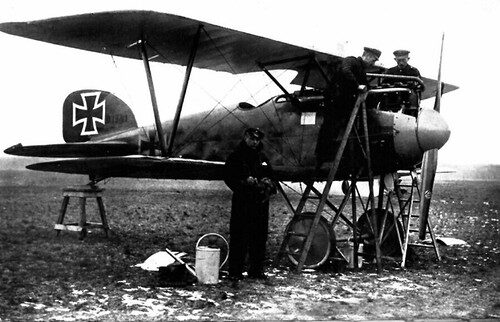
The Albatros D.III, together with its successor D.V, formed the basis of Germany’s fighter aircrafts of 1917 and the first half of 1918. Combining excellent speed, reliability and firepower, Albatros D.III became a very popular fighter aircraft of WWI. It had a reputation of being one the most challenging aircrafts to shoot down at that time. Moreover, it was one the best German aircrafts at the time of its appearance.
Albatros D.III Design Strengths:
- Backbone of German fighter force
- Combined speed and sturdy construction
- Powerful armament for its era
- Oeffag redesigned the lower wing
- Austrian versions gained more speed
Nevertheless, Albatros D.III had a serious design flaw, which affected the integrity of its lower wings. German manufacturers addressed this issue with reinforced lower wings, which ultimately added to the weight of the aircraft. Oeffag’s designers developed a novel solution, which involved the modification of the lower wing, thus eliminating the possibility of its detachment. Moreover, they removed the large spinner, which allowed the propeller to rotate freely. This measure increased the aircraft’s speed by 9 mph. Ultimately, the Austrian D.IIIs retained their popularity through the end of the war.
7. Messerschmitt-Bölkow-Blohm Bo 105
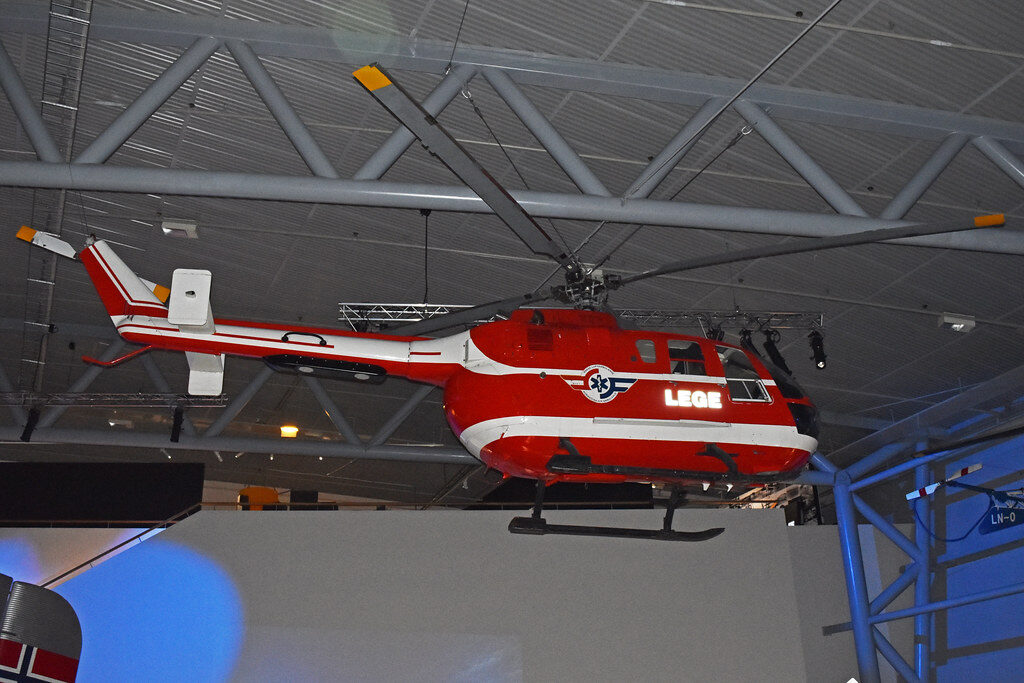
The Messerschmitt-Bölkow-Blohm Bo 105 was a landmark in the development of the modern helicopters. Its most notable feature was a hingeless rotor system, which made the Bo 105 the first practical helicopter of this type. The agility of the Bo 105 allowed it to perform such incredible feats as inverted loops. Thus, the development of the Bo 105 was truly groundbreaking and served as the foundation for the modern helicopter design.
Bo 105 Innovation Highlights:
- Featured a hingeless rotor
- Achieved extraordinary helicopter agility
- Could perform inverted loops
- Served military and government agencies
- More than 1,500 built
The research and development of a hingeless rotor technology began in 1948, when Bölkow started working on the future helicopter design. In 1979, the West German Army began using the anti-tank version of the Bo 105 (Bo 105 PAH-1). Equipped with HOT anti-tank missiles, the PAH-1 became known for its low-altitude flights and was painted in a special camouflage uniform. Moreover, as the first light twin-turbine helicopter, the Bo 105 set the foundation for the modern helicopters, including BK117, EC135/145 from Eurocopter Group. Over 1,500 Bo 105 helicopters were built between 1969 and 1997.
8. Siemens-Schuckert D.IV
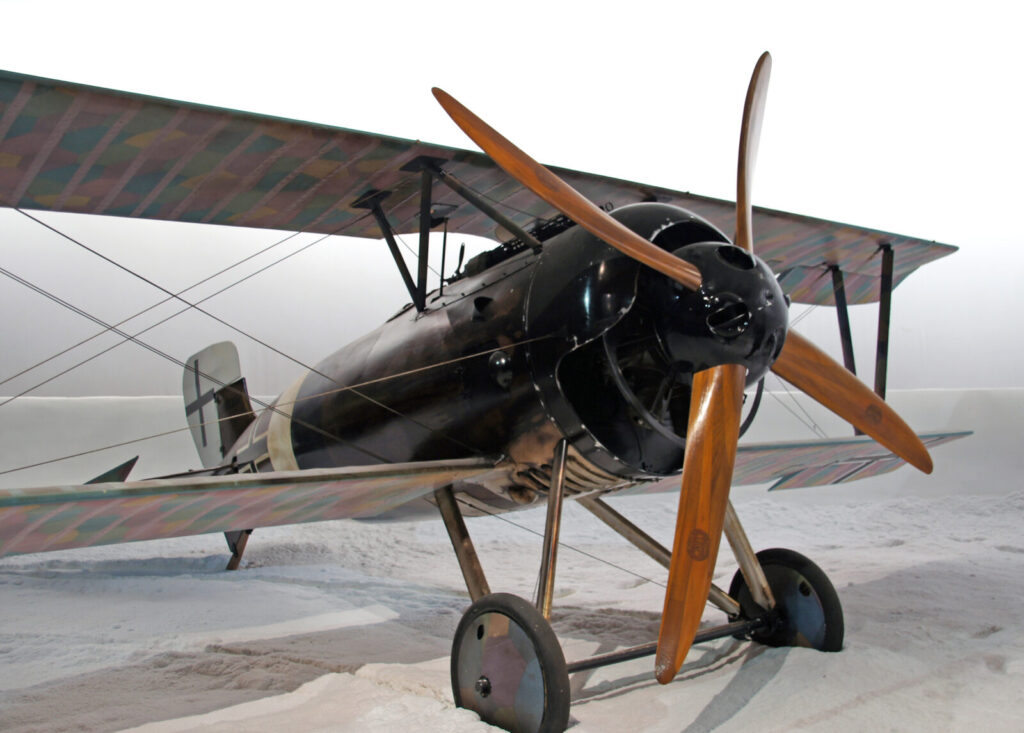
Siemens-Schuckert D.IV was one of the best interceptors of WWI. Thanks to the combination of a short fuselage and a powerful rotary engine, the Siemens-Schuckert D.IV appeared almost as a toy compared to the later aircrafts. However, the aircraft had a highly sophisticated engine at its disposal, which allowed it to reach amazing speeds. The Siemens-Halske Sh.III powerplant of the D.IV was a product of the further development of the rotary engine technology. Using an innovative crank and gear design, the designers managed to eliminate the torque effect experienced by other WWI aircrafts. Moreover, a high compression ratio ensured a reliable performance at higher altitudes.
Siemens-Schuckert D.IV Performance:
- Finest German interceptor of war
- Advanced eleven-cylinder rotary engine
- Reduced dangerous engine torque
- Exceptional rate of climb
- Only 123 aircraft built
Due to the advanced powerplant technology, the D.IV had unparalleled climbing abilities. Thus, it could climb to 26,600 feet, outpacing the Fokker D.VII and becoming one of the fastest aircrafts of WWI. Nevertheless, this excellent but short-lived aircraft appeared too late to affect the course of the war. And although 123 D.IVs were built, the final specifications were later updated. Ultimately, the development of the D.IV was halted because of the Versailles Treaty.
9. Messerschmitt Bf 109
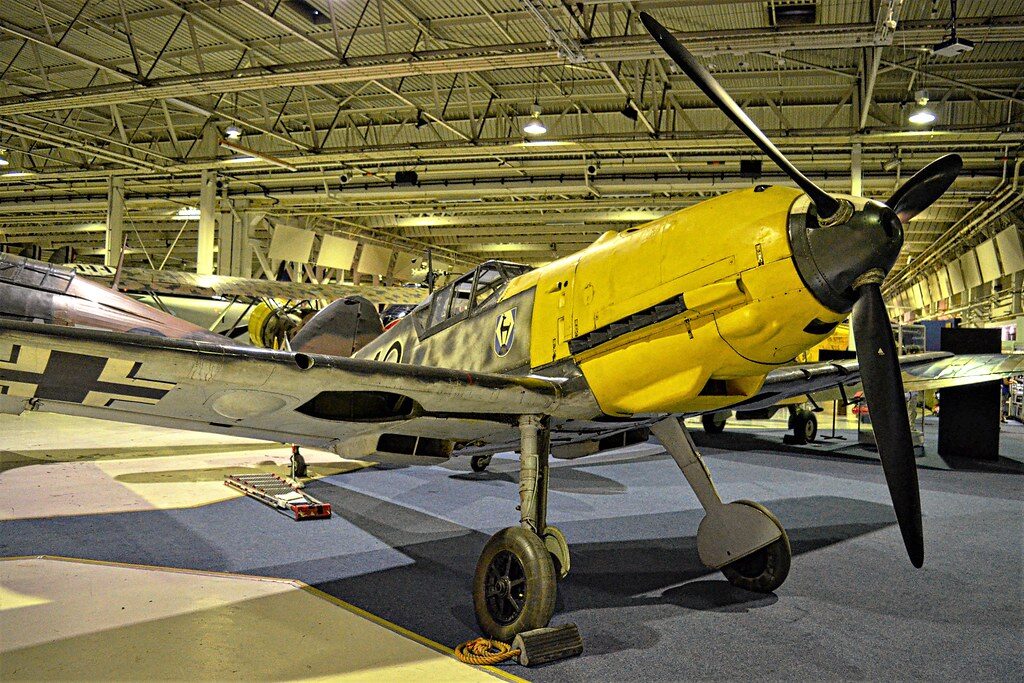
The Messerschmitt Bf 109 was probably the most successful fighter aircraft of WWII. It was one the most produced aircrafts in the world, with over 34,000 units built. Willy Messerschmitt designed the Bf 109 as a fighter capable of combining high speed, maneuverability and power. These features of the Bf 109 were delivered by the advanced technologies, which were applied to this aircraft. For instance, the Bf 109 was the first German fighter to have an enclosed cockpit and the use of all-metal construction. Furthermore, it had a powerful Jumo 210A engine.
Bf 109 Historic Achievements:
- First flew during 1935
- More than 34,000 were built
- Combined speed and maneuverability
- Dominated much of World War II
- Over 20,000 confirmed aerial victories
Messerschmitt Bf 109 was a high-performance fighter aircraft, which combined speed, maneuverability, power and was relatively simple to produce. The Bf 109 had its combat debut in the Spanish Civil War and was later upgraded to become the dominant WWII fighter aircraft. In addition, it is believed that the Bf 109 was responsible for over 20,000 aerial victories.
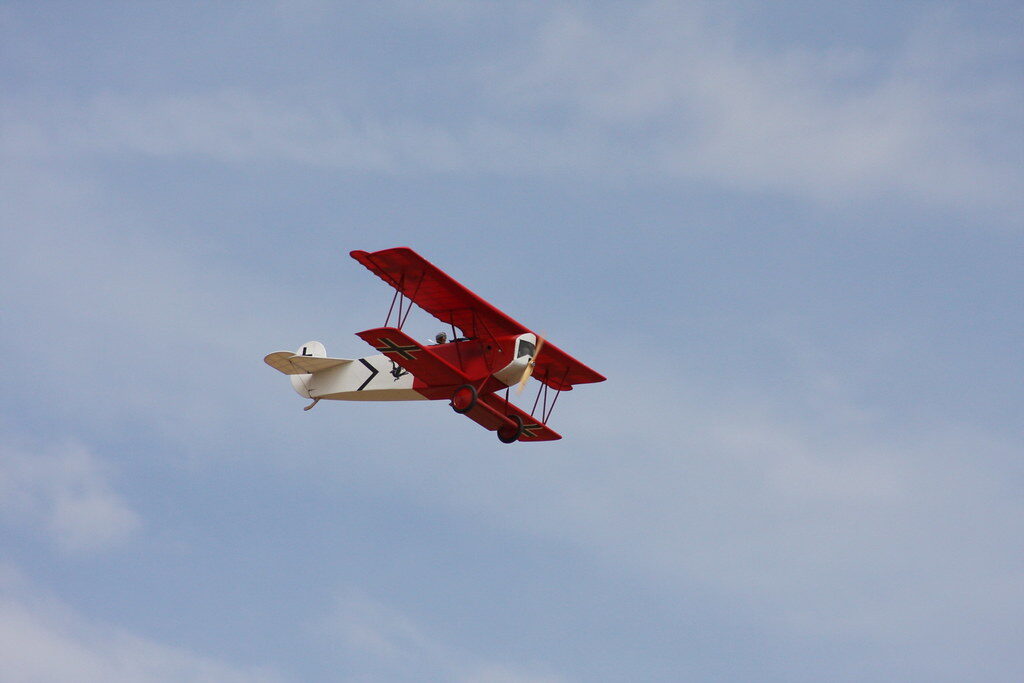
10. Fokker D.VII
Fokker D.VII was one the best fighters of WWI. Although it was not the fastest or the most maneuverable aircraft of that time, D.VII provided excellent overall performance with its reliable and powerful engine. Moreover, this aircraft had unique high-altitude capabilities and gentle landing characteristics.
Fokker D.VII Design Highlights:
- Excellent overall performance balance
- Strong high-altitude capabilities
- Forgiving handling characteristics
- Around 3,300 built by November
- Introduced self-supporting cantilever wings
Fokker D.VII was a reliable aircraft with excellent performance characteristics. It was relatively easy to fly even for an inexperienced pilot. In addition, D.VII could climb to great heights, which made it a real threat to most of the WWI aircrafts. The production of this aircraft began in the May of 1918, and approximately 3,300 aircrafts were built by November. Finally, the design of the Fokker D.VII also laid the foundation for the future aircraft design. The aircraft introduced the self-supporting cantilever wings, which became a novelty at the time.