

A Look Back at 1965 and the Rare 409-Powered Chevrolet Impala SS
The year 1965 was one of the most momentous in American history, seeing historic strides in civil rights, politics, culture, and innovation. The Selma to Montgomery marches on the nation’s capital led the push for voting rights for the African Americans, while President Lyndon B. Johnson signed the Voting Rights Act to protect those rights. The Immigration and Nationality Act changed immigration policies.
Achievements in the worlds of the arts, sports and space showed that 1966 was just as much a remarkable year. Singapore gained independence and the leadership of Prime Minister Lee Kuan Yew set the country on its path to becoming an economic powerhouse. The Beatles rocked their 55,600 fans at Shea Stadium in New York City, signalling how pop music was revolutionising live performances. And space achievements set imaginations alight.
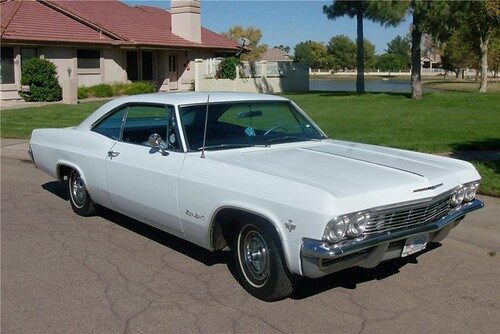
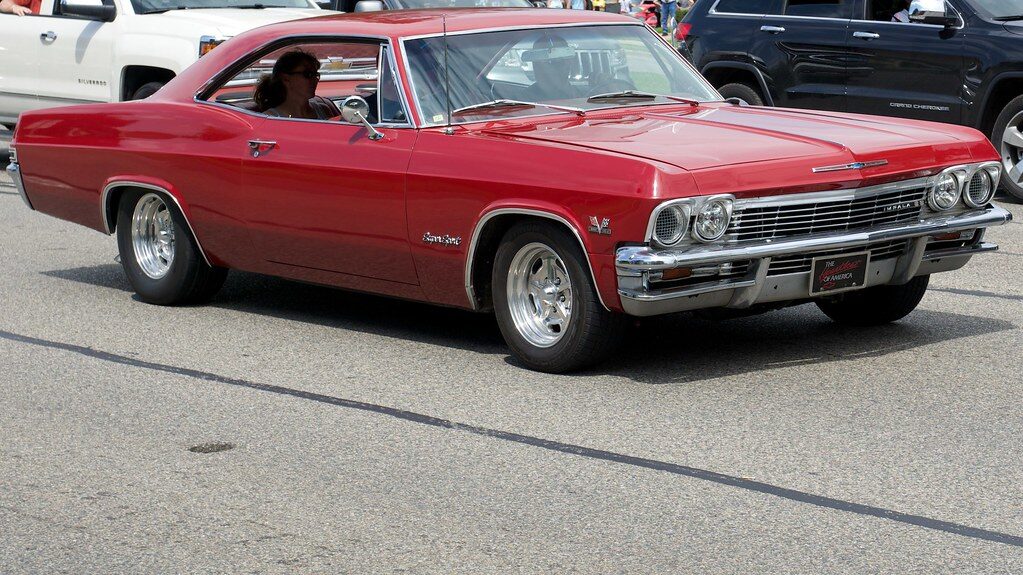
Between these adjustments, however, Chevrolet’s all-American market grew like wildfire, cranking out full-size Impalas in 1965 numbering approximately 1,046,500 units, reinforcing the model’s success in all of its styles, trims and horsepowers. Buyers not only had plenty of body styles and comfort features to pick from, but the choice of a few distinct engines, including the best-known-to-roadsters, the Impala Super Sport, featuring the venerable 409-cubic-inch V-8.
1. Chevrolet’s Record-Breaking Impala Sales in 1965
The full-sized Chevrolet Impala was a huge success in 1965, selling over a million cars. It offered American families and performance minded consumers everything they wanted with spacious interiors, unique styling and plenty of factory options. Chevrolet Impala was the common sight on the interstates, neighborhoods and dealerships that fans had grown accustomed to. Chevrolet also benefitted from being able to provide the full-size model experience to more than one demographic, the Impala.
What Made the Impala So Popular:
- Sales exceeded one million units
- Spacious interiors appealed to American families
- Distinctive styling attracted performance enthusiasts
- Factory options offered diverse ownership experiences
- Full-size proportions defined Chevrolet’s recognizable design
Buyers could opt for an inexpensive daily driver or the snazzier Super Sport version. This presence in two markets could have made the Impala a less well-defined but still widely recognizable Chevrolet. To today’s enthusiasts, the impressive sales numbers serve as a reminder of how rare specific versions are. While plenty of Impala buyers wanted one, not as many bought the 409 V-8 in its last production year. That discrepancy between popular demand and low production of a high-performance engine makes the 1965 Impala SS a Chevrolet standout.
2. The Legendary 409-Cubic-Inch V-8 Engine
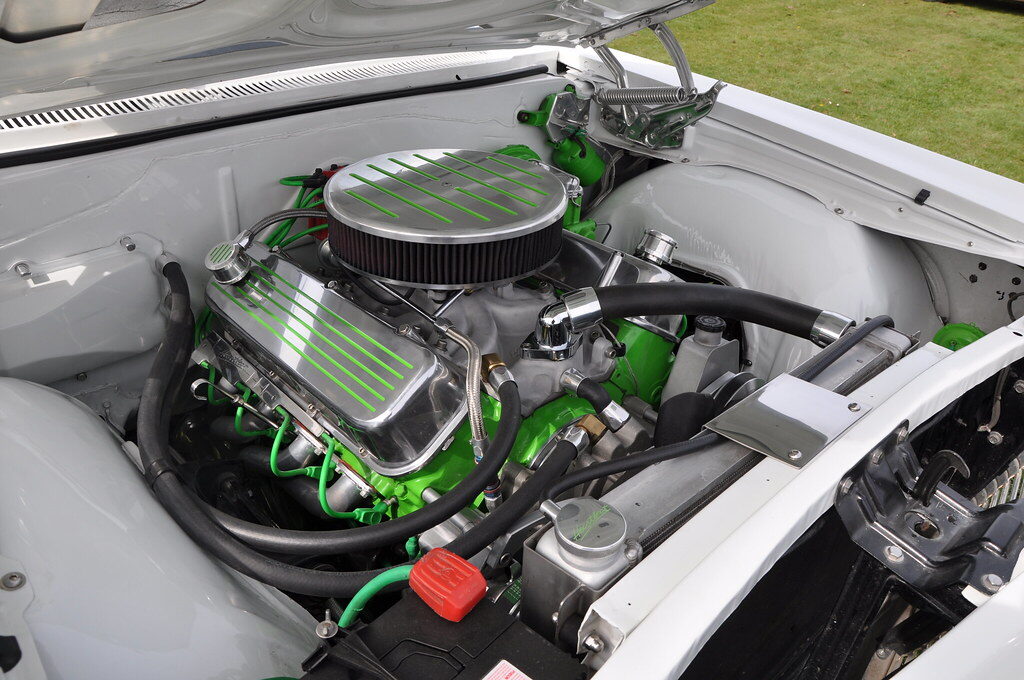
Chevrolet unveiled its 409-cube W-series V-8 as the 1960 model year was wrapping up in December 1960, and an engine so instantly popular with drag racers and horsepower junkies that it quickly became a legend. The 6.7-liter big block produced enough zip to put Chevrolet in the hot performance marketplace. The engine gained legendary status for its ability to rev even though it was hefty in size.
Engineering Details Behind the Legendary 409:
- 409 cubic inches of engine displacement
- Approximately 6.7 liters of capacity
- Introduced in December 1960
- Available with dual four-barrel carburetors
- Recognized for its performance heritage
With optional dual four-barrel carburetors, the power output could soar, and the engine gained additional notoriety on the racing circuits. The Beach Boys further cemented its legendary status in 1962 when they produced the hit song “409,” capturing the spirit of American muscle cars and American youth. But in 1965, the 409 was coming to the end of its life cycle. Chevrolet had a newer big-block in the works, including a 396-cubic-inch V-8. Ordering a 409-powered Impala SS created a somewhat unique pairing of performance, engineering history and scarcity.
3. A Rare Final-Year Performance Combination
Many want an 409 to commemorate a part of Chevrolet’s muscle car history that’s all but gone. An original 1965 Impala SS with the 409 marks the end of an era. Because Chevrolet moved on to newer V-8s, any Impala buyer who opted for that engine got a car that marked the end of a legendary run. The above production numbers for Impalas equipped with 409 engines bring the total number to over 2,000.
Details That Distinguish This Configuration:
- Limited production of 409-powered Impalas
- Just over 2,000 examples reportedly produced
- Early January 1965 build date
- Final-year availability of the celebrated 409
- Distinctive engine and model combination
As a result, that specific combination of engine and package makes a 409-powered Impala 1963 even more rare than an average, full-size car for that model year. It’s not just that it’s old, but that it also features the right motor. Another not-so-odd thing about the coupe is the fact that it’s build date is early January 1965. That falls at the front of the model year while the 409 engine was coming to a close. To a collector that is an interesting mix and information worth keeping notes on.
4. Evening Orchid: A Standout Exterior Color
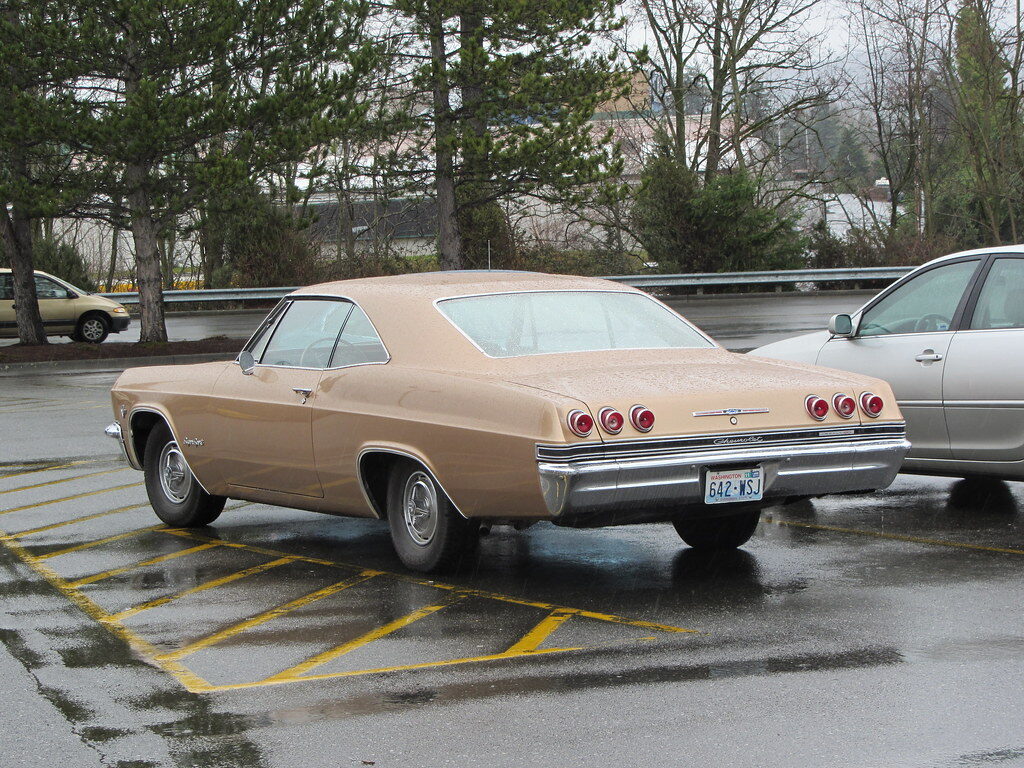
The most eye-catching aspect of this issue Impala SS is the Evening Orchid body finish. This offbeat hue sets this full-size coupe apart from the more common colors that are generally associated with American cars of the mid-1960s. Its offbeat personality suits the long lines and the substantial size of the Impala. You can see the reason for its popularity when we look at how the 1965 Chevrolet was designed. With its wide trunk, hood-like bodywork and the famous six taillight design, the car was practically begging for a unique finish.
Styling Features That Enhance Its Appearance:
- Distinctive Evening Orchid exterior finish
- Long body with substantial proportions
- Broad trunk and sculpted bodywork
- Signature six-taillight rear arrangement
- Uncommon color adds individual character
Depending on the way it hits the light, this paint can really bring out the contours, giving this coupe a very different character from a black, white or silver model. For the enthusiast, a factory color not only speaks to a cars’ appeal; a documented factory-correct originality can make the car even more appealing. Evening Orchid adds even more individuality to an already unique 409-powered Impala SS. The two of them out in a limited-production engine combination and a special production color set the bar for the most exceptional of the remaining full-size Chevrolets.
5. Single Four-Barrel Carburetion and Big-Block Power
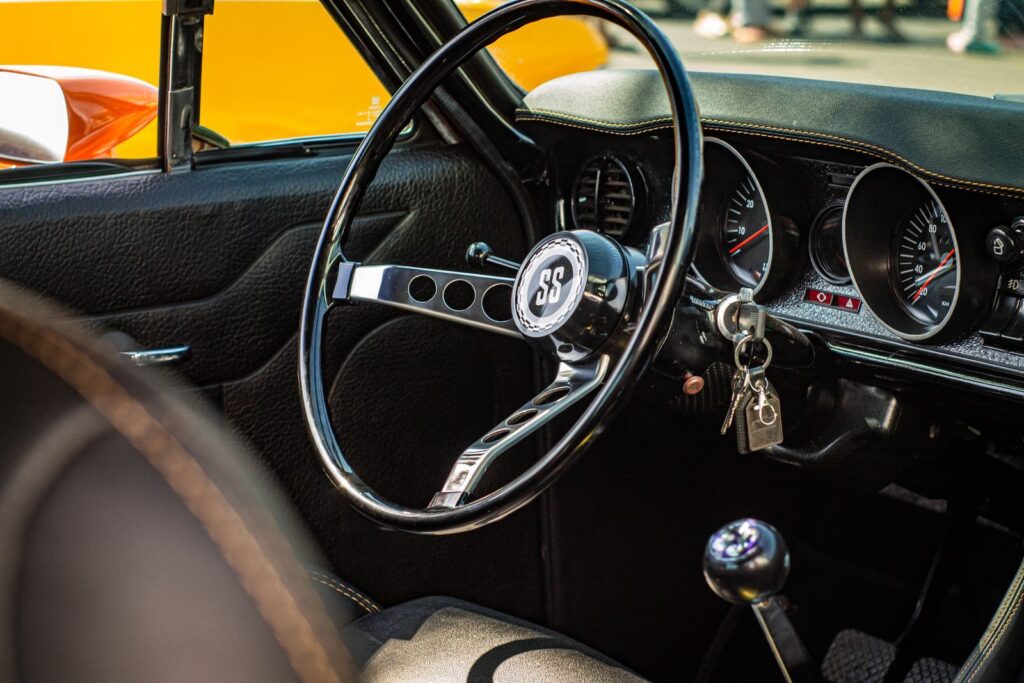
The Impala again has a 409 V-8 with the one four-barrel carburetor version of the engine and a relatively conservative 340 horsepower in the application with which the rating system used for this car is normally associated. The 409 with higher number of cylinders and dual four-barrel carburetors was listed at over 400 horsepower under the standards of the day for those figures.
Comparing the Available 409 Power Levels:
- Single four-barrel carburetor setup
- Factory-rated 340 horsepower output
- Dual four-barrel higher-output configurations available
- More than 400 horsepower in higher-output versions
- Big-block response defines its character
While the single carburetor engines exhibited a different output, the Impala still had rather impressive punch in a full-sized American coupe. The engine size and response were what defined it. The delivery is merely half the story. How the big-block engine sounds, how it feels physically, and how it communicates with the driver all go into making the 409 so unforgettable long after production of the engine ceased. In this Impala, the engine makes a direct link to an era when high-displacement, big-block V-8 engines defined American performance cars.
6. Four-Speed Manual Transmission and Driving Character
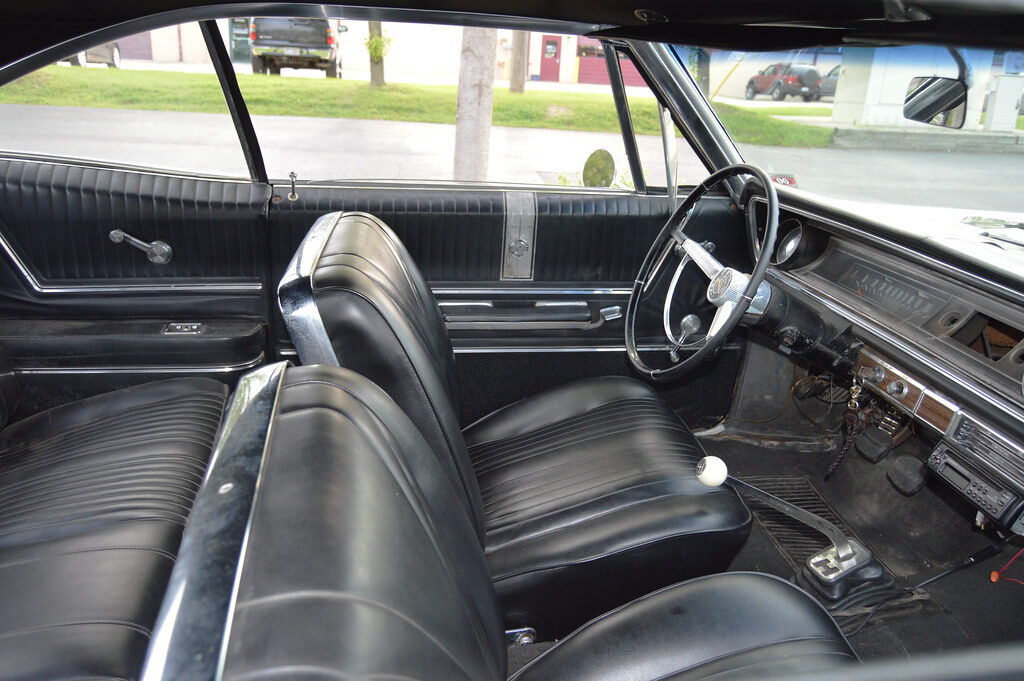
It brings some extra driving excitement to our featured Impala SS. Instead of a hydraulic-tipped automatic transmission, the driver chooses each gear himself, actively linking the engine and acceleration. Such a setup complements the 409’s lively personality. For the driver, changing gears maintains the engine’s performing power band while also indulging in the big-block’s roar and response. The four-speed adds a little more driver’s personality to the Impala than one might expect from such a large full-size coupe.
How the Manual Transmission Shapes Driving:
- Four-speed Muncie manual transmission
- Direct driver control over gear selection
- Acceleration linked to gear choice
- Engine response remains central to driving
- Traditional mechanical performance experience
Though certainly a big, full-sized full-impact, full-size coupe, the drivetrain just makes it all seem more a part of the muscle-car era. A V-8 coupled with a manual transmission is not exactly conventional, and it will take some management on your part – namely, when stepping on the throttle from a dead stop. It’s precisely that element of the experience that makes such a pairing so attractive to purists. As a result, this 1965 Impala SS isn’t just a cruiser.
7. Posi-Traction and Classic Tire Limitations
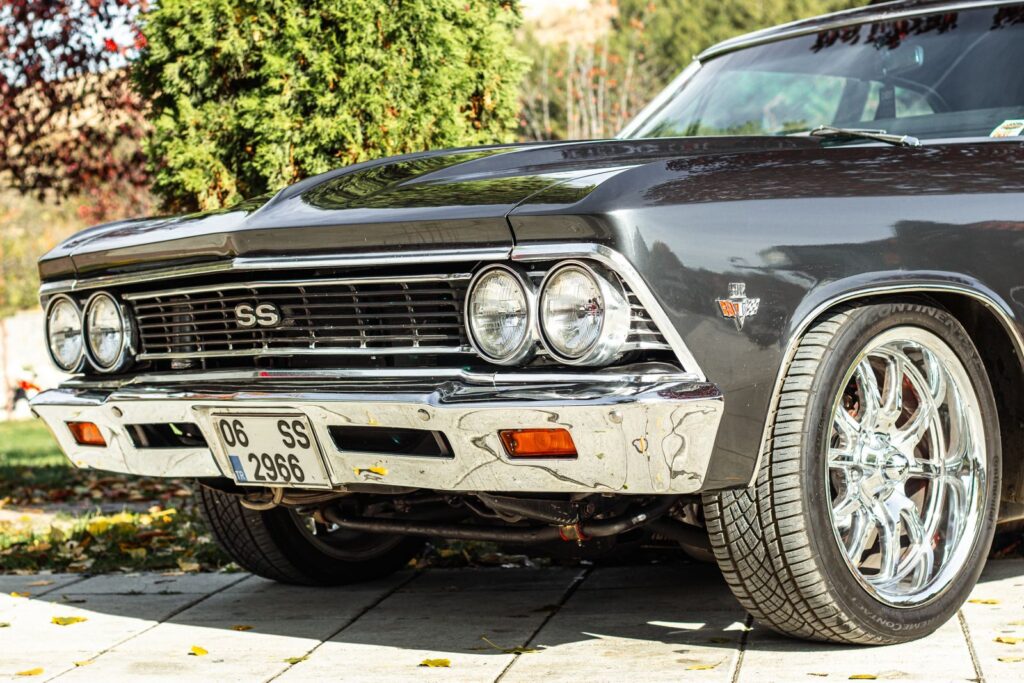
Getting the 409’s power to the pavement is a dilemma as old as performance cars of this era. This Impala still wears the stock 14-inch wheels with bias-ply tires, which have a starkly different profile than the wide tires on most modern performance vehicles. Grip depends on the road surface, tire condition and how much the driver abuses the throttle. Chevrolet’s Posi-Traction limited-slip rear differential reduces the likelihood of one driven wheel losing traction and spinning freely, making acceleration more effective when conditions allow.
Understanding the Car’s Traction Setup:
- Classic 14-inch wheels remain fitted
- Bias-ply tires reflect period equipment
- Posi-Traction limited-slip rear differential
- Throttle control affects available traction
- Road conditions influence acceleration performance
Of course, it doesn’t overcome the limitations of your tires or provide traction on every surface. These qualities are what can make an older muscle car so satisfying to drive. The Impala responds well to gentle throttle application and a driver who understands its linkage of power to rear wheel grip to overall weight. You need to consider the car in the context of 1960s engineering rather than present-day expectations.
8. Comfort and Convenience in a Performance Coupe
The Impala SS was built not only with muscle car specs but a laundry list of popular factory options. Air conditioning, power windows, power steering, and power brakes give a softer side to an otherwise rough and tough ride. All things that Chevrolet buyers could order on their big full-size Chevrolet. Power steering works especially well in a large coupe by making parking and low-speed maneuvering easier.
Factory Options That Improve Everyday Comfort:
- Air conditioning for cabin comfort
- Power windows for convenient operation
- Power steering reduces steering effort
- Power brakes support easier control
- Performance and comfort in one package
Power brakes, air conditioning and power windows all add a little relaxation to everyday driving without taking all the mechanical fun out of it. This mix of power and comfort is one of the key reasons to own an Impala. It could easily be a unique weekly driver, but one that still had plenty of the meat for enthusiast to appreciate. Chevrolet didn’t have to make you decide between the comfort and power they gave you both.
9. Originality, Restoration, and Documented Mileage
The special car is desirable not just because of its engine and its color. Its drive train and mechanical parts appear to be very close to their original configuration, maintaining most of the configuration the car had when it was new and leaving the factory. Original components are always important to collectors. The coupe saw a minor cosmetic refresh in the mid 90’s with a fresh coat of paint and some new old stock bumpers. The interior carpet was also replaced then, the rest of the interior being largely left in place after a good vacuum.
Details Relevant to Its Preservation History:
- Drivetrain and mechanical components reportedly original
- Cosmetic work completed during the mid-1990s
- Paint refreshed during earlier restoration work
- New-old-stock bumpers installed
- Odometer displays approximately 58,000 miles
This seems to have been a focus on bringing it back to life visually. According to the odometer, the odometer reading is about 58,000 miles. This is another data point in the history of the car; mileage cannot determine the condition of the car and it cannot trace the complete ownership history. However, it can provide additional detail when examined alongside other documentation, maintenance and inspection. As an original low-mileage and well-preserved interior example, this is an attractive vintage Chevrolet for many collectors.
10. Why the 1965 Impala SS Remains Collectible
The 1965 Chevrolet Impala SS combines a number of the qualities that make a classic car special: a popular big-block engine, a four-speed manual transmission, desirable factory options, and a less common exterior color. Each has something to offer, but in tandem it gives this full-size Impala coupe a more definitive character. From its prior core design history to the death of the 409 in 1965, I would say this one of its last hurrahs. And beyond the 409 engine history, Chevrolet’s lineup was transitioning to newer engine models.
Features That Support Its Collector Appeal:
- Legendary 409-cubic-inch V-8 engine
- Four-speed Muncie manual transmission
- Uncommon Evening Orchid exterior finish
- Largely original mechanical components reported
- Distinctive final-year performance configuration
With only a little over 2,000 built, Chevrolet 409 performance cars had a relatively short run. The Impala seen here was listed on Bring a Trailer, in an auction that was set to close on July 2. To collectors, it is more about the all-around package than rarity alone. The Evening Orchid finish, preserved mechanicals, documented mileage, and old-school big-block attitude all help transform this coupe into a worthy tribute to 1960s American motorculture.