

The VW ID. Buzz Captures The Original’s Magic In Almost Every Way
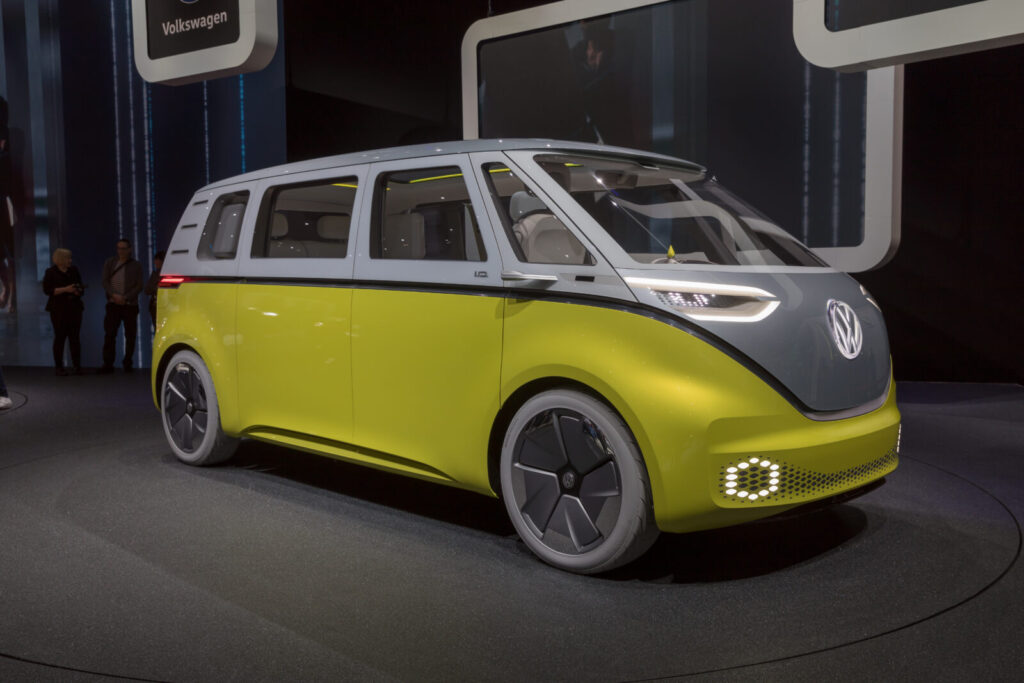
There are few motor vehicles as intrinsically linked to freedom and the open road as the Volkswagen Type 2 Microbus, with its recognizable smiley face silhouette becoming something of an icon during the 1950s and ‘60s an alternative mode of transport for the youthful, nomadic lifestyle. Volkswagen, of course, has taken their sweet time trying to make that feeling feel relevant once again and with the new all-electric 2025 ID. Buzz, this iconic look now fully electric for a new generation.
This is far from Volkswagen’s first time trying to engineer nostalgia into a marketable product; the New Beetle took up this charge a couple of decades ago as it dug up the heritage of the Type 1, but the ID. Buzz faces a more serious test. It needs to offer the same kind of emotional embrace of the original Type 2 while conforming to the high standards of safety, technology, performance, passenger packaging and daily comfort of today, and do it at a time when the marketplace has practical minivans and three-row electric SUVs with already impressive range, technology and family versatility.
Best in class by Personality The ID. Buzz makes its strongest play by personality: Its an instant recognizable object that draws curiosity from almost anyone that sees it and for those who have access to more than three decades of family history, they connect to the shape and the spirit of a different generation through a familiar vehicle. Whether that connection comes by memory of a VW Bus from years ago or by seeing a car like it in the original Cars movie with Fillmore, no one can doubt that The ID Buzz’s positive message isnt as fun as its interior that uses a completely modern electric foundation. Modern electric motor, versatile cabin and seating are standard issue inside its roomy Interior, but no amount of its limited electric range or the steep cost can dull some of its whimsical spirit.
1. A Modern Tribute to the Original Microbus
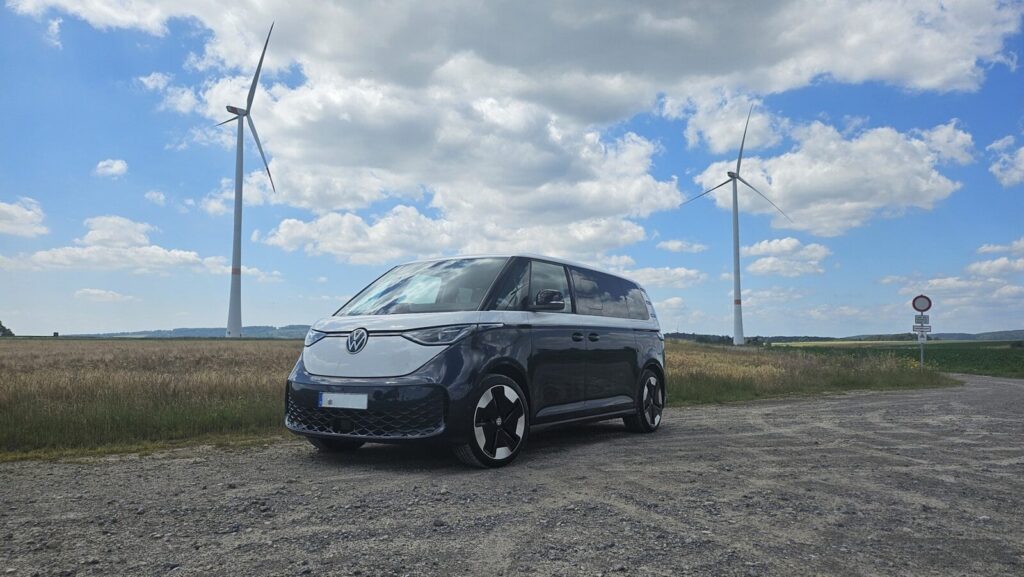
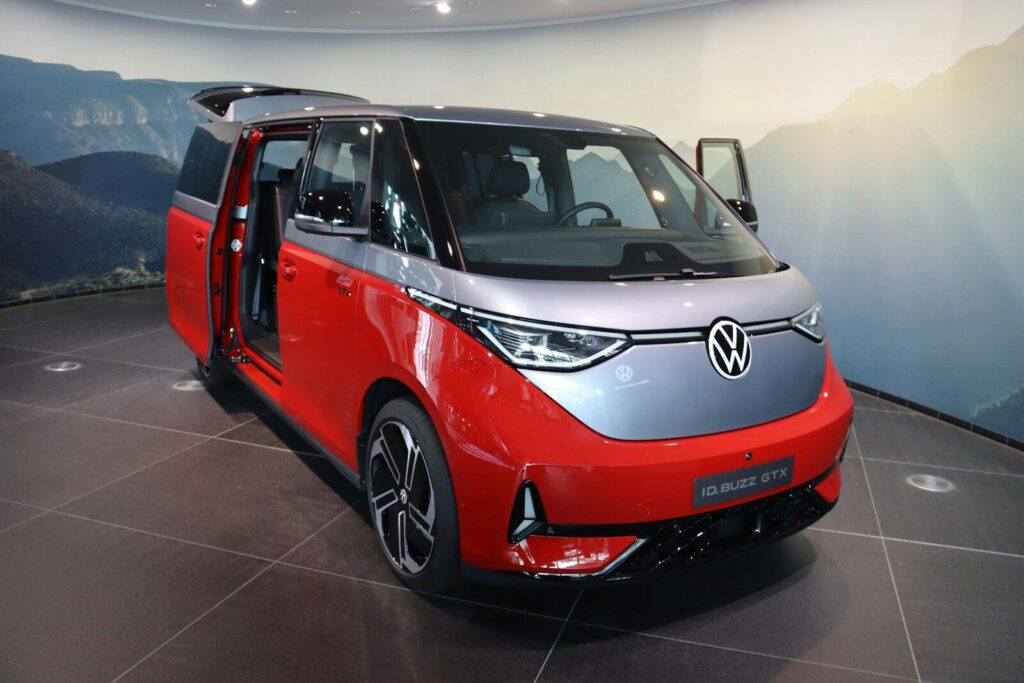
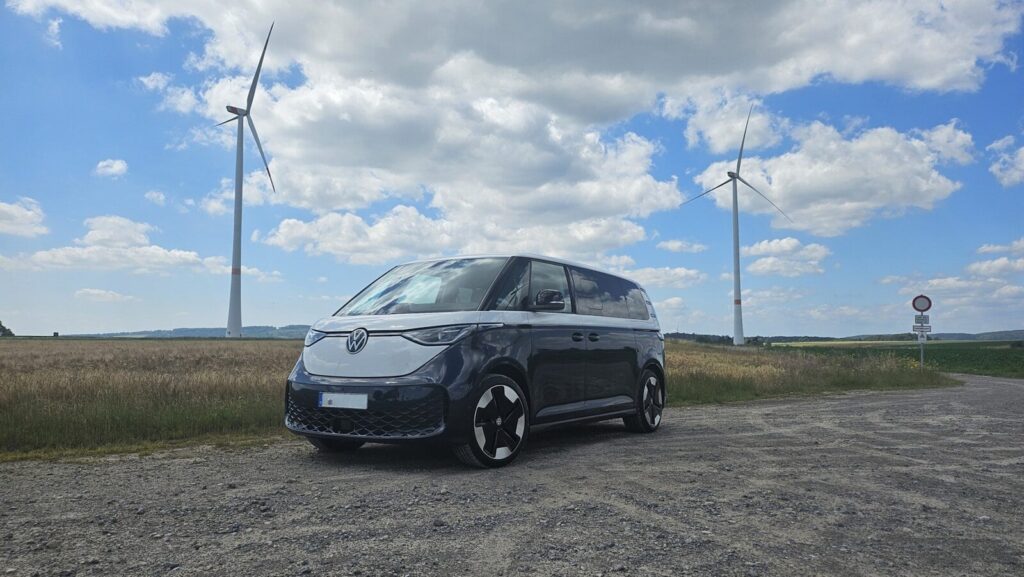
The 2025 Volkswagen ID.Buzz draws its identity directly from the Type 2 Microbus without attempting to reproduce every historical detail. Its upright body, short overhangs, broad front, and available two-tone paint immediately communicate the connection. Volkswagen understood that recreating the original dimensions would be impossible under modern safety and packaging requirements. Instead, designers focused on the qualities people remember most: a friendly face, generous glass, simple proportions, and a sense that the vehicle is ready for a shared adventure.
Design Elements Connecting Past and Present:
- Upright and approachable exterior body
- Familiar two-tone paint combinations
- Broad front with friendly styling
- Large windows creating visual openness
- Modern interpretation of classic proportions
This approach prevents the ID.Buzz from becoming a costume built entirely from retro decoration. The exterior contains familiar visual signals, but its lighting, surfaces, wheels, and aerodynamic details belong to the present. Volkswagen also avoided covering the interior with flowers, peace symbols, or exaggerated references to the 1960s. That restraint allows nostalgia to come from the vehicle’s overall character rather than forced graphics. The result feels influenced by the original Bus without appearing like a novelty replica designed only for short-term attention.
The name itself cleverly connects the past with electric mobility. “Buzz” echoes the word “Bus,” the familiar nickname for the original Volkswagen Type 2, while also suggesting the quiet sound of electric power. That small piece of wordplay captures the vehicle’s wider purpose. Volkswagen is not pretending that the old Microbus has simply returned unchanged. It is presenting a new interpretation that carries recognizable cultural meaning while using a completely different mechanical foundation suited to current transportation needs.
2. A Design That Connects Generations
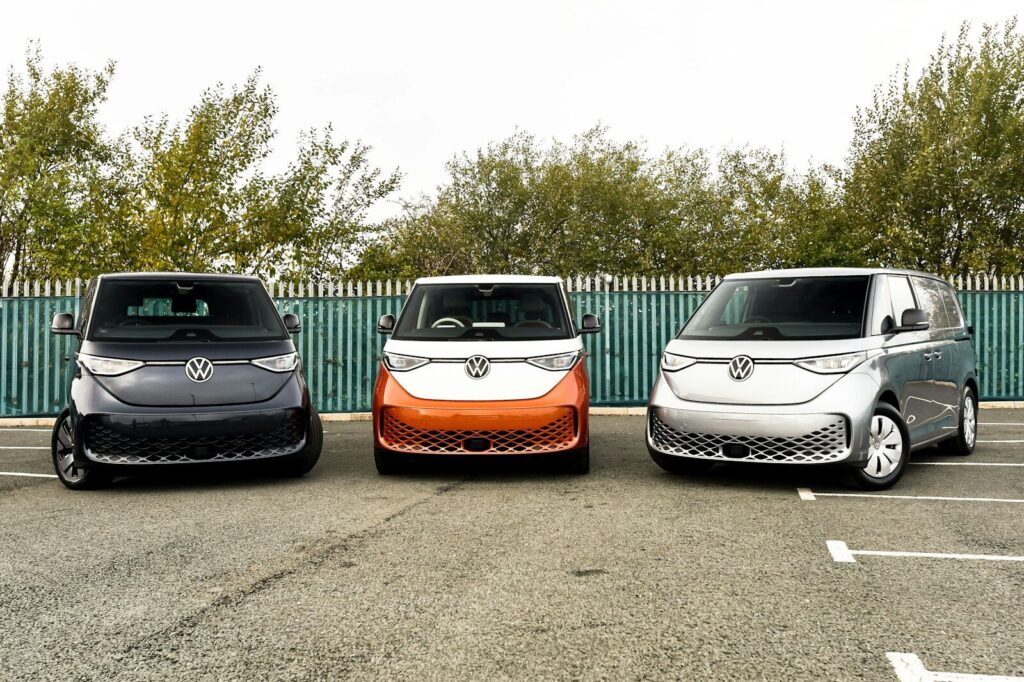
The strongest evidence of the ID.Buzz’s success appears in the reactions it creates. During everyday driving, people frequently turned, smiled, pointed, or approached the vehicle for a closer look. The response was consistent across upscale neighborhoods, local businesses, concert parking areas, and casual roadside stops. Unlike many modern vehicles that require badges to establish their identity, the Buzz communicates its heritage immediately. Observers rarely mistake it for an ordinary minivan or another electric crossover because its shape remains unmistakably Volkswagen.
Reasons the ID.Buzz Attracts Attention:
- Creates immediate public visual recognition
- Connects with older automotive memories
- Appeals to younger family generations
- Encourages positive conversations between strangers
- Stands apart from ordinary crossovers
Older viewers often responded with visible recognition, recalling the original Bus and the era it represented. A quick glance sometimes became a full double-take as familiar proportions triggered personal memories. Yet the response was not limited to people who had experienced the 1960s. Children also recognized the shape, including one who connected it with Fillmore, the Volkswagen Bus-inspired character from Cars. This ability to reach people with completely different cultural references gives the ID.Buzz an emotional range that technical specifications cannot easily measure.
The vehicle naturally becomes a conversation starter wherever it stops. People want to inspect its two-tone body, look through its large windows, and explore the bright cabin. That social quality feels appropriate for a successor to a vehicle remembered for bringing people together. Most cars perform their transportation role without attracting meaningful interaction. The ID.Buzz does something different: it makes strangers curious and creates positive encounters. In an increasingly uniform automotive market, that capacity to generate happiness becomes a genuine part of its value.
3. Larger Dimensions With Familiar Proportions
Modern safety rules, passenger expectations, and electric components have made the ID.Buzz considerably larger than the first-generation Microbus. It measures 195.4 inches in length, making it 26.9 inches longer than its ancestor. The body is also 10.4 inches wider, while the wheelbase has increased by approximately three feet. Interestingly, its 76.2-inch height is slightly lower than that of the original. These measurements reveal how dramatically vehicle packaging and occupant-protection requirements have changed across more than seven decades.
Important Changes in Vehicle Dimensions:
- Measures 195.4 inches in length
- Stands wider than original Microbus
- Features a significantly longer wheelbase
- Remains slightly lower than predecessor
- Provides greater modern passenger protection
Compared with a current Honda Odyssey, the ID.Buzz is roughly ten inches shorter but stands approximately 6.6 inches taller. Those dimensions give it a substantial road presence without making it unusually long for a family vehicle. The stretched wheelbase and short overhangs help maximize interior room, while the tall roof creates an airy passenger environment. Its exterior size may surprise anyone expecting the compact proportions of a vintage Bus, but the growth supports practical seating, cargo space, batteries, and modern crash structures.
Despite its increased footprint, the design preserves the visual spirit of the original. The broad front, nearly vertical sides, and wheels positioned near the corners create a recognizable stance. Volkswagen has shown that proportion and detailing can matter more than literal size when reviving a classic design. The ID.Buzz is not small or delicate, but it still appears approachable. Its friendly expression and carefully balanced bodywork prevent its considerable dimensions from turning it into another imposing, anonymous family transporter.
4. A Spacious and Welcoming Interior
The electric platform gives the ID.Buzz an almost completely flat interior floor because there is no conventional driveshaft tunnel running through the cabin. This creates a strong sense of openness and makes movement between seating areas easier. The tall body and enormous glass surfaces add to that feeling, filling the interior with natural light. Rather than resembling the dark, heavily styled cabins found in many SUVs, the Buzz feels relaxed, spacious, and genuinely suited to carrying families or groups over longer journeys.
Interior Features Supporting Passenger Comfort:
- Nearly flat and open floor
- Large windows providing natural light
- Tall roof improving cabin spaciousness
- Warm and welcoming color combinations
- Excellent visibility from driving position
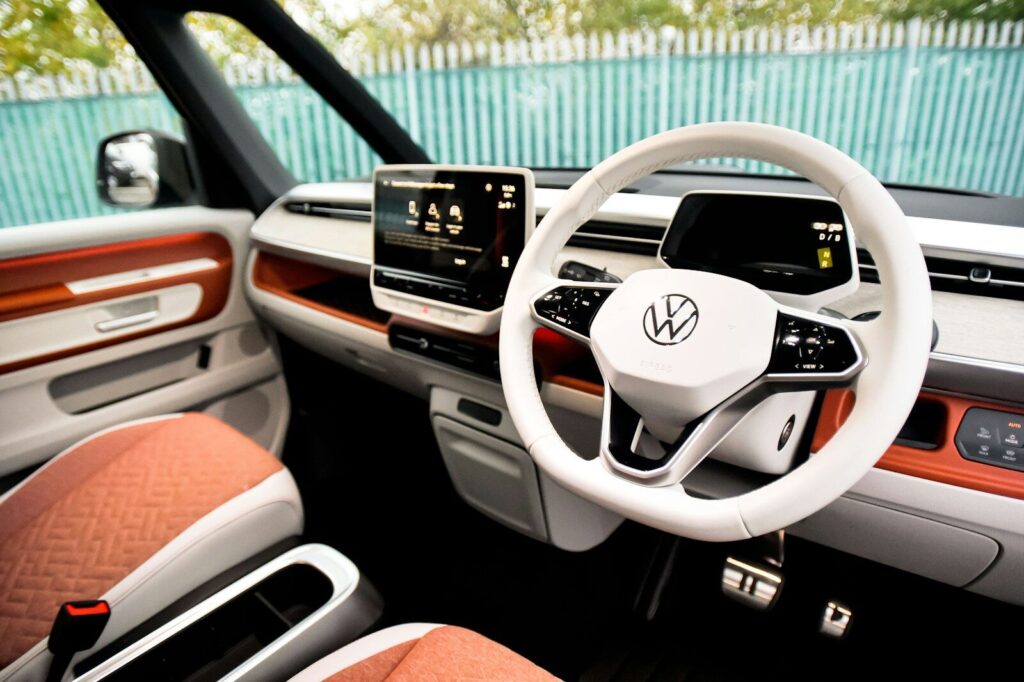
The tested vehicle used the Dune interior theme, combining creamy off-white surfaces with warm tan accents. The color palette feels both contemporary and inviting, supporting the exterior’s cheerful personality without relying on obvious retro references. Materials and storage areas are arranged with everyday usability in mind. Volkswagen resisted the temptation to turn the cabin into a themed tribute to the hippie era. That decision keeps the design from feeling theatrical and allows owners to enjoy the connection with the past without sacrificing sophistication.
The dashboard is unusually deep because the windshield begins far ahead of the driver. That broad surface emphasizes how much crash structure now separates occupants from the front of the vehicle. In the original Bus, the driver sat close to a thin outer panel with very little protection. The ID.Buzz includes a proper crumple zone and modern safety engineering. Its large windshield also provides impressive outward visibility, helping the vehicle feel manageable despite its height, width, and substantial overall mass.
5. Comfortable Seating and Questionable Controls
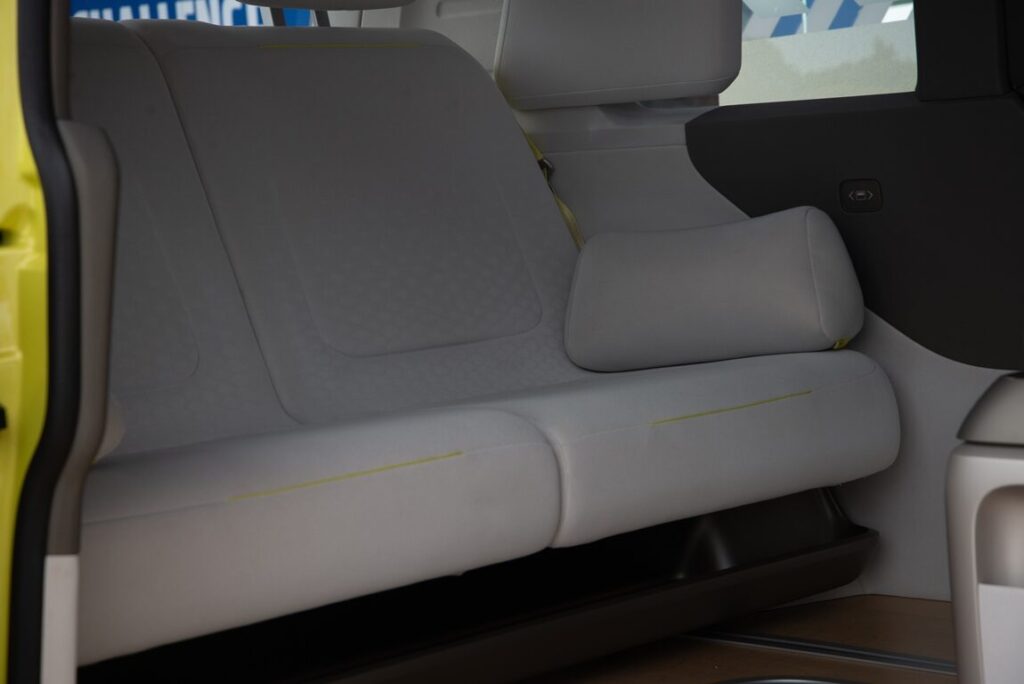
The ID.Buzz offers versatile seating suited to family travel and social use. The tested configuration featured captain’s chairs in both the front and second rows, giving occupants generous personal space and multiple adjustment options. The seats provide supportive cushioning without feeling overly firm, making them appropriate for longer journeys. Combined with the flat floor and tall roof, the arrangement creates an environment where passengers can enter, exit, and settle into their places without navigating the cramped passages common in lower vehicles.
Strengths and Weaknesses Inside the Cabin:
- Comfortable captain’s chairs across rows
- Flexible seating for family travel
- Modern digital instrument display
- Touch-sensitive controls lack physical feedback
- Window switches create unnecessary complexity
The instrument display and infotainment system follow Volkswagen’s current digital approach. Drivers familiar with recent models will recognize the interface and haptic control surfaces. These touch-sensitive controls have improved, making them easier to tolerate than earlier versions, but they still lack the immediate physical feedback of traditional buttons and knobs. In a family vehicle, frequently used functions should be accessible with minimal distraction. The cabin would feel more intuitive if Volkswagen had paired its modern screens with a greater number of dedicated controls.
The power-window arrangement is particularly frustrating. Volkswagen uses only two primary switches and a separate toggle to control all four windows, requiring the driver to change operating modes instead of selecting a dedicated switch for each window. The system appears designed to reduce component costs, but it introduces unnecessary complexity into an extremely familiar function. Such a compromise feels out of place in a vehicle costing more than many conventional minivans. Clever design should simplify daily interaction rather than making basic operations less natural.
6. Electric Power and Unexpected Performance
The ID.Buzz is available in the United States with two electric powertrain configurations. The standard version uses a single rear-mounted motor producing 282 horsepower, preserving the rear-drive layout historically associated with the original Bus. Buyers seeking stronger acceleration and improved all-weather traction can choose a dual-motor, all-wheel-drive model producing 335 horsepower. Both versions draw energy from an 86.0-kWh battery pack mounted low within the modified Volkswagen Modular Electric Drive Matrix platform.
Electric Performance and Powertrain Highlights:
- Rear-wheel-drive model produces 282 horsepower
- All-wheel-drive version delivers 335 horsepower
- Uses an 86.0-kWh battery pack
- Accelerates rapidly for family transportation
- Offers stable and predictable handling
Performance differs dramatically from the famously slow Type 2. The dual-motor ID.Buzz can accelerate from zero to 60 mph in approximately 5.5 seconds, making it a full second quicker than a Honda Odyssey. It remains about one second behind the faster Kia EV9, but the Volkswagen still delivers far more acceleration than a family van realistically requires. Electric torque arrives immediately and moves the heavy vehicle with surprising ease, creating a playful contrast between its nostalgic appearance and thoroughly modern straight-line performance.
The ID.Buzz feels quick without pretending to be a sports car. Its steering is accurate, and the chassis remains composed during normal driving, yet the suspension is clearly tuned around passenger comfort. A measured 0.80 g of skidpad grip demonstrates respectable capability for a tall, heavy van. Drivers can carry speed confidently through ordinary curves, but the vehicle is happiest while cruising. Volkswagen wisely prioritized stable, predictable behavior instead of sacrificing comfort in pursuit of handling figures that few owners would regularly explore.
7. Ride Comfort, Braking, and Highway Refinement
The suspension generally provides a soft and comfortable ride, helping the ID.Buzz manage everyday roads without passing harsh impacts into the cabin. Its long wheelbase contributes to stability, although some undulating surfaces can produce a mild front-to-rear porpoising motion. This movement does not make the vehicle difficult to control, but occupants may notice the body gently pitching after larger road changes. Better damping could reduce the sensation while preserving the relaxed ride character expected from a family-focused electric van.
Important Qualities of Its Road Behavior:
- Delivers a generally comfortable ride
- Maintains stability through long wheelbase
- Shows mild pitching on undulations
- Requires adjustment to brake response
- Produces noticeable highway wind noise
Brake-pedal response requires more adjustment. There is a noticeable dead area near the beginning of the pedal’s travel before regenerative and friction braking engage more strongly. The transition can make smooth stops difficult until the driver becomes familiar with it. Electric vehicles must carefully blend motor regeneration with conventional brakes, but the process should feel natural and predictable. A more progressive pedal would improve confidence, especially in traffic where gentle speed adjustments and consistent low-speed braking are important.
The cabin remains quiet around town because the electric motors create little mechanical noise. At highway speeds, however, the upright body pushes through a considerable amount of air. Testing recorded approximately 70 decibels inside at 70 mph, making the Buzz slightly louder than some important rivals. Wind noise is understandable given the vehicle’s broad front and tall profile, yet stronger acoustic insulation could improve its long-distance refinement. The highway experience is comfortable overall, though it is not as hushed as the electric powertrain initially suggests.
8. The Weight of Modern Electric Mobility
The ID.Buzz weighs an extraordinary 6,174 pounds in the tested configuration. That figure makes it more than 3,500 pounds heavier than a Volkswagen Bus from the 1950s and approximately 1,600 pounds heavier than a fully equipped Honda Odyssey. Much of the difference comes from the large battery, modern crash protection, electric motors, structural reinforcement, luxury equipment, and significantly larger body. The comparison illustrates how dramatically vehicles have grown in both physical dimensions and mechanical complexity.
Major Factors Behind Its Heavy Weight:
- Large high-capacity electric battery pack
- Strong modern crash-protection structure
- Multiple electric motors and components
- Larger passenger and cargo body
- Additional comfort and luxury equipment
Such mass affects efficiency, braking, tire wear, and suspension behavior. Moving a vehicle weighing more than three tons requires substantial energy, even with an efficient electric drivetrain. The weight also explains why the Buzz’s large battery does not deliver class-leading range. Engineers must balance cabin space, structural safety, performance, and usable battery capacity, but every added kilogram creates further energy demand. The ID.Buzz demonstrates one of the central challenges facing large electric family vehicles: providing practical space without allowing weight to rise uncontrollably.
The low position of the battery does offer an important benefit. Concentrating mass beneath the floor lowers the center of gravity, helping the tall van feel planted and stable during normal driving. Body movements remain predictable, and the vehicle does not feel as top-heavy as its height might suggest. This stability contributes to passenger confidence and supports the unexpectedly capable handling. The ID.Buzz cannot hide its weight entirely, but its platform uses that mass intelligently enough to maintain secure and comfortable road manners.
9. Range and Charging Limit Its Freedom
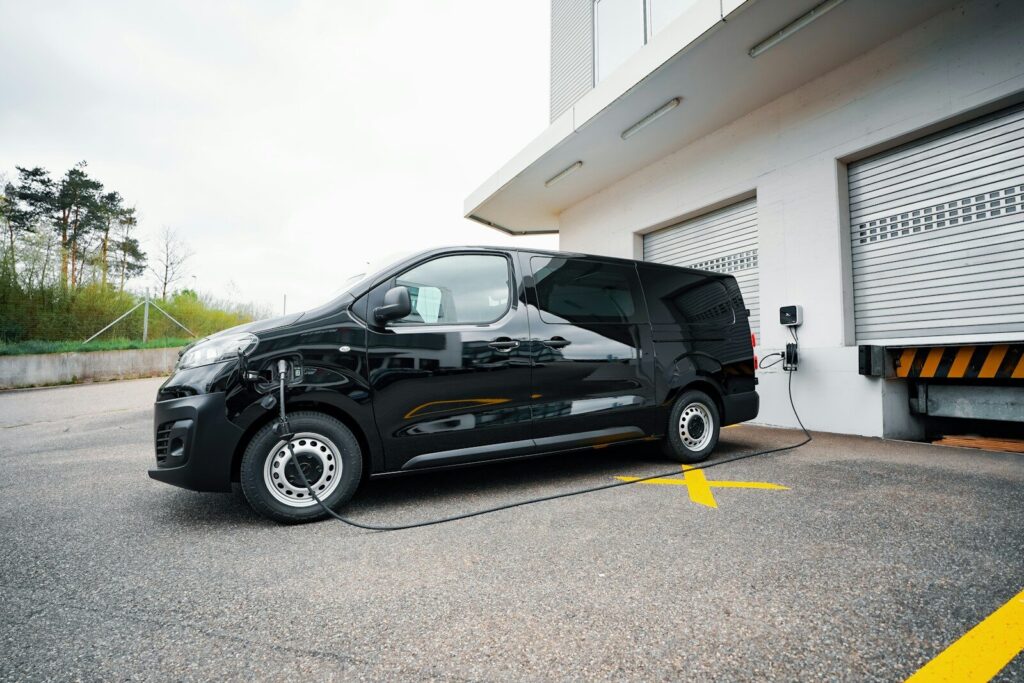
Range is the area where the ID.Buzz struggles most clearly against its image as a vehicle built for spontaneous adventure. The rear-wheel-drive version carries an EPA estimate of 234 miles, while the dual-motor model is rated at 231 miles. Those figures may be sufficient for commuting, school journeys, and regional travel, but they fall behind many newer electric sedans and crossovers. Families planning long vacations will need to consider charging locations and stopping intervals more carefully than the original Bus required.
Factors Limiting Long-Distance Electric Travel:
- Maximum EPA range remains modest
- Highway testing produced lower range
- Tall body increases aerodynamic resistance
- Charging stops require careful planning
- Several competitors travel considerably farther
During a 75-mph highway test, the all-wheel-drive model traveled only 190 miles before exhausting its usable range. High-speed aerodynamic drag affects the tall, broad body significantly, reducing efficiency compared with official mixed-driving estimates. Cold weather, cargo, passengers, and climate-control use could place further pressure on available distance. Drivers should therefore plan around real-world conditions rather than relying entirely on the EPA figure. The Buzz can complete road trips, but it does not encourage completely unplanned travel across areas with limited charging infrastructure.
This limitation becomes more noticeable because several competing electric vehicles can cover 300 miles or more. The long-range Kia EV9 also travels farther while offering three-row practicality. For buyers who mainly drive locally and charge at home, the difference may not matter often. For customers attracted by the Microbus tradition of open-road exploration, however, limited highway range creates an emotional contradiction. The vehicle celebrates freedom through its design while requiring a relatively structured approach to longer electric journeys.
10. Price, Character, and the Final Verdict
The ID.Buzz begins at approximately $61,545, while well-equipped versions can exceed $72,000. That price places it far above many conventional minivans and introduces strong competition from premium electric SUVs. Buyers evaluating range, speed, or equipment alone may struggle to justify the cost. The Buzz is therefore unlikely to succeed through traditional value calculations. Its appeal depends on design, cultural meaning, cabin atmosphere, and the pleasure of owning something that looks completely different from ordinary family vehicles.
Reasons the ID.Buzz Remains Appealing:
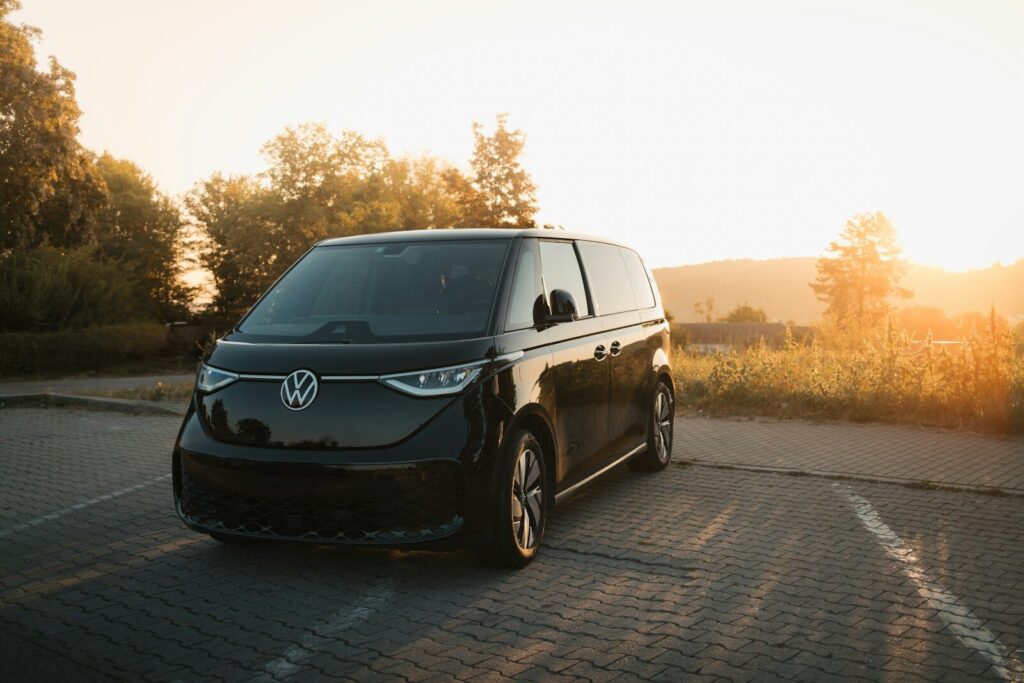
- Possesses unmistakable exterior design character
- Creates positive attention and conversations
- Provides practical and spacious seating
- Successfully modernizes Microbus heritage
- Offers personality beyond technical specifications
Volkswagen appears to understand that the ID.Buzz is a halo product rather than a guaranteed high-volume seller. It can draw visitors into dealerships, strengthen the identity of the company’s electric range, and demonstrate that EVs do not need to resemble anonymous crossovers. Beneath the nostalgia, it remains a practical minivan with useful seating, abundant light, clever storage, and comfortable road manners. The retro-inspired exterior attracts attention, but the functional interior gives owners reasons to continue appreciating it after the novelty fades.
The ID.Buzz is not perfect. Its range is modest, its weight is excessive, and several controls need improvement. Yet it succeeds at the hardest part of its mission: capturing the joyful spirit of the original Microbus without becoming a shallow imitation. It turns routine journeys into social experiences and makes people smile before they know anything about its specifications. As an electric people mover, a modern family van, and a rolling piece of design history, it stands as a worthy successor to a beloved Volkswagen legend.