






The Only Jet to Lock On: Sweden’s Viggen vs. the SR-71 Blackbird
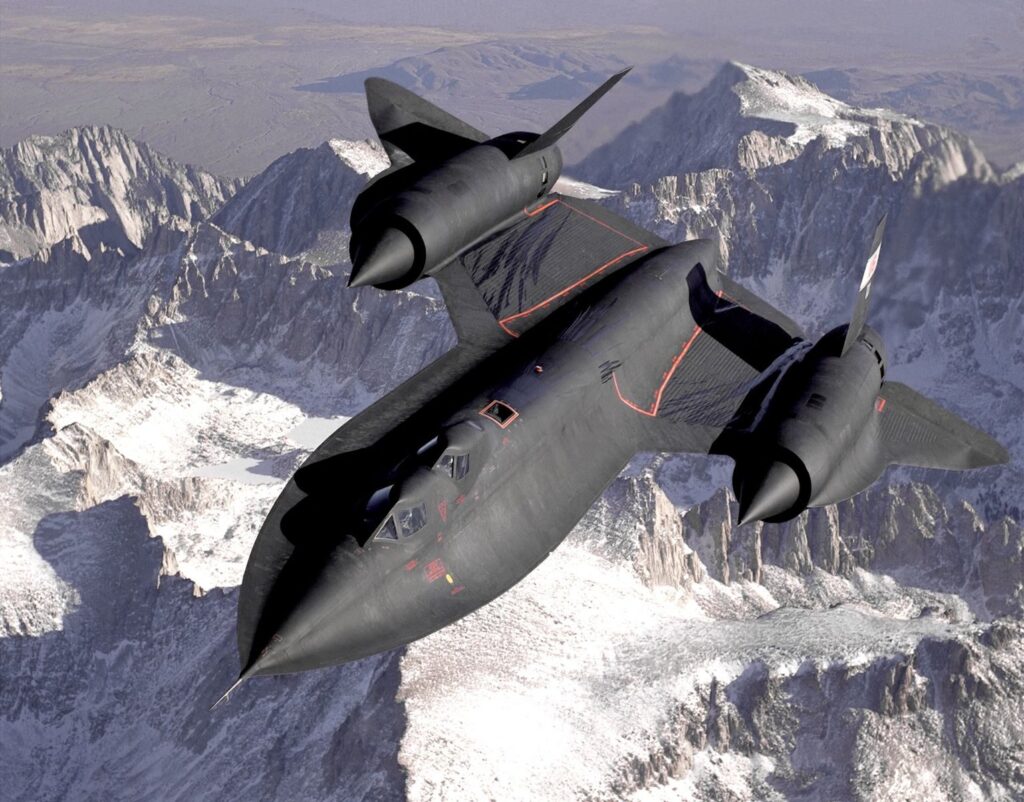
Very few aircraft stirred the imagination during the cold war like the Lockheed SR-71 Blackbird. It was more than just a recon aircraft but rather a fantastical machine conceived on the theory that, of all things, velocity and altitude would guarantee safety. At altitude of more than 15 miles, at speeds in excess of Mach 3, these aircraft gathered intel while flying out of reach of most counter weapons and planes. Their performance was so abnormal that most pilots and defense systems usually had mere seconds to realize a Blackbird was approaching and that any attempt to intercept would almost certainly be futile.
The Soviets were looking for an effective counter to the Blackbird the Mikoyan MiG-25 Foxbat and later the MiG-31 were conceived in order to intercept aircraft at high altitude and speed. Both were highly impressive aircraft, but had a distinct weakness. An SR-71 didn’t have to enter an air combat. Should something approach its performance range, the Blackbird could simply distance itself from a problem using its sheer velocity and altitude. Missiles have been fired at the Blackbird. Aircraft have taken off numerous times to intercept it. But no one ever succeeded.
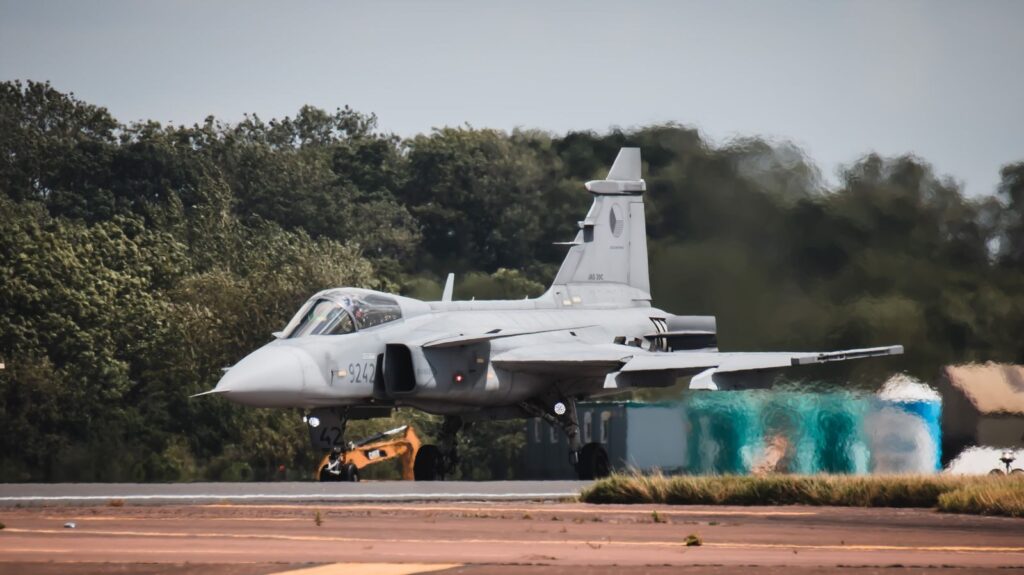
But unseen and unnoticed elsewhere, an equally daunting challenge was also being examined from an opposite direction, The Swedish air force, in the form of their all-purpose interception fighter Saab JA-37 Viggen, have an aviation doctrine fundamentally based around flexibility and distributed operations, in fact a completely independent national defense policy. The Viggen although not fast enough for straight running with SR-71 would hardly be able to climb that high, to chase an intruder could only waste time and fuel, it called into practice instead the technique of prediction, positioning, interception and an attack from directly ahead.
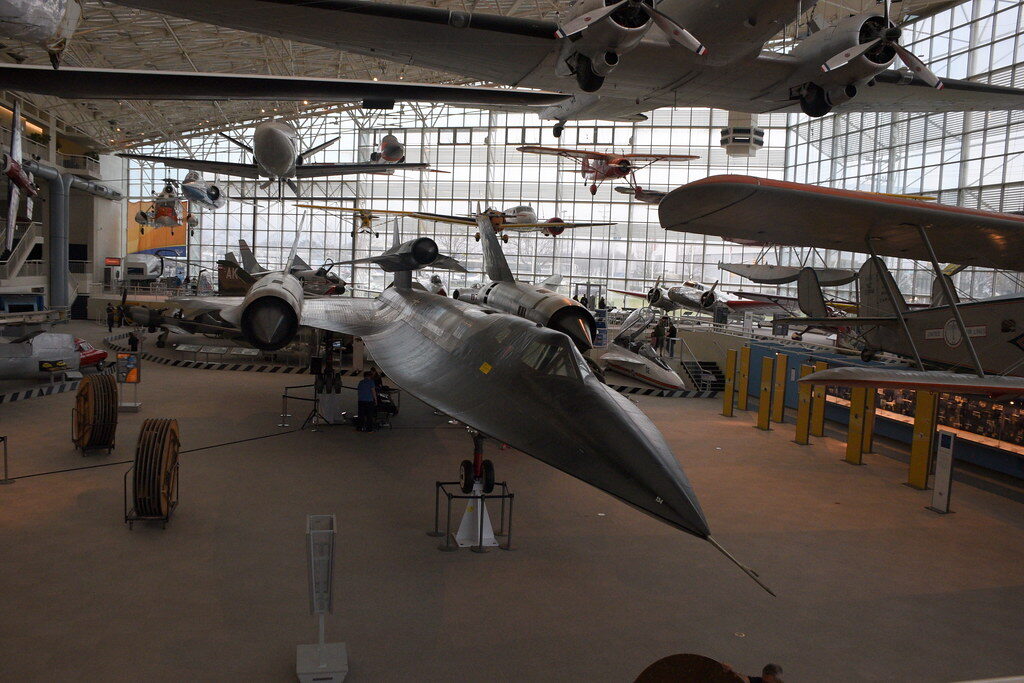
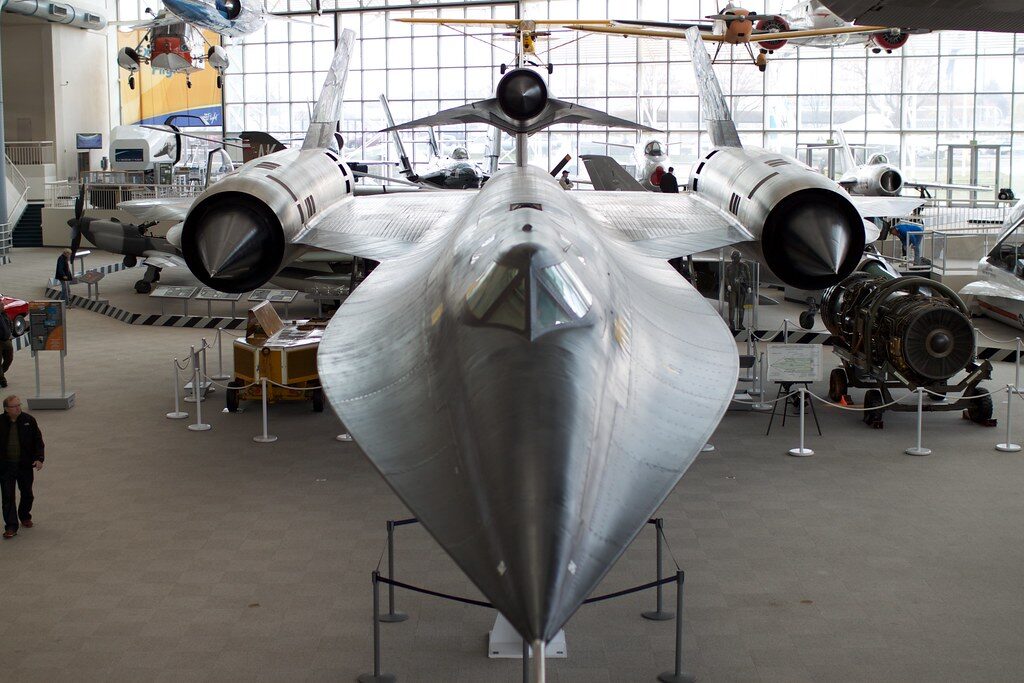
1. The SR-71 Blackbird Was Built to Be Untouchable
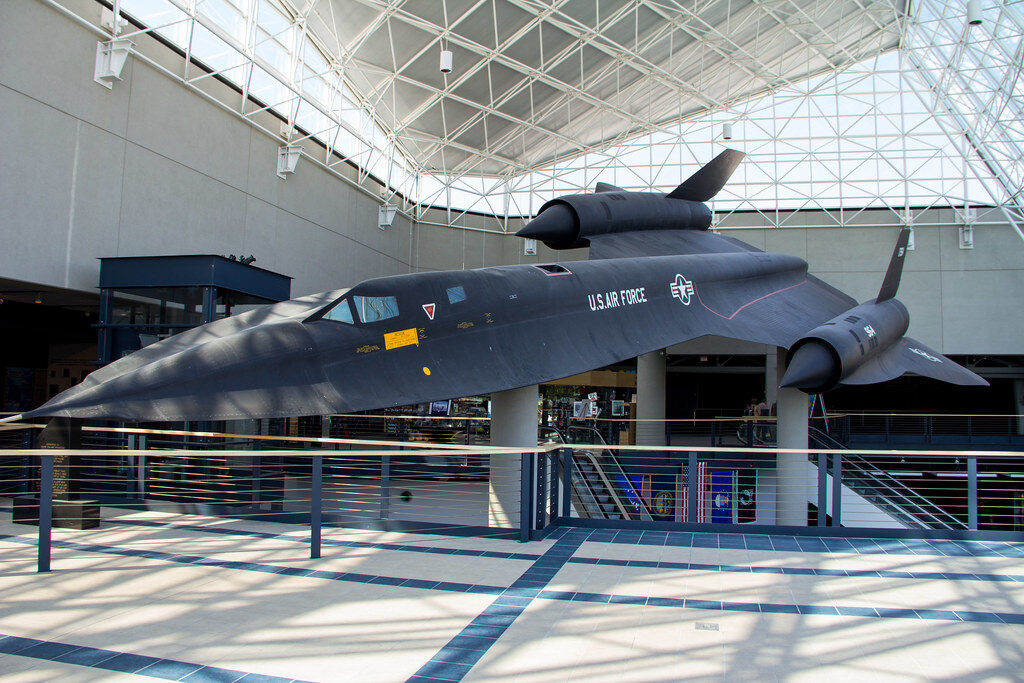
The Lockheed SR-71 Blackbird is one of Cold War military aircraft that was highly respected in its day. It is the fastest air-breathing manned aircraft and usually flew at speeds above Mach 3 and at altitudes of over 15 miles (50,000 feet (15 km; 9.5 mi)) above the Earth. This ability was used to allow it to conduct reconnaissance over and near nations of an unfriendly power, in all situations (whether under cover of darkness or daylight; and whether near a nation and its missile air defences, or further away from its air defenses), and to remain out of reach of all air defenses. Surface-to-air missiles have been fired at its air defenses from many countries.
Blackbird’s Extraordinary Capabilities:
- Mach 3.2 operating speed
- Altitudes reached 85,000 feet
- Long-range strategic reconnaissance aircraft
- Built by Lockheed’s Skunk Works
- Crew operated tandem cockpits
The SR-71 became part of Air Force inventory in January 1966, a little over a year after its maiden flight on December 22, 1964. On reconnaissance missions, it typically flew around Mach 3.2 at an altitude of 85,000 feet which meant that the jet was too fast for almost any airborne enemy, or surface-based threat (including air-to-surface missiles) to catch. It could avoid or outrun attackers, and even the “standard evasive manoeuvre” to an air-to-surface missile launch simply involved accelerating and outrunning the projectile.
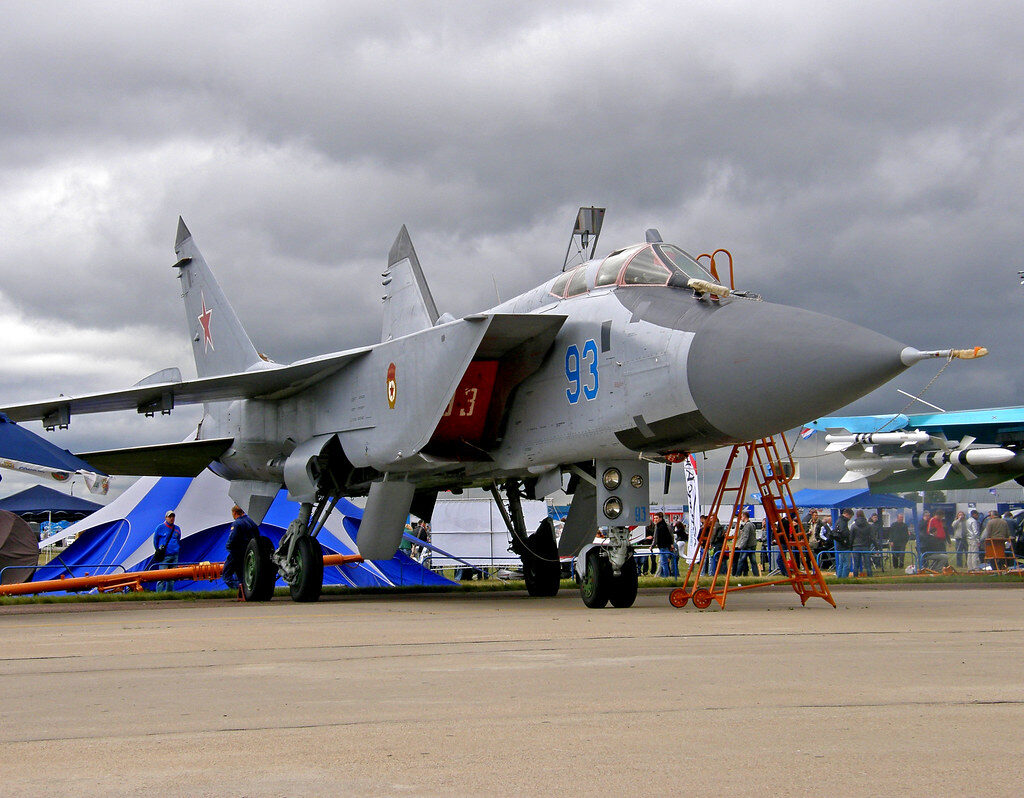
2. Soviet Interceptors Could Not Match the Blackbird
One of the main objects of SR-71 reconnaissance had been the Soviet Union, turning it into an nemesis of the air defence system. The most experienced pilots in the latest types of high-performance Soviet aircraft, such as the Mikoyan MiG-25 ‘Foxbat’, and eventually the MiG-31, were ordered up, more often than not at great expense and risk, to engage the American plane during its normal flights. The Soviets employed carefully developed complex tactics designed to give the interceptor a position on the target.
Soviet Interception Challenges:
- MiG-25 pilots attempted interceptions
- MiG-31 later joined efforts
- Zoom climbs proved ineffective
- Blackbird maintained extreme altitude
- Speed remained difficult to match
As the MiG-25 climbed, its top was perhaps 63,000 feet which still left it well below cruising altitudes that the SR-71 sustained. Nor was any Soviet interdictor capable of sustaining comparable speeds. There was not even any capacity for the best Soviet aircraft to get into any position where they would constitute a serious danger to the reconnaissance aircraft. Instead, the aircraft could outdistance virtually any pursuer simply because its high speed was coupled with equally high-altitude capabilities.
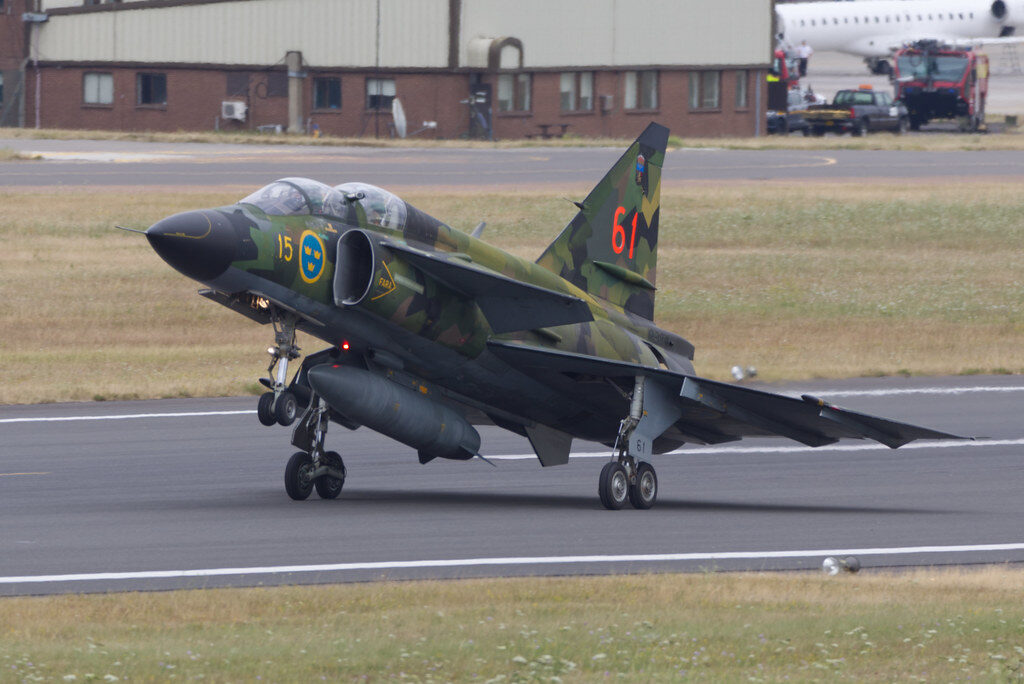
3. Sweden Developed a Completely Different Kind of Fighter
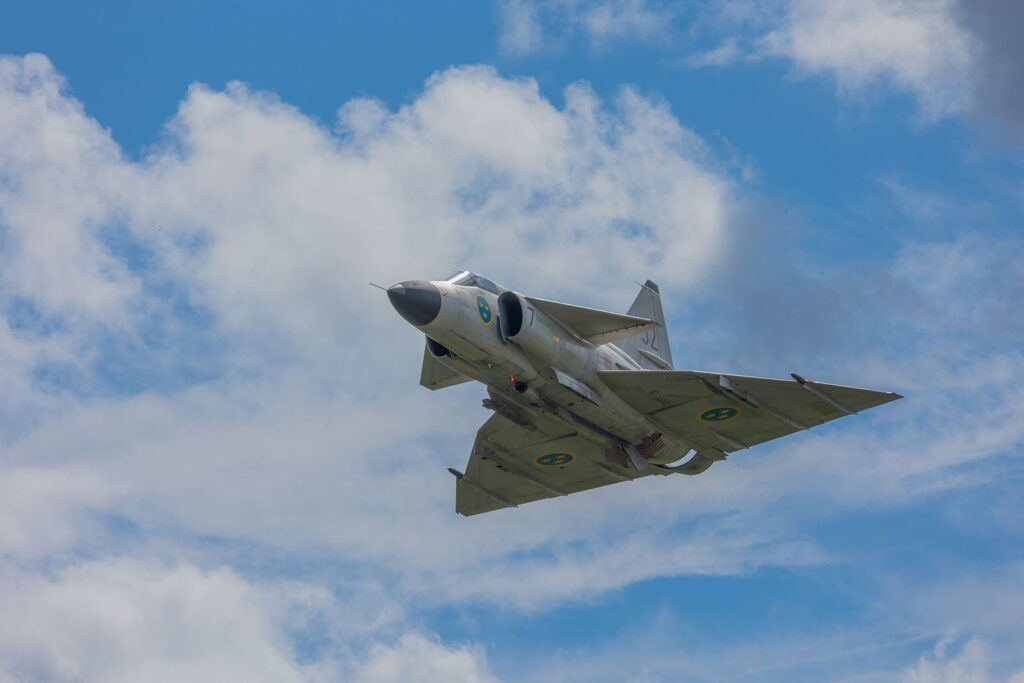
While the USA and the USSR were taking part in their respective aviation one-upmanship contest the neutral Swedish nation was building an aircraft on a rather different idea. Sweden’s air defence doctrine called for a degree of self-sufficiency, and its answer was the Saab 37 Viggen. A multi-role aircraft developed solely for Swedish conditions and requirements. Far from being intended for a one-upmanship contest involving speed and height like the SR-71, the Viggen was built as a tough and all-weather capable fighter that was able to perform well in its operational environment.
Viggen’s Distinctive Design Philosophy:
- Radical delta-wing configuration
- Canard-equipped fighter design
- Powerful licence-built engine
- Strong low-altitude performance
- Designed for Swedish requirements
Development of the Viggen was initiated in the early 1950s to provide the Swedish Air Force with a replacement for the Saab 32 Lansen attack aircraft and a complement to the Saab 35 Draken fighter. The aerodynamic design was finalized by Saab in 1963, and the prototype’s first flight was on 8 February 1967. A production order for 175 Viggens was placed by Sweden in 1968, and the aircraft was first introduced into service with the Swedish Air Force on 21 June 1971.
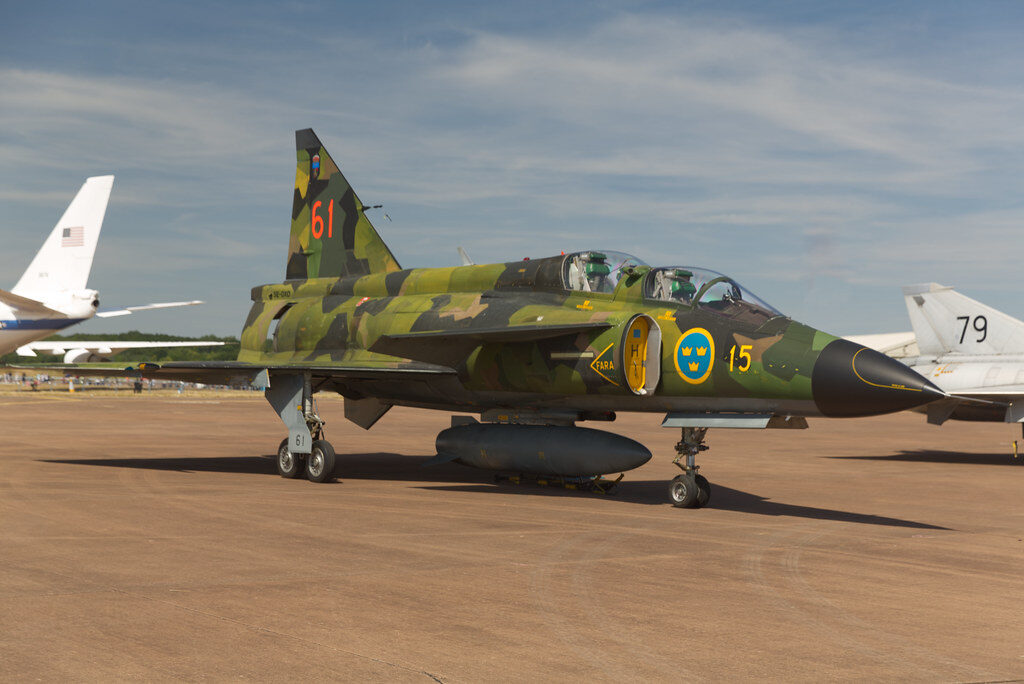
4. The Viggen Was Designed to Survive a Devastating First Strike
It was not just the air combat capabilities of the Saab 37 Viggen which made it so important to Sweden, but that this powerful fighter represented the very backbone of Sweden’s unique “Bas 90” air-basing system. This strategy was in part a recognition of Sweden’s need to maintain effective combat forces following a catastrophic first-strike nuclear blow. Instead of a few small, but extremely valuable airbases that the enemy could target with ease, Sweden could keep fighting by scattering small detachments of aircraft, dispersed in a pattern all over the country.
Bas 90 Strategy Relied On:
- Dispersed aircraft across Sweden
- Highways served as airstrips
- Short-field operations were essential
- Aircraft remained strategically resilient
- Design prioritised practical ingenuity
An integral part of this strategy was the excellent take-off and landing capabilities of the Viggen which allowed it to operate from short airfields of just 500 meters. This fitted perfectly with the strategy of the dispersion concept of operations. The abilities of the Viggen to operate from a short runway gave the Swedish Air Force an operational capability quite distinct from the operating concept of the Blackbird.
5. The Baltic Express Created a Unique Cold War Challenge
Even so, despite being developed according to almost contradictory designs philosophies, the two aircraft seemed to be fated to one another when they met over the Baltic. As part of their regular trips in order to gather Soviet and Warsaw Pact related intelligence, SR-71 crews regularly flew a patrol along Sweden’s edge; they nicknamed this sortie the ‘Baltic Express’. For the Swedish Air Force, these regular excursions of a black marvel were an exceptional opportunity. What, arguably was one of the most sophisticated aircraft of the time that regularly flown along their perimeter offered Swedish pilots a remarkable learning opportunity.
Baltic Express Missions Provided:
- Regular SR-71 reconnaissance flights
- Routes skirted Swedish airspace
- Soviet targets remained under observation
- Viggen pilots gained valuable training
- Interception became a major challenge
Swedish Air Traffic Controller Rolf Jonnson later said the alarms calling to them for an incoming Blackbird was one of the “most spectacular” to have appeared of that age and even at times, of the whole Cold War because Swedish fighters would fly to try to achieve the altitude and intercept point against a rapidly appearing, and extraordinarily high flying subject. But all of those failed attempts gradually brought success for Swedish aircraft. Swedish Air Force Pilot, Per-Olof Eldh stated there were five “hot intercepts” that he could clearly remember that involved that, Blackbird. His estimation of them all to be successfully conducted with visual acquisition in three, proved that an aircraft needn’t outmanoeuvre an enemy of this speed and altitude, along as it could reach the enemy’s position.
6. Swedish Pilots Learned to Meet the Blackbird Head-On
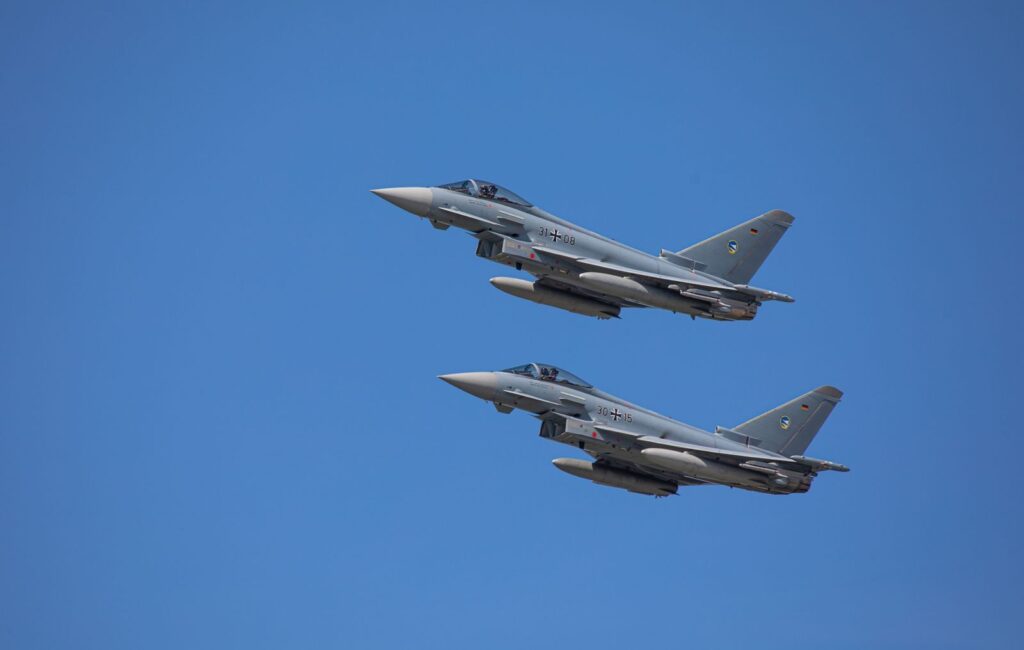
Instead of trying to pursue the SR-71, the trick to overcoming the problem was that they determined to head it off and meet it head-on-a tremendously audacious and deadly maneuver the Swedish pilots developed. Instead of making a futile pursuit, they determined the SR-71’s projected flight path, and placed the Viggen’s intercept point directly in the Blackbird’s flight path, directly ahead of the approaching jet. The Viggen pilot was to climb to slightly below the altitude of the approaching Blackbird and accelerate to Mach 2.
The Head-On Intercept Method:
- Calculate the Blackbird’s route
- Climb steeply below altitude
- Accelerate towards Mach 2
- Climb again before approach
- Achieve radar lock quickly
This tactic was radically different from the way Soviet interceptors tried to combat the SR-71, which either attempted to intercept it from the rear, or simply tried to fly on its level. Instead, the Swedish pilots managed to turn the Blackbird’s routine flight profile against it. This ploy provided the Viggen a window of opportunity in which to place itself ahead of the incoming reconnaissance plane, a move that was very difficult due to the high closing speed of the two aircraft.
7. Per-Olof Eldh Achieved a Full Missile Lock
The risky Swedish interception technique was given its sternest test by then in January 1986. When a warning that an SR-71 was on its way and entering the area came in, Swedish pilot Per-Olof Eldh took his Viggen airborne and got everything up. He went for height and manoeuvred the fighter up ahead according to the practised approach a manoeuvre that saw him get a perfect lock onto the incoming, swift, black recce craft at the point the radar systems started to activate. The calculated manoeuvre that should have been just about impossible actually worked.
Eldh’s Historic Interception:
- Alert triggered the scramble
- Eldh climbed rapidly
- Viggen reached interception position
- Full missile lock achieved
- No missile was fired
The meeting in January 1986 was an epochal occasion. The Blackbird still flew higher and faster, but the Viggen had proved that simply relying on speed and height was no recipe for absolute immunity to interception. Credit must be given for preparedness, good planning, airframe performance, aircrew skill and-not least-as a payoff for the Swedish policy of repeatedly trying to intercept SR-71’s on their Baltic Express runs over Swedish airspace.
8. The Blackbird Suddenly Became a Vulnerable Aircraft
The most famous meeting between SR-71 and Viggen was quite different from the previous interceptions. On June 29, 1987 while flying a typical Baltic Express-mission SR-71A 61-7964 experienced a catastrophic explosion of one of the engines of the reconnaissance machine. The SR-71, unable to fly with the same speed and altitude anymore, the pilot had to abort the mission and execute a sharp turn, thereby bringing the injured Blackbird directly into the airspace of Sweden. Instead of cruising along at extreme speed at more than 15 miles above the planet, the wounded reconnaissance aircraft now low altitude slow-moving at an altitude of approximately 25,000 feet.
The Blackbird Faced New Dangers:
- Engine suffered catastrophic explosion
- Pilot was forced to abort
- Aircraft entered Swedish airspace
- Speed and altitude dropped
- Blackbird became unexpectedly vulnerable
Everything changed in the instant this was realised. Suddenly, pilots of Swedish Air Force JA-37 Viggens were no longer just intercepting an aircraft flying at Mach 3 and great altitude but the disabled airframe, which could have posed a real danger to its crew. The Air Force scramble with two Viggens became an escort mission when the fighter pilots observed that the aircraft was in trouble.
9. The Viggens Protected the Stricken SR-71
The Swedes’ response turns an interception from training exercise into a lifesaving event The two JA-37 Viggens assumed an escort formation with the disabled aircraft on spotting it out of the air show. On realisation theSR-71was in difficulty, however. The two JA-37 Viggens established escort with SR-71out of the air show! Having appeared to notice theSR-71was vulnerable the MiGs acquired missile lock on to it. The situation had now deteriorated significantly from a normal Baltic Express encounter SR-71 was down slow, low, and without its protective speed and altitude. The Viggen pilots therefore flew in between the incapacitated American and the pursuing Russian machine.
Swedish Escort Mission Achieved:
- Viggens identified the aircraft
- Pilots established escort formation
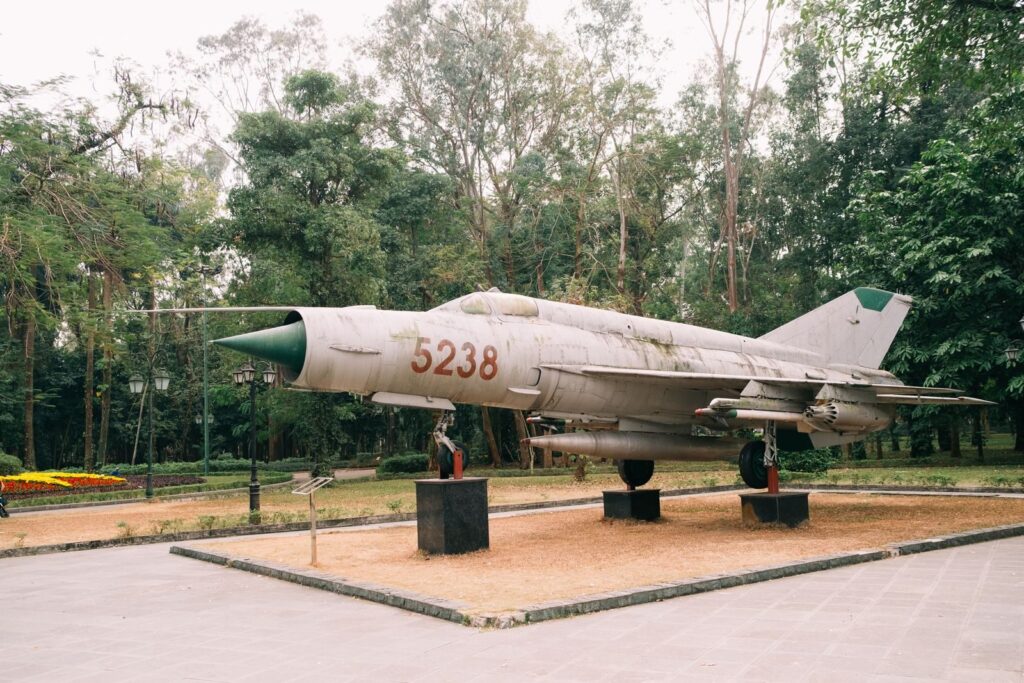
- Soviet MiG-25 approached the Blackbird
- Swedish fighters positioned between them
- Escort continued until Danish airspace
The presence of the Swedish fighters in such close proximity to the SR-71 prevented a clear shot by the MiG pilot and offered some protection to it during the entire event. Later one of the Swedish pilots was to recall that throughout the entire event “my job was just to assist a comrade in distress”. This continued protection provided by the Viggens helped get the Blackbird across Swedish air-space before it could be turned over to other NATO air craft so it could safely land in West Germany. This incident became one of the most striking acts of cooperation during the Cold War.
10. The Secret Encounter Became Part of Aviation History
This strange meeting between two Swedish fighters and the failed SR-71 was kept confidential for over 30 years; what started as practice intercepts and failing attempts to find the world’s highest, fastest reconnaissance aircraft became a legendary story of ingenuity, radar locks, and actually shielding the world’s first, fast attack aircraft when necessary to survive a critical event. For their persistence, Swedish fighters proved the SR-71 could be successfully intercepted even though the Blackbird outran everything but speed and altitude; when an engine on the Blackbird failed catastrophically, the fighters that had once been trying to intercept it ended up having to guard it from what was considered possible Russian intervention.
Aviation Legacy of the Encounter:
- Encounter remained classified decades
- Four Swedish pilots were honoured
- U.S. Air Medals were awarded
- Blackbird crew reached safety
- Secret bond crossed Cold War lines
Finally, on 28th November 2018 the four Swedish pilots, who participated in the two incident and subsequent flight, were decorated at a ceremony in Stockholm with U.S. Air Medals for their heroism, that not only saved a valuable aircraft and its crew but also created a unique, historically clandestine tie between neutral Sweden and the US. The tale illustrates also the very different competencies of the two aircraft types; The SR-71 depended on speed, altitude and advanced recon equipment and the Viggen on manoeuvrability, short-field take-off and landing capability, tactical capability and operational possibility within the Swedish disperse defence concept.