Tesla Adapts Sales Strategies and Production Models Amid Shifting Market Demand
Tesla has a rapidly evolving EV business as market demand, pricing, competition, and manufacturing strategies shift on the fly. The automaker is pressing forward in its electric mobility, energy storage, software, and autonomous tech pursuits yet its sales results are increasingly uneven across markets. Space between production and sales, shifting inventory, reduced vehicle pricing, and decreased sales in some key markets are forcing Tesla to re-evaluate its approach to customer acquisition and global operations.
Yet Tesla is not just going to walk away at a low point it is going to reinvent itself. Tesla will continue to update and refresh the Model 3, Model Y and other models, while developing low-cost vehicles, expanding its Semi battery-electric truck and accelerating its robotaxi (Cybercab) and Full Self-Driving, robotics and clean energy programs. Where market forces, customer sentiment, product lifespan, local demand and competitive pressures are concerned, Tesla’s story is about evolution just as much as revolution.
1. Tesla’s Expanding Electric Mobility and Energy Business
Tesla, Inc. Continues to manufacture and sell electric mobility and clean energy products and services and develop other related products and services with a US based corporate HQ in Austin, TX. The company was incorporated in 2003, changed its name from Tesla Motors, Inc. In Feb. 2017 and operates in 2 segments Automotive and Energy Generation and Storage. The company’s automotive products include Model S, Model X, Model 3, Model Y, and future vehicles. The Company’s energy generation and storage products consist of solar panels, solar roofs, lithium-ion battery energy storage products, including Powerwall and Megapack, and the related products. Tesla’s business model involves selling vehicles, operating service and collision centers, and providing mobile service technicians, Superchargers, and upgrades to the vehicles and Tesla’s other products within the vehicles or mobile applications. Tesla also sells vehicle purchase financing, lease arrangements, automotive insurance, vehicle maintenance not covered by the warranty, parts, and retail merchandise. Its energy generation and storage business includes designing, manufacturing, installing, selling, and leasing solar panels, and solar roofs.
Tesla’s Business At A Glance:
- Automotive and energy segments
- Founded back in 2003
- Headquarters located in Austin
- Powerwall and Megapack storage
- Direct sales and service
Tesla’s broader technology architecture includes its own self-driving development, artificial intelligence software, vehicle controls, and powertrain technology, too. These combine to allow the company to operate in multiple related spaces rather than simply manufacturing cars in the traditional sense. Its energy business adds another major segment through its solar products and battery packs. Tesla’s business architecture currently spans vehicles, charging, service, insurance, software, energy generation, and energy storage. It also continues to evolve its technology with developments relating to autonomous mobility and artificial intelligence. Tesla’s broad suite of offering implies that it still has multiple elements to adapt to shifting industry demands, but all sectors of its business remain critical to its global ambitions for mobility and clean energy.
2. Tesla’s Production and Sales Numbers Show Changing Momentum
Tesla’s latest operating numbers highlight the vast extent of its global manufacturing operations, while also hinting at an evolving dynamic of production and sales. In its first quarter of 2026, Tesla produced 408,386 electric cars across the world and sold 358,023 vehicles, a difference of 50,363 units. That quarterly production figure was below the 434,358 electric cars produced in the final quarter of 2025, while sales also fell from 418,227 units that quarter. The final quarter of 2025 had reported a production-to-sales differential of 16,131 units. Over the full year 2025, Tesla produced 1,654,667 electric vehicles globally and sold 1,636,129 units, creating a full-year production and sales shortfall of 18,538 vehicles. The Elon Musk-led auto maker’s total sales also declined from 1.81 million units in 2023 to 1.79 million units in 2024 a year-on-year fall of 1 percent.
Production Versus Sales Snapshot:
- 408,386 cars produced quarterly
- 358,023 vehicles sold quarterly
- 50,363-unit quarterly production gap
- 1.65 million vehicles produced
- 1.64 million vehicles sold
These numbers show that Tesla’s production and sales of vehicles are able to vary from each other. In the first quarter of 2026, production and sales of vehicles were separated by a far greater magnitude than the final quarter of 2025. The last quarter of 2025 saw Tesla produce 434,358 vehicles and sell 418,227 vehicles, a difference of only 16,131. Conversely, in the first quarter of 2026, production and sales saw 408,386 and 358,023 vehicles produced and sold respectively, a difference of 50,363 vehicles. The numbers are more aligned for 2025, with production and sales of 1,654,667 and 1,636,129 respectively. The annual sales of Tesla also declined slightly from 2023 to 2024. These numbers paint a picture of the global car company as it manages large production capacity whilst adapting to vehicle demand, inventory, pricing, and market shifts.
3. Tesla Faces Changing Demand in the United States
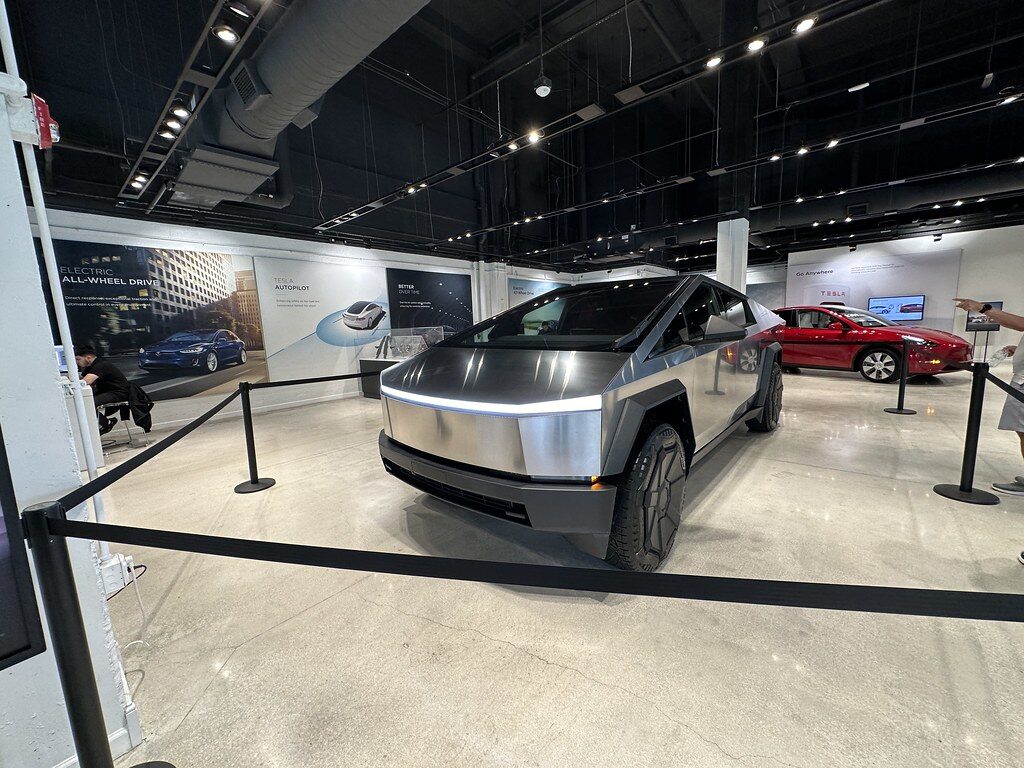
Tesla’s domestic U.S. car market has also been an indicator of shifting demand. The company sold 589,160 vehicles in the United States in 2025, down 7 percent from the 633,762 it sold domestically in 2024 as electric cars made up 9.6 percent of the total U.S. auto market in 2025. As per the Alliance for Automotive Innovation, the overall EV market share showed an incremental but minor (0.6 percent) dip from 2024. While Tesla’s and its customers’ EV market share declined, the company posted a fall in its home market’s EV sales, a considerable share of the overall car market. Tesla tied its 2025 operational context to “near term uncertainties” related to trade, tariff, and fiscal policy decisions, aligning the wider process with its continuing internal factors to calibrate sales and production in an evolving automotive landscape.
U.S. Sales Picture In Focus:
- 589,160 U.S. sales
- Seven percent domestic decline
- 633,762 sold during 2024
- EVs reached 9.6 percent
- Policy uncertainty affected operations
That U.S. statistic highlights the difference between the broader auto market and the success of the individual automaker, in this case Tesla. During 2025, EVs made up 9.6 percent of total U.S. auto sales, but the overall market share of EVs went up by just 0.6 percent compared with the prior year. Meanwhile, in the U.S., Tesla’s own sales were down from 633,762 vehicles in 2024 to 589,160 in 2025, and the automaker blamed its operational environment in 2025 which faced near-term uncertainties such as trade, tariffs, and fiscal policy for adding to the broader commercial environment in which it found itself, which also included challenges relating to production schedules, inventory, vehicle prices, and consumer preferences. The U.S. data therefore told only part of the much larger global picture in which momentum varied wildly from region to region.
4. Tesla Uses Discounts and Financing to Control Inventory
To control inventory and try to keep deliveries on track, Tesla has run specific commercial programs. In terms of inventory reduction, Taneja said that was a key priority for Q4 and that the company had achieved a two-year low finished-goods inventory. To address the inventory reduction, he said the company has adopted attractive pricing, incentive, and other programs to promote the sale of vehicles. Taneja noted that these “incentive programs” impact the ASPs, which he said has impacted the automotive margins. The company also brought down the average raw material input costs for manufacturing to less than $35,000 per vehicle, helped by falling raw material prices. This, however, was offset by a decline in vehicle ASPs, he added, which reduced the automotive margin sequentially.
Inventory Strategy At A Glance:
- Inventory reached two-year low
- Financing encouraged vehicle purchases
- Discounts supported inventory reduction
- Manufacturing costs fell below $35,000
- Lower ASPs reduced margins
The strategy outlines how Tesla adapted its commercial approach to combat the pressure on the inventory levels. A reduction in the finished-goods inventory was a significant operational accomplishment, but accomplishing it involved the usage of pricing and financing levers that had an impact on Tesla’s average selling prices. Tesla’s cost of manufacturing inputs also declined below the $35,000 pr vehicle threshold, driven by lower raw material prices. But given the lower pricing levels, those cost savings didn’t translate into higher automotive gross margins. As a result, the company had to tame two opposing forces bring down inventory without hurting profitability. Financing programs, discounts, and other incentives and promotions enabled Tesla to work down inventory, but the lower ASPs resulted in a sequential decline in automotive gross margins in the quarter. This highlights the complex dynamics linking production costs and vehicle pricing with demand and inventory.
5. China Shows Strong Momentum While Europe Changes
Sales in the regions fared very differently, with China showing solid momentum and Europe declining. Tesla set a record for deliveries in the final quarter in the Greater China region. “This is an encouraging result for us because we have gained volume in a market that is very competitive in the battery electric vehicle segment,” said Tesla’s CFO Vaibhav Taneja. European operations told a different story. The automaker sold a little over 225,000 cars in 2024 in Germany, the UK, France, the Netherlands, Belgium, Norway and Sweden down from nearly 260,000 in the same seven markets in 2023, a drop of 12.6 per cent year-on-year. Over the same markets, total BEV sales fell by 2.5 percent, causing Tesla’s market share to slip from 16.5 percent in 2023 to 14.8 percent in 2024 (down from 15.2 percent in 2022).
Regional Sales Tell Different Stories:
- China deliveries reached new records
- Greater China volume increased
- European sales declined 12.6%
- Seven European markets tracked
- European share fell 14.8%
This difference between China and Europe shows the diverging business situation of Tesla in its two biggest markets While the company achieved a new record of deliveries in Greater China in the fourth quarter and grew in volume, despite fierce competition in the BEV market, its sales in seven big European BEV markets came down from near 260.000 in 2023 to slightly over 225.000 in 2024. This was a much larger decline than the 2.5 percent reduction of the total BEV sales volume in those markets. Thus, Tesla’s share of the total volume in those markets fell from 16.5 percent to 14.8 percent. It is still understandable why Tesla’s overall performance could not be captured with one single market. China delivered a positive sales trend, Europe’s showed a considerably more challenging environment for the company.
6. California and the Used Tesla Market Are Also Changing
California, the single largest market for electric vehicles in the U.S., has experienced a similar shift in Tesla’s standing in the overall EV market. According to numbers prepared by Experian Automotive for the California New Car Dealers Association, Tesla experienced a decline of 11.2 percent during 2024 in U.S. auto sales year-over-year. Tesla moved just over 203,000 vehicles, capturing a 52.5 percent share of California’s battery electric vehicle market. A year earlier, the automaker had delivered more than 230,000 vehicles and earned a 60 percent share. Meanwhile, the used electric vehicle market is also evolving in unexpected ways. Car Gurus reported that Teslas were now the most frequently-seen electric vehicle on the secondary market. The median resale value of a pre-owned Tesla was approximately $10,000 less than its competitors from other brands. According to U.S. News & World Report, there were more than 14,000 used Teslas listed for sale across the nation, many at a cost of roughly $30,000. That was a far cry from 2022, when Business Insider reported a median value of $70,000.
The Used Tesla Market Shifts:
- California sales fell 11.2%
- BEV share reached 52.5%
- More than 14,000 Teslas listed
- Used prices became significantly lower
- Hertz listed 30,000 Teslas
The secondary market has introduced yet another element to Tesla’s evolving sales dynamic. Hertz, the rental car giant, put 30,000 Tesla vehicles for sale from its fleet in 2024, which adds more used cars to the mix. Dealerships are also seeing more trade-ins. According to data from Edmunds, cited by Reuters, Tesla 2017 or newer models made up 1.4 percent of all vehicles traded in through March 15 compared with 0.4 percent for the same period the year before. CNBC called this a record number of trade-ins for Tesla towards other brands. Combined, the resale pricing, used inventory, fleet sales and trade-in number give an overall picture of Tesla vehicles sitting more prominently in the used market while their relative pricing and consumer movements are shifting. Lower sales in California and decreased market share show part of this larger adjustment.
7. Tesla’s Brand Sentiment and Musk’s Public Role Draw Attention
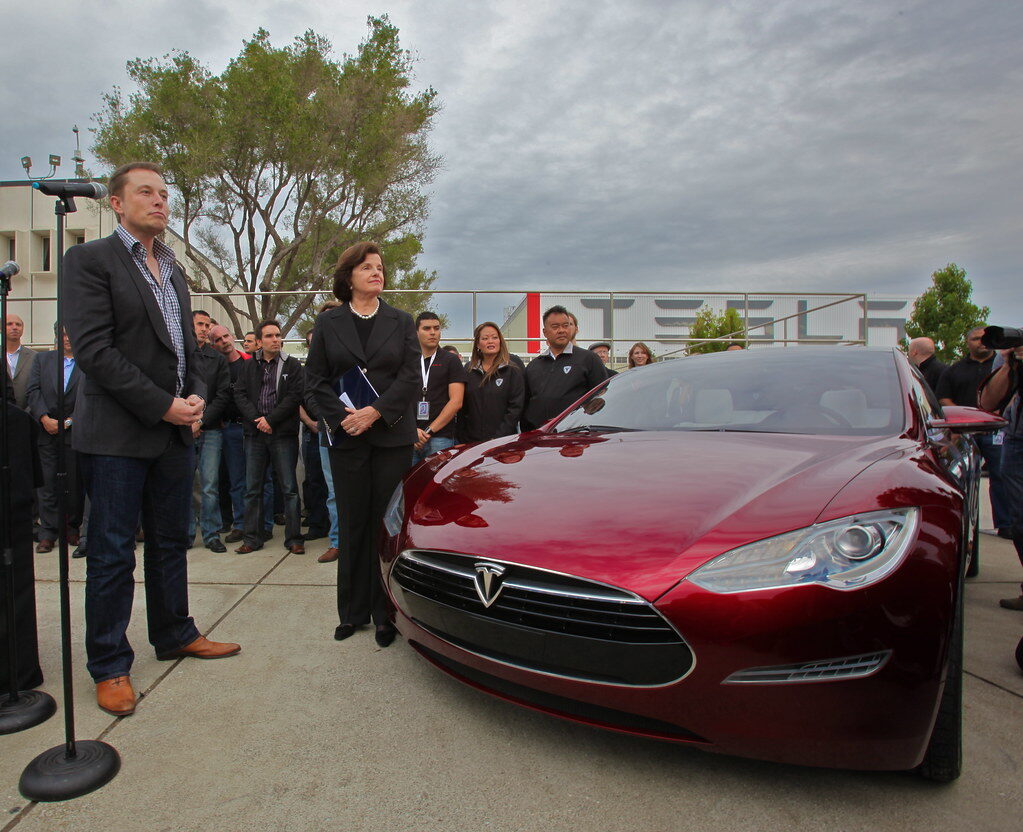
Tesla’s evolving sales climate has also been in the news about consumer sentiment and Elon Musk’s visible role in it. Jessica Caldwell, an analyst at Edmunds, told CNN that a shift in Tesla consumer attitude “would allow legacy automakers to make gains in those areas or EV start-ups,” with regions’ dealers reporting a growing influx of Tesla trade-ins. For example, Andy Hansen, the COO of Audi San Francisco, said his dealership is taking about five new Tesla trade-ins every week. Consumers have spoken about their own reasons for changing cars, too. For example, one Model 3 owner traded their car in for a BMW in spite of owing thousands in a three-year lease, and singer-songwriter Sheryl Crow got her own 15 minutes of fame for switching up her personal transport and donating the proceeds of her sale to National Public Radio. Meanwhile, Musk’s role as president’s adviser and head of the Department of Government Efficiency has provoked more discourse, and Tesla’s stock has fallen more than 50 percent from its December high, and a CNN poll showed 53 percent of Americans had a negative impression of Musk.
Consumer Sentiment Enters The Picture:
- Tesla trade-ins increased noticeably
- Rival brands see opportunities
- Musk’s public role drew commentary
- Stock price fell over 50%
- Consumer sentiment became important
Public debate about Musk has thus emerged as part of a larger dialogue about Tesla and its market strategy. President Donald Trump threatened to protect Tesla properties from destruction, calling the damaging of American property destructive to a great American company; and, U.S. Attorney General Pamela Bondi warned that individuals involved in what she called domestic terrorism would face consequences. Responding to the negative publicity about his political activities and public expressions, Musk would publish tweets on the controversy. These events coincided with markets for Tesla sales, the exchange of car trade-ins, the stock price, and the sentiment of consumers all fluctuating. These changes created an arbitrarily complex market environment where vehicle purchase demand was determined by far more than price and specification. Observation from the field, as well as decisions by individual owners, alongside emerging consumer trends, provided evidence of the changing market for individual car purchases, while analysts saw it as a potential success factor for the general automotive industry.
8. International Sentiment and the “Musk Partisan Effect”
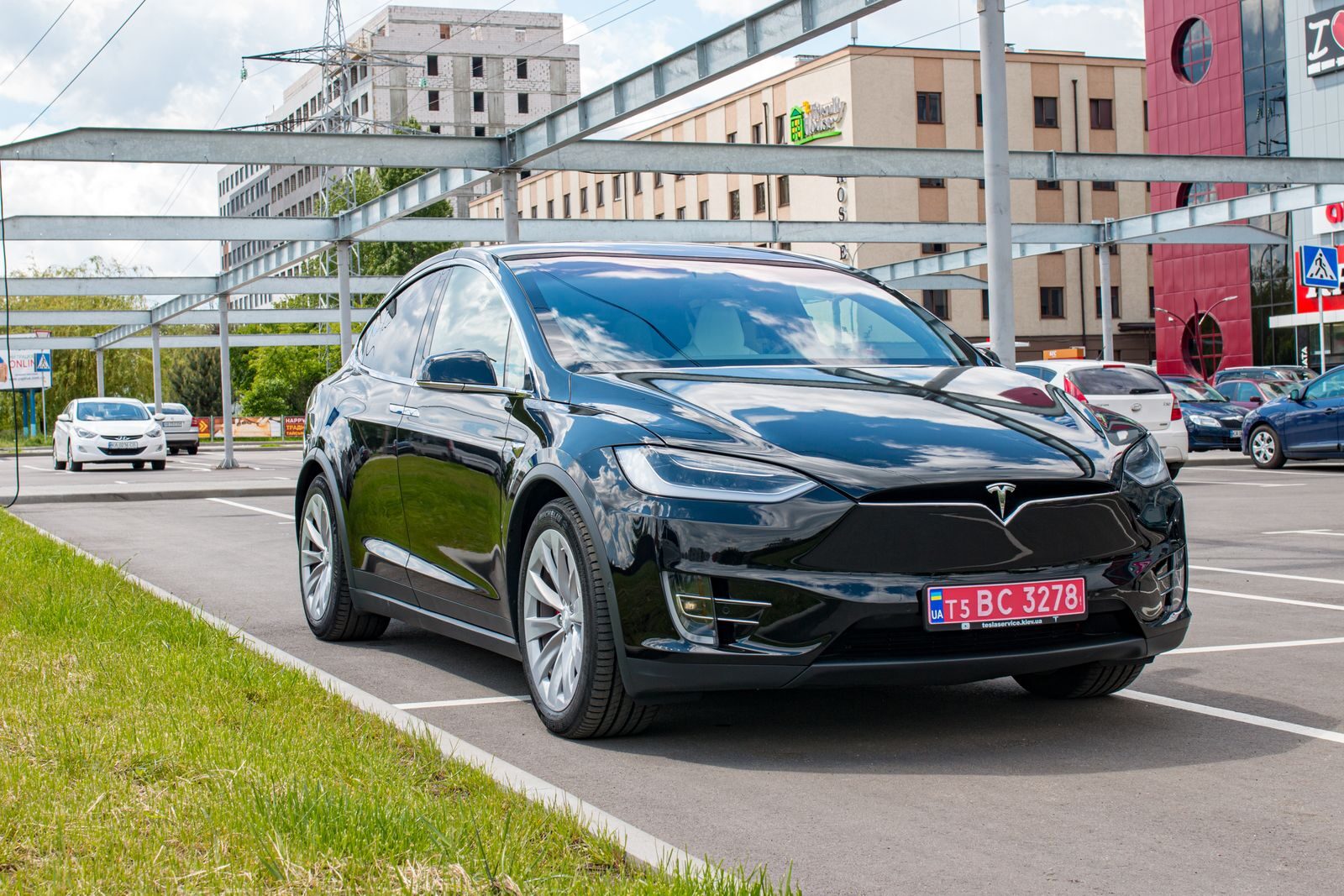
A report from international studies revealed further insight into shifting Tesla consumer moods. Research firm Een Vandaag revealed in early 2024 that 30 percent of Tesla owners in Netherlands, the country with the highest Tesla ownership ratio, were thinking about selling their Tesla. The report also suggested Elon Musk’s negative personal reputation was a contributing factor as one interviewee stated, “A top man’s character also influences one’s choice whether to buy a Tesla or not. If you know what the man is like right now, you will not buy a Tesla.” Data in early 2025 registration statistics indicated downward national and international trends for international automotive markets, with Tesla sales in Australia down 53 percent and in February 2025 down 49 percent in China, down 76 percent in Germany, and down 49 percent in the Netherlands from February 2024. Research has sought a connection between Musk’s reputation and Tesla’s share prices and sales figures. A November 2025 survey from Yale University estimates the number of vehicles Tesla failed to sell in the period October 2022 to April 2025 due to what the authors called the “Musk partisan effect” at between 1 and 1.26 million.
Global Sentiment Raises Questions:
- Dutch owners showed concerns
- Thirty percent considered leaving
- China February sales fell 49%
- Australia sales fell 71%
- Germany sales fell 76%
The Yale research also maintained that that same dynamic was at work for rival EV and hybrid car makers, which grew their sales 17 to 22 per cent. Those findings further complicate the shifting Tesla landscape. The research out of the Netherlands linked certain owner choices to Musk’s political reputation and registration numbers showed a plunge in a number of key markets in February 2025. But the Yale research also attempted to tap into the potential link between the publicity surrounding Musk’s political reputation and Tesla vehicle sales. Taken in isolation, the results suggest the consumer emotional landscape includes factor like pricing, vehicle age, competition and market conditions. But the space Musk’s Tesla occupies is a space in which the vehicle and its performance sits alongside the CEO and the executive strategist.
9. Tesla Refreshes Its Models While Preparing More Affordable Vehicles
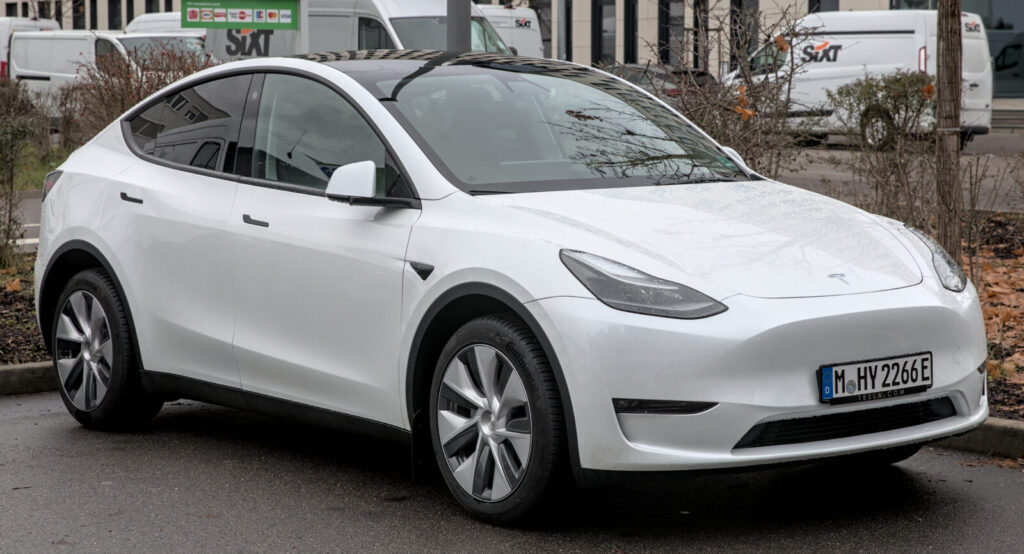
Tesla responds to market changes as well by updating current models and preparing more vehicles. “Tesla faced a tough 2025 as its vehicles were starting to get long in the tooth, and it didn’t have a high-volume product to offset that,” said Stephanie Valdez Streaty, director of research and industry insights for Cox Automotive. February 2025 registration data revealed a 32.5 percent drop in Cyber Truck sales and a 17.5 percent drop in Model 3 sales. Tesla had introduced the new Model 3 late in 2023 and planned a refreshed Model Y to be introduced in the first half of 2025. The Long-Range AWD Model Y was priced at $61,630 including destination and order fee in the U.S., with an estimated effective five-year cost of $46,490 after applying a $7,500 federal tax credit and five-year fuel savings of $6,000, compared to $34,490 for the existing model. Tesla also had new, more affordable models slated for production in the first half of 2025.
Product Strategy Is Moving Forward:
- Model 3 received an update
- Model Y received a refresh
- CyberTruck sales declined 32.5%
- Model 3 sales declined 17.5%
- Affordable models remain planned
The affordable vehicles were to have combined elements of Tesla’s next-generation platform with elements from its current platform using current manufacturing lines. Tesla said the plan would deliver less cost reduction than previously anticipated, but that it would enable the company to fully utilise its maximum sanctioned capacity of around 3 million vehicles and grow production more than 60 percent in 2024 over 2023 before building new factories. The Model Y, which is based on the Model 3 and shares about 76 percent of its parts, has remained central to Tesla’s product portfolio and expansion plans ever since production began in January 2020. Production was subsequently expanded to China, Texas and Germany. Tesla delivered 1.2 million Model Ys in 2023, making it the best-selling vehicle of the year globally. A refreshed Model Y was revealed in January 2025, with the Y L long-wheelbase six-seat configuration following in mid-2025.
10. Tesla Pushes Toward Trucks, Robotaxis, FSD, Robotics and Energy
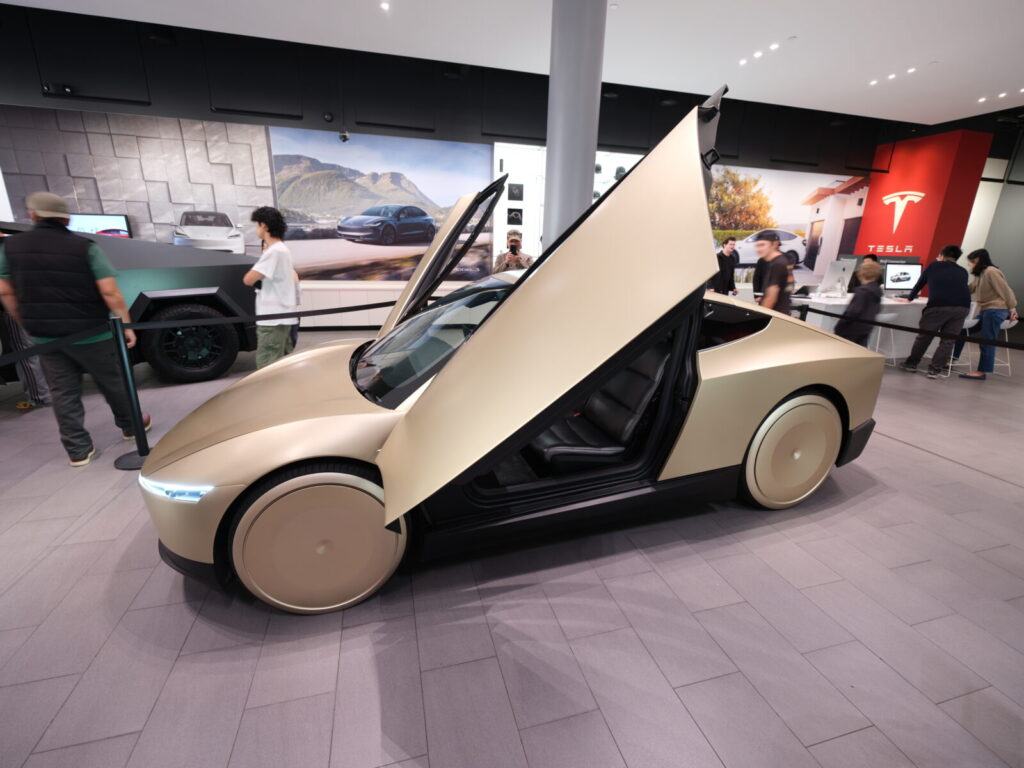
The company’s future plans are not limited to passenger cars and heavy-duty trucks. As of 2023-24, construction of the Tesla Semi dedicated heavy-duty electric truck factory in Nevada had reached a milestone where work on the wall closures was completed in January 2025 to allow installation of equipment to progress. Lars Moravy, Tesla’s vice-president of Vehicle Engineering, said the Semi was a compelling total-cost-of-ownership vehicle and that when produced at volume would make a meaningful contribution to Tesla’s total revenue.Elon Musk described the commercial truck program as potentially being worth “10bn/yr” and 1bn/month at some point in time. Tesla has also been pursuing the Cybercab robotaxi with an “unboxed” manufacturing concept with volume production targeted for 2026. He is also expanding its unsupervised Full Self-Driving (FSD) capability and autonomous ride-hailing testing in Austin and exploring its licensing to third-party car makers with Musk indicating major manufacturers had expressed interest in the software.
Tesla’s Next Chapter Takes Shape:
- Semi production is advancing
- Cybercab targets 2026 production
- FSD expansion remains a priority
- Automakers show FSD licensing interest
- Optimus targets massive revenue potential
Another area of Tesla’s technology plans involves robotics and cleaner energy. Musk has estimated there could be over $10 trillion in revenue from the Optimus robotics venture. In the energy space, Tesla said it is changing how it will deliver the residential solar roof, with a focus on growth through a nationwide network of certified installers rather than direct sales, according to Michael Snyder, vice-president of Energy and Charging at Tesla. Musk explained that that strategic shift was in part driven by successful growth through providing products directly to the roofing industry. Meanwhile, Tesla still offers the Model Y and Cybertruck while adapting its production plans. The Cybertruck gained limited production capacity at Gigafactory Texas in 2023 after facing delays, with a 2026 model lineup that includes a tri-motor AWD Cyberbeast and dual-motor AWD model. In addition to Tesla’s vehicle offerings, the next generation of its software, robotics, commercial transport, and energy projects will form Tesla’s next phase of operation.