

Oldsmobile Toronado: The Bold Front-Drive V8 Coupe of the 60s
American cars in the sixties was one steeped in tradition. Rear wheel drive, V8 powerhouses was what dominated the street and in every sense was “the power”, the “persona”, and the “pride” of american automotive engineering. The General Motors division however was not content with merely playing the game, they were not afraid to break the rules they had set themselves. The bulk of the market perfected their recipes of what worked, however the engineers at GM continuously explored the frontiers of possibility in sometimes outlandish experiments in the name of progress and innovation, sometimes at the cost of success.
These innovations were widespread across all of GMs departments;from radical rear-engine layouts like the chevrolet corvair to futuristically styled concepts reminiscent of the Euro sport cars; all the divisions at GM were re-examining there understanding of american automotive engineering through creative exploration into the possible. These were not wild guesses but educated and thought-provoking explorations into possibilities for comfort, speed and space efficiency that had previously gone unimagined for American cars.
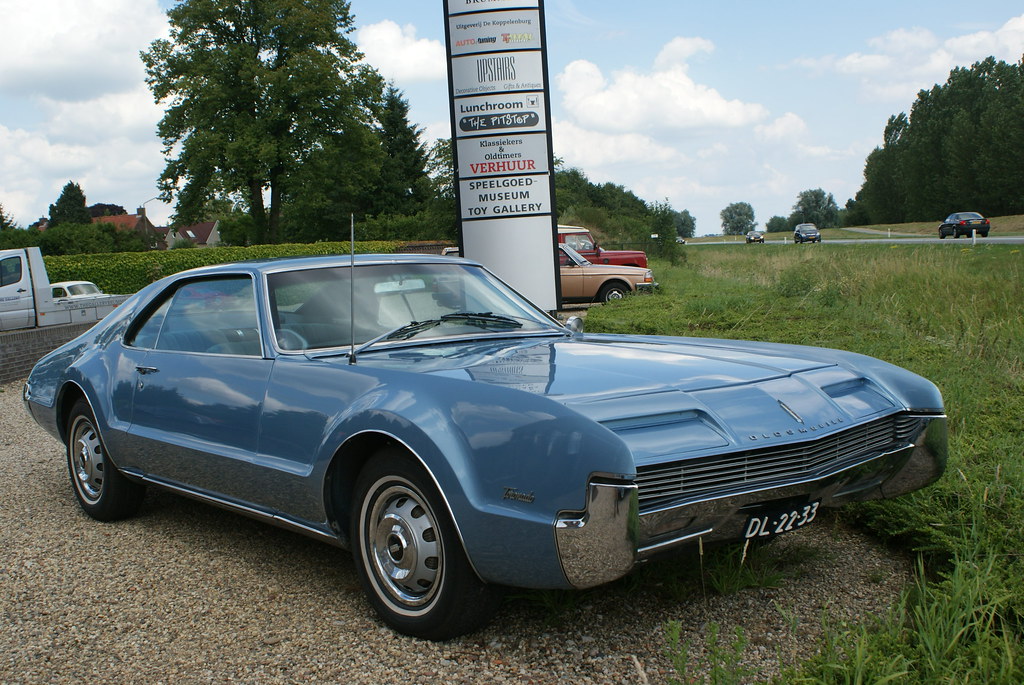
From these bold ideas blossomed what is perhaps the most significant unconventional automotive of the period, the 1966 Oldsmobile Toronado, a vehicle which wasn’t just a high-luxury coupe, but a turning point for American full size performance automotive engineering; a bold, and in fact almost abandoned, foray into a front wheel drive V8 monster which would pave the way for the automotive landscape of the future.
1. The Concept of Unitized Power Package
GM engineers call the core concept behind the Toronado a Unitized Power Package (UPP). The main goal of the UPP was to simplify packaging by creating an engine transmission unit. This was required so that the power could be sent directly to the front wheels, thus eliminating any drive shaft and engineers could rearrange the interior space much more effectively so the car was able to have a more flat floor than a conventional American large car.
Compact Drivetrain Integration:
- Unitized Power Package engineering concept
- Engine and transmission combined unit
- Direct front wheel power delivery
- Driveshaft elimination from vehicle layout
- Improved interior space and flooring
Not only did the package gain advantages from the design itself, but there were also distinct performance advantages to be gained from the concept. Weight placement over the driven front wheels helped gain more traction, particularly valuable in low friction or slippery conditions. While front wheel drive had existed in earlier cars it had all but disappeared from American roads in decades prior, and with the Toronado, it returned in to serious consideration thanks to the engineering applied to the new concept.
Experiments have been conducted since the 50s where General Motors ran concept vehicles testing this very principle on public road and for engineers. Those early tests found a lot of potential with the idea, and while there was still some time to go for engineers to get the design ready for reliable production usage, those studies paved the way for the concept.
2. Early Concept Development at GM
GM first experimented with its front wheel drive setup starting in 1955 with a couple of show cars. Called LaSalle II and L’Universelle, these concept vehicles were some of the first demonstrations of the Unitized Power Package concept to the public in a concept car form. Although these concepts were not ready for production, they did showcase GM’s ideas about a new front-wheel-drive arrangement in a show car and proved GM was considering this type of car for many years to come.
Experimental Concept Vehicles:
- LaSalle II and L’Universelle show cars
- Early front-wheel-drive experiments
- Unitized Power Package exploration models
- Non-production engineering prototypes
- Future drivetrain layout studies
Around the end of the 1950s, GM handed over this idea’s development to Oldsmobile’s engineers. Originally the idea was to be put into smaller, cheaper vehicles. Such vehicles are in dire need of a light construction and compact mechanics. Oldsmobile’s engineers had even considered a light version of a V8 engine to ease on the drivetrain. The goal here was that this idea should fit into the every-day transport. That was when this idea started to be viewed from experimental in the labs to application on roads.
From there on the obstacles of engineering started to grow: the system turned out to be to complex and to expensive for smaller cars. The power of a larger engine and a small transaxle made them difficult and thus to expensive to build for cars within reach of more people. It was time for GM to see in which kind of vehicles the technology could really be placed: larger and much more luxurious.
3. Strategic Shift Toward Luxury Performance
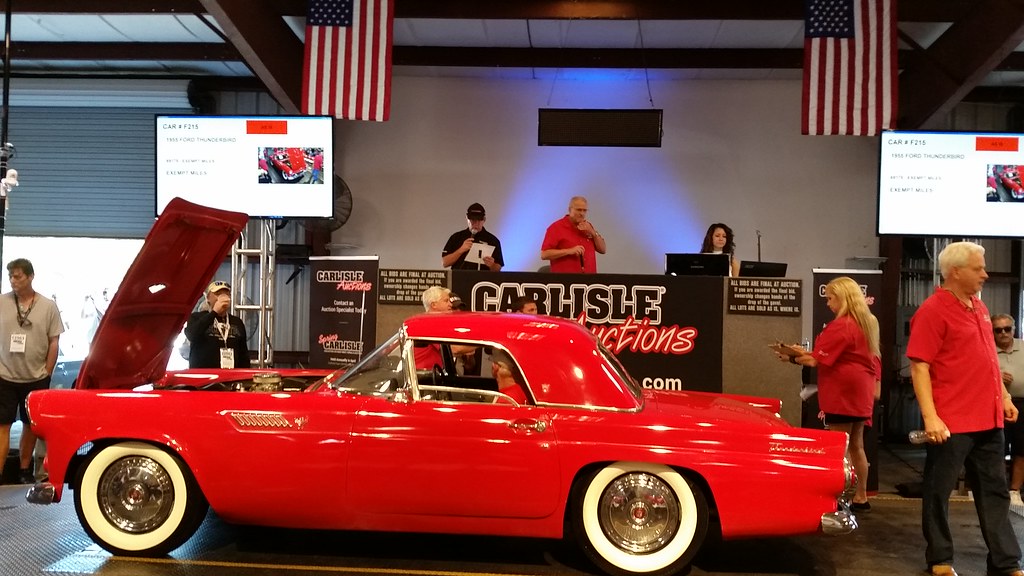
While costs were escalating further GM made a critical strategic choice-that of moving the UPP system from the realm of inexpensive cars into luxury vehicles. This was tightly linked to the ambition of Oldsmobile entering the expanding personal luxury coupe market; a segment then dominated by competitors such as Ford’s Thunderbird and Buick’s Riviera. The change meant the thinking behind the application of front-wheel drive had shifted fundamentally: no longer was it being applied in a pursuit of affordability, but was now directed toward performance conscious luxury buyers.
Luxury Market Repositioning:
- Shift from economy to premium vehicles
- Targeting personal luxury coupe segment
- Competition with Thunderbird Riviera
- Front-wheel drive as luxury feature
- Focus on market differentiation strategy
Oldsmobile even began re-marketing front wheel drive as something high-tech rather than a means to save money. This subtle shift began to establish UPP as a luxury item rather than a cheap alternative. More importantly, it allowed Oldsmobile to carve its niche within a competitive luxury market where expensive technology was seen as an advantage rather than just another feature of a luxury vehicle. This shift took the whole concept from “good for us, okay for you” to “great for you, and what a luxury!”.
Since fewer limits on cost were placed upon engineers, the designers were allowed to spend more time working on the reliability and the mechanical niceness of the system. Special care was taken in ensuring that the system could properly transmit high-torque V8s; vital if Oldsmobile wanted to retain its reputation for power. It allowed the system to develop into something stronger, stronger. The basis for a very potent production vehicle was in place.
4. Engineering the Production-Ready System
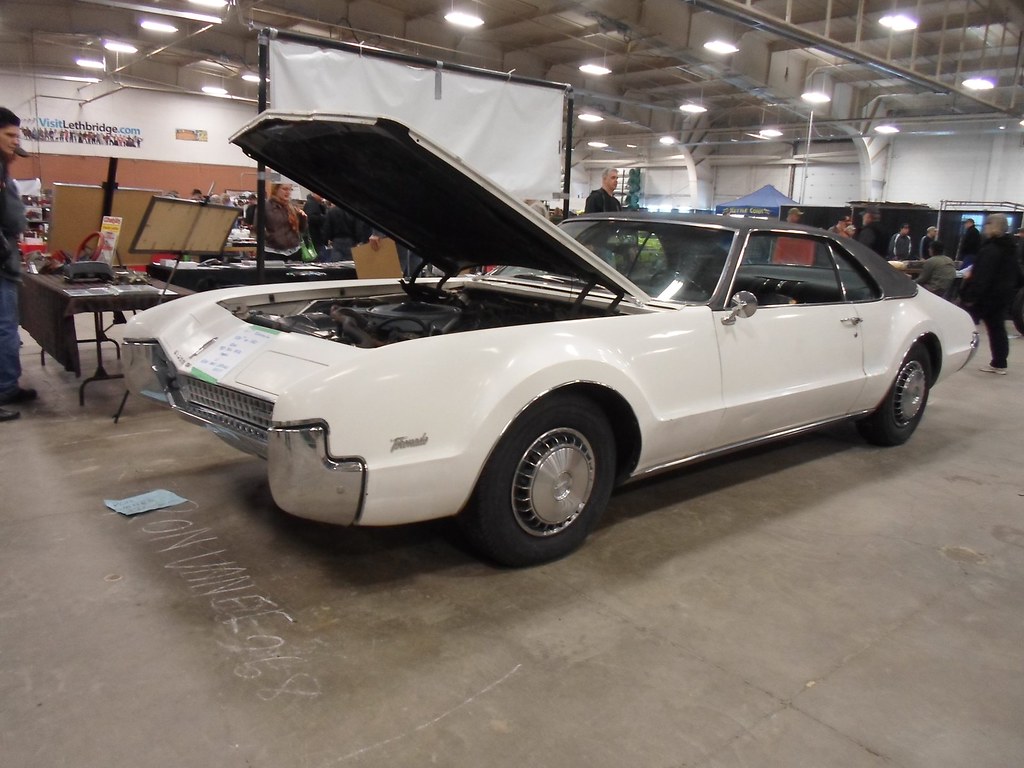
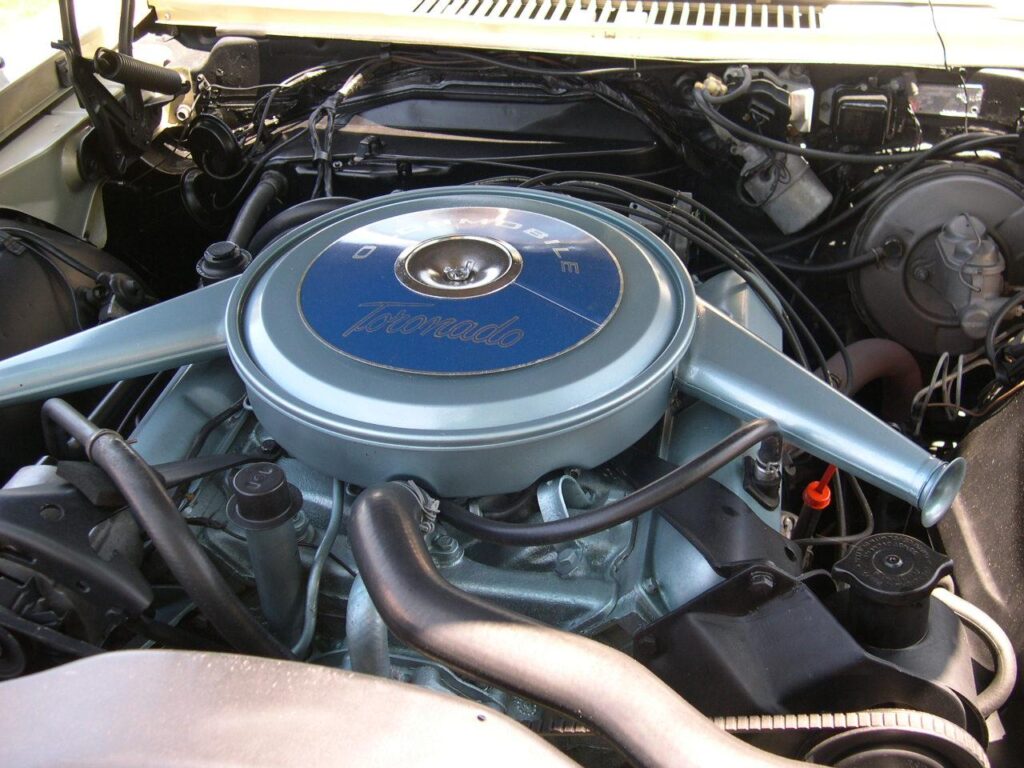
As the emphasis returned to performance luxury, Oldsmobile’s engineers turned the UPP concept into a production viable design capable of high displacement power with smooth performance. It evolved into a combination of a big V8 engine and a Turbo-Hydramatic three-speed transaxle all housed together. The design was laid out in a longitudinal manner for better packaging and handling of the torque, all designed with brute strength.
High-Strength Drivetrain Layout:
- V8 engine transaxle integration
- Three-speed Turbo-Hydramatic system
- Longitudinal drivetrain configuration
- Heavy-duty torque handling focus
- Production-ready engineering design
GM proved this system with some severe high-torque engine abuse to prove its durability. They wanted to operate the drivetrain outside normal performance envelopes. Their purpose was to show it could supply maximum torque without mechanical breakdown. The engineers looked for high stress points and durability over the years. This demonstrated that the drivetrain had the mechanical resilience to do its job.
Besides having the ability to withstand tremendous mechanical stress the drivetrain had to have a certain degree of refinement for a high-class automobile application. This means a quiet, smooth and controllable power delivery must be demonstrated. Engineers reduced vibration and tested vehicle stability while under acceleration. Power output should remain controllable while also exhibiting predictable behavior during heavy throttle conditions. The final performance parameters were tuned to be competitive while still meeting customer expectations for refined automobile behavior.
5. Design Evolution and Styling Direction
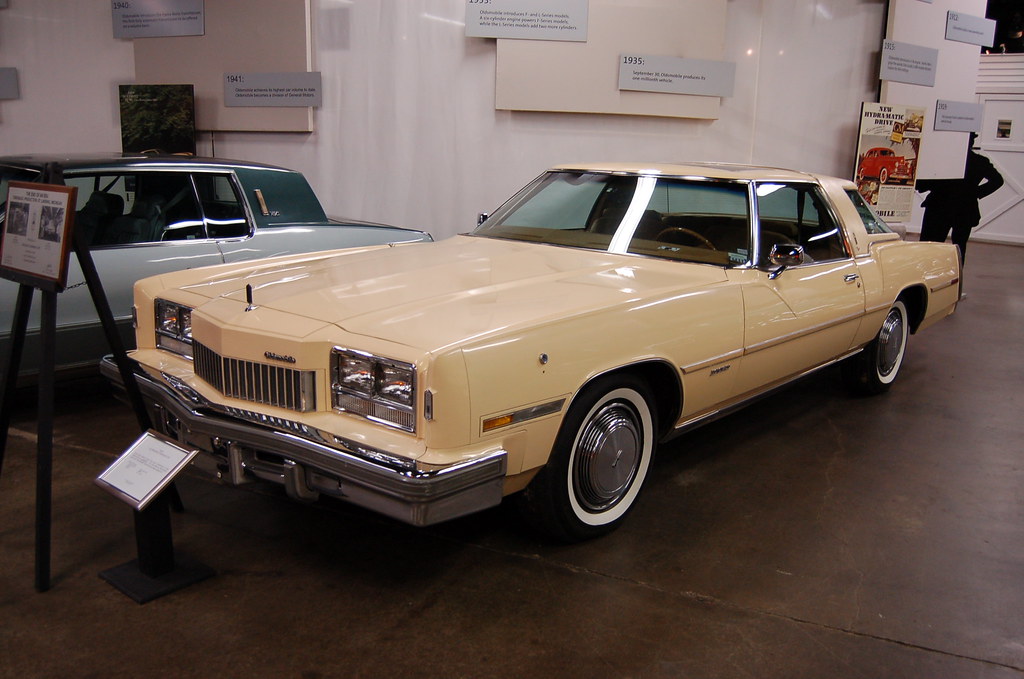
Work on the visual design of the Toronado started in 1962, with David North designing the first concept sketches. In its original proposed form the car was smaller, though leadership at GM felt the proportions of the car’s design was well received. They subsequently decided to scale up the car in to a full sized coupe, bringing it in line with the positioning it was planned to have. The larger scale and style increased road presence, while it also brought the design in line with GM’s intent to establish a large range-topping car.
Concept Styling Foundation:
- Initial design sketches by David North
- Early compact concept proportions
- Decision to scale into full-size coupe
- Strong luxury coupe positioning
- Foundation of Toronado identity
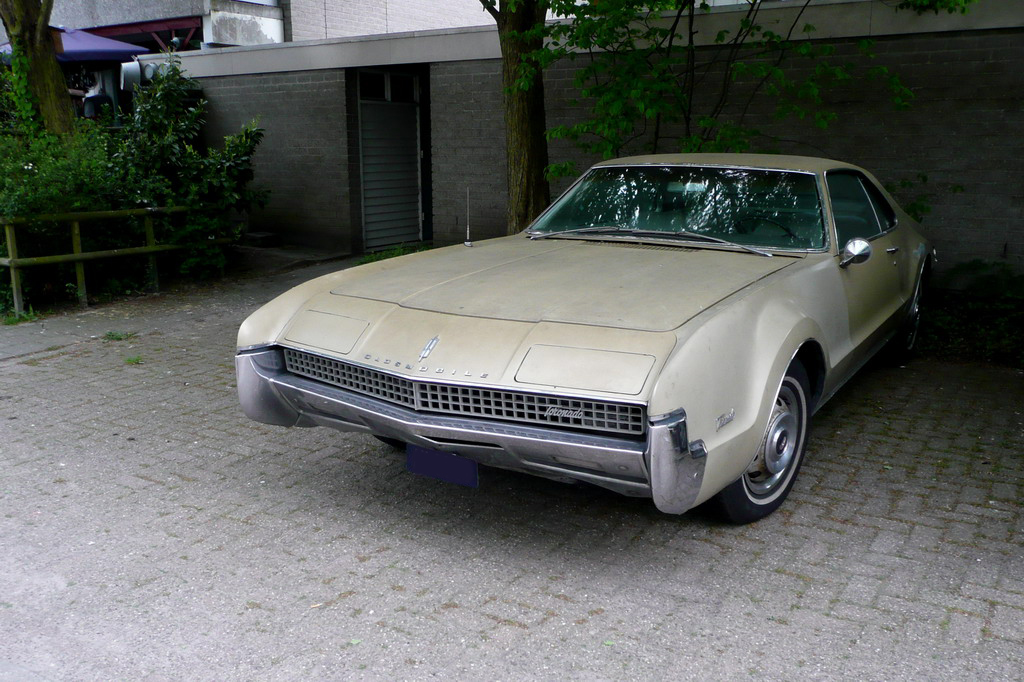
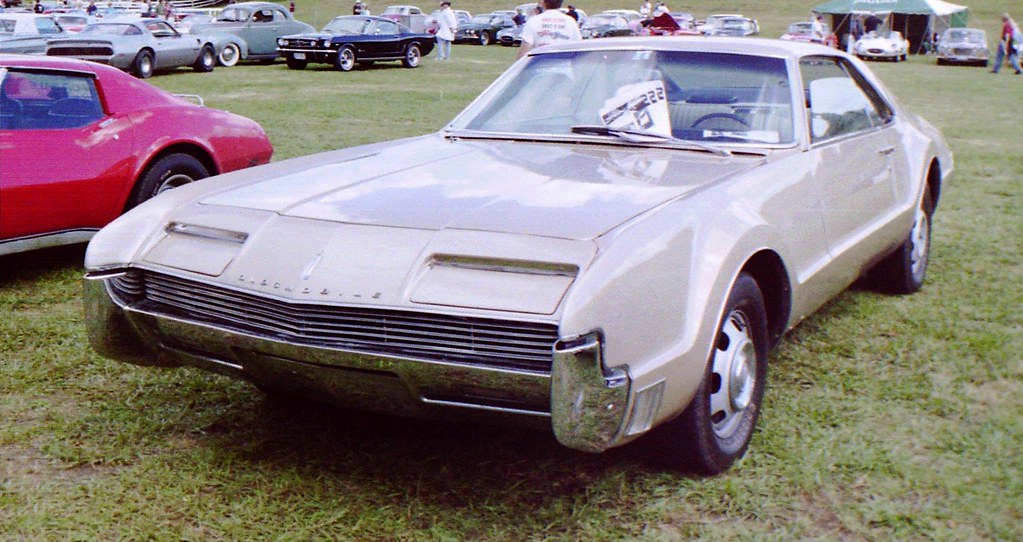
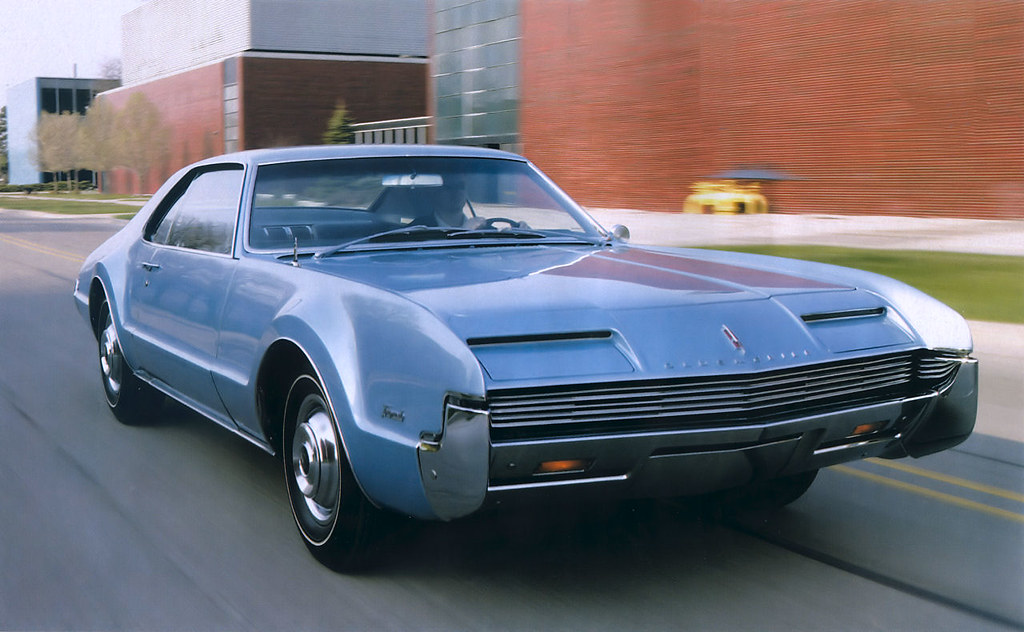
The resultant design seemed to achieve a balance between futuristic appeal, combined with traditional American design language. A long sculptured body shell with a raked fastback shape lent the Toronado an incredibly clean, fresh look. Further adding to this ‘clean’ image was the inclusion of hidden headlamps. The overall appearance was of an entirely unique design, devoid of any obvious “aggressiveness”, to set it apart from all other cars of its day.
This elegant yet aggressive design managed to give the Toronado an “awesome” presence even before you were aware of the engineering beneath. It managed to “communicate” class and power very quietly. It was, and remains, an extremely distinctive vehicle. This design alone was probably enough to ensure a legendary status for the Toronado even if it were not for its innovative mechanical package, but, combined with the new technology, many viewed this design as an indication of GM’s future direction.
6. 1966 Launch and Mechanical Identity
Upon its release, the Oldsmobile Toronado was a completely new American coupe. The interior and body offered luxury styling with an uncommon drivetrain. Powering it was a 425 ci Rocket V8, generating a respectable 385 hp and 475 lb-ft torque which put it in muscle car performance range, but the car’s purpose was still one of premium comfort and grand touring.
Powertrain Performance Breakthrough:
- 425 cubic inch Rocket V8 engine
- 385 horsepower output rating
- 475 lb-ft torque delivery
- Muscle car level performance figures
- Luxury coupe performance balance
The other point which really made the Toronado something special was not just its front wheel drive layout but this coupled with so much torque. Pushing that kind of power through the front wheels wasn’t something engineers took lightly when the first generation Toronado was rolled out. The system that delivered the power was actually surprisingly manageable and planted. The engineers had to fine tune the drive train to minimize torque steer. This system was not as unwieldy as they expected. The vehicle’s characteristics are designed for comfort. Even when you nail the accelerator you feel it putting that torque down to the front wheels in a nice manner rather than an aggressively jerky motion.
Engineers worked hard at controlling this torque. It was more stable than engineers thought it would be. The Toronado was also engineered to handle the way a luxury car should handle, smoothly even when accelerating aggressively. It handles itself in an unexpected level of confidence considering its driving layout. The car had successfully broken barriers in its high power front wheel drive layout and it could do it in a production luxury car.
7. Driving Behavior and Handling Character
On the road the Toronado exhibited a calm, composed and secure feeling at speed. The front end relied on a torsional bar with increased spring rates to cope with the additional weight from the drivetrain and remained composed even in vigorous driving. Although the Toronado was naturally prone to some understeer owing to the nature of the front-wheel-drive system, the handling was predictable and aimed for overall refinement as opposed to a more ‘lively’ demeanor.
Stable Suspension Dynamics:
- Front torsion bar suspension setup
- Reinforced spring rate tuning
- Managed front-heavy weight balance
- Predictable understeer characteristics
- Luxury-focused ride stability
However surprisingly for front wheel drive the car feels quite secure on the road and never feels unstable under strong acceleration, even when accelerating hard it keeps in the desired direction and seems very controlled. There was an obvious fear that the high amount of torque the Toronado could generate would result in unstable or difficult to handle vehicle characteristics but in reality this did not seem to be the case, it performed smoothy regardless of speed, and the Toronado was therefore seen more as a high performance luxury cruiser.
Indeed reviewers often found it particularly refined to drive for its era with smooth delivery and controllable acceleration, even when using full throttle not particularly a harsh or violent experience but rather one of comfort and control which differentiates it from some of the more raw, less controllable rear wheel drive performance vehicles.
8. Market Reception and Public Reaction
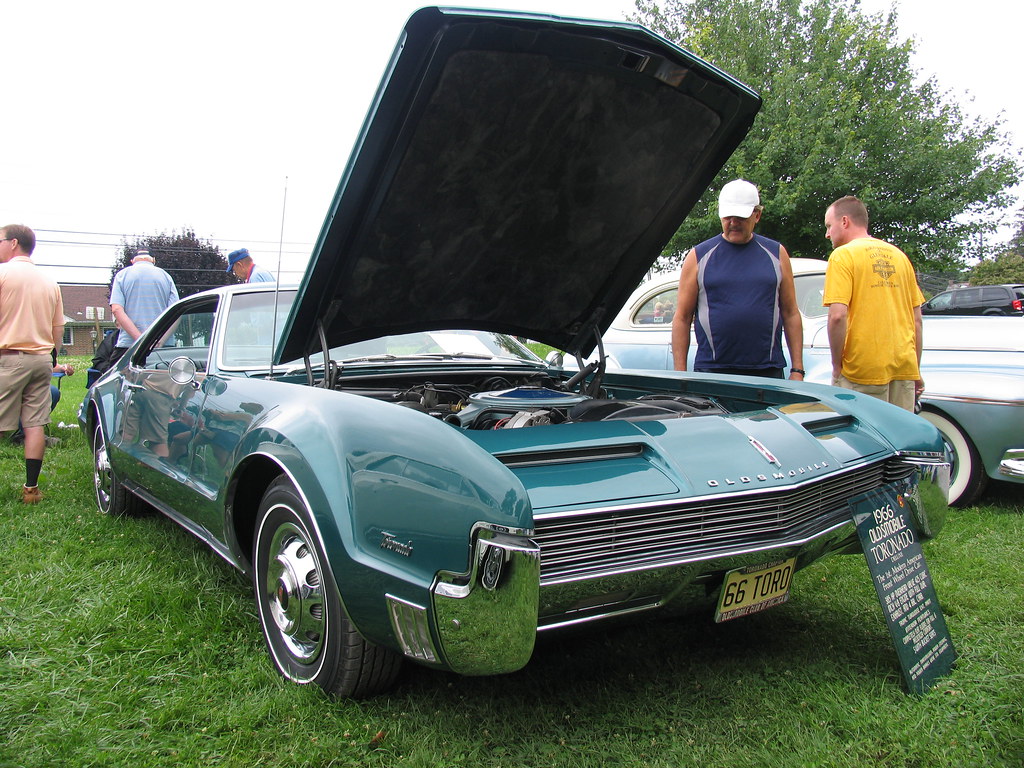
Upon its debut, the Oldsmobile Toronado garnered extensive accolades. With its daring design, sophisticated technology and impressive power, the automobile instantly garnered industry wide attention. Unique engineering and striking styling was sure to capture the public’s attention, and it is in that it has become one of the most talked about cars of its time. Its significance was further reinforced when it was awarded Motor Trend Car of the Year in 1966.
Critical Recognition and Awards:
- Motor Trend Car of the Year 1966
- Strong automotive press attention
- Innovative design recognition
- Advanced engineering appreciation
- High industry impact status
Despite critical praise for its technical merits, sales didn’t quite live up to what was hoped for. Traditional buyers of luxury vehicles perceived its suspension as firmer than desired, and the price point placed it against very established and respected competition. In essence, it failed to truly marry its performance design with the buyers expectations of a relaxed luxury machine, and never truly hit sustained high sales.
This disconnect widened as its existence stretched on, where more technically minded customers found something to admire but the majority of luxury consumers yearned for comfort, making the Toronado a well respected if niche luxury car which redefined what was possible.
9. Platform Influence Across GM
The Toronado’s E-body platform served as a crucial engineering benchmark for the corporation. By utilizing a pioneering body-on-frame layout, the platform paved the way for divisions within the GM group to conceptualize their own luxurious offerings. Buick was a participant to a certain degree with their Riviera, although it still used the traditional rear-wheel-drive setup. The Riviera platform borrowed components from the Toronado platform, proving it could be implemented without front-wheel-drive. It had a significant impact in luxury coupe design in later GM models.
E-Body Platform Adaptations:
- GM E-body platform foundation
- Buick Riviera platform adaptation
- Rear-wheel-drive retained layout
- Cross-division engineering influence
- Luxury coupe platform evolution
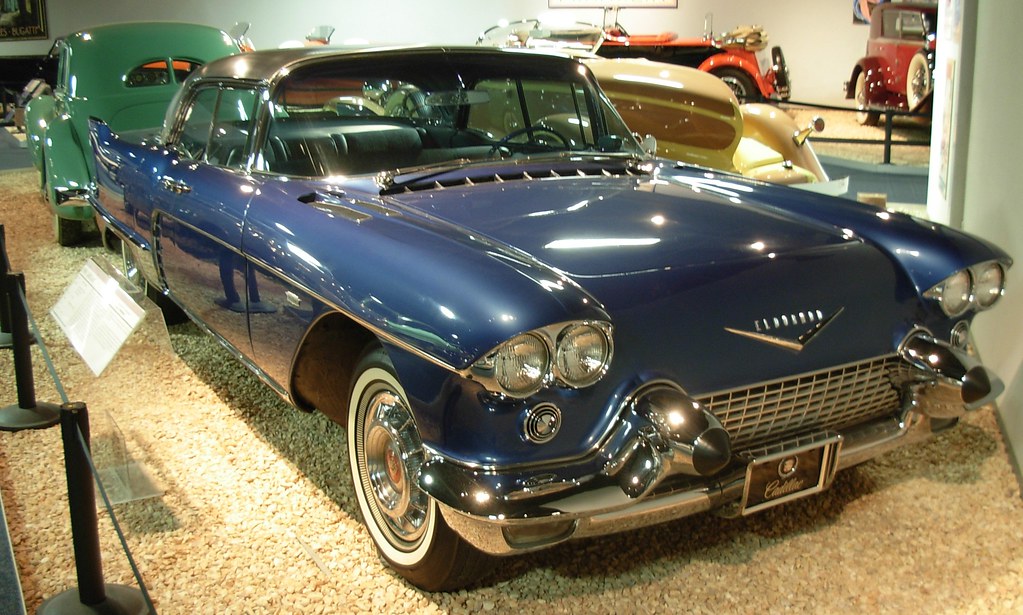
Of the brands to build upon the engineering principles of the Toronado, Cadillac followed most closely. In 1967 it adopted a front wheel drive architecture similar to that of the Toronado, in the form of the Eldorado. This became an incredible stretch of the idea to yet another premium GM brand, and Cadillac further iterated upon the original by also taking the opportunity to introduce larger more powerful engines, to show that the engineering principle was indeed capable of scaling appropriately.
Eventually, it became evident that the architecture was easily adaptable for a number of other GM platforms, both with front-wheel drive and rear-wheel drive luxury cars, thus showing the brilliance of the original Toronado concept by enabling an entire line of luxury cars and beyond.
10. Legacy and Long-Term Impact
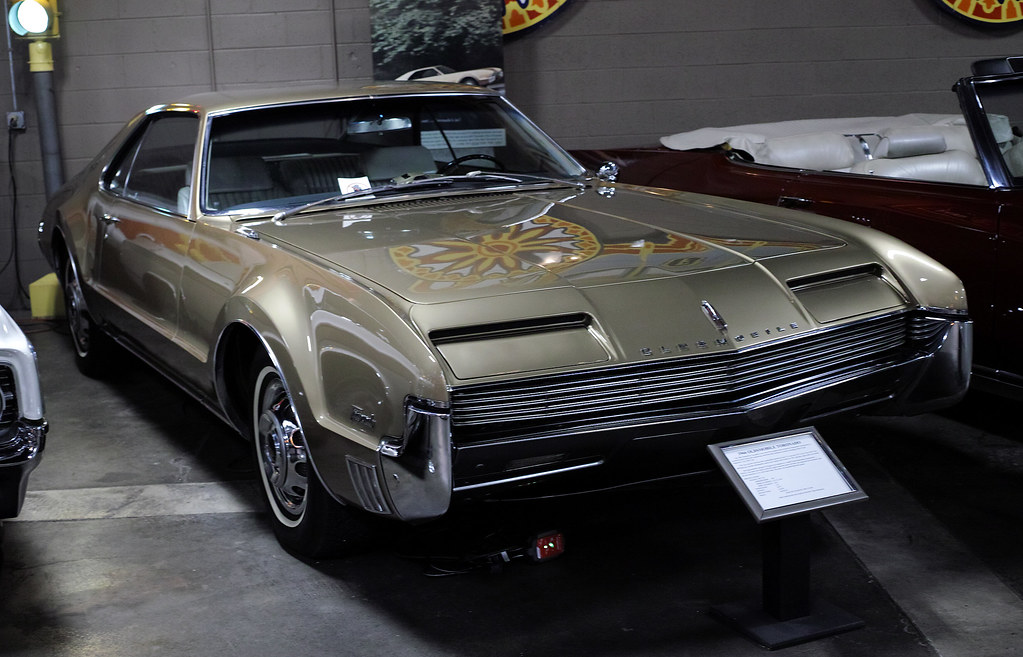
By the late 1960s and early 1970s, the Toronado gradually transitioned into a more conventional luxury cruiser. In this phase, it lost some of its early experimental and groundbreaking character. However, its engineering influence within GM did not fade. Instead, it continued to shape design thinking across multiple divisions. The vehicle remained an important reference point for future development work.
Evolution Into Mainstream Luxury:
- Shift to conventional luxury cruiser
- Reduced experimental engineering focus
- Continued GM engineering influence
- Refinement of original concept
- Long-term design relevance
The durability of the Toronado’s drivetrain system eventually opened doors for broader applications. Engineers recognized that the platform could support different types of vehicles beyond luxury coupes. This included larger and more utility-focused designs where strength and stability were essential. Most importantly, it proved that front-wheel drive could handle high torque reliably. It also demonstrated stable performance in large and heavy vehicles.
In the long run, the Toronado became a major turning point in American automotive engineering. It influenced how GM approached platform design and drivetrain innovation in the following decades. Its success helped encourage the wider adoption of front-wheel drive across multiple vehicle segments. Even when later models became less experimental, the original concept remained highly influential. The Toronado’s legacy is defined by its role in reshaping engineering direction at GM.