







Pontiac GTO: Unpacking the Name and Legacy of a Muscle Car Icon
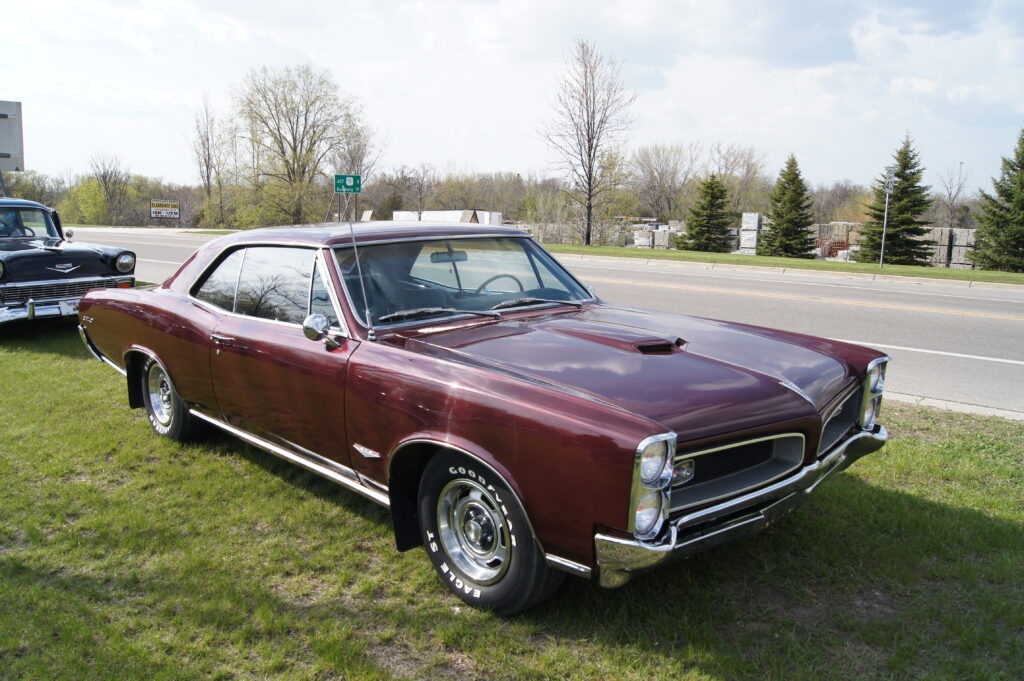
The Pontiac GTO is considered an important milestone in automotive history because of what it accomplished when only a handful of vehicles in history have been capable of doing such a thing. It shifted the direction of an industry. In the 1960s, speed wasn’t enough; the industry needed to reconsider its vision for high-performance road cars. Most significantly, the GTO managed to fuse engineer creativity with bold decision-making in a context where rules and regulations should have prevented its creation.
During the 1960’s the direction of American automobiles changed. Buyers demanded more from their automobiles, no longer content to be satisfied with mere transportation. Pontiac, under such strict restrictions from General Motors that racing involvement wasn’t an option, capitalized on this change in perception and sought to redefine it. Rather than abandoning this pursuit altogether, the marque decided to focus on another significant undertaking: creating an automobile whose performance on the road felt identical to its performance on the track.
Thus, the GTO was conceived. It was born from corporate loophole into an enduring icon; it was not a planned product in the conventional sense but a deliberate gamble taken by engineers, marketers, and executives who had spotted an opportunity hidden within constraints. The resulting synergy was what made the GTO’s impact so powerful.

1. Corporate Rules That Sparked a Revolution
The genesis of the Pontiac GTO is not a story of total independence, but of corporate control. Early 1960s General Motors had imposed restrictions, forbidding official factory racing; they also dictated how each brand could compete. This was a serious predicament for Pontiac, a division with an image intrinsically tied to speed and teen drivers.
Key Factors Behind the GTO’s Origins:
- General Motors factory racing ban
- Pontiac’s performance-focused brand identity
- Need to attract younger enthusiasts
- Shift from racing programs to street performance
- Opportunity to innovate within existing models
Rather than discarding performance altogether, Pontiac executives focused instead on building production cars that offered race-inspired performance in a street-legal format. This enabled them to remain compliant with corporate restrictions while still addressing a consumer market interested in speed, power, and excitement from a factory-built machine.
This approach to engineering was ultimately responsible for developing what may be the most important vehicle in American automotive history. Instead of a race car, a street machine began to develop that incorporated a race car’s design philosophy into an ordinary production model. The result of this design philosophy was the Pontiac GTO and the birth of the muscle car.
2. The Tempest Experiment and Engine Swap Strategy
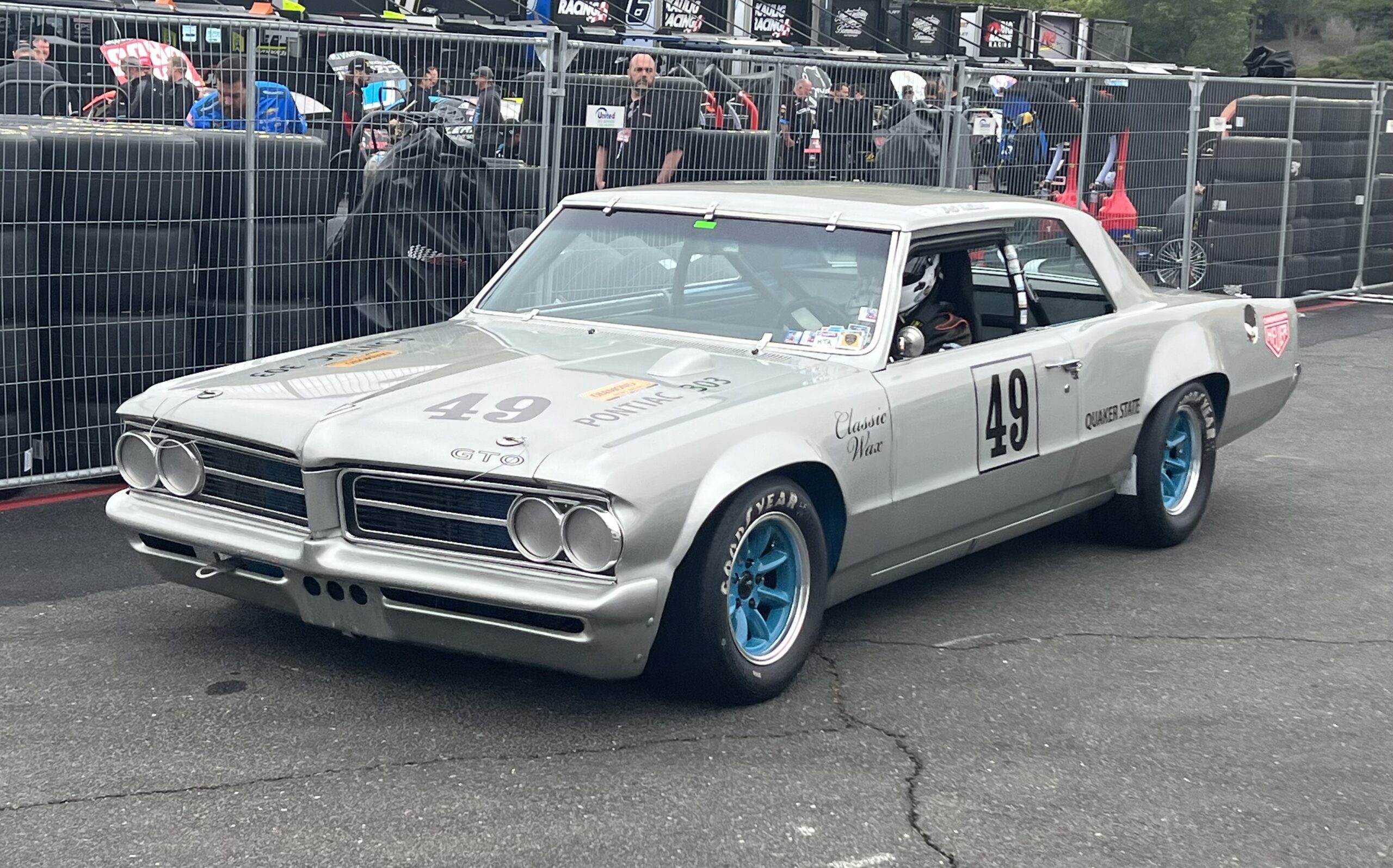
The “eureka” event for an experimental muscle car was the adaptation of the Pontiac Tempest. Engineers for Pontiac, at one time, swapped out a 326cid V8 with a much more powerful 389cid V8 from a Pontiac Grand Prix, and immediately, a regular full-size Pontiac ceased to be.
Engineering Innovation Behind the GTO Formula:
- Pontiac Tempest used as the base platform
- 389 cubic-inch V8 engine installation
- Engine sourced from the Pontiac Grand Prix
- Exploitation of GM option-package loophole
- Creation of a high-performance mid-size car
Although General Motors still imposed internal limits on engine displacement at the time in its intermediate class vehicles, Pontiac discovered a loophole. Larger engines were not to be sold in a typical model, but could be installed if they were part of an optional performance package. With this tactic in mind, Pontiac was able to pack a punch into its vehicle, while still technically abiding by corporate policy.
The result was a vehicle that looked like a standard model upgrade, but that had more power packed into it then anyone anticipated. This engineering marvel allowed Pontiac to insert a big block engine into a mid-sized body and paved the way for what would be the Pontiac GTO and would forever change the way American muscle cars were designed.
3. The Meaning Behind the GTO Name
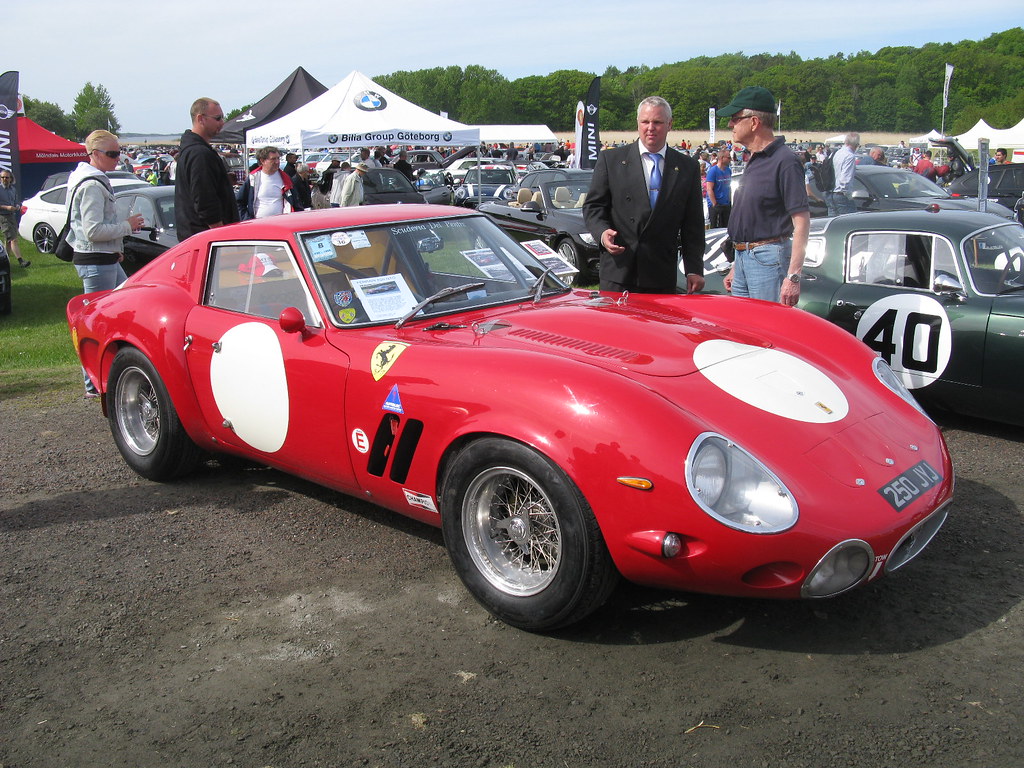
It’s not like Pontiac simply called it “GTO.” The name has some pretty significant meaning. Pontiac GTO is derived from Italian: “Gran Turismo Omologato” which means: “Grand Touring Homologated”. It has quite a bit of meaning attached with European racing traditions where homologation links street legal production car to race-car.
The Significance Behind the GTO Identity:
- Derived from the term “Gran Turismo Omologato”
- Inspired by European racing traditions
- Associated with competition-approved vehicles
- Connected to high-performance engineering ideals
- Helped establish a global performance image
The name was also notably used by the famed Ferrari 250 GTO one of the most desirable performance cars at the time. By using this designation, Pontiac was trying to place its new performance car on equal footing with the exoticism and exhilaration already associated with the name given to European racing-styled automobiles. The name was also being positioned with some European interest, rather than exclusively American. The GTO was later homologated for some European motorsport and lent legitimacy to the use of the name. In other words, the Pontiac GTO was seen not only as a high-performance street car, but as something aspirational.
4. First Release and Immediate Market Reaction
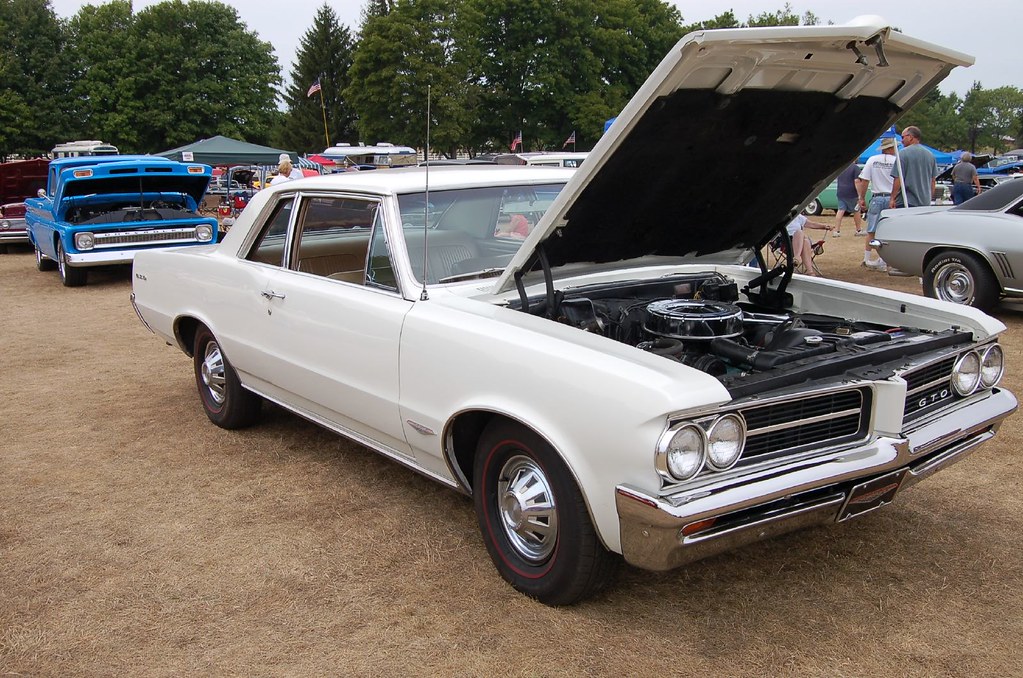
Released in 1964 as an optional performance package rather than a separate model, the Pontiac GTO was available in LeMans models and offered surprisingly high levels of performance from an economical mid-size production vehicle. It came standard with a 389cid V8 that output 325hp, a manual transmission, scoops built into the hood, and an upgraded suspension.
Performance Features That Attracted Buyers:
- 389 cubic-inch V8 engine
- 325 horsepower standard output
- Optional Tri-Power induction system
- Performance-oriented suspension upgrades
- Available manual transmission for enthusiast drivers
To further improve performance on their new muscle car, Pontiac provided optional Tri-Power setup on which includes three 2 barrel carburetor that provides an additional horsepower to 348 and enhance the GTO’s performance image. That ordinary mid-size car had transformed into a car that has power and acceleration at the same level as any of expensive performance car out there.
The market’s response was swift and huge. The expectation for Pontiac for the sale of GTO package was at 5,000, thinking that this will be another niche experiment for the car manufacturer. More than 32,000 were sold in just the first model year. It clearly shows that American consumers had a thirst for affordable, high-performance, road-car that marks the arrival of the muscle car age.
5. Growth and Strong Market Validation
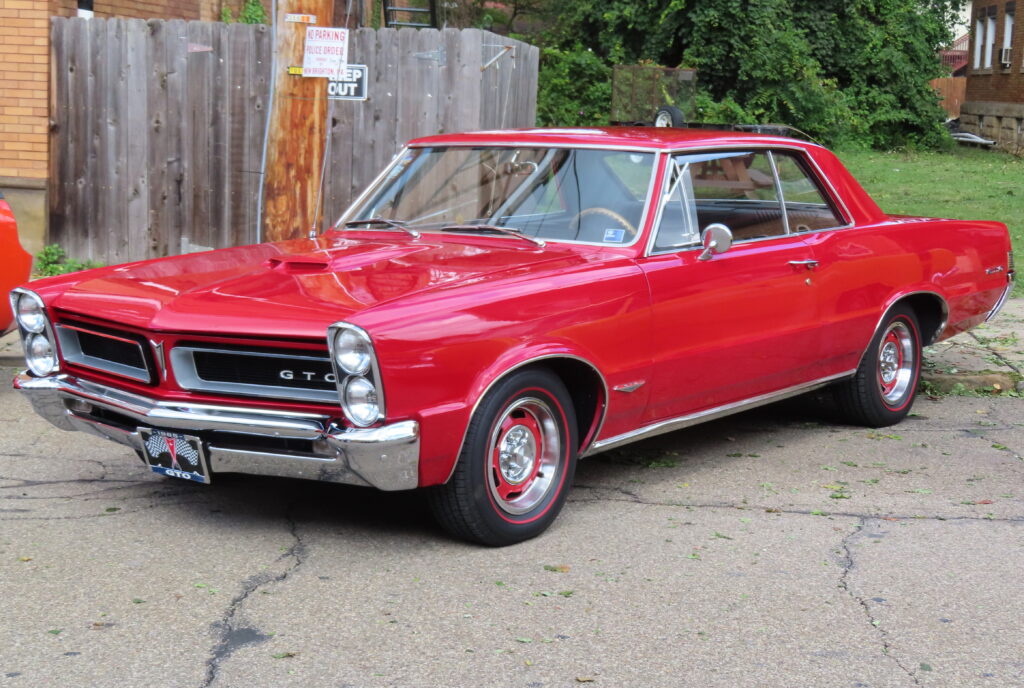
By 1965 the Pontiac GTO has gone beyond just a “performance package” and has really been accepted as a performance icon in its own right. Pontiac made styling revisions to include stacked headlamps, re-worked body lines and a longer, more sophisticated look to the car, while keeping it tough looking and aggressive.
Key Factors Behind the GTO’s Rapid Growth:
- Updated styling with stacked headlights
- Longer and more refined body design
- 335-horsepower standard V8 engine
- Optional Tri-Power system producing 360 horsepower
- Growing popularity among performance enthusiasts
The enhancements in performance further increased the GTOs desirability. In addition, the normal 389 cid V-8 increased its horsepower from 325 to 335, while the optional Tri-Power setup boosted this to a stunning 360 hp. The added oomph translated into greater acceleration and driving enjoyment and established the GTO as a truly potent car that was attainable to the everyday consumer.
The market enthusiastically embraced the concept. It nearly doubled its 1964 sales total. This increase proved that the GTO was far more than a fad or gimmick. It was a phenomenon in the American auto world, legitimizing Pontiac’s strategy of concentrating on performance cars and carving a distinct niche for the muscle car.
6. Becoming a Standalone Model
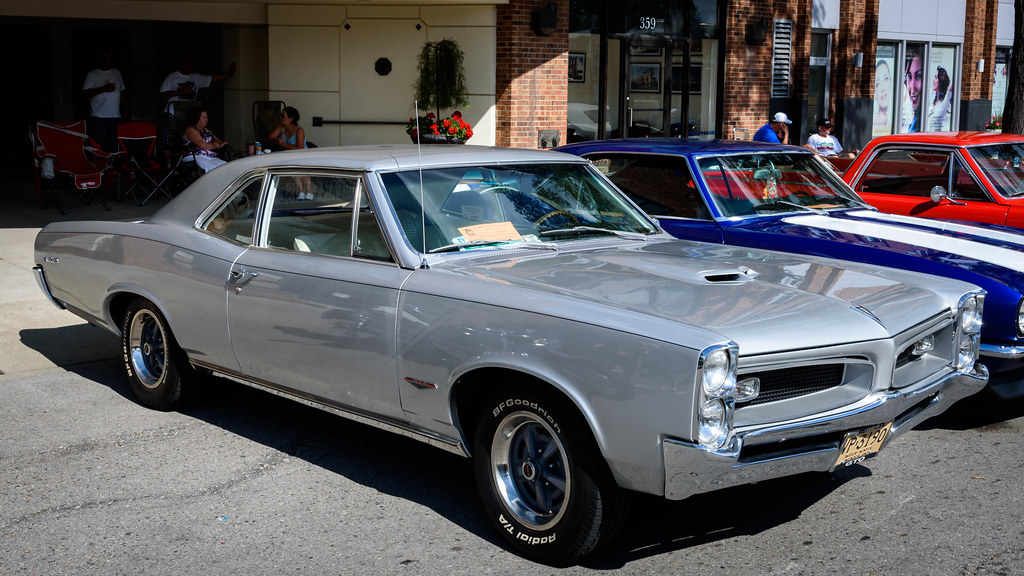
The Pontiac GTO received its first major recognition in 1966 when the GTO ceased to be an optional package and became an independent Pontiac model. The reason for this change was that the model had become immensely popular, and was no longer just an add-on to the vehicles upon which it had been based.
The GTO’s Evolution into a Dedicated Model:
- Official standalone model status in 1966
- Distinctive “Coke-bottle” body styling
- New plastic front grille design
- Improved bucket seats and interior comfort
- Redesigned dashboard and driver-focused layout
The GTO gained a more sculptured, aggressive look after being restyled for 1966.The stylish “Coke-bottle” body shape was adopted and would go on to be adopted as a trend throughout the year, and a different plastic grille set it apart from the rest of Pontiac’s line-up. The interior was updated too to provide more comfort, with reshaped buckets seats and a fresh looking dashboard.
The market’s reaction was astounding: sales rose to almost 97,000 for 1966 which proved to be the highest sales year of the GTO’s lifespan. The car had by now become one of the top performance machines of the year and began to establish itself as a legend amongst enthusiasts, whom gave it its familiar nick name “The Goat”.
7. Mechanical Refinement and Performance Growth
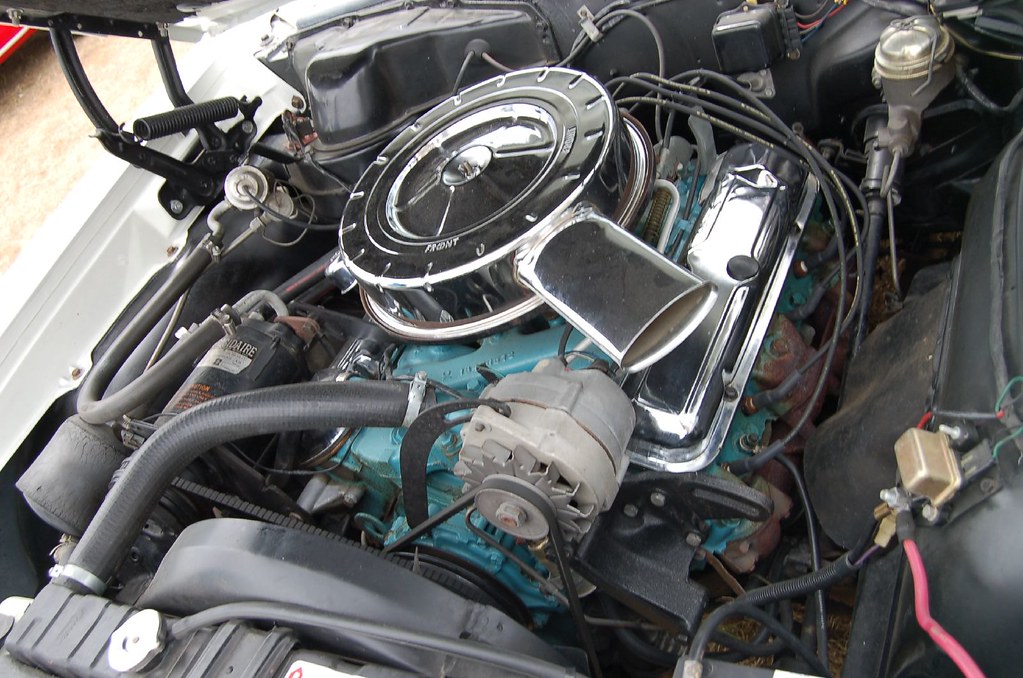
1967 brought along another set of mechanical changes that greatly enhanced the GTO. One of the biggest modifications was the elimination of the reliable old 389 V8. Its successor was the brand new, larger 400 V8 which would be more than happy to respond to increased performance needs.
Key Mechanical Improvements for 1967:
- Introduction of the 400 cubic-inch V8 engine
- Replacement of the Tri-Power setup
- New Quadrajet four-barrel carburetor system
- High-output versions reaching 360 horsepower
- Available front disc brakes and upgraded transmissions
Pontiac phased out the Tri-Power induction system, which had become the iconic setup of early GTO models, in favor of a single Quadrajet four-barrel carburetor. Though many enthusiasts debated the wisdom of this move, Pontiac managed to achieve and even surpass the previous performance standards, with high output engines still reaching as much as 360 hp. This new setup made tuning easier and the GTO even more streetable.
Apart from engine changes, Pontiac also refined the driving experience through transmission options and the addition of front disc brakes, resulting in a more tractable and better-controlled car. Pontiac broadened the GTO’s capabilities beyond simple straight line speed, and transformed it into a more balanced performance car with much of its legendary muscle car appeal intact.
8. Redesign and Peak Muscle Identity
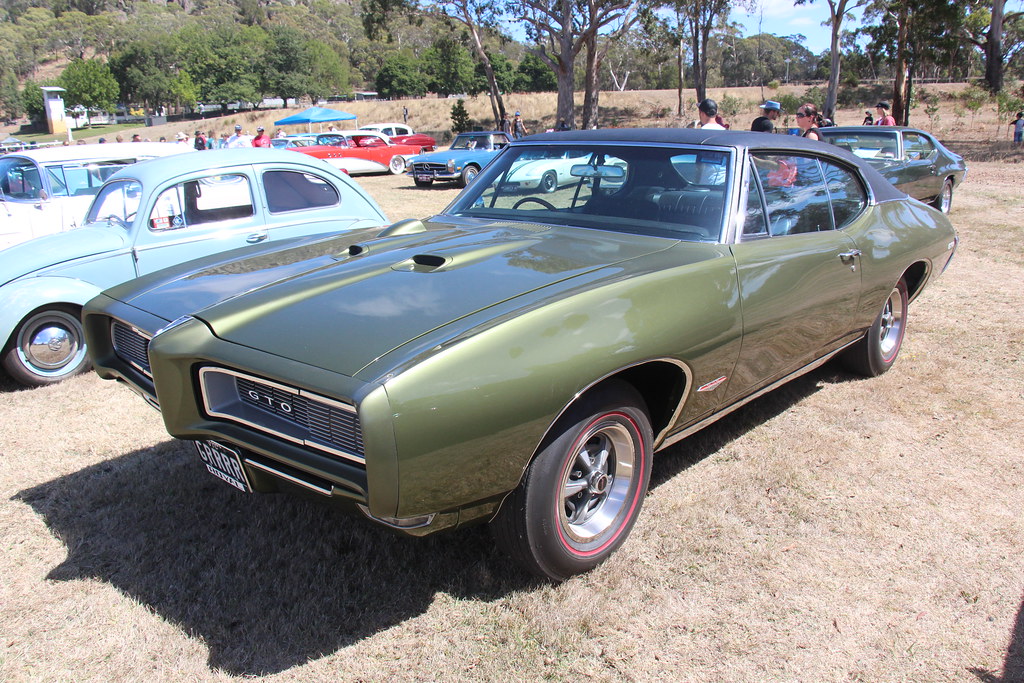
The 1968 Pontiac GTO is arguably one of the most distinctive and recognized muscle car ever built. It had a complete redesign and shortened wheelbase with clean, semi-fastback lines that created a more muscular and performance-oriented feel fitting for a muscle car.
Defining Features of the 1968 GTO:
- All-new body design with shorter wheelbase
- Aggressive semi-fastback styling
- Innovative Endura front bumper
- Optional Ram Air II performance package
- Major industry awards and recognition
Arguably the single most important styling change made to the 1968 GTO was the introduction of the Endura front bumper. Instead of the previous shiny chrome, the Endura was a body-colored impact-absorbing design that flowed well with the rest of the body and proved far more durable. Endura front bumpers would remain a defining feature of GTO styling. The year would also bring the introduction of Ram Air II, which provided additional breathing room for the engine and further upped the performance potential of the model.
This striking new look, coupled with its performance capabilities, quickly established the 1968 GTO as a hit and the car was named Car of the Year, among other industry awards, in 1968. It is by many GTO faithfuls considered the car to represent the true muscle car heritage of the GTO.
9. The Judge Era and Performance Extremes
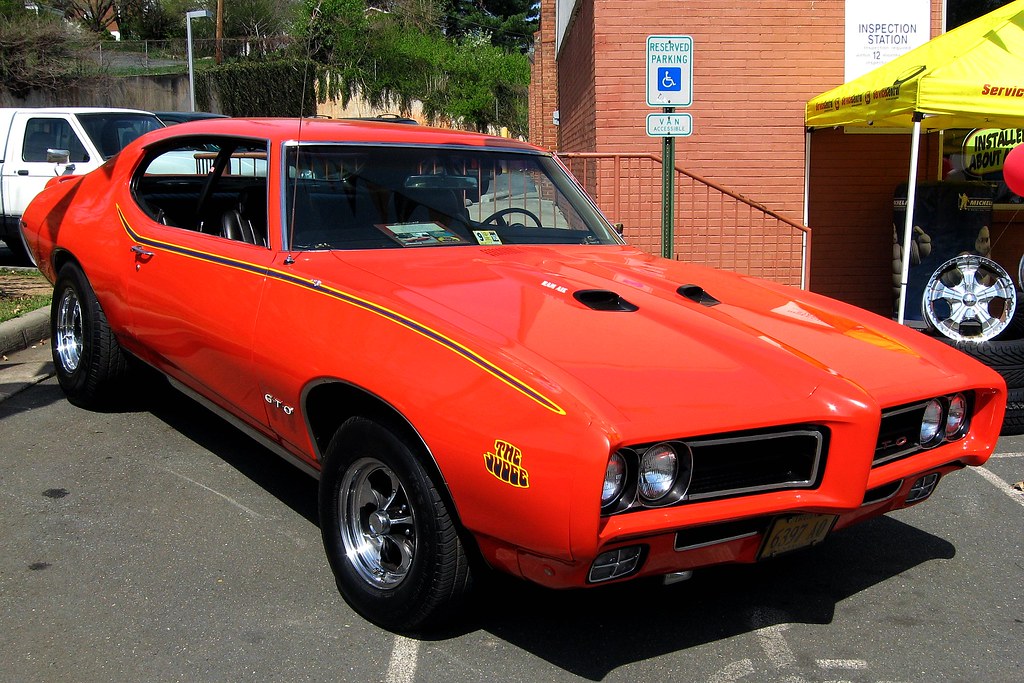
1969 had also produced some of the peak performance GTO’s. The Ram Air IV engine option, with outputs up to 370 horsepower was one of the most potent factory options offered by a manufacturer during the muscle car era. The era saw the GTO develop from just a performance model into an actual performance icon.
Highlights of the Judge Era:
- Introduction of the Ram Air IV engine
- Up to 370 horsepower factory output
- Launch of “The Judge” performance package
- Hurst shifter and performance tire upgrades
- Distinctive styling and youthful image
A significant addition to the GTO lineup was the introduction of the Pontiac GTO Judge (also referred to as “The Judge”). While initially developed in an effort to compete in the market place with lower cost muscle cars, the Judge package quickly became a legend in GTO history. While visually distinct from the standard model, the “Judge” also received performance minded equipment such as a Hurst Shifter, different tires, special graphics package, and the ability to select higher horsepower engine options. The overall rebellious nature of this car helped it to appeal to younger enthusiast who desired more in terms of attitude.
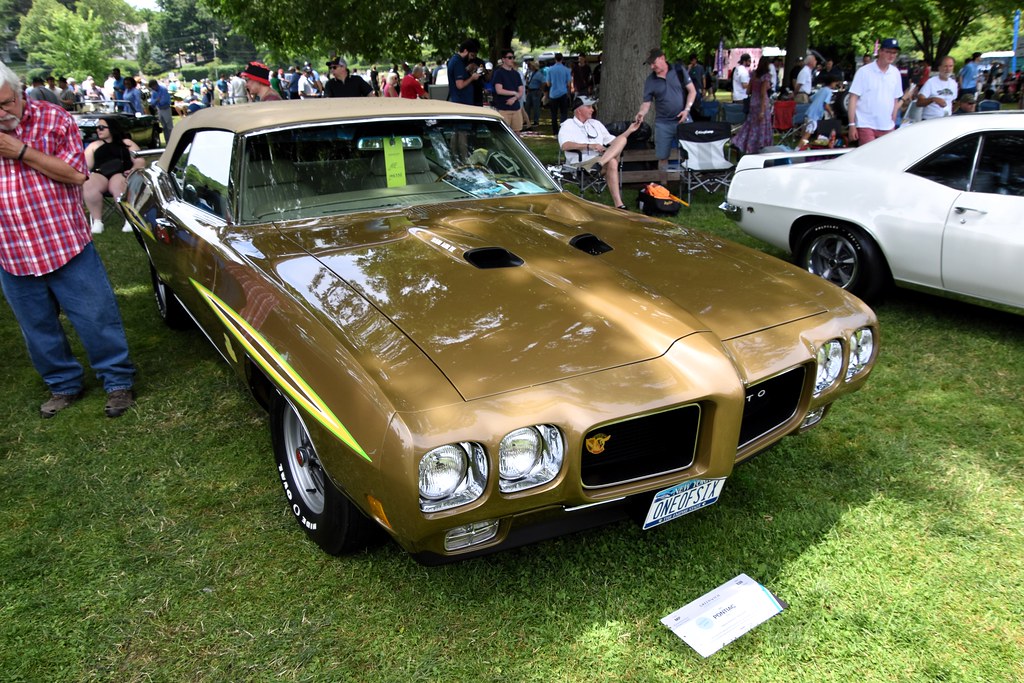
In 1970, Pontiac moved to further performance with the development of the 455 HO engine. Known for tremendous low-end torque and fantastic off the line acceleration, the 455 HO was still just before higher performance versions were in store for 1971. Market conditions, however, were beginning to shift. Increasing insurance rates for performance cars, growing concerns about fuel prices, and evolving customer interests started to take a toll on demand for traditional muscle cars.
10. Decline and End of the Muscle Era
By 1971, the golden days of the Pontiac GTO were waning. Emissions laws and fluctuating gas needs were now leading to decreased compression ratios and changes to performance engine design because of a newfound increased governmental involvement.
Factors Behind the GTO’s Decline:
- Stricter emissions regulations
- Lower engine compression ratios
- Discontinuation of Ram Air engines
- Rising fuel and insurance concerns
- Changing consumer preferences
While Pontiac continued to offer powerful 455 HO options for a bit, the American muscle car was starting to fade and buyers became increasingly concerned with mileage, price and utility. As a combination of government and buyer pressure escalated, demand for high-horsepower options diminished greatly. This trend was exacerbated in 1972 as the GTO once again became just a model option. Sales plunged further, horsepower dwindled and the fever for muscle cars the had peaked in the 1960’s and just died down completely.