


Decoding the Tata Curvv EV’s Real-World Range and Performance
The EV market in India is growing at a very fast rate as the adoption shifts away towards serious mainstream. The core of this shift is one important buyer issue, namely the real-world driving range. The positive laboratory results are being released by manufacturers but the daily reality of driving the vehicle tells otherwise. Real usability is affected by traffic congestion, different road surfaces, changes in elevation, and the constant use of the air-conditioning.
The Importance of Real-World EV Range
- Some figures of laboratories hardly represent daily driving
- Efficiency is influenced by traffic and road conditions
- Climate control is a major factor that influences battery consumption
- The energy consumption depends on driver behavior
- The range anxiety is also a major buyer issue
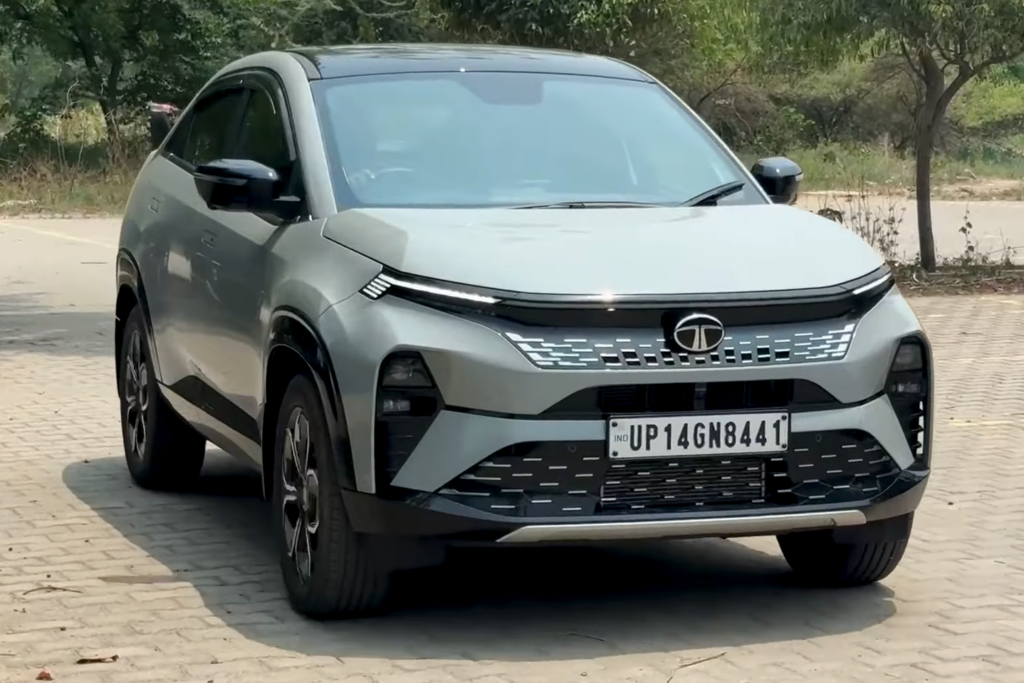
The Tata Curvv EV is coming with a lot of confidence into this challenging environment. Being the flagship of the electric range of Tata Motors, it incorporates the styling of a dramatic coupe with a great emphasis on practicality. Placed between [?]17.49 lakh and [?]21.99 lakh, it has to compete with the proven competitors such as the MG ZS EV and Mahindra XUV400 directly; in this case, it offers both aesthetics and reliable long-range performance.
1. Pricing, Positioning and Battery Options Explicated
As a high-end, though affordable, electric SUV-coupe, Tata Motors has placed the Curvv EV strategically. Buyers have two battery choices, where they can either buy a 45kWh battery pack which is used in urban areas or they can buy a bigger 55kWh battery pack that enables them to travel long distances. This is its flexibility that enables Tata to attract a city-oriented user and at the same time the highway assurance user. Battery and Variant Overview There are 3 batteries available in the product: a single 40 V battery, a single 8.5 V battery, or multiple batteries combined into one unit.
Battery and Variant Overview
- Entry price starts at [?]17.49 lakh
- Top variant priced at [?]21.99 lakh
- Two battery options: 45kWh and 55kWh
- Competes with MG ZS EV and XUV400
- Targets long-range EV buyers
The bigger 55kWh model is evidently targeted at consumers who fear range anxiety. Tata would want to offer a solution that is beyond the short commutes and long road trips are truly feasible. This place is indicative of the Tata strategy towards EV, in which usability, reliability, and confidence are more important than headline-grabbing but impractical specifications.
2. Formal Claims over Range against Reality
The Tata Curvv EV has great numbers on paper. The front-wheel-drive system is powered by a 167hp electric motor with 215Nm of torque, and a 55kWh LFP battery. Official MIDC testing results are quoted at 502km with ARAI results indicating a rather 520km to 585km under ideal conditions.
Getting to know the Range Figures of Tata
- MIDC claimed range: 502km
- ARAI figures extend up to 585km
- Has long life LFP battery chemistry
- Electric motor mounted to the front
- Designed to conserve both energy and time
A more realistic approach is taken by Tata Motors itself, which has brought about the C75 cycle, which estimates what 75 percent of the users can anticipate. According to this system, the Curvv EV promises a real-life range of 400-425km. This candid admission preconditions the actual experiment, which eventually will decide the extent to which the Curvv EV could match its promises.
3. Explaining Drive Modes and Regenerative Braking
The Curvv EV gives the drivers several instruments to control performance and efficiency. The car has three drive modes, including Eco, City, and Sport, and gives the driver control over power delivery according to the conditions. Eco is all about efficiency, City is all about comfort and response, and Sport is all about maximum torque and spirited driving. These modes contribute a lot towards energy consumption.
Efficiency features that are under the driver control
- Three modes of drive can be chosen
- The eco mode reduces the torque
- City mode compromises performance
- Sport mode works to increase acceleration
- Adaptation power delivery system
These modes are complemented with four levels of regenerative braking. This system captures energy when braking and decelerating and it is restored into the battery. The default Eco setting of the test provided Level 2 regeneration, and it provides a fine balance between efficiency and driving comfort. This freedom enables the drivers to play an active role in determining their practical range.
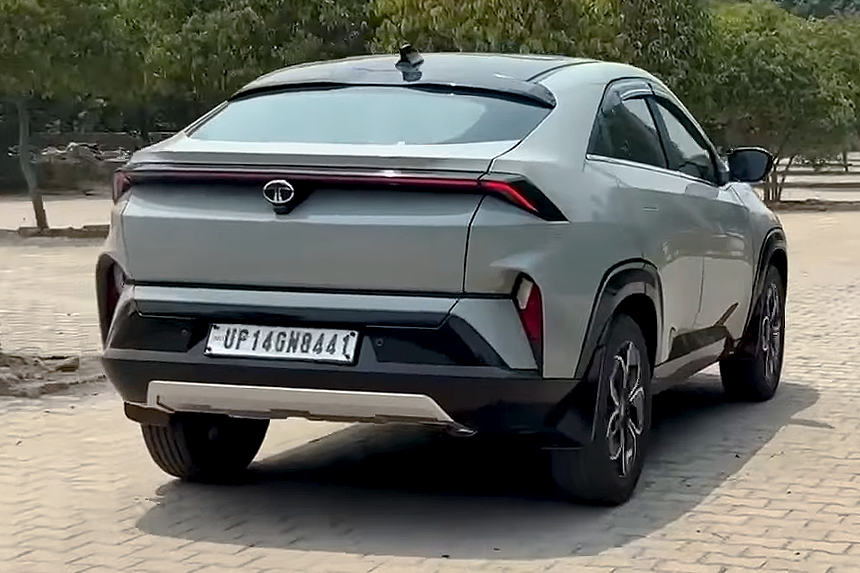
4. Deterministic Real-World Range Testing Approach
The protocol followed was strict and repeatable in order to come up with the correct results. Curvv EV was initially charged and with recommended tyre pressures by the manufacturer. The test was done on a loop road consisting of both the city streets and the highways, which are typical of the normal use of the vehicle. During the test, air conditioning was left at 22 degrees Celsius.
Testing Conditions Used
- Built in full charge battery
- Tyre pressure prescribed by the manufacturer
- Fixed city and highway route
- AC set to 22degC on auto
- Normal infotainment usage
This approach provided the consistency and removed the variables that are usually overlooked in informal testing. Naturally, such features as ventilated seats, audio systems and navigation were used. This aim was not to work towards the maximum range but was meant to replicate the way majority of the owners would drive the vehicle in a realistic situation in India.
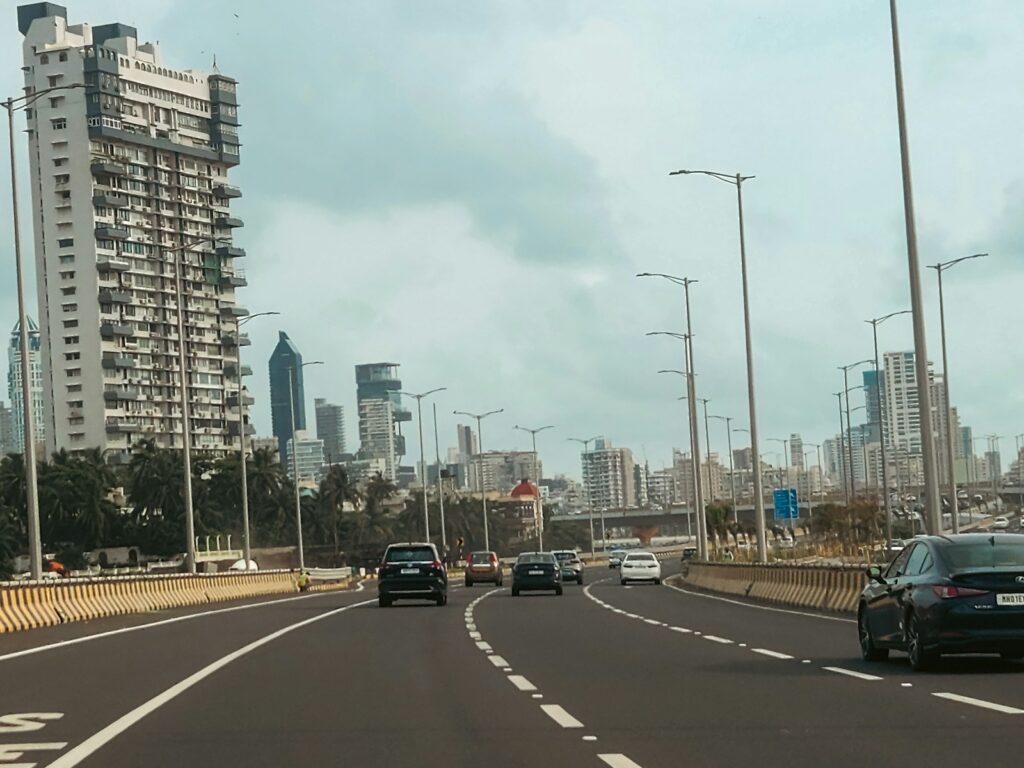
5. The results of city and highway efficiency
During the test, the Curvv EV was in Eco mode. Its power was not to exceed 70 percent and the maximum speed was 120km/h to ensure the maximum efficiency. The regenerative braking was set to go on with Level 2 during traffic congested areas and Level 1 was chosen to be used during smooth highway driving.
Efficiency Breakdown
- City efficiency: 6.75km/kWh
- Highway efficiency: 6.52km/kWh
- Combined efficiency: 6.64km/kWh
- Eco mode enabled throughout
- Maximum speed reduced to achieve optimum
An estimated real-world range of 365km was achieved as the result of the calculation. Although low by comparison to headline figures, it is a number of consistent, repeatable driving under controlled conditions. Notably, it proves that despite realistic limitations, the Curvv EV can provide reliable range that can be used on a day-in, day-out basis and driving moderate distances within highways.
6. Mixed-Terrain Real World Driving Test
The other conditions that were introduced in the real-world test were more challenging such as the increase and decrease in elevation, expressways, and asymmetrical urban roads. The driver used regenerative braking proactively to extend efficiency stretching it with the Eco mode activated and the air conditioning at 23 degrees. This test was meant to represent erratic real life driving and not in controlled conditions.
Mixed Route Test Highlights
- There are inclines and changes of elevation
- The use of combined city, highway and expressway
- Eco mode was used all the time
- Regenerative braking in use
- Remaining battery dropped to 1 percent
The Curvv EV did 381.3km in a single charge at the conclusion of this rigorous test. This was the longest range covered by Tata EV in real world testing history of that publication. The outcome supported the Curvv EV capacity to navigate different terrain and still have remarkable efficiency.
7. Over Distanced Endurance Run Over 400km
Another endurance test was aimed at passing the mental 400km barrier. The trip started at full charge that indicated a range of 424km plus two occupants and roughly 25kg of luggage. This was a challenge to long-range performance; the track consisted of both urban and highways, with speed being maintained through the entire length.
Endurance Test Setup
- Two passengers onboard
- Light luggage carried
- Most of the drive operated by AC
- Eco mode enabled
- Highway speeds maintained
With increasing elevation on the return leg efficiency decreased, but again was constant. Having a battery of 10 percent, almost 380km was covered. By turning off the air conditioning on the last leg of the city run the Curvv EV was able to complete at 401.3km and still have 6 percent charge in the battery indicating that the Curvv EV could travel 426km.
8. Highway Comfort/Driving Experience
Other than statistics, the Curvv EV was stunning as a long-range cruiser. It was comfortable and smooth in highways over a round trip of 500km. The sound of roads was also quite subdued, and the JBL sound system came to the fore. Stability was also high with minimum body movements even on uneven surfaces.
Highway Driving Impressions
- Stable at cruising speeds
- Minimal road and wind noise
- Long-range comfortable seats
- Aggressive overtaking skills
- Smooth power delivery
Sport mode was occasionally used to give it a burst of acceleration to pass. The suspension was good to control undulations ensuring that occupants were calm. This tradeoff between comfort and performance renders the Curvv EV an appropriate choice to drive on a daily basis and to travel long distances without feeling overwhelmed.
9. Performance and Ride Quality- ADAS
The Curvv EV has Level-2 ADAS that will improve the safety and minimize driver fatigue. Adaptive cruise control was also in operation and capable of maintaining the same distance from vehicles in front of it. Nevertheless, the lane-keeping assist was too corrective at several points as it needed the intervention of the driver to provide a steady position on the lane.
ADAS Feature Overview
- Adaptive cruise control fitted
- Lane-keeping assist was included
- Forward collision warning system
- Driving assistance is safer
- Works best on highways
The ride was a bit hard in urban setting because 18-inch wheels were used. Although not a squeezer, it did not have the luxurious feeling that can be found on some other Tata models. The suspension was fairly good at absorbing sharp bumps but still had a significant degree of stiffness that will be felt by the drivers on irregular city roads.