




The Wild Ride of Janis Joplin’s One-of-a-Kind Porsche 356
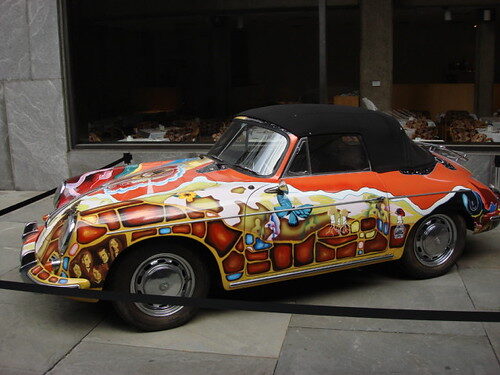
When a car has such an intimate relationship with a cultural icon, it transcends its identity as a form of transport. For Janis Joplin, this car was her 1964 Porsche 356 SC Cabriolet a used German sports car that morphed into one of the world’s most recognizable celebrity cars of all time. Due to its incredible paintwork, association with the legend, and long, complex history of owners, restoration and exhibition, her Porsche has become an rolling, acid-washed remnant of the 60s counterculture.
Joplin bought the used Porsche for $3,500 in 1968, as her musical career began to rocket. The car had previously worn a dull factory livery; there was little to indicate it had been picked as the canvas for something utterly new. The vision for the car was for it to look anything but ordinary, so Joplin handed it over to her roadie, Dave Richards, with the task of giving it a total overhaul.
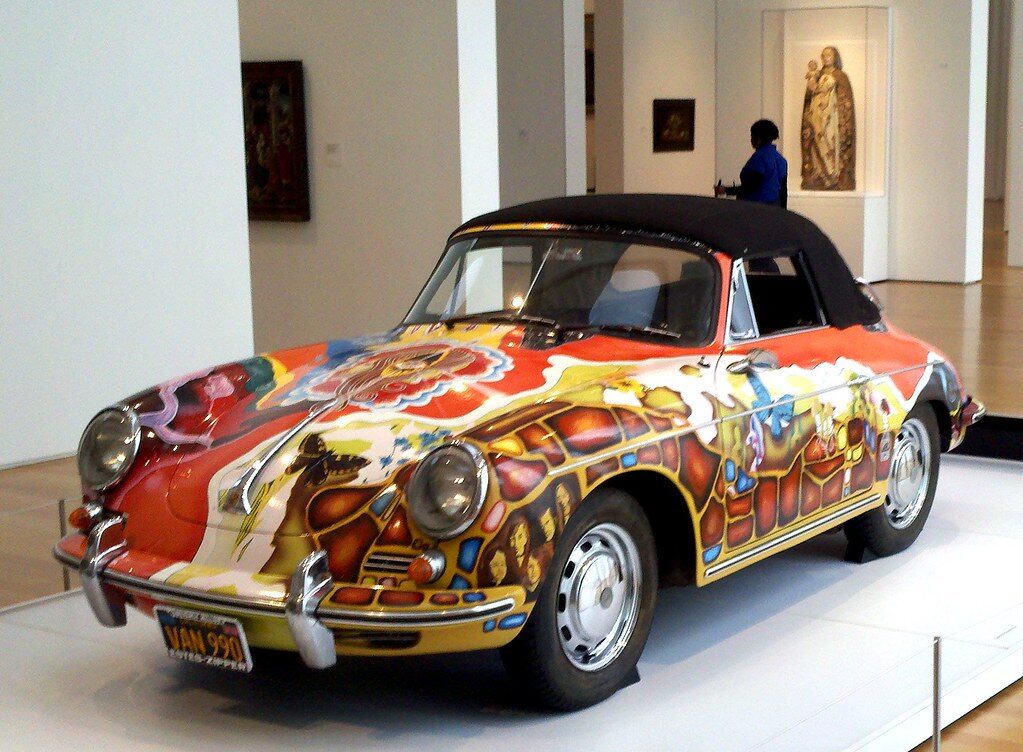
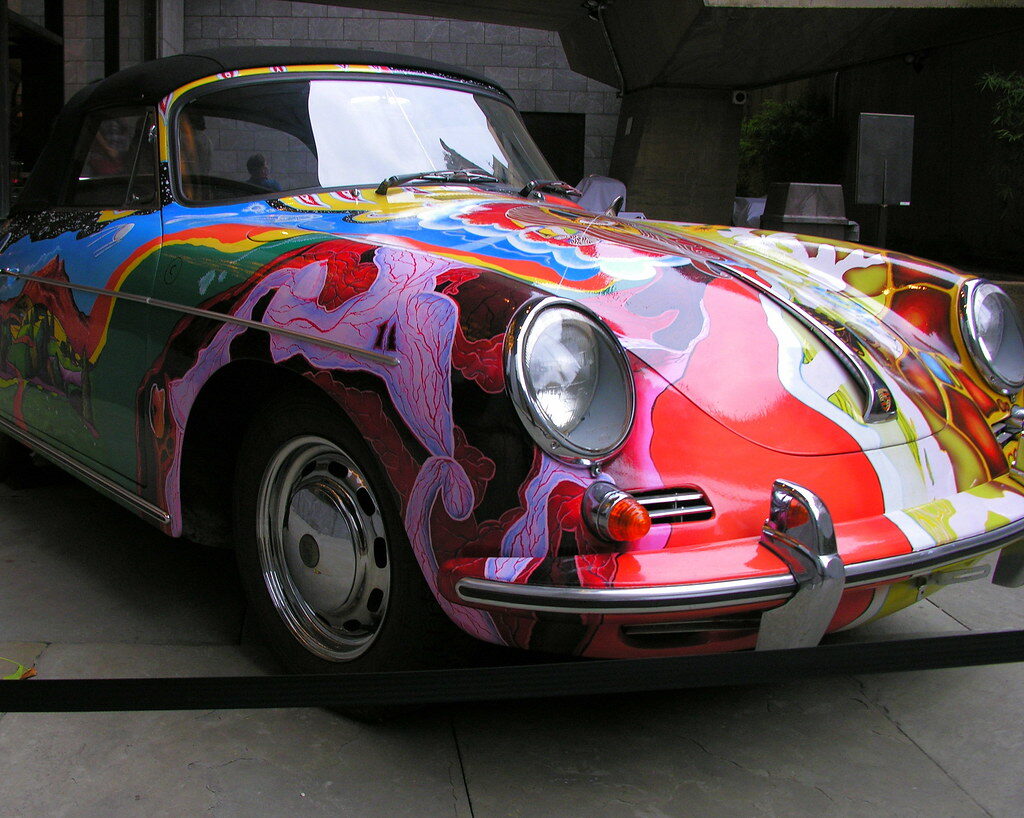
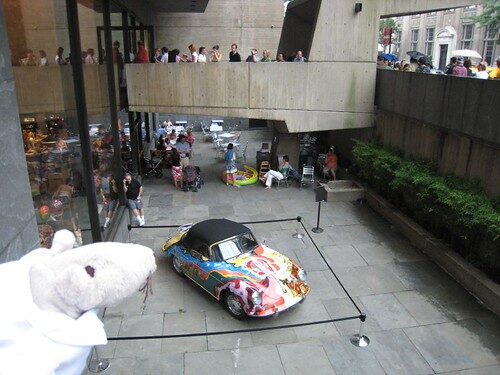
It took Richards around a month to complete painting the entire body of the Porsche in the elaborate psychedelic mural that became dubbed ‘The History of the Universe’, which included images of landscapes, people, animals and more drawn from Joplin’s world. While most celebrity cars are celebrated purely due to their association with famous people, Joplin’s Porsche developed an undeniable identity of its own, one that would go down in history and make it the most valuable Porsche 356 ever sold.
1. The Ordinary Porsche That Became Extraordinary:
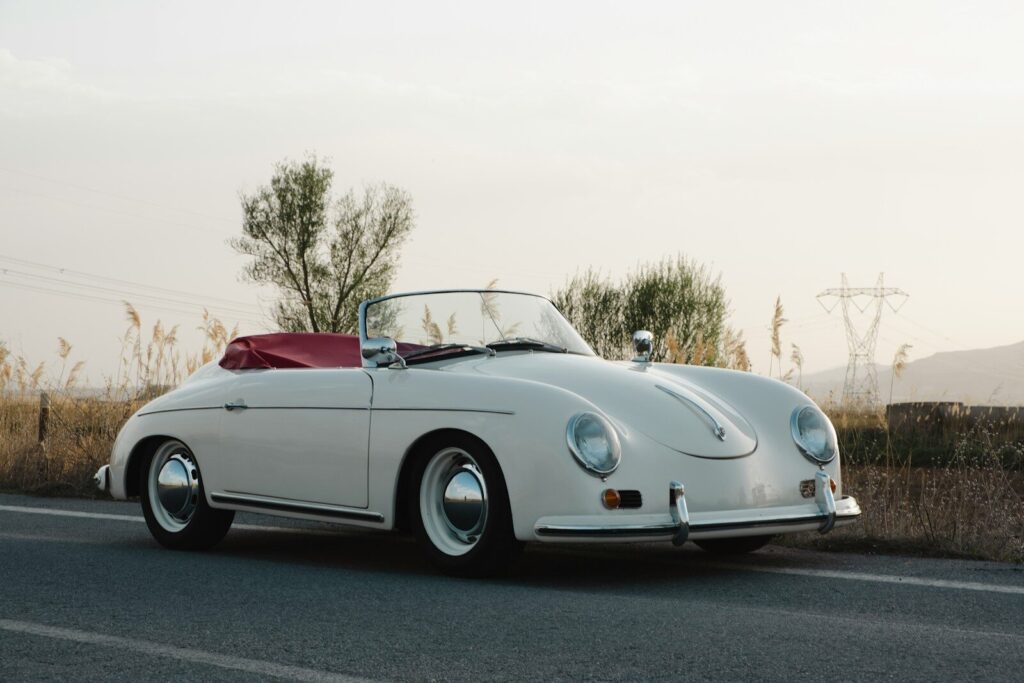
When Janis Joplin purchased her 1964 Porsche 356 SC Cabriolet in 1968, it initially looked like a fairly conventional European sports car. Its restrained factory appearance gave no indication that it would eventually become one of the most recognizable celebrity automobiles in history. Joplin reportedly paid $3,500 for the used Porsche during a period when her music career was rapidly gaining momentum. Rather than treating the car as a simple possession, she saw an opportunity to make it reflect her personality, artistic freedom, and unconventional approach to celebrity.
Why Joplin’s Porsche Stood Out:
- Purchased during Joplin’s rising fame
- Originally wore a restrained factory finish
- Became an extension of her personality
- Driven as part of her everyday life
- Eventually gained extraordinary cultural significance
The Porsche 356 already had a reputation for distinctive styling and enjoyable driving characteristics, but Joplin’s connection with the car made it much more personal. She drove it around California instead of keeping it hidden away as a valuable possession or promotional display. That everyday use allowed the Porsche to become part of her lifestyle and public identity. Its significance therefore developed naturally through her ownership rather than being created afterward by collectors or historians looking for an important celebrity artifact.
The eventual transformation of the Porsche reflected the same qualities that defined Joplin’s music and public image. Her performances were emotional and unconventional, while her appearance and lifestyle frequently challenged traditional expectations surrounding famous entertainers. The car ultimately received similar treatment, moving far beyond its original understated appearance. What had started as an ordinary used German sports car became a highly personal expression of its owner’s individuality, helping establish the foundation for the remarkable cultural legacy the vehicle would develop in later decades.
2. Dave Richards Creates “The History of the Universe”:
Joplin eventually entrusted her Porsche to Dave Richards, a roadie associated with Big Brother and the Holding Company, and asked him to give the car a completely different appearance. Richards reportedly spent around a month working on the project after receiving approximately $500 for his efforts. Rather than adding a few decorative graphics, he transformed nearly the entire exterior into a psychedelic mural. The result was so elaborate and visually distinctive that the Porsche gained an identity of its own, eventually becoming known for the artwork titled “The History of the Universe.”
Elements That Defined The Mural:
- Portraits of Joplin and band members
- Surreal animals and fantastical imagery
- Colorful landscapes across the body
- Psychedelic patterns covering exterior panels
- Artwork transformed the car completely
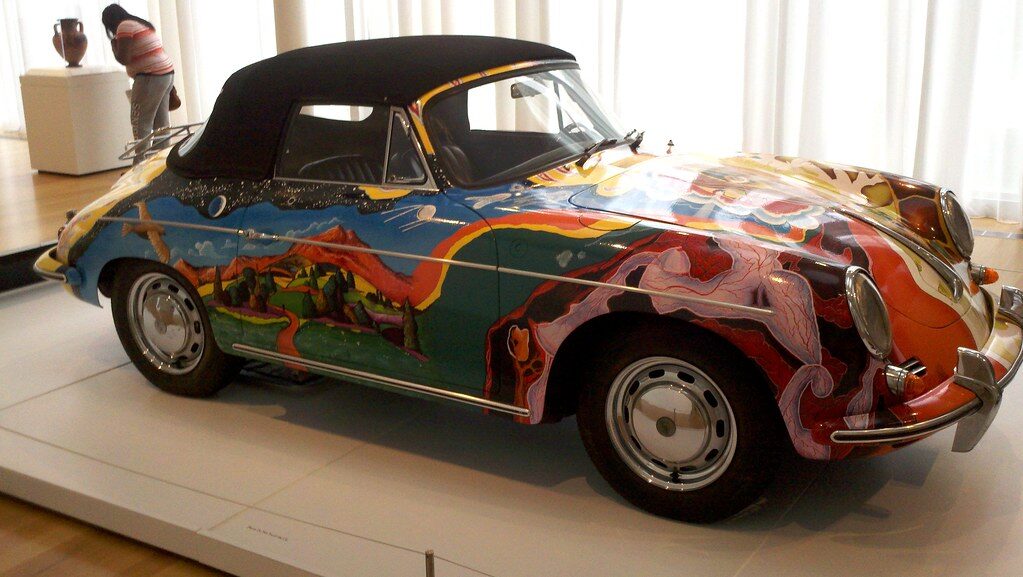
The mural incorporated an extraordinary collection of imagery, including portraits, landscapes, animals, butterflies, skulls, jellyfish, floating eyes, colorful skies, and other surreal elements. Instead of presenting one consistent scene, the artwork encouraged viewers to discover different images across the car’s body. The original restrained finish disappeared beneath an explosion of color and detail. This made the Porsche resemble a giant psychedelic artwork moving through the streets rather than a conventional sports car with a custom paint job.
Richards’ creation also changed the way the Porsche represented Joplin. It became almost like a three-dimensional piece of album artwork that could travel wherever she went. The car communicated her individuality without requiring a stage performance or recording. At a time when rock musicians were becoming increasingly influential cultural figures, the Porsche provided Joplin with another way to express herself publicly. Its extraordinary appearance made the vehicle inseparable from her image and helped ensure that its story would survive long after the original artwork was created.
3. A Rolling Symbol of Janis Joplin’s Personality:
The Porsche’s psychedelic appearance closely matched the personality Janis Joplin presented through her music and performances. Her powerful voice, energetic stage presence, and unconventional lifestyle made her one of the defining figures of late-1960s rock culture. The car communicated many of those characteristics visually. Its vivid colors, surreal imagery, human figures, and unusual patterns immediately separated it from ordinary automobiles. It became impossible to see the Porsche without thinking about the singer who owned it and the cultural environment surrounding her career.
Ways The Porsche Reflected Joplin:
- Expressed individuality through vivid artwork
- Matched her unconventional public image
- Connected music with psychedelic visual culture
- Rejected traditional ideas of luxury
- Became part of her identity
The vehicle also represented an early form of personal branding that was driven entirely by individual expression. Joplin did not need a corporate campaign to make the Porsche recognizable because the mural itself served that purpose. People who encountered the car could associate it with her music and the San Francisco rock scene almost immediately. The vehicle became part of the visual language surrounding her career, demonstrating how an automobile could communicate the personality of its owner as effectively as clothing, stage design, or album artwork.
That connection eventually allowed the Porsche to survive as more than an interesting vintage sports car. Thousands of Porsche 356s were produced, but very few became permanently associated with a specific performer and cultural movement. Joplin’s example captured the spirit of experimentation, individuality, psychedelic art, and rock music within a single physical object. Its significance therefore came from the combination of the automobile itself and the cultural moment it represented, giving the Porsche a historical identity that ordinary examples of the model could never possess.
4. The Porsche and “Mercedes Benz” Connection:
Janis Joplin’s ownership of the psychedelic Porsche creates an especially interesting connection with her famous song “Mercedes Benz.” The song humorously refers to luxury automobiles and includes a reference to friends driving Porsches, while Joplin herself already owned one of the German sports cars. Her actual relationship with the Porsche gives that contrast an additional layer of irony. Instead of representing conventional luxury or status, however, her Porsche had become something much more personal and unconventional because of its extraordinary artwork.
Why The Porsche Contrasted Luxury Cars:
- Joplin already owned a Porsche
- Her car rejected conventional luxury styling
- Psychedelic artwork replaced understated elegance
- Individuality mattered more than social status
- The vehicle matched her artistic identity
Joplin’s Porsche was not presented as a polished status symbol designed to demonstrate wealth or sophistication. Its psychedelic mural transformed the vehicle into something closer to an outsider-art installation. The unusual imagery deliberately separated it from the restrained appearance normally associated with expensive European sports cars. Its value came from personal expression rather than conformity, and that distinction made the Porsche particularly appropriate for Joplin’s unconventional public image and approach to fame.
The contrast also strengthens the car’s connection with Joplin’s broader legacy. She was known for her raw singing style, energetic performances, and willingness to challenge expectations. The Porsche expressed those qualities in physical form. While “Mercedes Benz” remains one of her most recognizable musical works, the colorful 356 has become one of the clearest visual representations of the world surrounding her career. The car therefore complements her music by showing the same rebellious spirit through design rather than sound.
5. A Celebrity Car That Was Actually Driven:
Unlike many celebrity automobiles that eventually become protected collectibles, Joplin’s Porsche was genuinely part of her daily life. She drove it around California, including areas associated with the San Francisco and Los Angeles music scenes. Because the car was so visually distinctive, it naturally attracted attention wherever it appeared. Fans could recognize it without needing to see Joplin behind the wheel, turning the vehicle into a moving symbol of her growing fame and creating a direct connection between her public career and ordinary life.
Details That Made It Memorable:
- Joplin used the Porsche regularly
- Fans recognized its unusual appearance
- The car traveled throughout California
- People left notes beneath its windshield
- Everyday use strengthened its historical connection
The attention surrounding the Porsche reportedly extended to fans leaving handwritten notes beneath its windshield wipers. Such encounters demonstrate how recognizable the vehicle had already become while Joplin was alive. It was not merely photographed beside her or displayed at special events. Instead, it occupied public streets and everyday surroundings, allowing people to encounter an unmistakable part of the singer’s life in ordinary circumstances.
That history of real-world use adds an important dimension to the Porsche’s modern significance. Many famous cars become valuable because of photographs, ownership records, or appearances in films, but Joplin’s Porsche was closely integrated into her actual life. Its importance developed through personal use, public recognition, and the extraordinary circumstances of her career. The vehicle therefore carries a sense of authenticity that would be difficult to reproduce with a car that had only been preserved as a static celebrity collectible.
6. The 1969 Theft and Failed Cover-Up:
The Porsche’s extraordinary appearance eventually became a disadvantage when the vehicle was stolen in 1969 while Joplin was performing at San Francisco’s Winterland Ballroom. Unlike an ordinary automobile that could potentially disappear without attracting much attention, Joplin’s Porsche was almost impossible to mistake for another vehicle. Its psychedelic artwork made the car immediately recognizable, meaning anyone attempting to use it after the theft would have faced the challenge of hiding one of the most distinctive automobiles in the city.
Problems Created By The Theft:
- The Porsche was stolen in 1969
- Its mural made concealment difficult
- Spray paint covered parts of artwork
- The disguise remained visibly obvious
- The Porsche was eventually recovered
The thief reportedly attempted to hide the car’s identity by covering portions of the psychedelic mural with spray paint. The attempt did not make the Porsche anonymous. Instead, the crude paintwork left parts of the original design visible and created an even stranger appearance. The vehicle remained highly distinctive despite the attempted cover-up, illustrating just how difficult it was to disguise a car whose entire exterior had been transformed into an enormous psychedelic mural.
Fortunately, the Porsche was recovered, and much of the original artwork survived the incident. A protective clear coat applied over Richards’ mural helped shield the underlying design from the unwanted spray paint. This meant the added paint could eventually be removed without completely destroying the artwork. The theft therefore became another remarkable chapter in the Porsche’s history rather than a disaster that permanently erased the visual identity that made the car so closely associated with Joplin.
7. The Porsche Nearly Lost Its Famous Identity:
After Joplin died in 1970, her Porsche continued through a less glamorous period of its history. The vehicle eventually passed to her manager, Albert Grossman, and reportedly served for a time as a courtesy car. It later returned to Joplin’s family in a condition that required attention. During this period, the Porsche no longer received the same level of cultural recognition it would eventually gain, and its famous appearance was placed at risk as its owners treated it more like an ordinary vehicle than a historically important artifact.
Changes That Threatened Its Legacy:
- Ownership changed after Joplin’s death
- The Porsche became a courtesy vehicle
- Its condition deteriorated over time
- Engine work was eventually required
- Original psychedelic artwork was removed
Joplin’s brother Michael eventually had the Porsche’s engine rebuilt, but an even more dramatic change involved its exterior. The famous psychedelic mural was removed and the car was repainted in a conservative gray finish. This decision effectively erased the appearance that had made the Porsche instantly recognizable during Joplin’s career. For a period, one of the most important celebrity automobiles in history could once again have passed for an ordinary vintage Porsche.
The situation also demonstrates how easily historically important objects can lose their significance when their cultural value is not yet widely understood. At the time, the Porsche was still a family possession rather than a museum artifact or multimillion-dollar collector vehicle. Its eventual importance was not necessarily obvious to everyone responsible for its care. The removal of the mural therefore became a crucial part of the car’s story, because its later restoration would require the recreation of artwork that had once been considered removable decoration.
8. The Psychedelic Restoration:
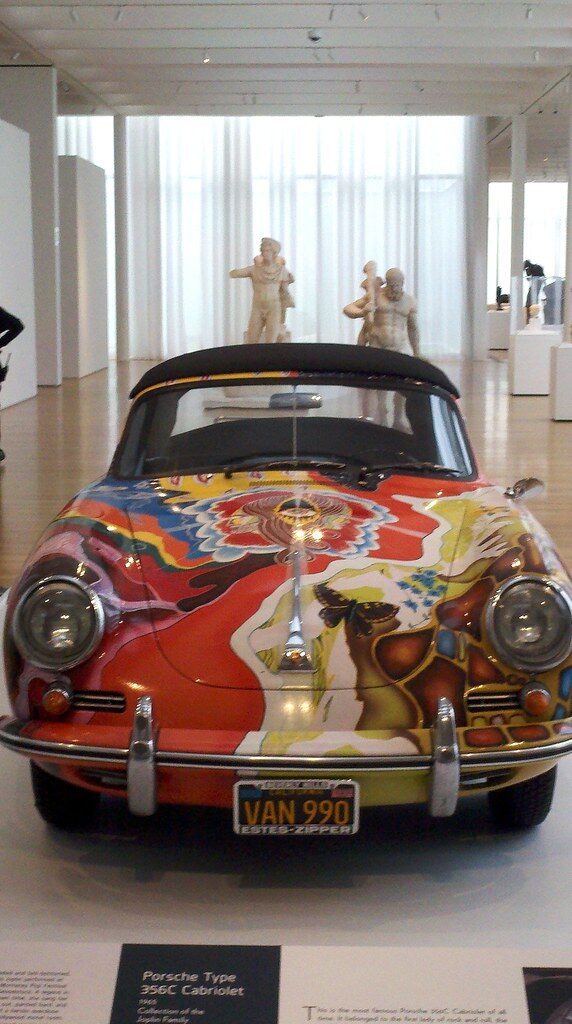
The Porsche eventually regained the visual identity associated with Janis Joplin through a major restoration during the 1990s. Joplin’s family commissioned artists Jana Mitchell and Amber Owen to recreate the original psychedelic artwork after the earlier mural had been removed. Reproducing the design was far more complicated than simply repainting the car with bright colors. The artists needed to study period photographs and surviving references to determine how the original artwork had been arranged across the Porsche’s many body panels.
Challenges Behind The Restoration:
- Original mural had already been removed
- Period photographs became essential references
- Artwork covered nearly every body panel
- Artists recreated intricate psychedelic imagery
- Restoration required historical and artistic accuracy
The artists had to reconstruct a design that had originally been created decades earlier under completely different circumstances. Photographs became particularly important because they provided evidence of the placement, shapes, colors, and individual details of the mural. Since the artwork covered almost every visible portion of the car, even small differences could affect its overall appearance. The project therefore combined restoration work with artistic reconstruction and historical research.
Once completed, the recreated mural returned the Porsche to the appearance that people associated with Joplin. The restoration allowed a new generation to understand the vehicle’s importance rather than experiencing it only through old photographs. In 1995, the restored Porsche was loaned to the Rock and Roll Hall of Fame, giving visitors an opportunity to see an important physical artifact from Joplin’s career. The work ensured that the car’s visual identity could continue alongside the memory of its famous owner.
9. The Porsche Becomes a Cultural Artifact:
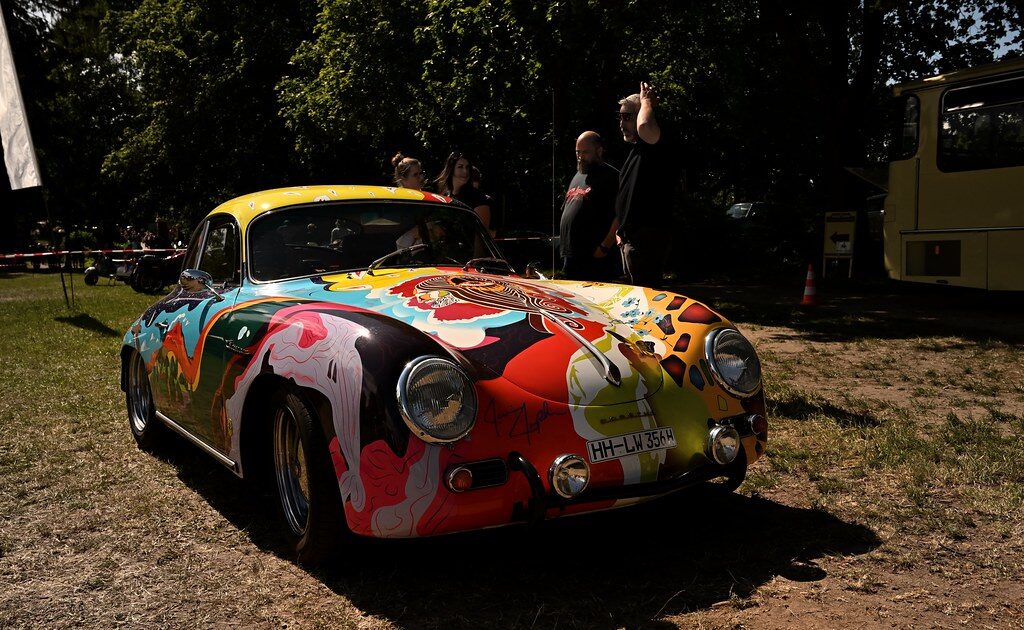
The Porsche’s later museum history helped elevate it beyond the category of a famous celebrity possession. Its connection with Janis Joplin gave it an obvious place in rock music history, while its psychedelic artwork connected it with the visual culture and countercultural movements of the 1960s. The vehicle consequently represented several different aspects of cultural history at once. It combined automotive design, popular music, celebrity culture, psychedelic art, and the social atmosphere surrounding one of America’s most influential musical eras.
Historical Roles The Porsche Represents:
- Important artifact from rock history
- Example of psychedelic visual culture
- Symbol of 1960s counterculture
- Unique celebrity-owned automobile
- Link between music and automotive art
Its display at the Rock and Roll Hall of Fame strengthened that cultural importance because visitors could see an object that had physically existed during Joplin’s lifetime. The Porsche provided a tangible connection to an artist whose career was relatively brief but left a lasting influence on rock music. Instead of relying solely on recordings, photographs, and written histories, the car offered something physical that could communicate the personality and atmosphere surrounding Joplin’s world.
The Porsche’s story is particularly powerful because its significance comes from several histories converging in one object. A standard 356 SC Cabriolet would already represent an interesting period automobile, but Joplin’s example became something entirely different through its mural, ownership, theft, repainting, restoration, and museum history. Each stage added another layer to its identity. By the time collectors and cultural institutions recognized its importance, the car had become a unique artifact whose complete story could never be duplicated.
10. The $1.76 Million Auction:
In December 2015, Joplin’s family decided to place the historic Porsche on the collector-car market. At RM Sotheby’s “Driven by Disruption” auction in New York, the vehicle attracted considerable attention because of its extraordinary history and connection with the singer. It ultimately sold for $1.76 million, far exceeding its original $3,500 purchase price and establishing a record auction price for a Porsche 356 at the time. The result demonstrated the extraordinary financial and cultural value the car had accumulated over decades.
Factors Behind Its Auction Value:
- Strong connection with Janis Joplin
- Original artwork recreated through restoration
- Extensive documented ownership history
- Major cultural and museum significance
- Record-setting Porsche 356 auction result
The price reflected much more than the Porsche’s mechanical specifications or rarity as a particular model. Buyers were effectively competing for a combination of automotive history, music history, psychedelic artwork, and celebrity provenance. Joplin had personally owned and driven the vehicle, Richards had transformed it into a unique work of art, and its later history included theft, restoration, and museum exhibition. Very few collector automobiles can offer such an unusually complete combination of personal and cultural history.
The auction also carried significance beyond the final sale figure because the proceeds were intended to support social programs in Janis Joplin’s memory. The transaction confirmed that the Porsche had become far more than an old sports car with a famous previous owner. It represented Joplin’s artistic personality, the cultural atmosphere of the late 1960s, and the ability of an ordinary automobile to become an enduring historical object. Its journey from a $3,500 used Porsche to a $1.76 million collector car remains one of the most remarkable stories in automotive celebrity history.