





Engineering Marvels: The 10 Most Powerful Planes Ever Built
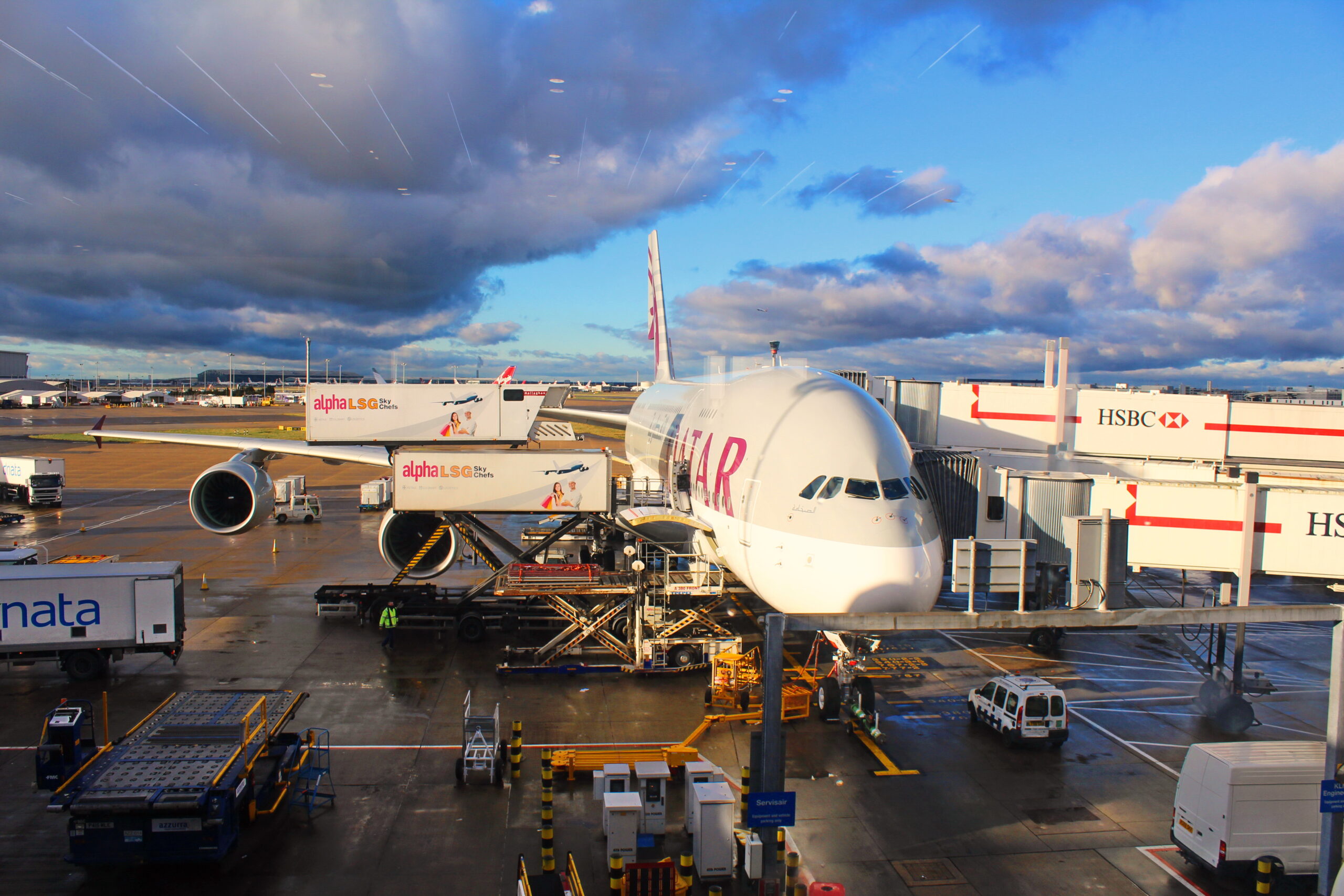
Contemporary aviation can be considered as one of the most amazing innovations in human engineering. Planes are not merely a mode of transportation anymore, but are highly elaborate systems designed to be able to push the boundaries of speed, weight, distance and thrust. Whether military cargo titans, the next generation jets or supersonic experiments, each aircraft represents decades of invention and constant development.
Going back to the early history of the jet, the difference is nearly unfathomable. The initial turbojet airplanes in the late 1930s only generated a few kilonewtons of thrust, which is hardly enough by modern standards. The engines in modern aircrafts produce hundreds and even thousands of kilonewtons of power, making it possible to have machines with hundreds of tons of the mass to take off and fly over continents.
This change did not occur immediately. It is a culmination of consistent aerodynamic, engine, material and flight system experimentation. Each of these planes can be seen as the breakthrough point in which engineering has made a significant leap and aviation is quicker, heavier, and more powerful than ever.
1. Lockheed C-5M Super Galaxy
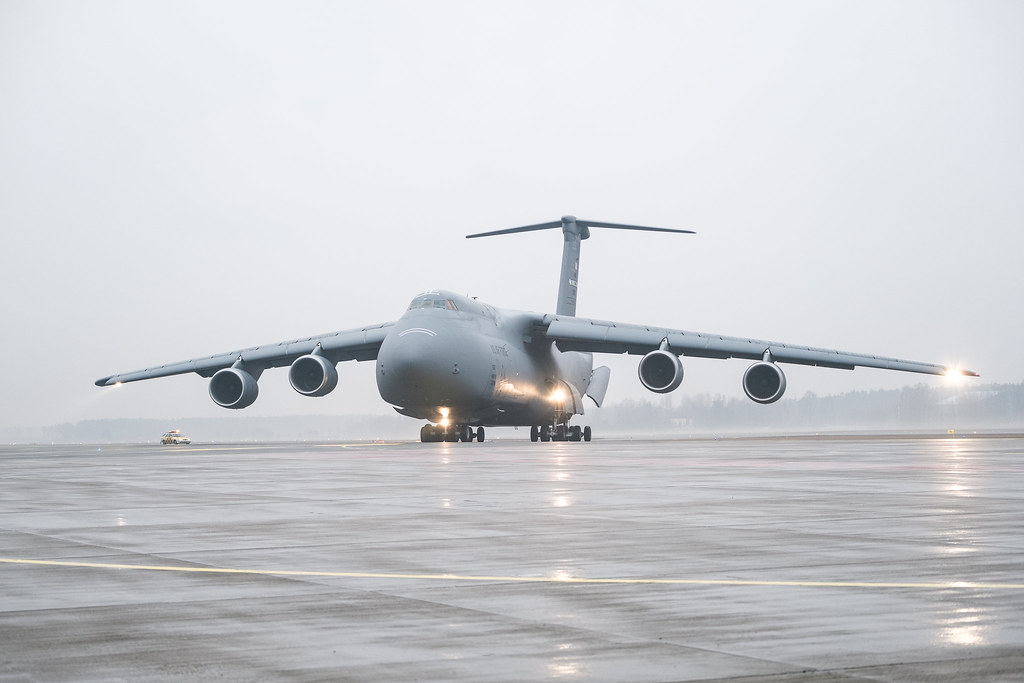
One of the heaviest strategic airlift aircraft ever constructed is the Lockheed C-5M Super Galaxy, which was to assist in conducting military logistic missions that are heavy in demand worldwide. It can carry very heavy loads such as armored vehicles and other massive military equipment to the far away locations without requiring to be refueled. It is an aircraft manufactured by Lockheed Martin and is a very important resource in the contemporary air mobility operation. Paper-wise it is one of the pillars of the military transport capability in the globe with unsurpassed payload capacity. Its immense size and engineering represent years of aerospace development. It still has a crucial role in the deployment of strategy and the support of logistics.
Strategy Lift Capabilities Summative:
- Large transporting capacity
- Long-range mission without refueling stops
- Power is provided by four high-thrust engines
- State-of-art avionics enhance flight operations
- Modernized systems increase reliability of operations
The central performance of the aircraft is that its total thrust is about 912 kilonewtons with the four high-thrust engines. This colossal force allows it to take and carry heavy and very bulky cargo that cannot be carried by most other airline. Its engineering is highly adapted to strategic airlift missions and it is a prime asset in quick deployment and logistical support in military operation across the globe.
The platform has over time been modified into the C-5M Super Galaxy variant with better avionics, increased fuel efficiency and much better reliability systems. These upgrades have increased its life cycle of operation and it has also guaranteed that it is still useful in contemporary mission needs. Although it was initially launched decades ago, it remains a pillar of military air transport, enabling it to support world operations with steady performance and enhanced ability.
2. Tupolev Tu-144
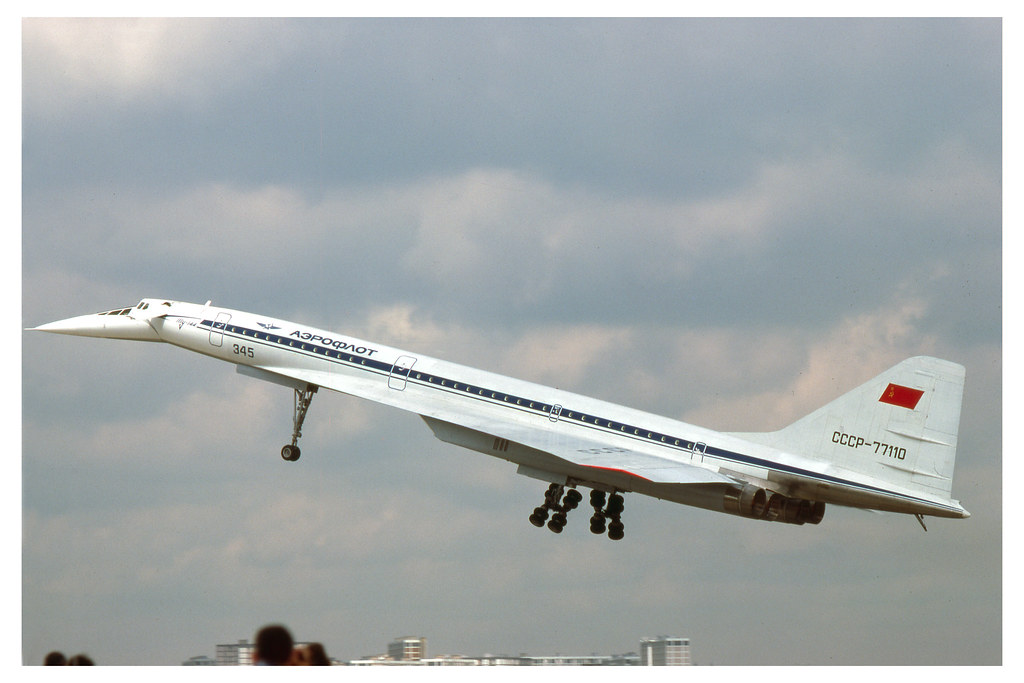
One of the earliest efforts at developing a supersonic passenger airliner was the Tupolev Tu-144, which was developed in the cold war period as the part of the larger technological competition between the superpowers of the world. It was a symbol of national pride and the fast development of aerospace, which represented the extent to which aviation engineering had advanced in the same period. It was designed by Tupolev Design Bureau and it was intended to compete directly with Western supersonic projects. Paperwise, it was a radical step forward into the future of commercial air travel with previously unheard of speed and ambition.
Supersonic Performance Overview:
- Able to travel over Mach 2
- Output of about 960 kilonewtons thrust
- One of the fastest commercial aircraft
- Built to travel at high speed over long distances
- High technology of its time
The aircraft was in terms of performance the fastest aircraft to fly at speeds that were faster than Mach 2 making it one of the fastest commercial aircraft ever built. It had the power needed to maintain high-speed supersonic flight over long distances with a total thrust output of about 960 kilonewtons. This was a breakthrough in the engineering of aviation in its day.
Even with its remarkable abilities, the Tu-144 had serious operational problems and safety issues that curtailed its future effectiveness. Its service life was rather short in comparison with expectations, since there were technical issues and reliability problems that affected its commercial performance. However, it is a historically important aircraft, as the first supersonic transport to fly, and an important milestone in the history of high-speed aviation.
3. Tupolev Tu-160 Blackjack
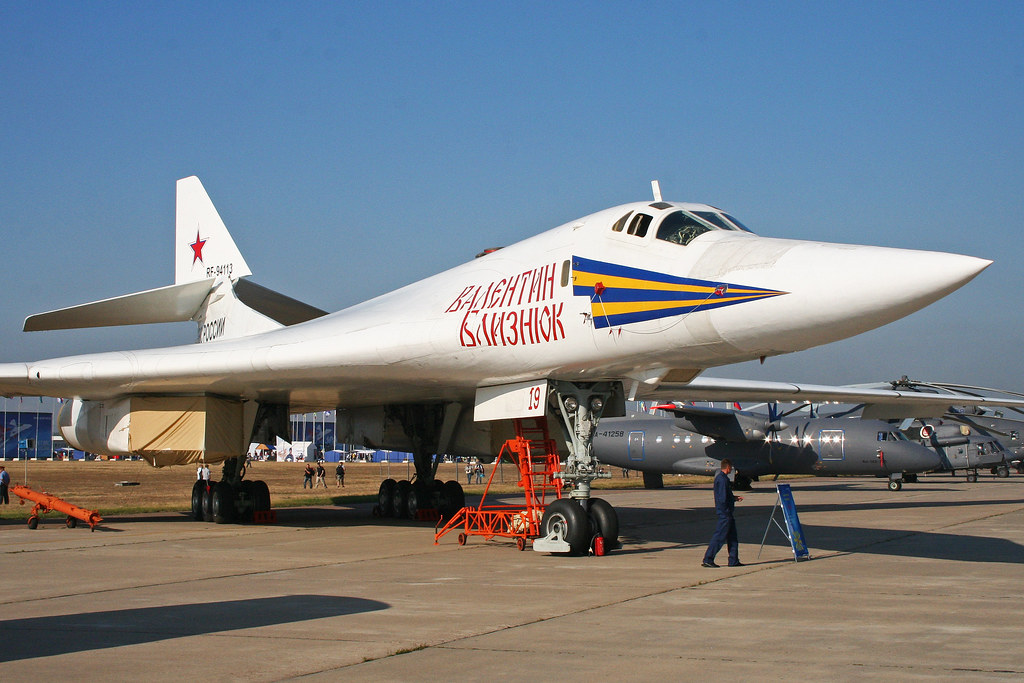
The Tupolev Tu-160 Blackjack is the heaviest and largest combat aircraft that ever flew, which was developed to act as a long-range strategic bomber and a combination of speed, payload capacity, and advanced aerodynamic engineering. It was constructed by the Tupolev Design Bureau and was designed to provide capability to strike with nuclear and conventional weaponry in intercontinental ranges. Paperwise, it is an effective combination of brute strength and advanced flight design, which made it one of the most powerful bombers ever.
Strategic Capability Overview:
- Heavyest and biggest fighting planes
- Variable-sweep wing aerodynamic design
- Large payload on long-range missions
- Ability to fly supersonically
- Planned to be used in strategic strike missions
The Tu-160 has the power of four high-thrust engines that generate about 980 kilonewtons of total thrust enabling it to travel at supersonic speed speed and endurance in strategic missions. It possesses variable-sweep wing system that enables it to change wing geometry at different stages of flight, maximizing its performance during takeoff, cruising and high-speed operations.
The aircraft can also carry a huge load of weapons which includes long range cruise missiles and strategic weapons. Still today, it is still an active and relevant element of modern strategic air forces, and it has proven to be incredibly durable and still relevant. Its design has well stood the test of time over the decades and it has remained one of the strongest bombers ever constructed.
4. Boeing 777 Series
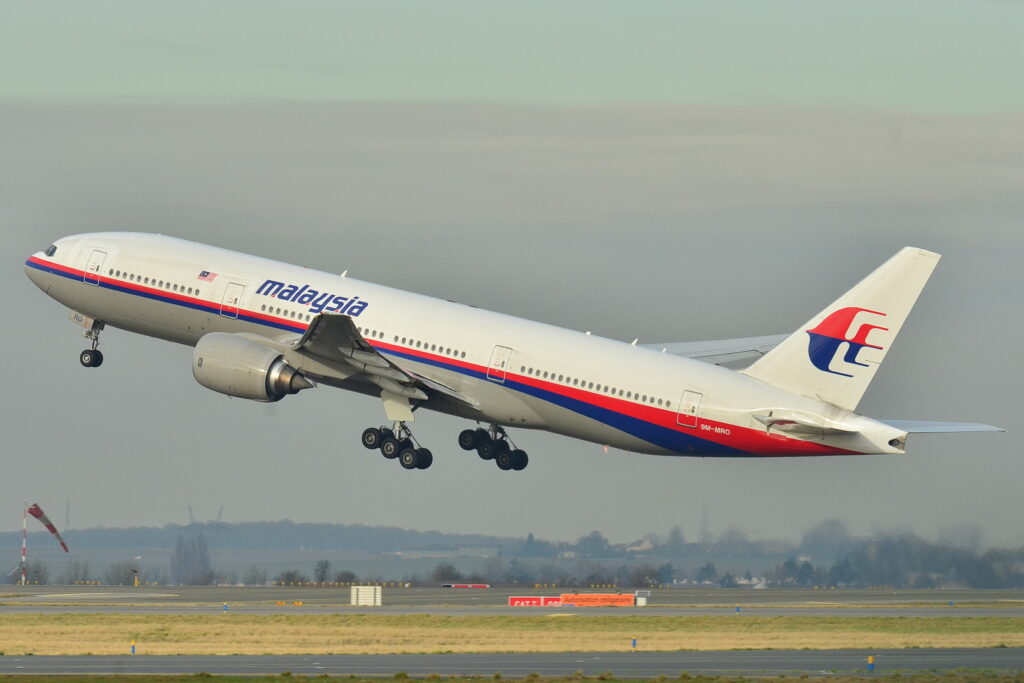
The 777 by Boeing is a significant innovation in the contemporary commercial air transport, and it reinvented the capabilities of a twin-engine aircraft in long-range flights. It is generally considered as one of the strongest and most potent twinjets ever constructed with range efficiency and reliability all in one platform. It was a creation that was developed by Boeing and was a milestone in intercontinental travel of passengers. Paperwise, it was a transition to more efficient wide-body aircraft to operate in global airlines.
Twinjet Innovation Overview:
- The strongest twin-engine airliner
- Approximately 1026 kilonewtons force
- A fewer engine long-haul efficiency
- High performance GE90 engines
- Enhanced safety and reliability system
A key factor that has made GE succeed so much is the GE90 engine family that has brought new dimensions of thrust, efficiency and operational reliability to commercial aviation. The aircraft had a total thrust of about 1026 kilonewtons and allowed airlines to fly ultra-long-haul routes with only two engines and still perform well and have good performance and safety margins.
Another advancement that the Boeing 777 made was the use of cutting edge software design and engineering, the aircraft was one of the first commercial planes to be developed with the heavy use of computer-aided design systems. This invention enhanced structural efficiency, fuel consumption and general safety, contributing to the future of the modern aircraft development. Its design philosophy is still evident in the next-generation wide-body aircraft of the aviation industry.
5. Airbus A340-600
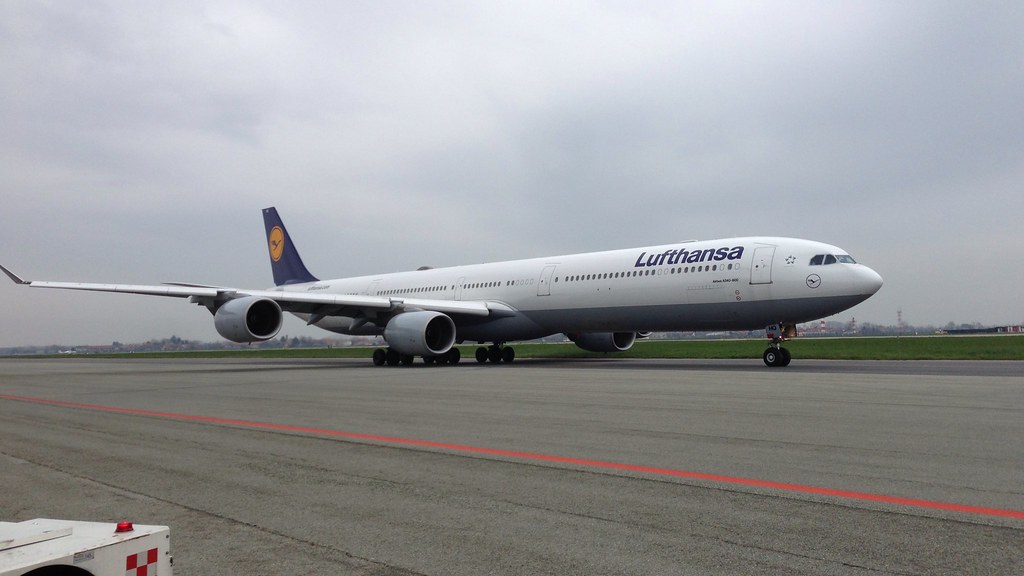
The Airbus A340-600 is known to have an unusually long fuselage and a powerful intercontinental performance, a design which came into being at a time when the four-engine-powered aircraft were the norm in long-haul travel. It was constructed by Airbus and was to be highly efficient in linking far away other destinations all over the world without compromising on passenger capacity and stability in operation. Paper wise, it is a major milestone in the evolution of wide-body aircrafts with emphasis on range, comfort and long distance reliability.
Long-Range Capability Overview:
- High capacity fuselage
- Long route four-engine design
- Approximately 1080 kilonewtons force in total
- Streamlined with intercontinental travel
- Good payload and range balance
The A340-600 is powered by four high-thrust engines which produce a total thrust of around 1080 kilonewtons and it has been designed to have a reliable performance even with the high load of passengers and cargo. This enabled it to have long-haul intercontinental flights that were consistent and efficient, particularly at its best of times.
Though it has in most routes been replaced by modern twin-engine aircraft, as a better economic and more fuel-efficient airplane, the A340-600 is still a significant illustration of the engineering philosophy of Airbus in the early history of developing long-range wide-body aircraft. It is still recalled with its large size, performance, and contribution to the development of the long-distance commercial aviation.
6. Boeing 747-400ER / ERF
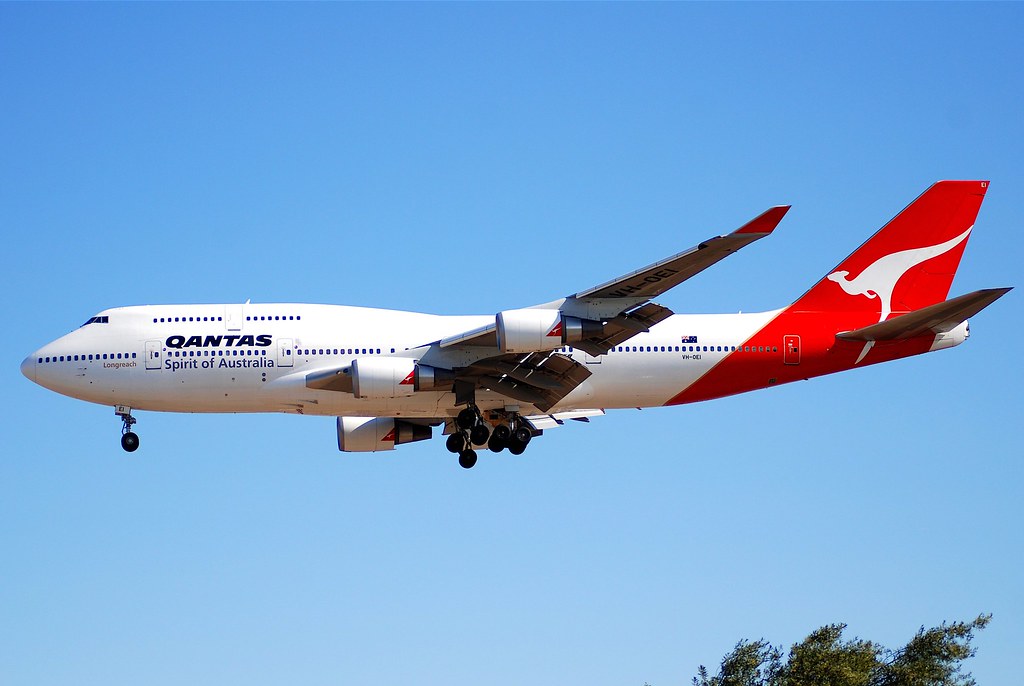
The Boeing 747-400ER and Boeing 747-400F are the new modernized version of the time-tested 747, which has changed the face of commercial aviation, introducing the concept of the wide-body jumbo jet. These variants were developed by Boeing and had the effect of extending the range and efficiency of the aircraft thus making them very useful in passenger as well as freight operations. Paperwise, they are one of the most efficient long-haul planes in the history of aviation, with a combination of scale, range, and versatility.
Jumbo Jet Capability Overview:
- Extended range ER variant performance
- Freighter (ERF/F) operations
- Approximately 1124 kilonewtons push production
- Huge capacity of passengers and cargo
- Planned to be used in intercontinental missions
The 747-400ER and freighter models were designed to carry up very heavy loads over long distances of intercontinental routes with the help of high-thrust engines that provided a total of around 1124 kilonewtons of force. Their design has allowed airlines and cargo operators to transport large volumes in an efficient way and as such have become vital resources in the world aviation logistics and long-haul passenger service.
Although newer and more fuel-efficient twin-engine aircraft have been introduced, the 747-400ER and ERF models still maintain an iconic status. They are still the icons of the jumbo jet age and are generally considered as being among the most influential aircrafts ever assembled and have influenced the course of air travel and cargo hauling all over the world over decades.
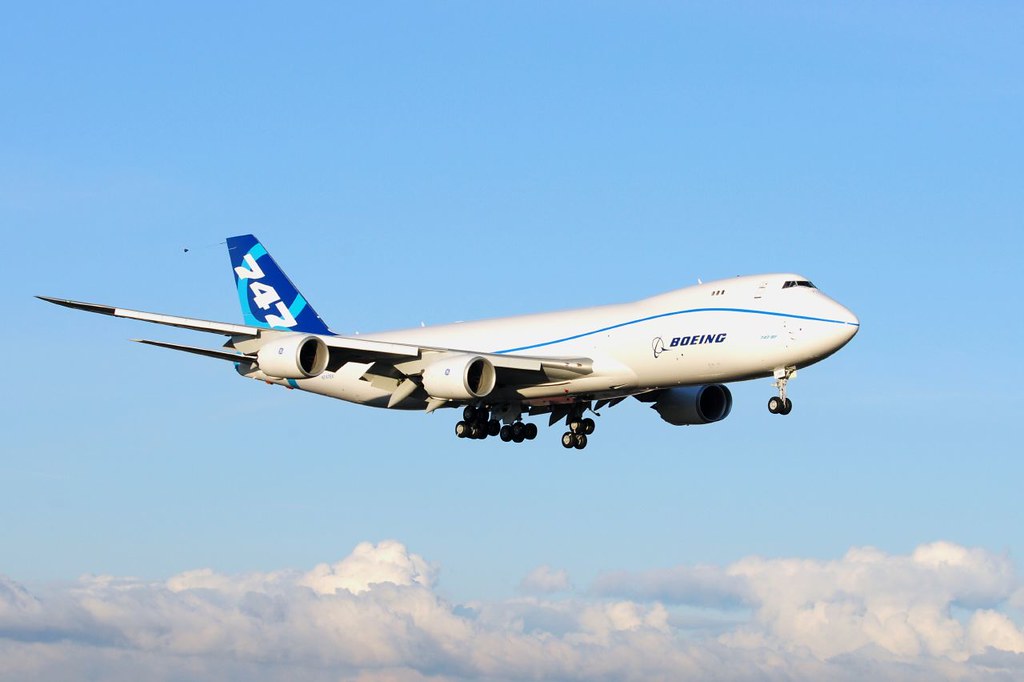
7. Boeing 747-8
The 747-8 has become the best development on the popular 747 line, with new, more aerodynamically refined features and new-generation engine technology inspired by more modern Boeing aircraft designs. It was designed by Boeing to be more efficient, range-wise, and overall more efficient without compromising the jumbo jet identity. On canvas, it is the last and most sophisticated part of one of the most iconic families in the history of aviation.
Next-Gen Jumbo Performance Overview:
- Majority of the developed 747 family variant
- Improved aerodynamics and efficiency
- Approximately 1184 kilonewtons force production
- Longer range than previous models
- Streamlined to fit advanced aviation applications
The 747-8 has superior performance with a total thrust of about 1184 kilonewtons of propulsion with its advanced high-bypass engines and gets better performance compared to a commercial aircraft of its size. These enhancements enable it to be more fuel-efficient and have a longer range than the past 747 models, but retain its gigantic passenger and cargo capacity.
The 747-8 is still actively involved in cargo tasks as well as special government transport duties, despite the fact that 747-8 production officially ceased. It is still one of the most important reminders of the lasting legacy of the 747 as it was a way of connecting the traditional jumbo jet engineering with the current needs of the aviation industry.
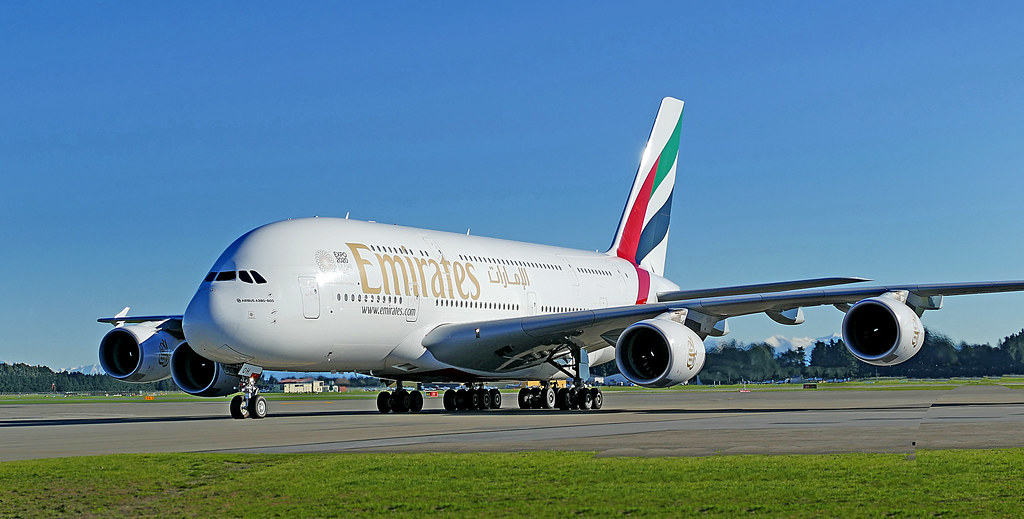
8. Airbus A380
The Airbus A380 is the largest passenger airplane ever constructed which is used to carry a large number of passengers in international routes which have never been too high. Its unique full-length 2-deck design is different to all other commercial aircraft in service. It was developed by Airbus and was designed to maximize capacity, comfort and efficiency in the global air routes of high demand. On paper, it embodies the highest standards of the large-scale commercial aviation engineering.
Superjumbo Capacity Overview:
- Biggest passenger aircraft ever constructed
- Complete two-deck cabin design
- Total thrust-approximately 1364 kilonewtons
- Structured to carry high capacity
- Pay attention to the comfort of passengers in the long run
The A380 is powered by four high-thrust engines that generate about 1364 kilonewtons of power in total and was designed to enable it to launch its huge structure without losing the long-range performance. It is designed to be passenger friendly and efficient in operation in high traffic international flights particularly between major international hub airports.
The aircraft was challenged by its high operating costs even though its technical accomplishments were high and its lack of success was caused by changing airline strategies with smaller, more flexible twin-engine jets. This led to a low adoption rate. However, the iconic image of the A380 in the history of aviation as one of the symbols of bold engineering and ability to transport high numbers of people remains intact.
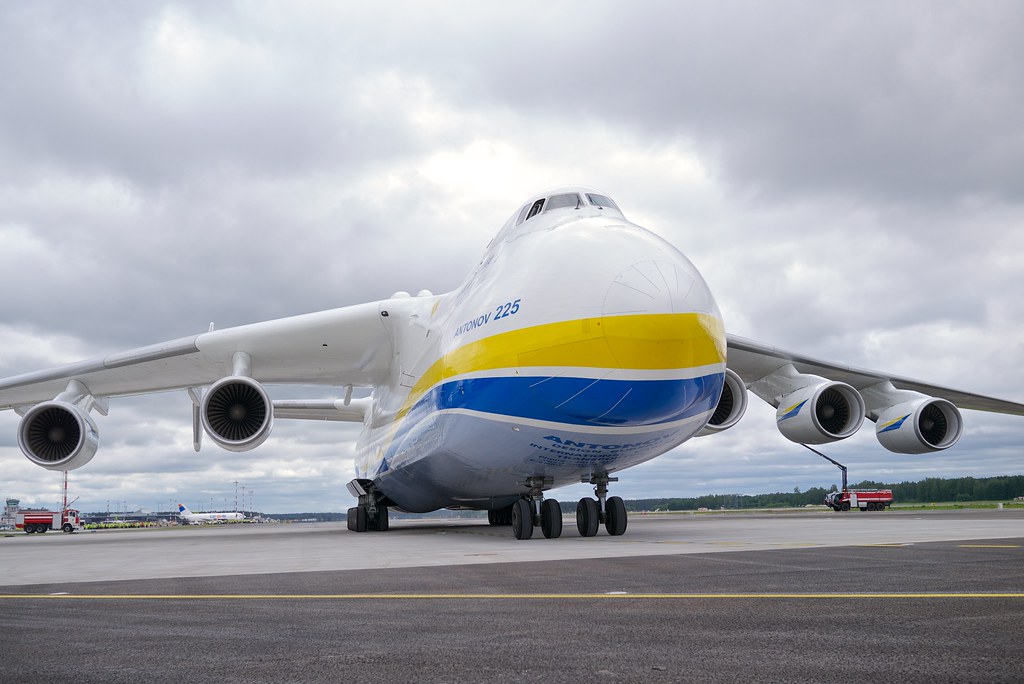
9. Antonov An-225 Mriya
The Antonov An-225 Mriya was the aircraft ever built. It was made to carry things like the Buran spacecraft for the Soviet space program. This plane was designed for heavy loads that no other plane could carry. The Antonov Design Bureau built it. It was the best of its kind for carrying heavy things. The An-225 was an achievement in making planes that can carry a lot of weight.
Extreme Cargo Capability Overview:
- Largest and heaviest aircraft ever built
- Designed for space program transport missions
- Six-engine configuration for thrust
- Around 1377 kilonewtons total thrust output
- Record-breaking payload carrying capacity
The An-225 had six engines that made a lot of thrust. Around 1377 kilonewtons. This made it able to carry heavy things like big machines and spacecraft parts. It could do jobs that no other plane could do making it very important for moving heavy things.
Even though it was so good at its job only one An-225 was ever made. This made it very special and famous in the aviation world. When it was destroyed it was a loss. Its legacy lives on and helps design modern planes that can carry heavy loads. The An-225 An-225 Mriya remains a symbol of engineering and ambition, in aviation history.
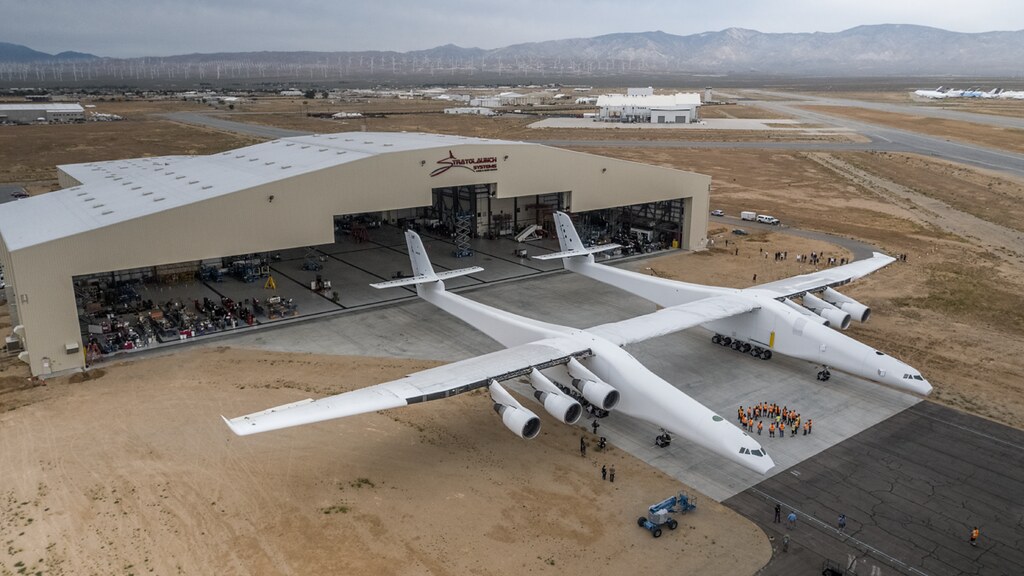
10. Stratolaunch Roc
The Stratolaunch Roc is the plane in the world when it comes to the distance from one end of the wing to the other. It was made to carry rockets and special vehicles to high up in the air before they are let go. The people at Stratolaunch Systems created the Stratolaunch Roc. It shows how things are changing in the world of flying with a focus on getting to space and trying out launch systems. On paper the Stratolaunch Roc is an important tool for doing things in space from the air and for testing new things that can fly.
Airborne Launch Capability Overview:
- The Stratolaunch Roc has the wingspan of any plane ever built
- It has a special design with two bodies
- It is made for launching rockets from the air
- It has six engines that give it a lot of power to lift things
- It helps with special missions for things that can fly
The Stratolaunch Roc is powered by six big engines that produce a lot of power. This shows that the people who made it are very good at engineering. The special design with two bodies lets the Stratolaunch Roc carry and release payloads from the air. This makes it easy to launch things into space and do research on things that go fast.
The Stratolaunch Roc does not go fast compared to other planes. It is made for a special job, not for carrying people or things from one place to another. The Stratolaunch Roc is a way of thinking about things that can fly. It is a plane that can launch things into space and help us try out technologies. This is a deal for the people who make planes and it is helping to push the limits of what we can do, with flying machines. The Stratolaunch Roc is a part of this new way of thinking.