

A Deep Dive into America’s Most Iconic Fighter Jets
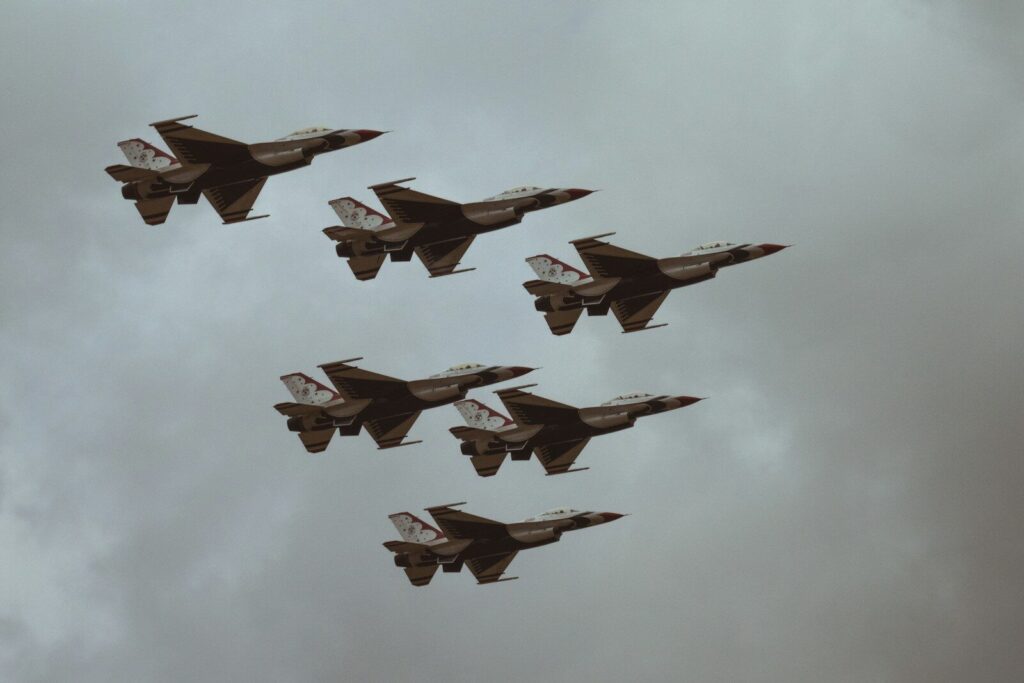
The United States has long been a powerhouse in military aviation, consistently producing some of the most advanced and capable aircraft ever to take to the skies. From the dawn of the jet age to the modern era of stealth and sensor fusion, American engineering has repeatedly pushed the boundaries of aerial warfare. These incredible machines are more than just metal tubes with engines; they are flying supercomputers, critical strategic assets, and powerful symbols of technological capability that have shaped geopolitics for nearly a century.
Before diving into the aircraft themselves, it’s worth understanding what actually makes a fighter jet one of the “best.” Raw speed is only a small part of the equation, and chasing top-speed numbers alone would miss most of what matters. Modern experts evaluate these aircraft based on a complex mix of attributes: stealth capability for evading radar, manoeuvrability in a dogfight, the variety and quantity of weapons payload, and the sophistication of avionics and sensor fusion all factor heavily into the assessment.
A jet’s real-world combat record, its versatility across different missions, and its operational cost round out the picture. Some aircraft on this list earned their reputation through raw performance, others through sheer adaptability, and a few simply by outlasting everything built to replace them. What follows is a tour through thirteen aircraft that, together, tell the story of American air power.
1. F-22 Raptor
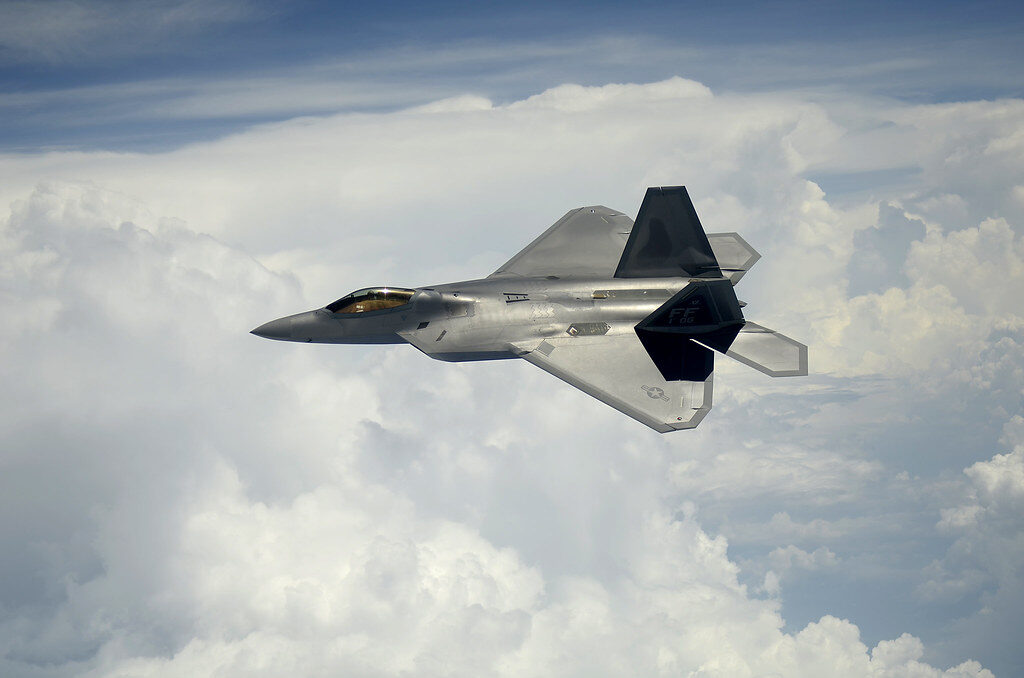
The Lockheed Martin F-22 Raptor is a fifth-generation multirole fighter that was commissioned in 2005. It is a superlative air superiority fighter, developed to surpass all previous generations of fighters. It incorporates various advanced technologies, making it extremely agile and giving it unprecedented combat capabilities.
Features of F-22 Raptor:
- Fifth-generation stealth fighter
- Outstanding air superiority capabilities
- Superior thrust vectoring
- Internal weapons bay
- Supersonic cruise capability
The F-22 Raptor’s standout feature is its exceptional stealth characteristics. Its estimated radar cross-section is the size of a marble, making it hard to detect and track on radar. This jet is powered by two formidable Pratt & Whitney F119 turbofan engines with thrust-vectoring capability. This enables the pilot to perform incomparable aerial acrobatics not possible in other fighters. The engines also give the jet a high speed of Mach 2.25 and enable it to cruise at supersonic speeds without afterburners.
The F-22 has an internal weapons bay designed to carry six AIM-120 radar-guided missiles. The jet can carry two AIM-9 Sidewinder heat-seeking missiles in addition to the missiles in the bay, while remaining stealthy. Even though only 187 aircraft were built because of its high maintenance cost, the F-22 had a significant impact because of its advanced technology. These planes have redefined air-to-air combat and have influenced the design of all subsequent stealth fighters.
2. F-35 Lightning II
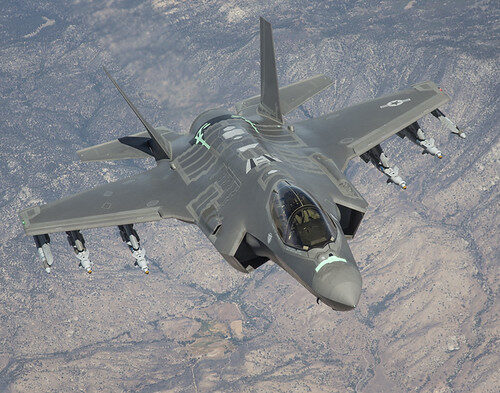
The F-35 Lightning II is a fifth-generation multirole fighter produced by Lockheed Martin and considered one of the most advanced warplanes in the world. This jet is replacing various legacy fighter aircraft and is set to be the primary fighter plane of the US military. Unlike the F-22 Raptor, the F-35 was designed to fulfill air-superiority roles in addition to attack, reconnaissance, and electronic warfare roles. The aircraft was developed in three variants, namely, the F-35A, F-35B, and F-35C for the US Air Force, Marines, and Navy, respectively.
Features of F-35 Lightning II:
- Three different variants
- Sensor fusion technology
- Outstanding battlefield situational awareness
- Multirole fighting capabilities
- Large external weapons carrying capacity
The F-35’s greatest strength lies in its situational awareness and advanced sensor fusion technologies. This jet provides an unprecedented level of information about the battlespace to the pilot. It gathers information from onboard sensors, radars, infrared sights, and other sources, including other allied aircraft on the battlefield. It then processes this information to give the pilot a comprehensive view of what is happening. Superior situational awareness enables the pilot to make quick decisions and operate effectively in a dynamic and challenging battlespace.
The F-35 Lightning II is a formidable multirole fighter capable of performing various combat roles. It can carry a diverse arsenal of missiles and bombs, including air-to-air missiles and various precision-guided and unguided bombs. In certain situations where stealth is not necessary, it can carry up to 22,000 pounds of weaponry on its external weapons stations. With stealth and situational awareness technologies, this jet can perform its roles effectively and survive hostile environments. With more than 1,000 aircraft built, the F-35 is the most widely produced modern fighter and the most advanced in the world. It is the preferred fighter plane for the US and many of its allies.
3. F-15EX Eagle II
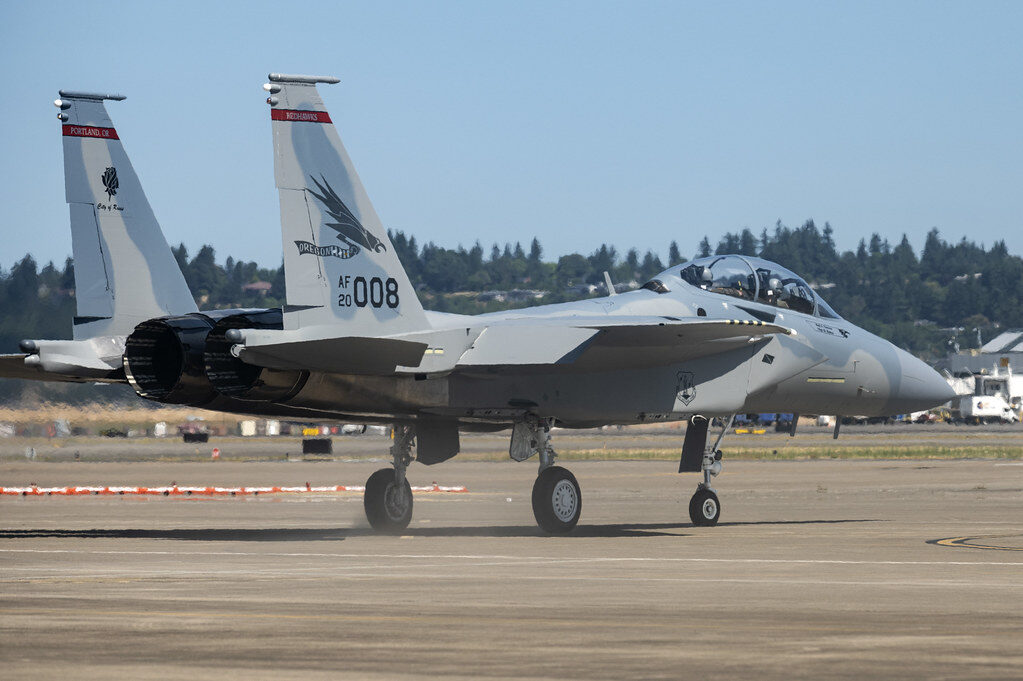
Boeing’s F-15EX Eagle II is the latest version of the legendary F-15 fighter jet. This advanced fifth-generation jet is a major upgrade over its predecessor and was commissioned for the first time in 2021. It is not the replacement for sixth-generation stealth fighters but rather complements the F-35 by providing unmatched speed, outstanding combat capabilities, and exceptional weapons carrying capacity. This jet has a top speed of Mach 2.5, making it one of the fastest aircraft in the world.
Features of F-15EX Eagle II:
- Outstanding supersonic speed
- Superior weapons carrying capacity
- Digital flight control system
- Cutting-edge electronic warfare
- Upgradable avionics and systems
The primary strength of the F-15EX Eagle II lies in its unmatched weapons carrying capacity. It can carry up to 29,500 pounds of missiles and other ordnance, making it one of the heaviest fighters in terms of payload. Unlike the F-22 Raptor and F-35, the F-15EX is not a stealth fighter, but its advanced speed, maneuverability, and electronic warfare tools enable it to evade threats. This jet also has a digital flight control system, which improves its agility and maneuverability, enabling it to perform better during combat. The improved modernized cockpit provides the pilot with situational awareness, which enhances combat capabilities.
The F-15EX Eagle II will play a critical role in the US Air Force for decades. It is designed to carry larger and heavier missiles, including future hypersonic missiles, which the F-35 and F-22 cannot carry because they lack sufficient internal space. Its open architecture avionics allow faster and cheaper upgrades to ensure it remains relevant in the future. The F-15EX will complement the F-35 by providing unmatched speed and payload while fulfilling the roles previously performed by the F-15C.
4. F-15E Strike Eagle
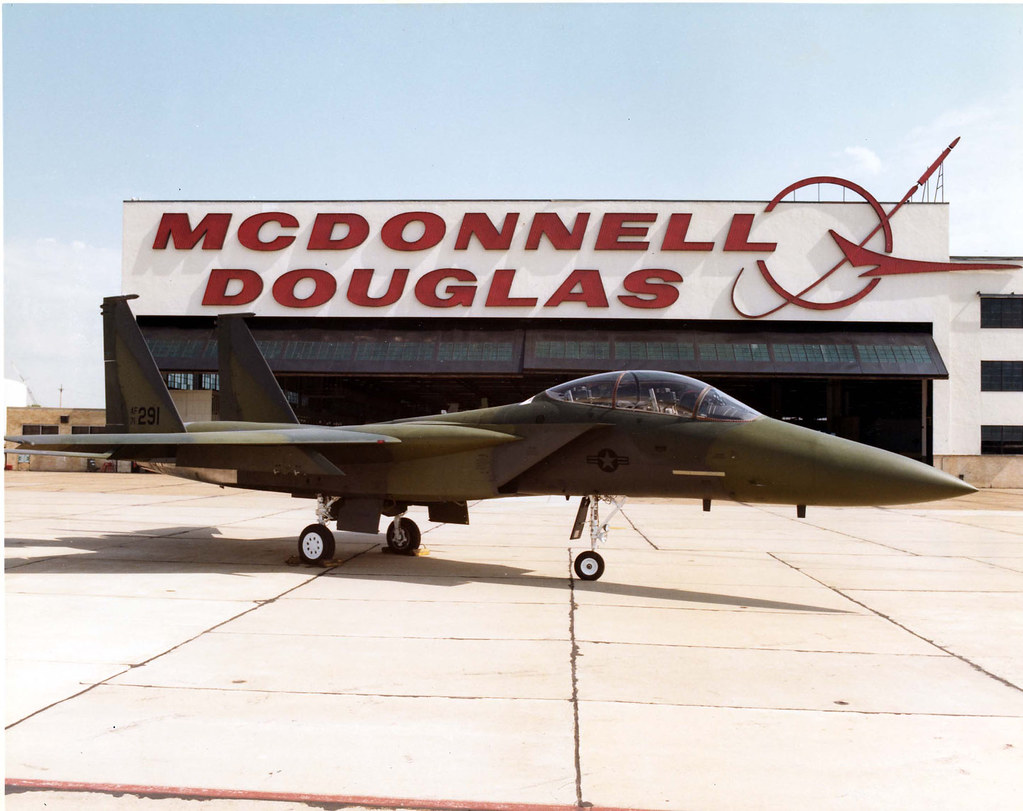
The F-15E Strike Eagle marked a major evolution of the legendary F-15 platform by transforming it from a dedicated air superiority fighter into a highly capable all-weather strike aircraft. Entering service during the late 1980s, the Strike Eagle introduced a two-seat configuration that placed a weapons systems officer in the rear cockpit to manage advanced targeting systems and precision ground-attack missions. This arrangement allowed the pilot to focus on flying and air combat while the second crew member handled mission systems, making the aircraft exceptionally effective in both offensive and defensive operations across a wide range of combat environments.
Features of F-15E Strike Eagle:
- Two-seat attack configuration
- Remarkable all-weather strike capabilities
- Excellent dogfighting capabilities
- Successful combat history
- Versatile guided weapon compatibility
Over the years, the F-15E Strike Eagle has become one of the U.S. military’s most dependable combat aircraft, earning a reputation for reliability and mission success. It played a significant role during Operation Desert Storm by carrying out precision night bombing missions against important Iraqi military targets. Since then, the aircraft has participated in numerous major military operations around the world, demonstrating its ability to deliver laser-guided bombs, satellite-guided munitions, cruise missiles, and other advanced weapons with exceptional accuracy. Despite its emphasis on ground attack, the Strike Eagle has consistently maintained its strong air-to-air combat capabilities.
The broader F-15 family has built one of the most remarkable combat records in aviation history, reflecting decades of operational success and technological excellence. Across its many variants, the aircraft has achieved an impressive number of aerial victories without any confirmed losses in air-to-air engagements. This outstanding record highlights not only the strength of the F-15’s engineering and continuous modernization but also the professionalism and skill of the pilots who have operated it in demanding combat situations. The F-15E Strike Eagle remains a vital part of that legacy, combining precision strike capability with proven air combat performance in a single, highly versatile platform.
5. F/A-18E/F Super Hornet
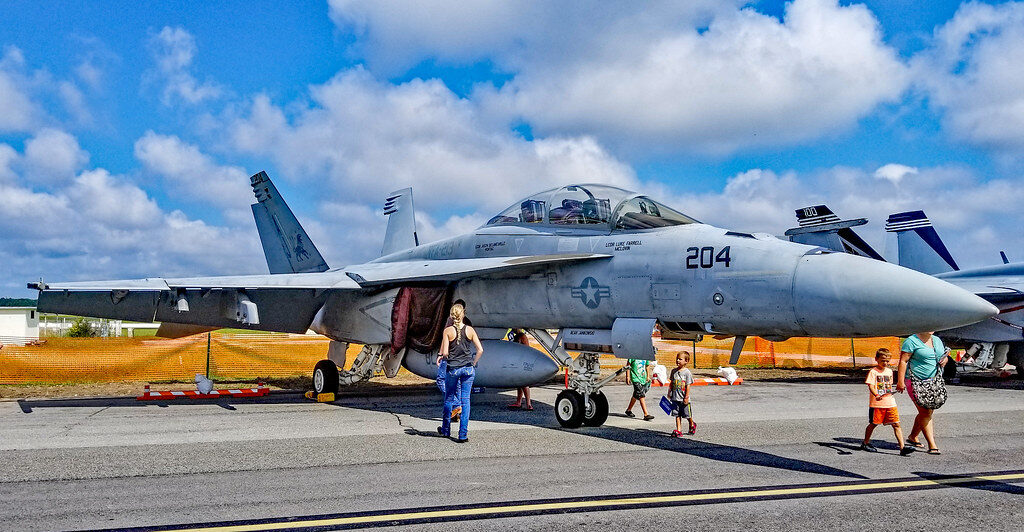
The F/A-18E/F Super Hornet is the latest version of the Hornet fighter jet and the primary strike fighter for the US Navy. It is larger and faster than the original F/A-18 and can carry more missiles than any other American fighter jet. The Super Hornet comes in two variants: the single-seat F/A-18E and the two-seat F/A-18F.
Features of F/A-18E/F Super Hornet:
- Carrier-based multirole fighter
- Upgraded larger airframe
- High weapons carrying capacity
- Excellent all-weather capabilities
- Forms the basis of EA-18G Growler
The F/A-18E/F Super Hornet is a formidable multirole fighter plane with enhanced capabilities. It can carry external weapons, including various air-to-air and air-to-ground missiles. Furthermore, it can carry precision-guided, satellite-guided, and laser-targetted bombs and missiles. With a top speed of Mach 1.8, Super Hornet is reliable and efficient. It is the most trustworthy aircraft for the Navy because of its improved landing and take-off capabilities on carriers.
The Super Hornet is not a stealth fighter, but its design minimizes radar cross-sections to avoid detection by enemy radar. In addition, this jet has an avionics system that is more advanced than that of other fighters, such as the F-15. This plane serves as the foundation for the EA-18G Growler, the world’s premier electronic warfare aircraft. Super Hornet will continue to serve as the Navy’s primary strike fighter for decades. It will be complemented by F-35C in the future. This jet is reliable and efficient in various combat roles, making it one of the best US fighters in history.
6. F-16 Fighting Falcon
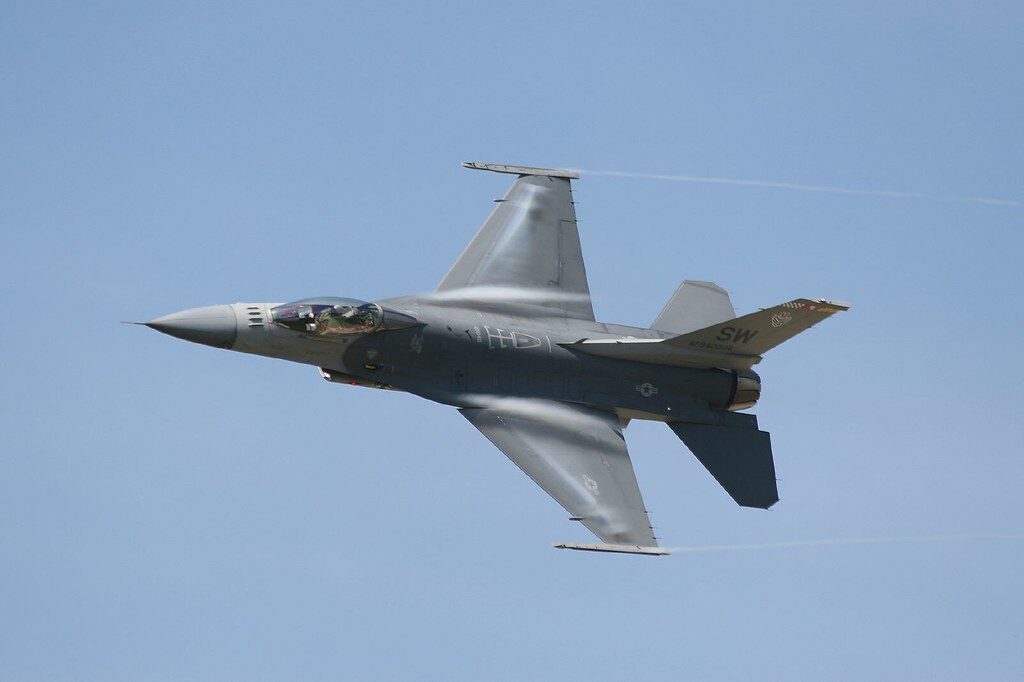
The F-16 Fighting Falcon is a single-seat fourth-generation jet fighter that was commissioned for the first time in the early 1970s. It was designed to have good air-to-air combat capabilities while being lightweight and cost-effective. The F-16 has been one of the most successful aircraft in military history, having been acquired by more than 25 countries. Over 4,500 units were produced, and it is among the most widely purchased fighter planes in military history.
Features of F-16 Fighting Falcon:
- Lightweight high-performance fighter
- Advanced fly-by-wire controls
- Excellent manoeuvrability
- Multirole capabilities
- Proven combat record
The best thing about the F-16 is that it offers good performance while being cost-effective. This aircraft is powered by a single engine and can achieve speeds of more than Mach 2. It is relatively lightweight, making it highly efficient while being cheaper to maintain than other fighters with two engines. The advanced fly-by-wire system enhances manoeuvrability and gives the plane excellent dogfighting capabilities.
The F-16 has shown to be highly reliable and efficient in combat. It has an excellent combat record, having been used in various military operations, including the Gulf War, the Balkans conflict, and the wars in Iraq and Afghanistan. It has been upgraded over the years, allowing it to carry more missiles and weapons while being able to perform better in various combat environments. The latest versions, including the F-16 Block 70/72, have advanced radar, avionics, and electronic warfare capabilities. This allows the pilot to engage enemies with greater ease and have situational awareness on the battlefield while avoiding threats. The F-16 is a highly efficient and reliable fighter with good combat capabilities, making it one of the best aircraft in military history.
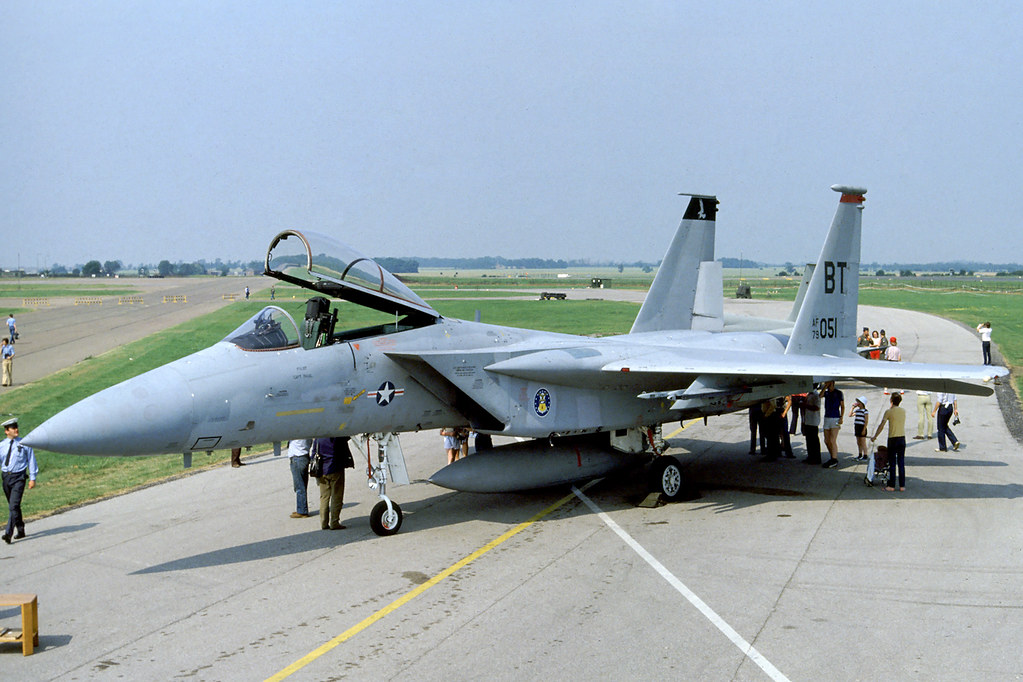
7. F-15C/D Eagle
The F-15C Eagle and its two-seat training variant F-15D were the premier air superiority fighters of the Cold War. They were the first fighters to have the capability to control the skies. This remarkable jet was specifically designed for one purpose: to dominate the skies in air-to-air combat. It was an outstanding aircraft with remarkable dogfighting capabilities and could carry a substantial number of missiles.
Features of F-15C/D Eagle:
- Air superiority fighter
- Outstanding speed and power
- Advanced radar and missiles
- Excellent dogfighting capabilities
- Remarkable combat record
The F-15C Eagle was a revolutionary fighter aircraft that redefined aerial warfare. This plane has exceptional dogfighting capabilities and speed. Its twin engines give it a phenomenal thrust-to-weight ratio that enables it to accelerate faster and to climb vertically while in combat. The F-15C has a top speed of Mach 2.5, making it one of the fastest fighters in aviation history. Its advanced radar capabilities enable it to detect enemy aircraft and missiles at long ranges.
The F-15 Eagle was the best fighter aircraft of its time because of its formidable combat capabilities. It could carry various short- and medium-range missiles, giving it tremendous offensive power on the battlefield. Although it is being phased out of active duty, the F-15C/D will continue to serve as the primary fighter plane of the Air National Guard for years to come. The jet has a remarkable combat record and a superior dogfighting capability that have kept it at the top of air-to-air combat.
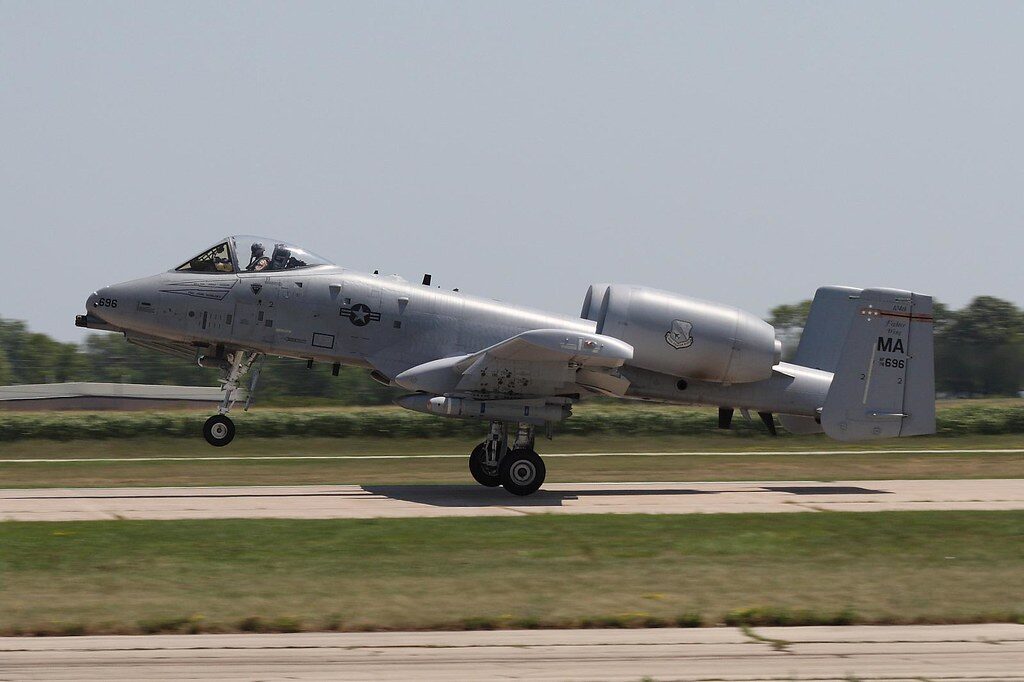
8. A-10 Thunderbolt II
The Fairchild Republic A-10 Thunderbolt II, also called the A-10C Warthog, is one of the most iconic aircraft in military history. Unlike other jets, the A-10 was designed specifically for one function: to provide close air support to ground forces. It can fly at low altitudes and has a slower speed than most of the fighters mentioned above. It has advanced capabilities and is reliable, making it one of the best aircraft for providing close air support to American troops.
Features of A-10 Thunderbolt II:
- Close air support aircraft
- Advanced 30 mm GAU-8 Avenger II cannon
- Heavily armoured cockpit
- Increased durability
- Provides critical support to US ground forces
The most notable feature of the A-10 is its 30 mm GAU-8 Avenger II rotary cannon. This impressive weapon has a firing rate of 4,000 rounds per minute and exceptional piercing power. It is the main weapon of the A-10 Warthog and can take out tanks and other armoured vehicles with ease. The A-10’s cockpit is heavily reinforced, providing the pilot with maximum protection. The pilot’s seat is made of titanium and is referred to as the bathtub. The engines are also located on the top of the wings, providing better protection from attack. The A-10 can withstand extraordinary amounts of damage to the cockpit and continue fighting.
The US Air Force has proposed to retire the A-10 on various occasions because it is not cost-effective. The A-10 has a poor defines mechanism and cannot protect itself against advanced surface-to-air missiles. However, it has been used successfully in various conflicts and operations because of its reliability and advanced capabilities. This plane provides critical support to troops on the ground by delivering powerful ordnance. Its unmatched cannon can easily destroy enemy aircraft, armoured vehicles, and tanks. It has served reliably in various wars, and the Warthog’s capabilities have ensured that there is nothing better at providing close air support in war.
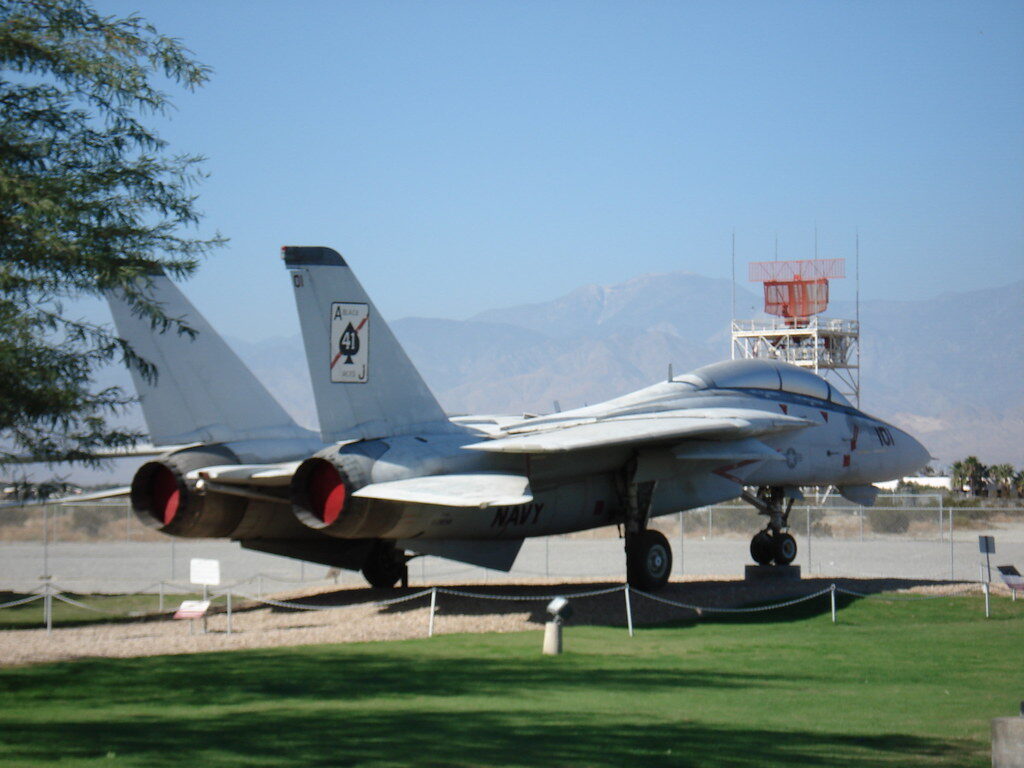
9. F-14 Tomcat
The Grumman F-14 Tomcat is one of the most iconic fighters of all time. This aircraft has gained fame not only for its remarkable capabilities and advanced technology but also for its appearances in popular media, such as Top Gun. The Tomcat served as the US Navy’s primary fleet-defines interceptor for more than three decades.
Features of F-14 Tomcat:
- Variable-sweep wing design
- Advanced long-range missile
- Outstanding speed and performance
- Supercarrier-based fighter
- Remarkable combat record
The most remarkable feature of the F-14 Tomcat is its variable-sweep wing design. The wings could change their sweep angle during flight, from fully swept back for high-speed flight to being almost horizontal for take-off and landing. This gave the plane extraordinary flexibility and range. The F-14 was faster and more agile than any other fighter plane of its time. The powerful turbofan engines allowed the Tomcat to achieve speeds of more than Mach 1.8. This iconic jet was outfitted with an advanced missile system that could take out enemy aircraft with ease. The AIM-54 Phoenix missiles had an impressive range of more than 100 miles.
This meant that enemy aircraft that posed a threat to the US Navy fleet would be taken out with ease. The F-14 Tomcat served in various operations, such as the Gulf War and the US intervention in Libya. Despite its advanced technology and impressive combat record, the F-14 Tomcat was eventually replaced by the F/A-18 Super Hornet because it was too expensive to maintain. The F-14 has a storied history and an enviable combat record. It has remarkable capabilities and was one of the best fighter planes of its time.
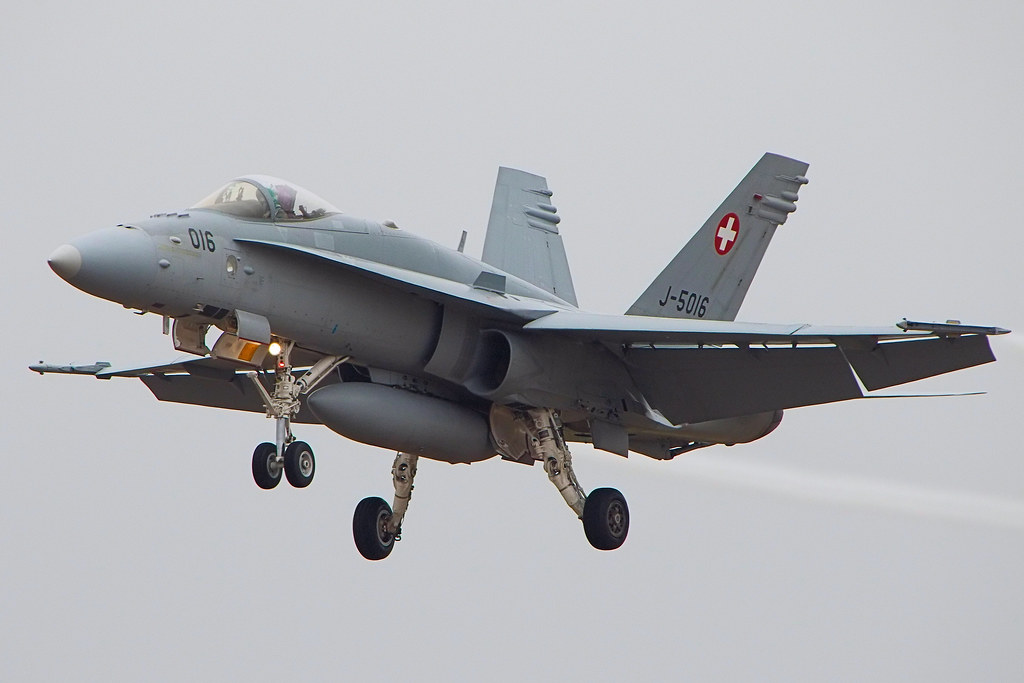
10. F/A-18 Hornet
The McDonnell Douglas F/A-18 Hornet was the first fighter jet to become the US Navy and Marines’ standard multirole aircraft. Coming to service in the early 1980s, the F/A-18 Hornet could be described as the universal utility fighter that could perform numerous missions with equal levels of effectiveness. Its versatile “F/A” designation emphasized its ability to carry out both fighter and attack roles simultaneously. The Hornet became the backbone of the US Navy for more than two decades.
The Best Features of the F/A-18 Hornet:
- First multirole fighter
- Reliable twin-engine design
- Excellent carrier-based fighter aircraft
- Proven in both air-to-air and air-to-ground roles
- Laid the foundation for the future multirole fighters
Combining excellent performance and combat capabilities with the reliability of a twin-engine design, the F/A-18 Hornet was the most suitable fighter jet for taking on various challenges. It could fly at a speed of Mach 1.8 and was highly manoeuvrable, although the redundancy of having two engines ensured a safer flight, especially over vast expanses of water. Hornet’s combat capabilities were showcased during Operations Desert Storm and Desert Shield as it took on both air-to-air and air-to-ground roles with equal tenacity and success.
While the F/A-18 Hornet eventually was replaced by the larger and more advanced F/A-18E/F Super Hornet, it continues to play its part in the development of future military aircraft. The versatility and reliability of the Hornet, which allowed it to serve as an attack aircraft, a fighter jet, and even a carrier-based trainer, placed it in the ranks of the best multirole fighter aircraft of all time. Its legacy is evident in the latest developments in the field, from the advanced stealth technologies of the F-35 Lightning II to the F/A-18E/F Super Hornet itself.
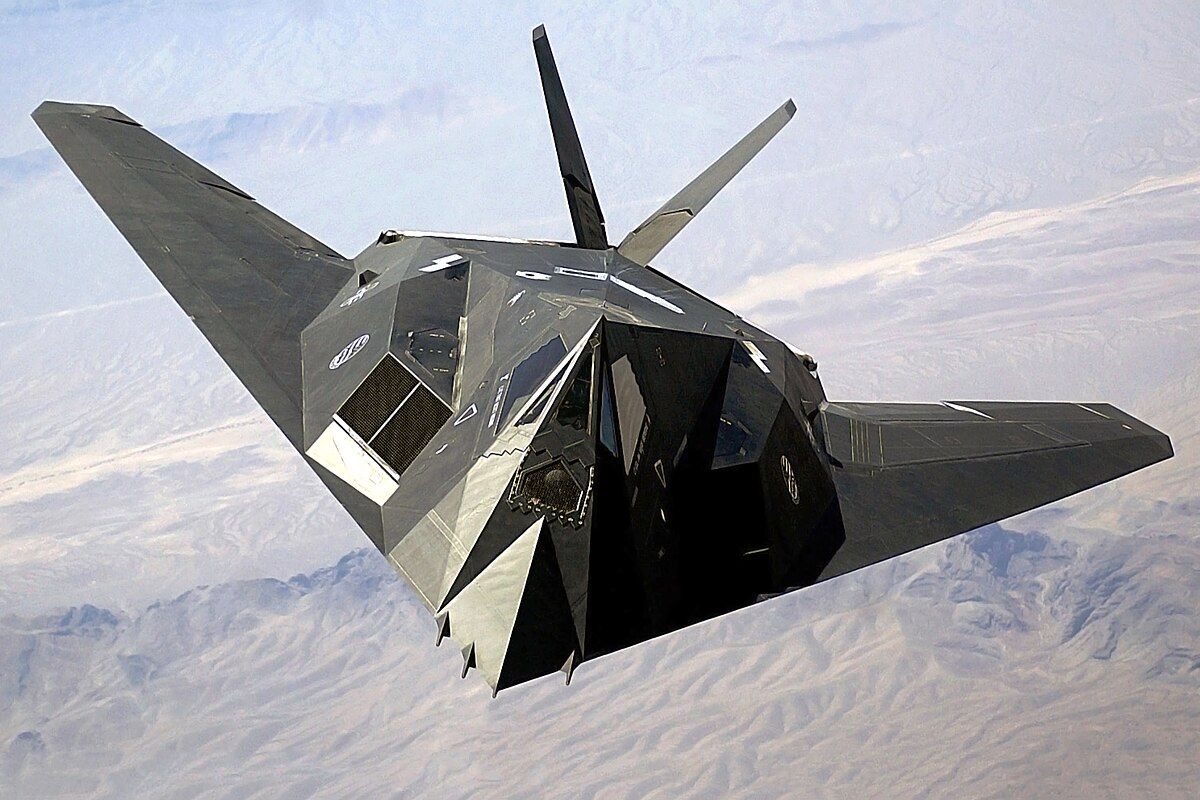
11. F-117 Nighthawk
The Lockheed F-117 Nighthawk was the world’s first stealth aircraft to see the light of day. The revolutionary design of the F-117 Nighthawk remained classified for many years, with the US government only officially acknowledging the existence of the stealth jet in 1988. In contrast to the traditionalist approaches to aircraft design, the F-117 Nighthawk took a radically different route to reduce radar cross-section detection. Its unconventional angular shape may not have been aerodynamically perfect, but it significantly minimized the radar exposure when in flight.
The Best Features of the F-117 Nighthawk:
- First stealth aircraft in the world
- Revolutionary design
- Highly precise aircraft
- Tested its combat capabilities in Operation Desert Storm
- Set the benchmark for future stealth aircraft
During its combat debut in the 1991 Gulf War, the F-117 Nighthawk was able to perform its primary role of penetrating enemy air defences with unprecedented precision. The stealth jet was in charge of conducting ground-attack missions over one of the most heavily defended airspace in the world. Taking advantage of its ability to avoid radar detection, the F-117 Nighthawk dropped thousands of precision-guided bombs during its combat missions over Iraq. Remarkably enough, the F-117 Nighthawk was never shot down during Operation Desert Storm.
Despite being an attack aircraft, the F-117 Nighthawk bore the “F” in its designation, perhaps, for the security reasons. Meanwhile, stealth jet set the framework for future stealth aircraft and demonstrated the tremendous combat potential that aircraft with reduced radar cross-sections possessed. Even now, years after the F-117 Nighthawk was officially decommissioned, its legacy lives on with various stealth fighters and stealth bombers currently equipped by the US Air Force and Navy.
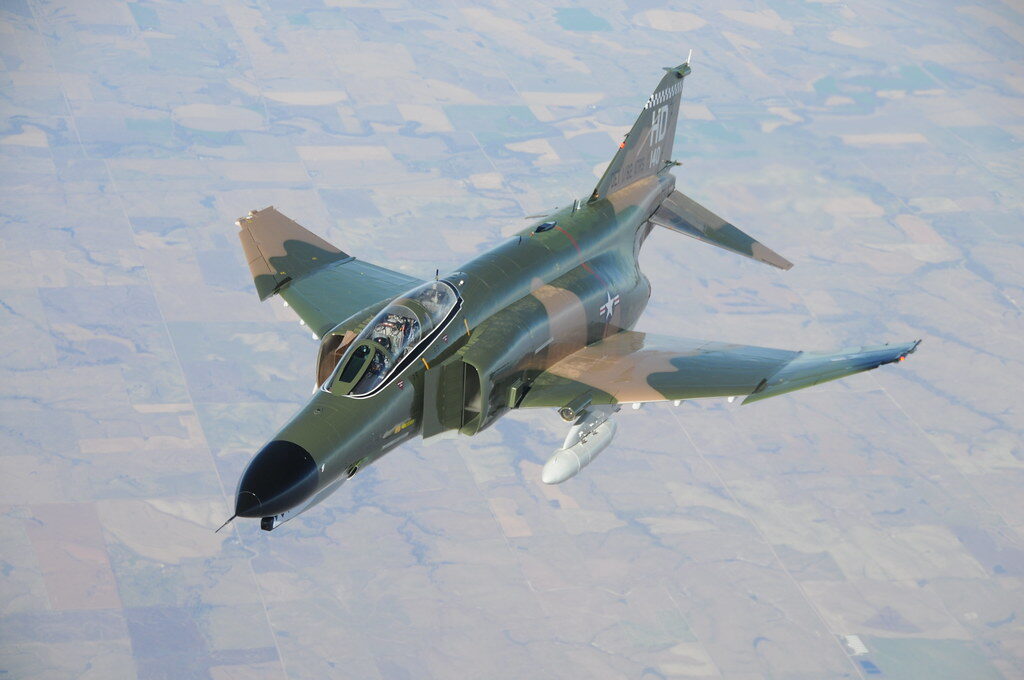
12. F-4 Phantom II
The McDonnell Douglas F-4 Phantom II belongs to the most influential aircraft of the Cold War era. Coming to service in 1958, the F-4 Phantom II was a twin-engine fighter jet that saw action with the US Air Force, Navy, and Marines. It became a symbol of the American military might due to its exceptional versatility, being able to switch between air superiority fighter, attack, reconnaissance, and even interceptor roles. Its combat effectiveness was unmatched for many years, making it the most advanced tactical fighter jet during the Vietnam War.
The Best Features of the F-4 Phantom II:
- One of the legendary Cold War aircraft
- Versatile multirole fighter
- Highly manoeuvrable and fast
- Saw extensive combat during the Vietnam War
- Set the stage for the current generation of modern fighters
F-4 Phantom II was among the first jets to enter the so-called “dogfight era”. Its initial designs did not include a built-in cannon because it was believed that missiles would render dogfights obsolete. As a result, early F-4s had no guns and had to rely on the missiles during air-to-air combat.
However, the gun proved to be extremely useful, and the later versions of the F-4 Phantom II included a cannon. The combat experience of the F-4 during the Vietnam War served as a valuable lesson to the US Air Force. Among other things, it led to the development of various advanced fighter aircraft, including the famous F-15 Eagle and F-16 Fighting Falcon. Additionally, the F-4 Phantom II inspired the establishment of the TOPGUN school, which teaches fighter pilots to engage in a dogfight.
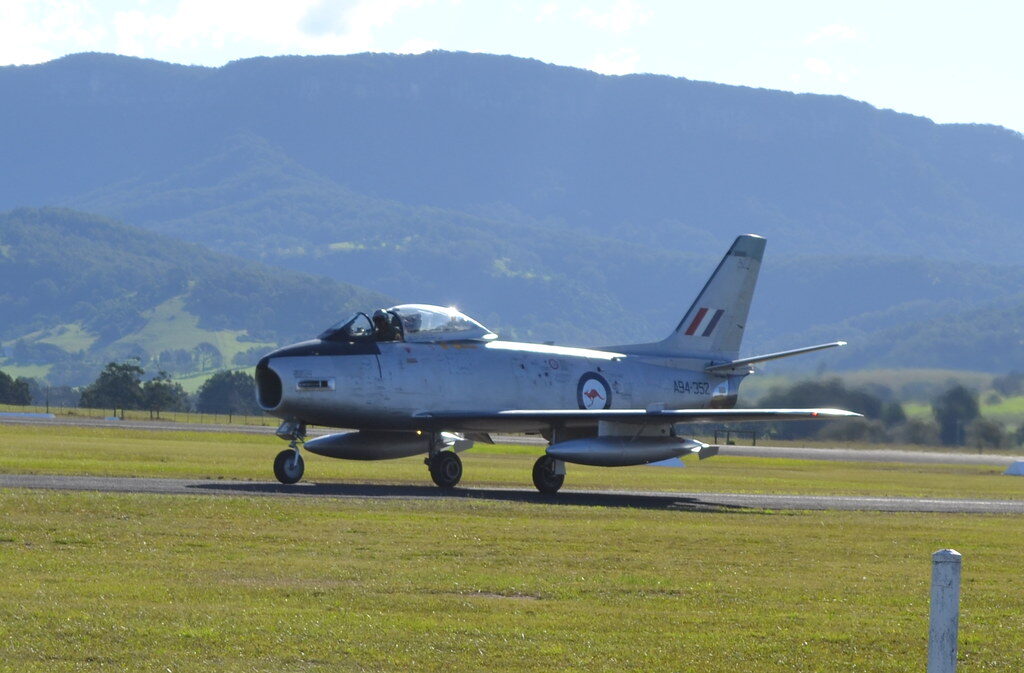
13. F-86 Sabre
The North American F-86 Sabre was the first American jet fighter to enter service. Coming to service in 1949, the F-86 Sabre first saw the combat action during the Korean War. Famed for its role in the air-to-air combat engagements in the “MiG Alley”, the F-86 Sabre took on the Soviet MiG-15 in the first major jet duels of the modern warfare.
The Best Features of the F-86 Sabre:
- First jet fighter of the United States Air Force
- Legendary aircraft of the Korean War
- Iconic jet-to-jet combat
- Unmatched pilot training
- Set the standard for future supersonic fighters
During the Korean conflict, the F-86 Sabre established itself as one of the most capable jet fighters of its time. Powered by a high-performance jet engine and a swept-wing design, the F-86 Sabre was extremely agile in dogfights. Combined with the exceptional skills of the American pilots, it allowed the F-86 Sabre to take on the MiG-15, the first jet fighter of the Soviet Union. Moreover, the combat experience gained by the American pilots in the F-86 Sabre during the Korean War translated into their later successes in the Vietnam conflict. Thus, the F-86 Sabre not only saw service in actual combat but also served its purpose in training future generations of fighter pilots.
The F-86 Sabre was an aircraft ahead of its time, which set the course for the future developments of the military aviation. Its design incorporated many advanced technologies that saw their applications in numerous subsequent fighter aircraft. With more than 9000 aircraft built, the F-86 Sabre was one of the most produced jet fighters and a true symbol of the United States’ military power. Apart from being one of the most influential aircraft in the history of the military aviation, the F-86 Sabre served as the model for future supersonic jet fighters.