








Ford GT90: The Story of America’s Quad-Turbo V12 Supercar Concept
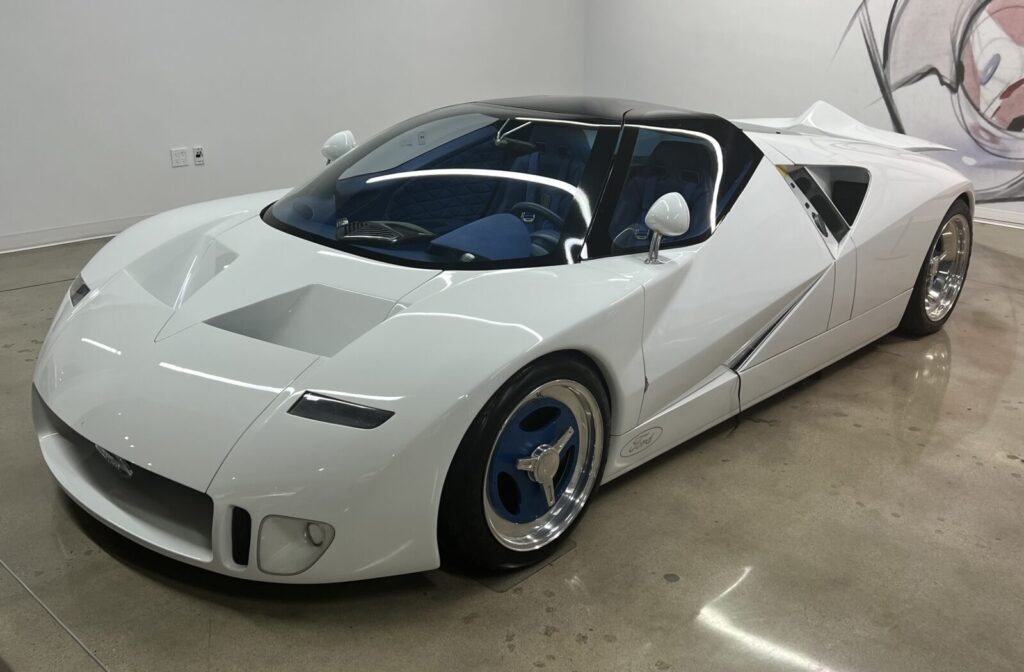
When discussing the most powerful cars of America, one can always name such cars as Mustang, classic V8 muscle cars, or the iconic Ford GT. However, there was a time when Ford built a supercar that made a new level of what American supercars can do. The Ford GT90 was an all-in concept with futuristic design, unusual construction, and impressive quadruple-turbocharged V12 engine. It was never put into production, but the GT90 showed what great things can happen when Ford is given a chance to go for extreme.
Built in secrecy, and produced within only six months, the Ford GT90 premiered in 1995 Detroit Auto Show. The car had a carbon fiber and aluminum body, chassis of Jaguar XJ220, and 5.9-liter V12 engine with reported 720 horsepower and top speed over 250 mph. However, the prototype was not allowed to prove itself. Therefore, the story of the Ford GT90 is the story of a car that can give many ideas and answers.
1. Ford GT90 Was America’s Wildest Supercar Concept
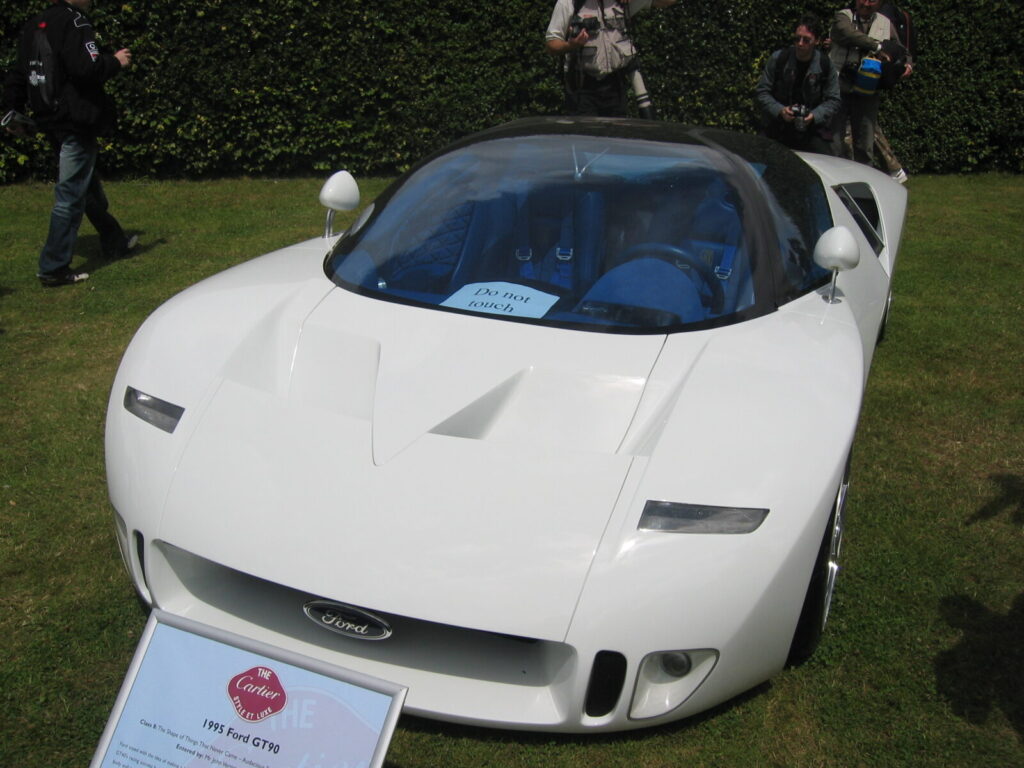
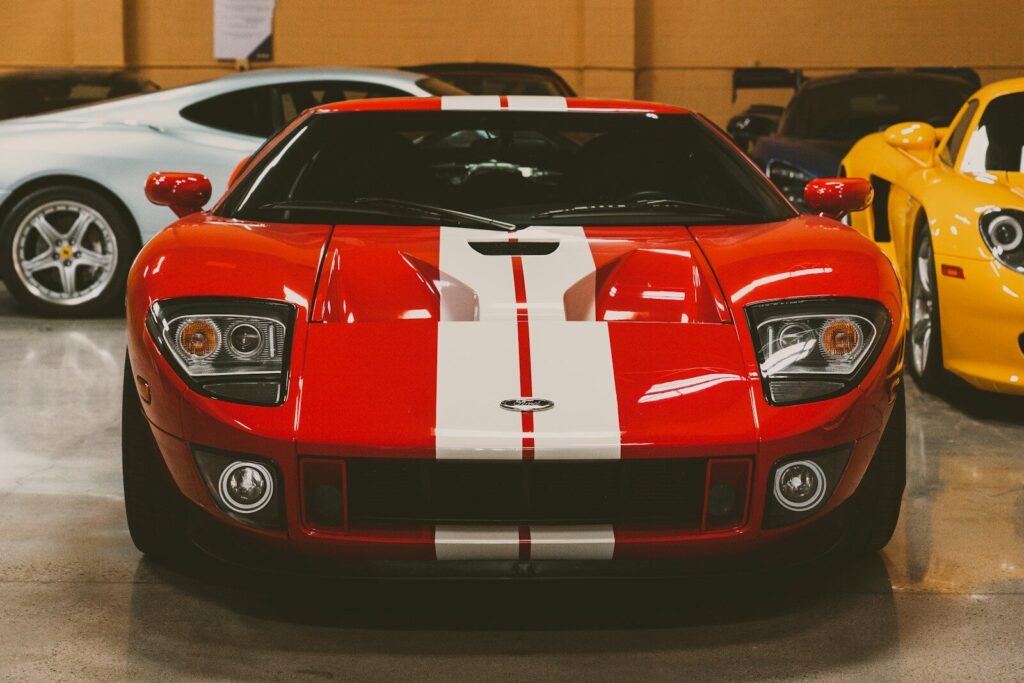
When discussing the best performance cars made in America, the name of Ford GT comes up along with the likes of Mustang and other V8 performance cars. The supercar line of the Ford GT models ranks among the most beautiful exotics that have ever been thought of. Although the Ford GT of the 2000s is known for its supercharged V8 engine and GT40 styling, there is another beautiful car that can be found in the history of Ford Motor Company. The Ford GT90 was an example of a fully developed concept that demonstrated the potential of American performance on another level.
The GT90’s Biggest Claims:
- America’s extreme supercar concept
- Fully developed and drivable
- Inspired by legendary Ford GT
- Never reached production
- Built for extreme performance
Introduced at the Detroit Auto Show in 1995, the GT90 was a shock for the whole automobile world. It was secretly developed and produced within six months only; its unique, space vehicle look made it an outstanding prototype compared to all others. The GT90 demonstrated that the company was capable of competing with the fastest cars in the world. Completely designed and ready to drive, the GT90 became one of the greatest achievements of Ford during the 1990s.
2. The GT90 Introduced Ford’s New Edge Design Language
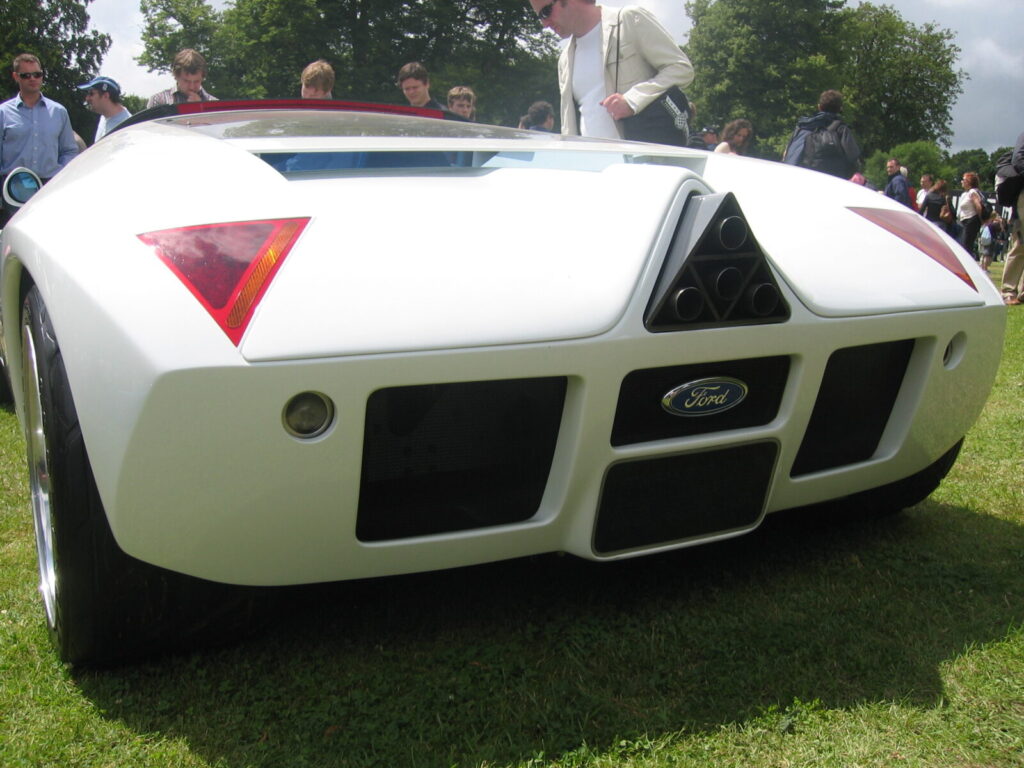
The exterior of the GT90 became one of the best interpretations of the Ford’s New Edge design philosophy. With its low profile, aggressive shapes, aerodynamic vents, and wedge-shaped lines, it appeared futuristic, like a character from a computer game. In terms of roof and overall pose, it resembled the GT40, but that’s all that was similar about them. Instead of just copying the old car, Ford took the classic proportions and added a visual shock factor to them. Decades have passed, and the GT90 is still eye-catching; it conveys speed even before it moves.
Design Features That Stood Out:
- Sharp low-slung bodywork
- Dramatic wedge-shaped proportions
- Aggressive exterior vents
- Razor-sharp design lines
- Subtle GT40 references
GT90’s design was all about the ambition of Ford, where the combination of new technologies and extreme speed were incorporated along with a heritage of GT40’s performance. Even though the roof and overall stance carried these references in the form of heritage, the entire exterior gave a hint of the future ahead. Rather than going back in time, Ford created a completely new language of its own which was completely different from that of the conventional performance car designs of America and even exotic cars of Europe.
3. Carbon Fiber, Aluminum, and Space Shuttle Heat Shields
The GT90 was no less daring in its construction, utilizing carbon fiber and aluminum due to its exceptional performance. Still, the engine produced a great amount of heat that could damage the body elements. For this reason, the designers had to create heat shields for the car in the same way as they did for space shuttles. It is clear that the GT90 was far from being a normal concept car as it demanded the solution of some problems from the engineers instead of just designing a vehicle.
Advanced Construction Defined GT90:
- Carbon fiber formed the body
- Aluminum supported the construction
- Engine temperatures created challenges
- Space shuttle heat shields helped
- Endurance racer inspired construction
GT90 design took into account all the peculiarities of such an advanced engineering project. The use of carbon fiber and aluminum body made for a very lightweight platform, but the great power of the engine and the heat generated from it were a big challenge. To solve it, engineers applied heat shielding techniques that are used in space shuttles. It is another evidence of the special conditions under which GT90 was designed, because all components had to be able to work in such an extreme environment.
4. Jaguar XJ220 Underpinnings Helped Ford Build It Quickly
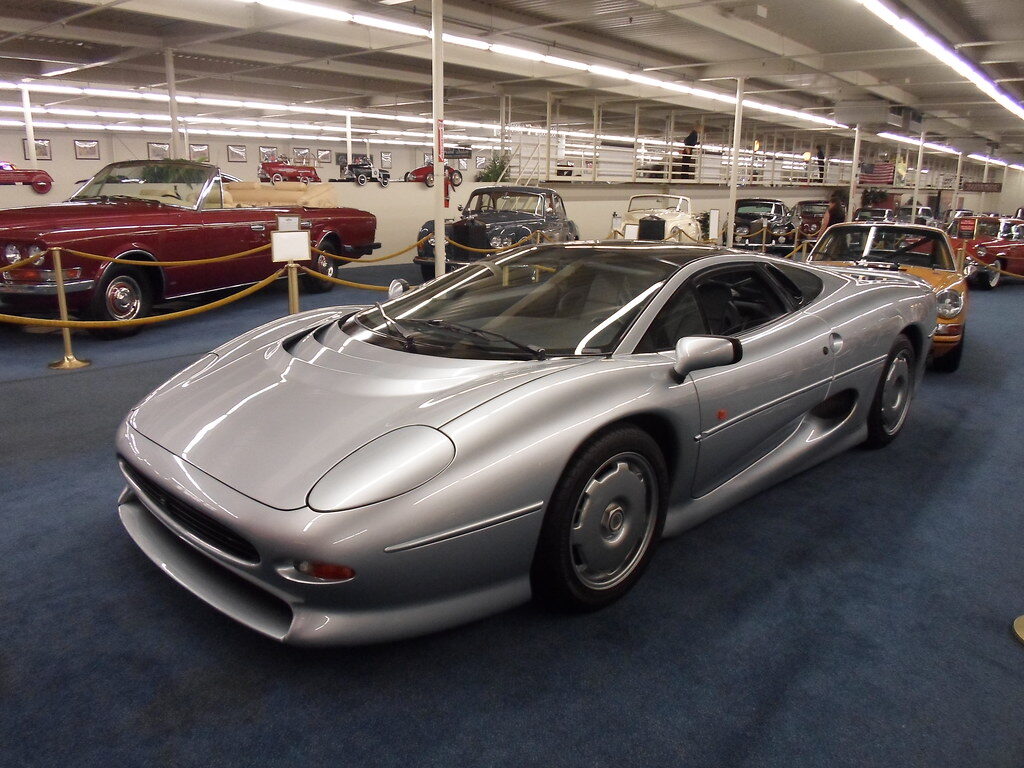
With the need to create the GT90 in only six months, it would be necessary for the engineers at Ford not to waste any time in unnecessary developments. The reason behind this is the fact that Jaguar was at that time owned by Ford, meaning that the engineers decided to use the chassis structure and the transmission system of the Jaguar XJ220 instead of developing their own. Not only did this save a great deal of time but also provided a reliable basis for the mechanics, considering the fact that the Jaguar XJ220 was one of the fastest vehicles of that period.
Jaguar Supplied Important Foundations:
- XJ220 chassis foundation borrowed
- XJ220 transmission was directly used
- Proven underpinnings saved development
- Six-month construction demanded efficiency
- Jaguar added engineering credibility
The use of Jaguar parts proved that the GT90 program was practical. Even though the vehicle had its own special look and design, Ford used the chassis and the transmission system from the XJ220 for the same purpose of saving time and money by concentrating on the special aspects of the GT90. The most important thing about the parts was that they could be easily adapted to the new chassis in just six months.
5. Ford Created a Quad-Turbocharged 5.9-Liter V12
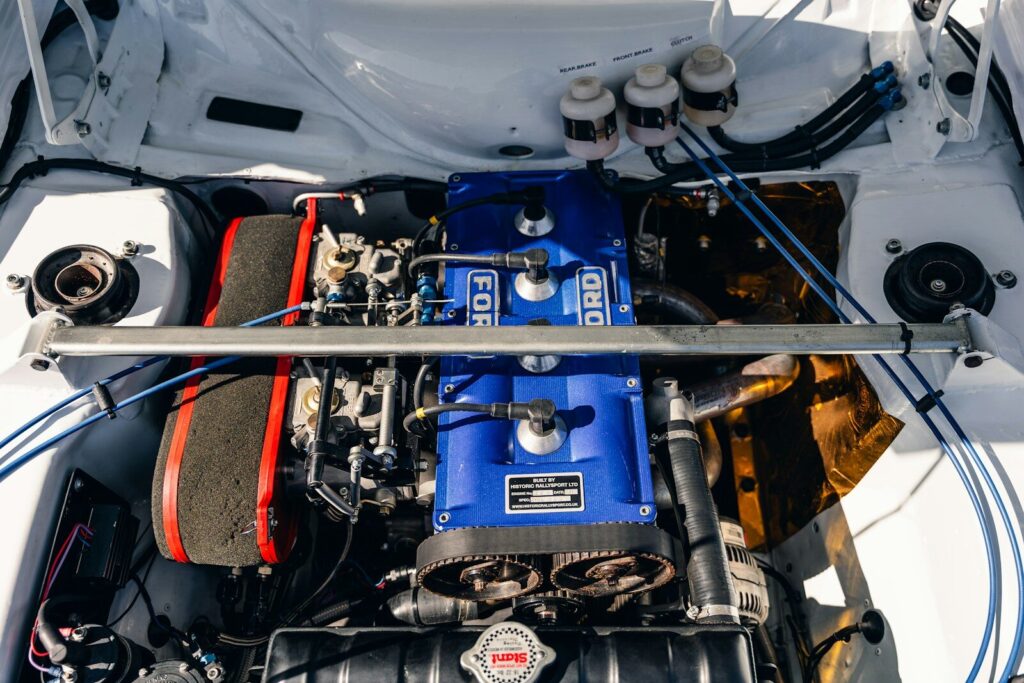
The heart of the GT90 was its unique quad-turbocharged V12 engine. Rather than modifying an existing engine, Ford developed a new 5.9-liter powerplant specifically for the flagship project. It started with the modular 4.6-liter V8 architecture, which engineers extended by adding cylinders to create a V12, then equipped it with four turbochargers. At the time, the only other car with a quad-turbo setup was the Bugatti EB110, highlighting Ford’s ambition to compete with the world’s most extreme performance cars. The decision to create an entirely new powertrain showed just how serious the GT90 project was.
GT90’s Engine Was Extraordinary:
- New 5.9-liter V12 engine
- Based on modular V8
- Block was significantly extended
- Four turbochargers added
- Bugatti EB110 also used four
The GT90’s engine design was influenced by Ford’s existing technology. Engineers used the modular 4.6-liter V8 architecture as a base and expanded it into a 5.9-liter V12 with additional cylinders. Four turbochargers pushed the project further, making the setup exceptionally rare at the time, with the Bugatti EB110 being the only other car to use it. This placed the GT90 among an elite group of performance cars even before production. Its unique architecture and quad-turbo system became the core of the engineering effort to create an American supercar capable of competing with Europe’s most celebrated exotics.
6. A Lincoln Town Car Was Used To Test The Monster Drivetrain
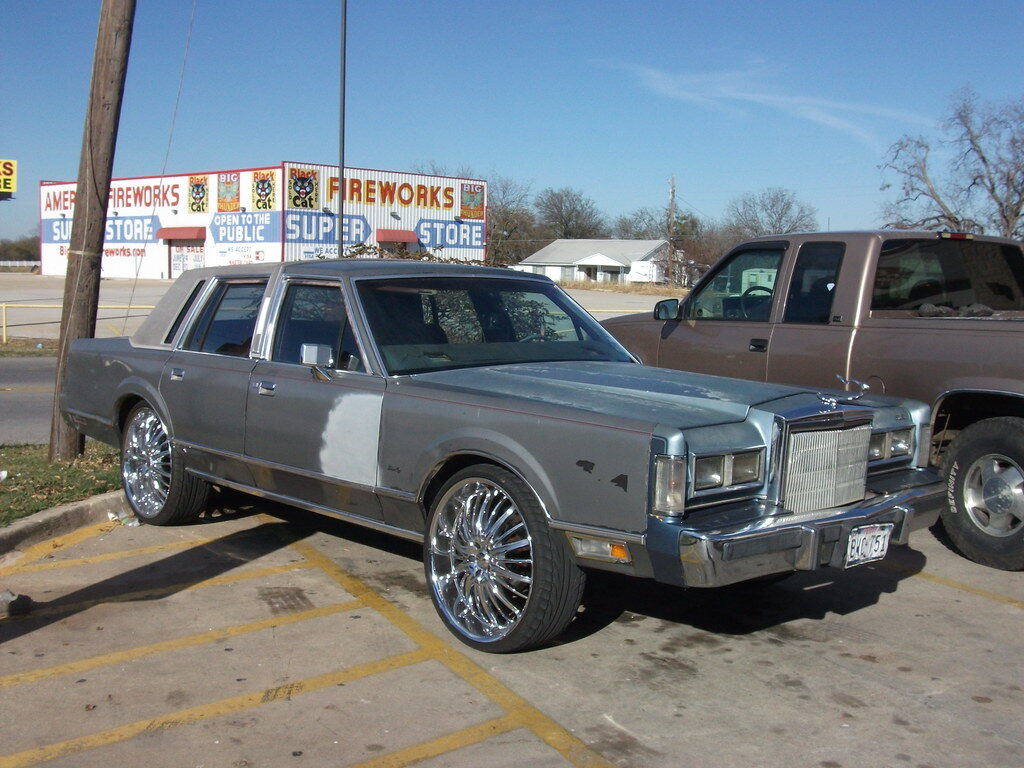
Before the final GT90 prototype was ready, Ford engineers needed a way to test its unique drivetrain. They chose an unusual test mule a large Lincoln Town Car sedan. Although fitting a quad-turbo V12 into a luxury sedan seemed absurd, the Town Car allowed engineers to develop and test the engine and drivetrain before installing them in the GT90. This approach helped identify potential problems early without risking the completed supercar prototype.
The Town Car Test Mule:
- Lincoln Town Car became testbed
- Quad-turbo V12 powered testing
- Luxury sedan carried prototype drivetrain
- Engineers sorted drivetrain problems
- Testing preceded GT90 completion
The use of the Town Car demonstrated the extent to which Ford was willing to go in order to develop the GT90 in the limited time. The test mule provided the engineers with the running platform for the testing and development of the new drivetrain before the GT90 was ready. Such approach was especially valuable in case of GT90 engine, as it was a completely new and unique 5.9-liter V12 engine with four turbochargers. The engineers used the Town Car as the platform to sort out the system before its installation into the GT90 prototype. The idea of installing the quadruple turbo engine into a luxurious liner may seem absurd, but the test was successful. As a result, the unique test mule became an integral part of the GT90 story.
7. The GT90 Claimed 720 Horsepower and Over 250 MPH
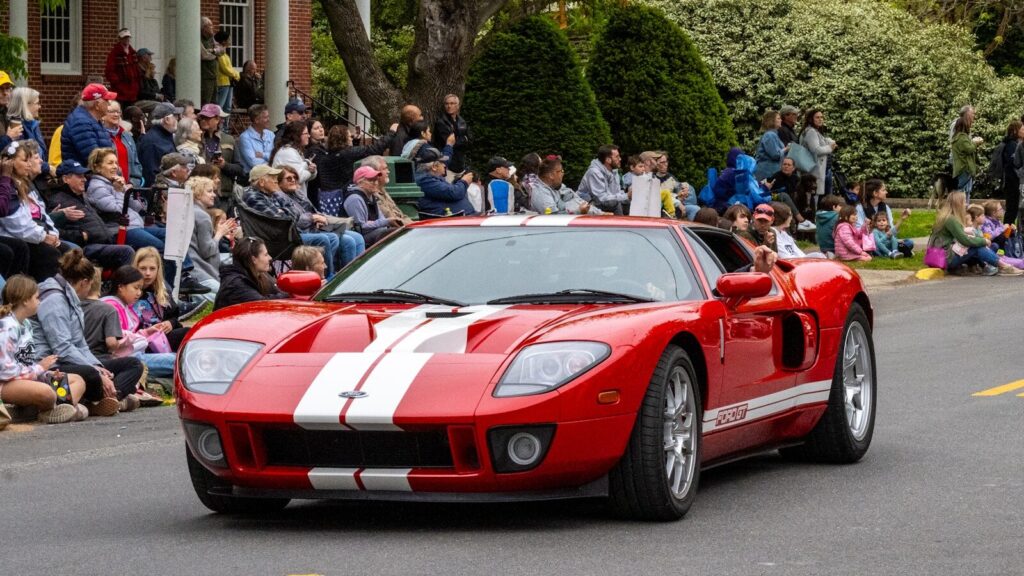
Ford claimed the GT90’s quad-turbo 5.9-liter V12 produced 720 horsepower and 660 lb-ft of torque, enabling a 0-to-60-mph time of 3.1 seconds and a top speed exceeding 250 mph. These figures seemed almost unbelievable in 1995, putting the GT90 in competition with the McLaren F1, Ferrari F50, Bugatti EB110, and Jaguar XJ220. Its powerful drivetrain, mid-engine layout, and projected top speed made it one of the era’s most ambitious performance concepts. Ford also planned early computer systems and radar-assisted braking, making the GT90, at least on paper, capable of becoming one of the world’s fastest cars.
Performance Figures Were Astonishing:
- 720 horsepower was claimed
- 660 lb-ft of torque
- 3.1-second zero-to-sixty sprint
- Top speed exceeded 250 mph
- Radar-assisted braking was planned
The GT90’s performance figures placed it in a league that seemed almost unbelievable for its time. Its projected 250+ mph top speed and 3.1-second sprint showed how seriously Ford approached speed, while planned computer systems and radar-assisted braking added futuristic technology. However, these figures were claims and projections rather than results from production-car testing. Although the GT90 was an operational prototype, its full performance potential remained unexplored, especially when journalists later received the opportunity to drive it.
8. Ford Never Let Journalists Experience Full GT90 Power
Despite its incredible performance claims, the GT90 never demonstrated its full power on a track. When journalists were allowed to drive the prototype, engineers locked the wastegates to prevent the four turbochargers from producing maximum boost. They were unsure whether the prototype and chassis could safely handle the claimed 720 horsepower. As a result, journalists never experienced the GT90’s full power. This created an enduring mystery around its true potential, as the claimed 3.1-second sprint and 250+ mph top speed were never proven under unrestricted testing.
The GT90’s Biggest Mystery:
- Full boost was never demonstrated
- Wastegates were locked wide
- Chassis safety remained uncertain
- Journalists experienced limited performance
- True ceiling remains unknown
The decision to limit the GT90’s power highlighted the difference between creating extreme performance and safely demonstrating it. Although the prototype was designed for 720 horsepower, its chassis was not ready to handle the full output, so engineers locked the wastegates to prevent maximum turbo boost. Journalists therefore never experienced the car at full power, leaving its impressive performance figures unproven. With its powerful engine, futuristic design, and claimed supercar performance, the GT90 became an enduring mystery in automotive history.
9. Financial Reality and Corporate Politics Killed Production
The GT90 ultimately faced problems that had little to do with engineering. Producing such a car in the mid-1990s would have cost Ford a fortune, making profitable sales difficult. Ford also owned Aston Martin, meaning a Blue Oval flagship supercar could have created internal competition. These factors ruled out production. Had Ford built even a limited run, the GT90’s estimated 250-mph top speed could have made it dominant for years, potentially competing with later cars like the SSC Ultimate Aero and Bugatti Veyron. While America had contenders such as the Saleen S7, the GT90 had the pedigree and performance to stand above them. Its biggest challenge was turning the extraordinary machine into a profitable production car.
Why Production Never Happened:
- Exotic production would cost heavily
- Profitable sales seemed unlikely
- Aston Martin created internal competition
- Limited production remained financially difficult
- GT90 could have dominated performance
The GT90 was ultimately a victim of the harsh realities of extreme supercars. While Ford proved it could build a phenomenal machine, turning it into a commercially viable product was far more difficult. Its high production cost and limited potential market, combined with Ford’s relationship with Aston Martin, kept the GT90 from becoming more than a concept. However, its performance potential remained impressive. A limited-production GT90 capable of around 250 mph could have dominated its competition for years. Compared with American contenders like the Saleen S7, the GT90 had the engineering, Ford pedigree, and power to challenge the world’s exotic supercars.
10. The GT90 Survived and Became Part of Ford’s Forgotten Supercar Era
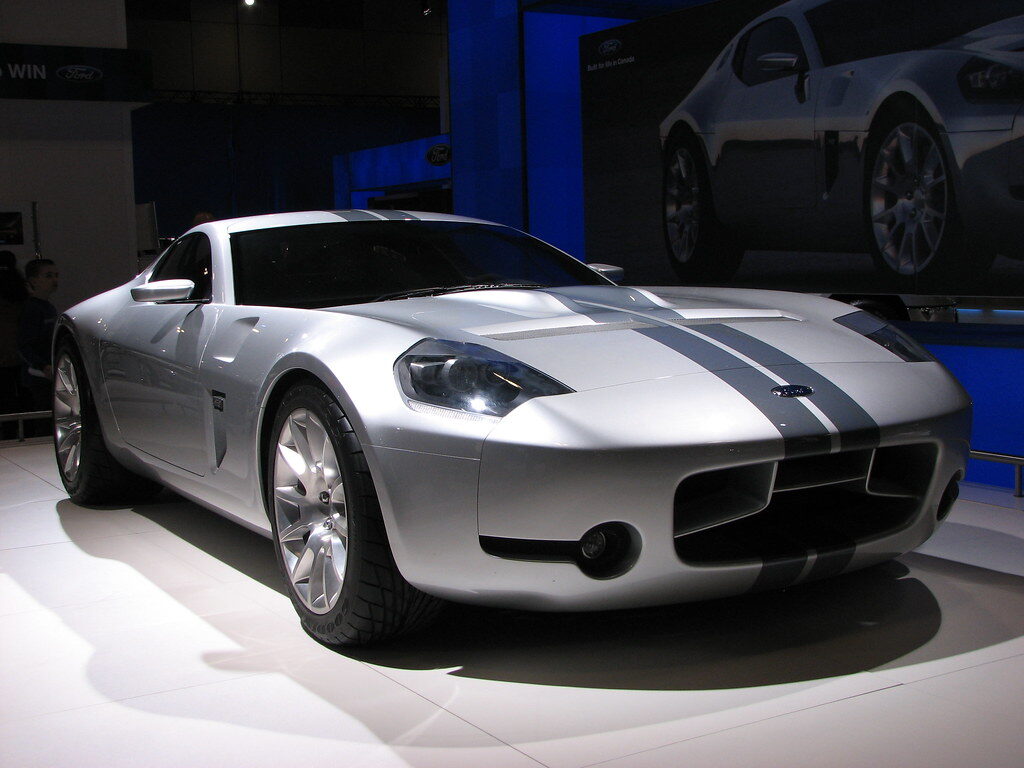
Unlike many concept cars that are destroyed or forgotten in corporate storage, the GT90 found a quiet life after its conceptual debut. It now resides at the Hajek Motorsports Museum in Ames, Oklahoma, where owner Brent Hajek keeps it in working condition. The rural setting, with fewer than 200 residents, contrasts sharply with the futuristic supercar, which still attracts automotive websites for videos and features. The GT90 was part of Ford’s 1990s experimentation, alongside concepts like the Ford Indigo, featuring V12 power based on the Duratec V6 and a carbon-fiber tub developed with Reynard Motorsport, and the Shelby GR-1, inspired by the Shelby Daytona Coupe and powered by a V10 based on the modular V8 architecture.
Ford’s Forgotten Concept Supercars:
- GT90 remains in running condition
- Indigo featured V12 power
- GR-1 carried V10 power
- GR-1 inspired by Daytona Coupe
- Superformance continues the dream
Ford’s 1990s supercar era continued beyond the GT90 with the Ford Indigo and Shelby GR-1. The Indigo featured V12 power based on the Duratec V6 and a carbon-fiber tub developed with Reynard Motorsport, while its IndyCar-inspired design made it memorable, especially through Need for Speed 2. The Shelby GR-1 used a V10 based on the GT90’s modular V8 architecture and was arguably the most production-ready of the three concepts. Although Ford never built it, the supercar dream continues through Superformance’s 750+ horsepower Ford drivetrain projects.


