Toyota Compact Land Cruiser FJ Brings Affordable Off-Road Utility to Global Markets
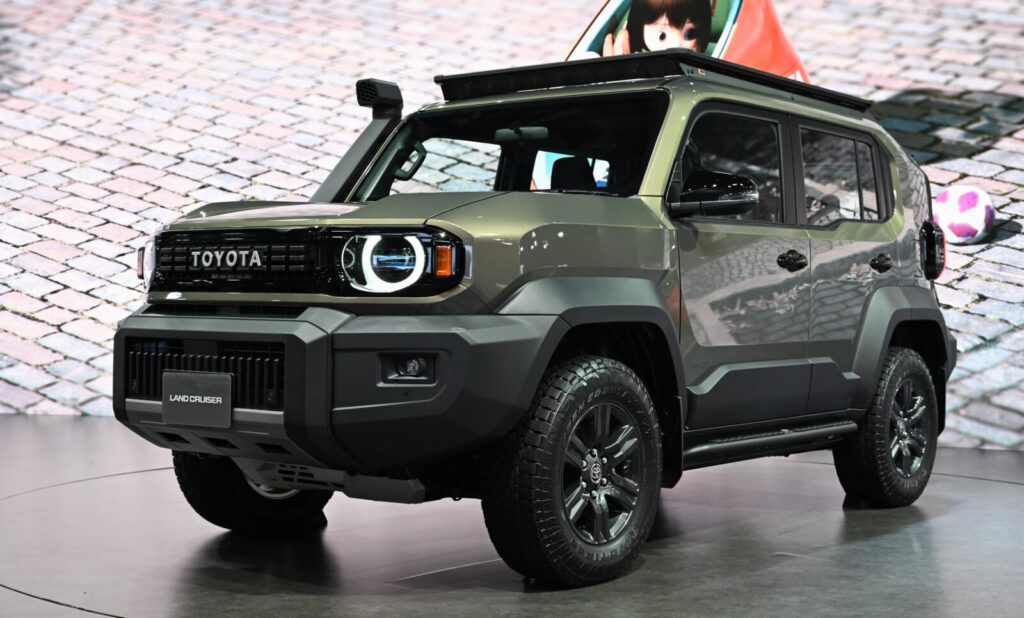
Now, the famous Land Cruiser range is about to receive a new member, which will be a small Land Cruiser intended for those customers who desire an off-road performance yet do not wish to have a large expensive car. The new Land Cruiser FJ will likely become the smallest four-door model within Toyota’s famous Land Cruiser series. Early information states that the price tag of the FJ might be approximately $25,000, thus making Toyota’s well-known off-road performance available to more customers. At first, the compact off-roader was unveiled during the 2023 teaser showing the FJ in comparison with the 70, 250, and 300 Series.
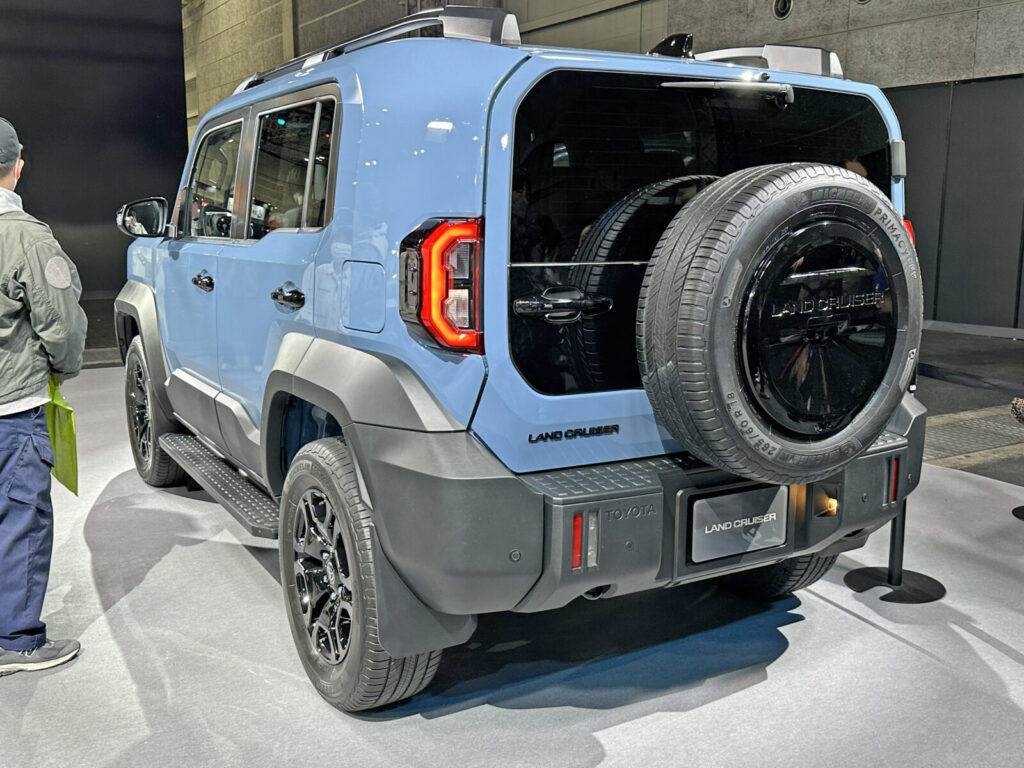
In general, the exterior of the FJ is classic, but there are some elements such as LED headlights, high ground clearance, robust tires, and a spare rear-mounted wheel. However, one should note that the compact off-roader preserves its ladder frame and four-wheel drive instead of becoming yet another crossover based on a passenger car. In this case, the IMV platform, reliable 2.7-liter engine, and the classic mechanics help in creating a durable and rather cheap model. Already under production in Thailand and having started to accept orders in Japan, the small Land Cruiser will launch a new page in Toyota’s rich off-road history.
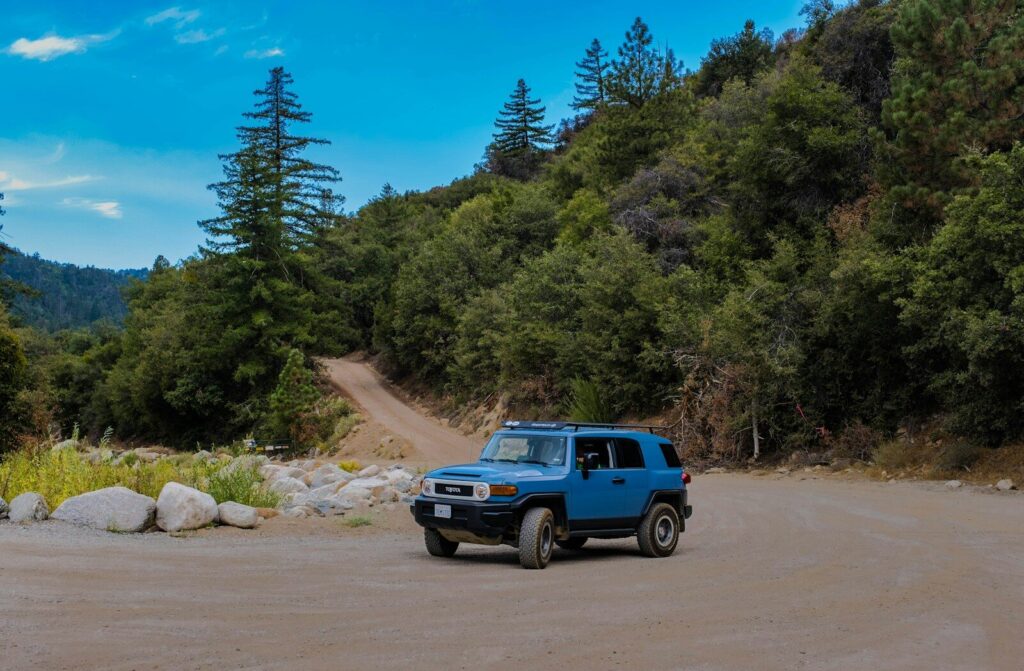
1. Toyota Land Cruiser FJ Brings Affordable Off-Road Utility
The Toyota company is set to introduce its legendary off-road badge with an affordable new product offering. This time, the FJ model will be the smallest four-door version to wear this iconic badge. The initial pricing for this model is expected to start at about $25,000, thus providing a model that is available at just half the price of the big off-roaders from Toyota. Toyota initially introduced the concept of a smaller off-roader in 2023, showcasing it with the 70 Series, 250 Series, and 300 Series.
Land Cruiser FJ At A Glance:
- Smallest four-door Land Cruiser
- Around $25,000 starting price
- Real trail capability promised
- Production began in Thailand
- Japan reservations already opened
Production has officially commenced in Thailand, and booking has been made available for customers from Japan. Fitted with a squared jaw and off-road proportions, the FJ is meant to be a reflection of the adventurous cars of the past. The small size makes the car suitable for Toyota to introduce Land Cruiser functionality to customers who might not want the large off-road vehicle.
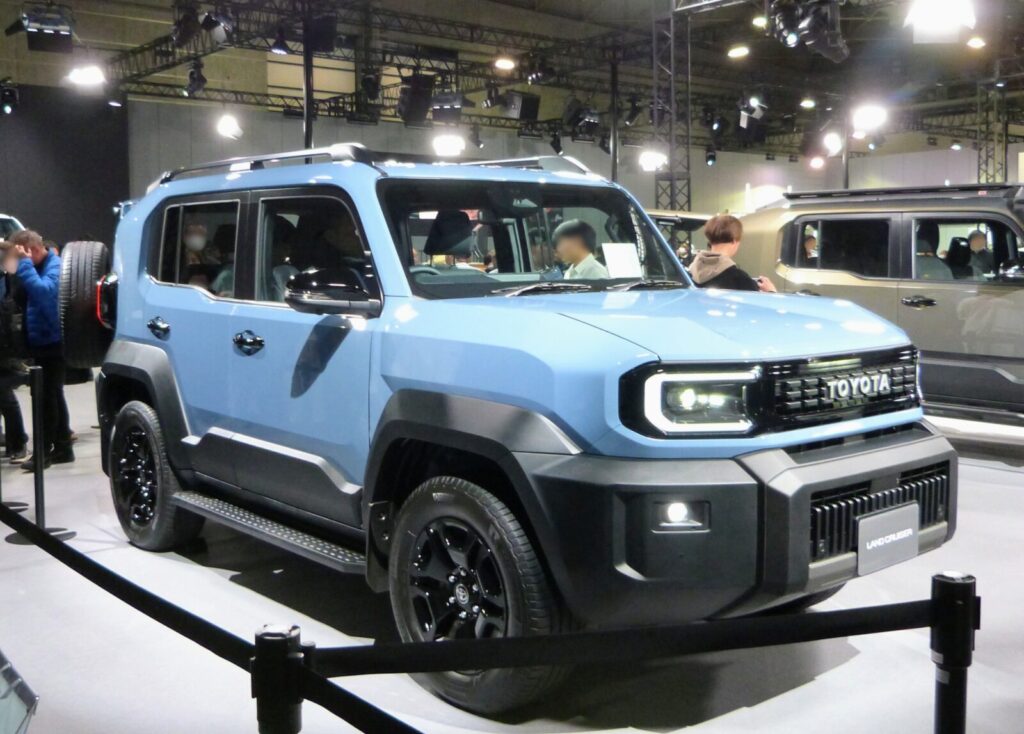
2. Heritage-Inspired Styling Gives The FJ A Rugged Look
The styling of the Land Cruiser FJ is largely taken from the 2021 Toyota Compact Cruiser EV Concept vehicle. The design includes upright and boxy proportions, contemporary lighting elements including LEDs, high ground clearance, and tough tires. On the back end of the vehicle, there is a flat tailgate with a wheel mounted on a door for additional functionality.
Key Styling Features:
- Inspired by Compact Cruiser
- Upright boxy exterior design
- Modern LED lighting accents
- Generous ground clearance
- Rear-mounted spare wheel
The design of the FJ incorporates contemporary elements with classic off-roading proportions. Its upright design gives it an aggressive look, and its tough tires and high clearance definitely convey its intended functionality. The flat rear and exterior spare tire add to the practical feel. Instead of taking the route that many other compact crossover SUVs take, Toyota has given the FJ a more classic adventure vehicle style.
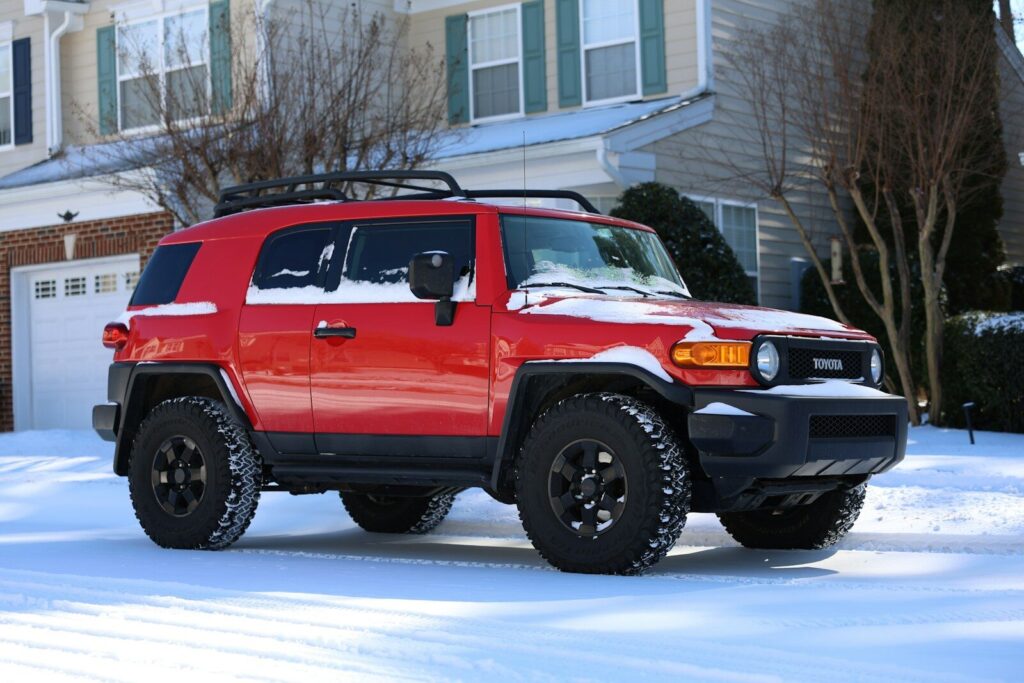
3. Compact Dimensions Make The FJ Easy To Handle
The Land Cruiser FJ has a length of about 180.1 inches, which equals approximately 4,500 mm. This SUV is 1,830 mm wide and 1,850 mm tall, with a wheelbase of 2,750 mm. Compared to a Corolla Cross, it is a bit larger in size; however, unlike a RAV4 and the Land Cruiser 250 from North America, it is significantly smaller. Such dimensions will likely make it easier for the FJ to move around both in cities and on wilderness trails.
FJ Dimensions At A Glance:
- Length reaches 4,500 mm
- Width measures 1,830 mm
- Height reaches 1,850 mm
- Wheelbase measures 2,750 mm
- Smaller than Land Cruiser 250
Compared to the Ford Bronco Sport with its 4,387 mm length, the FJ offers a bit more longitudinal space while remaining a car with an upright stance. This layout ensures great visibility ahead of the hood, as well as comfortable seats. Therefore, drivers can have the commanding view typical of SUVs and yet avoid bulky parking issues of bigger off-road vehicles.

4. Toyota Keeps A True Ladder-Frame Chassis
One of the main design decisions of the FJ is its true ladder frame chassis. As opposed to other modern compact crossovers that typically use the car-based unibody construction, the FJ retains a body-on-frame design. It allows for achieving necessary rigidity and durability for tough off-road conditions. At the same time, such design choice emphasizes the FJ’s separation from regular compact crossovers.
Chassis Engineering Highlights:
- True ladder-frame chassis retained
- Body-on-frame construction used
- Structural rigidity supports trails
- Durability remains a priority
- Unibody approach was avoided
The FJ uses Toyota’s tried-and-tested IMV platform, more precisely, the IMV 0 architecture that is used in the Hilux Champ and Rangga pickups. Apart from that, the IMV platform supports such popular Toyota products as the Hilux, Fortuner, and Innova. Notably, the FJ does not use the complicated TNGA-F platform used for the Land Cruiser 250 and 300 Series
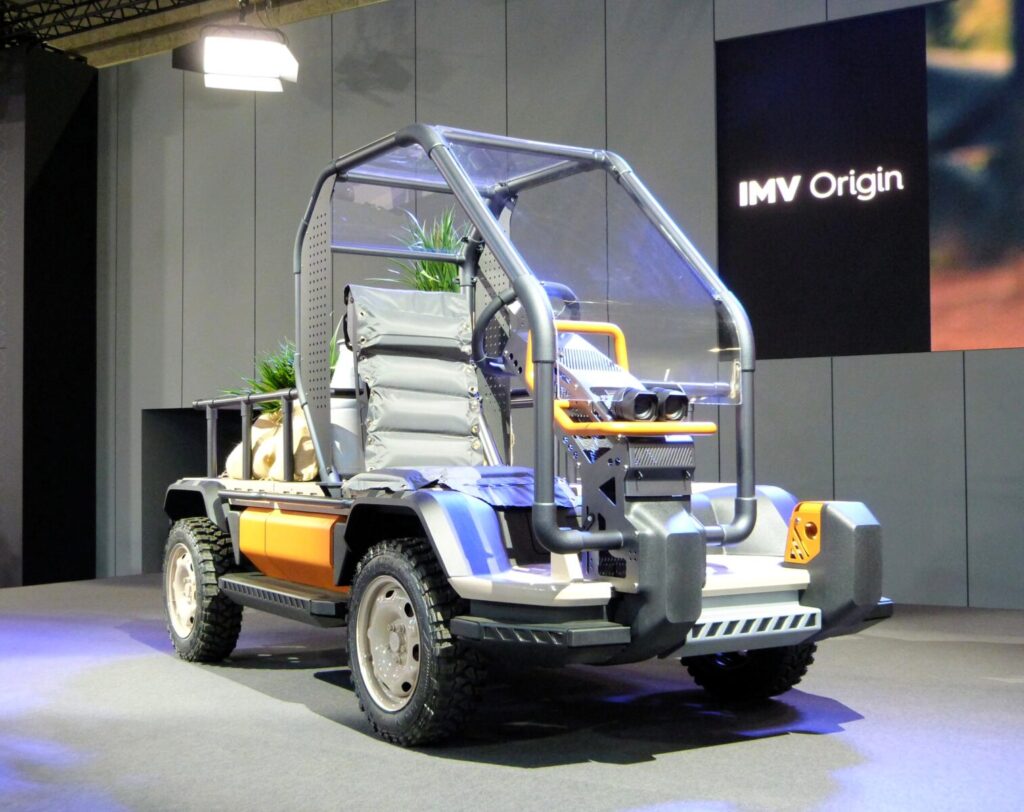
5. The Proven IMV Platform Keeps Costs Manageable
Toyota engineers have been constantly developing the IMV platform for about two decades, which gave it a great reputation for durability and easy maintenance in global markets. The platform also supports some of Toyota’s reliable workhorses – the Hilux pickup, Fortuner SUV, and Innova MPV. For the FJ, the proven foundation helps Toyota provide full-fledged four-wheel-drive system without using TNGA-F platform.
IMV Platform Advantages:
- Platform refined for decades
- Shares Hilux Champ components
- Supports global workhorses
- Manufacturing costs stay manageable
- Reliability remains well established
The mechanical simplicity of the platform also suits the FJ’s purpose. Toyota aims to keep the compact Land Cruiser able to be maintained even in remote locations without losing its toughness. The designers paid attention to chassis tuning to ensure better ride refinement compared to commercial pickup trucks. Thus, the FJ got a practical basis for both daily driving and off-road conditions.

6. A Proven 2.7-Liter Engine Powers The FJ
The initial production version of the car uses a 2.7-liter four-cylinder gasoline engine referred to internally as the 2TR-FE. It has previously served as the base engine for Toyota Tacoma (2004-2023), and now serves as the power plant of the Thai-spec Hilux Champ and some global Land Cruiser Prado variants. The engine generates 161 horsepower and 246 Nm of torque.
FJ Powertrain Essentials:
- 2.7-liter four-cylinder gasoline
- 161 horsepower output
- 246 Nm of torque
- Six-speed automatic transmission
- Proper four-wheel-drive system
In conjunction with the engine, Toyota provides a six-speed automatic transmission and proper four-wheel drive. In contrast to many modern compact crossovers that use continuously variable transmissions (CVT), a traditional six-speed gearbox allows delivering torque predictably while driving up steep hills or moving across unpaved terrain.

7. Serious Trail Hardware Supports Its Off-Road Mission
Toyota provided the Land Cruiser FJ with serious trail equipment from the very beginning. It includes such drivetrain elements as the center differential lock, rear differential lock, and hill-descent control. Additionally, there is a Torsen limited-slip differential that is part of the four-wheel-drive system to ensure even torque distribution to all four wheels. All the mentioned systems allow the compact SUV to handle mud, rocks, and unpaved trails.
Off-Road Hardware Includes:
- Center differential lock included
- Rear differential lock included
- Hill-descent control available
- Torsen limited-slip differential
- Four-wheel-drive system included
Thus, the mentioned equipment proves the FJ’s position as a true off-road vehicle and not just crossover with rugged styling. The locking differentials help to cope with traction problems, while the hill-descent control makes it easier to descend safely down the hill. Hence, Toyota decided to equip the FJ with the necessary mechanical equipment to support its Land Cruiser heritage.
8. Alternative Powertrains Could Expand The FJ Lineup
Despite the fact that the 2.7-liter engine offers great long-term reliability, Toyota may add alternative powertrains to the FJ range depending on market needs. Reports from regions suggest that Toyota once planned hybrid configurations, while several engines belong to the modular portfolio of the company. Among the possible options are 169-horsepower 2.0-liter inline-four of the Corolla Cross and 203-horsepower 2.5-liter four-cylinder of the RAV4.
Possible Future Powertrains:
- Hybrid configurations were considered
- Corolla Cross engine possible
- RAV4 engine could fit
- Prius hybrid setup possible
- Diesel variant could emerge
Another possible option is the 194-horsepower 2.0-liter hybrid setup of the Prius. A diesel version may also appear in some markets due to the connection between the FJ and Hilux family. This would give Toyota additional opportunities to adapt the compact Land Cruiser to regional needs. However, the initial production version of the car will feature the proven 2.7-liter gasoline engine.
9. Affordable Pricing Could Make The FJ A Game Changer
Price is one of the most exciting things regarding the Land Cruiser FJ. According to Japanese publication Best Car, the price range of the car in Japan will reach about ¥4 million to ¥4.5 million. In US dollars, it means roughly $25,000 to $28,500, while according to other estimations, the range may go up to $26,600-$30,000. These prices will likely position the FJ below Toyota’s big Land Cruisers.
FJ Pricing Comparison:
- Japanese estimate starts near ¥4 million
- Expected range reaches ¥4.5 million
- U.S. conversion starts near $25,000
- Land Cruiser 250 costs more
- Land Cruiser 300 costs considerably more
The Land Cruiser 250 in Japan starts from about ¥5.2 million, while the 300 Series costs from about ¥5.25 million to ¥8.2 million. Heavy-duty 70 Series goes for around ¥4.8 million. In the USA, the 2025 Land Cruiser starts from $56,450 or $57,600, depending on the specifications. In case Toyota brings the FJ to North America, the estimates show that the car would start from about $35,000 with top trims costing more than $45,000.
10. Global Availability And Land Cruiser Heritage Shape Its Future
Toyota’s initial strategy of the FJ distribution will involve such regions as East and Southeast Asia, Africa, Middle East, and Latin America, where durable and uncomplicated off-road vehicles are still highly demanded. Manufacturing in Thailand puts the FJ close to those regions. However, there will be difficulties with certification in the USA and Europe, where the IMV platform does not meet necessary safety standards of the former and has high emissions of the latter. Only hybrid versions may be easily distributed in Europe.
The FJ’s Global Road Ahead:
- Thailand production supports rollout
- Asia remains a key market
- U.S. certification creates hurdles
- Europe requires cleaner powertrains
- Hybrid could unlock markets
Land Cruiser nameplate originated in 1951 when Toyota developed military-style, Jeep-like vehicles designated as FJ and BJ models. The name Land Cruiser officially appeared in 1954, while the family developed into three branches of heavy-duty 70 Series, light-duty Prado/250 Series, and luxury 300 Series. Thus, the compact FJ became the fourth branch of Land Cruiser that aims to provide the same ladder-frame utility for less money.