Unpacking the Tesla Model Q: Range, Specs, Pricing, and Next-Gen Platform Details
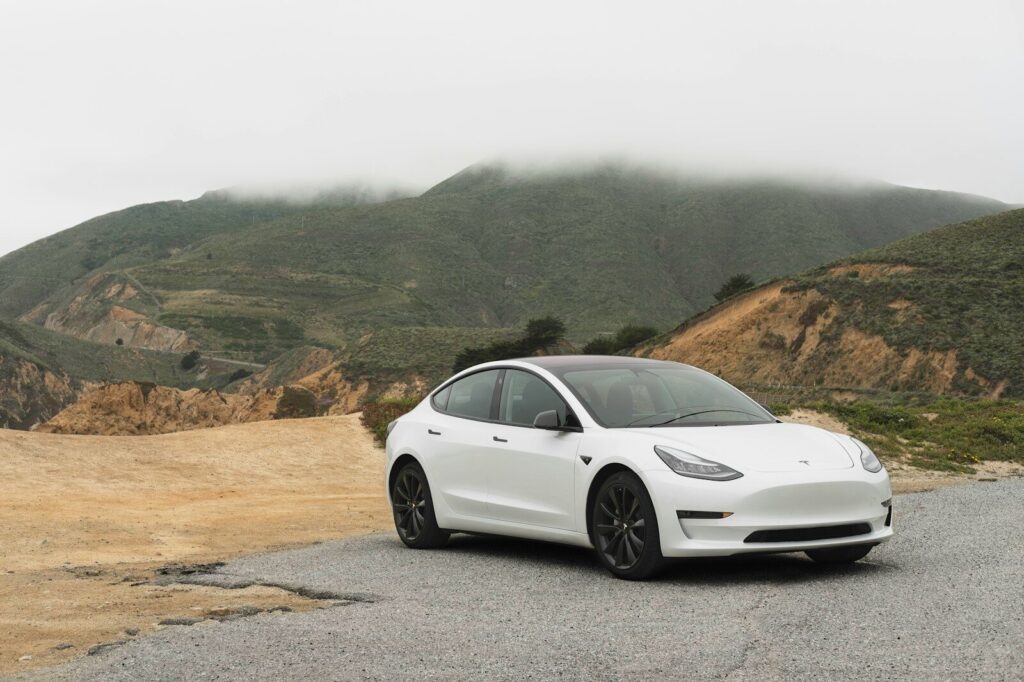
The long-awaited and much-buzzed-about entry-level Tesla is here, but don’t let the cheaper price and smaller size fool you this could be one of the most important new cars in Tesla’s history. For years, a budget Tesla was rumored to be the holy grail of the EV world, and the lesser-known subcompact is now preparing to go on sale in the US. Positioned just below the Model Y, the subcompact EV (commonly known as the Model Q, Model 2, or Redwood project) is said to be low-cost, highly efficient, and top-notch in range for its size. All of that is estimated to start at around $25,000 in the US.
The automotive industry has tracked each and every leak, spy shot, and analyst report related to this potential game-changer. This article discusses the Model Q’s Redwood platform, Unboxed production, design, interior, LFP battery, range, performance, charging, cost, competitors, and international manufacturing plans. Codenamed Redwood, this subcompact hatchback is approximately 15 percent smaller and 30 percent lighter than the current Model 3 sedan, and it is focused mostly on city driving needs. Here’s what the leaks and rumors reveal about the vehicle that might put electric driving on the map.
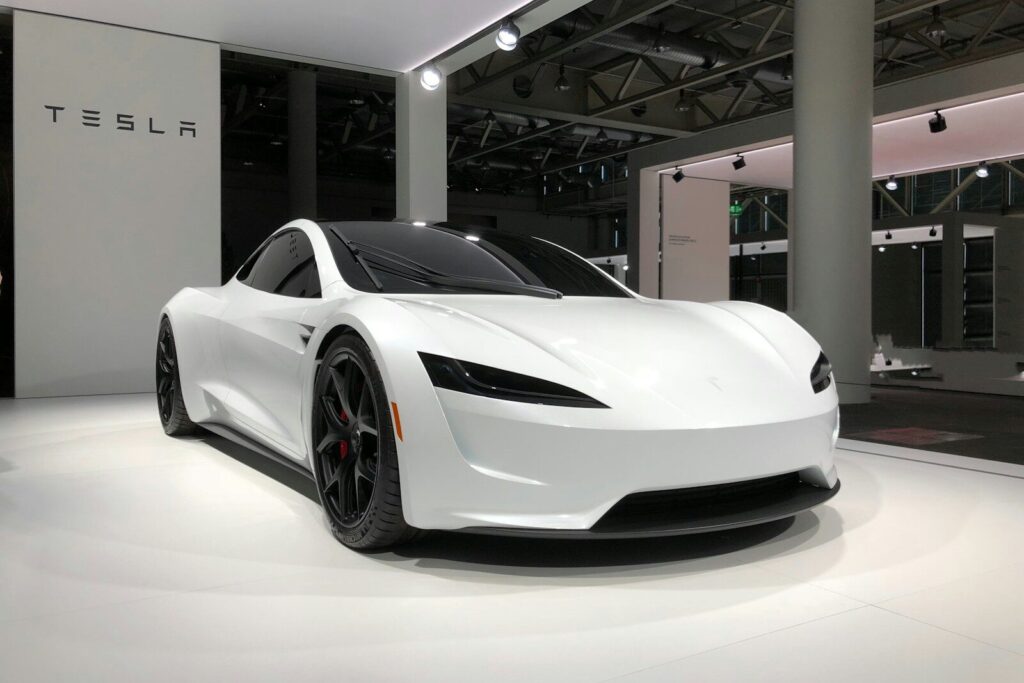
1. Project Redwood: Tesla’s Entry-Level Platform and Strategy
Codename Redwood was intended to be an affordable model that bridged the gap between in-city driveability and commuter utility. Code-named Redwood, the subcompact hatchback body is expected to be approximately 15% smaller and 30% lighter than the existing Model 3 sedan. Built with the primary design purpose to operate as a city vehicle, it has become one of the most attractive lower-cost EV models in development worldwide. During earnings calls, Tesla CEO Elon Musk and other company executives have mentioned the next-gen vehicle platform as one that would significantly increase overall production volume. The goal of this approach is to provide transportation to a wider audience which originally led some to believe that the company might go for a dedicated Robotaxi as opposed to a human-driven hatchback.
Project Redwood Strategy:
- Positioned below the Model Y
- 15% smaller than Model 3
- 30% lighter than Model 3
- Built for urban driving
- Human-driven compact remains central
The strategy allows both consumer vehicles and automaker platforms to take advantage of the engineering scale economies. The platform is designed to increase the overall production volume. Its emphasis on high volume output and emphasis on volume suggests how critical it is to Tesla’s plans. With an estimated starting entry price of around $25,000, the model would significantly lower entry costs in the EV segment. Spy shots and industry leaks have suggested low cost, high efficiency and excellent range for a vehicle of its size, which is why the automotive industry has been closely tracking every bit of its leaks and analyst forecasts, and why the car remains one of Tesla’s most important strategic moves.
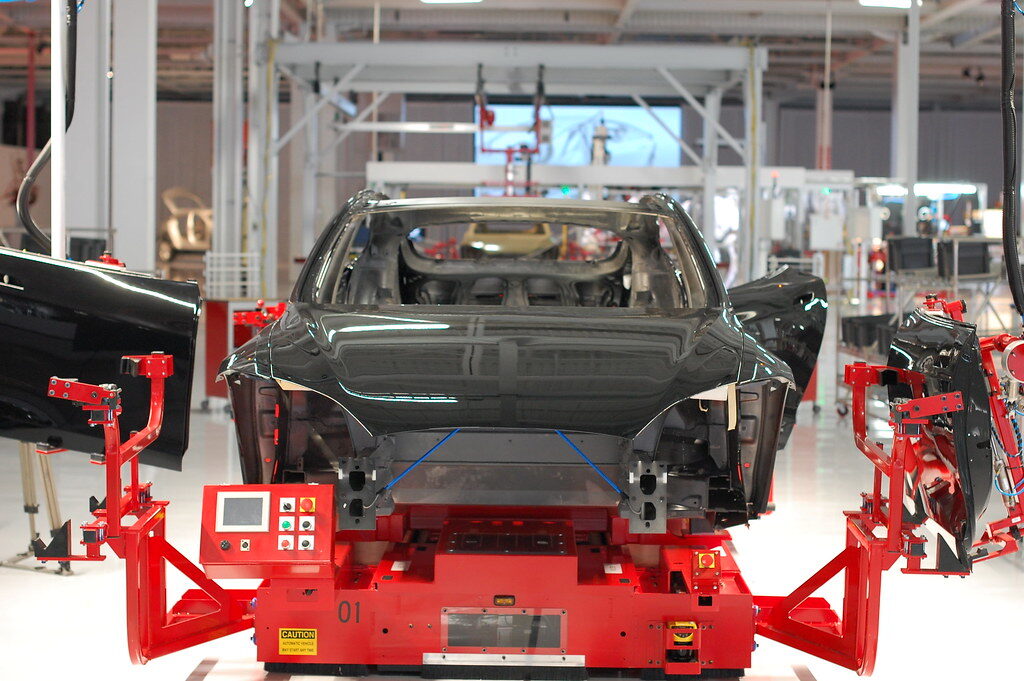
2. The Unboxed Process and Cost-Cutting Manufacturing
Tesla is reinventing automotive manufacturing to reach a ground-breaking price point without sacrificing the bottom line The principal feature of the Model Q plan is the Unboxed Process, a novel manufacturing approach that will be outlined at Tesla’s Investor Day. Instead of pushing a traditional stamped body shell down an assembly line, the unboxed process will carve the vehicle into sub-assemblies, for which workers and robots will simultaneously build portions before uniting them into a single final assembly step. This modular approach will cut down factory floor space and cut production costs by approximately 50 percent, by eliminating duplicated steps in the paint shop and body shop assembly lines so that vehicles can be built faster and at significantly less cost.
Unboxed Process Benefits:
- Vehicle split into sub-assemblies
- Sections built concurrently
- Single final assembly step
- Costs cut by estimated 50%
- Smaller factory floor footprint
Furthermore, the platform integrates a 48V electrical architecture, moving away from legacy 12V automotive systems. This network reduces wiring harness weight, simplifies cable routing, and optimizes power delivery throughout the vehicle’s electronic control modules. By combining the unboxed assembly approach with advanced gigacastings, Tesla streamlines overall platform complexity. Structural die-castings replace hundreds of individual stamped metal parts, significantly lowering structural weight while increasing rigidity. Weight reduction plays a critical role in maintaining high energy efficiency, allowing a smaller battery pack to achieve competitive driving range. This structural efficiency is essential for keeping manufacturing expenses low while delivering the performance characteristics buyers expect from the brand.
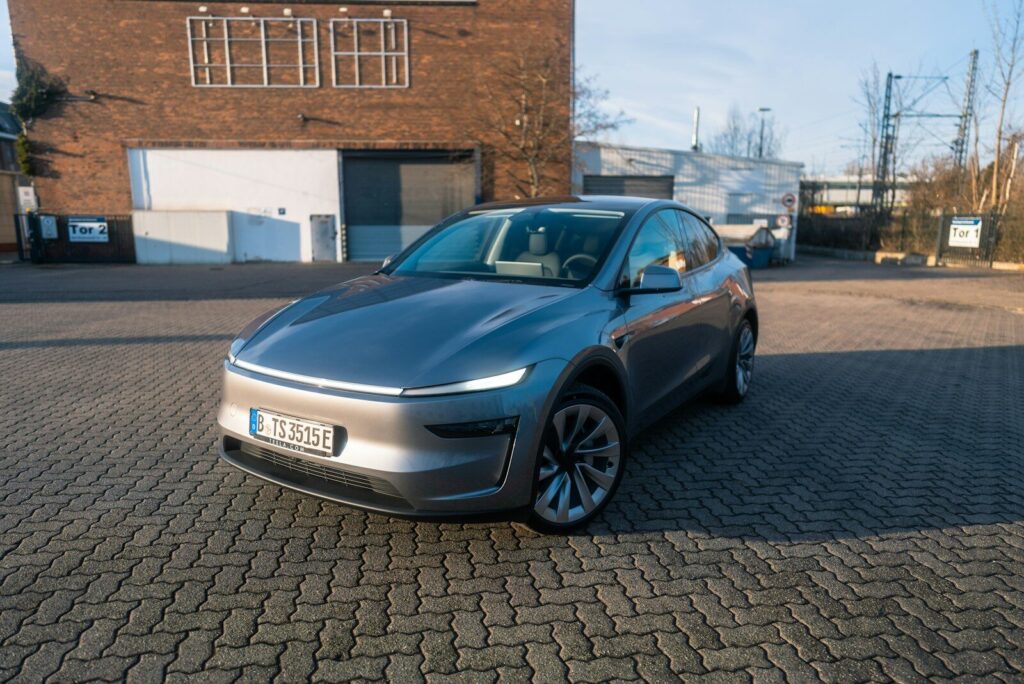
3. Exterior Design, Dimensions and Aerodynamics
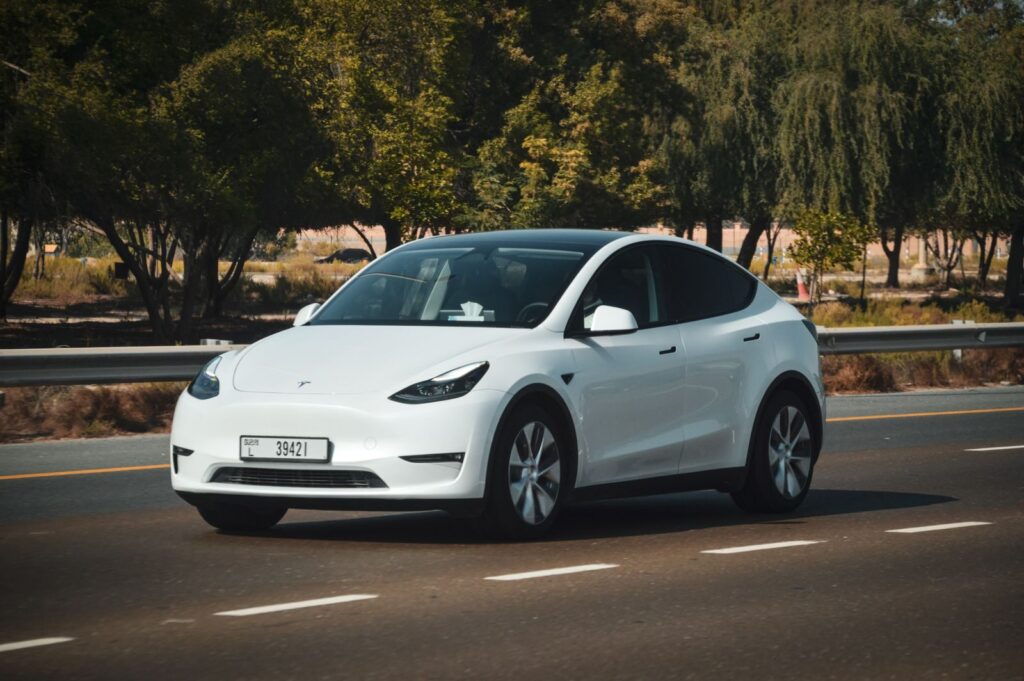
These visual clues from the latest spy shots and teaser paints give us a solid idea of the Model Q’s subcompact hatchback or lifted crossover stance. Length will reportedly be between 172 inches and 176 inches, with a compact 106 to 108-inch wheelbase, which makes for an extremely tight footprint that should make the Model Q a formidable competitor for city dwellers, against the likes of Hyundai Kona Electric and the Volvo EX30. Much like the short wheelbase and large-width proportions, the decreased length and body width makes the new Model Q a perfect fit for city streets and urban parking lots. In terms of styling, the previously spotted test vehicles feature a similar front-end lighting strip to the refreshed Model 3 rather than the Model Y’s LED light bar.
Model Q Design Facts:
- Subcompact hatchback or lifted crossover
- Length 172 to 176 inches
- Wheelbase 106 to 108 inches
- Drag coefficient under 0.21 Cd
- Lighting like refreshed Model 3
The body profile favors a clean, aerodynamic shape targeting a drag coefficient under 0.21 Cd. Achieving such low aerodynamic drag is crucial for maximizing highway efficiency, especially given the vehicle’s compact frontal area. The crossover design combines a lifted ride height with a functional rear hatchback layout to optimize interior utility. Passengers gain easier cabin entry and elevated visibility compared to standard low-slung compact cars. At the rear, the liftback tailgate provides a wide loading aperture for cargo and everyday gear. This practical blend of crossover utility and hatchback agility gives the entry-level EV strong broad-market appeal across diverse regional markets.
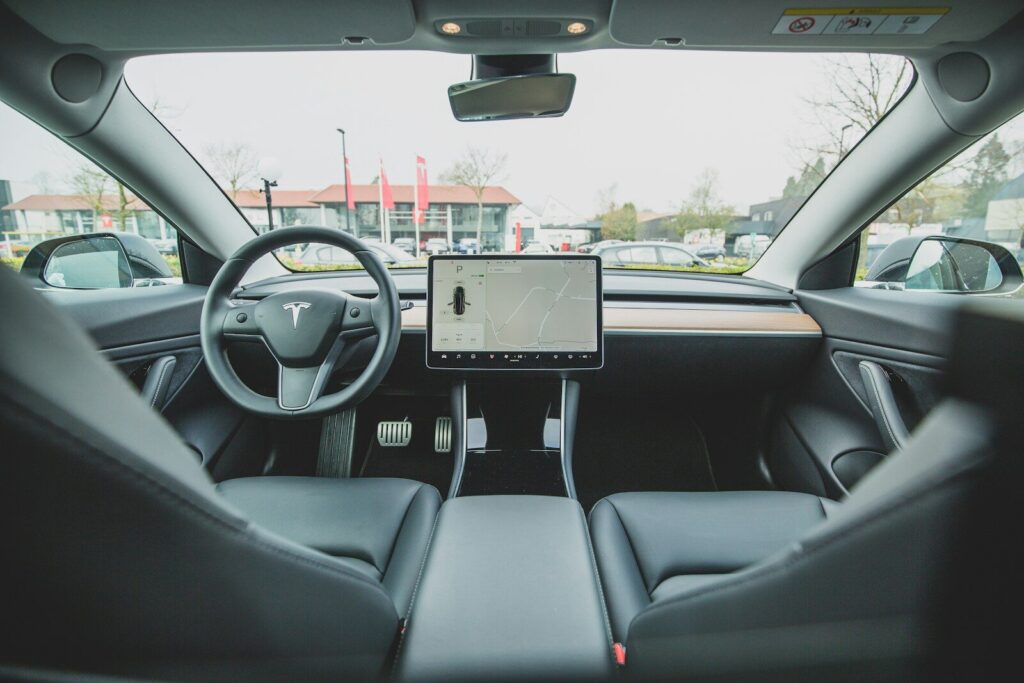
4. A Minimalist Interior with Sustainable Materials
Once inside the Model Q’s cabin, you’ll find that the overall styling follows Tesla’s “ultra-minimalist” design language. The cockpit is centered around the 15-inch or 15.4-inch touchscreen, which takes care of all your infotainment needs, climate controls, and vehicle settings. Beyond the lack of a traditional instrument cluster behind the steering wheel, you will see a cockpit that is stripped-down with fewer interior components and less complexity, which can contribute to reducing the costs of assembling the vehicle. Additionally, in an effort to remain focused on tight cost constraints while appealing to environmentally-minded consumers, the interior can be equipped with upcycled recycled materials to create a futuristic and clean interior appearance.
Model Q Interior Facts:
- 15 to 15.4-inch central touchscreen
- No instrument cluster
- Recycled textile-focused materials
- Seating for up to five
- Flat floor battery architecture
Cabin seating accommodates up to five passengers, providing comfortable legroom and headroom despite the vehicle’s compact exterior dimensions. Front and rear seating layouts are engineered to maximize passenger volume through efficient packaging around the flat floor battery architecture. In terms of cargo capacity, the compact crossover is projected to offer between 22 and 26 cubic feet of storage behind the rear seats. Folding down the second-row seats expands total cargo volume to approximately 50 to 55 cubic feet. Additionally, the front trunk, or frunk, is expected to provide an extra 2 to 3 cubic feet of weather-sealed storage space. This layout ensures that the vehicle remains highly versatile for grocery runs, luggage, and weekend outdoor equipment.
5. LFP Battery Technology and Its Advantages
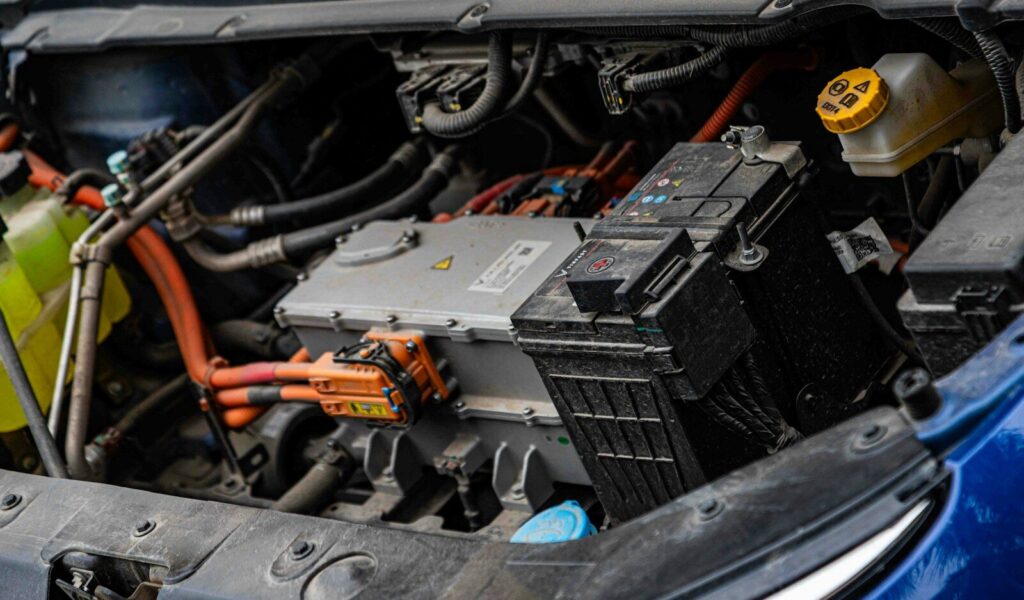
Battery engineering is the basis for the Model Q value proposition. Based on speculation and supply chain reports, the base configuration is expected to get a lithium iron phosphate or LFP battery pack with a usable capacity of 50kWh to 58kWh and standard pack variants with around 53kWh. The chemistry of the LFP battery brings some unique advantages to an entry-level EV. Used by major suppliers CATL and BYD, LFP batteries are designed without expensive cobalt and nickel in the chemistry. One of the biggest advantages of LFP packs is their incredible cycle life and thermal stability, which can withstand more than 1000-3000 full charge cycles with minimal capacity loss over 150,000 miles.
LFP Battery Facts:
- 50 to 58 kWh usable capacity
- Standard pack around 53 kWh
- CATL and BYD supply cells
- No expensive cobalt or nickel
- 1,000 to 3,000 charge cycles
Furthermore, Tesla officially recommends charging LFP battery packs to 100% state of charge on a daily basis without accelerating battery wear. In contrast, nickel-manganese-cobalt, or NMC, battery packs are typically restricted to an 80% daily charge limit to protect long-term battery health. Because owners can routinely utilize 100% of the LFP battery’s rated capacity, the daily usable range of a 250-mile LFP pack effectively equals 250 miles. This makes the chemistry a strong fit for an affordable commuter vehicle. Owners do not need to manage charge limits, and they get the full benefit of the pack every day, which supports both convenience and long-term durability.
6. Range: Official Targets and Real-World Numbers
According to the media, Model Q is said to be capable of travelling a maximum of up to 500 km (about 311 miles) as tested under certain test cycles, and has 250 miles close-to-official range estimates on the EPA test cycle on standard battery options. It appears the base versions and very early ones on the EPA test cycle potentially have a range close to 250 miles. That is a competitive range for city driving, running local errands, and even modest highway touring. Real-life range will really depend on driving conditions, outside air temperature, and speed. At a constant 70 miles per hour on highway cruising at comfortable outside air temperatures, range should be 210-225 miles.
Model Q Range Facts:
- Up to 500 km, about 311 miles
- EPA target near 250 miles
- Highway 70 mph: 210 to 225 miles
- Urban driving: 240 to 260 miles
- Winter range: 160 to 190 miles
Stop-and-go urban traffic represents the optimal operating environment for the LFP battery, where heavy regenerative braking can recover energy and yield 240 to 260 miles of range. Cold weather operations present a known physical limitation for lithium iron phosphate chemistry. In cold ambient temperatures around 30 degrees Fahrenheit, LFP battery range can experience a degradation of 25% to 35%, yielding an estimated winter range of 160 to 190 miles. Standard inclusion of Tesla’s high-efficiency heat pump system will help mitigate thermal range loss by scavenging waste heat from the powertrain. Nevertheless, buyers in northern climates must factor seasonal efficiency changes into their daily charging routines.
7. Motors, Acceleration and Efficiency
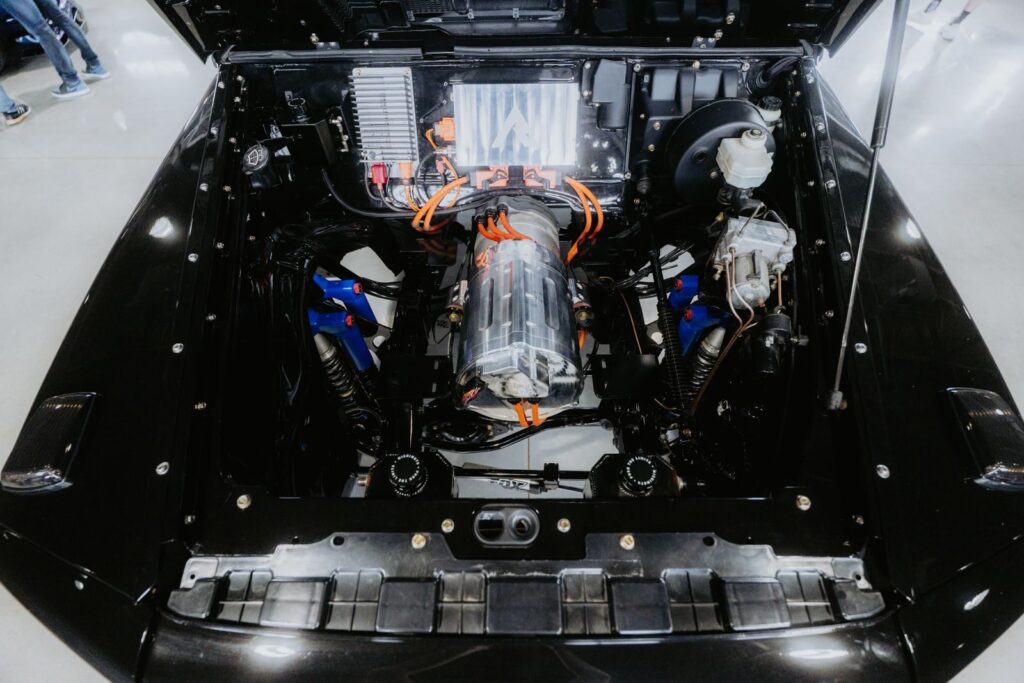
Hidden beneath the floorboards of the Model Q is a powertrain that’s primed for everyday, good-time driving. Standard cars feature a single electric motor mounted at the rear that outputs 200 to 250 horsepower to the rear wheels. This rear-wheel-drive setup is expected to accelerate to 60 mph in about five to seven seconds, depending on the model, with the standard cars which will be roughly on par with current Model 3 models hovering around 6.0 to 6.5 seconds. Tesla isn’t aiming to beat Plaid off the line, but that’s quick nonetheless. For folks who want a bit more grip and a little more zippiness, a dual-motor all-wheel-drive version is expected as well. It would take just 4.5 seconds to accelerate from 0-60.
Performance and Efficiency Facts:
- Single motor, 200 to 250 hp
- Base 0-60 mph: 6.0 to 6.5 seconds
- Dual-motor AWD: about 4.5 seconds
- Top speed limited to 125 mph
- 120 to 130 MPGe combined
Top speed for the base platform is electronically limited to around 125 mph to preserve battery health and motor efficiency. Powertrain engineering emphasizes smooth power delivery, immediate throttle response, and single-pedal driving capability through aggressive regenerative braking. Overall vehicle efficiency is targeted between 120 and 130 MPGe combined, representing an energy consumption rate of roughly 26 to 28 kWh per 100 miles. Achieving high MPGe figures allows the compact platform to extract maximum distance from its relatively modest 53 kWh LFP battery pack. Combined with a lightweight chassis and low drag coefficient, these traits ensure that lower acquisition costs do not come at the expense of fun, responsive driving.
8. Charging: Supercharger Access and Home Charging
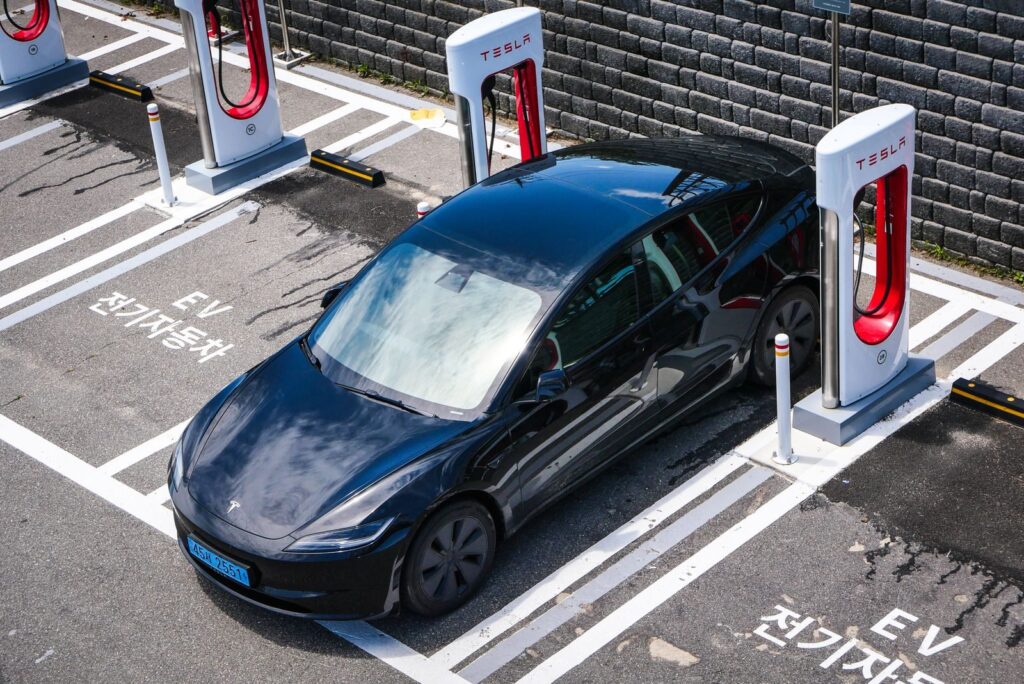
Tesla owner experience remains centered on charging convenience, and the Model Q is no exception. With a native NACS port, Model Q provides plug-and-charge access to the global Supercharger network. Peak DC fast charging is estimated to be between 170 kW and 200 kW; a 10-80% DC fast charge will take between 22 and 28 minutes at compatible high power chargers. With a smaller battery pack than the long-range sedans, the LFP battery pack charge curve gradually tapers. Beginning at a 10% state of charge, initial charge acceptance remains near peak power levels up to approximately 40%, before tapering down to an 80 kW rate at around a 60% state of charge.
Charging Facts:
- Native NACS port
- Peak DC speed 170 to 200 kW
- 10% to 80% in 22 to 28 minutes
- 11.5 kW onboard charger
- About 38 miles of range per hour
Above 80%, power levels taper down sharply to protect cell chemistry. This rapid mid-pack replenishment allows road-tripping drivers to add significant driving range during brief rest stops. Home Level 2 charging provides even greater convenience for daily suburban and urban commuters. Utilizing an 11.5 kW onboard charger on a 240V, 48-amp circuit, the Model Q can replenish its battery at a rate of approximately 38 miles of range per hour. A complete 0% to 100% full home charge requires roughly 5 hours to complete. This fast home replenishment means drivers who plug in overnight can consistently start every morning with a fully charged battery.
9. Pricing, Tax Credits and Subscription Features
Pricing is the Model Q’s most daring break from the mainstream auto industry. Tesla plans to set an entry-level starting base MSRP of $24,990 for the base rear-wheel-drive range. Mid-range Long Range RWD trims may be priced in the $29,000 ballpark while higher end Dual-Motor AWD trims could be close to $33,000.A sub-30,000 auto that does not factor in incentives will certainly make the Model Q a tough competitor against gas-powered compacts and even other imported EVs. The final buyer transaction price will heavily rely on state incentives as well as U.S. government clean vehicle tax credits. Per the current clean vehicle credit rules in the U.S., qualifying EV buyers could pay even lower effective costs of potentially as low as $17,500.
Pricing Facts:
- Base RWD: $24,990
- Long Range RWD: around $29,000
- Dual-Motor AWD: near $33,000
- Possible effective cost $17,500
- Features offered by subscription
However, eligibility under federal tax credit rules depends on strict critical-mineral sourcing and battery component manufacturing criteria. Because LFP cells sourced from Chinese suppliers like CATL face sourcing hurdles, full federal tax credit qualification remains subject to official regulatory verification. To maintain a low entry price point, Tesla is expected to offer certain hardware features and advanced software functions through flexible monthly subscriptions. Features such as heated seats, performance acceleration boosts, and Full Self-Driving (Supervised) software can be enabled via over-the-air updates. Powered by standard Hardware 5 (AI 5) suite, the vehicle supports Level 2 driver-assistance features, including camera-based Tesla Vision. Drivers must remain fully attentive and engaged, as these systems assist but do not replace active human supervision.

10. Rivals, Global Production and the Road Ahead
Within the sub-$30,000 EV segment, the Model Q is confronting an array of established incumbents from around the world: the Chevrolet Equinox EV with 319 miles of EPA range; the Hyundai Kona Electric (261 miles), the compact Volvo EX30, and Chinese automakers such as BYD who are still ramping up their cheaper EV exports. The Model Q will attempt to triumph over this tougher field with its aggressive lower price point, its superior native software, and its inherent access to Tesla’s Supercharger network. Initial manufacturing plans for the Next-Gen platform suggest a synchronized global introduction, with initial tooling and low-volume pre-production at Gigafactory Texas and additional volume production intended at Giga Berlin and Giga Shanghai.
Rivals and Production Facts:
- Rival: Chevrolet Equinox EV, 319 miles
- Rival: Hyundai Kona Electric, 261 miles
- Also faces Volvo EX30, BYD
- Texas, Berlin, Shanghai production
- Target up to 10,000 units weekly
Production ramps are designed to scale rapidly, with internal targets aiming for up to 10,000 units per week as manufacturing operations reach full maturity. This global production footprint guarantees that high market demand across North America, Europe, and Asia can be satisfied efficiently. Looking ahead, the arrival of a true mass-market Tesla signals a pivotal moment for electric mobility worldwide. By marrying innovative manufacturing techniques with proven battery tech and seamless software, Project Redwood promises to lower the barrier of entry for millions of prospective EV drivers. Electric driving is finally stepping out of the niche luxury realm and firmly into the mainstream spotlight for drivers everywhere.