








Affordable 1950s Classic Cars That Still Offer Exceptional Style and Driving Joy
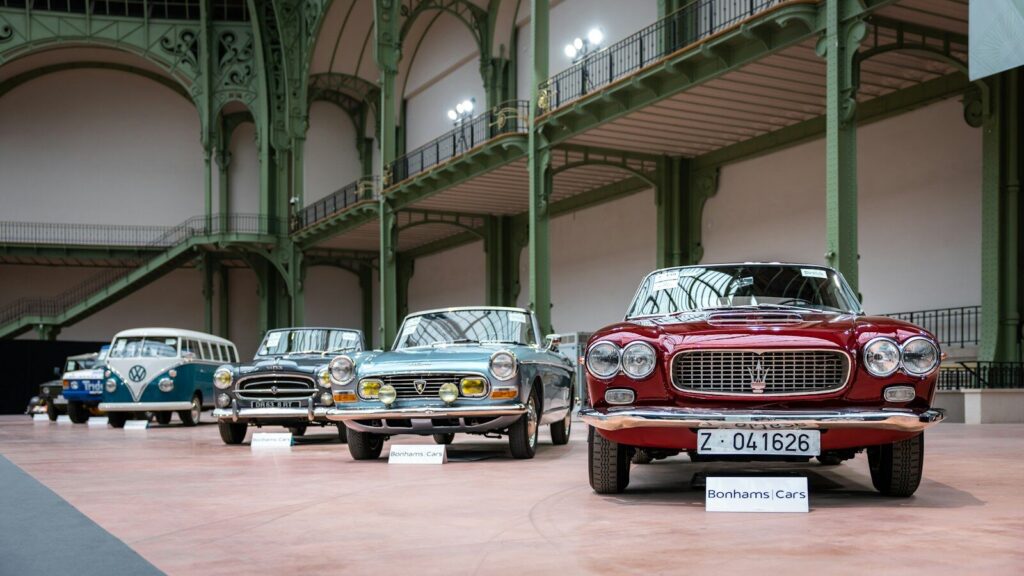
The 1950s represented a remarkable period in automotive design, when chrome became a defining feature and dramatic fins reached toward the sky. Cars from the decade combined bold styling with the optimism of a rapidly changing era, creating shapes that still attract attention decades later. Although some 1950s classics now command six-figure prices, many interesting models remain within reach for enthusiasts willing to search carefully.
Automotive design changed quickly throughout the decade, while improvements in performance and drivability made classic cars increasingly enjoyable to own. Automatic transmissions and power steering became more common, giving buyers more convenience alongside the decade’s unmistakable styling. From sleek British sports cars to large American cruisers, these ten classics demonstrate how much variety the 1950s offered without requiring every enthusiast to spend a fortune.
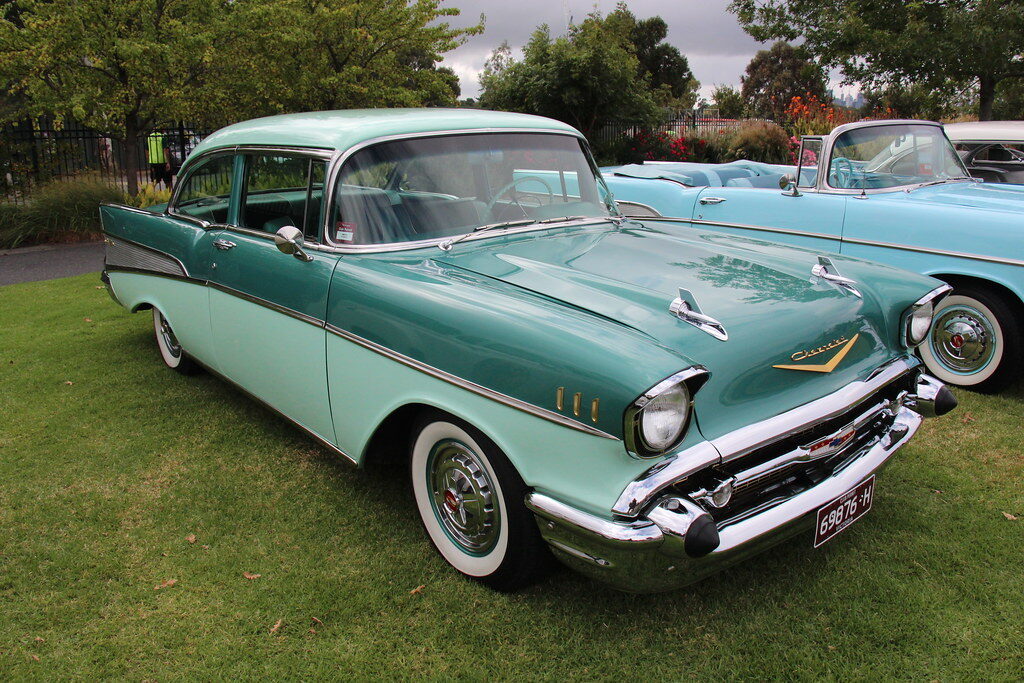
1. 1955-1957 Chevrolet Bel Air
1955-1957 Chevrolet Bel Air (Tri-Five Chevy) They had all the looks and fairly decent handling (especially the bodies with small-block V8s). The ones from 1957 have the tendency to get the most attention (from the front), but the ’55s and ’56s deliver that classic shape for a fraction of the cost. Anything that is clean and presentable as a driver fetches anywhere from $25k to $45k, again, depending on trim level, condition, and so on. There is an option that the expense is right, along with the availability of parts for maintenance and restoration for owners.
What Makes the Bel Air Appealing:
- Iconic Tri-Five American styling
- Small-block V8 availability
- Strong parts availability
- Multiple model years
- Accessible classic-car ownership
The Bel Air is an ideal choice for someone who wants a distinctive 1950s car but doesn’t want to get involved at the top end of the collector market. That would be a high price to pay for the impact of its chrome and body lines, and common presence at cruise nights and shows. Since the car was the best-selling one in America for several years in a row, the availability of replacement parts is also much better than for more exclusive models. The 1957 model might get the most coverage, but a 1955 or 1956 car can still give the feel of a classic Tri-Five at a lower cost. That rich variety makes the Tri-Five family a car for almost anyone.
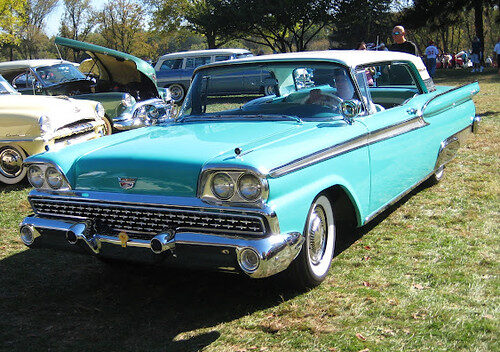
2. 1959 Ford Galaxie
As the smaller Ford equivalent of some of the more known to global markets Chevrolet models, the Ford Galaxie offers a bit more discreet design. If you’re looking for the year ’50s, style however, the regular Ford Galaxie can be reasonably affordable. The style look, with the fact that it is a bit more subdued, will be particularly pleasing for most who are looking for a good piece of the ’50s without having to get a highly priced upmarket model. The price range of the Ford Galaxie will usually range up to $15,000 for any one in reasonable condition, up to $30,000 for a decent restoration and anything close to $40,000 for the top-end models or the Skyliner retractable.
Why The Galaxie Stands Out:
- Distinctive late-’50s styling
- Affordable standard models
- Reliable FE-series V8
- Easy mechanical servicing
- Space-age visual character
The Ford’s FE-series V8s give plenty of torque and are said to be fairly easy to maintain. That mechanical sensibility makes the Galaxie attractive to a person who wants to drive an old car instead of just show it, its combination of big-car attitude, period looks and affordability providing an appealing alternative to the Chevrolet stable. While the Skyliner retractable remains the head-turner, drivers don’t have to have that premium feature to enjoy the spirit of the Galaxie. Even the standard cars, sporting the clean mid-’50s sheetmetal, strike a lovely attitude. For the traditional American-car enthusiast who wants to keep the purchase price reasonable, the Galaxie is a good entry into the decade.
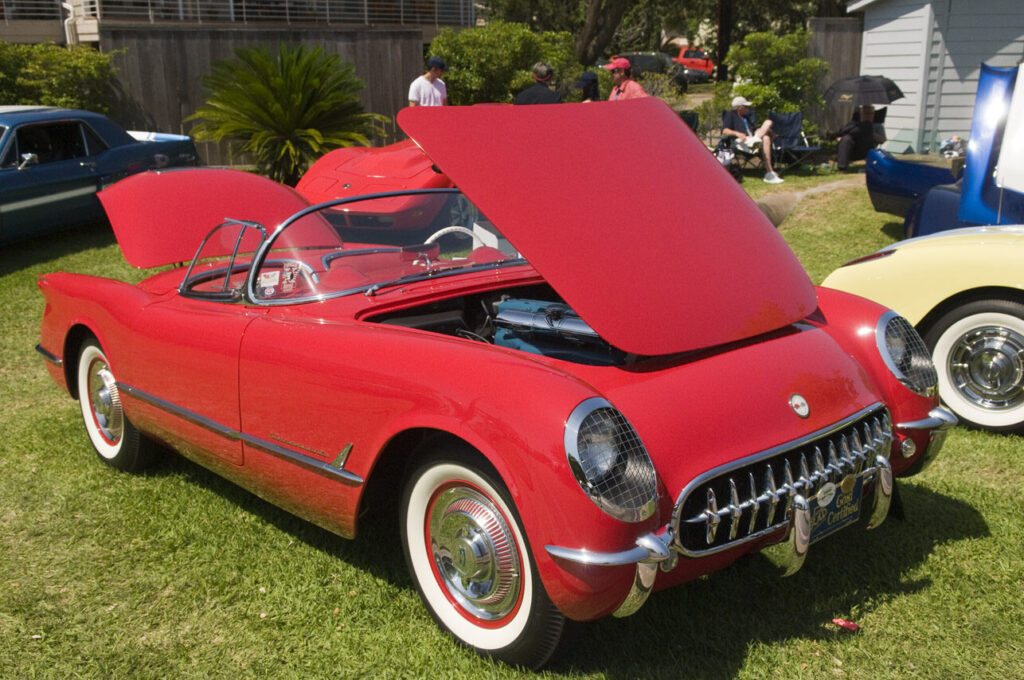
3. 1953-1954 Chevrolet Corvette
The 1953-1954 Chevrolet Corvette (chevrolet.com) First-generation Corvettes are really interesting simply because they are so different than the V8 powered, hugely popular later Corvettes. The fiberglass bodies, inline-six engines, and Powerglide automatic transmissions make first-generation Corvettes more compelling and different than you might expect. With 3000 models produced for 1953, only about 300 Corvette in that year, a first-generation Corvette could cost you between $50,000 and $80,000 making it one of the most expensive Corvettes on this list. A rarity by virtue of production numbers and historical significance, the first-generation Corvette, arguably the most significant in the line’s history, carries a lot of weight.
Key Early Corvette Features:
- Fiberglass body construction
- Inline-six engine
- Powerglide automatic transmission
- Extremely limited 1953 production
- Distinctive early Corvette styling
Styling still remains a winner of this model and its gaping grille and huge, wraparound windshield give it an elegant yet distinctive look that is still clearly that of an early Corvette. The fact it won’t deliver the blistering speed of later models doesn’t diminish its significance for enthusiasts and as the first model of what became one of the world’s best-known sports-car brands, the first-generation Corvette has something that most others on this list lack: a place at the start of something very special. If you want to add a bit of history to your garage, this one is a great choice, although it does come with a significantly bigger price tag than some others here.
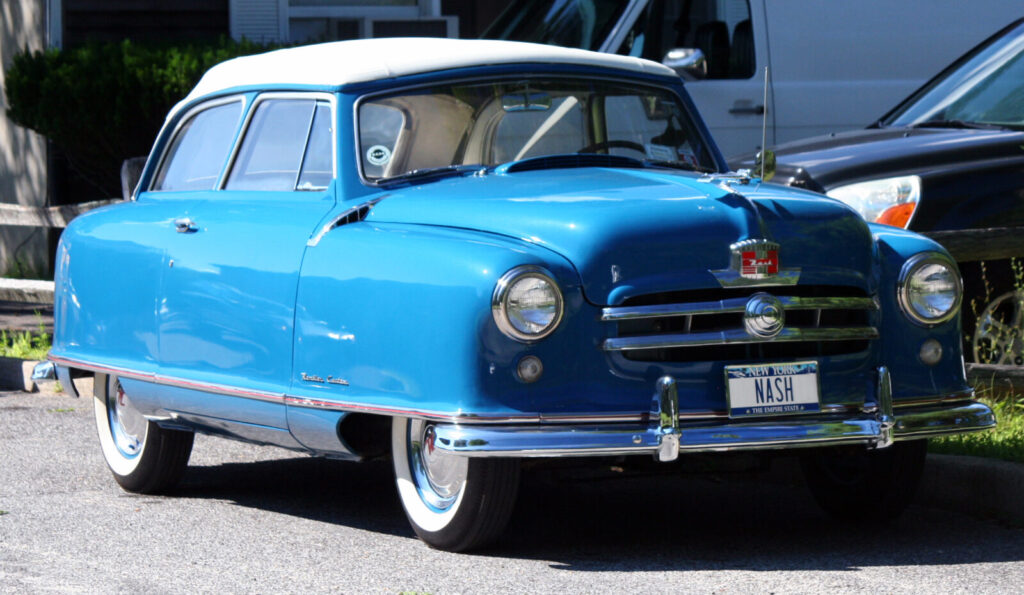
4. 1950-1952 Nash Rambler
The 1950-1952 Nash Rambler takes a different path to classic-car appeal. There’s no giant size and flamboyant chrome here, only a relatively small car that has unusual styling and utilitarian design features. The convertible and wagon configurations give the car a character and dimension that differentiates it from the blue-collar American car cruisers of the era. Values typically range from $12,000 for a very rough example up to about $25,000 for a high-quality, low-mile example. It’s relatively advanced unibody design for the era, and the optional convertible bed-conversion, adds a bit of the strange and wonderful to its long list of curious factoids.
Why The Rambler Is Different:
- Compact 1950s proportions
- Quirky exterior styling
- Practical body configurations
- Advanced unibody construction
- Accessible purchase prices
The Rambler isn’t based on full-tilt performance. It’s about character, utility and the fact that it isn’t a popular kid on the block, like Chevy, Ford, or Chrysler. That makes it perfect for those who like something a little different at cruise nights and classic-car shows which is to say, a conversation-starter because the Rambler is less known. Its proportions and styling create an imposing presence without the need for a mountain of cubic inches or a complete restoration, and so this is the one for someone who appreciates an easier introduction to 1950s American classics.
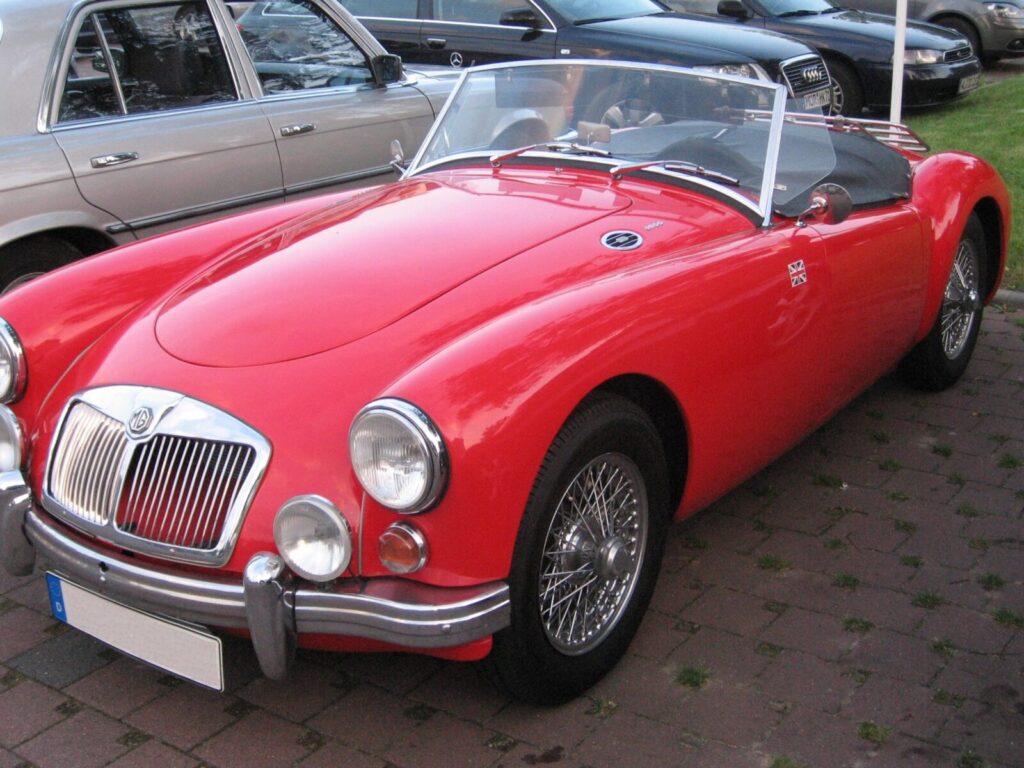
5. 1955-1959 MG MGA
The 1955-59 MG MGA takes an entirely different view of 1950s motoring. Here we have the lightweight, rounded and nimble little British sports car and not the full-size, chrome-laden American cruiser. This roadster’s open-air appeal gives you the quintessential wind in your hair experience that is assumed to be the defining characteristic of the Australian-built British sports-car recipe. Good, mechanically sorted examples can be had for 20,000-35,000, while excellent examples can get up to $45,000. This sports car has always been attractive, with simple flowing bodywork and sports-car understatement in the form of restraint rather than supersizing.
What Defines The MGA:
- Sleek British roadster design
- Nimble driving characteristics
- Open-air driving experience
- Strong parts support
- Accessible sports-car pricing
The MGA has a dedicated enthusiast following and specialty part suppliers as well. This can make it even easier for potential buyers to get involved and enjoy a classic British motoring experience without end up with a very rare and expensive to keep a purchase. The parts and also the driving knowledge make it an essential used cars for those who do not want an American-built land yacht but do want to be much closer to a classic sports car. With the proportions, way of handling and open cockpit, it’s something a lot more fun from the perspective of the driving experience.
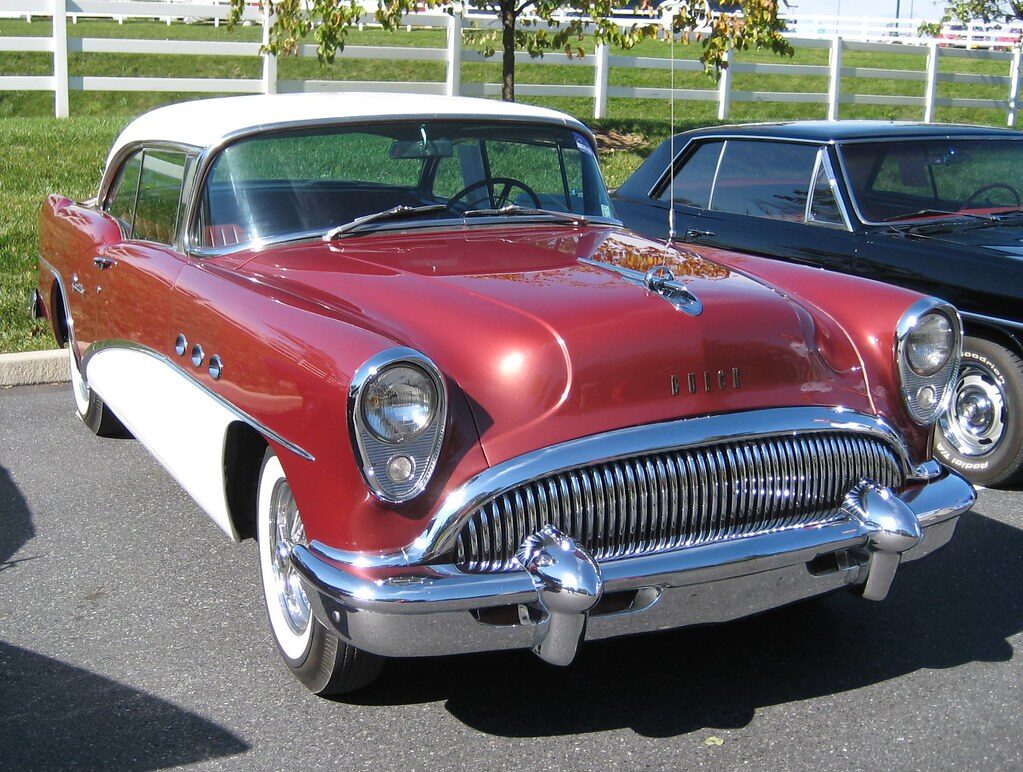
6. 1953-1956 Buick Special
The 1953-1956 Buick Special combines upscale styling and a price point that, compared to other luxury-type classics, is somewhat more affordable. Buick gave these cars a unique style with the recognizable portholes associated with the brand, and the slightly roomier Dynaflow transmission helped give the car the relaxed cruising nature of a big car. They were essentially a large American car with comfort and looks front and center. Reasonably priced driver-quality models start around $12,000, with high-end restored examples fetching about $30,000. The Riviera hardtop coupe especially looks great with its pillarless styling providing an open, expensive look that makes the Buick stand out in a field of big, elaborate cars.
Buick Special Highlights:
- Upscale mid-century styling
- Smooth Dynaflow transmission
- Distinctive Buick portholes
- Attractive Riviera hardtop
- Relatively accessible pricing
The Buick Special is equally at home in the highway mode. Its comfortable seating and ability to thread itself through traffic make it an ideal runner for enthusiasts who want to make use of their classic, not park it. It has a certain sense of restrained confidence about it-more luxury cruising than unrestrained aggression. For those who don’t want to ante up the big bucks to drive a luxury car, the Special offers an intriguing alternative: the well-proportioned chrome-trimmed profile that embodies the feel of 1950s American driving, with an accessible price tag.
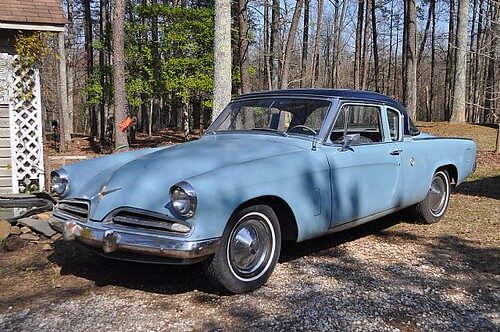
7. 1950-1954 Studebaker Champion
1950-54 Studebaker Champion Shows What Small builders could do. Studebaker Champion 1950-1951 bullet noses are quick to catch the eye, but the 1953-54 Starliner coupes by Raymond Loewy are particularly stunning. This pair is a good example of what separated Studebaker from the Big 3 Detroit giants. Prices typically vary from around $15K for a driveable solid car to about $40K for a top-show example, depending on body style and year. The Champion’s six-cylinder engine is never going to be a hard-core stoplight blaster, but it is the definition of an economical, dependable cruise missile.
Studebaker Champion Features:
- Distinctive bullet-nose styling
- Raymond Loewy-designed coupes
- Economical six-cylinder engine
- Reliable cruising character
- Dedicated owner communities
The Champion is a true exception in the world of automakers. By choosing a different route to design than the Big Three Detroit companies, Studebaker has made this car one of the more unique models today. Without driving a Ford, Chevrolet, or Chrysler, a Studebaker clearly demonstrates that this car has an unusual automotive history; parts may be tougher to find than many parts for American automakers, but there are Studebaker clubs and groups dedicated to helping owners and enthusiasts of the Studebaker models. Such a community can go a long way to make ownership a little easier for collectors who enjoy truly unique automobiles.
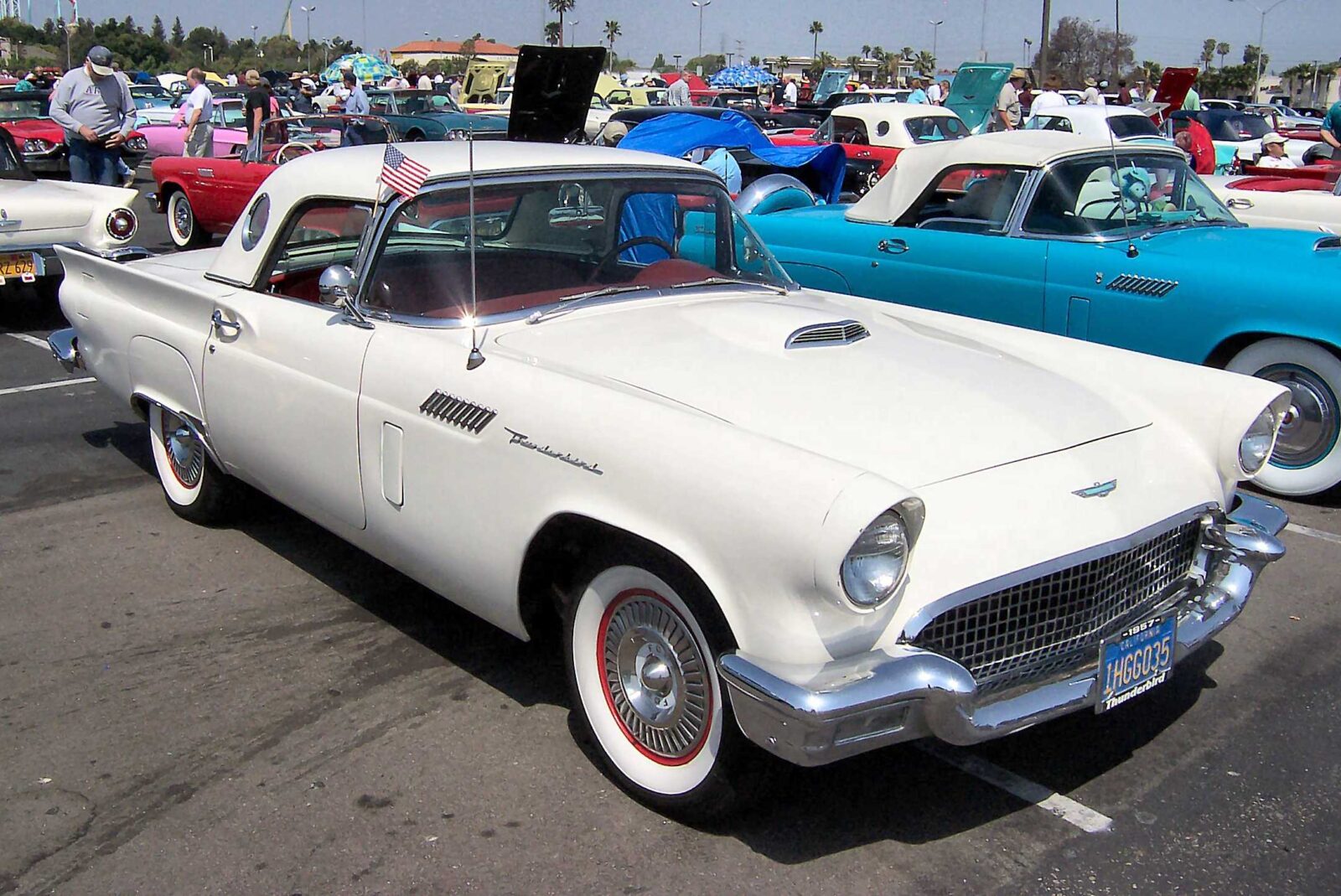
8. 1955-1959 Ford Thunderbird
Of course, the original two-seater Ford Thunderbird was Ford’s literal personal-luxury answer to the Chevrolet Corvette. Dubbed the “Baby Bird,” the first-generation Thunderbird offered a pleasing blend of attractive proportions, a cozy cockpit, and driving characteristics that vintage-car fans still enjoy. Ford hit the perfect balance of sports-car sensibility with a more personalized lifestyle focus; prices are up, but a solid specimen still fetches a minimum of 35,000- 45,000, while a concours-quality example can sell for around $65,000. The removable hardtop and trademark porthole windows give the Thunderbird a look that’s instantly identifiable, and little wonder it’s still among the most well-known American cars of its decade.
What Makes The Thunderbird Special:
- Classic two-seat configuration
- V8-powered performance
- Removable hardtop design
- Iconic porthole windows
- Comfortable cockpit layout
The V8 engine is a sufficient match for the Thunderbird, allowing it to be fun in current traffic conditions. Though this isn’t the most affordable in this segment, it does rank among the more affordable desirable 1950s automobiles. The combination of style, comfort, and performance give it wide appeal, and for those who desire a somewhat spirited personal-luxury vehicle, the Baby Bird has a unique 50s take on the formula. It’s got just enough visual personality to stand out, combined with the comfort of a personal luxury machine, putting it in a unique in-between space of muscle cars and American big cars.
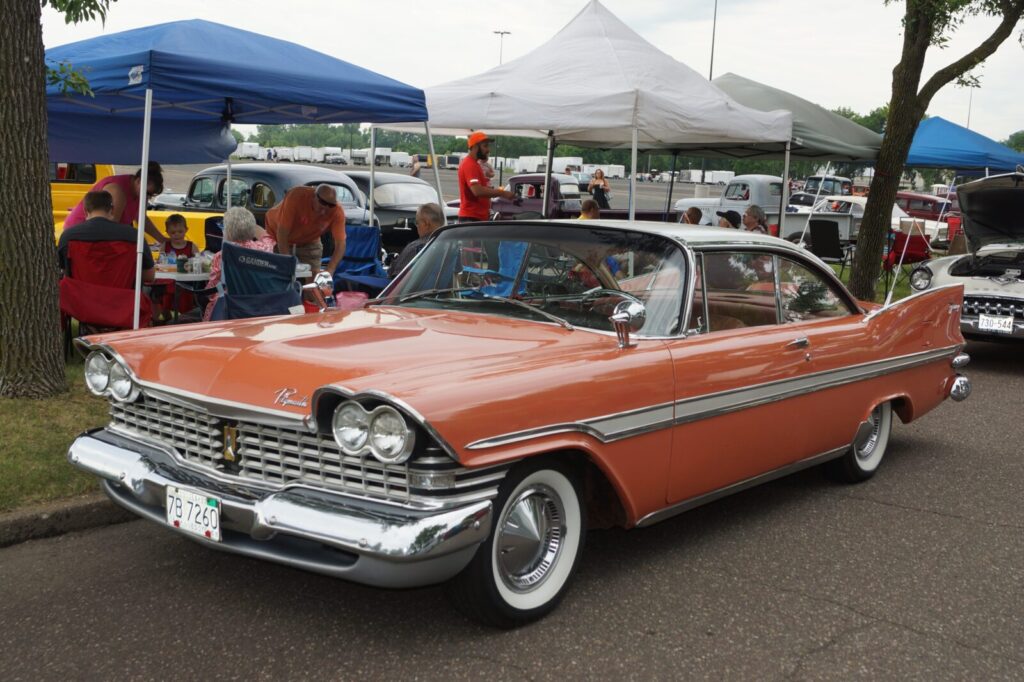
9. 1959 Plymouth Fury
The 1959 Plymouth Fury shows the fiery side of late-1950s American car design. The Fury’s styling is a creation of Virgil Exner’s so-called “Forward Look” stylists, and it exhibits plenty of fins, and a body shape that looks as if it were moving even when standing still. Its styling screams of speed, futuristic flair, and bold proportions in a way that many run of the mill family cars of the time couldn’t quite match. Though decent examples are in the 18,000-35,000 range, the Fury is actually a pretty affordable way to get a late-’50s look, and the Sport Fury hardtop coupe has a particularly dramatic roofline and stance that don’t demand the price of a Chrysler or Imperial.
Plymouth Fury Highlights:
- Virgil Exner Forward Look
- Dramatic tail-fin design
- Sport Fury hardtop
- Golden Commando V8 option
- Accessible late-’50s styling
Available Golden Commando V8 engines still bring solid straight-line performance to the Fury’s visual theatrics. The Fury is a sure-bet of late-’50s American auto-industry machoism: big engines and over the top bodywork. A buyer doesn’t have to leap into Chrysler or Imperial waters to get big fins and bold proportions in the style of that time period; the Fury can keep the spirit of ’50s Futurism intact while remaining relatively “friendly.” For those who seek out the most flamboyant side of 1950s design, the Fury has got plenty of attitude.
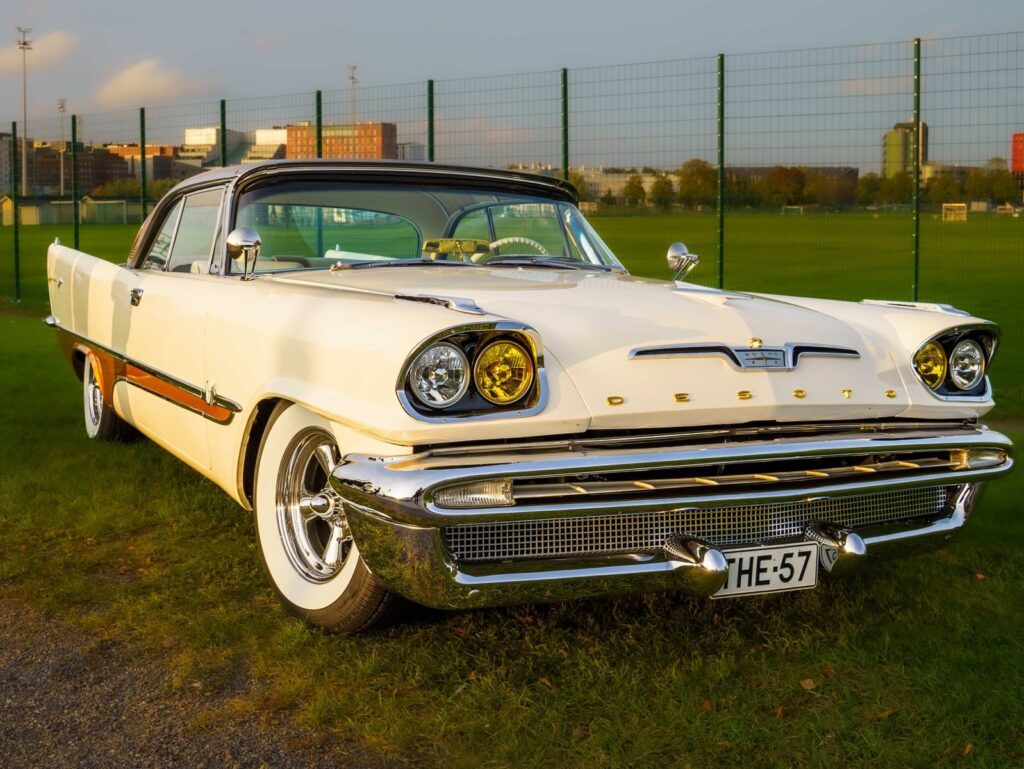
10. 1957-1959 DeSoto Firesweep
The [6]1/2-Seater DeSoto Firesweep from 1957-1959: Chrysler Corporation’s familiar Forward Look design ideology is distilled down to an entry-level proposition. The Firesweep’s visual impact is largely driven by dramatic tailfins, familiar grille bits, and eye-catching late-1950s styling ratios. For fellow old car aficionados, clean driver quality examples generally run 15,000-30,000, making the Firesweep particularly appealing for someone seeking big visual impact for relative brevity. The name is suggestive of speed and future sexiness, but that translates to a boulevard vehicle that merely makes the numbers and wild visual cues work in this price point.
DeSoto Firesweep Characteristics:
- Chrysler Forward Look styling
- Dramatic tail fins
- Distinctive front grille
- Smooth TorqueFlite transmission
- Strong historical character
The Firesweep’s refined road manners are further supported by its smooth TorqueFlite automatic transmission, which complements its effortless cruising character. It is not a car designed to be hustled or used to out-drag other vehicles. Instead, its main attraction is the flamboyant sheet metal, with the dramatic fins and distinctive front-end styling giving it a memorable presence. The powertrain simply provides the means to enjoy that bold design while cruising comfortably.


