Understanding Texas Vehicle Registration Changes and New Identification Rules from 2025 to 2027
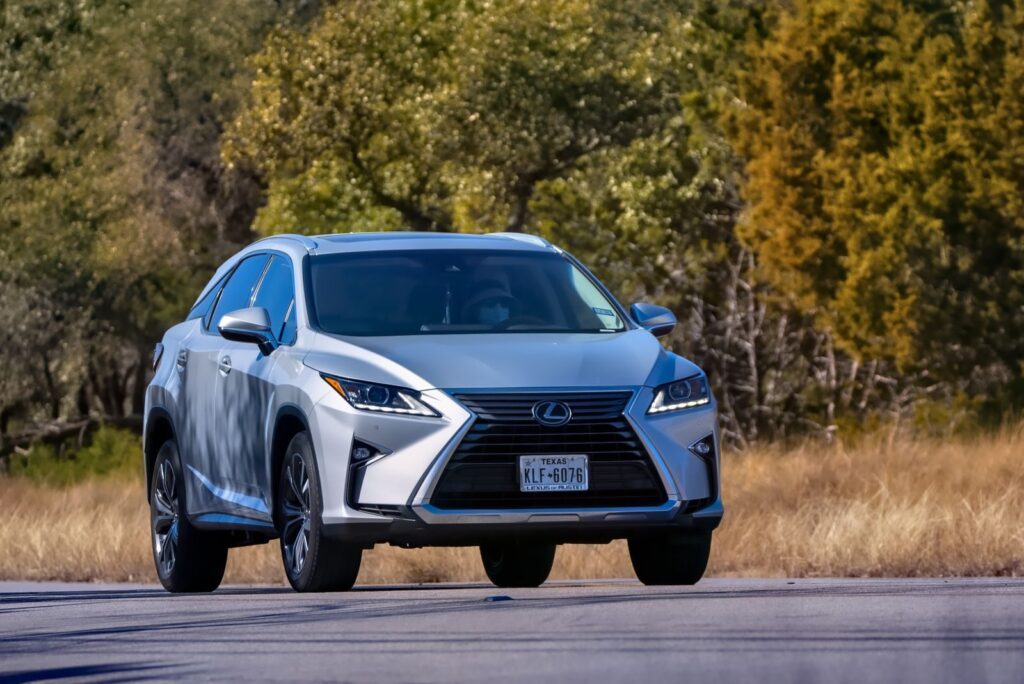
Getting from Point A to Point B in the Lone Star State is just a fact of life in Texas both in the bustling city limits and out on the open rural roads. In recent years, the Texas Department of Motor Vehicles and other lawmakers have enacted several significant policy changes that have profound impacts on how millions of local drivers register their vehicles and manage title transactions. Here’s what you need to know about the changing landscape of Texas auto-related laws. At 268,596 square miles, Texas extends from the Gulf Coastal Plains to the mountain ranges of West Texas. In 2025, there will be over 31 million residents, spread throughout 254 counties in all parts of the state.
A large portion of Texan residents, including those in Houston, San Antonio, Dallas, Austin, Fort Worth and El Paso, rely extensively on personal vehicles to get around. Because personal transportation is the primary mode of transportation in the state, any near-term changes to vehicle registration, emissions testing, identification and title procedures can impact regular drivers. The New Year has brought a radical shift for all drivers in Texas. As of January 1, 2025, new legislation (Texas House Bill 3297) is now in place that requires no safety inspection for most passenger vehicles other than certain commercial vehicles.
1. Texas Ends Annual Safety Inspections for Most Vehicles
One other significant modification to Texas vehicle management has been the removal of annual safety inspections. Up until 2012, all passenger vehicles, including non-commercial vehicles, had to take their vehicle to a mechanic authorized by the state of Texas for an annual safety check. Prior to the registration renewal, owners of vehicles had to pass the safety inspection before they could renew the registration for their vehicle. As a result, the process of registering a vehicle has become a little easier.
Key Changes to Safety Inspections:
- Annual safety inspections ended for most vehicles
- Non-commercial passenger cars are generally exempt
- Vehicle maintenance remains the owner’s responsibility
- Brakes, tires, and lights still matter
- Emissions testing continues in designated counties
Vehicles are still required to be properly maintained by their owners, even though the safety check has been eliminated. The safety inspection program did not involve the safety equipment (brakes, windshield wipers, lights, tires, etc.) that is important to safe driving; it was simply a requirement for passing the annual registration inspection. Just because the vehicle doesn’t need an inspection doesn’t mean drivers don’t need to maintain their vehicle or get problems fixed. This policy change affects nearly all non-commercial passenger cars, but it does not mean every car-related test went away. County-wide emissions testing still happens in designated counties in Texas, and other types of vehicles could still be subject to different testing.

2. The New Inspection Program Replacement Fee
The financial burden of a safety inspection still remains for Texas drivers. The new system involves what is called an Inspection Program Replacement Fee. When a motorist renews their registration annually the new replacement fee costs $7.50.Instead of paying out of pocket for a safety inspection appointment, they will instead pay the fee to renew their registration.This way, they are avoiding the safety inspection appointment but the cost is built into their renewal registration.
How the Replacement Fee Is Applied:
- Standard renewals include a $7.50 fee
- New Texas vehicles pay $16.75 initially
- The initial amount covers two years
- Transportation receives $3.50 from fee
- Clean-air programs receive $2.00
The charge for replacement on a brand new vehicle or a vehicle that has not been registered in the state of Texas before is $16.75. This fee includes the first two years of the registration fee. It is important to note that the cost varies depending on whether the vehicle is new or used, and the vehicle’s registration is being completed for the first time. The $7.50 payment goes to Texas for different state accounts. From that fee $3.50 goes to the Texas Mobility Fund which finances various types of transportation projects. $2.00 is sent to the Texas General Revenue Fund and $2.00 goes into the Clean Air Account. That means vehicle inspections stay with our vehicle administrative structure and have not changed with the abolishment of the annual inspection.

3. Annual Registration Still Remains Mandatory
Getting Your Car Registered and Renewed in Texas No Longer with Annual Safety Inspection Many people assume getting rid of the annual safety check in Texas also got rid of the vehicle registration renewal process. That is not true. While you no longer need to have a car inspected, you can still register your vehicle and renew your registration using the process. Writing a paragraph on the topic Winning a lottery is a hard task. Many of us buy lottery tickets regularly but hardly win any prizes.
What Registration Renewal Still Requires:
- Annual registration renewal remains mandatory
- Current registration stickers must remain displayed
- Valid auto insurance proof is required
- Base registration costs $50.75
- County charges may also apply
Drivers can expect to pay a total of $58.25 for a standard registration renewal. The total amount of a registration renewal depends on which county a driver lives in, since each county has its own local fees. However, a standard registration renewal will also include the $50.75 base registration and the $7.50 Inspection Program Replacement Fee. This subtle differentiation between safety inspection and registration matters because eliminating one requirement does not eliminate the other. Just because a driver may not be required to subject his or her passenger vehicle to the now former annual safety inspection requirement does not mean that vehicle still does not need a valid registration. Maintaining registration is a fundamental duty of any person operating a vehicle on Texas roads.
4. Emissions Testing Continues in 17 Texas Counties
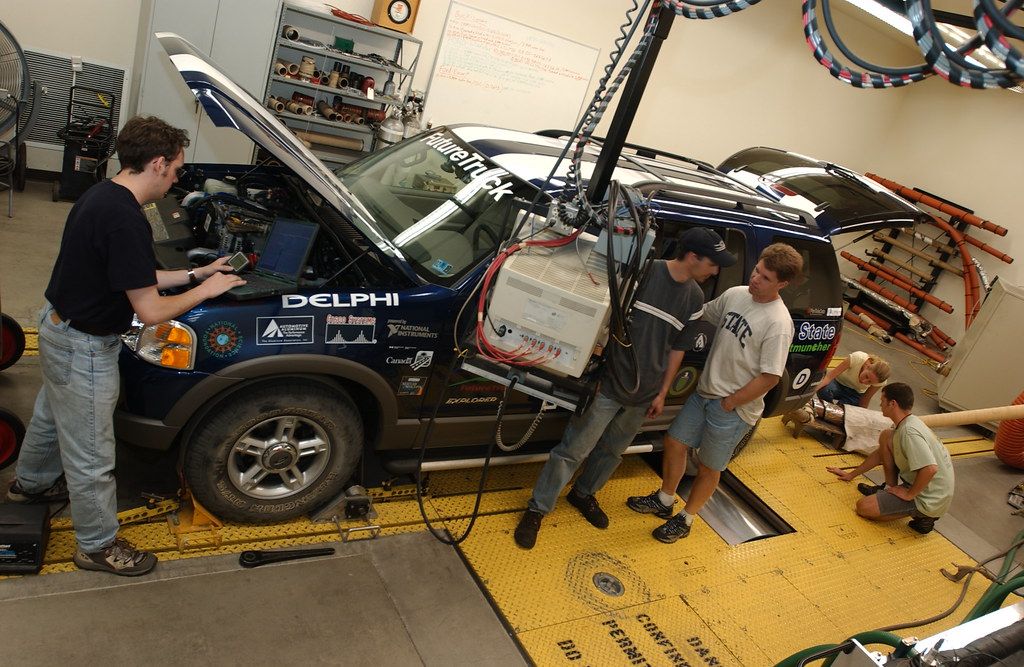
Even though a comprehensive safety inspection every year is not necessary for most vehicles in Texas, it still is required to have your emissions tested in 17 Texas counties with large population. The counties with heavy populations in which you need to have the emissions tested are Brazoria, Collin, Dallas, Denton, Ellis, El Paso, Fort Bend, Galveston, Harris, Johnson, Kaufman, Montgomery, Parker, Rockwall, Tarrant, Travis, and Williamson. So if you live in one of these counties or if you are registering your vehicle in one of these counties, you still need to adhere to the applicable emissions testing requirements.
Counties With Continuing Emissions Testing:
- Testing remains required across 17 counties
- Requirements vary by county location
- Emissions fees range from $11 to $27
- Testing examines vehicle exhaust pollutants
- Check-engine lights may cause failures
All drivers in those counties still need to perform the annual emissions test before receiving their registration renewal, with tests costing $11 to $27 based on the county and which tests are needed. Local county rules are also important to vehicle owners in or traveling between different areas of Texas. What Emissions Testing Is Not from the old safety inspection. Instead of inspecting things like windshield wipers and brakes, mechanics inspect vehicle emissions and emissions-system effectiveness by measuring pollutants that come from the engine’s exhaust. Mechanics use diagnostic tools to see how well the vehicle’s engine and emissions systems are functioning. In some cases, the vehicle can fail due to a warning light on the dashboard, even with a functioning engine.

5. Bexar County Joins the Emissions Testing Program
It’s adding to Texas’ emissions testing mandate. Starting Nov. 1, 2026, Bexar County, where San Antonio is located, will officially become part of one of Texas’ emissions testing counties, along with several others, requiring annual emissions checks of vehicles.When residents go to renew their registrations, Bexar County vehicle owners will be required to take that test. Think of it as an extra step they’ll need to take to renew their registration, which comes ahead of time when the driver goes to the Bexar County Tax Assessor-Collector’s office.
What Bexar County Drivers Should Know:
- Bexar County joins November 1, 2026
- San Antonio drivers face new requirements
- Annual emissions testing becomes necessary
- Local procedures may affect renewal timing
- County rules should be checked beforehand
The addition is also relevant to San Antonio and nearby county residents because of how Bexar County is among the state’s largest population centers. As is true in other parts of Texas, drivers who don’t have prior experience with emissions testing will need to learn the details and how the program aligns with routine vehicle care and registration. The switch also highlights why drivers in Texas should think twice before assuming that the same in and out of state procedures are used in other counties. Vehicle administration may vary from one place to another. The emissions program is growing, and travelers should double-check local requirements before a registration deadline.

6. New Photo ID Rules Take Effect in 2026
On March 5, 2026, Texas announced another big change in the form of fresh photo identification rules for vehicle registration and title services. Those rules were adopted by the Texas Motor Vehicle Board, following original adoption by the Texas Department of Motor Vehicles on November 18, 2025. The goal of the new vehicle registration rules is to provide a uniform procedure for vehicle services throughout the state. They provide uniform identification requirements that are the same in each of the state’s 254 counties. It provides uniform procedures statewide so that vehicle owners and applicants will have the same basic identification requirements no matter where they’re submitting their application.
Transactions Affected by New ID Rules:
- Applicable transactions require unexpired identification
- Government-issued photo ID is emphasized
- Title transfers face updated documentation
- Initial registrations require proper identification
- Out-of-state transfers follow new procedures
The driver must show valid, unexpired state-or country-issued identification for registration or title transactions. County tax assessor-collector offices may have more discretion when it comes to expired driver’s licenses or other proof of legal presence than under the new rules. The new rule does not require the county to do so. The change applies particularly to those drivers who buy cars in private-party sales, transfer titles, register vehicles for the first time and bring vehicles in from another state. These motorists will want to gather the prescribed identification in advance of their visit to a county office. This may prevent a return trip to the county office if they are refused.
7. REAL ID and Accepted Alternative Documents
You can tell whether your Texas driver license or ID is REAL ID-compliant by looking for the gold or silver star in the upper corner. You can see the star in the top right corner of your driver license or ID. If there is a star, it means it is REAL ID-compliant and complies with the federal identification requirements; if not, you may have to use a different document or get the credential updated. If your driver license or ID says “Not for REAL ID Purposes,” you will need to have an alternate document accepted as identification or have a credential that is updated.
Accepted Identification Options:
- REAL ID Texas credentials are accepted
- U.S. passports provide alternative identification
- Military identification cards may qualify
- Enhanced licenses can satisfy requirements
- Trusted Traveler cards may also qualify
If you do not have a Texas license or ID that meets REAL ID standards, there are other documents drivers can bring in addition to a typical Texas driver’s license. A valid, unexpired U.S. passport book or passport card (valid 12 months after expiration, in certain initial registration cases) can be used to verify your identity. Active U.S. military identification cards are also accepted. An EDL from a participating state or a valid REAL ID driver’s license issued from a state other than Texas can be used for out of state drivers that have the legal presence indicator. Non-Texas residents who have a valid License to Carry can use the identification if it meets REAL ID requirements. Traveler cards issued by the Department of Homeland Security such as NEXUS and SENTRI can also satisfy required identification.

8. Document Combinations Can Meet Identification Requirements
However, individuals without a driver’s license or passport that are REAL ID-compliant may be able to present a combination of alternative documents to establish their identity. For example, a current, unexpired Texas driver’s license that is not REAL ID-compliant can be combined with an original or certified copy of their birth certificate to establish their identity. U.S. naturalized citizens can also establish their identities with a combination of documents, such as a valid, unexpired Texas driver’s license and an official Certificate of Naturalization.
Alternative Document Combinations:
- Non-REAL ID licenses may need supporting documents
- Birth certificates can establish identity
- Naturalization certificates support citizenship verification
- Foreign passports may accompany DHS documents
- Requirements depend on transaction type
Immigrants with valid documents on file in Texas may also show a foreign passport with approved documents from the U.S. Department of Homeland Security for citizenship or immigration status. For instance, form I-131 or form I-765 if the individual fulfills the necessary criteria. The system offers eligible drivers options when they lack a Texas ID that is real. The key though, is not to assume that every piece of ID will be universally accepted. The new rules put in place clear guidelines on what documentation can be used, and depending on the transaction, the acceptable combination of these may differ. Getting together the right original or certified documents before heading to your county tax office could save you time.

9. 2027 Brings ID Requirements to Annual Renewals
Not all registration transactions require the new identification requirements that took effect on March 5, 2026. A driver who will be doing a private-party transfer, initial registration, out-of-state transfer, or transfer of ownership for other reasons will use the new identification requirements in March. However, registration renewals are still based on the old process for now. The current renewal paperwork will be in place until the end of 2026, which means there is a transition period before annual registration renewals are impacted by the new requirements.
Important 2026–2027 Transition Points:
- New transaction rules began March 2026
- Annual renewals retain earlier procedures
- Broader renewal rules begin January 2027
- REAL ID credentials can ease preparation
- Alternative documents may remain available
That difference matters even more on Jan. 1, 2027. Starting then, the more rigorous photo ID provisions will apply to annual vehicle registration renewal through the year statewide. Motorists who were allowed to renew their existing registrations using the older protocols during 2026 will need to have valid ID when renewing that registration again in 2027. Motorists have some time to get ready, don’t wait for your renewal deadline to pass to become familiar with the new requirements. Find out if your driver’s license has the star and locate a valid passport or other form of approved identification now so that you won’t have any surprises when the rule becomes mandatory.

10. Special Considerations for Military Members and Representatives
Additionally, the revised requirements for proof of identification could have a particular impact on different groups of residents in Texas. For example, approved residents who are documented immigrants, refugees, or have a temporary legal status could be asked to present a corresponding foreign passport and a DHS-issued document to prove identity and legal presence. Individuals who use an ITIN and do not possess a valid driver’s license could be required to present approved documentation of identity and proof of legal presence for any specific vehicle transaction.
Special Documentation Situations:
- Military members can use qualifying ID
- Representatives need compliant photo identification
- Power of Attorney may support transactions
- License upgrades require supporting documents
- Replacement cards arrive by mail
Active-duty United States military members are able to establish residency at the county tax office to register a personal vehicle by presenting their military ID card. A Power of Attorney agent can register the vehicle for the owner but will be required to present their valid, compliant photo identification. REAL ID license holders can visit a Texas Department of Public Safety office in person to request a full card replacement to upgrade the credential. They will be required to present proof of identity, Texas residency, and their Social Security number, and pay the relevant fee. The vast majority of cards are mailed out in 10 to 14 days but there are options for expedited service.”Updated Vehicle Administration Process” Origin The updated vehicle administration process was started as a way to unify documentation and verification processes across the state of Texas.