








10 Rare American Cars That Kept Performance Alive in the 1970s
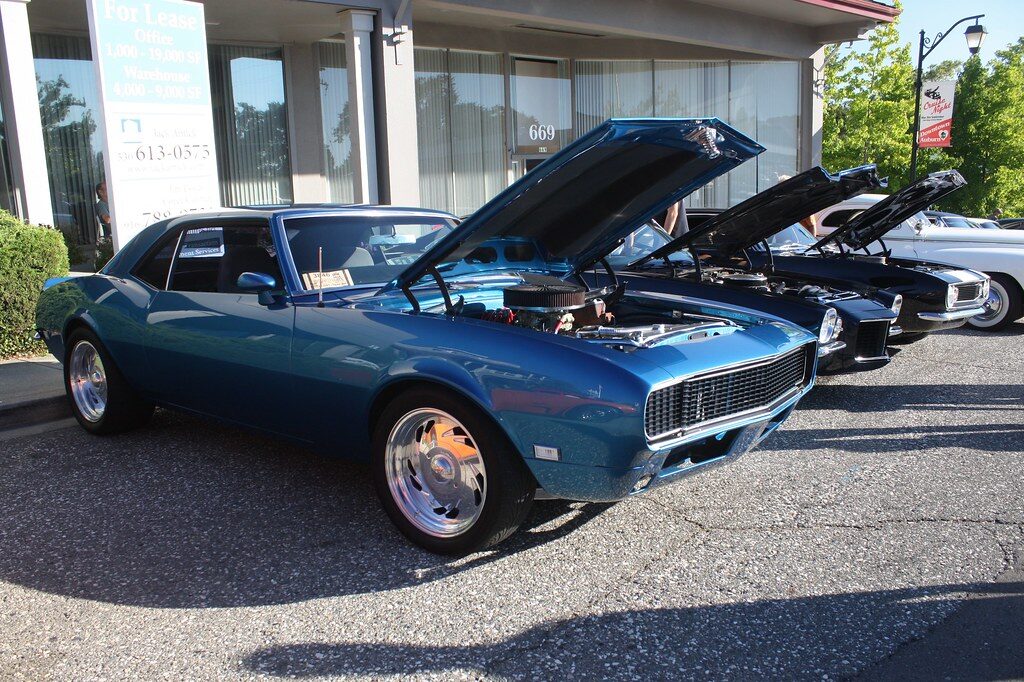
Great performance cars were practically a thing of the past in the 1970s. As emissions regulations, lower compression ratios, inflation of insurance prices and the everyday needs of the consumer became more of a priority in car design, the Detroit automakers faced mounting pressure to end the Big-Block/Steady-Performance era of the muscle car. Still, it didn’t happen overnight. It took several years for the Big-Block to completely disappear, especially in the beginning of the decade when it was common to be able to buy a Big-Block and Performance Option Pack.
The 1970 model year, at least, was another such time when American automakers were still able to put together high-displacement engines, striking styling, and fairly straightforward performance engineering without the more extreme limits that were about to arrive. Automotive enthusiasts still saw cars like the Hemi ‘Cuda, Chevelle SS 454 LS6, and Buick GSX Stage 1 whooping Detroit’s muscle-car sticks. Even as consumer demand was starting to force industry changes, engineers were still tweaking common platforms for more horsepower.
The next cars demonstrate how performance changed in the decade. Some benefitted from enormous big-blocks, yet others changed accordingly as V8 engines were replaced with smaller-displacement units in response to spiraling fuel prices and increasing motor vehicle standards. AMC persisted with its one-of-a-kind performance cars as others like Pontiac and Plymouth fought to maintain performance once the muscle-car alchemy was no longer available. These cars reveal how Detroit’s performance scene was kept alive in an era of change.
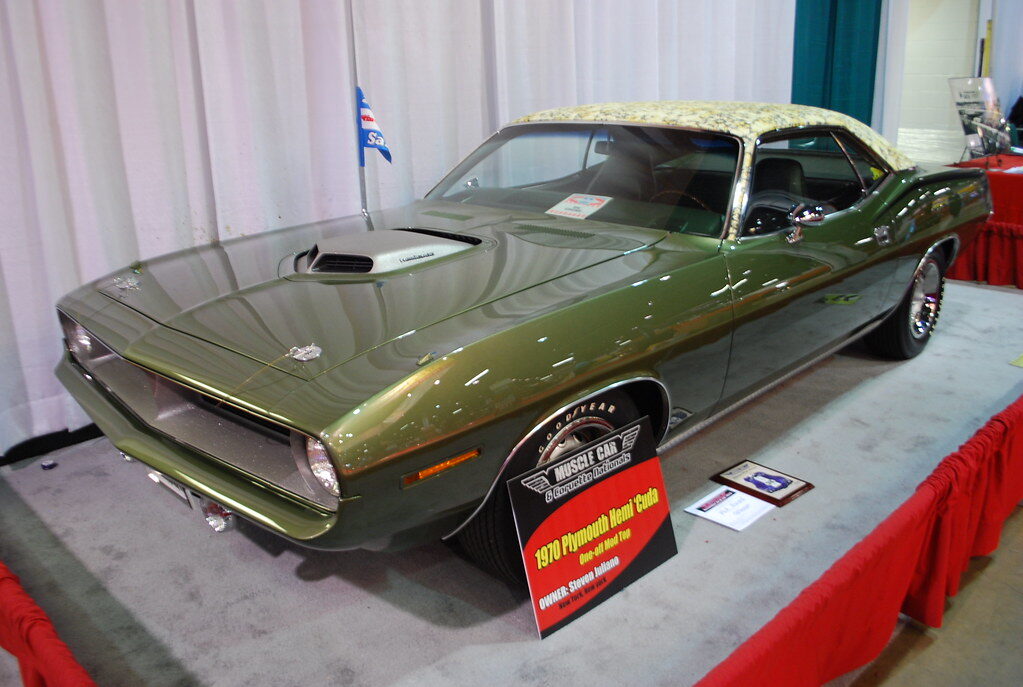
1. 1970 Plymouth Hemi ‘Cuda
For 1970, the Barracuda transitioned to the new E-Body chassis, giving the Plymouth stylists freedom to produce a far more aggressive shape than before. The wide stance, bulging fenders, and stylized rear-quarters turned the Barracuda into a much more serious high-performance machine. And at the top of the engine line-up was the famous 426 Hemi V8, with its hemispherical combustion chambers and beefy internal components making it an instant legend in the world of American musclecar fans.
Performance And Production Details:
- 426 Hemi produced 425 horsepower
- Low-13-second quarter-mile capability
- Shaker hood added distinctive styling
- Four-speed manual increased enthusiast appeal
- Limited production made examples scarce
The 426 Hemi was rated 425 horses, and that gave the ‘Cuda that muscle-car straight-line performance that characterized the era. The big-bore engine, with its stout internals and high-performance breathing was capable of lugging such well-developed examples into the low 13s in the quarter mile. The muscle cars could be optioned out with whatever flags and whistles that helped identify and make the car even more iconic, such as the iconic Shaker hood scoop. Four-speed manual transmission offered even more enthusiast options.
Since cars with the 426 were produced in very low numbers, and since the high price tag and insurance premium for large, potent engines turned many buyers away from choosing the most expensive engine options, only a small percentage of ‘Cuda models received the 426 Hemi, especially when ordered in conjunction with coveted options like the four-speed manual transmission and the Shaker hood. That is a big part of why these cars are so significant today-there just aren’t that many of them out there, and they pair a legendary Chrysler big block with one of the most iconic designs ever to come out of Detroit.
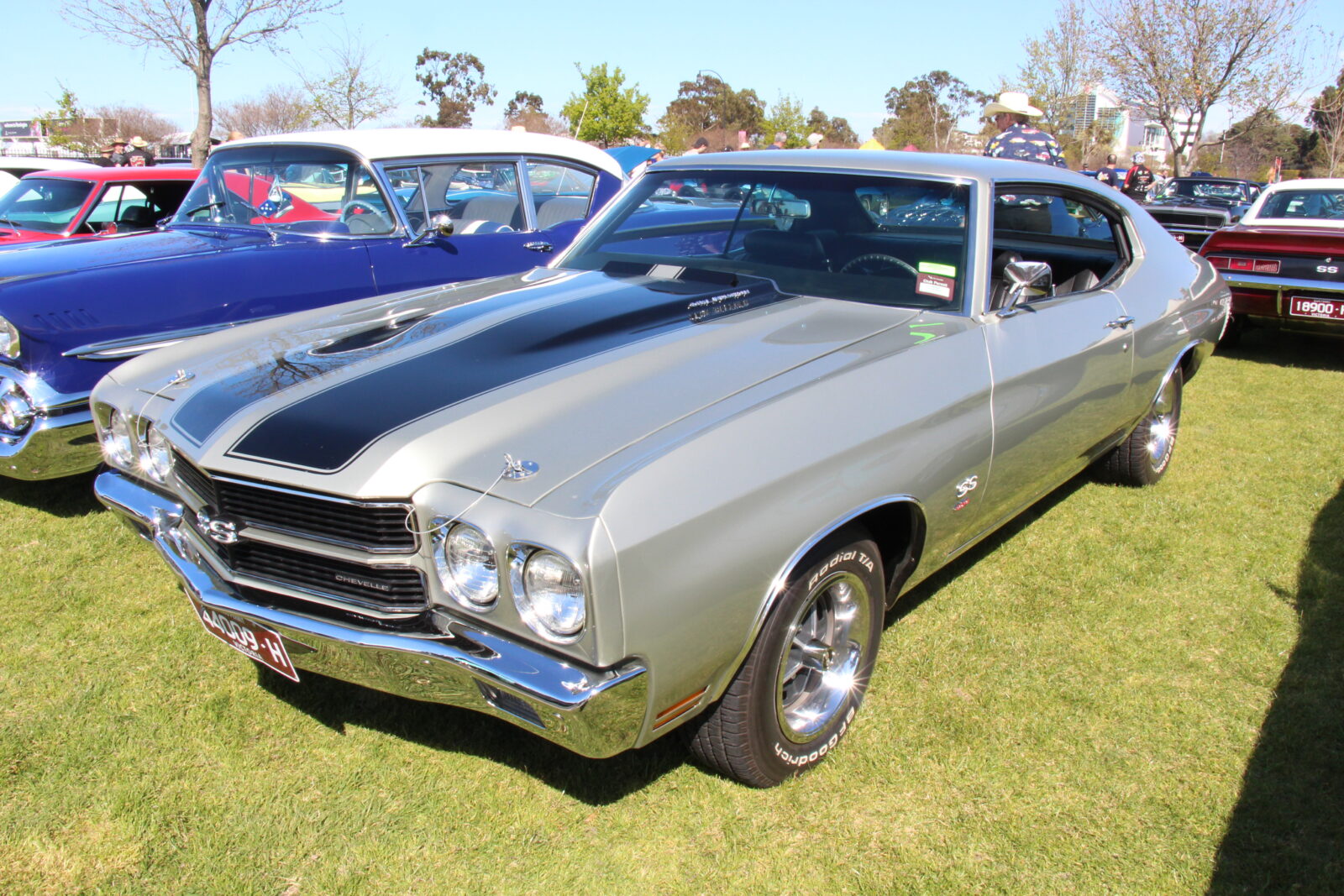
2. 1970 Chevrolet Chevelle SS 454 LS6
The 1970 Chevrolet Chevelle SS 454 LS6 was yet another excellence of the American muscle-car. GM’s previous Corporate discplacement rules that limited the size of cars for the intermediate market were abolished and Chevrolet could sell a 454 cubic inch V8 in the Chevelle. This option offered in the LS6 package provided the Chevelle with a giant-sized powerplant and cemented it as Chevrolet’s most fearsome factory muscle. The fact that it was a mid-sized car that had a big block made it powerful on the street and the track.
LS6 Performance Characteristics:
- Chevrolet rated output at 450 horsepower
- Estimates reached 470 to 500 horsepower
- Massive torque supported rapid acceleration
- High-12-second quarter-mile capability
- Expensive option limited production numbers
Chevrolet claimed the LS6 could produce 450 horses, but opinions at the time and subsequent aftermarket estimates have often claimed that the motor produced significantly more. As noted in the source, the average output is said to have been closer to 470-500 horsepower. The engine’s impressive torque and high-performance setup resulted in legendary acceleration from what was a pretty standard street-going car from the factory, and even with very little prep, many cars posted high-12 second quarter-mile times, making it one of the quickest muscle cars ever.
The LS6 was also a costly proposition, one that proved prohibitive for many customers looking to get into a new Chevelle. As a result, it remained less popular than many other Chevelle variants, making real LS6 cars much more scarce than lesser-equipped versions of the car. This scarcity has helped give the LS6 a crucial role in the car’s history-the moment when Chevrolet wedged a popular intermediate-sized car onto one of its baddest big blocks, just as legal and economic limits were tightening on that type of combination.
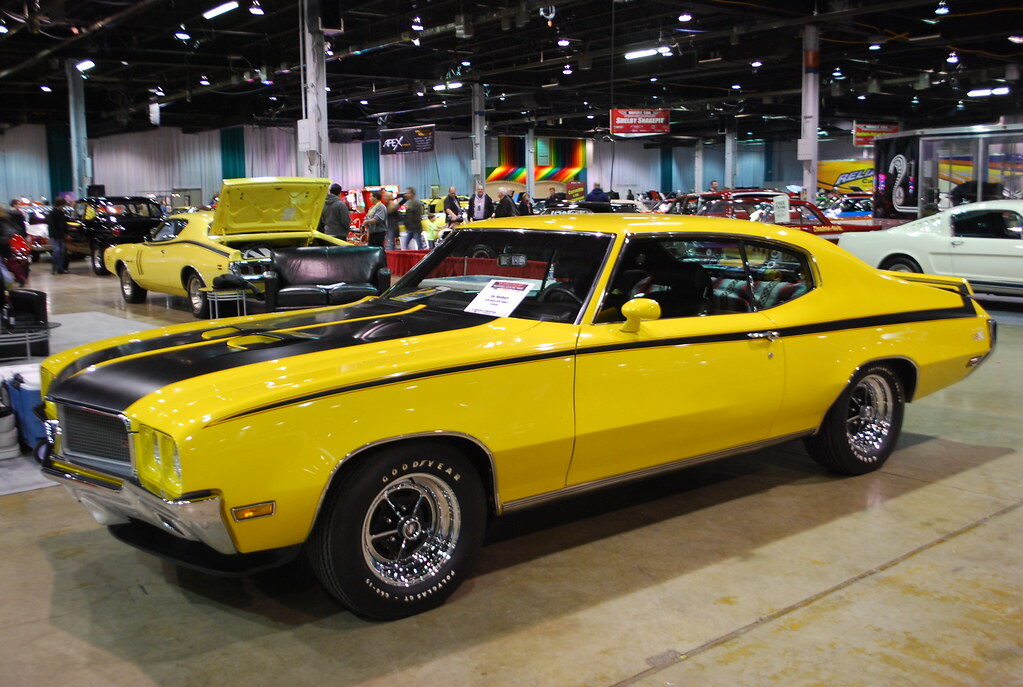
3. 1970 Buick GSX Stage 1
The 1970 Buick GSX Stage 1 proved that American musclecar performance didn’t have to be confined to Chevrolet, Pontiac, Plymouth or Dodge. Buick’s Gran Sport series already had a reputation for serious performance, but the GSX package pushed the envelope with a suitably big 455-cid V8 coupled with a striking appearance package. Buick was positioned one notch up the GM chain of command, so the GSX was an intriguing mix of sophistication, luxury-tuned character and bare-knuckle American V8 muscle. Here was a variation on muscle-car tried and true.
Stage 1 Performance And Styling:
- 455 V8 produced 360 horsepower
- Torque reached 510 lb-ft
- Strong low-end acceleration defined character
- Bold graphics emphasized performance identity
- Limited production increased modern rarity
The GSX version of the Stage 1 455 produced an extreme 360-hp and 510-lb-ft of torque at the factory. The GSX’s torque output provided the big powerhouse with excellent power throughout the low and midranges of its powerband, transforming the GSX from simply a high-horsepower package into a muscle-machine that was strong when you were tooling around town and when you wanted to get on it. It was a different muscle-car package altogether than the small, light performance cars; a different muscle car package altogether.
The outside was just as unusual. Buick delivered the GSX with daring graphics, body stripes, a rear spoiler, and famous paint colors such as Saturn Yellow and Apollo White that immediately distinguished it from other Gran Sports. Production numbers were lower, making the GSX fairly rare in the modern day. A restored GSX Stage 1 deliver a premium Buick appearance along with potent big-block muscle and is a noteworthy demonstration of how broadly the muscle-car tradition ranged across Detroit’s product lines.
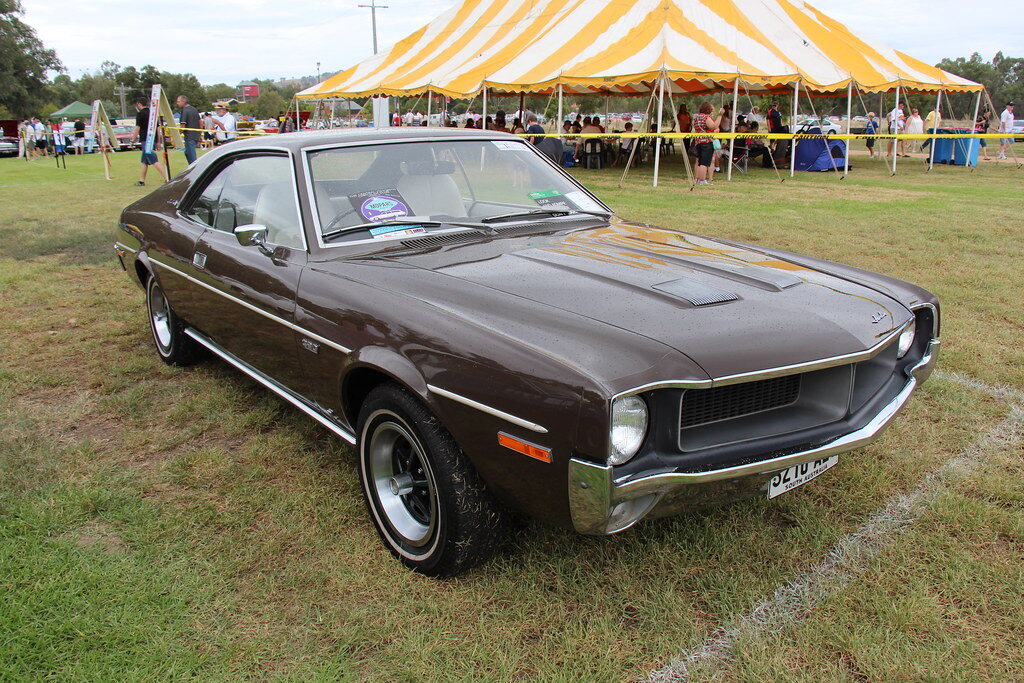
4. 1970 AMC Rebel Machine
While American Motors was in a different position from Detroit’s biggest players, the company was not ready to give up on the high-performance marketplace. And the 1970 AMC Rebel Machine was one of its clearest atrempts to counter the muscle-car movement. Instead of attempting to duplicate everything in the Big Three’s product formulas, AMC cooked up an original, showroom-issue performance car that had an aggressive appearance and a meaty V8. Its high-profile presentation in red, white and blue was hard to confuse with anything on the road, and it created a distinct identity for itself in the cramped performance-marketplace of the late 1960s and early 1970s.
Rebel Machine Performance Details:
- 390-cubic-inch V8 provided power
- Engine produced roughly 340 horsepower
- Approximately 14-second quarter-mile capability
- Bold red, white, blue presentation
- Smaller production reflected AMC’s market position
The power source was a 390-cid V8 that delivered about 340 horsepower. The combination was good for an estimated 14-second quarter-mile performance, enough to give the Rebel Machine some legitimate straightline performance without forcing AMC to match the wildest big-block versions available from Chrysler, Chevrolet, and Ford. The entire package was therefore a bundle that included unusual styling and a fairly attainable enthusiast nature that appeared to be something new but still familiar.
One of the biggest reasons the Rebel Machine hasn’t become one of the iconic muscle cars of the muscle car era was the fact that AMC had a less expansive dealer network than the Big Three Detroit automakers. Less access to dealerships meant fewer units produced, and the Rebel Machine subsequently becomes more of an individual rarity than the general population of muscle cars from the day. Despite being a performance car, its relative rarity today is because of a much more prosaic reason.
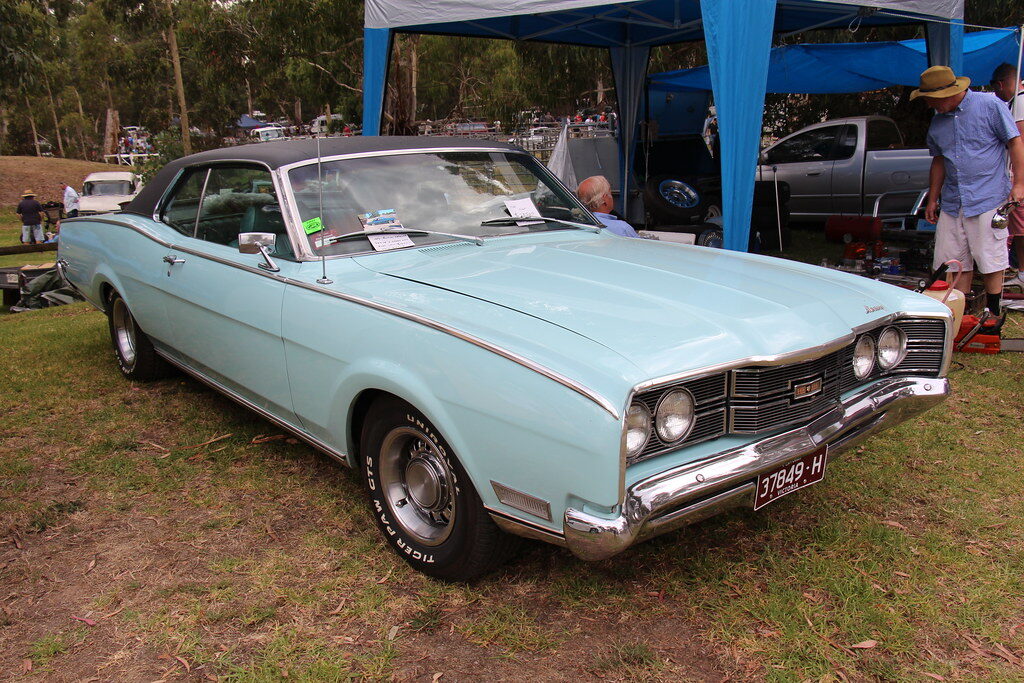
5. 1970 Ford Torino Cobra 429
The 1970 Ford Torino Cobra provided a larger and more spacious alternative to Ford’s better-known Mustang. While the Mustang dominated much of the public attention surrounding Ford performance, the Torino offered buyers a more substantial mid-size platform with plenty of room for a large-displacement V8. The Cobra package transformed the Torino into a serious straight-line performer while retaining the larger-car character that appealed to drivers who wanted more space than a pony car could provide. Its combination of size and power made it an important part of Ford’s performance lineup.
Torino Cobra Performance Features:
- 429 Cobra Jet V8 available
- Super Cobra Jet added further capability
- Output ranged around 370 to 375 horsepower
- Mid-13-second quarter-mile potential
- NASCAR influenced aerodynamic development
The most important engine choices were the 429 Cobra Jet and Super Cobra Jet V8s. Output ranged from approximately 370 to 375 horsepower, depending on configuration. With the right combination of gearing and equipment, the Torino Cobra could reach the mid-13-second range in the quarter mile. The car therefore offered performance that placed it firmly among the serious muscle machines of the period, despite receiving less attention than the Mustang in popular culture. Its larger body also gave it a character distinct from Ford’s smaller performance models.
The Torino benefited from Ford’s involvement in NASCAR. Aerodynamic development associated with racing helped influence Ford’s approach to the Torino’s body design, particularly as manufacturers increasingly recognized the value of aerodynamic efficiency at high speeds. Far fewer Torino Cobras were produced than Mustangs, leaving surviving examples considerably less common. The combination of large-car practicality, 429 power, aggressive styling, and racing influence makes the 1970 Torino Cobra an important part of Ford’s performance history and a notable example of how Ford extended performance beyond the Mustang.
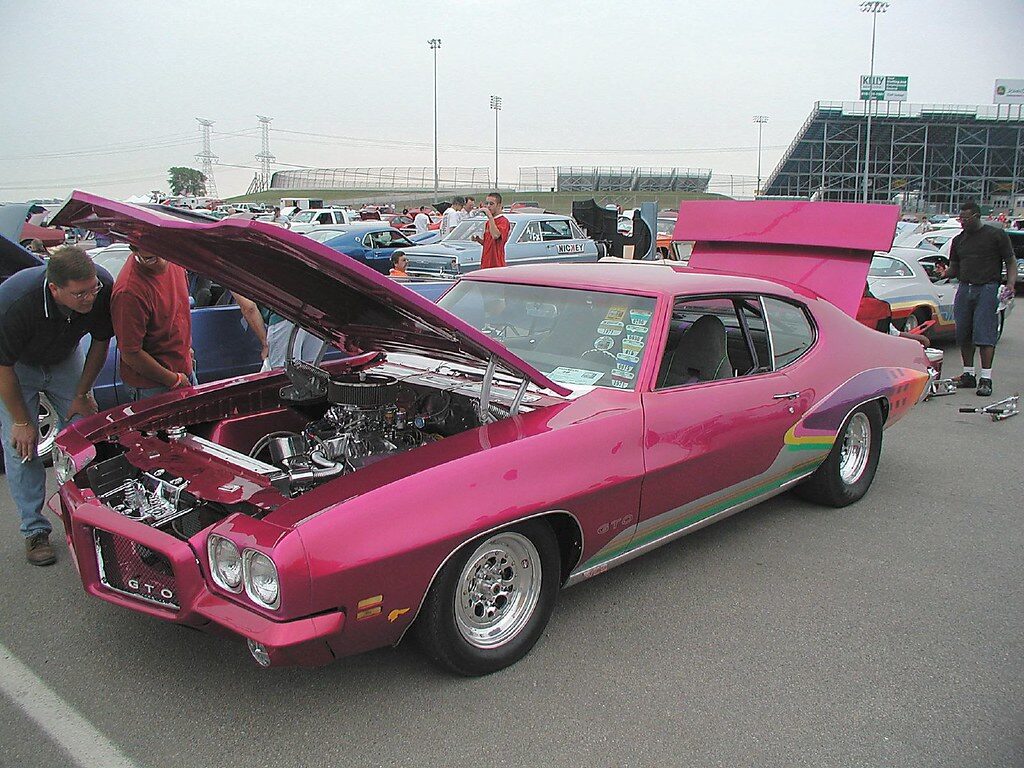
6. 1971 Pontiac GTO Judge
By 1971, the Pontiac GTO Judge was approaching the end of its production run. Pontiac had introduced the Judge in 1969 as a distinctive performance-oriented package aimed at the increasingly competitive street-performance market. Bright graphics, a rear spoiler, and other visual details gave the car an unmistakable identity. By the beginning of the 1970s, however, the market around high-performance vehicles was becoming increasingly difficult, while corporate policies and changing regulations placed additional pressure on powerful models. The 1971 version therefore arrived during a major transition in American performance-car history.
Final Judge-Year Characteristics:
- Judge package entered its final phase
- 455 High Output V8 remained available
- Large displacement preserved acceleration
- Bright graphics maintained visual identity
- Production fell to only a few hundred
Pontiac still gave the 1971 GTO Judge serious mechanical credentials. A 455-cubic-inch High Output V8 provided substantial torque and helped preserve the car’s performance character even as emissions requirements were becoming more restrictive. Large displacement remained one of Pontiac’s most effective tools for maintaining strong acceleration, even as the industry began moving away from the high-output muscle-car formula of the previous decade. The Judge therefore retained much of its mechanical identity despite the increasingly difficult environment surrounding high-performance automobiles.
Production of the Judge was limited in 1971, with only a few hundred buyers selecting the package before Pontiac discontinued the badge. That low production makes the late GTO Judge an especially uncommon representative of Pontiac’s muscle-car period. Rather than being remembered simply as another GTO variant, the 1971 model represents the closing stage of the Judge’s short but influential run. Its large-displacement V8 and distinctive appearance preserved the character of the package during a period when the entire American performance market was changing rapidly.
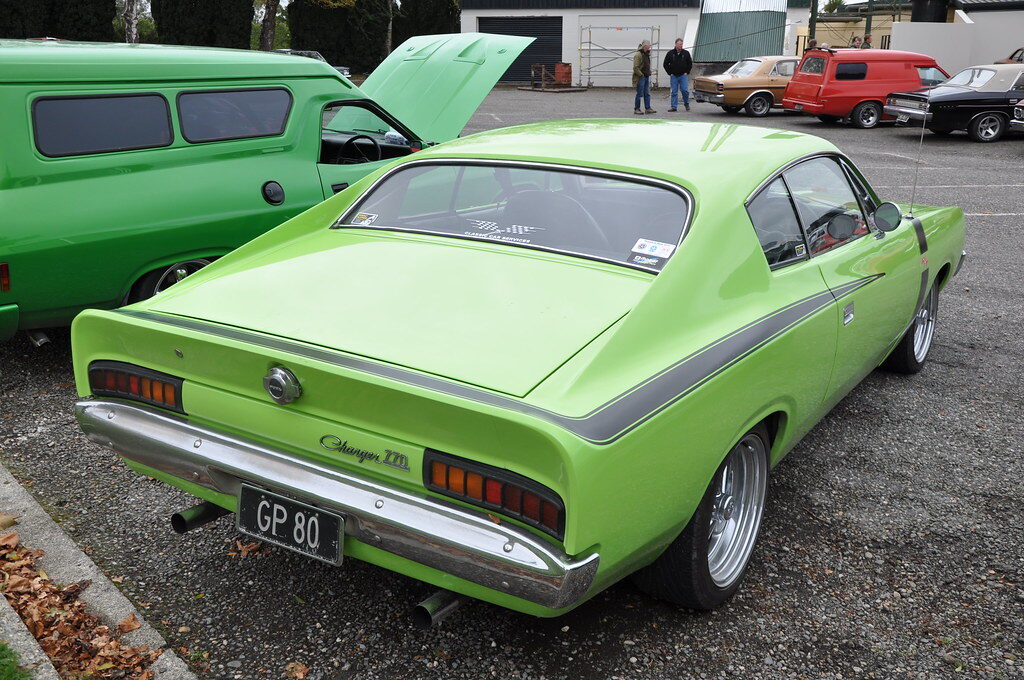
7. 1971 Dodge Charger R/T 440 Six Pack
The Dodge Charger R/T 440 Six Pack represented another important moment in the final phase of traditional Mopar muscle-car performance. The Six Pack system used three two-barrel carburetors to provide substantial airflow and aggressive throttle response. The arrangement had already become associated with famous Chrysler performance models such as the Super Bee and Road Runner. By 1971, however, increasingly strict emissions requirements and higher insurance costs were making these high-performance configurations much more difficult to sustain. The Charger therefore represented a powerful formula approaching the end of its era.
Six Pack Configuration Details:
- 440-cubic-inch V8 powered the Charger
- Three two-barrel carburetors supplied induction
- Factory rating reached 385 horsepower
- Hidden headlights emphasized aggressive styling
- Insurance costs affected buyer demand
The Charger R/T 440 Six Pack was officially rated at 385 horsepower and delivered substantial torque throughout the engine’s operating range. The combination of the 440-cubic-inch V8 and multi-carburetor induction system gave the Charger a distinctive performance character. Its visual identity was equally aggressive, with features such as hidden headlights and an available loop-style bumper contributing to the model’s imposing appearance. The result was a car that remained unmistakably Mopar even as the traditional muscle-car environment began disappearing.
The changing market quickly affected production. High insurance premiums made large-engine performance cars more expensive to own, while regulatory requirements were beginning to restrict the engines and induction systems manufacturers could offer. As a result, the 440 Six Pack configuration became considerably less common. The 1971 Charger therefore occupies an interesting place in Dodge history: it preserved the classic formula of big displacement and multiple carburetors at a moment when that formula was already becoming increasingly difficult to maintain.
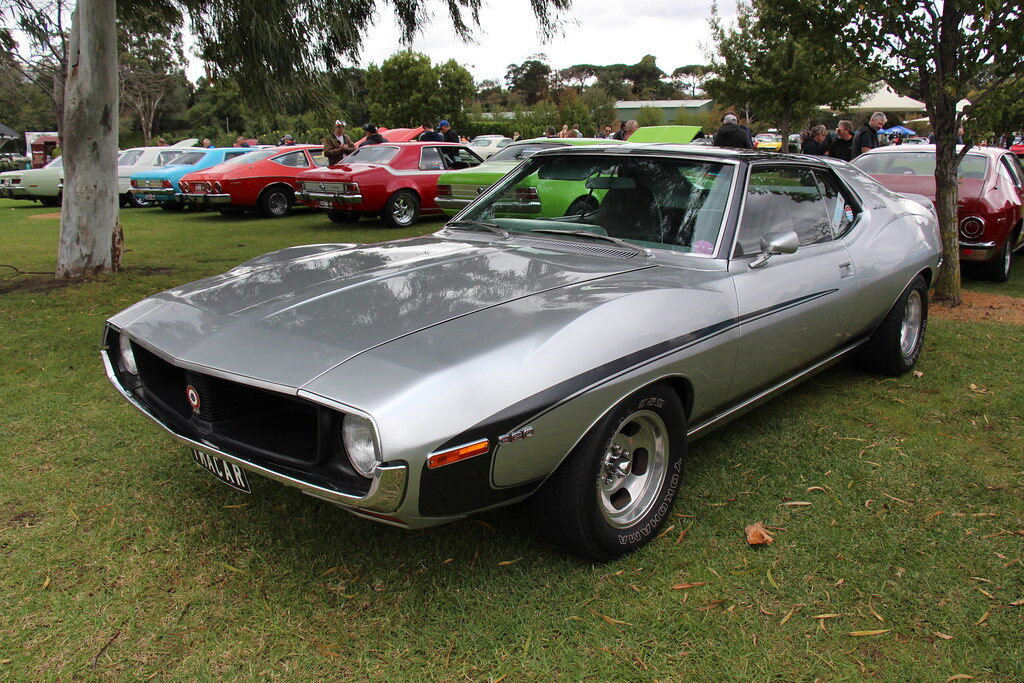
8. 1971 AMC Javelin AMX 401
The 1971 AMC Javelin AMX 401 showed that AMC could still compete aggressively in the pony-car segment despite its smaller market presence. The Javelin received significant styling changes for 1971, including distinctive flared fenders influenced by AMC’s involvement in Trans-Am racing. The wider body gave the car a more purposeful appearance and separated the redesigned Javelin from many of its competitors. The changes were not simply cosmetic; they reinforced the connection between AMC’s road cars and its motorsport ambitions while giving the model a distinct visual identity.
Javelin AMX Performance Elements:
- 401-cubic-inch V8 topped lineup
- Engine produced 330 gross horsepower
- Flared fenders emphasized wider stance
- Trans-Am influenced exterior styling
- Limited production increased enthusiast interest
At the top of the Javelin range was the AMX equipped with AMC’s 401-cubic-inch V8. The engine was rated at 330 gross horsepower and gave the car the kind of substantial performance expected from a serious American pony car. AMC’s decision to offer such a large engine demonstrated that the company was still willing to challenge larger competitors directly. The combination of distinctive styling and substantial V8 power gave the Javelin AMX a character that was distinctly AMC rather than simply another interpretation of a mainstream Detroit formula.
Production numbers remained relatively low, reflecting AMC’s smaller position in the American automotive market. That scarcity has helped make factory 401 Javelin AMX models particularly interesting to enthusiasts today. The car represents an unusual intersection of motorsport-inspired styling, large-displacement American performance, and the engineering ambition of a manufacturer operating with considerably fewer resources than Ford, General Motors, or Chrysler. Its individuality is one of the reasons the 1971 Javelin AMX remains memorable within the broader history of classic American performance cars.
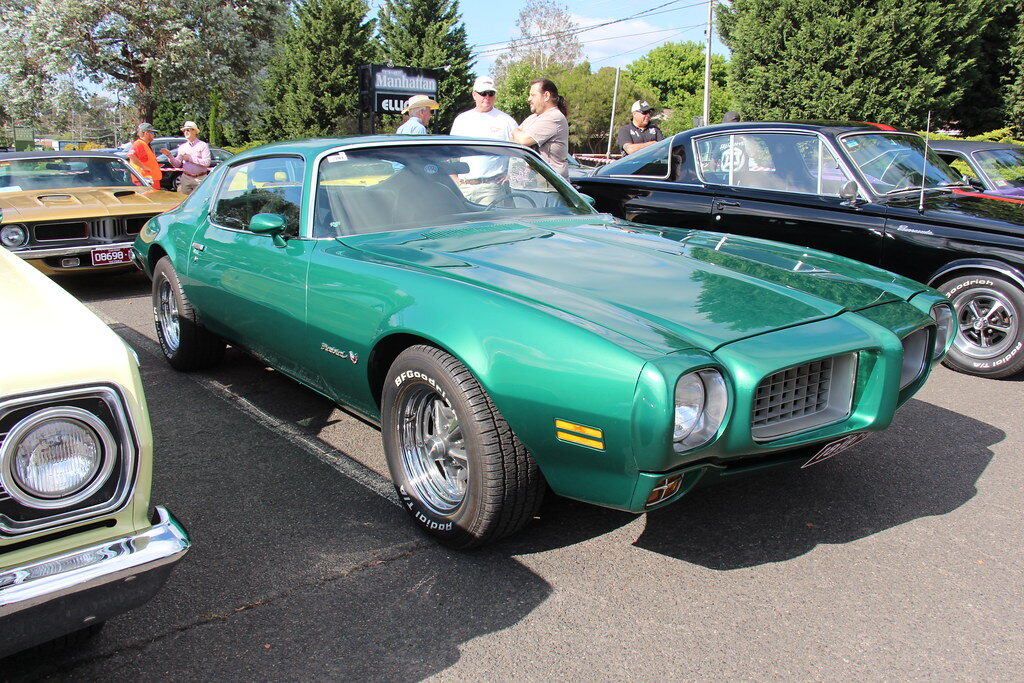
9. 1973 Pontiac Firebird Trans Am SD-455
The 1973 Pontiac Firebird Trans Am SD-455 appeared at a time when most manufacturers were moving toward lower-output engines. Pontiac nevertheless developed the Super Duty 455 as a serious high-performance powerplant, giving the Firebird a remarkable mechanical package during the emissions era. The engine used heavy-duty components including forged internal parts, specialized cylinder heads, and a high-nickel block designed to withstand demanding operating conditions. Pontiac’s approach demonstrated that performance engineering had not disappeared even as the industry was being forced to change. The SD-455 preserved an important part of Pontiac’s performance identity.
Super Duty 455 Engineering:
- Heavy-duty internal components were used
- Forged parts supported engine durability
- Specialized cylinder heads improved capability
- High-nickel block handled demanding use
- Large displacement maintained strong acceleration
The SD-455 was officially rated at 290 net horsepower, a figure that reflected the industry’s transition to more realistic net-horsepower measurement rather than the older gross-horsepower ratings. Period road tests nevertheless demonstrated that the engine delivered substantial real-world performance. Its large displacement and durable internal components allowed the Trans Am to retain strong acceleration at a time when many other performance cars were becoming progressively less powerful. The engine therefore represented Pontiac’s effort to preserve serious performance despite a rapidly changing regulatory environment.
Pontiac produced fewer than 300 SD-455 Trans Ams for the 1973 model year according to the source, making the model an exceptionally limited part of the Firebird’s history. Its rarity was combined with a particularly important place in the development of late-era American performance cars. The SD-455 showed that an automaker could still build a serious muscle machine even while emissions regulations and market pressures were reshaping the industry. It became an important example of performance surviving during a difficult transition.
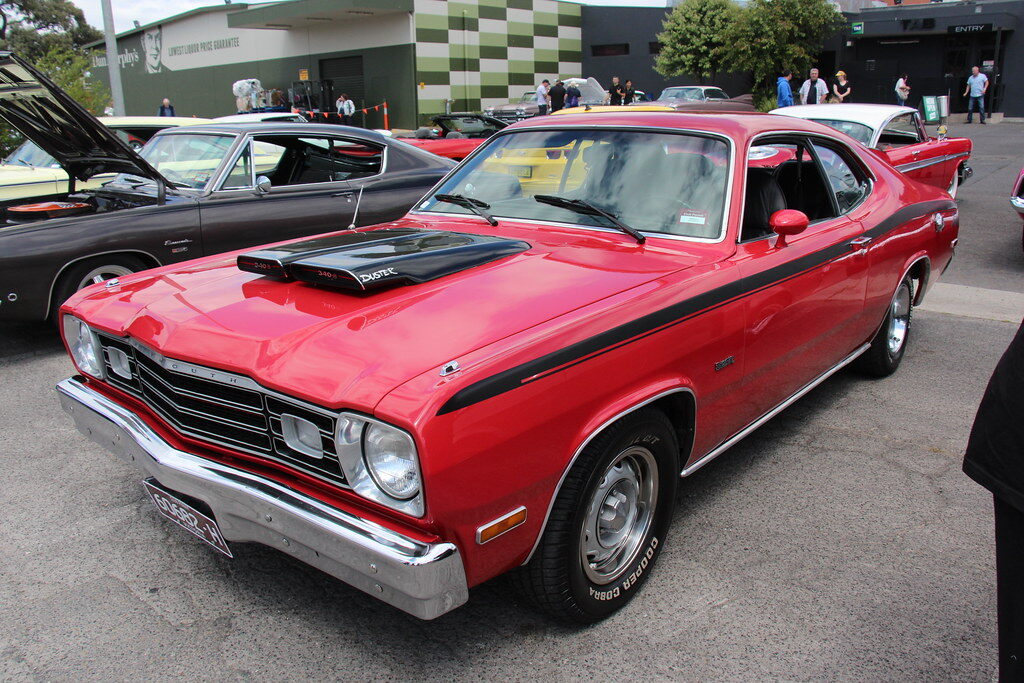
10. 1974 Plymouth Road Runner 360
By 1974, the Plymouth Road Runner had entered a very different automotive environment from the one that had produced the legendary big-block muscle cars only a few years earlier. Rising fuel costs, tightening regulations, and changing consumer priorities had made enormous engines increasingly difficult to justify. Instead of abandoning the Road Runner’s performance identity entirely, Plymouth adapted by using the 360-cubic-inch small-block V8 as a more suitable powerplant for the changing market. The later Road Runner therefore represented a significant shift in the traditional muscle-car formula.
Road Runner’s Changing Formula:
- 360-cubic-inch V8 powered the car
- Smaller engine reflected market changes
- Fuel costs influenced vehicle development
- Regulations pressured large-displacement performance
- Road Runner graphics remained recognizable
The smaller engine represented a significant shift from the enormous big-blocks that had previously defined Chrysler’s most powerful muscle cars. Yet Plymouth retained recognizable elements of the Road Runner identity. Cartoon graphics, side striping, and distinctive front-end treatment continued to connect the later car with the nameplate’s performance heritage. The result was not the same kind of machine as an earlier Hemi or 440-powered Road Runner, but it still carried the visual personality that had made the model famous. The car demonstrated how Plymouth adapted an established name to a changing automotive market.
Surviving examples can be surprisingly difficult to find in untouched condition because many were used as everyday cars or modified during their lives. That history is important because later performance cars were often treated less like collectibles and more like affordable transportation with sporting potential. The 1974 Road Runner therefore represents a different kind of rarity from the ultra-low-production big-block cars. Its significance comes from showing how Plymouth attempted to preserve a performance identity after the traditional muscle-car formula had begun to disappear.


