Ten One-Hit Wonder Vehicles That Never Received a Direct Successor
There have been many popular or even notorious vehicles in automotive history that long outlived the short time they were in production, like The Kaiser Darrin with its unique sliding doors, the Studebaker Avanti with its sporty carbonfiber all-new body, the supercharged V8 in the Packard Hawk, the safety engineered Bricklin SV-1, and the Cobra with its European sports car precision married to American muscle. While not every one of these short-lived, outlandish models led to a long family of models, each one dared to be different for just a time.
And a handful of reasons accounted for their demise financial struggles, manufacturing challenges, costly price tags, and shifting market requirements. The GMC Syclone packed supercar performance into a small pickup, the DeLorean DMC-12 delivered iconic gullwing doors and stainless steel bodywork, and the Autozam AZ-1 fitted an exotic mid-engine layout to a tiny kei car. Conversely, the Stutz Blackhawk and Jensen C-V8 each took their own unique approaches to the luxury grand touring formula. Despite their short production runs, these 10 vehicles all carved out long-lasting identities within the automotive collectables universe. Their stories reveal how a vehicle doesn’t need decades or multiple generations of production to gain notoriety.
1. Kaiser Darrin
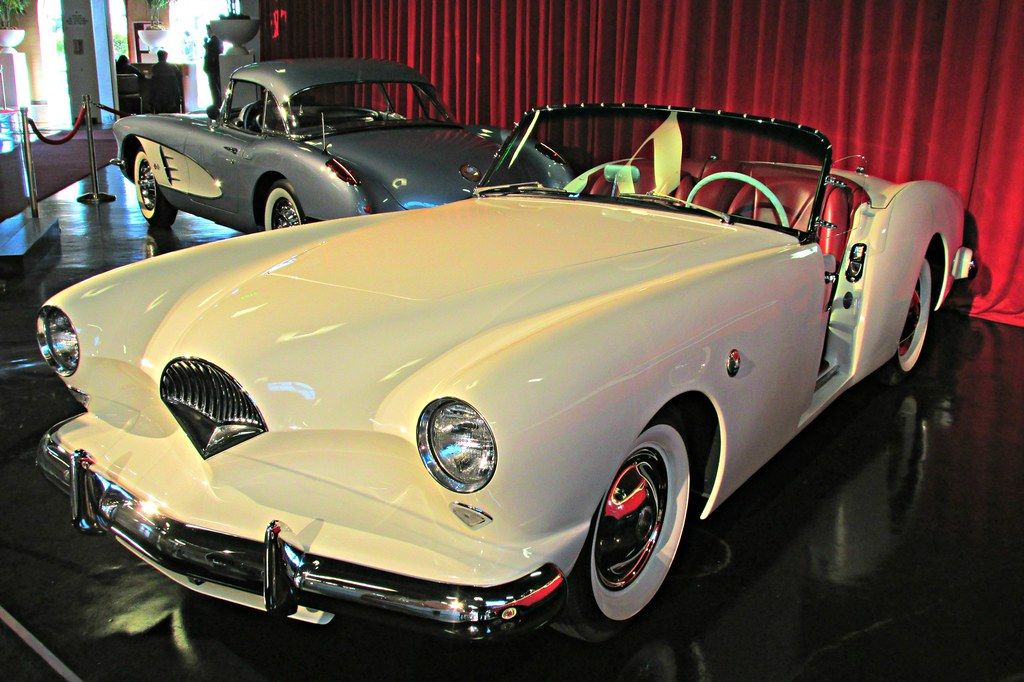
The body on the 1954 Kaiser Darrin was arguably the best looking of the American set when you consider the overall look of the car, combined with the fact it was the first all fiberglass sports car. The designer of this little beauty was none other than Howard Darrin. The 1954 Kaiser Darrin had all kinds of interesting features, from a light weight fiberglass body to sliding pocked doors that slid into the front fenders, the “pursed lips” front grille was quite distinctive, and the car was full of other interesting features that kept people talking. Production on these little beauties, all 435 of them, was short lived when the company pulled the plug, but Darrin bought leftover bodies off the production line and tricked out a handful with Cadillac engines.
What Made the Kaiser Darrin Special:
- Lightweight fiberglass body construction
- Innovative sliding pocket doors
- Distinctive front grille design
- Only 435 units produced
- Cadillac-powered examples created later
The Kaiser Darrin may have demonstrated how far automotive designers could take traditional roadster styling. Its sliding doors are an interesting example of that, opening into the front fenders rather than extending outwards. Unfortunately, that innovative styling was not enough to secure long-term viability for the model, and only 435 were built. The choice by Howard Darrin to acquire the remaining body shells and equip those remaining with Cadillac engines helped write the vehicle’s history into the annals of American automotive manufacturing, however. Although it has not been direct production successor, the Darrin’s fiberglass body and innovative design ensures it has garnered a dedicated following in the collector community.

2. Studebaker Avanti
For 1963, the Studebaker Avanti was introduced with the goal of bringing Studebaker back to the forefront of performance vehicles. Its wind-tunnel-tested fiberglass bodywork, front disc brakes, electric windows and supercharged V8 were revolutionary at the time. With the slogan of “the world’s fastest production car,” Studebaker set 29 world records at Bonneville. When Studebaker ran out of capital and was forced to close its South Bend plant, production of the avanti of which only 4,600 were made in the two-year production run was halted. Two dealers purchased the tooling and rights to the design to make the hand-built Avanti II, which used Chevrolet V8s and carried the torch in small numbers well into the 21st century.
Avanti’s Performance and Engineering Highlights:
- Introduced for the 1963 model year
- Wind-tunnel-tested fiberglass bodywork
- Optional supercharged V8 engine
- Set 29 Bonneville speed records
- Original production exceeded 4,600 units
The Avanti was also an adventurous attempt to establish Studebaker as a stronger performance marque. No other American car of the period combined aerodynamic styling, front disc brakes, electric windows, and supercharged V8 engines in a production car. The original generation of the model was unable to have a prolonged run because of the company’s financial difficulties. The closing of the South Bend factory ended it after about two years of production. The name lived on, however, because rights to produce the vehicle and its components were bought by two local dealers, who gave the design a second life as the Avanti II with Chevrolet V8 power.
3. Packard Hawk
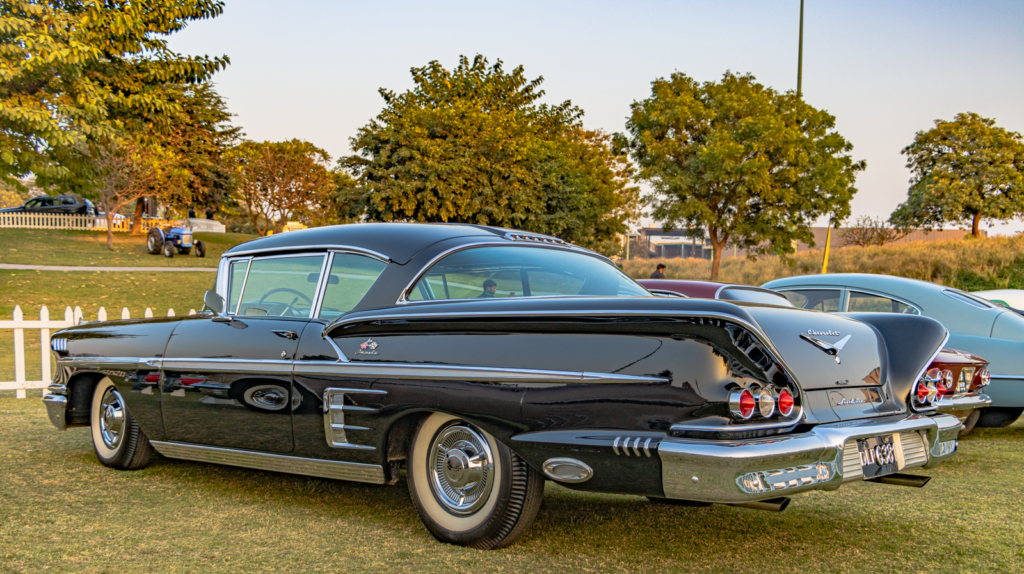
The 1958 Packard Hawk was an old car that marked the last attempt to preserve the nameplate’s legendary heritage. Based on the Studebaker Golden Hawk, the car was equipped with an open front grille, fiberglass nose, and a slight decrease in elevation in the deck lid region with fins on the outer edges trimmed with strips of polished metal. Powertrain components consisted of a supercharged 289-cubic inch V8 engine with 275-hp at its disposal. The interior of the cabin was appointed with extensive leather materials celebrating the car’s high-end appeal along with a handful of rare manual transmission-equipped options fitted with overdrive. Only 588 examples were produced before the golden arch of Packard would fade forever.
The Packard Hawk’s Distinctive Features:
- Supercharged 289 cubic inch V8
- Engine produced 275 horsepower
- Fiberglass nose and sharp fins
- Full leather luxury interior
- Only 588 examples manufactured
The Packard Hawk mixed unusual design with a strong engine and a luxurious interior. Characterized by a broad front grille, fiberglass nose, and a swept-back rear deck, the Hawk had a look that was memorable. The supercharged V8 under the hood pushed out 275-horsepower, and the luxurious leather seats matched the car’s image. Even more interesting, the manual transmission could be ordered with an overdrive, which was rare on most muscle cars of the era. However, the Hawk was introduced during the waning days of the Packard marque, and only 588 were built. It never would form the basis of a larger model range, but it would be an important chapter in the story of Packard’s death knell.Bricklin SV-1

4. Bricklin SV-1
Founded in 1974, the Canadian Bricklin SV-1 was a specialized sports car that was designed to protect its driver and passengers. The car had all of the typical safety features as well as power gull wing doors, an all fiberglass body, a steel safety frame with internal roll cage, and impact absorbing bumper. The SV-1 was limited to a 360 cubic inch AMC V8 at first but was later fitted with a Ford V8 as well. At 3,400 pounds, the safety frame weighed more than the engine which meant the car was not ideal for performance. Due to manufacturing delays and panels warping, the company was shut down in 1975, after making just 2,854 cars.
Safety-Focused Design and Engineering:
- Power-operated gullwing doors
- Fiberglass body construction
- Integrated steel frame structure
- Internal roll cage protection
- Production ended after 2,854 vehicles
The engine was designed to protect the driver in a crash (by playing an integral part in the car’s structure), while its steel frame, internal roll cage, and hit-absorbing bumpers, were innovative safety features. Unique gullwing doors and a wedge-shaped body, also set the car apart. Unfortunately, such safety features added weight, impairing performance, and initial cars came with an AMC V8, before the car-makers switched to a Ford V8 replacement. Additionally, manufacturing issues (including warping body panels) created further problems, and the car-maker ceased production in 1975, after only 2,854 cars had been completed.
5. AMC Rebel Machine
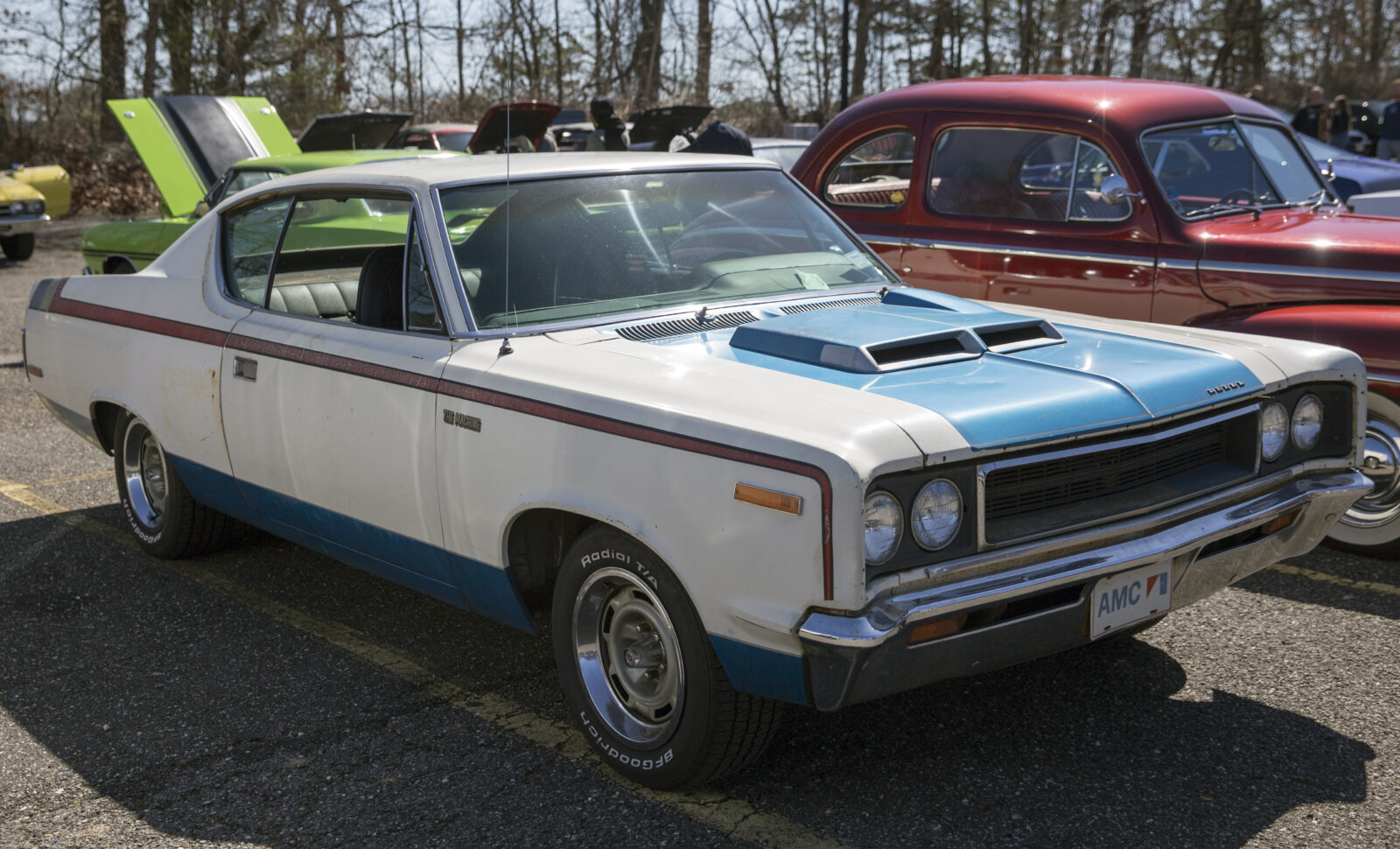
American Motors Corporation actually debuted the Rebel Machine as their own ultra-high performance muscle car for the 1970 model year. Built in conjunction with Hurst, the machine was fitted with a 390 V8 engine producing 340 horsepower, race-ready suspension and heavy duty parts, power disc brakes, and 15-inch specialty wheels. The first 1,000 cars came in an exclusive factory paint scheme of red, white, and blue and could run quarter mile times in the mid 14 second range while still being available at the showroom floor as a true muscle car. Other standard factory paint schemes with matching trim packages eventually followed for the remaining cars with a total production of only 2,300 cars.
Performance Details of the Rebel Machine:
- 390 V8 engine configuration
- Produced 340 horsepower
- Developed alongside Hurst
- Mid-14-second quarter-mile performance
- Total production reached 2,300 units
The Rebel Machine was designed to be one of the best all-around muscle cars available for sale with a large motor and racing equipment. The 390 V8 engine had 340 horsepower, and heavy-duty suspension parts and power disk brakes complemented its high-performance intent. The paintjob also was pretty unique, with the first 1,000 repaint schemes being those familiar red, white and blue bands, while later cars had their paint schemes but with factory matching trim packages. However, the muscle car fanbase wasn’t overwhelmed when it launched, and with only 2,300 built, it is one of AMC’s rarest and shortest-lived muscle cars.

6. GMC Syclone
It revolutionized pickup trucks by offering supercar performance from a very small truck package. Its modest looking exterior concealed a turbocharged 4.3-liter V6 engine making 280 horsepower and 350 pound-feet of torque. Backed by a unique all-wheel-drive system and sport-tuned suspension, the Syclone could accelerate from 0 to 60 mph in well under five seconds and even managed to surpass a Ferrari 348 TS during a quarter mile drag race test. Designed exclusively for street use, the Syclone had no capacity for cargo or towing like traditional pickups. Production of the Syclone lasted just one calendar year, with 2,995 being produced in 1991 and a handful being produced in 1992 as well. It remains a highly collectible vehicle that established that these utility trucks could be very fast vehicles.
Syclone’s Unusual Performance Package:
- Turbocharged 4.3-liter V6 engine
- Produced 280 horsepower
- Delivered 350 pound-feet torque
- Reached 60 mph under five seconds
- All-wheel-drive performance setup
At the time, the Syclone was the antithesis of pickup-truck expectations. Instead of everything that was lacking, power and handling were the priorities. The turbocharged V6, all-wheel-drive system, and sport-tuned suspension all added up to a unique package in a small truck. The Syclone’s ability to run 0-to-60 mph in less than five seconds was remarkable, and its drag-race run against the Ferrari 348 TS was almost unthinkable for a pickup. As a trade-off for the truck’s identity of speed and handling, the Syclone was light on the traditional pickup truck chores, and only 2,995 copies were made for the first year, with a few extra 1992s built.

7. Stutz Blackhawk
Built for an exclusive market, the 1971 Stutz Blackhawk was a high-priced and exclusive luxury grand tourer. Hand-built to order by local European artisans from a Pontiac Grand Prix chassis, each was built over the course of 1,500 hours. Available with 350 and 425-horsepower V8 engines, the combination of muscle cars from the USA and grand touring European design was unique, with interior features including top-quality Connolly leather upholstery, real wood finishes, heavy-duty carpeting, and a water and satin lacquer coating the exterior in multiple layers, highly polished. The first production Blackhawk sold to Elvis Presley while other high-profile names, such as Frank Sinatra and Sammy Davis Jr., reportedly commissioned their own Blackhawks. Total production run, through 1987, is believed to be between 500 and 600.
Luxury and Craftsmanship of the Blackhawk:
- Individually assembled in Italy
- More than 1,500 crafting hours
- V8 engines produced up to 425 horsepower
- Connolly leather and wood trim
- Estimated production of 500-600 units
“American muscle meets Italian art” was the tagline for Stutz Blackhawk, which combined tough American mechanics with intricate Italian design. Based on the body and chassis of a Pontiac Grand Prix, the hand-assembled vehicle required over 1,500 hours of work to produce. The luxury interior came with high-end leather and real wood interior trim, while the bodywork was finished with hand-polished layers of lacquer. Its luxury exclusivity proved popular with celebrities like Elvis Presley, Frank Sinatra and Sammy Davis Jr. The first production Blackhawk went to Presley, securing the car’s infamy with the stars. Production continued through 1987, although only an estimated 500 to 600 were ever built in the car’s single generation, ensuring the Blackhawk a truly rarefied place among grand touring cars.

8. Jensen C-V8
Manufactured from 1962 to 1966, the Jensen C-V8 was a unique pairing of elegant British coachwork and brawny American V8 muscle. Constructed with a sleek fiberglass body atop a steel chassis, the C-V8 drew power from Chrysler’s big-block V8 engine to power the cruiser from a standstill to 60 in less than 7 seconds and over 130 mph. The grand tourer offered all-day comfort and luxurious cabin touches, but its exterior design was certainly contentious. Very few C-V8s were produced fewer than 500 before the Jensen company transitioned to other models such as the Interceptor, making the C-V8 a sought-after and exotic grand touring hybrid.
Jensen C-V8’s Engineering and Speed:
- British coachbuilt grand tourer
- Lightweight fiberglass body
- Chrysler big-block V8 engine
- Reached 60 mph under seven seconds
- Top speed exceeded 130 mph
An unusual combination of British styling and American potency, the Jensen C-V8’s body was built in fiberglass while the underpinnings were steel. The big V8 from Chrysler delivered brisk acceleration and a top speed of more than 130 mph to this grand touring sports car, while interior appointments enhanced its touring abilities. The styling of the car’s exterior was odd for the time period, and that probably kept sales down, particularly in the US fewer than 500 were produced between 1962 and 1966 before Jensen moved on to various other models, up to the later Interceptor. Despite not having a C-V8 built as a direct successor, this is still an important step along Jensen’s high-performance grand touring cars.

9. DeLorean DMC-12
The ’82 DeLorean DMC-12 by Giorgetto Giugiaro created a clear visual impact with its stainless-steel body panels and signature gullwing doors. The car mounted a rearmounted 2.8-liter V6 engine co-developed by Peugeot, Renault and Volvo with just 130 horsepower behind the cabin. Its mechanical power proved somewhat underwhelming, but not its futuristic styling which attracted instant attention when it was unleashed. The DMC-12 ground to a halt in production due to financial difficulties and legal concerns after only around 9,000 units had been completed, but it cemented itself in cinematic history as an icon of all things popular culture. Its short-lived production run and its unmistakable design have made it one of the most easily identifiable and desirable models of the single-generation era.
The DeLorean’s Iconic Design Features:
- Designed by Giorgetto Giugiaro
- Unpainted stainless-steel body panels
- Distinctive gullwing doors
- Rear-mounted 2.8-liter V6 engine
- Approximately 9,000 units manufactured
The DeLorean DMC-12 was not a high performer in terms of the mechanicals. The standout feature was the innovative, futuristic design with its stainless-steel panels and distinctive gullwing doors. The DMC-12 was powered by a rear-mounted V6 engine that offered 130hp not bad, but a little modest considering the DMC-12’s flamboyant looks. The DeLorean’s production was brought to an abrupt halt by financial difficulty, as well as legal entanglements around 9,000 DeLorean DMC-12s were manufactured before production ceased. Fortunately, thanks to the film industry, the DeLorean is now a well known and rather enigmatic figure on our streets today.
10. Autozam AZ-1
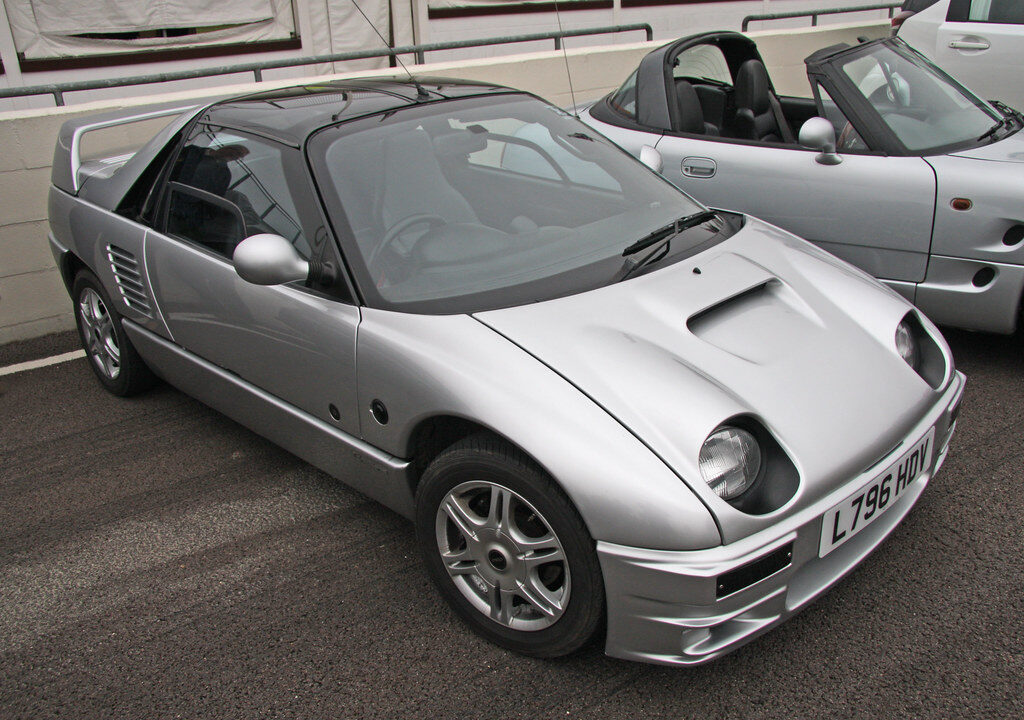
The AZ-1 was a mid-engine Japanese sports car sold by Mazda in the 1990s, imported from Japan under Mazda’s Autozam marque. It was built from 1992 and designed to meet the kei car regulations in Japan, but with exaggerated gullwing doors and a very small, lightweight body to still offer nimble performance. With a turbocharged 657 cc (40.1 cu in) three-cylinder engine producing 64 PS (47 kW 64 hp) and five-speed manual transmission, the small body and powerful engine promised great excitement, but the high price and Japan’s recession from 1991 cut sharply into its sales. With a production of just 4,348 units, there was no direct successor after its commercial cycle expired in 1998, although the car has gained a loyal following. Its exotic mid-engine layout and minimal proportions make it one of the more interesting micro sports cars.
What Set the Autozam AZ-1 Apart:
- Introduced under Mazda’s Autozam brand
- Mid-engine sports coupe configuration
- Turbocharged 657 cc three-cylinder engine
- Produced 64 horsepower
- Just over 4,300 units built
The Autozam AZ-1 proved that you didn’t need a giant to experience a unique sports-car experience. Its mid-engine layout, sparing use of weight-saving materials, and gullwing doors gave it an exotic aura as an automotive oddity. The turbocharged 657 cc engine boasted 64 horsepower and was paired with a five-speed manual transmission. But the car’s high sticker price proved difficult to justify, especially given the recession that clutched the country in the early ’90s, and only a few over 4,000 examples were built before it disappeared into obscurity and an unspoken succession. Its oddball construction and appearance earned it a following among enthusiasts, however.