Engineering the SR-71 Blackbird: Speed, Stealth, and the Mach 3.5 Debate
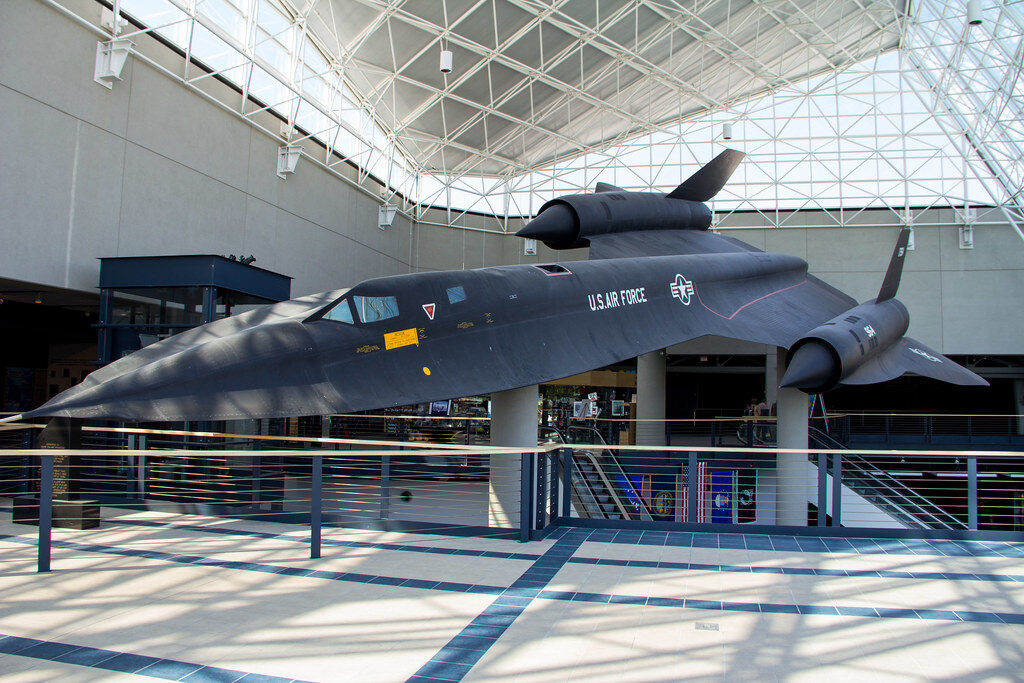
Perhaps the most amazing achievement in aviation is the Lockheed SR-71 Blackbird. This was a plane designed at the height of the Cold War, where demands for reconnaissance forced engineer to try, and reach, capabilities previously unimaginable. Capable of flying at greater heights and faster speeds than a conventional aircraft, the Blackbird flies in excess of 80,000 feet and travels at in excess of mach 3.2. At these heights, the atmosphere thins so significantly that the sky goes dark, and speed becomes the Blackbird’s most effective defense.
The SR-71 was more than just a souped-up version of existing spy aircraft-nearly all its features had to be re-examined to accommodate incredible speed, altitude, heat, and aerodynamic stress. This all culminated in a plane of Titanium construction, unique propulsion, low radar detectability, advance reconnaissance technology, and pressure suits. The fact that Lockheed was able to develop the SR-71 through Skunk Works shows how unorthodox engineering was critical for solving problems that normal aircraft technology simply would not overcome.
The Blackbird served beyond its function of reconnaissance and became a symbol of aspiration to technological achievement. In terms of gathering information on an elusive enemy, it redefined how speed and altitude effected survivability, and in spite of being retired more than 20 years ago is still to be admired as one of a mere handful of manned aircraft to come close in terms of sustained velocity, altitudes sustained and technical marvel that defined it.
1. Mach 3 Speed and Extraordinary Flight Performance
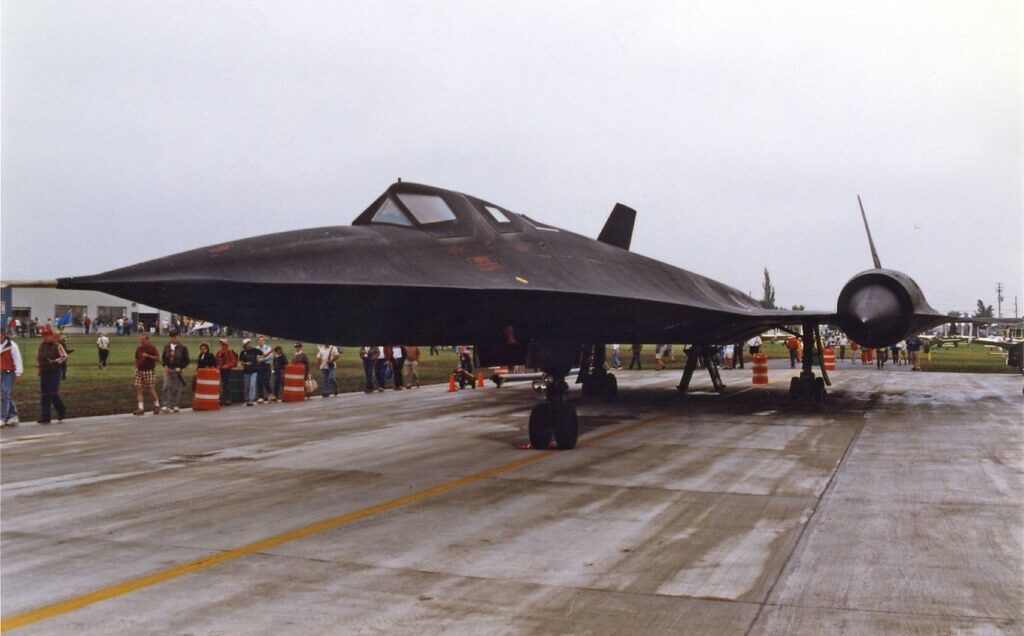
The Lockheed SR-71 Blackbird could move at such incredible velocities that it was in a class almost entirely to itself. The official sustained speed for which the Blackbird was designed is attributed to Mach 3.2, or about 2193 miles per hour, over four times the approximate speed a standard commercial airliner cruises at. Traveling at this speed the Blackbird could go a thousand or more miles in mere minutes, giving the armed forces a completely new type of reconnaissance ability.
Performance figures that defined the Blackbird:
- Sustained cruise near Mach 3.2
- Roughly 2,193 miles per hour
- More than 3,200 feet every second
- Exceptional long-distance reconnaissance capability
- Speed became its primary protection
Also this documented aspect helped in making the SR-71 a legendary aircraft, appreciated by pilots and aviation lovers. The published official performance have stated Mach 3.2, Mach 3.3 as maximum official flight speeds, whereas old SR-71 drivers claim to have piloted on the Mach 3.5 boundary, or even higher. Brian Shul for example, reported during a combat mission, in February 1986, in retaliation to the missile strike on Libya by Gaddafi, during which his aircraft exceeded Mach 3.5 while accelerating to avoid a missile. These kinds of memories boosted the assumption that Blackbird had better flight performances than the official ones.
For every part of the mission, ordinary navigation had to become far from ordinary at speed over Mach 3. They were hurtling through the sky at over 3200 ft/s: small turns resulted in large geographical diversions for heading and that means they had to see where they were going to be. Thus their incredible speed influenced navigation planning and execution and the reconnaissance profile and mission reaction to any potential threat and any aspect of their mission had to take on the fact that the aircraft had extraordinary velocity.
2. Titanium Construction and Extreme Thermal Stress
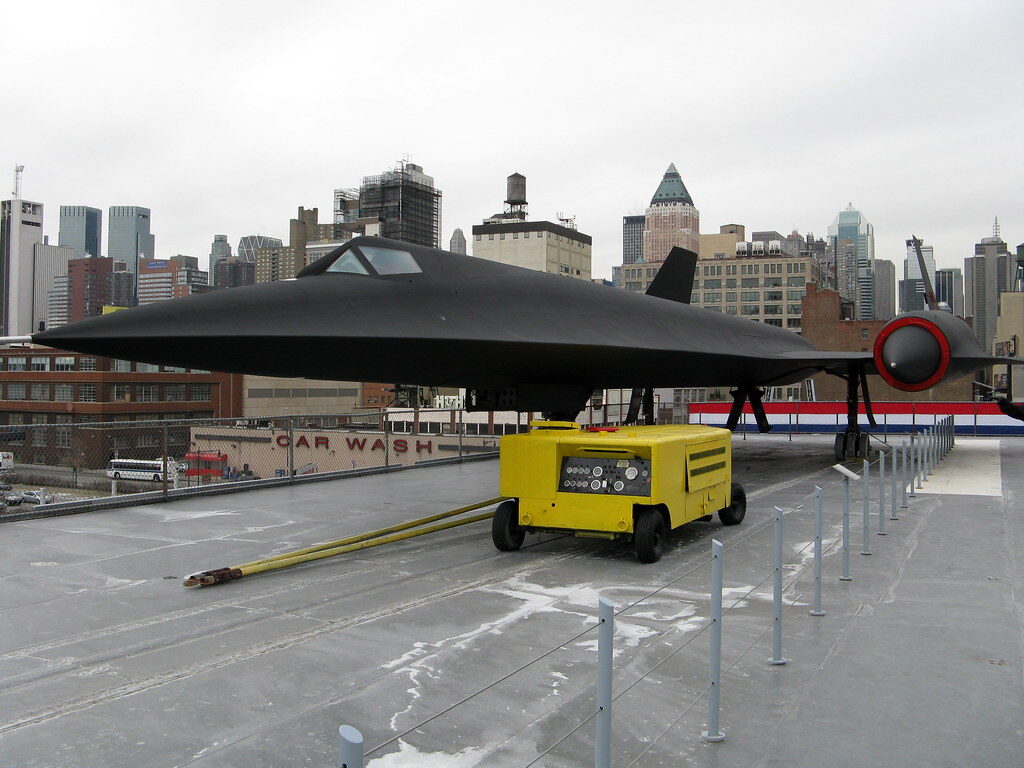
Another engineering problem of the SR-71, due to it’s speed, was heat. When flying at MACH 3, parts of the outside surface could reach over 500 degrees F or roughly 260 degrees C due to air compression and friction with it’s surroundings. A plane that reached these temperatures cannot be made of Aluminum. Thus engineers at Lockheed had to make use of Titanium extensively in building the Blackbird; Over eighty percent of its structure had to be made of heat-resistant Titanium in order to withstand these extreme temperatures which no conventional aircraft could endure.
Thermal engineering challenges shaped the airframe:
- Titanium formed most structural components
- Surface temperatures exceeded 500 degrees
- Airframe expansion occurred during flight
- Fuel joints accommodated thermal movement
- Pressure suits protected the crew
It was because of the fierce heat that the Blackbird displayed one of its most peculiar traits on the ground. As the temperatures in flight rose and stretched the titanium skeleton by many inches, the body itself was made to accommodate this by expanding its panel work, and in turn fitting them ever more tightly. It was the leaks of a special fuel through these joints when the airframe was relatively cool that looks at first glance to be an anomaly that would relate in no way to the required Mach 3 performance.
But heat problems existed not only through out skin of the system. Systems of electronics, fuel, cockpit instrumentation, and internal system structures had to perform in a manner not expected from typical aircraft system. Even the crew itself wore full pressure suits much like that in a spacewalk, due to the extreme altitude at which the plane flew. Overall the Blackbird was a fully integrated high-speed and high altitude system consisting of the appropriate material, the proper system, the necessary life support, and the best in aero design.
3. Pratt & Whitney J58 and the Blackbird’s Propulsion System
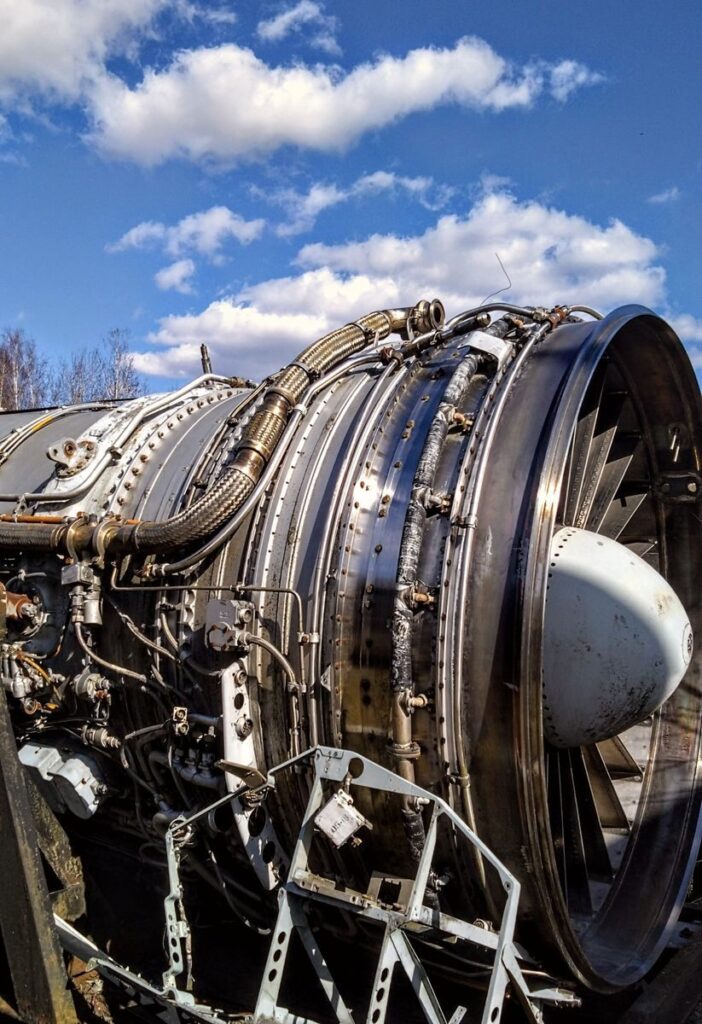
The Blackbird’s remarkable performance depended heavily on its Pratt & Whitney J58 engines. These powerplants were developed around the unusual demands of sustained high-speed flight and incorporated characteristics that allowed the propulsion system to remain effective as velocity increased. Instead of behaving like a conventional turbojet throughout the entire flight envelope, the J58 increasingly incorporated ramjet-like operating characteristics at very high speeds. This relationship between engine performance and incoming airflow was essential to maintaining the Blackbird’s extraordinary cruise capability.
The J58 propulsion system relied on:
- Specialized high-speed engine architecture
- Increasing airflow compression at speed
- Closely integrated intake design
- Sustained Mach 3 performance
- Propulsion matched to aerodynamics
As the SR-71 accelerated, the propulsion system increasingly benefited from compression generated by incoming air. This allowed the engine architecture to continue functioning in a flight regime where conventional jet engines would encounter serious difficulties. The interaction among the J58 engines, their intakes, and the surrounding airflow was therefore central to the Blackbird’s performance. Rather than treating the engines as independent components, Lockheed engineers designed the entire propulsion arrangement around the aircraft’s unique aerodynamic environment.
This propulsion architecture helped the SR-71 sustain speeds that many conventional aircraft could only approach briefly, if at all. The J58 was not simply a powerful engine attached to a fast airframe; it formed part of a carefully integrated system designed for extreme-speed atmospheric flight. Engine operation, inlet airflow, combustion, and aerodynamic compression all contributed to the aircraft’s ability to remain at Mach 3-plus speeds for extended periods. That integration was one of the major reasons the Blackbird became a practical reconnaissance aircraft rather than merely an experimental speed machine.
4. The Cold War Titanium Procurement Challenge
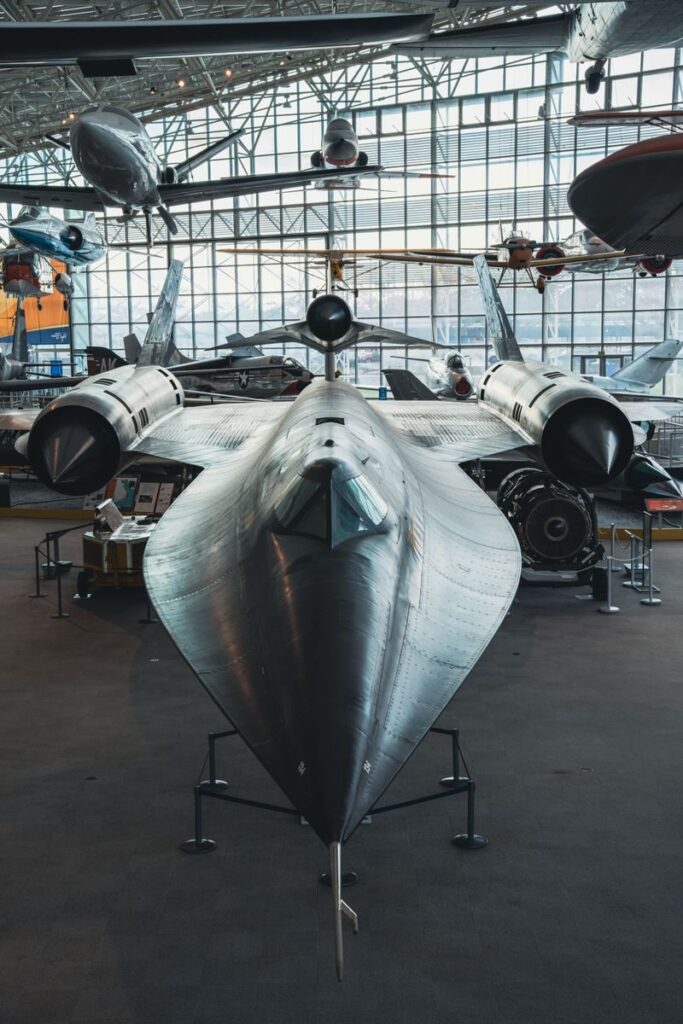
The SR-71’s unusual material requirements created a logistical problem almost as difficult as the engineering challenges themselves. Titanium was essential because conventional aircraft materials could not comfortably withstand the temperatures generated by sustained Mach 3 flight. Yet acquiring the necessary quantities of suitable titanium during the Cold War was complicated. The United States required a large supply of a strategically important material associated with industrial capabilities on the other side of the geopolitical divide. The Blackbird program therefore required secrecy and ingenuity well beyond the aircraft factory.
Titanium procurement created unusual challenges:
- Extreme heat demanded titanium construction
- Large quantities were required
- Cold War secrecy complicated procurement
- Soviet-origin material entered supply networks
- Logistics became part of engineering
The United States ultimately obtained significant quantities of titanium through indirect and covert procurement channels, including material sourced from the Soviet Union. This created an extraordinary Cold War irony: an aircraft developed partly to monitor the Soviet Union was constructed using material obtained through networks connected to its principal adversary. Openly purchasing the quantities required could have revealed too much about the secret aircraft program, so procurement had to be handled carefully.
The titanium story demonstrates that creating the Blackbird required far more than solving aerodynamic problems. Engineers and program managers also had to address materials science, manufacturing, logistics, secrecy, and international procurement. Designing an aircraft capable of extreme performance was only one part of the challenge; the team also had to obtain and process the materials that made that performance possible. The SR-71 was therefore the product of a broad technological and industrial effort rather than simply an exceptional aircraft blueprint.
5. High-Altitude Reconnaissance and Survival Strategy
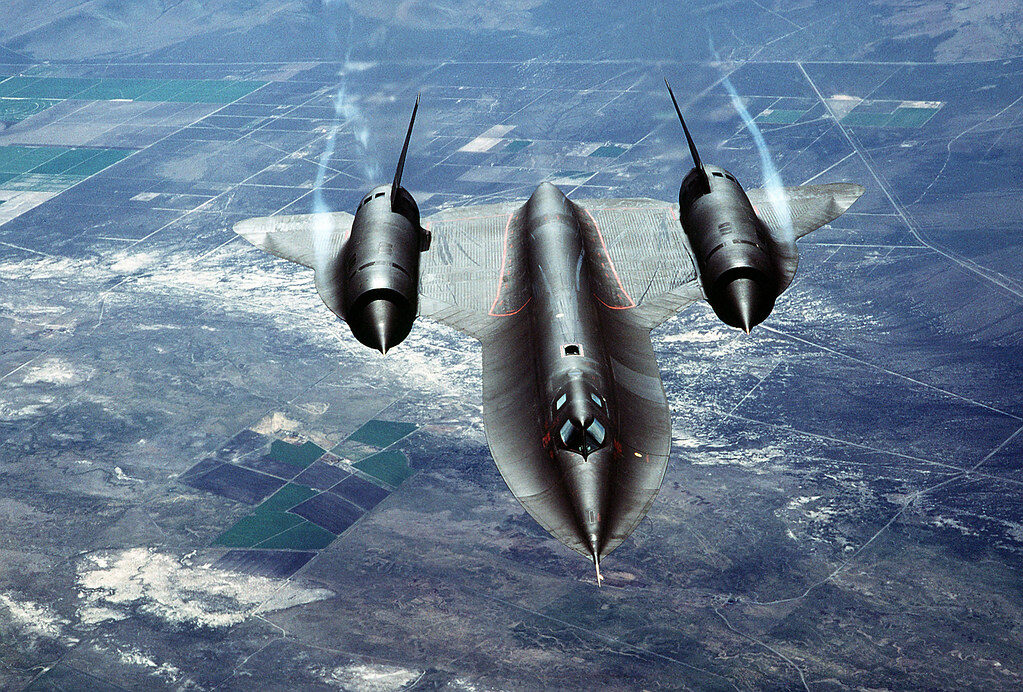
The SR-71 transformed strategic reconnaissance by combining extreme altitude with extraordinary speed. It could operate around 80,000 to 85,000 feet while gathering intelligence across enormous areas. Its reconnaissance equipment included sophisticated cameras, signals-intelligence systems, and side-looking airborne radar, allowing the aircraft to collect information without depending entirely on conventional low-altitude observation. This combination of altitude, speed, and specialized equipment gave the Blackbird a reconnaissance capability that was difficult for contemporary systems to match.
Its reconnaissance strategy combined several advantages:
- Operating altitude reached extreme levels
- Cameras gathered detailed visual intelligence
- Signals systems collected electronic information
- Radar expanded reconnaissance coverage
- Speed reduced exposure to threats
The Blackbird’s defensive philosophy differed fundamentally from that of an armed combat aircraft. It was not designed to defeat enemy aircraft through dogfighting or destroy incoming missiles with weapons. Its primary defense was to remain extremely difficult to reach. When hostile systems detected an SR-71 and attempted to engage it, the aircraft could use its altitude and speed to move beyond effective engagement conditions. The mission depended on avoiding the threat rather than confronting it directly.
This approach produced a remarkable operational record. Enemy forces repeatedly attempted to target SR-71 missions, yet no Blackbird was lost to hostile action. Its ability to outrun threats became one of the defining characteristics of its service. Speed was therefore much more than a performance statistic. It became a strategic defense mechanism that influenced reconnaissance planning, enemy response, and pilot decision-making. The Blackbird demonstrated that an aircraft could survive dangerous airspace through a carefully engineered combination of altitude, velocity, and situational awareness.
6. Missiles, Interceptors, and the Speed Defense
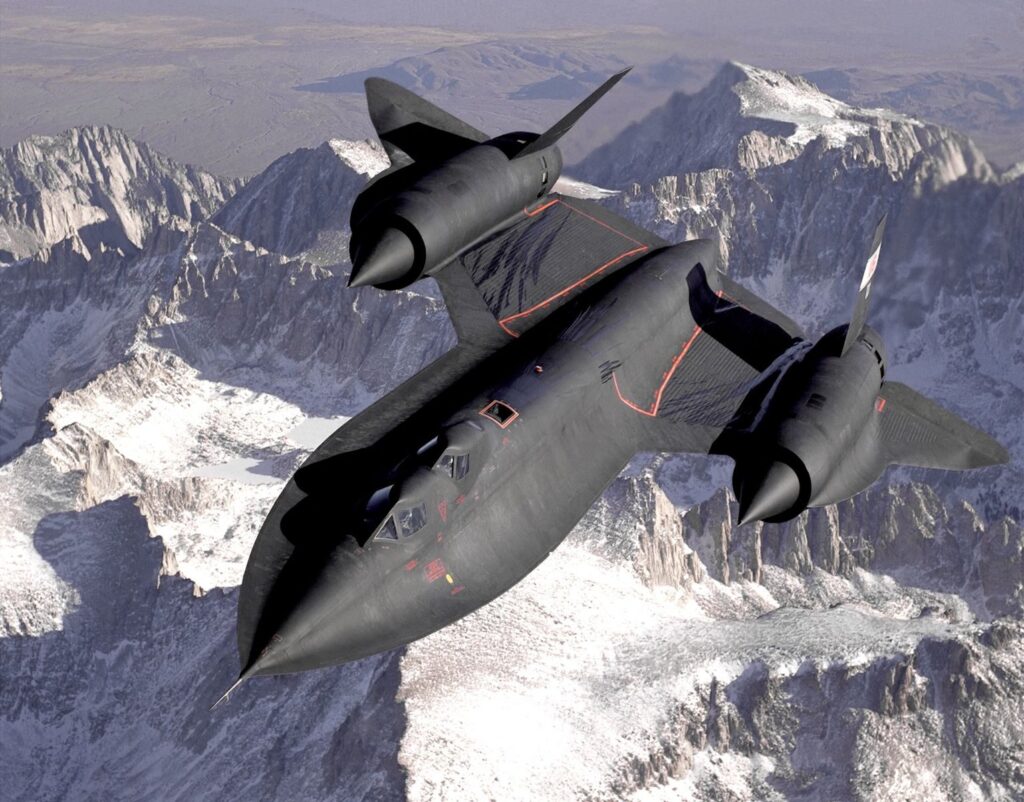
The Blackbird’s operating environment created major challenges for surface-to-air missile systems and interceptor aircraft. By the time a missile climbed toward the aircraft’s altitude, it had already expended substantial energy overcoming gravity and atmospheric resistance. Maintaining sufficient speed and maneuverability to intercept a target traveling at Mach 3-plus was therefore extremely difficult. The SR-71’s ability to maintain enormous velocity while operating at extreme altitude gave it a unique advantage against systems designed around slower conventional targets.
Threats faced by the Blackbird included:
- High-altitude surface-to-air missiles
- Soviet SA-2 missile systems
- Fast interceptor aircraft
- Difficult interception geometry
- Rapid threat-response capability
The same principle complicated interception by high-performance aircraft. Even advanced interceptors had to position themselves correctly and generate enough speed to close the distance before the SR-71 escaped the engagement area. Soviet SA-2 surface-to-air missile systems and aircraft such as the MiG-25 Foxbat were among the threats associated with the Blackbird’s operating environment. Yet the SR-71’s combination of altitude and velocity made successful interception extraordinarily difficult.
The Blackbird’s defensive method became almost counterintuitive. When a missile threat was detected, the aircraft could accelerate rather than simply turn away from the threat. Its enormous speed allowed it to increase the distance between itself and the incoming danger while continuing its mission. Acceleration effectively became a tactical response. This unusual approach helped establish the Blackbird’s reputation as an aircraft that could escape danger through performance rather than weapons. Its most important defensive system was, in many circumstances, the ability to go faster.
7. Early Stealth Features and Reduced Radar Visibility
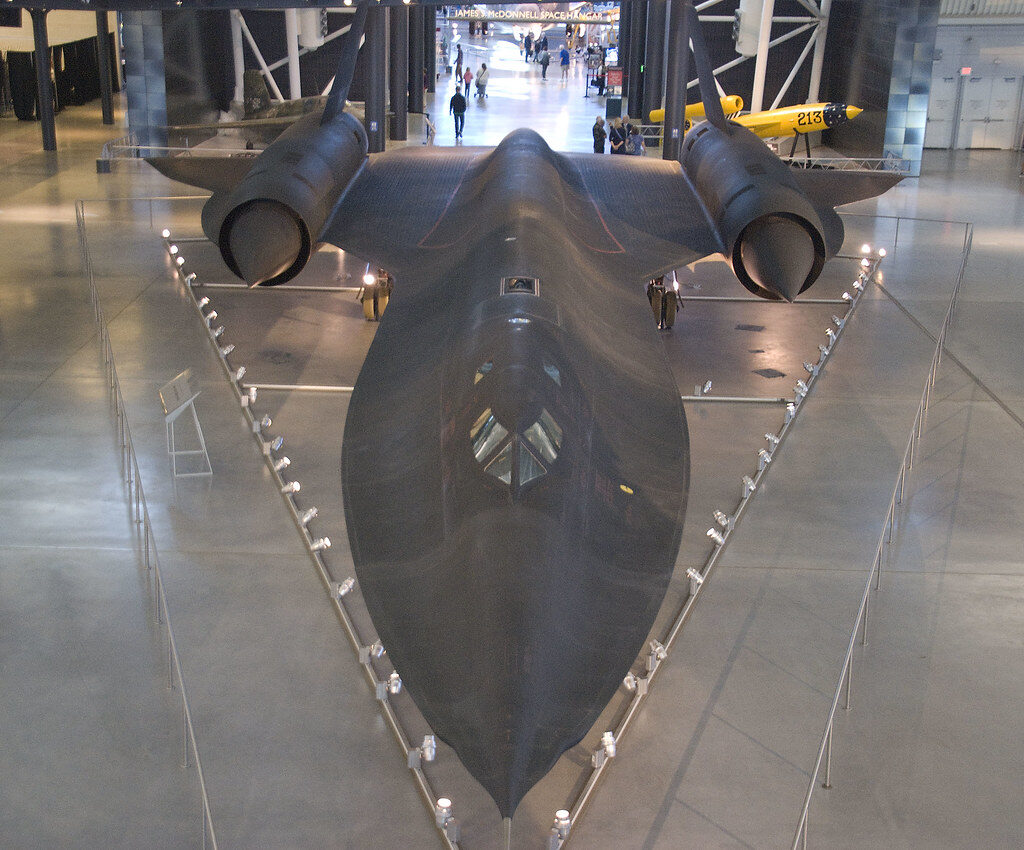
Speed and altitude were not the only forms of protection incorporated into the SR-71. Lockheed’s Skunk Works engineers also applied early low-observable principles to the aircraft’s design. Its distinctive fuselage geometry, long chines, and carefully shaped surfaces helped reduce radar reflections toward enemy radar systems. The inward-canted vertical stabilizers also contributed to reducing reflective surfaces. These characteristics were particularly significant because they demonstrated how aerodynamic shaping could serve both high-speed flight and radar-signature reduction.
Low-observable design added another defense layer:
- Distinctive chines shaped radar reflections
- Vertical stabilizers were inward-canted
- Specialized coatings reduced radar energy
- Radar visibility remained lower than conventional aircraft
- Heat still produced infrared visibility
Specialized materials and coatings were also incorporated into the aircraft as part of the effort to reduce radar visibility. The Blackbird’s iron ferrite-based coating was intended to absorb some radar energy and reduce its radar signature compared with conventional aircraft of the period. These features did not make the aircraft invisible, but they added another layer of protection by making detection and tracking more difficult. The SR-71 therefore combined aerodynamic shaping with specialized materials in an early form of low-observable aircraft design.
The aircraft could never completely eliminate its visibility because extreme speed generated substantial heat. Its enormous infrared signature was an unavoidable consequence of sustained Mach 3 flight. Nevertheless, reducing radar visibility remained useful because it could complicate detection and targeting. Stealth and speed therefore worked together rather than functioning as separate solutions. A reduced radar profile could provide additional time, while the aircraft’s extraordinary velocity supplied the primary means of escaping threats once the aircraft had been detected.
8. Record-Setting Altitude and Transcontinental Performance
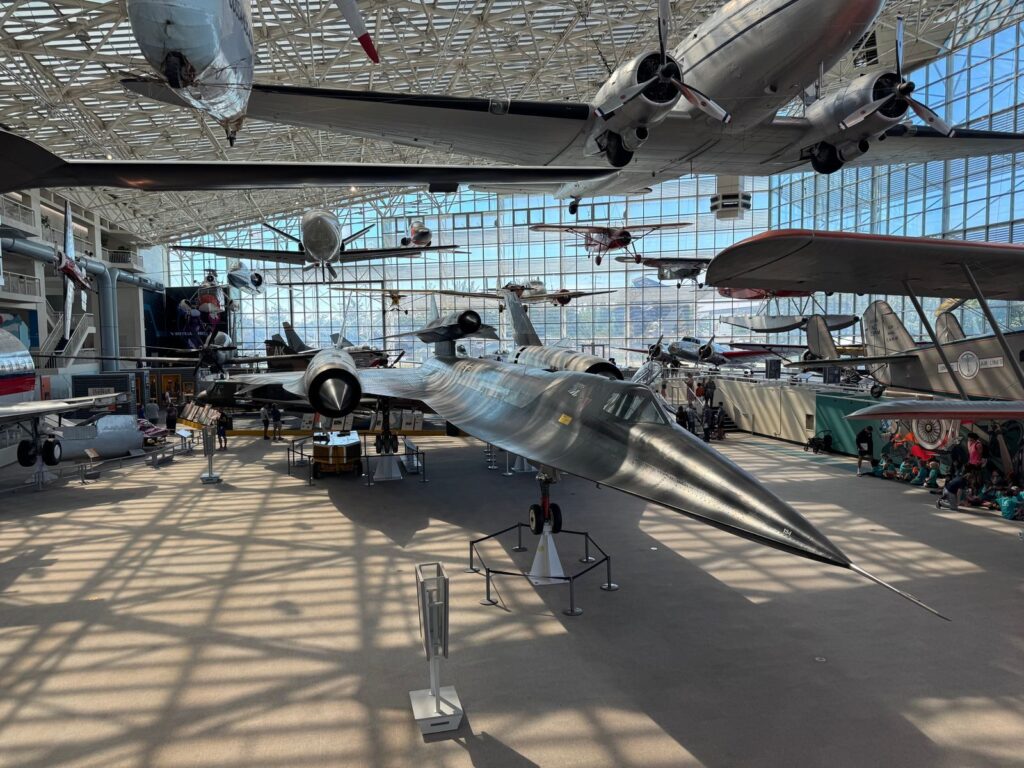
The SR-71 established a series of extraordinary aviation records during its career. In July 1976, the aircraft achieved an official absolute altitude record of approximately 85,068 feet and an absolute speed record of around 2,193 mph, associated with Mach 3.3. It also established a closed-circuit speed record of approximately 2,092 mph over a 1,000-kilometer course. These achievements demonstrated that the Blackbird’s extreme performance was not limited to brief bursts but could be sustained over significant distances.
Its most remarkable records included:
- Approximately 85,068-foot altitude record
- Around 2,193-mph absolute speed
- Approximately 2,092-mph closed-circuit speed
- London-New York under two hours
- California-Washington flight near 64 minutes
The aircraft also demonstrated its long-distance capabilities through record-setting international flights. In 1974, an SR-71 completed the London-to-New York journey in 1 hour, 54 minutes, and 56 seconds. That performance illustrated how dramatically the Blackbird could compress travel time compared with conventional aircraft. It was not merely capable of flying faster than other aircraft; it could maintain that performance over distances normally associated with lengthy transatlantic journeys.
The aircraft’s final operational era produced another memorable demonstration. During its final flight in 1990, an SR-71 traveled from California to Washington, D.C., in approximately 64 minutes and 20 seconds while averaging around 2,144 mph. These achievements reflected decades of work at Lockheed’s Skunk Works under designer Kelly Johnson. They also represented the culmination of concepts that had evolved from earlier high-altitude platforms, including the U-2 and A-12, into one of the most capable crewed reconnaissance aircraft ever built.
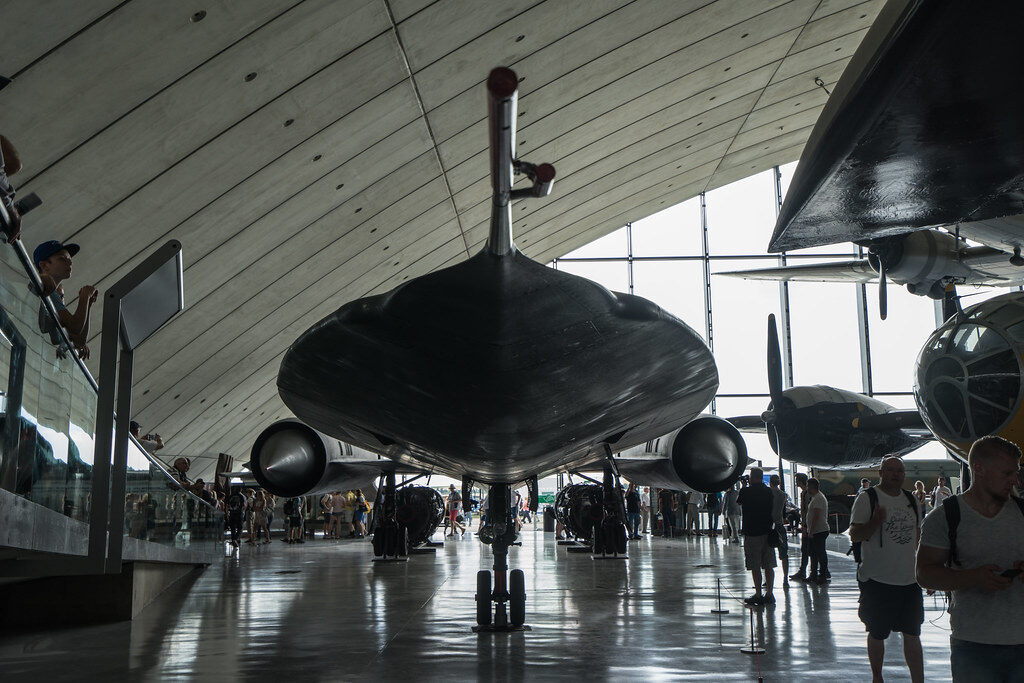
9. Development, Service History, and Operational Legacy
The SR-71 was developed during the 1960s as a highly classified Lockheed Skunk Works project under the direction of aerospace engineer Clarence “Kelly” Johnson. It evolved from the earlier A-12 Oxcart design, becoming longer and heavier to accommodate additional fuel and a two-person crew seated in tandem cockpits. The aircraft first flew on December 22, 1964, and entered United States Air Force service in January 1966. Its development represented one of the most ambitious aerospace programs of the Cold War era.
The Blackbird’s service was defined by:
- Skunk Works development under Kelly Johnson
- First flight in December 1964
- Air Force service beginning in 1966
- Worldwide strategic reconnaissance missions
- Exceptional survival against hostile action
During its career, the Blackbird conducted reconnaissance missions from locations including Kadena Air Base in Okinawa and RAF Mildenhall in the United Kingdom. Its missions covered areas associated with Vietnam, Laos, North Korea, the Baltic and Barents Sea regions, Cuba, Nicaragua, Libya, and other strategically important locations. Unlike earlier CIA-operated reconnaissance aircraft, the SR-71 flew with United States Air Force markings and operated as an overt military reconnaissance platform.
A total of 32 SR-71 aircraft were built, with 12 lost in accidents. None was lost to enemy action. The United States Air Force retired the type in 1989, although several aircraft were subsequently returned to service for a limited period before their final retirement in 1998. NASA became the last operator, using Blackbirds as research platforms until 1999. Eventually, the reconnaissance role was increasingly handled by combinations of satellites and unmanned aerial vehicles, changing the strategic need for a crewed aircraft of such complexity.
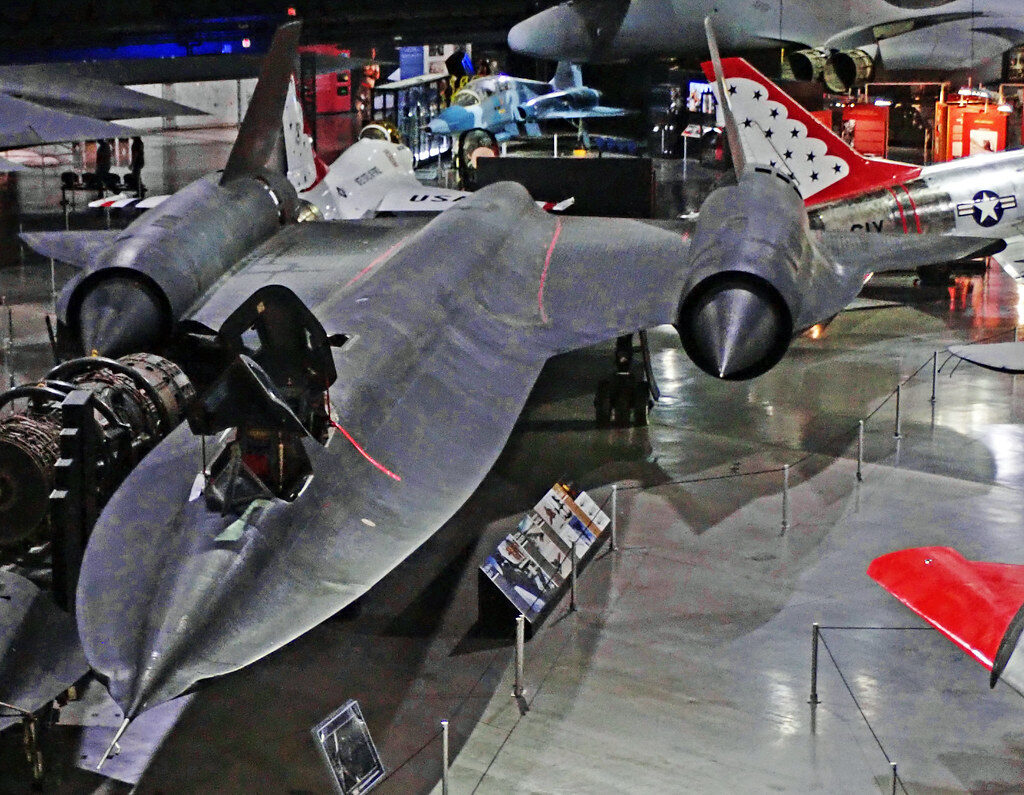
10. Retirement and the Enduring Blackbird Legacy
The SR-71 eventually became increasingly expensive and complicated to operate. Specialized maintenance, unique fuel requirements, extensive mission preparation, and the growing capabilities of satellites and unmanned reconnaissance systems changed the strategic equation. The Blackbird could perform extraordinary missions, but maintaining a small fleet of highly specialized aircraft became increasingly difficult when newer technologies could gather intelligence without placing crews inside an aircraft traveling at Mach 3. Its retirement therefore reflected changing technology as much as the aircraft’s operating costs and complexity.
Several factors shaped the Blackbird’s retirement:
- Specialized maintenance demanded extensive resources
- Operating costs remained exceptionally high
- Satellites expanded reconnaissance capabilities
- Unmanned systems reduced crew exposure
- New technologies changed strategic priorities
Modern military aviation has generally moved toward different solutions. Stealth aircraft emphasize reduced observability, while unmanned systems and satellites can perform reconnaissance without placing pilots in the same physical danger. Concepts associated with a potential SR-72 successor have also explored much higher speeds, including hypersonic flight. However, proposed future systems remain fundamentally different from the operational Blackbird that established its reputation through decades of real-world missions.
The SR-71 remains one of the clearest examples of what can happen when engineering is pushed toward an extreme and narrowly defined objective. Its titanium structure, advanced propulsion, aerodynamic design, reconnaissance systems, and early stealth characteristics were developed together to create an aircraft capable of operating where few other machines could. Long after its retirement, the Blackbird continues to represent a remarkable combination of human ingenuity, technical ambition, and uncompromising aerospace engineering.