




A Technical Deep Dive into 10 High-Speed Vehicles and Engineering Marvels

Fast cars, the fastest boats, the fastest planes this is the work of high performance engineers. From hypercars on the road to jet-powered land vehicles and planes, these extraordinary machines demonstrate how powerful propulsion systems, combined with optimum aerodynamic performance and careful control, can produce extraordinary designs. All the components of the vehicle, from the engine and gear box to the bodywork and cooling systems, have to be able to cope with the enormous forces generated at high speed. These engineering innovations come from many years of design, development and testing, to take the automotive, marine and aerospace industries to the limit.
They’ve beaten the resistance, battled the environment and kept their foot on the gas to reach unprecedented speeds. It’s not all about horsepower in these global speedsters, which come with everything from four-wheel drive and turbo chargers to jet propulsion and multi-axis flight control systems. Every speed challenge, whether on the land, sea or the air, takes into consideration factors including horsepower, torque, gearing and aerodynamic design. Paired with state-of-the-art design and construction, here are 10 incredible vehicles that take speed to a whole new level in automotive, marine and aerospace industries.
1. Yangwang U9 Xtreme
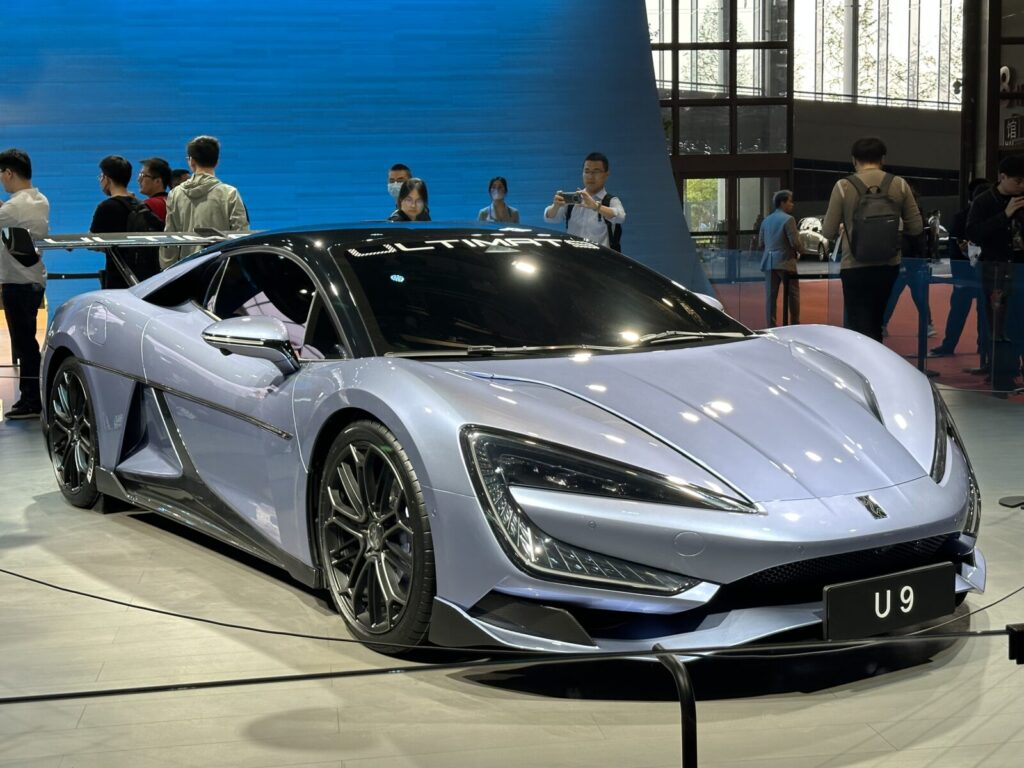
The Yangwang U9 Xtreme is considered to be an incredible electric hypercar developed by Yangwang, with a claimed top speed of 308.34 mph (496.22 km/h), as tested at the ATP Automotive Testing Papenburg test track in Germany. Only 30 units will be manufactured and will utilize an all-electric powertrain capable of generating an incredible 3,027 horsepower (2,226 kW). Its electric motor package shows electric propulsions can harness massive power while challenging the dominance of combustion-powered cars in the quest for record-breaking speed.
Engineering Features That Set Records:
- Top speed of 308.34 mph
- Four powerful electric motors
- Output reaches 3,027 horsepower
- Low 0.27 Cd drag coefficient
- Direct-drive electric transmission system
Speed is the obvious part of the equation, but the U9 Xtreme performs just as well on a twisty circuit, as it proved to us on a recent lap of the legendary Nürburgring Nordschleife, where it set a lap time of 6:59.157. An aerodynamic body shape creates the necessary downforce to control the airflow, while the instant electric power drives all four wheels for that feeling of fast acceleration exactly what you want to feel when you’re driving at high speed.
2. Bugatti Chiron Super Sport 300+
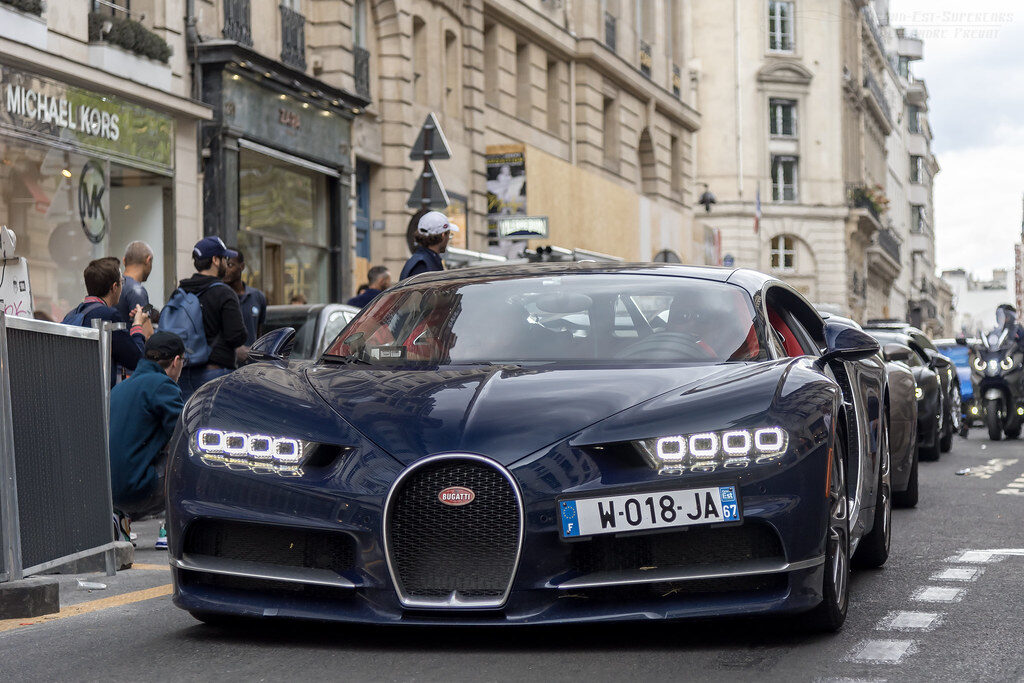
Representing a milestone in the automotive world, the Bugatti Chiron Super Sport 300+ was the first ever production car to break the 300 mph barrier, hitting 304.77 mph (490.48 km/h) on the German Nürburgring’s high-speed track. This performance was attained by the one-of-a-kind hypercar with the help of its 8.0-litre W16 quad-turbocharged engine, which develops 1,578 horsepower (1,160 kW) and more than 1,180 lb-ft of torque. You might think the speed it hit was overkill, but we beg to differ.
Powertrain Technology Behind Its Speed:
- 8.0-litre quad-turbocharged W16 engine
- Produces 1,578 horsepower
- Torque exceeds 1,180 lb-ft
- Seven-speed dual-clutch automatic transmission
- Production speed limited to 273 mph
The quad-turbo W16 engine generates the Chiron Super Sport 300+’s tremendous output. Power is transmitted via a seven-speed dual-clutch auto transmission to ensure reliable performance despite the car’s extreme power. The Chiron Super Sport 300+’s aerodynamic drag coefficient of 0.35 compares favorably to that of other high-performance vehicles: They each have a significant drag coefficient, which makes the car’s record-breaking speed even more notable. Customer versions are electronically limited to 273 mph (440 km/h).\
3. SSC Tuatara
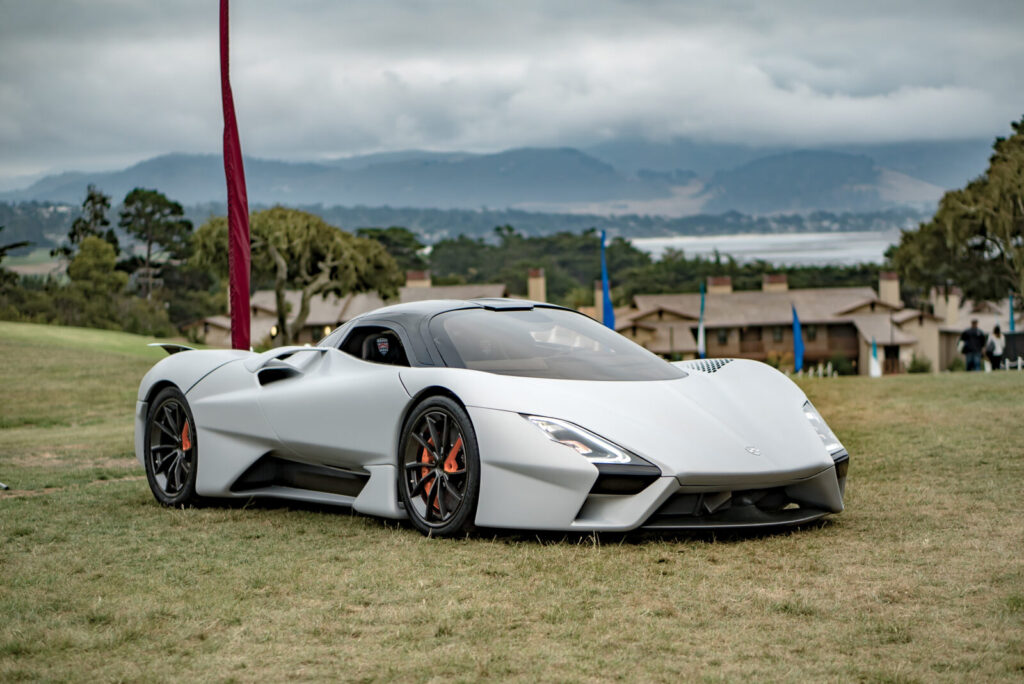
The Tuatara, built by SSC North America, is a mid-engined hypercar built with aerodynamic performance, high rpm and a large amount of power in mind. Its fastest speed, that of 29.5 mph (475 km/h) reached in May 2022 by driver Larry Caplin on a 2.3 mile (3.7 km) stretch of road at the Space Florida Launch and Landing Facility, showed the value in melding engine performance with a fairing and a chassis that would support the higher speeds.
Key Technologies Driving Performance:
- 5.9-litre twin-turbocharged V8 engine
- Produces 1,750 horsepower
- Delivers 984 lb-ft of torque
- Seven-speed CIMA automated manual transmission
- Aerodynamic drag coefficient of 0.279 Cd
The Tuatara houses a 5.9l twin-turbocharged V8 engine capable of delivering up to 1,750 horsepower (1,300 kW) and 984 lb-ft (1,350 Nm) of torque. Power is sent to the wheels via a single-clutch seven-speed automated manual transmission developed by CIMA. This engine is perfectly complemented by the car’s low downforce coefficient of 0.279 Cd which, combined with its high specific power density ensures the car can accelerate to mind-boggling figures regardless of the engine’s power alone.
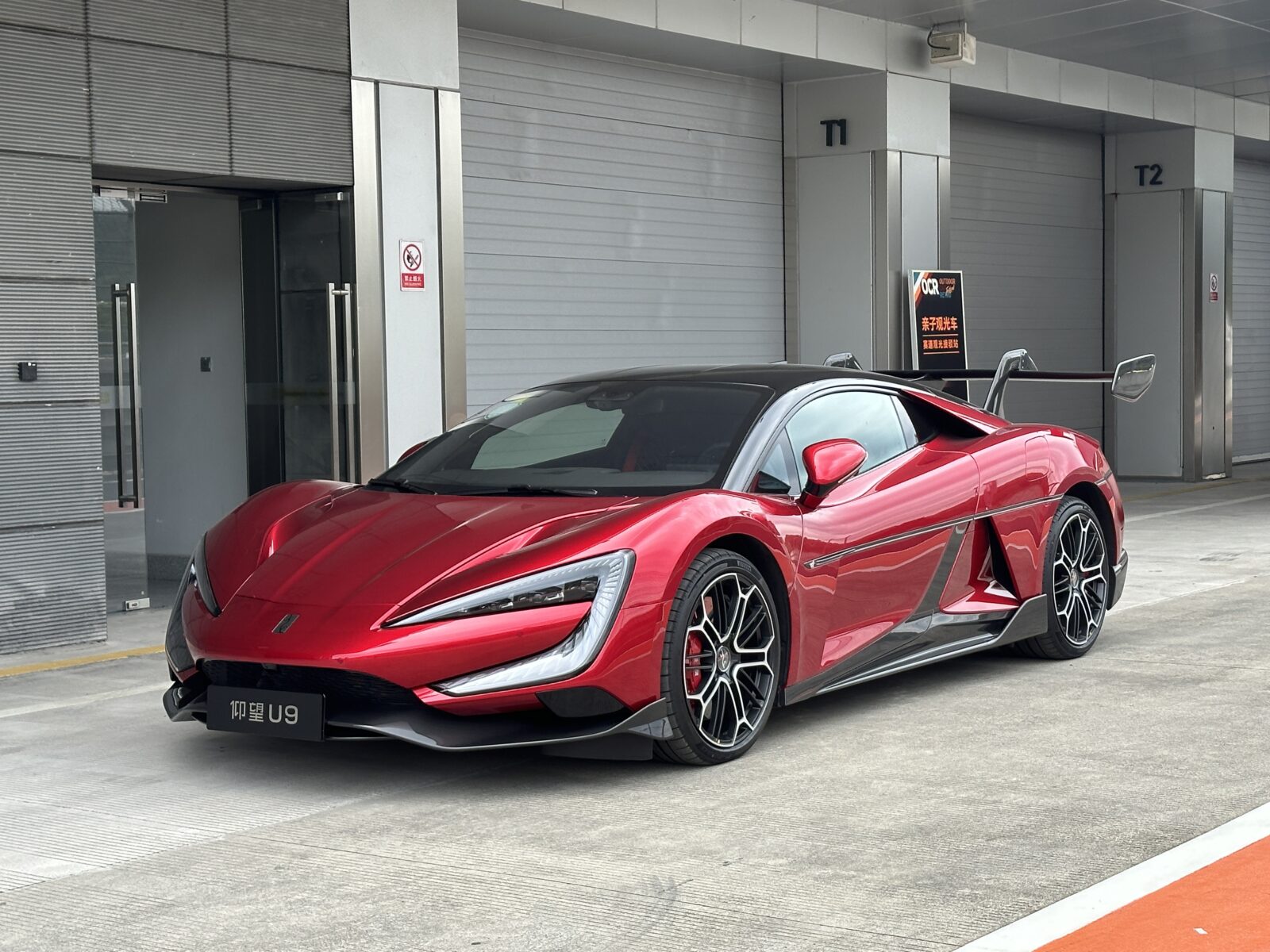
4. Yangwang U9 Track Edition
BYD’s premium sub-brand introduced the Yangwang U9 Track Edition, another step forward into this corner of high-performance EVs. It achieved 293.54 mph (472.41 km/h) at the ATP Automotive Testing Papenburg test centre with driver Marc Basseng behind the wheel. BYD’s ultra-fast electric tech and four-motor configuration demonstrates how companies are experimenting with new ways to control massive amounts of power and speed in this space where previously only the most specialised, combustion-engined hypercars have ventured.
Advanced Electric Engineering Highlights:
- Reaches 293.54 mph
- Uses a 1,200-volt architecture
- Four motors operate at 30,000 rpm
- Produces 2,977 horsepower
- Features independent wheel torque control
For example, the Track Edition gets 2,977hp (2,220kW) from its e4 Platform quad-motor powertrain, which can vary the torque to each motor independently up to 100 times every second to effectively ‘quicken’ its response to drive terrain. Simultaneously, the DiSus-X Intelligent Body Control System moves each wheel vertically to help keep the tyre in contact with the surface. These, and other systems, prove how electronic control and mechanical design can work together to help keep a vehicle stable at extreme speeds.
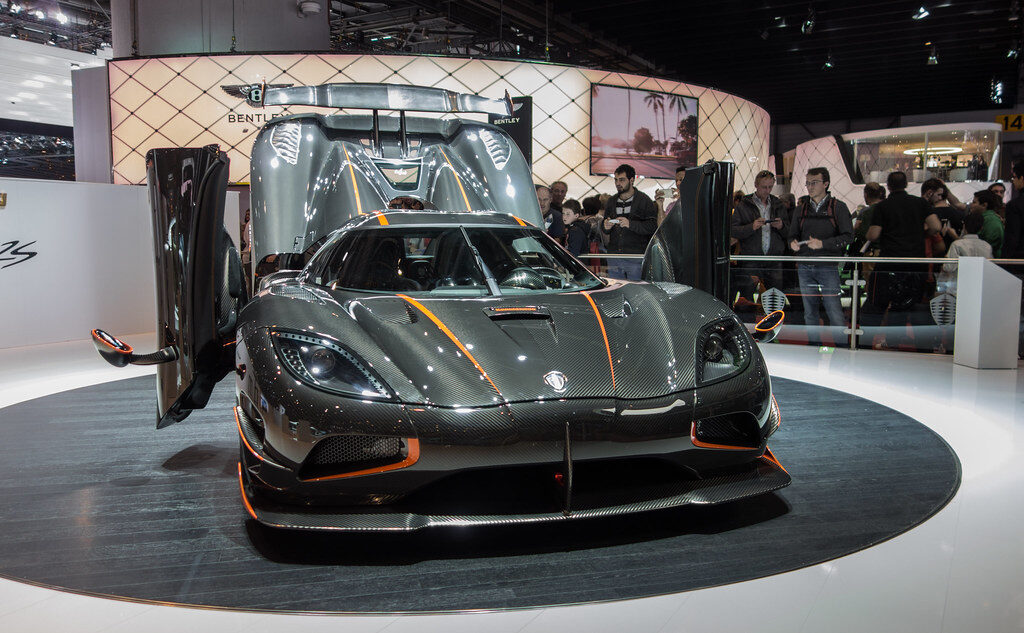
5. Koenigsegg Agera RS
There are still many records to be broken on the internal-combustion hypercars front, and the Koenigsegg Agera RS certainly stands out, thanks to its documented average speed of 277.87 mph (446.97 km/h), measured by an an array of sensors. That’s the official top speed of the Agera RS, albeit that’s not far from its top speed of 273 mph (440 km/h) from the tuned twin-turbocharged V8 engine, which delivers 1,176 hp (865 kW) and 940 lb-ft (1,280 Nm) of torque.
Performance Specifications Worth Noting:
- 5.0-litre twin-turbocharged V8 engine
- Output of 1,176 horsepower
- Torque reaches 940 lb-ft
- Seven-speed CIMA automated manual gearbox
- Zero to 100 km/h in 2.9 seconds
The power flows to the driven rear wheels via a seven-speed CIMA single-clutch automated manual gearbox. Aerodynamically efficient bodywork achieves a drag coefficient of 0.33 Cd, to strike a sensible compromise between drag and the need for driving stability at high speed. The Agera RS can accelerate from 0-100 km/h in 2.9 seconds a typical example of how much track-winning power can be made usable, even on a comparatively heavy car with good grip. Its speed record also demonstrates how combustion engines still have a role to play in a future full of electric technology.
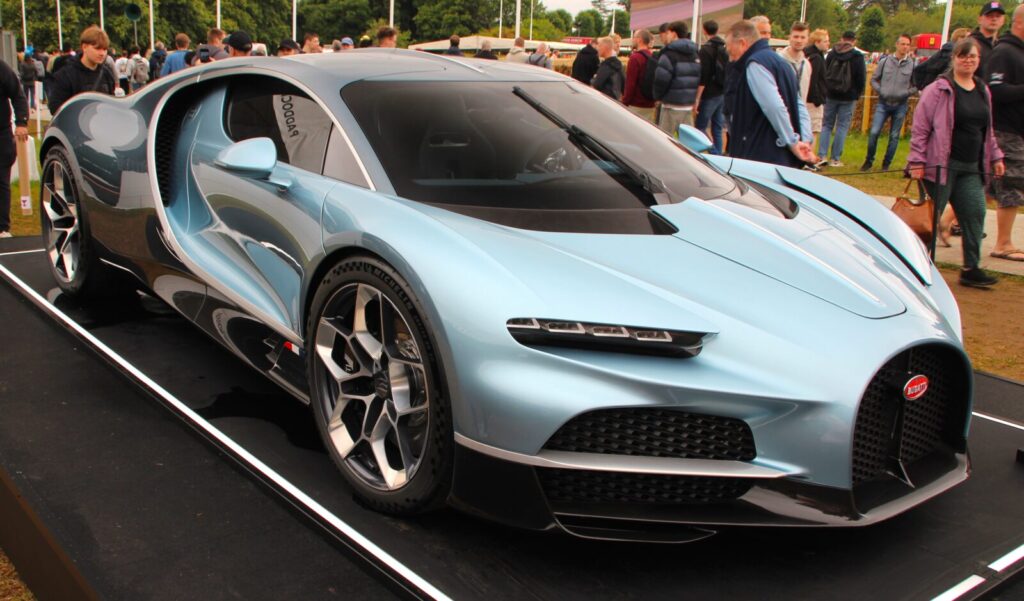
6. Bugatti Tourbillon
Efficiency is given a new take by the Bugatti Tourbillon it’s not another Quad-turbocharged W16 like you’re used to seeing from the Bugatti. Instead, Bugatti provides the car with a 8.3-litre naturally aspirated V16 coupled to hybrid powertrain that makes a combined 1,800 horsepower (1,342 kW) and 1,464 lb-ft (1,985 Nm) of torque. It’s a new take on delivering on-demand quickness and defies the traditional build of a Bugatti and blazes a trail for the next Bugatti hypercar.
Hybrid Power and Speed Features:
- Naturally aspirated 8.3-litre V16
- Combined output of 1,800 horsepower
- Torque reaches 1,464 lb-ft
- Zero to 100 km/h in 2.0 seconds
- Speed Key unlocks 276 mph
On top of its base price of around $4 million, the Chiron Sport 300+ features a Speed Key that unlocks this car’s full top speed of 276 mph (445 km/h). When the driver doesn’t have the key, the speed is electronically governed at 273 mph (440 km/h) in order to comply with the customer limit for the Chiron Super Sport 300+. The Speed Key, then, provides a way to unlock higher speed potential when the situation is suitable. As its name implies, the hybrid powertrain coupled with the large, normally aspirated engine is Bugatti’s way of signaling a new penchant for speed.
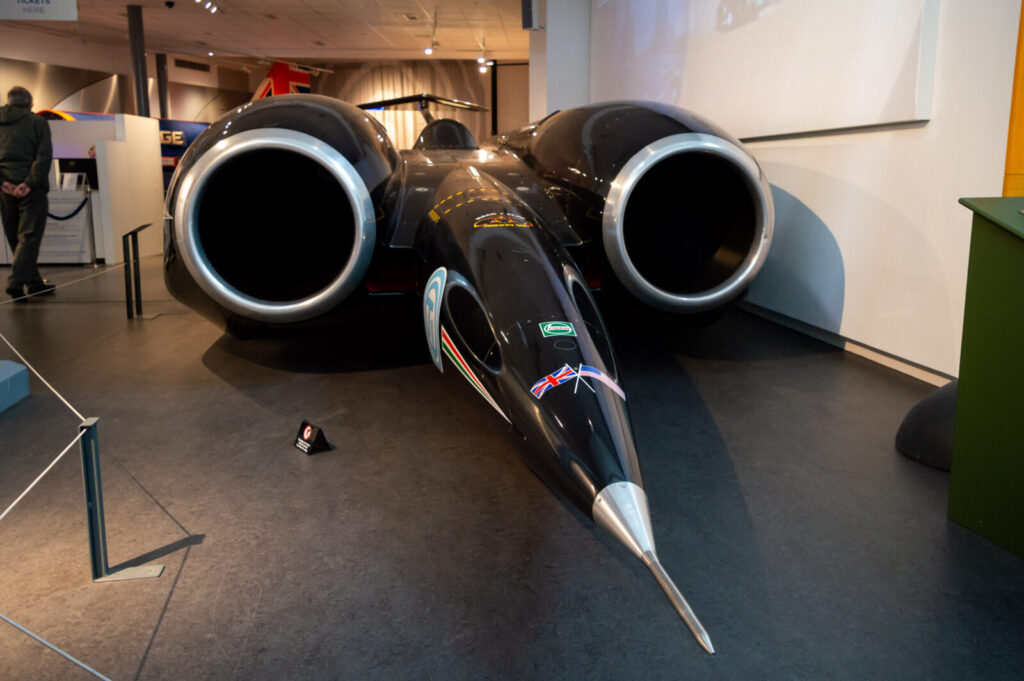
7. ThrustSSC
ThrustSSC exists in a category of vehicles that’s a total galaxy away from any road-legal car. On 15 October 1997, a special, purpose-built land vehicle called ThrustSSC powered by a special supercharged jet engine, driven by a special Royal Air Force officer called Wing Commander Andy Green set the world record for the fastest land vehicle of all time. During a mile-long track in Nevada’s Black Rock Desert, the ThrustSSC hit 763 mph (1228 km/h) and broke through the sound barrier.
Engineering Behind Supersonic Ground Speed:
- Recorded speed of 763 mph
- First land vehicle to break sound
- Two Rolls-Royce Spey turbofan engines
- Engines sourced from F-4 Phantom II fighters
- Combined output of 102,000 brake horsepower
The car gets to record speeds from two Rolls-Royce Spey turbofan engines, originally built for the F-4 Phantom II aircraft, a British fighter jet that the RAF used in the 1960s and ’70s. These twin turbofans combine to produce an amazing 102,000 brake horsepower, powering the car to break the sound barrier. A car gains acceleration through the transfer of power from the engine to the road via tyres, yet ThrustSSC transfers that air-to-ground throttle via the aviation realm of jet thrust.
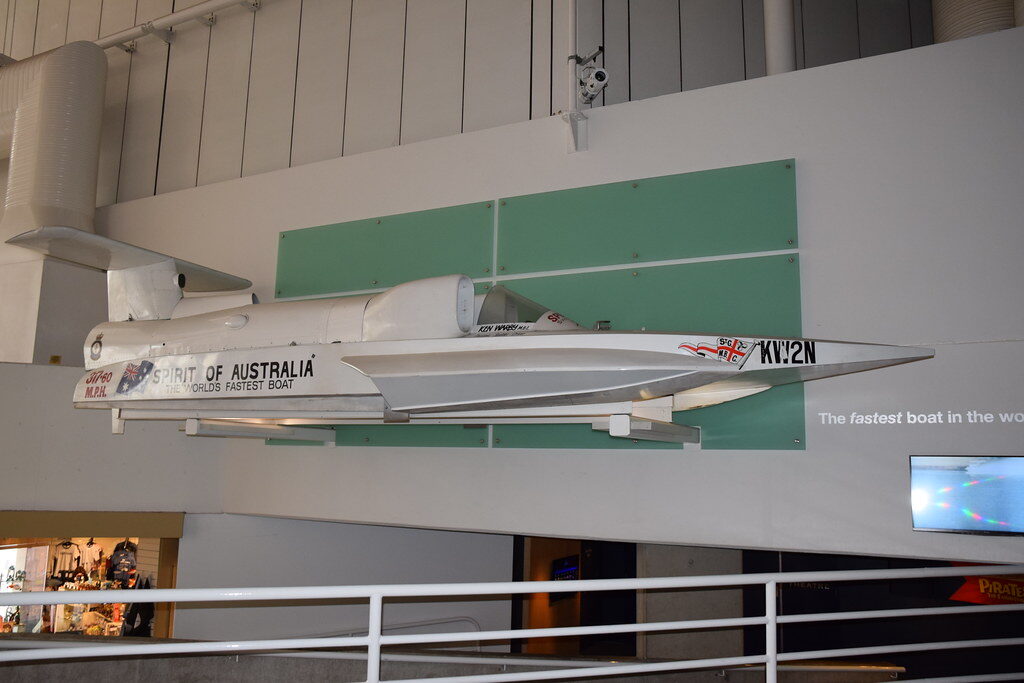
8. Spirit of Australia
Spirit of Australia demonstrates that record-breaking speed is not confined to roads and runways. Built by Australian motorboat racer Ken Warby during the 1970s, this hand-built wooden speedboat achieved an official world water speed record of 317 mph (275.98 knots) on 8 October 1978. The record was set on the Tumut River in New South Wales, establishing the vessel as an extraordinary example of marine engineering and a lasting achievement in the pursuit of speed across water.
Marine Engineering That Made History:
- Hand-built wooden speedboat construction
- Designed by Ken Warby
- Record achieved in October 1978
- Powered by a Westinghouse J34 jet engine
- Recorded speed of 317 mph
The vessel’s propulsion comes from a single Westinghouse J34 jet engine, originally developed for aircraft applications. The engine’s aviation heritage gave Spirit of Australia the thrust required to travel across the water at a remarkable speed. Building and controlling a craft capable of such performance involves challenges that differ significantly from those faced by road vehicles, particularly when maintaining stability over a water surface. Its record illustrates how a relatively specialised design and powerful jet propulsion can combine to achieve an extraordinary result in marine speed engineering.

9. Bell Boeing V-22 Osprey
The Bell Boeing V-22 Osprey is a unique type of high-speed aircraft, combining in one vehicle the ability to take-off and land vertically (like a helicopter) with the ability to fly faster than a helicopter. The Osprey’s tilt-rotor design allows it to take advantage of helicopter-like hovering capabilities, and traditional helicopter principles of control, to travel at high speeds. Powered by two Rolls-Royce T406-AD-400 engines (each with 6,150 shaft horsepower), the aircraft exemplifies the use of more specialised propulsion and flight-control technologies.
Tiltrotor Technology and Flight Performance:
- Two Rolls-Royce T406-AD-400 engines
- Each engine produces 6,150 shaft horsepower
- Maximum speed of 351 mph
- Maximum cruising speed of 306.1 mph
- Engine nacelles tilt up to 80 degrees
Osprey has a top flying speed of 351 mph (305 knots) at 15,000 ft. (3,660 km/h), but it has a max cruising speed of 306.1 mph. The engine nacelles can be moved up to 80 degrees, enabling the V-22 to transition seamlessly from a vertical hover to horizontal flight and back again. It therefore combines both horizontal speed as well as hovering ability, as well as the ability to switch between the two, aided by a state of the art flight control system that provides stable flight without the pilot having to correct the aircraft constantly.
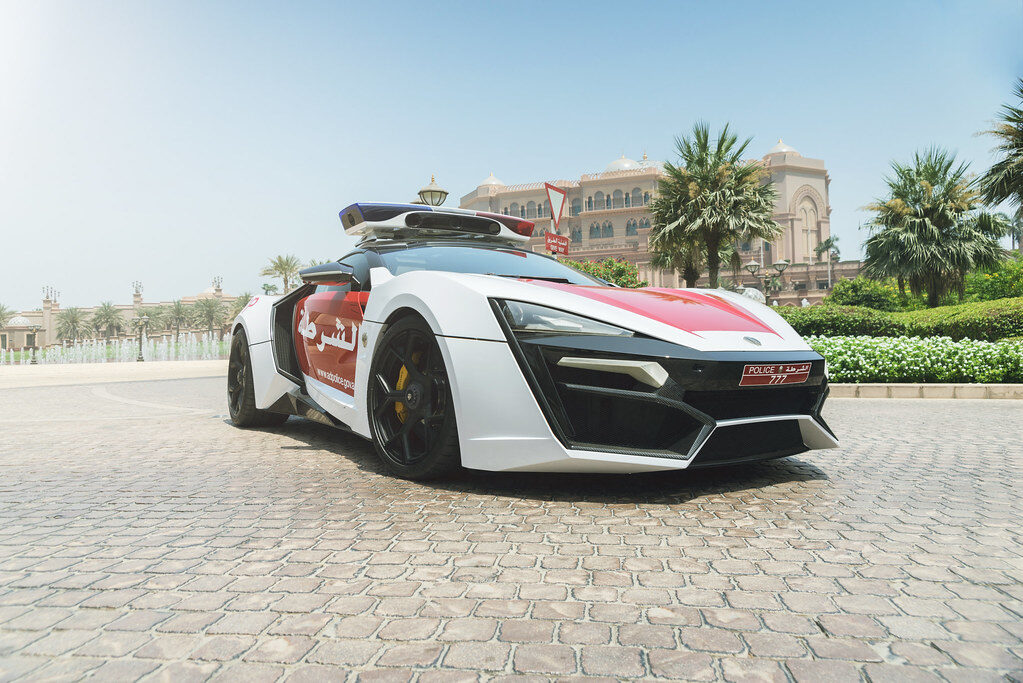
10. Hypersport Responder
The Hypersport Responder represents an unusual application of hypercar engineering, bringing extreme performance into the field of emergency response. Developed by Dubai-based manufacturer W Motors, known for creating the rare Lykan HyperSport, this custom vehicle is described as the world’s fastest ambulance. It can reach a top speed of 245.4 mph (395 km/h), making it a striking example of how the performance characteristics associated with exclusive supercars can be adapted for specialised applications.
High-Speed Emergency Vehicle Features:
- Developed by Dubai-based W Motors
- Based on hypercar engineering concepts
- Top speed of 245.4 mph
- Valued at nearly 13 million AED
- Designed for emergency response applications
With an estimated valuation of nearly 13 million AED, the Hypersport Responder combines remarkable speed with equipment and functionality intended for emergency services. Its design presents a different purpose from record-setting hypercars, as its defining feature is the application of high-performance technology to a specialised responder vehicle. Although its extreme top speed makes it stand out, the vehicle also illustrates how engineering concepts developed for exclusive performance cars can be repurposed for roles beyond conventional transport.