



Ten Legendary American Sports Cars Defining Performance and Innovation Across Eras

American car culture has always taken a different approach to building powerful cars. While carmakers from around the world explored their own visions, American manufacturers adopted a style emphasizing brute strength, aggressive looks, and an attainable kind of speed. From grassroots racers to iconic showrooms, Detroit built a memorable tradition that forever altered the way we drive. No other country has given us such an extensive and recognizable portfolio of speedy automobiles.
Finding the most iconic of American automotive history means we go back to the moments that broke the limits of what these machines could do. These cars showcase important points in design, engineering and racing history. In this list we will introduce ten of those cars, from the Shelby Cobra, and 1964 Ford Mustang to Ford GT, and Cadillac CTS-V. For each one, we will explore what made it unique, and how it laid the groundwork for American sports car history.
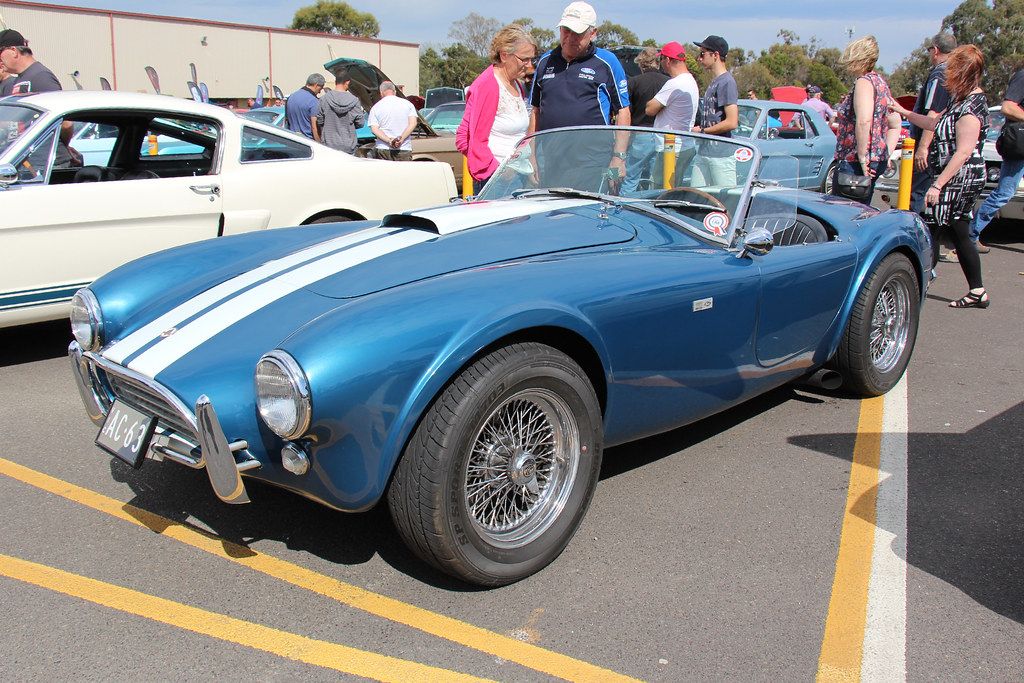
1. Shelby Cobra
The Shelby Cobra is an iconic force to be reckoned with in American motorsports history. Created by Carroll Shelby, the Cobra was developed in California by slipping a powerful American V8 engine into an agile light-weight AC chassis. Incorporating an American muscle spirit in a European platform was a recipe for competition success, and the car put Shelby into the racing hall of fame, and solidified his everlasting imprint on the industry. This true grass roots racer became an international fan favorite that could go race against the best international racing teams, and it allowed Shelby to grow his racing and business empire tenfold. A simple concept of being small and light and packing a big punch, Cobra proved that even a small team can beat the best.
Shelby Cobra Lightweight Design:
- Created by Carroll Shelby
- Born in California
- American V8 in lightweight AC chassis
- Challenged established racing teams
- Still replicated by builders
Decades after its debut, the Cobra remains an appreciated piece of American automotive history. Numerous builders continue to hone, reimagine, and replicate the classic formula, demonstrating an unquenchable enthusiasm for analog, bare-bones driving machines. The fact that so many people still build Cobra-style cars shows how strongly the original idea resonates. It was never about luxury or technology. It was about a direct, thrilling connection between the driver and the road, and that appeal has not faded with time.
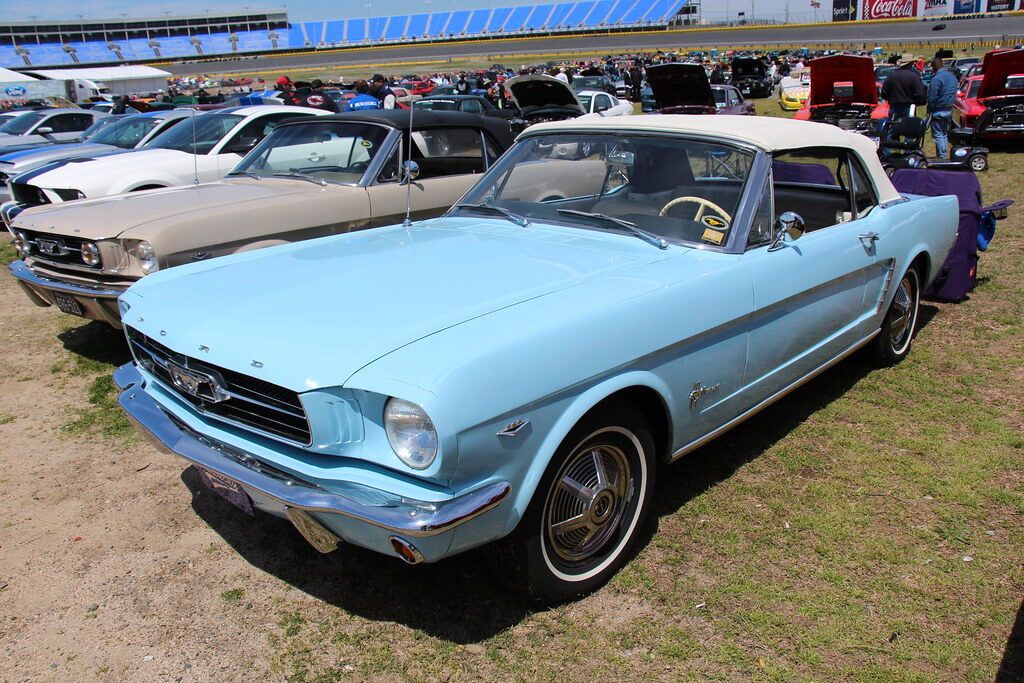
2. 1964 Ford Mustang
When the original Ford Mustang arrived in 1964, it created a new market segment, and one that was quickly and historically successful. Built for the average guy to be a performance car, the Mustang was an instant hit and changed the game in the auto industry. GM was forced to respond to the Mustang with its introduction of the Camaro and the pony car rivalry was born and is still going. The Mustang proved that buyers wanted eye appeal with horsepower at a reasonable price, and that changed everything automakers chose to build.
1964 Ford Mustang Market Success:
- Debuted in 1964
- Opened a new market segment
- Everyman performance vehicle
- Instant commercial success
- Forced Chevrolet to build Camaro
Over time, the Mustang evolved from an affordable street car into a serious performance vehicle through both in-house engineering and Shelby development. Through decades of market shifts, the Mustang has endured as a pivotal accomplishment. It fundamentally changed consumer expectations, earning its place among the most influential performance cars ever produced. Few nameplates have stayed relevant for so long, and the rivalry it started with the Camaro continues to give enthusiasts great cars to choose from, which shows how lasting its impact has been.
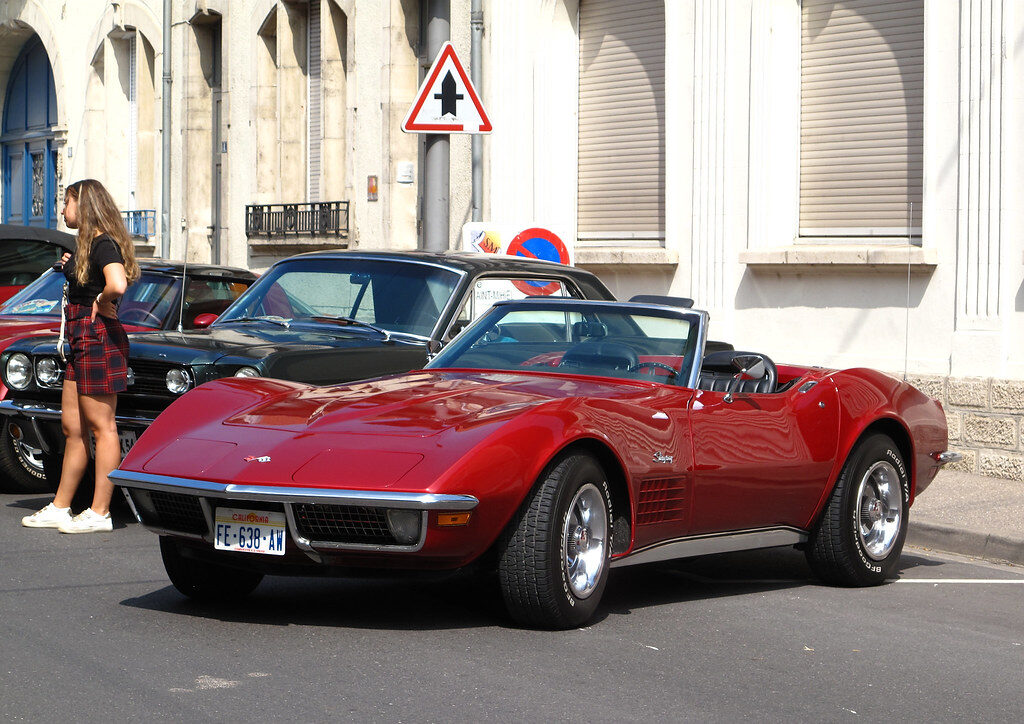
3. Chevrolet Corvette
What the car was: First introduced in 1955 as a straight-six roadster, the Corvette became the world’s most famous sports car. Decades of generations that led to today’s mid-engined iteration saw the car continually make the case that a mass-produced sports car could take on and even top more expensive, hand-built exotics. Even in lean years, the Corvette followed the same recipe that made for “drop-dead gorgeous” looks and V8 juice, a car that made the American dream seem just a little more attainable. That made it one of the most recognizable sports cars in the world.
Chevrolet Corvette Evolution:
- Introduced in 1955
- Began as straight-six roadster
- Now has mid-engined design
- Styling and V8 firepower
- Top performance at reachable price
The Corvette extended its legacy by proving its capability in the world’s toughest endurance races. Through continuous mechanical refinement, it built a reputation as both an accomplished race car and a pop culture icon. Its journey from a modest roadster to a mid-engined performance machine shows how willing Chevrolet has been to evolve the car while keeping its core promise. For many enthusiasts, the Corvette remains the clearest example of what American sports car engineering can achieve for the money.
4. Pontiac GTO
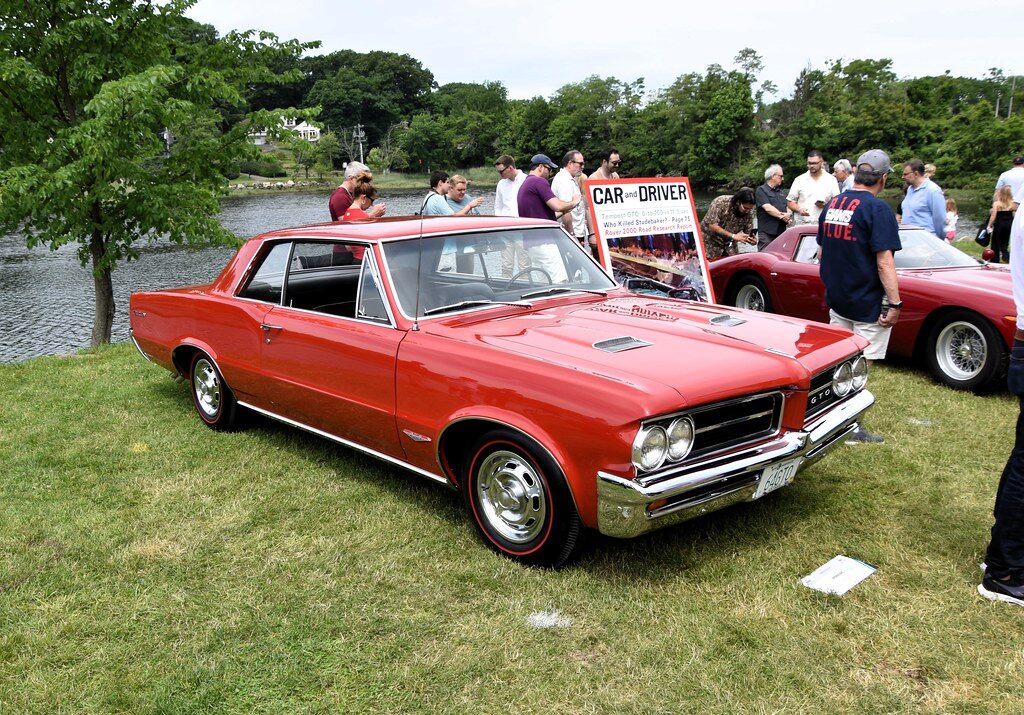
The naming of the “GTO” is credited with defining what became the muscle car era. It was a simple formula that the 1964 Pontiac GTO engineers used-stick a high-performance V8 in the intermediate-size Le Mans body and build a fast car. That rapidly garnered the attention of the buying public and other automakers across North America soon copied the idea. It was so easy to understand, and that simplicity is one of the reasons the GTO’s idea spread so quickly. Buyers wanted performance with a normal skin and that’s exactly what they got.
Pontiac GTO Muscle Car Origins:
- Launched the muscle car era
- 1964 model year
- High-output V8 in Le Mans body
- Copied by competing automakers
- 1969 Judge had orange paint
While later models like the 1969 Judge featured high-impact orange paint and flaming graphics, the original 1964 model initiated the wild trend. By proving that mainstream buyers craved affordable horsepower, the original GTO altered industry product strategies and sparked a memorable era of domestic performance design. Its influence can be seen in the many muscle cars that followed, each one built on the same basic idea of putting a powerful engine into a practical, affordable body. The GTO started a movement that shaped American car culture.
5. Plymouth Superbird
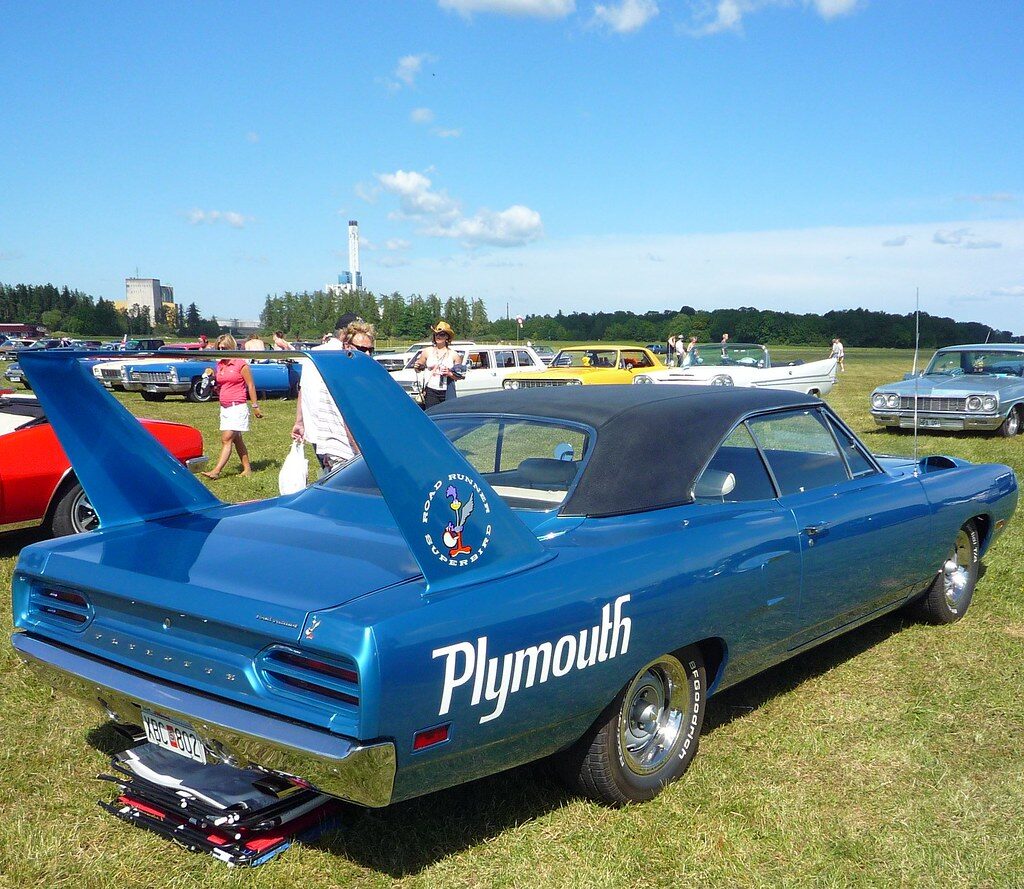
During the late 1960s, aerodynamics was king on the superspeedways of NASCAR. To hit 200 mph, an engineer-designed Superbird hopped onto the scene, a Plymouth Roadrunner with a drag-reducing nose cone and towering rear wing. The purpose-built design was born out of a necessity to go fast, and the strange shape of the car made perfect sense to the gearhead that designed it-even if that same car turned strange to the casual car buyer that was shopping for a car in a showroom.
Plymouth Superbird NASCAR Racing:
- Built for NASCAR superspeedways
- Modified Plymouth Roadrunner
- Drag-reducing nose cone
- Tall rear wing
- Successful with Richard Petty
The Superbird achieved remarkable success on track with driver Richard Petty. However, NASCAR homologation rules required production versions to be sold, forcing dealerships to offer these unconventional cars on showroom floors. Consumers initially resisted the extreme styling, leading sales representatives to remove the aerodynamic trim and sell them as standard Roadrunners. Today, the Superbird represents a remarkable peak of NASCAR aero development adapted for public roads. What was once hard to sell is now admired as one of the boldest cars of its era.
6. Buick GNX
Classic muscle car fever had cooled since the 1972 oil crisis, and domestic performance went cold turkey for more than 10 years. Then, everything changed thanks to Buick. Bringing about this massive comeback was Buick, which was testing turbo-technology in every model in its product line for years until they launched the Buick GNX, an experimental prototype that was truly pushed beyond the limits. The GNX proved that American performance was still an option and that ingenuity in engineering could even get a long and quiet performance car back on the road again.
Buick GNX Turbo Technology:
- Followed 1972 oil crisis fade
- Forced induction experiments
- Built on Grand National lineup
- Comprehensive hardware modifications
- Iconic all-black finish
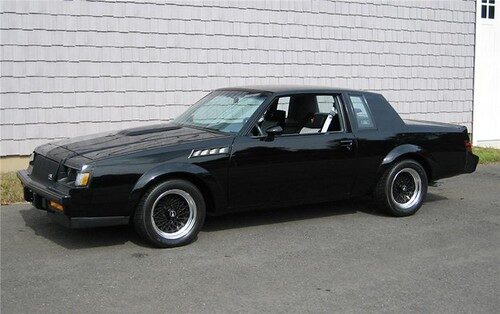
The GNX received a comprehensive suite of hardware modifications across all vital components, transforming the vehicle into a high-tech performance weapon. Finished in an iconic, sinister all-black treatment fit for Darth Vader, it visually and mechanically reclaimed American performance during the post-muscle car era. Its dark look and serious hardware made it unforgettable. The GNX remains a symbol of how a determined engineering effort can revive a whole category, and it holds a special place in the story of American performance cars.

7. Dodge Viper ACR VX I
The early Viper was the ultimate old-school, bare-knuckle muscle car. During the Viper’s history, mechanical engineers and test drivers painstakingly turned a brute into an extremely capable race car, evolving from a car powered on brute force to something more refined. A horsepower nightmare with an extremely limited on-road sensibility, the Viper started off as a tough brute with a brutal V10 and evolved into a much more refined beast that shows you exactly what people have been willing to do to make their idea work on a race track.
Dodge Viper ACR Track Performance:
- Modern update of Shelby Cobra idea
- Bare-bones brute with V10 engine
- VX I series ACR is ultimate version
- Extreme Aero Package
- Unofficial Nürburgring lap record
The VX I series Viper ACR stands as the ultimate production realization of this evolutionary path. Engineered with a specialized chassis and a legendary V10 engine, the vehicle utilized an extreme downforce-generating Extreme Aero Package to keep its tires firmly planted on challenging race tracks. This extreme engineering focus enabled the ACR variant to claim an unofficial Nürburgring lap record. It shattered long-standing prejudices regarding domestic handling capabilities, proving that purposeful mechanical development could conquer the world’s toughest circuits.
8. Shelby GT500
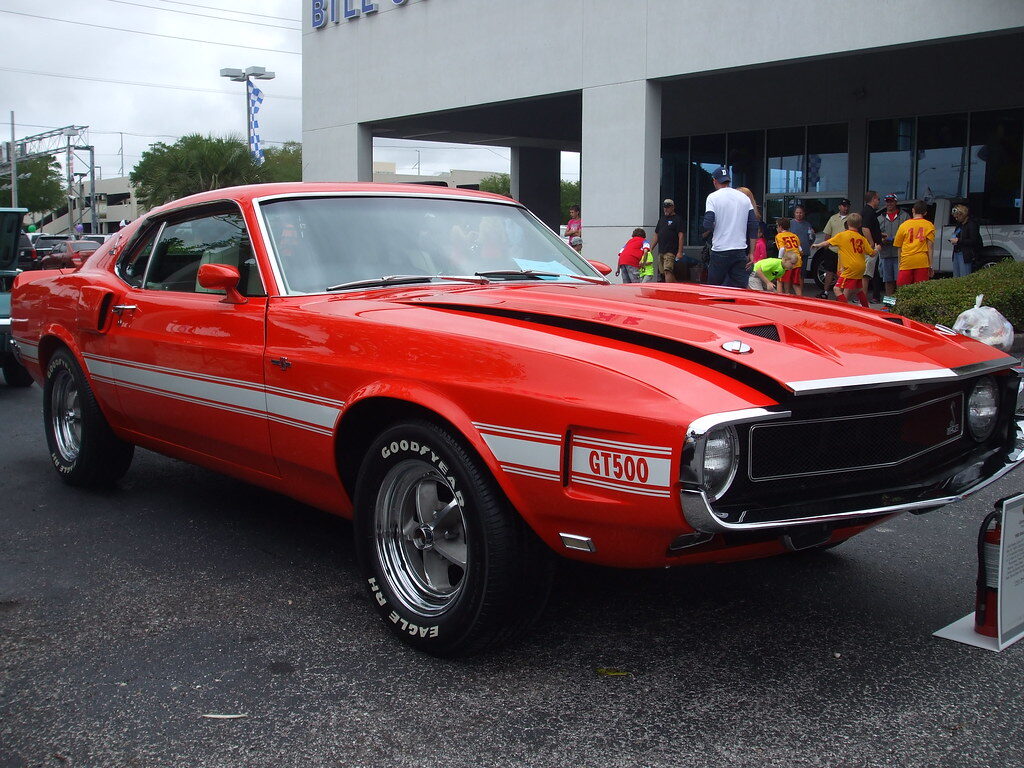
The modern muscle car has given us unbelievable high-performance cars, but the 2020 Shelby GT500 is the new king of the hill, the very best of modern design and engineering. A tech-packed car for the extreme driver, this ultimate Mustang can bring track-killing performance coupled with a daily driver’s usability. This car’s multi-link rear suspension setup provides razor-sharp handling, with the rear suspension and spring rates a testament to the level of control we can now get from a modern muscle car that doesn’t have to be a sacrifice in order to work the rest of the week.
Shelby GT500 Supercharged Power:
- Introduced in 2020
- Supercharged 5.2-liter Predator V8
- 760 horsepower at 7,200 rpm
- Rear multi-link suspension
- GT500KR exceeds 900 horsepower
However, the true centerpiece of the vehicle is its supercharged 5.2-liter Predator V8 engine, which releases an astonishing 760 horsepower at 7,200 rpm. In its highly exclusive GT500KR configuration, this legendary V8 engine pushes output beyond 900 horsepower. Powerful yet amazingly usable, this advanced Shelby Mustang reigns supreme as the absolute king of modern muscle performance. It brings the muscle car story full circle, pairing the traditional V8 formula with modern suspension and engineering that make the power easy to enjoy.
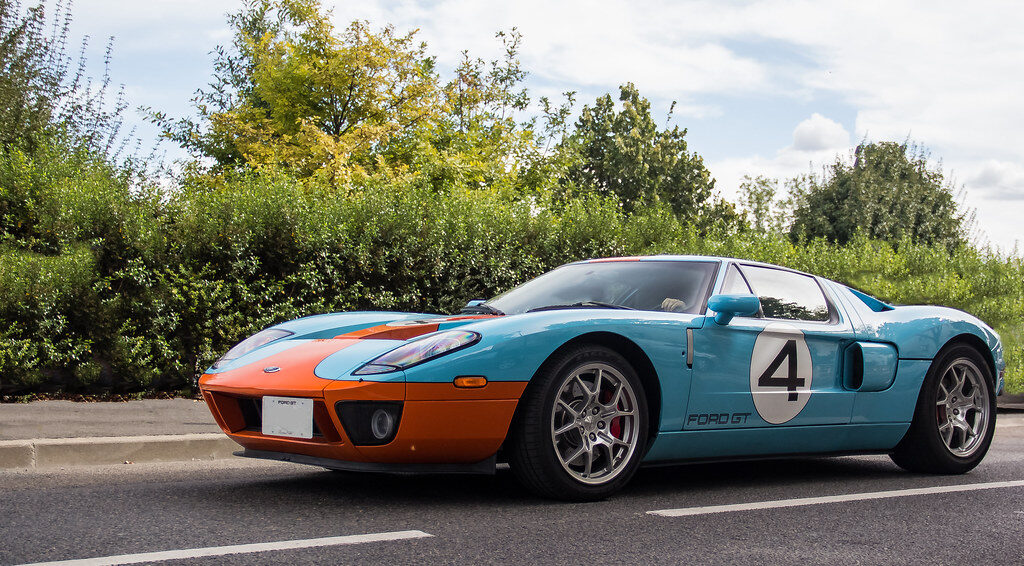
9. Ford GT
Mid-engined American sports cars are exceptionally rare, making the forward-thinking 2016 Ford GT a true masterpiece of modern domestic engineering. Engineered and built as a true exotic, this second-generation supercar represents the most advanced performance vehicle ever constructed in Detroit. The structural core incorporates lightweight carbon fiber elements alongside advanced active and passive aerodynamic features designed to optimize airflow and downforce. It stands apart from nearly every other American performance car because of its layout and its advanced construction.
Ford GT Carbon Fiber Design:
- 2016 second-generation supercar
- Mid-engined American exotic
- Lightweight carbon fiber structure
- 3.5-liter twin-turbo EcoBoost V6
- 650 horsepower
Beneath its aerodynamic bodywork sits a high-tech 3.5-liter twin-turbocharged EcoBoost V6 engine delivering 650 horsepower. Debuting on the 50th anniversary of Ford’s iconic 1966 Le Mans victory, this advanced machine validated its engineering brilliance by winning its class at the world’s premier endurance race, once again triumphing over Ferrari. The timing and the result made the car’s story especially memorable. It honored the past while proving that modern Ford engineering could still compete with the best in the world.
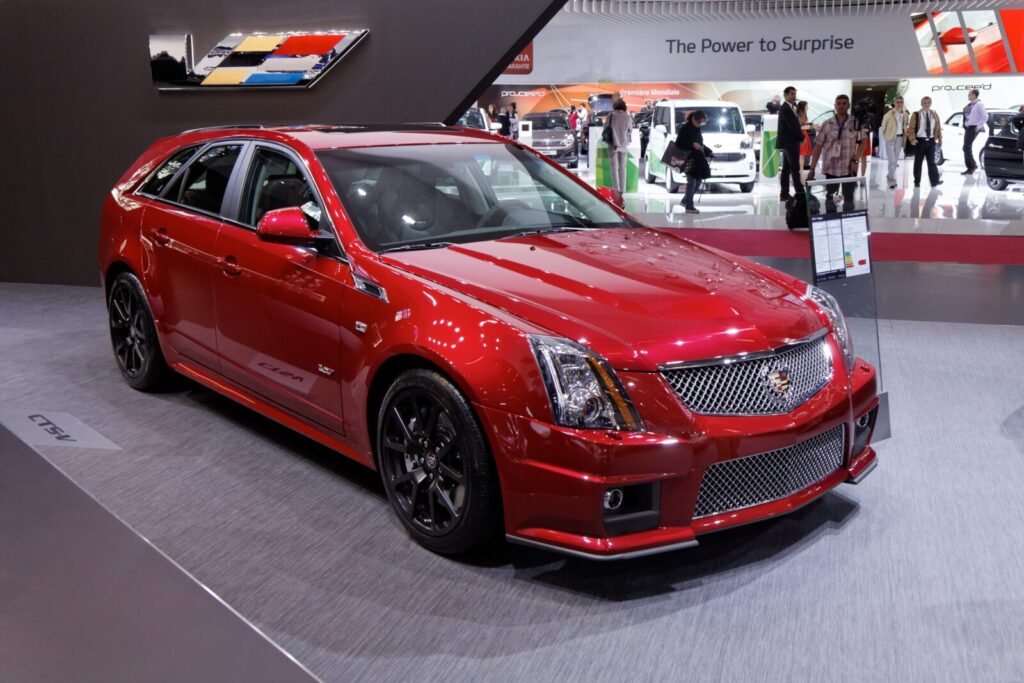
10. Cadillac CTS-V
For decades, Cadillac focused almost exclusively on plush luxury and comfortable land barges, leaving performance as a low priority. That long-standing philosophy shifted dramatically in 2004 with the introduction of the disruptive CTS-V, a vehicle that redefined the brand’s engineering capabilities. Mechanically elevated by an LS6 V8 engine sourced directly from the C5 Corvette Z06, the CTS-V delivered sharp handling and relentless power. For the first time in history, domestic enthusiasts had a US-born sports sedan capable of directly challenging elite European competitors.
Cadillac CTS-V V8 Performance:
- Introduced in 2004
- Shifted Cadillac toward performance
- LS6 V8 from C5 Corvette Z06
- US-born sports sedan
- Kickstarted V Series lineup
This landmark machine established a completely fresh trajectory for Cadillac, successfully kickstarting the acclaimed V Series lineup. By pairing traditional luxury with serious motorsport engineering, the CTS-V fundamentally altered expectations for domestic performance sedans. These extraordinary machines showcase how American automotive ingenuity evolved from raw horsepower into world-class engineering marvels. By continually pushing mechanical boundaries and embracing cutting-edge innovation, Detroit’s high-performance legends continue to ignite excitement on streets and racetracks around the globe.