Analyzing the Volkswagen ID. Buzz Sales Stumble and U.S. Market Challenges
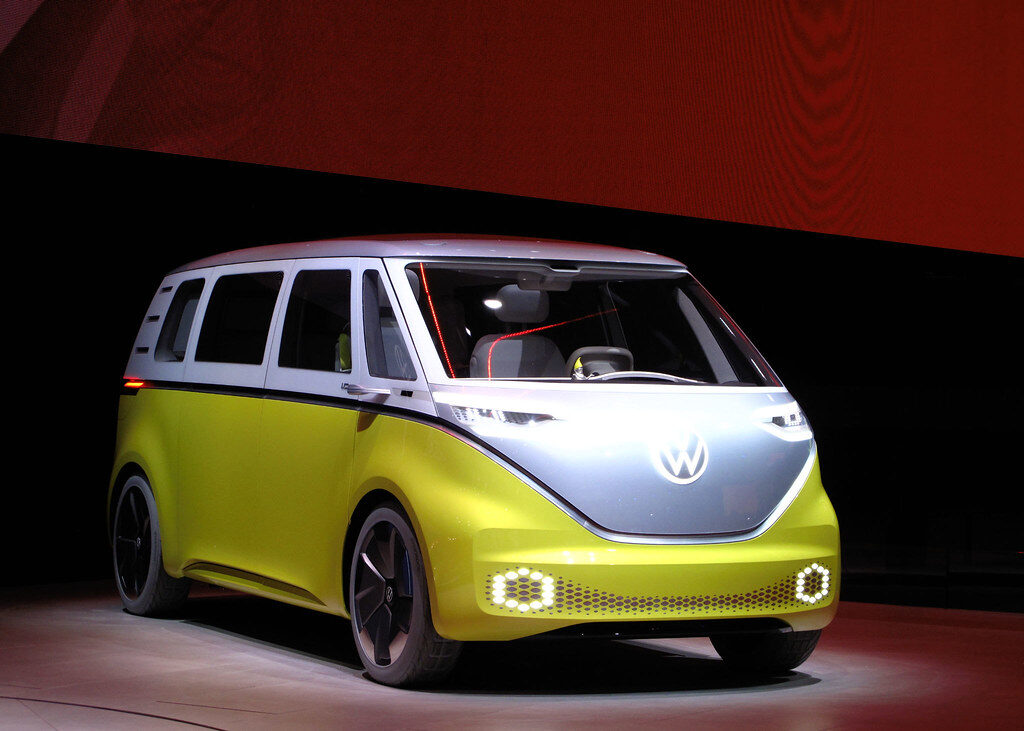
The Volkswagen ID. Buzz rode in on a wave of excitement for a new take on the iconic Microbus. With its retro styling, family-friendliness and electric drive, it set high expectations in North America. To many car lovers, it appeared ready to carve a niche for itself as an electric vehicle. But translating the craving for nostalgia into high, protracted sales proved to be much more elusive. American consumers immediately revealed more issues over and above that unique look of the vehicle.
Volkswagen later revealed the ID. Buzz will not be available in the U.S. or Canada for the 2026 model year. Due to weaker than expected demand, the company was able to shut down North American manufacturing and focus on inventory. The burden of high prices, short driving range, and having the federal EV incentives revoked. Vehicle market introduction was impacted by safety compliance issues and feature gaps. At the same time, its better European showing showed there can be huge disparities among regional EV markets.
Thus, the ID. Buzz story is about more than disappointing sales, It shows the challenge of combining heritage and price, range and practicality, and everyday use. Volkswagen still sees the electric van as a key part of its range. If the first is set to return in 2027, then there is the chance to learn from its North American debut. It remains to be seen if this next-generation will prove to be the world-class design that European’s demand of Electric Vehicles.
1. The ID. Buzz Arrived With Huge Expectations
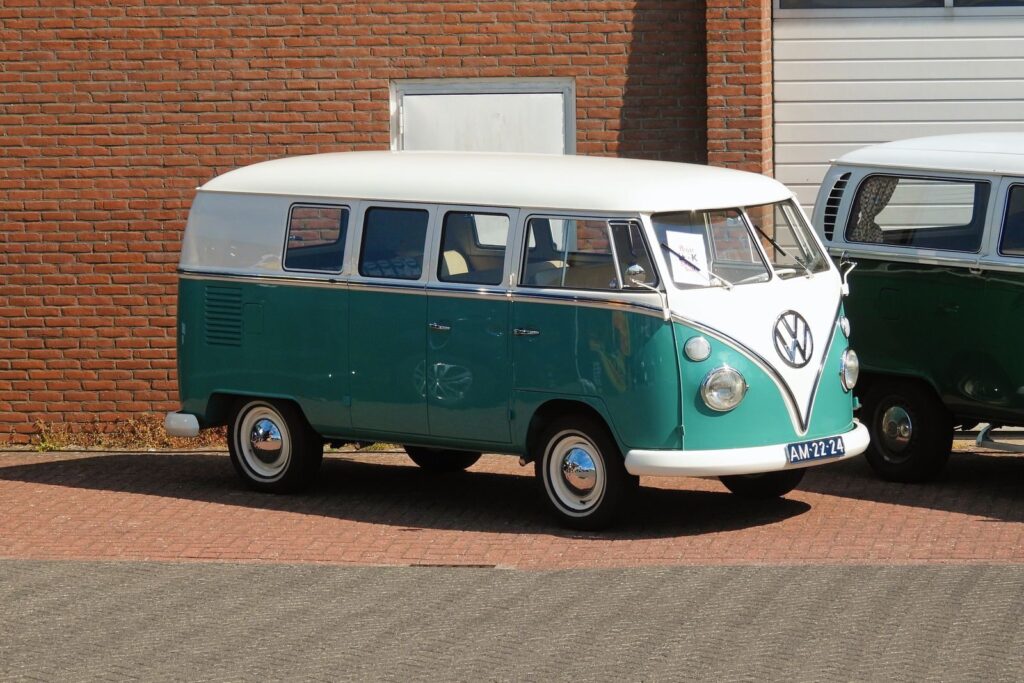
There was something undeniably thrilling about watching a legendary automobile icon reborn for the latest age of EV transportation. When Volkswagen launched the ID. Buzz, North American EV fans and muscle car smirkers began to feel a genuine tingle of hope. America had long lacked a born-for-the-road lifestyle vehicle that could nail both retro stylings and its family-expressing bravura. The revival of the legendary Microbus seemed ideally poised to fit the bill. But turn that nostalgic appeal into a consistent winner in a relentlessly competitive American auto market turned out to be a far trickier task. When the North American fleet rollout arrived, the ID. Buzz became an unwitting victim of economic turbulence, regulatory confusion, and serious practical limitations, which somewhat deflated the world’s most imaginative modern transportation concept.
Key Points Behind the Buzz:
- Iconic Microbus returned electrically
- North America showed early optimism
- Retro styling attracted enthusiasts
- Family appeal boosted expectations
- Sales proved more complicated
Thus, it was an instructive example of how emotional design coupled with electric ingenuity could manifest demand in the real world. The reception was overwhelmingly positive, but ultimately the American market uncovered several issues related to features and legacy that extended beyond those attributes. Volkswagen had sold the electric van as a key piece of their moving forward, but consumers also considered factors like affordability, practicality and range all of which grew in significance as the rollout continued. In this way, the story of the ID. Buzz isn’t just about an electric vehicle that didn’t fulfill its promise it’s about how challenging it is to adapt a beloved vehicle concept into a profitable contemporary model when consumers, policy and the economy are so focused on delivering something quite different.

2. Volkswagen Paused the ID. Buzz for 2026
The rest of the 2025 Volkswagen ID. Buzz story in North America was settled with an unexpected break in model years. Volkswagen confirmed that the retro-look electric van would not be sold in either the United States or Canada for the 2026 model year. Production intended for North America was discontinued in 2025 because of weaker-than-expected sales. Instead of continuing to pour money into marketing and selling new production that was already proving to be slow-moving, Volkswagen announced plans to sell off inventory already in the wild, which raised speculation that the ID. Buzz might no longer make it to the American market at all. However, Volkswagen executives quickly insisted that the break in model years was merely a bump in the road.
What The 2026 Pause Meant:
- 2026 model year was skipped
- North American production was halted
- Consumer demand fell short
- Dealers focused on existing inventory
- Volkswagen planned a return
Volkswagen Group of America CEO Kjell Gruner directly addressed the situation of the vehicle and reassured that the ID. Buzz still held an important place in the portfolio. He clarified that Volkswagen would not be cancelling the product in the US market but rather that the company was making moves to optimize inventories and use models from the 2025 model year as a dealer support in the middle of the year. Gruner also revealed that the ID. Buzz would be returning for the 2027 model year at some point in 2026. This is an important differentiation because the decision to pause production was not a complete withdrawal from the American market, but rather an opportunity for Volkswagen to regroup and adjust to customer demand levels.

3. ID. Buzz Sales Fell Far Below Expectations
That discrepancy, between Volkswagen’s initial expectations and actual sales volume in the United States, became perhaps the clearest indicator of the ID. Buzz’s failure. Industry surveys and Volkswagen’s own forecasted sales in the U.S. first startup, predicted annual sales to be between 15,000 and 20,000 vehicles, once supply caught up. Worldwide, a target of 40,000 annual units was set. Volkswagen’s own U.S. sales data shows otherwise. Through three quarters, 2025, the automaker sold 4,934 ID. Buzz vehicles, or just under 4,930 over the course of its first nine months. In a whole quarter, fewer than 600 vehicles were delivered nationwide.
Sales Reality Check:
- U.S. targets reached 15,000-20,000
- Actual sales reached 4,934
- Global target reached 40,000
- Fewer than 600 monthly deliveries
- Dealer turn stayed below 500
The sluggish sales pace created an all-too-blemished commercial problem for a vehicle that was supposed to be Volkswagen’s electric halo car. “The volume was so low that the ID. Buzz was all but assured to not meet original annual volume forecasts,” IHS Automotive analyst Stephanie Brinley wrote in a report issued after the Sept. 4 Audi announcement. “Turn rates of less than 500 VINs/month suggest that vehicles were moving very slowly through the US market.” Those numbers showed a yawning gap in the reality versus the expectation in the market for the vehicle. Volkswagen created an enthusiast machine that was on its way to becoming a heritage-motivated vehicle, but the number of American buyers who wanted it just wasn’t there.
4. High Pricing Created a Major Buyer Barrier
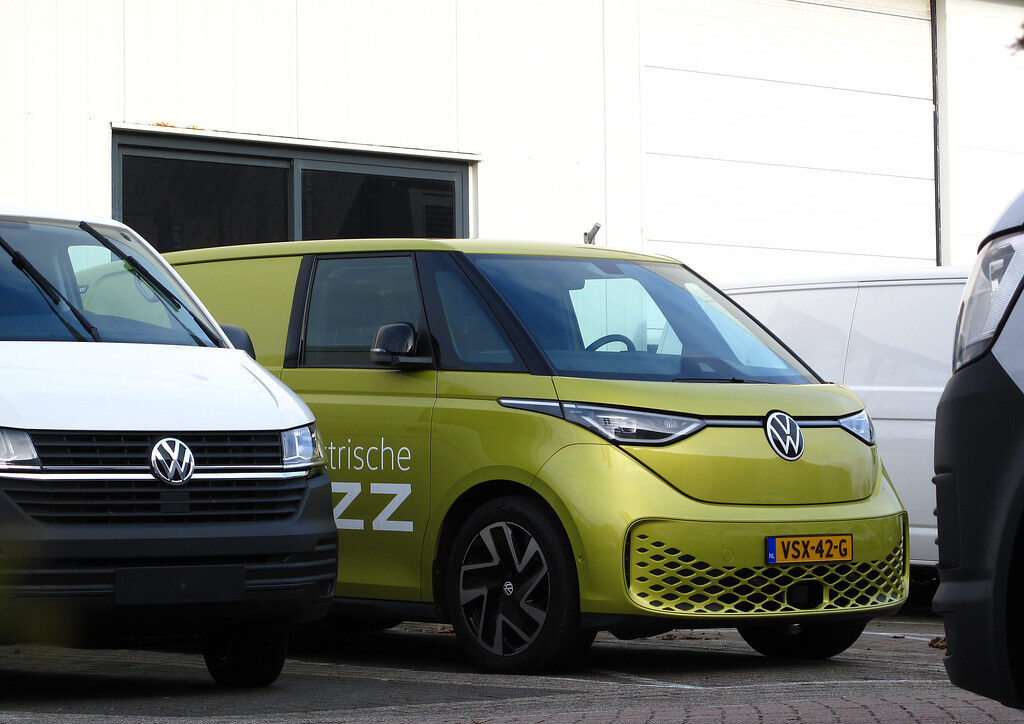
In the end, price became one of the biggest hurdles for the ID. Buzz in the US and Canada. The starting sticker price of the 2025 VW ID. Buzz was$61,545. That immediately put the vehicle into premium brand territory when shoppers were asked to reach that amount of money for an electric van. Families who opted for the electric van’s most popular options, like all-wheel drive and the two-tone paint finish, could get close to $70,000. That made it difficult to be an affordable entry in the market for those who were shopping for a flexible passenger van, not a new-to-the-market vehicle with a polarizing design.
Pricing Challenges Stood Out:
- Starting price reached $61,545
- Premium pricing limited affordability
- Options pushed prices near $70,000
- Families compared traditional minivans
- Crossovers offered another comparison
The price challenge was compounded by issues of international trade and US taxation. The ID. Buzz was imported into the US from Germany, and so faced a 27.5% import duty. Assembled outside North America, it was also ineligible for federal EV tax credits for which other rival vehicles were eligible. Once those incentives ceased on 30 September 2025, the remaining undecided shoppers deserted the ID. Buzz, leaving the remaining consumers open to the sticker price on what was a very niche item. With neither a lower price nor available incentives to temper that cost on offer, the ID. Buzz faced a doubly tough challenge.
5. Limited Range Made Family Road Trips Harder
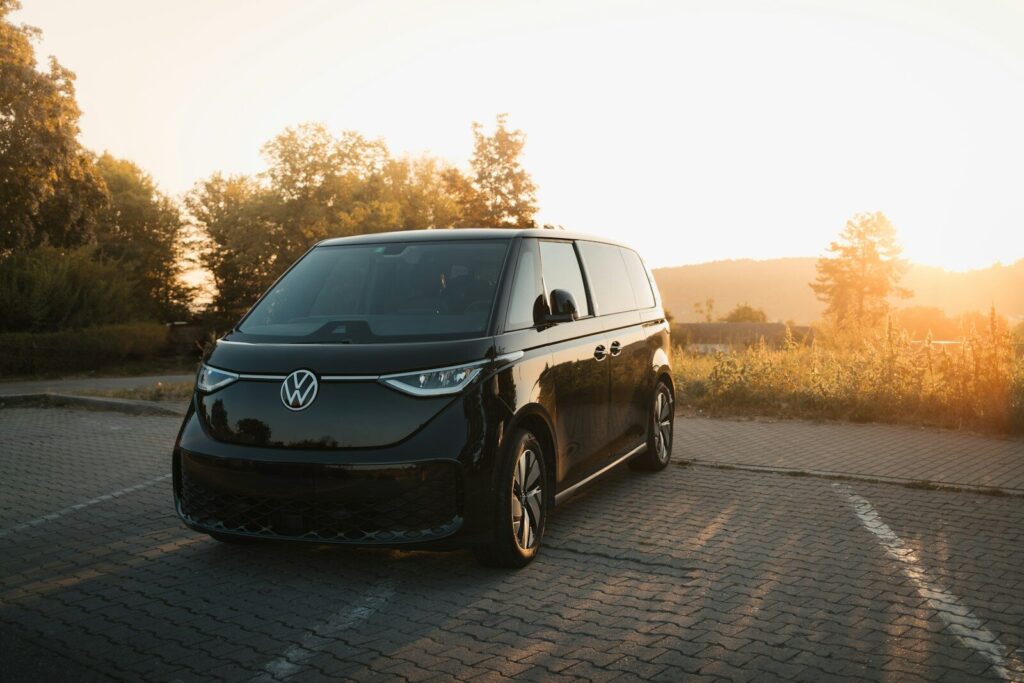
Range was another important factor for potential ID. Buzz owners, especially families that intended to use the vehicle for extended trips. The EPA-rated range for the rear-wheel-drive ID. Buzz was a top-end 234 miles (or about 370 km). Even lower if equipped with all-wheel drive. While that would be sufficient for a suburban day-to-day driver, running errands and school pickup, it could be a real obstacle for family road trips. Consumers in the U.S. have an expectation that a family-oriented van is going to undertake long motorway journeys, weekend camping trips, and cross-country driving. Given the vehicle’s family-oriented focus, range was an important consideration for buyers.
Range Challenges Mattered:
- Maximum range reached 234 miles
- AWD versions offered less range
- Daily commuting remained practical
- Road trips created challenges
- Highway charging required planning
The charging infrastructure also affected the range that consumers thought the vehicle would have. In some regions where fast-charging infrastructure was still lacking or limited, the range was particularly limited and required the vehicle to stop more often at highway charging stations. Future buyers comparing the ID. Buzz to other electric crossovers could see competitors’ models with comparable or higher range ratings for the same or lower price. Volkswagen appeared to be heavily using expressive design and reminiscent from nostalgia to mitigate some of these functional shortcomings. However, the modern EV buyer is more pragmatic about range and charging ability, making it harder for the ID. Buzz’s look to offset its practical drawbacks.
6. EV Fans Wanted More Practical Features
In addition to the range and price issues, automotive enthusiast forums pointed out other feature shortfalls that deflated some of the optimism among dedicated EV fans. A thread about the VW on the subreddit r/electricvehicles started by carmichaelcar was met with lots of discussion about how VW could have been better. Comicidiot on the r/electricvehicles forum said, Consumers of today are far more sensitive to price, and it’s not enough for something to simply be a blast from the past to make up for a less than stellar spec sheet. Mattwb72, in a similar thread, was annoyed as hell after sitting on the VW for years before it arrived. For this customer, the prices were high, and the range was low, so it was doubly upsetting when the ID. Buzz finally did arrive.
Features Buyers Wanted:
- Consumers remained highly price-sensitive
- Nostalgia could not carry everything
- High pricing caused disappointment
- Limited range reduced enthusiasm
- EV fans expected stronger specifications
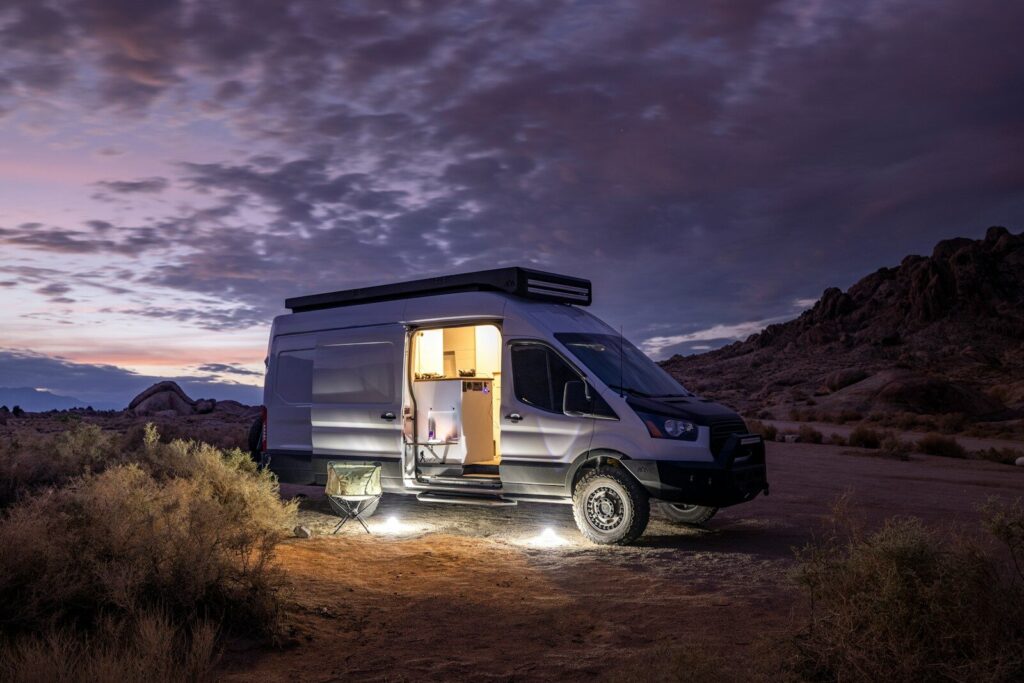
Many community members drilled down to more specific lifestyle features associated with the original Microbus identity. User Fojoart alluded to a potential Westfalia camping package that would have been innovative for van lifers and outdoor enthusiasts interested in electric camper. User unique_usemame went even further with eco-friendly camping-specific features found in other large EVs, from a dedicated camp mode to use a smaller portable air conditioning unit, to sleeping in a fully climate-controlled vehicle all night without draining the battery. The ID. Buzz offered only a 200-watt power outlet, instead of the larger, more powerful 1,800-watt outlet that would power larger camping equipment.
7. Safety Recalls Added More Launch Pressure
Meanwhile, the ID. Buzz was yet another launch date victim in part due to the unexpected safety recall issues that dogged the European-branded people-mover’s North American rollout. VW paused the ID. Buzz’s North American sales back in April to correct a dashboard warning icon issue that lacked the word “brake.” Then a more complex safety compliance issue involving the long-wheelbase ID. Buzz (North America’s version) and the third-row seats, couldn’t be taken care of by a simple recall. As test documents revealed, the LWB ID. Buzz was not compliant with FMVSS No. 208, passenger crash protection requirements.
Safety Issues Complicated Launch:
- Dashboard warning error paused sales
- Third-row compliance issue emerged
- FMVSS No. 208 was involved
- Three seats had two belts
- Inventory faced mandatory modifications
The second issue was a compliance issue. Here, it was a seatbelt issue on a third row that was supposed to accommodate three passengers but only had two seatbelts. The investigation was first initiated by a Volkswagen supplier in mid-February, tested externally in March and confirmed in April. To resolve the defect in over 5,000 vehicles that have already been sold, Volkswagen dealers were instructed to install unpadded, fixed trim pieces in the center section to secure seating for only two passengers. Vehicles that were not yet sold were kept under a stop-sale status until the implementation could be completed. These safety and compliance issues aggravated an already-market-pressured vehicle.
8. Europe Showed a Very Different Sales Picture
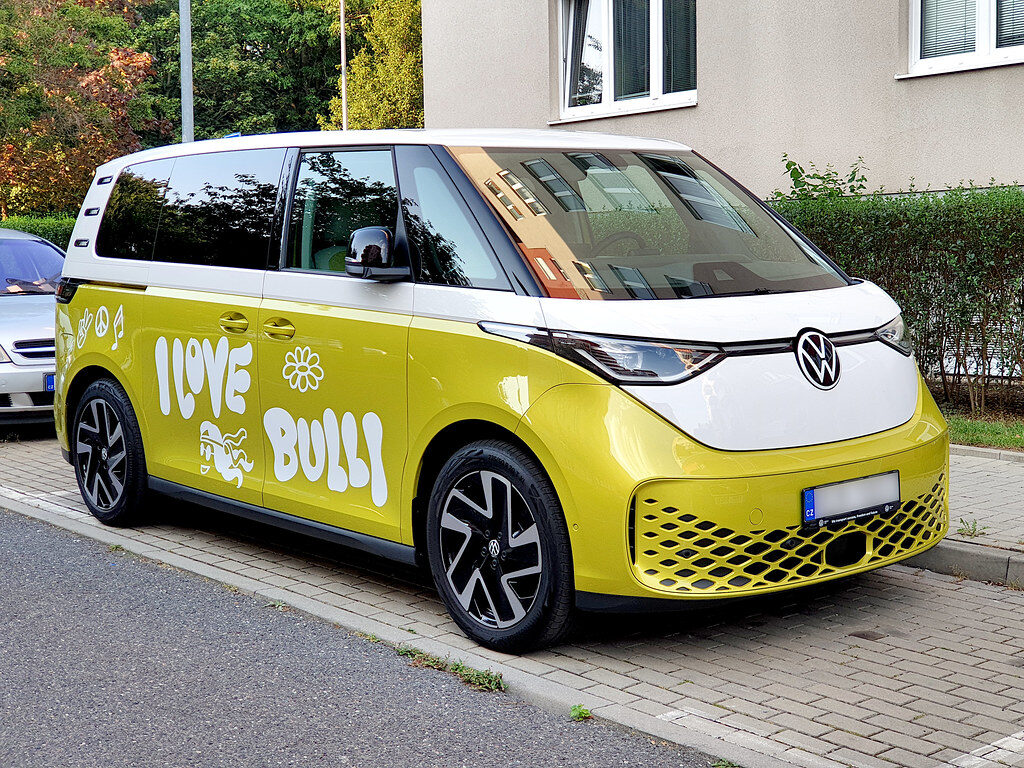
In North America, this story hasn’t been able to gather significant momentum, but in Europe, the picture has been very different. In the first half of 2025, VW delivered 27,600 ID. Buzz in the world, of which the overwhelming majority were intended for customers in Europe. Over the same period, Volkswagen Group’s total number of electric cars delivered to customers in Europe grew by almost 90 percent compared to the same period of the previous year. But these figures highlight how much regional factors can influence the performance of an electric vehicle. While a specific model may face resistance in one market, it may not meet the same response elsewhere, because factors like infrastructure, government policy, driver behavior, and driving style can all influence an electric car’s appeal.
Regional Differences Shaped Demand:
- Europe received most ID. Buzz
- Global shipments reached 27,600
- European EV sales surged
- Charging networks supported adoption
- Driving habits differed regionally
European drivers have access to denser public charging infrastructure and shorter average trip distances, and they are subject to different urban driving conditions and more favorable tax treatment. Other examples of how product performance can vary across regions include the Honda e electric vehicle, which was enthusiastically received in Europe but never launched in the U.S., and Ford’s Mustang Mach-E, which was a reliable hit at home in America but continues to face stiff competition from local EV makers such as BYD and NIO in China. The common thread here is that electric vehicle success is not simply a matter of how well the product and technology works. It has everything to do with where it is deployed and how that region’s consumers, developers, and regulators respond.
9. Global EV Markets Are Becoming More Regional
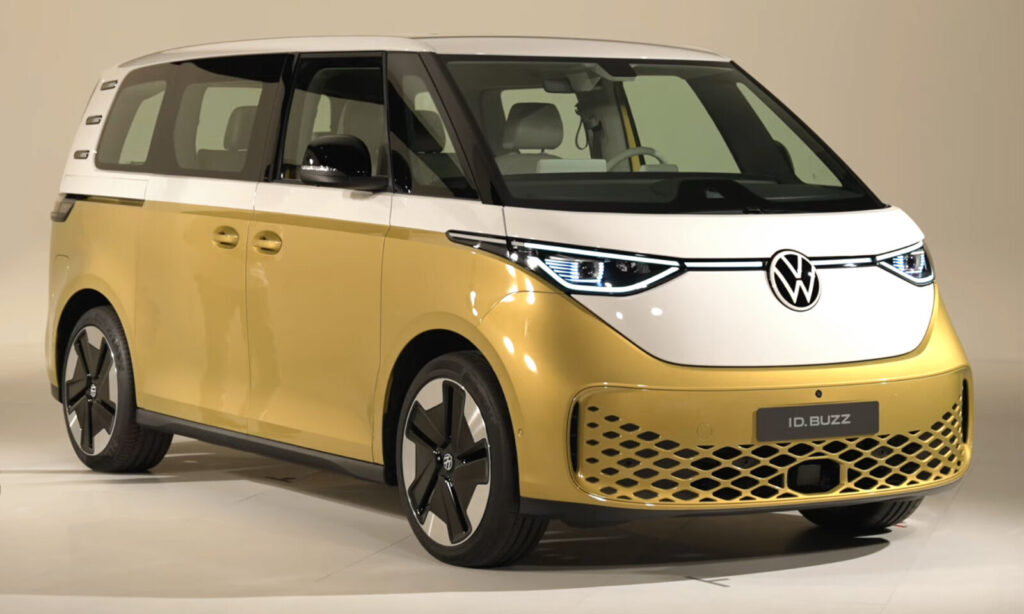
Beyond the narrow EV passenger vehicle market, it’s clear that this adoption has also become far more regional than global for the automakers in question. Tesla’s Model Y may be extremely well-positioned in Europe and China, for example, but faces significant challenges in India due to high import duties and local assembly requirements. These all demonstrate the profound impact that market incentives and national policies can have on the success of individual models of electric vehicles. The success of the ID. Buzz is another example of this, with clear (albeit lower) sales in North America as opposed to very limited sales in Europe. In short, automakers’ global EV strategy is no longer as evenly distributed around the globe, and will need to be far more tailored to each individual market going forward.
Every Market Has Different Rules:
- EV adoption remains highly regionalized
- Tesla leads Europe and China
- India presents import challenges
- U.S. strategies are changing
- Automakers are refining approaches
At a larger scale, the wider U.S. market underwent a notable adjustment in 2024, as Ford said it would end the F-150 Lightning, which was U.S. sales leader among electric trucks in 2025. In combination, these changes demonstrate how automakers are honing their EV offerings to account for regional differences. The North American sales success of the ID. Buzz may therefore be just part of a much bigger story: That demand for electric vehicles can vary with price, incentives, infrastructure, customer preferences, and local competitors, and that success in one country doesn’t automatically predict how well an EV model will sell elsewhere. To succeed commercially, manufacturers need to understand the specific demands that might be placed on their offerings in each market.
10. The 2027 Revival Could Bring Important Changes
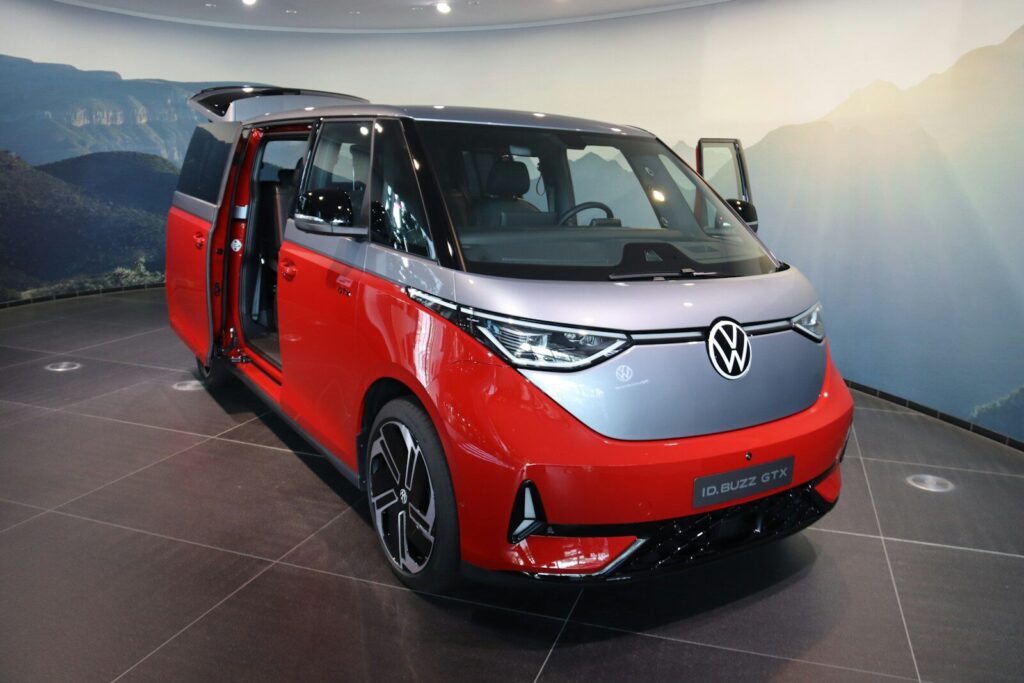
Against a possible 2027 first-quarter resurgence, VW has some lessons in how not to introduce the ID. Buzz in North America starting with the general consensus that it’s value, convenience and real-world range that win over consumers. While VW officials look for fixes that will ensure a second chapter for the ID. Buzz in North America, it will have to come with some real changes perhaps in pricing, range, local assembly or lifestyle-centric packages. A forward-leanin camper option like a Westfalia package might also appeal to outdoor lovers and van lifers who view the Microbus as a heritage feature, not just an ode to Microbus history.
What Could Strengthen The Revival:
- Adjust pricing for buyers
- Enhance battery range
- Consider local assembly
- Explore camper package options
- Improve everyday vehicle value
In the end, the ID. Buzz makes the point that while emotional design and automotive iconography may start a frenzy, it takes the right balance of styling, price, battery state and everyday functionality to sustain a long term commercial success. As the legacy manufacturers endeavor to learn the moves of the sustainable mobility dance, matching product specs to real-world consumer buyers’ wish list is key to unlocking the American highway market. The ID. Buzz may only be taking a detour, if a very brief one, to re-evaluate. With tweaks, longer range and a focus on everyday value, there’s hope that Volkswagen can get this electric icon back on the road for a new chapter. But the new story will depend on whether that Buzz can find the magic in this icon.