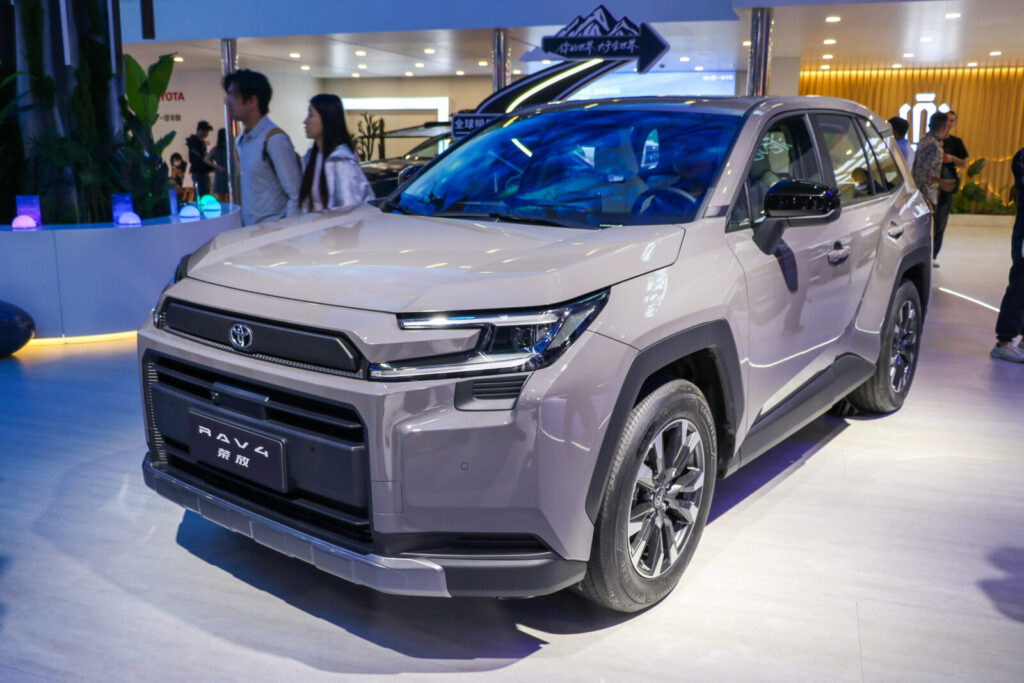
Examining the 8 Remaining American-Made and Domestic Sedans for 2026

The American car market has evolved so much that you’ll find far fewer sedans on sale in US showrooms, but Americans are still partial to a domestic four-door, with a smaller pool of sedan choices for the traditional car buyer. But many of these surviving models show that there is still room in today’s market for the traditional car, from efficient hybrid transportation to high-performance luxury and electric solutions. To find out what makes a car an “American-made” or “American-built” sedan, drivers need to look past the badges on the hood of the cars and consider just where they’re assembled. Some remain products of the “Big Three” companies in Detroit, while others are actually made by foreign automakers with large US factories and plants. Here’s what you can expect from the current crop of 2026 model-year American-made and assembled cars.
Here are the eight sedan nameplates covered in this story, along with an update on where they are being made in 2026, how they are equipped, what their performance credentials are, and whether they are still on sale. Together, these names illustrate how auto makers are changing to meet America’s shifting needs. Honda Accord and Toyota Camry Still the family sedans of choice for practical buyers. Cadillac CT4 and Cadillac CT5 The cream of Michigan-made luxury and performance. Tesla Model 3 and Tesla Model S How EVs are winning and losing. (That Model S has expired, according to the info given.) Dodge Charger, built in Canada, with electric or gas engine Lucid Air, built in Arizona, with electric engine
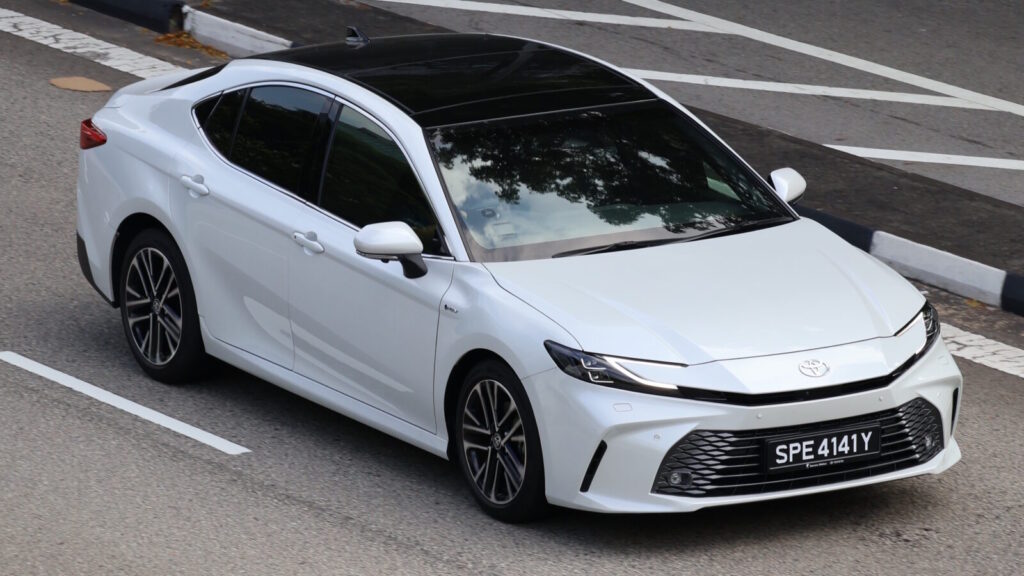
1. Toyota Camry
The 2026 Toyota Camry continues to be one of the clearest examples of the family sedan line available in the United States. Produced in Toyota’s Georgetown, Kentucky, facility, this five-passenger midsize sedan offers everyday practicality and a hybrid-only powertrain. Its American market placement illustrates a larger trend of automakers modifying old family sedan nameplates to meet different customer needs, with automakers moving away from the V6-powered family sedan formula towards something more suitable for today. If you’re still shopping for a familiar four-door, with comfortable seating, and some sense of a domestic assembly, the Camry remains a good choice, and it has a long history, going all the way back to 1982.
Toyota Camry Highlights:
- Assembled in Georgetown, Kentucky, USA
- Five-seat midsize hybrid family sedan
- Hybrid-only powertrain for the 2026 model
- Practical design for everyday driving
- Global sales exceed 22 million
The fact that Camrys are made in America does not mean all of their components are made in America. They are part of the global supply chain, which means where the vehicle is assembled and where individual components come from are two separate considerations. The latter becomes important when comparing something like a domestic-made vehicle to a vehicle entirely manufactured domestically. From a small, compact car, the Camry grew to a full-size two-row sedan, larger than the Corolla in a handful of markets. The car’s presence and reception make clear the value of affordable family sedans, even as crossover utility vehicles gain ground among consumers, and underscore the value for drivers of a long-running manufacturing program.
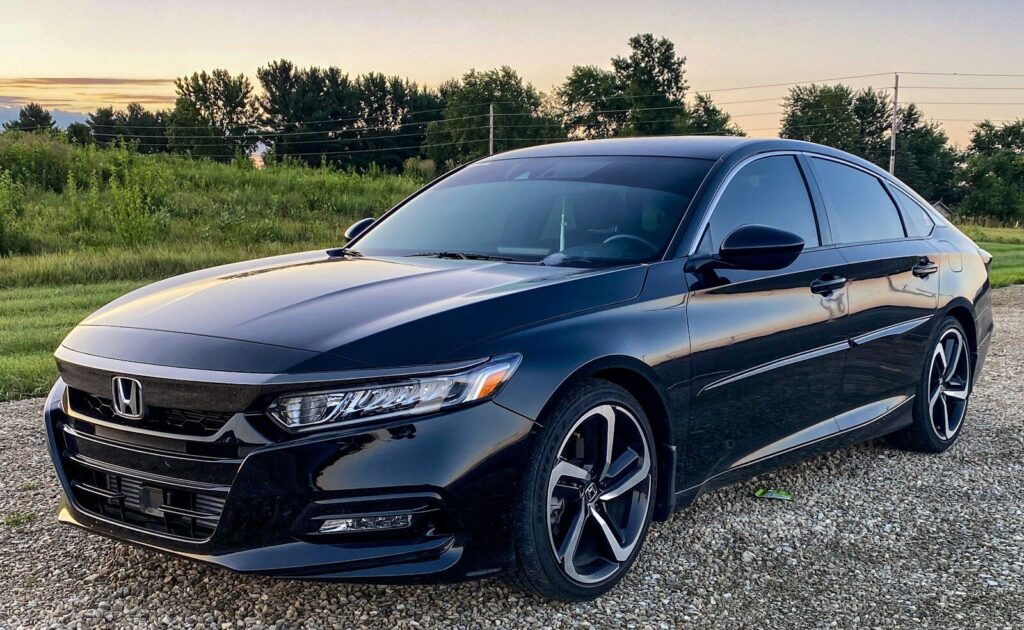
2. Honda Accord
In fact, Honda has had the Accord built in Ohio since 1982. The platform has become so familiar that Honda’s name can easily be attached to the Accord and not lose any of its authenticity. While Honda is obviously a Japanese automaker, the fact that the Accord is assembled in Ohio seems relevant to the discussion of domestically built cars in the US Auto line. The Accord can be attractive to purchasers who would like a comfortable place to sit, an easy driving position, economical travel, and the versatility of a traditional boot. The Accord thus remains something of a stable in the 2026 market and industry mix and demonstrates that Japanese automakers who have a long-standing operation on the continent have a significant stake in the survival of the traditional US-built sedan market.
Honda Accord Highlights:
- Assembled at Honda’s Marysville plant
- Ohio production dates back to 1982
- Comfortable four-door family car design
- Efficient travel for everyday journeys
- Long-standing presence in American showrooms
Since 1976, the Honda Accord has been one of the company’s most recognizable model names worldwide. Its production span includes multiple body styles, but the Accord in all its forms is still best known as a four-door sedan in the US. That distinction is reiterated by the additional info provided below that mentions secondary reports of future factory retooling and potential production allocations, though the Accord still qualifies as a well-established US-assembled product for 2026. That status underscores the difference between brand nationality and production location, so if you’re wondering whether a car is American-made, consider where the vehicle is actually assembled rather than its brand’s home country. The Accord shows how international automakers continue to support US production with a midsize sedan focus for the foreseeable future.
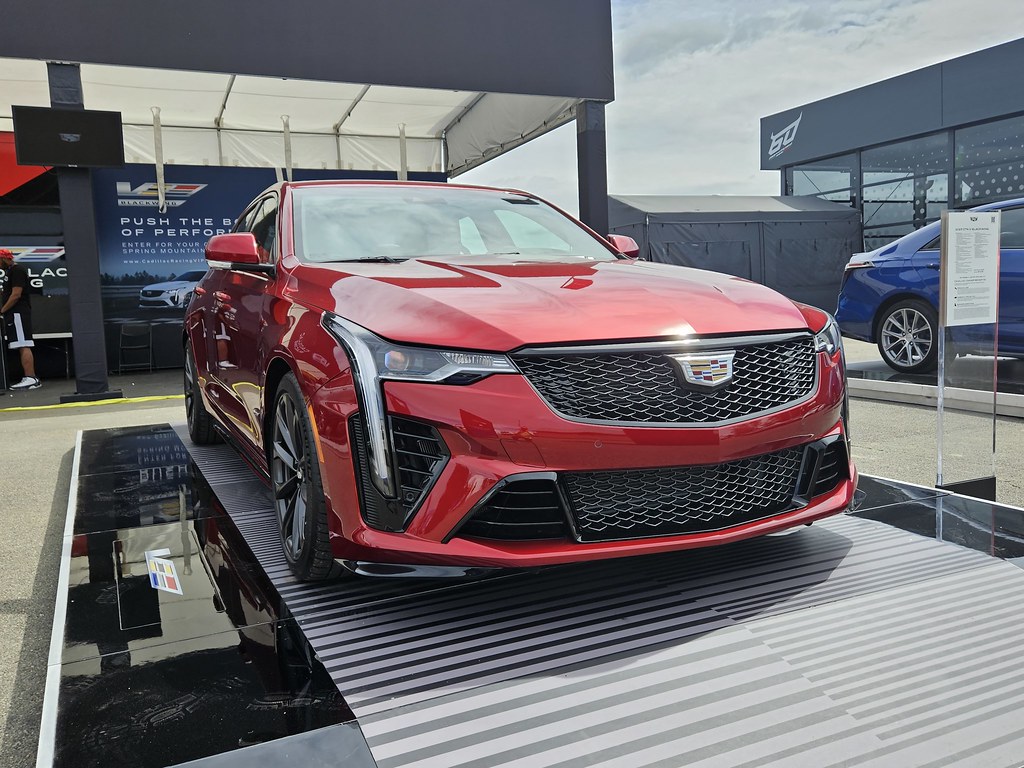
3. Cadillac CT4
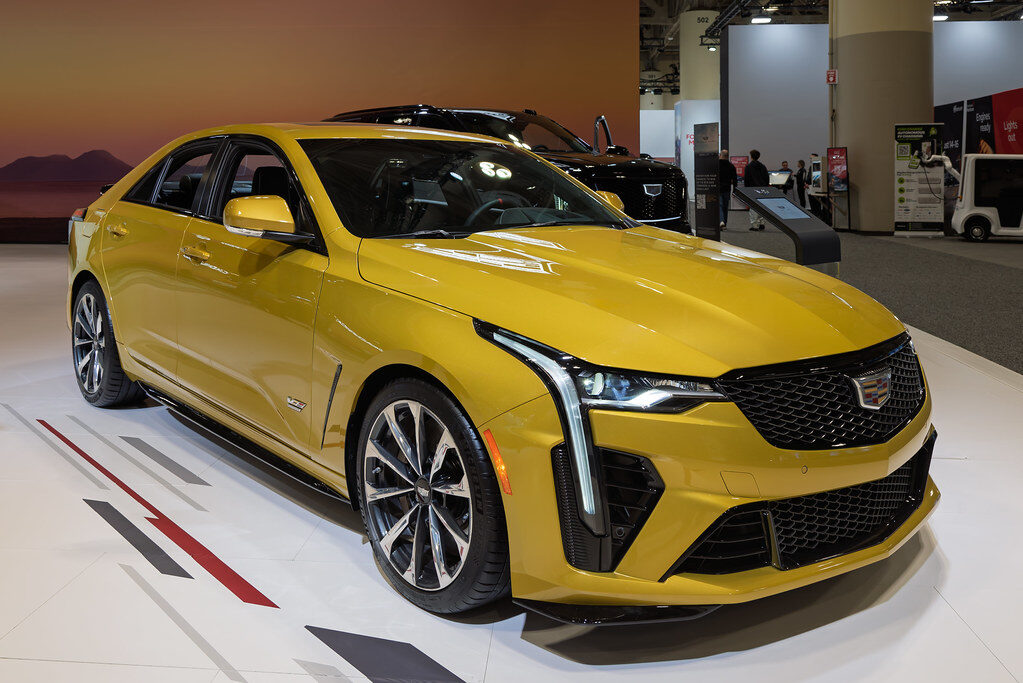
The Cadillac CT4 is part of the American luxury sedan hierarchy, serving as the brand’s smallest and most affordable entry into the segment. As such, it is both a luxury car and a fun drive. It is built by General Motors at its Lansing Grand River plant in Michigan. The model is the base Cadillac model of the CT4 range, with buyers interested in a more refined and smaller luxury offering opting for the CT4 model. Performance-oriented buyers in search of a more refined driving experience and more sporty styling can opt for the more powerful CT4-V or even the high-output CT4-V Blackwing variants. However, the model was short-lived, with its specific model year officially ending on 25 June 2026.
Cadillac CT4 Highlights:
- Assembled in Lansing, Michigan, USA
- Compact luxury sedan with responsive handling
- CT4-V offers enhanced driving performance
- Blackwing delivers high-performance character
- Production concluded during June 2026
The CT4 has only been around since the 2020 model year, so this is no long-running model that has been phased out of Cadillac’s lineup. Instead, its end of life comes after just six model years, with model years 2020 through 2026 in the books. Knowing about when the CT4 goes extinct is handy, as it is set to be around for a very limited time, and its last time on sale will be 2026. The CT4 has managed to carve out its identity as a more compact, luxury entry rather than a base-level luxury car, thanks to its focus on rear-wheel drive engineering, and its available performance versions. It is also a sign of the dwindling availability of traditional sedans here in the US.
4. Cadillac CT5
The Cadillac CT5 stands out as a mid-sized sedan with more gusto than the CT4 on which it is based. Cadillac’s Lansing Grand River assembly plant in Michigan builds the high-powered CT5, which delivers more bodily comfort, extra boot space, and greater road presence than a smaller luxury car. It’s the kind of medium-sized luxury car for drivers who want more interior breathing room than a compact luxury sedan but don’t need an SUV. Along with its more sensible style, the CT5 can satisfy enthusiasts with its performance-driven models, particularly the CT5-V Blackwing, which preserves internal-combustion performance with an optional high-performance V8. As most automakers gravitate toward crossovers and electrons, the CT5 provides an unconventional (and American) alternative.
Cadillac CT5 Highlights:
- Manufactured in Lansing, Michigan, USA
- Larger cabin than the CT4
- Increased passenger and cargo space
- CT5-V Blackwing offers V8 performance
- Current generation faces a production sunset
The CT5 entered production in November 2019 and serves as the successor to the Cadillac CTS. It shares the GM Alpha platform with the CT4 and offers rear-wheel-drive and available all-wheel-drive configurations, according to the supplied model information. Its combination of luxury, space, and performance places it among the more distinctive American sedans remaining in the 2026 lineup. The supplied article states that Cadillac has confirmed the current CT5 generation will end after the 2026 model year. This makes the vehicle particularly relevant to buyers who want a Michigan-built luxury sedan with a conventional combustion engine and an enthusiast-focused performance option. The CT5’s position highlights the continuing appeal of larger sedans, even as the wider market increasingly favours taller vehicles and more versatile body styles.
5. Tesla Model 3
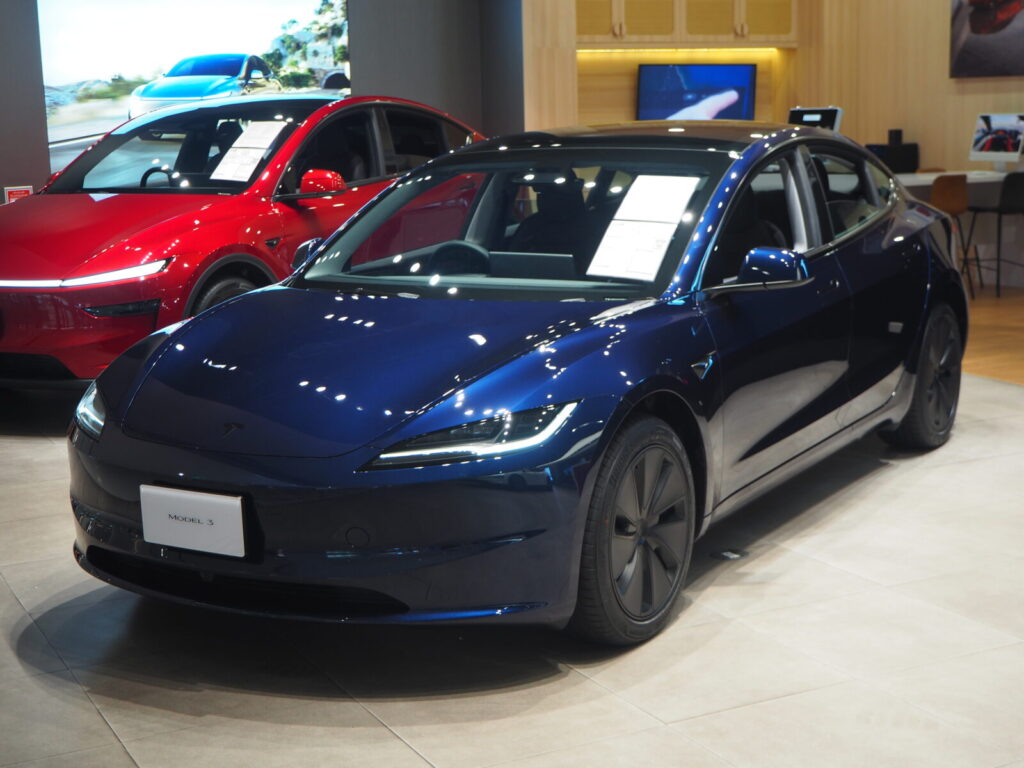
Marketed as one of the few domestically-assembled sedans, the Tesla Model 3 is an EV built with normal usability, technology, and affordability in mind. Assembled at the Tesla factory in Fremont, California, the 2026 Model 3 offers something different from petrol-powered family vehicles. With a base price of $34,490, the Model 3 is cheaper than many of the other Tesla sedans and has a higher performance variant for those who want more. Aerodynamic and with an electric drivetrain, it makes a case for retaining a traditional four-door car in an industry that has seemingly moved exclusively toward 4×4’s. As a departure from the crossover craze, the Model 3 runs with sedan proportions and offers a different kind of all-electric driving experience that is driven by efficiency and comfort.
Tesla Model 3 Highlights:
- Assembled in Fremont, California, USA
- Starting price listed at $34,490
- Fully electric midsize sedan design
- Performance variant offers greater acceleration
- Software remains central to ownership
Introduced in 2017, the Model 3 was developed as a more affordable alternative to Tesla’s earlier Model S and Model X. It has since become an influential electric car, with the supplied information noting that it became the first electric vehicle to surpass one million global sales in June 2021. The model also received a significant redesign, introduced in late 2023 in markets supplied by Tesla’s Shanghai factory and in early 2024 in North America and other markets supplied by Fremont. Its US assembly provides a clear example of domestic electric vehicle manufacturing, although its components continue to depend on international supply chains. For buyers considering a 2026 sedan, the Model 3 combines a familiar four-door format with electric propulsion, modern software, and a range of performance options.
6. Dodge Charger
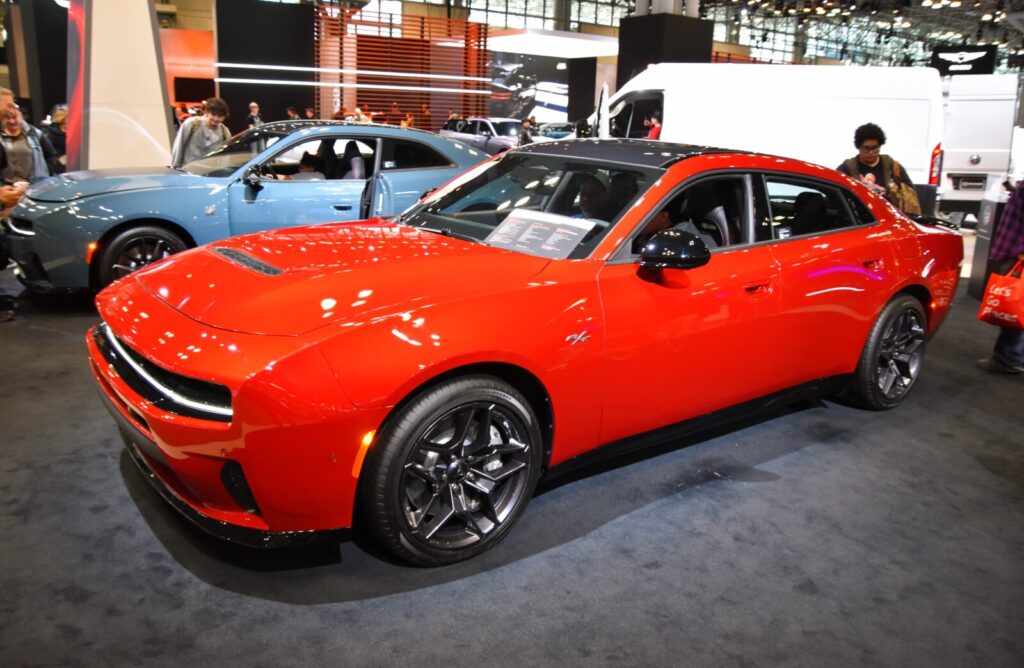
The new Dodge Charger introduces a muscle-car type of persona for four-door vehicles that has a significant caveat in its origin. 2026 Charger models are built in Windsor, Ontario, Canada, so it fits into the overall North American production field but should not be thought of as one that is built in the US. It is powered by a range of powertrains, from the entirely electric Daytona EV to the combustible-motor Sixpack variant that is powered by a Hurricane inline-six engine. This still gives the Charger the muscle car persona even though it is all four doors and a variety of propulsion options. For enthusiasts wanting a “Muscle Car” that happens to be four doors, then the Charger is unique among the other family sedans or luxury-electrics in this family.
Dodge Charger Highlights:
- Assembled in Windsor, Ontario, Canada
- American brand with North American production
- Daytona EV provides electric performance
- Sixpack uses Hurricane inline-six power
- Combines speed with cabin practicality
The Charger nameplate has a long history, with multiple generations produced across different periods since the 1960s. Its identity has changed over time, appearing in different vehicle categories before becoming associated with the modern performance-oriented sedan. The latest version reflects this evolving identity through its electric and combustion-powered offerings. Traditional enthusiasts may miss the sound and character of earlier V8-powered models, but the Hurricane-powered Sixpack and electric Daytona EV maintain a strong emphasis on performance. Its Canadian assembly also illustrates why the terms American brand, American-made, and North American-built are not interchangeable. If manufacturing origin is a priority, you should consider the final assembly location alongside the manufacturer’s nationality. The Charger remains an important part of the broader domestic-brand sedan conversation, even though its 2026 production takes place outside the United States.
7. Tesla Model S
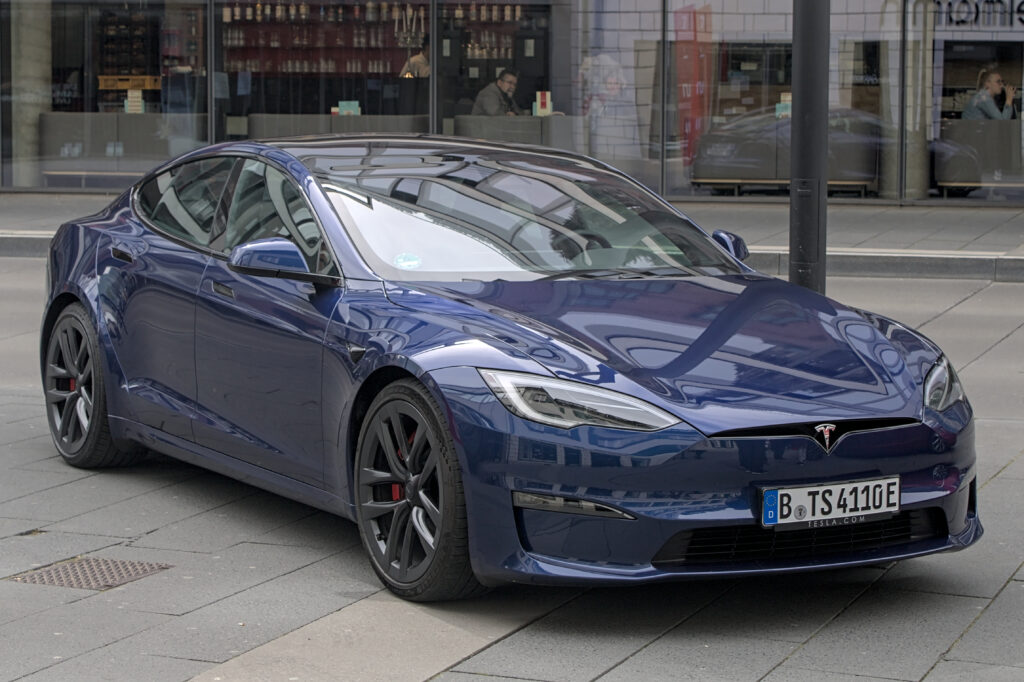
The Tesla Model S helped to prove that electric luxury sedans can be highly capable cars. Built in Fremont, California, the full-size electric sedan offered a more spacious interior and a more luxurious drive experience than the smaller Tesla Model 3. The provided specs give a starting price of $94,990 and a demonstration of its swift acceleration, versatility and the position at the top of Tesla’s sedan range. Its power said it can go toe to toe with mighty muscle cars and supercars rather than just functioning as a cost-effective alternative to daily driving. The Model S marked a big milestone in 2026, however. Tesla announced its end of production in January and the provided production history indicates production was finished in May 2026.
Tesla Model S Highlights:
- Full-size electric luxury sedan
- Assembled at Fremont, California
- Base price listed at $94,990
- Plaid variant delivers extreme acceleration
- Production ended in May 2026
Introduced in 2012, the Tesla Model S was one of the most influential electric vehicles in the 2020s era of modern vehicles. The Model S was originally in development under the codename White Star and was eventually designed by Franz von Holzhausen before the production Model S was introduced in 2009. Series production of the Model S began at Tesla’s Fremont plant in June 2012. It later saw significant updates, such as the 2021 introduction of its high-performance Plaid version with three electric motors, and was part of bringing advanced driver-assisted technology such as Tesla Autopilot into the broader vehicle technology conversations. With production now complete, as per the information provided, the Model S signals a turning point in the 2026 sedan market; remember to distinguish between a current, production car and the remaining inventory.
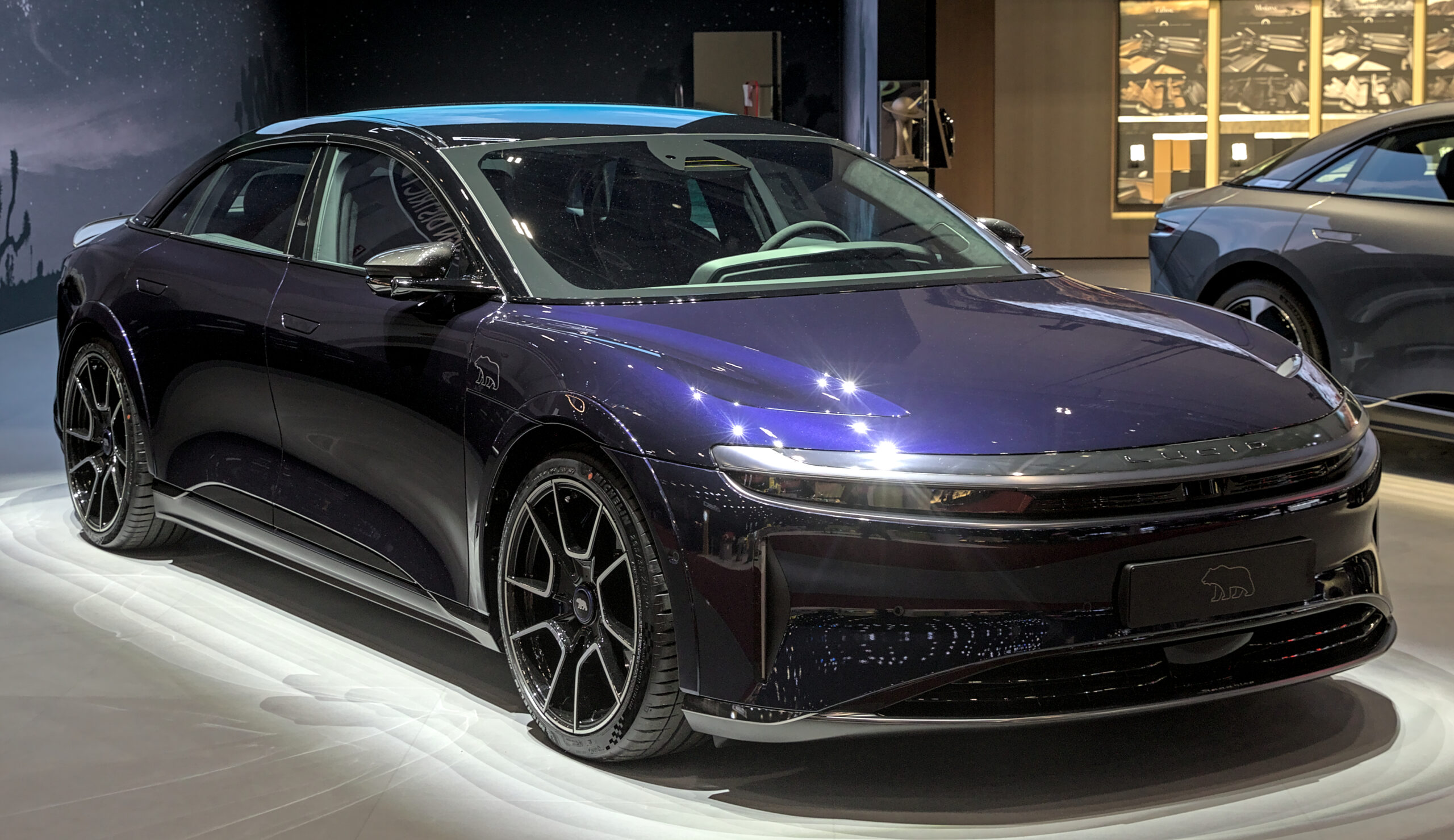
8. Lucid Air
The Lucid Air provides a glimpse of what American electric vehicle production can look like beyond the major automakers and into the space of upscale offerings. Built at Lucid’s Advanced Manufacturing Plant-1 in Casa Grande, Arizona, the 2026 Air marries its upscale accommodations with its huge electric range and incredible high performance in the upper trims. Based on the information provided, the Air Pure can be considered as the affordable model to have an estimated range of 420 miles. An upgraded Grand Touring model improves that to 512 miles per charge. That would make the Air a serious contender for anyone in the market for a long-range electric sedan, offering elegant styling and a refined luxury interior along with its electric powertrain.
Lucid Air Highlights:
- Assembled in Casa Grande, Arizona
- Air Pure estimates 420-mile range
- Grand Touring estimates 512-mile range
- Sapphire produces 1,234 horsepower
- Luxury cabin with electric performance
The Air Sapphire is the most capable of the performance versions, with 1,234 horsepower the bumper and the dash a claimed 1.89 second 0-60 mph time. This puts the Air in the realm of the sort of performance machine that only a luxury electric sedan can provide. This Arizona-built Air also shows that American manufacturing is not yet relegated to a fleet of family-oriented sedans and SUVs or well-established Detroit luxury brands. The other American sedans are still out there and are now at the higher end of the market, particularly for the premium and performance-oriented models. (FYI, the car in the specs here has nothing to do with the Kia Forte, even though the description here refers to a Forte. This is the Lucid Air, built in the US.)