


BYD’s Shark: A New Pickup Challenging Ford and Toyota’s Reign
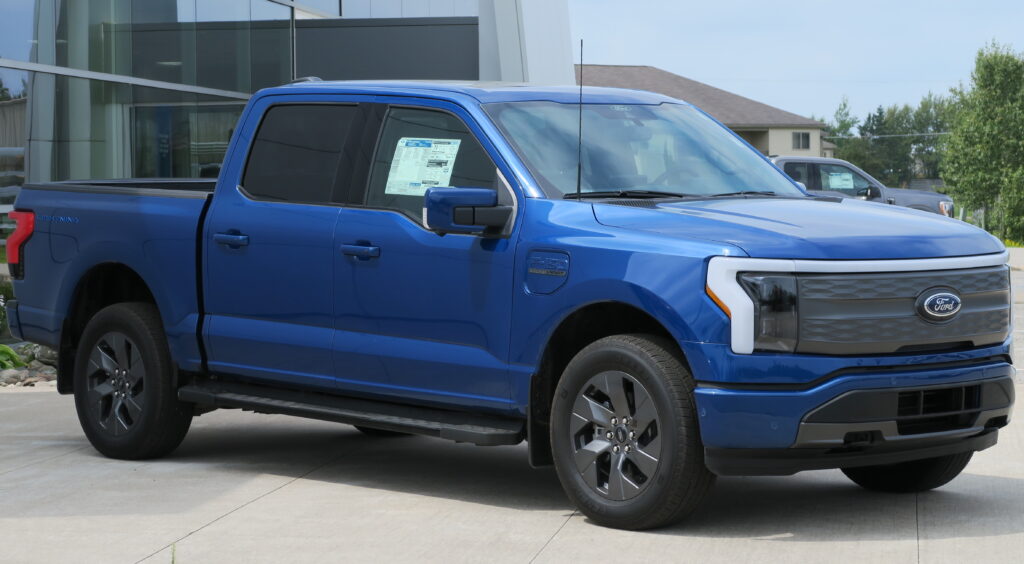
The worldwide pickup truck segment has been one of the most exciting and most sentimental regions in the automobile industry since time immemorial. Brands such as Ford, Toyota have been established as near unassailable powerhouses in this segment for years on end. A lot of this has to do with the image that these manufacturers have been able to carve for themselves-a picture of their pickups being an embodiment of sturdiness and longevity. To most buyers, owning a pickup has ceased being just about transport but has come to represent more about status, style, power and lifestyle.
In the recent few years, however, this all started to change. At a time when electric and hybrid vehicles were unimaginable in some sectors, and when new brands-most of them hailing from China-were hardly known beyond their own markets, the automotive world has began shifting, and quite rapidly, I must say. Even segments that seemed well secured against any form of competition are now beginning to witness shifts in innovation and product strategy that were once unheard of.
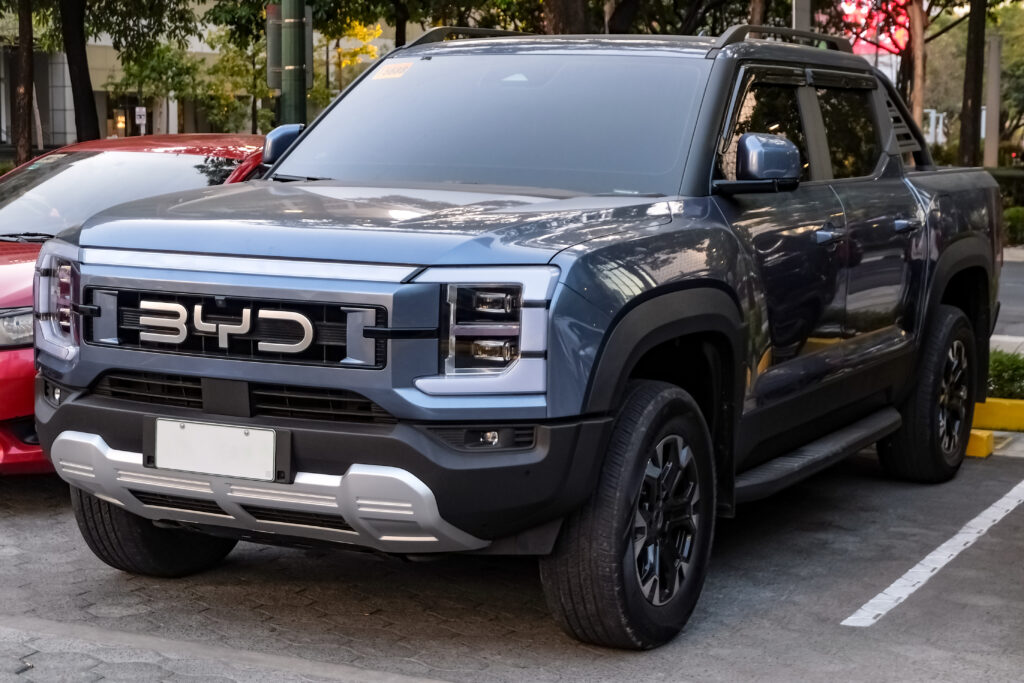
The arrival of the BYD Shark cannot in any way be mistaken for another tentative step into the pickup segment. The Shark appears to be nothing short of an all-out assault, the latest harbinger of what seems to be a major disruption in the automobile industry and the way we see vehicles. It is, however, more a reflection of the overall trend where efficiency and expansion take equal precedence with engine power, than the former, it would appear.
1. A Changing Global Pickup Landscape
The pickup truck segment of the market was traditionally comprised of only a few large international companies that have had the market and design in development for decades. These trucks became known as very reliable vehicles, and as part of necessity in places like North America and Australia where a very robust vehicle is required. For years, the buyer has expected essentially the same thing. The trucks need to tow more, be more tough and be better off-road.
Key Industry Transformation Factors:
- Electrification and hybrid transition
- Stricter global emissions standards
- Entry of new EV-focused manufacturers
- Shift toward advanced powertrains
- Rising competition from new brands
Yet, gradually the landscape is shifting significantly. Electrification, hybridization, and stricter emissions laws are pushing the traditional engineering paradigms into a slow and significant change. This change allows new players to enter, players more keen on embracing contemporary powertrains and engineering approaches, making the segment highly competitive.
This change is well emphasized by BYD Shark. This segment was seen as a rather static and legacy dominated space is now slowly transforming into a competition that has creativity as the main driver for competition as much as the badge. Established manufacturers are now competing against their own traditional rivals and new flexible entities that provide the segment with new engineering solutions and fresh perspectives.
2. The BYD Shark as a Strategic Entry
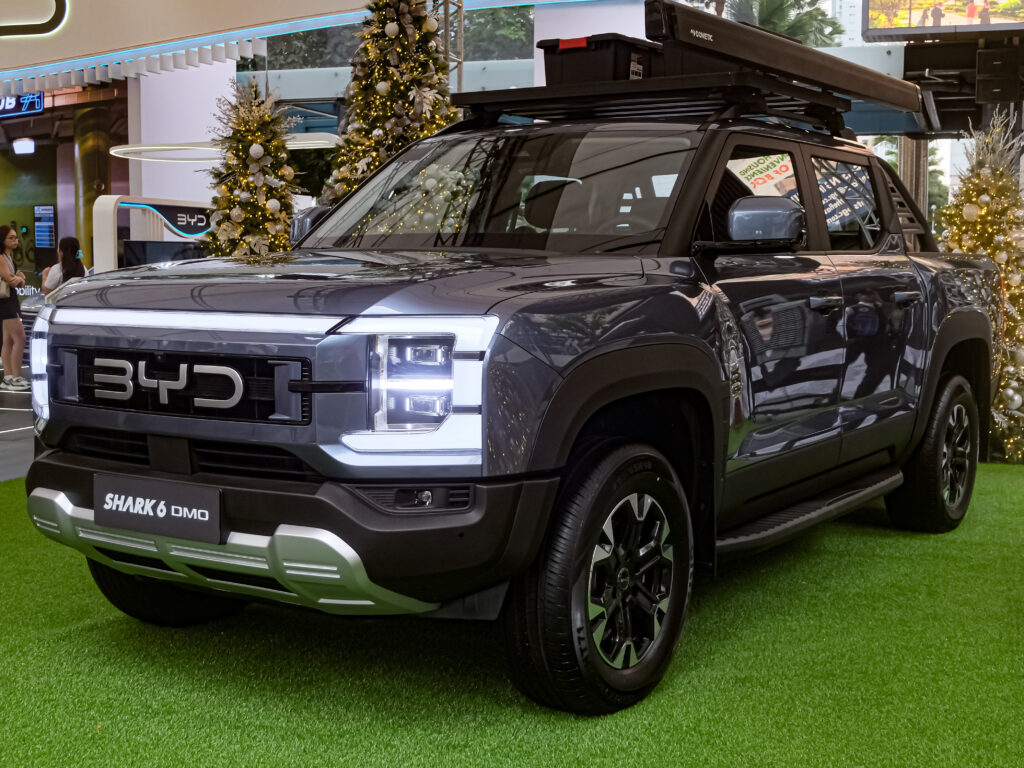
The BYD Shark is not the “fun extra” to the lineup. Instead, it is a deliberately engineered entrant to one of the world’s most competitive and lucrative automotive markets. As the vehicle shows, BYD’s aspirations extend far beyond the production of consumer-oriented electric sedans; the establishment of the company in the commercial pickup truck market signifies a strategically and symbolically significant global push.
Key Strategic Positioning Factors:
- Entry into global pickup segment
- Plug-in hybrid powertrain system
- Balance of efficiency and performance
- Compliance with emissions regulations
- Targeting international utility markets
Where the classic pickup has purely internal combustion (even if sometimes augmented) propulsion, the Shark utilizes a plug-in hybrid powertrain capable of being efficient yet still having some sort of usable output for the utility segment of the vehicle market. With it, BYD will comply with a range of environmental regulations while still providing a performance level people expect out of a more utilitarian model, and as such will look to challenge models currently dominant in many of the world’s pickup markets.
The deployment in countries such as Australia is indicative of the deliberate plan for the Shark. The region has a demand for a durable utility, therefore it will give a prime showcase to the vehicle and its performance in real world applications, determining global appeal. In these regions, the Shark is more than a new vehicle, it’s BYD making a clear statement of intent to move beyond its current segment.
3. Exterior Design and Visual Identity
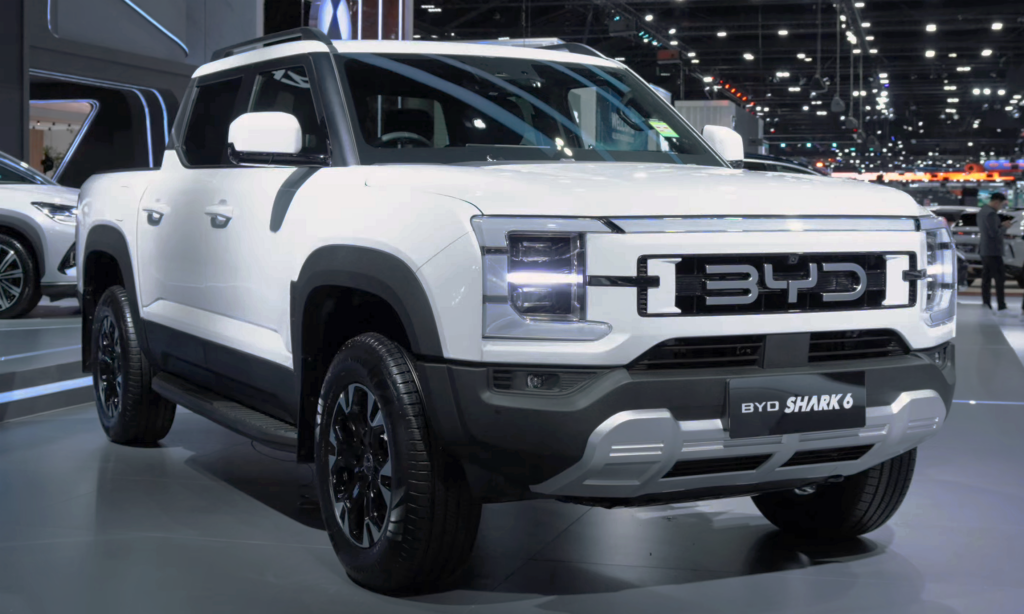
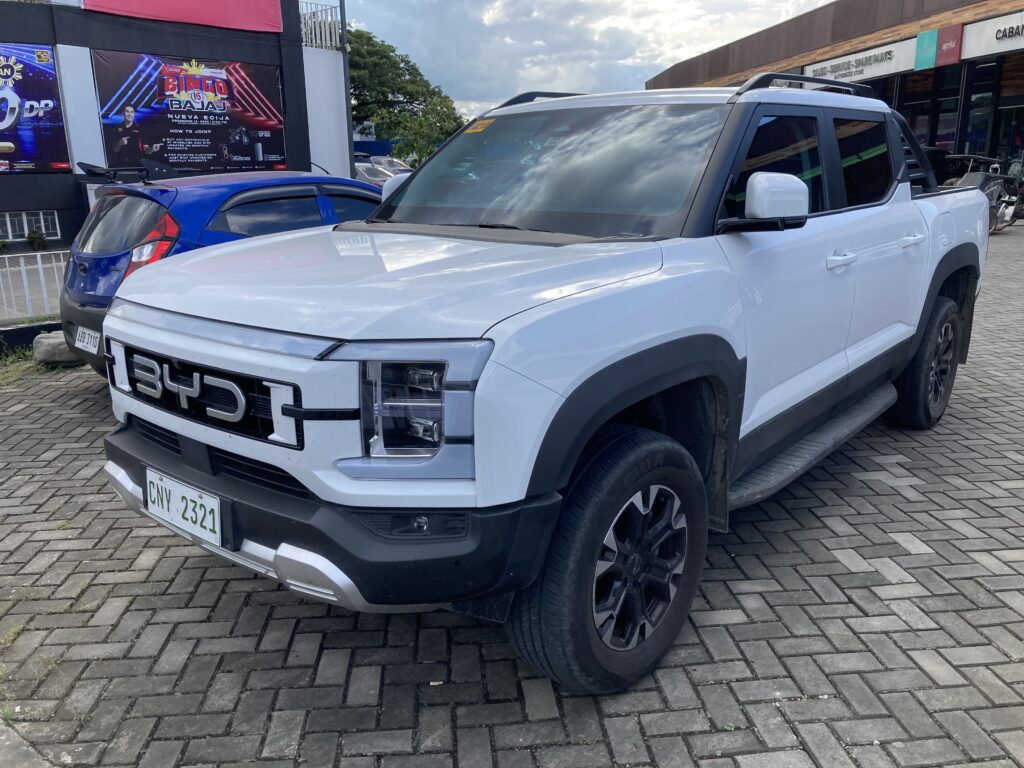
Visually, the BYD Shark was clearly designed to bridge the gap between the common and the unique. Initially, it utilizes cues and features commonly associated with American work trucks, thereby enabling the buyer to instantly recognize it as being part of the class where appearance plays a key role in customer acceptance.
Key Exterior Design Elements:
- Familiar pickup-inspired proportions
- Bold front grille design language
- Vertical headlamp structure
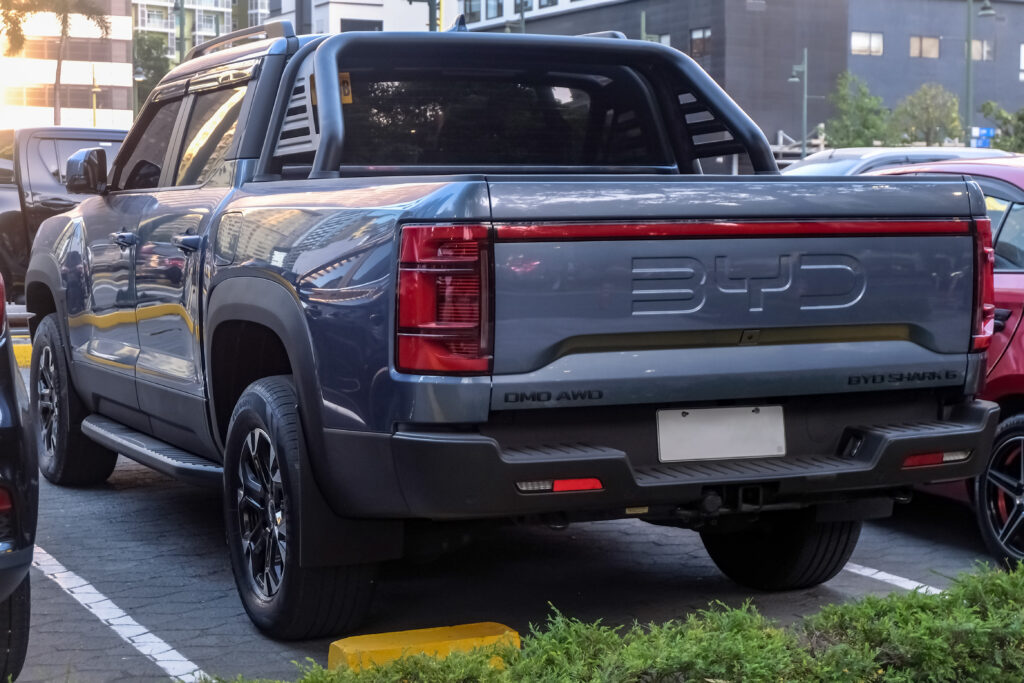
- Clean horizontal rear lighting strip
- Functional, modern body surfacing
Concurrently the Shark adopts styling which allows the model to take its own stance and find its own identity. Strong, prominent front grille design, vertical front light treatment, robust body surfacing allow it to present a strong posture on the road. These elements are matched with fresh lighting signature and formal lines to display both strength, aero bias in contrast to overly common design language.
In all, the exterior expresses capability in a composed, modern fashion. There is little gratuitous aggression or visual fuss here; strength, form, function are what matter. It clearly signals a design trend toward the strength being conveyed by the economy of form in preference to that provided by visual complexity.
4. Size, Proportions, and Road Presence
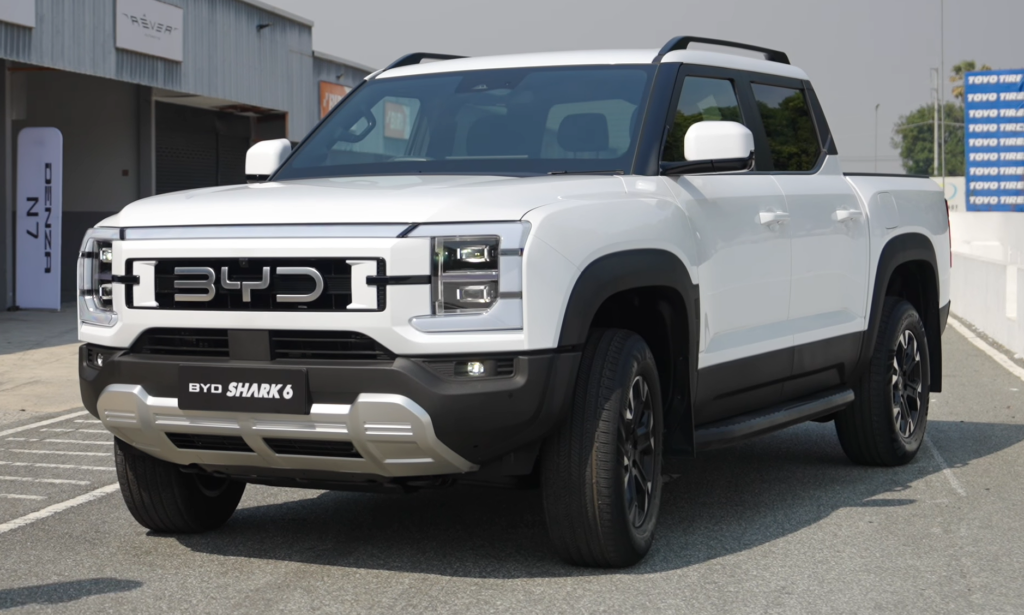
Although officially entering the mid-size truck segment, the BYD Shark is actually on the larger side for its classification. Its length of over 5450 mm offers an intimidating stance on the road, making it look physically bigger than a few of its well-established competitors in the same category.
Key Dimensional Characteristics:
- Mid-size pickup classification
- Length over 5450 mm
- Wide and stable body proportions
- Strong road presence and stance
- Balanced cabin and cargo packaging
Its proportions, specifically its width and height, also aid in creating a visually imposing and well-balanced stance, resulting in enhanced stability and accommodating cabin space. Despite not having the overall size of an American full-size pickup truck, the vehicle still achieves a confident presence in its appearance, fitting within established global design trends for a modern utility vehicle. This balance between size and ease of use makes it appealing to a varied group of global buyers and varied working environments.
The design proportions are far more than just a visual design they’re directly related to how the Shark performs its various roles. A larger stance means a bigger, more practical cab and is designed to help manage payload better and increase cargo carrying capability. This allows the Shark to be suitable for work duty as much as everyday duty.
5. Interior Design and Technology Experience
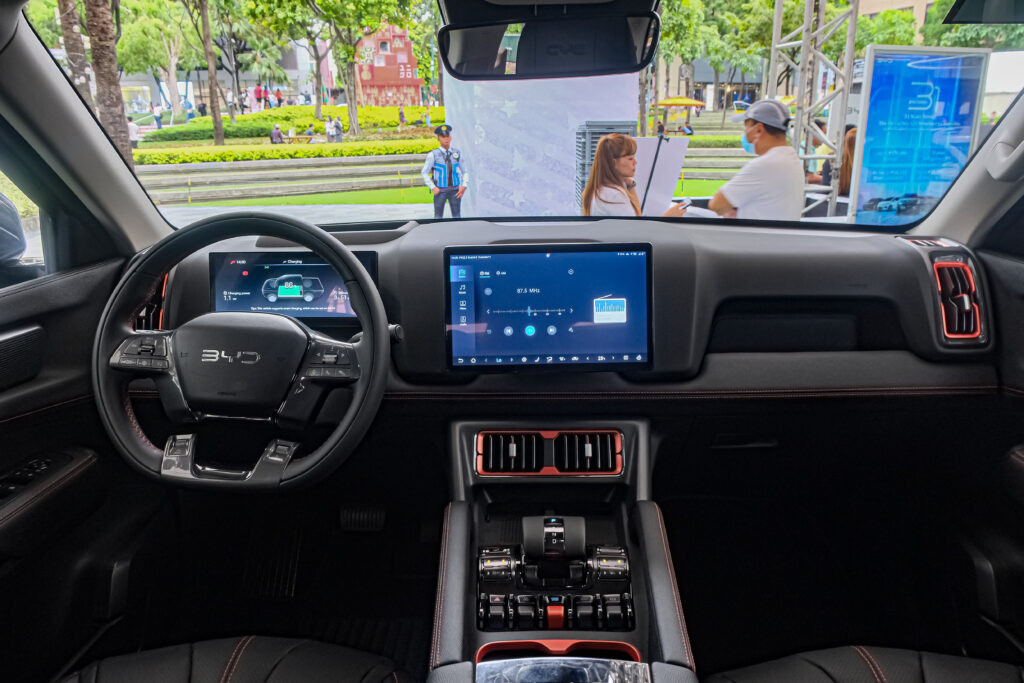
For the cabin itself, the BYD Shark is clearly set out to bring all the latest technology and a digital-first approach. This, of course, involves moving away from the rows and rows of buttons to a far more screen based arrangement which aligns with the trends of the industry for software based, connected vehicles where control of the various functions and features relies on a digital system.
Key Interior Technology Features:
- Fully digital instrument cluster
- Large central infotainment display
- Smartphone connectivity integration
- Voice control functionality
- Wireless charging support
The dashboard design is dominated by an all-digital instrument cluster combined with a centrally mounted large infotainment screen. These systems access many of the vehicle’s settings such as navigation, media, controls and system configuration, while integration of smartphones allows full connectivity expected by todays customer.
Further comfort and convenience technologies are also available on the interior, from wireless charging and voice control, to an optional head-up display to add to the user friendly driving experience. Overall, the interior design has moved away from a more mechanical workspace to a connected and easily navigable digital environment.
6. Hybrid Powertrain and Engineering Approach
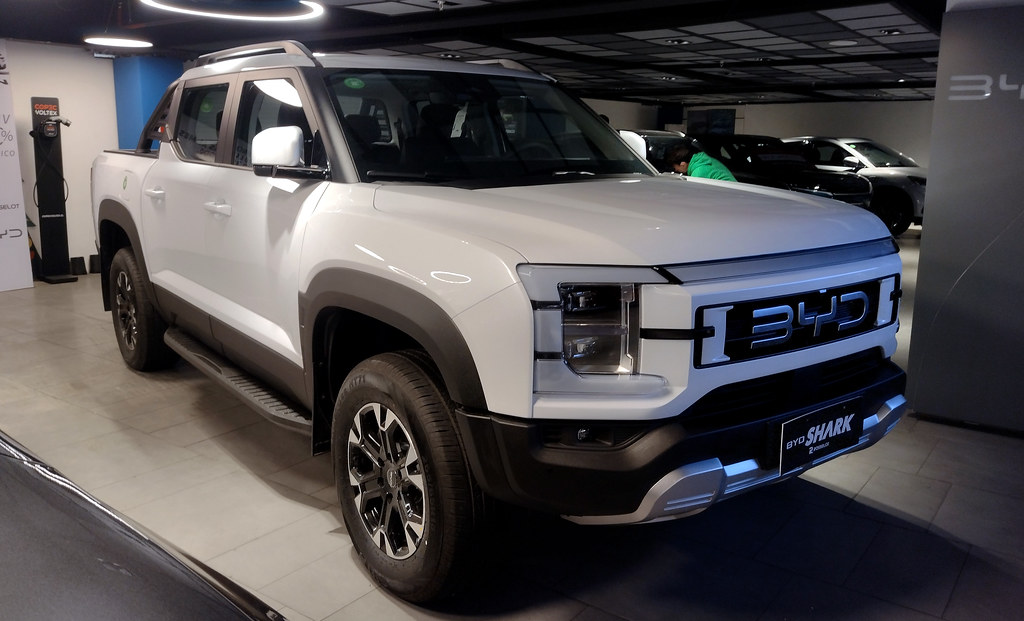
The By BYD Shark plug-in hybrid is powered by a turbocharged gasoline engine and an electric motor. The system is designed to provide a combination of economy and performance that is flexible to the demands of both city streets and high-speed highways. It shows how the design of utility vehicles is rapidly advancing with the emphasis on adaptability.
Key Powertrain Characteristics:
- Plug-in hybrid power system
- Turbocharged internal combustion engine
- Electric motor assistance
- Dual-mode driving capability
- Optimized fuel efficiency balance
The hybrid powertrain is built to be suitable for a variety of uses, as its short city runs are possible running on pure electric, consuming less fuel and emitting fewer pollutants. This is perfect for commuting and light-duty driving in a city environment. Its longer runs will benefit from the addition of its internal combustion engine which should ensure adequate range is always available and sustained power levels are achieved.
This powertrain combination mirrors a growing and somewhat transitional phase being experienced by the global automotive industry and in fact this vehicle bridges two very different forms of power. It essentially represents a middle ground between traditional internal combustion engines and fully electric vehicles. This design approach enables markets to adapt to evolving technologies, while offering an efficient solution while charging infrastructure is under development. The BYD Shark’s engineering gives it advantages during a key transitionary phase in the truck market.
7. Performance and Driving Capability
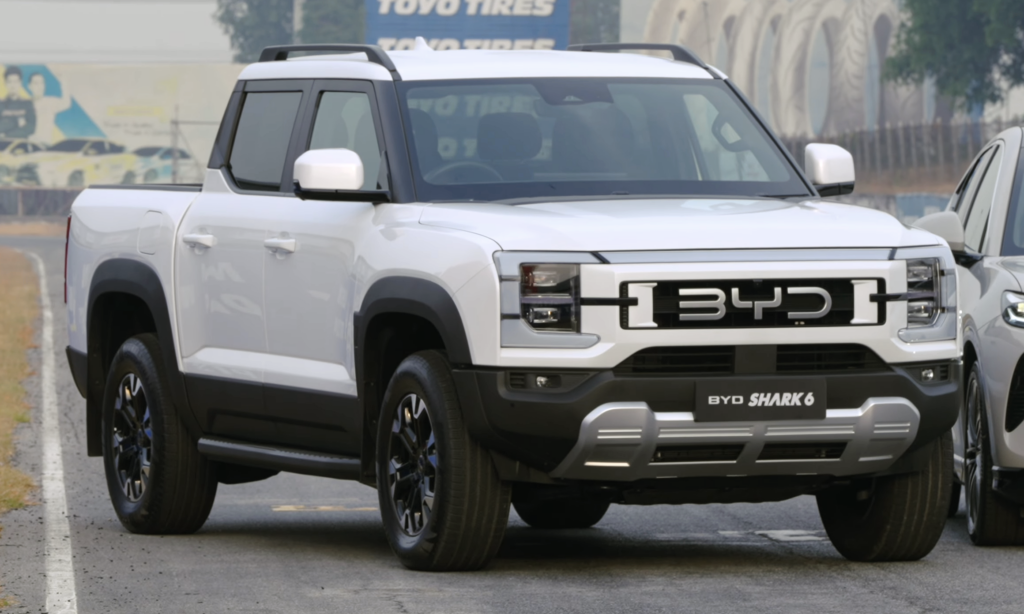
The driving performance of the BYD Shark positions it in a rather dynamic class of truck than you might expect. Combined hybrid power provides both responsive and quick acceleration; it really has a spirited feel which is something you just don’t expect from a pickup. Electrified power certainly is coming along for real-world driveability.
Key Performance Attributes:
- High combined hybrid power output
- Rapid acceleration capability
- Strong mid-range responsiveness
- Balanced on-road and utility performance
- Electrified torque delivery advantage
Speed acceleration from a standstill to highway speeds is surprisingly rapid because of its all-electric motor and instant torque. This is the one element of the Shark which really sets it apart from the typical work-horse pickup truck by making it surprisingly nimble and offering more engaging driving dynamics to owners who appreciate both practicality and dynamic capability at the same time.
You have an vehicle that’s everyday suitable yet dynamic and responsive. However, don’t let the sporty intent take away from the Shark’s practicality. It has the capability to provide useful towing and hauling capacities, thus making it equally usable as a work vehicle and not just a recreation one.
8. Safety Systems and Driver Assistance
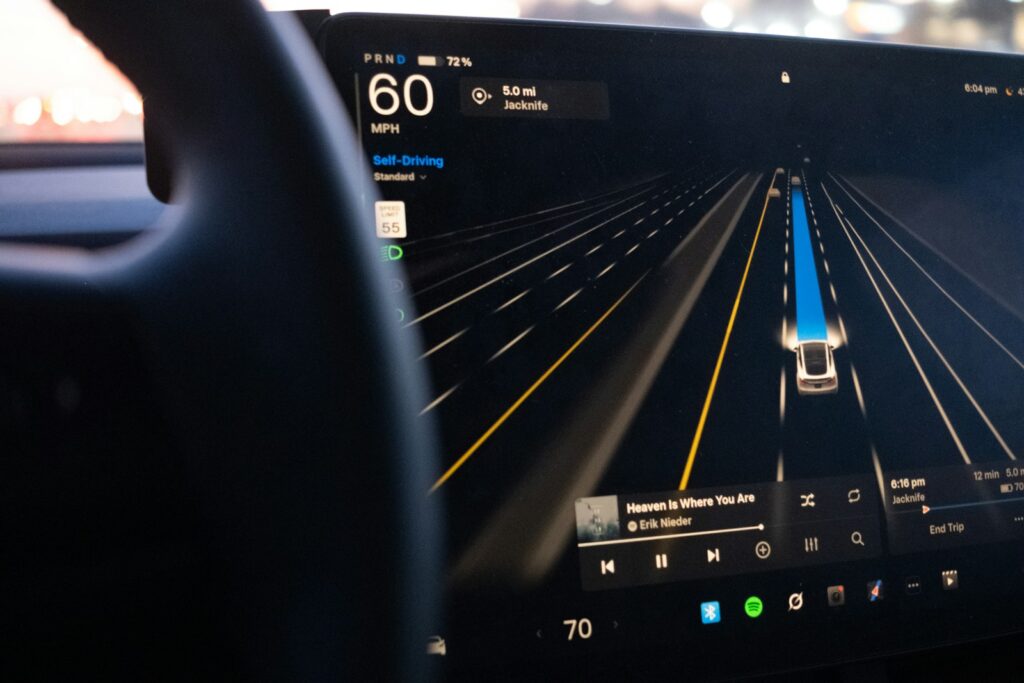
Safety has become a core priority in modern vehicle engineering, and the BYD Shark reflects this shift through a wide range of driver assistance and protection technologies. These systems are designed to enhance situational awareness, reduce driver workload, and improve overall safety performance in both urban and highway conditions.
Key Safety and Assistance Features:
- Adaptive cruise control system
- Lane departure warning support
- Autonomous emergency braking
- Rear cross-traffic alert
- Parking assistance systems
These technologies work together to support the driver across everyday driving scenarios. Adaptive cruise control helps maintain safe distances in traffic, while lane departure warning and emergency braking systems assist in preventing potential collisions. By actively monitoring road conditions, the vehicle reduces the likelihood of human error in critical situations.
Additional features such as rear cross-traffic alert and parking assistance improve usability in confined or low-visibility environments. These systems make maneuvering a large pickup more manageable, particularly in urban settings. Overall, the integration of these safety technologies demonstrates an effort to align with global standards and strengthen confidence in the pickup segment through advanced driver assistance capabilities.

9. Market Competition and Industry Pressure
The global pickup market is one of the most commercially important automotive segments, generating substantial revenue across key regions such as North America, Australia, and parts of Latin America. Historically, this space has been dominated by a small group of established manufacturers that refined their products over decades to meet the demanding expectations of durability, towing strength, and long-term reliability.
Key Competitive Pressure Factors:
- High-value global pickup segment
- Strong legacy manufacturer dominance
- Rising EV and hybrid competition
- Increased pricing pressure
- Faster innovation cycles
The introduction of new competitors such as the BYD Shark adds a new layer of competitive pressure on pricing, innovation, and overall market positioning. Established manufacturers are now required to respond not only to long-standing rivals but also to emerging global players who are introducing alternative powertrain technologies and modern design approaches. This has accelerated the pace of development across the segment.
Industry leaders have increasingly acknowledged this shift toward a more global and technology-driven competitive environment. As a result, product planning and engineering strategies are evolving to incorporate electrification, software integration, and efficiency improvements. This changing landscape is expected to significantly influence the future direction of pickup truck development across multiple markets worldwide.
10. Challenges and Future Outlook
Despite its strong technical package and modern positioning, the BYD Shark faces considerable challenges in establishing a stable global presence. One of the biggest hurdles for any new entrant in the pickup segment is building long-term trust, particularly in markets where durability, reliability, and resale value are critical purchasing factors. Established brands benefit from decades of proven performance, which creates a high barrier to entry for newer competitors.
Key Challenges Ahead:
- Building brand trust in new markets
- Developing strong service networks
- Ensuring spare parts availability
- Establishing long-term reliability perception
- Competing with legacy pickup brands
Beyond product quality, infrastructure will play a decisive role in its success. A well-developed service network, consistent spare parts availability, and dependable after-sales support are essential for gaining customer confidence. Without these elements, even technologically advanced vehicles can struggle to achieve widespread acceptance in highly competitive regions.
At the same time, the long-term direction of the industry is clearly shifting toward hybridization and electrification. In this context, the BYD Shark represents part of a broader transition rather than an isolated product launch. Whether it ultimately becomes a dominant global player or remains a strong alternative option, it has already contributed to redefining expectations in the pickup truck segment and accelerating the shift toward new powertrain technologies.