

De Tomaso’s Mustang-Powered Supercar Is Gloriously Analog
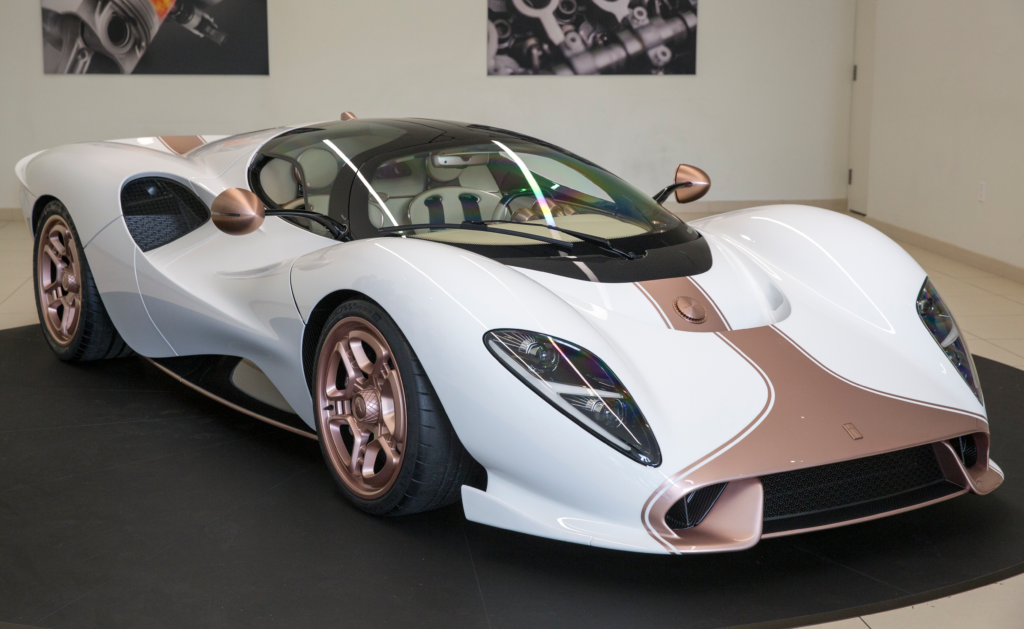
Italian supercar design and engineering meets American V8 muscle and old-school driver feel in a new model with a legendary name the Pantera. The new De Tomaso P72 is a modern supercar inspired by the De Tomaso Pantera of the 1970s, powered by a supercharged 5.0-liter Ford-based V8 with some serious engineering input from Roush, and more than 700 horsepower. It’s a throwback in many ways not full-electric like nearly all of today’s hypercars, but with a manual six-speed gearbox, analog instrument cluster and tactile physical controls. Its evocative bodywork is designed with a focus on craftsmanship and mechanicality with flowing, sculptural forms and synergistic aerodynamic features meant to firmly hold it to the road.
From the inside, the P72 continues the car’s analog themes, with a machined aluminum center console, exposed metal switches and rotary dials, and no digital screens. Its carbon monocoque chassis, naturally weighted steering, and balanced suspension offer precision response and nimble on-road performance. The supercharged V8 offers instant throttle response and that unmistakable mechanical scream, with the exposed-linkage manual gearshift making each gear change an experience. Where some hypercars rely on digital wizardry, oversize aerodynamics, and ever-crazy carbon-futtered forms, De Tomaso goes for involvement, emotions, and the work of Italian hands. The P72 is a throwback to the main ethos of the original founder, providing the collector and road driver a new, updated alternative to the plethora of digital tech-centric supercars.
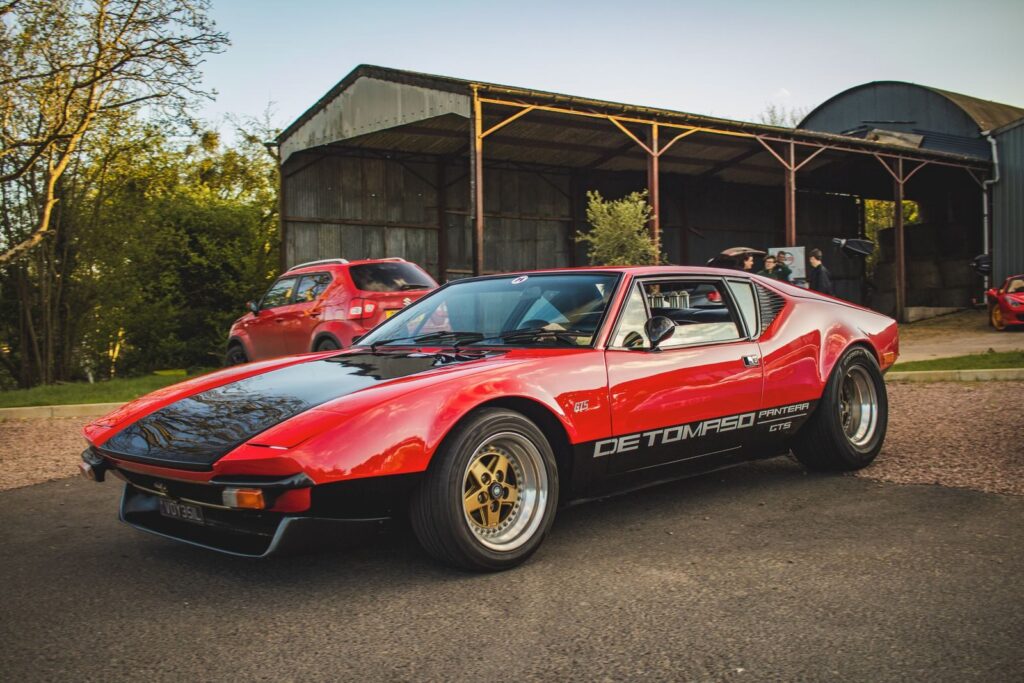
1. De Tomaso’s Return and the Legacy of the Pantera
De Tomaso’s renaissance is about more than just bring back a historic automotive badge. The Modena-born automaker was founded on a unique philosophy that melded Italian design and chassis expertise with the might of American V8s. The most iconic representative of that approach was the legendary Pantera a supercar that embodied aggression, mechanical honesty and an easy-to-maintain everyday usability. Alejandro De Tomaso, the company’s founder, believed there should be a sports car that combines Italian style with dependable American muscle, but a series of financial setbacks and corporate blunders ultimately sabotaged the vision. The new P72 is now trying to revive the same ideals using new-age materials, modern safety benchmarks and enhanced quality control processes.
De Tomaso Heritage Highlights:
- Modena-born automotive manufacturer
- Alejandro De Tomaso’s original vision
- Legendary Pantera supercar legacy
- Italian design and American muscle
- Modern P72 revival project
The P72 is not merely an attempt to revisit the past or to hide the company’s former malaise under a layer of nostalgia. It is an attempt to carry out the original De Tomaso idea with modern standards of engineering and production. The P72’s appeal is its Italian craftsmanship combined with an American V8, which is very much on the lines set by the Pantera. As such it is an attempt to produce a supercar that has the grit and zest of an enthusiast’s car, even though it remains a mechanical device. De Tomaso’s return, in other words, is to a different type of car to today’s performance cars that are becoming ever more sophisticated and reliant on software.
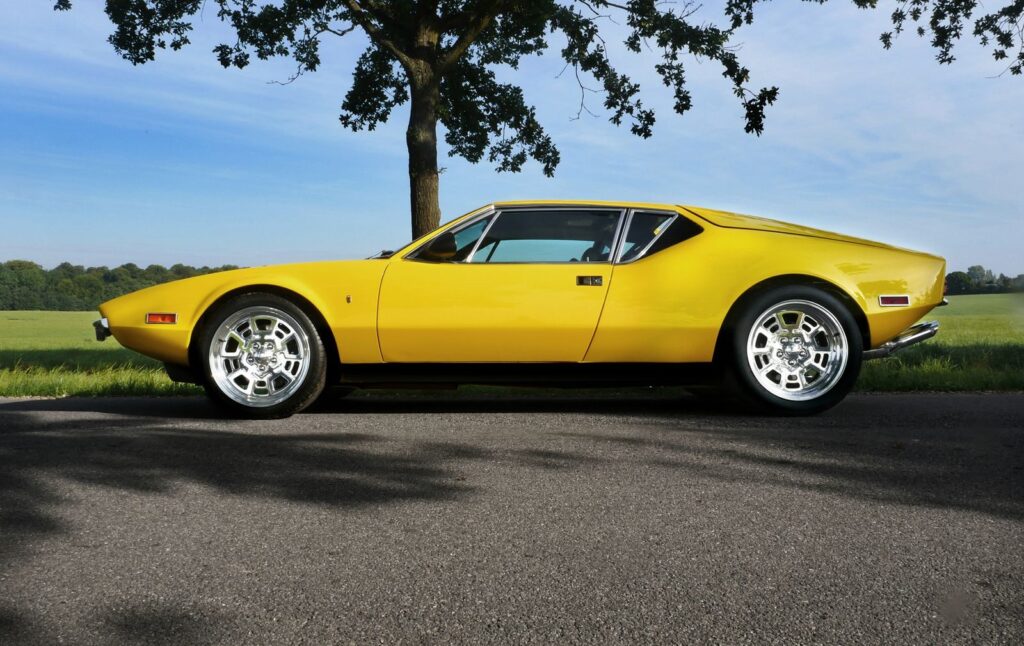
2. The Meaning and Heritage Behind the De Tomaso Name
De Tomaso goes back to roots in a historic name ‘De’ is a Latin preposition used as a prefix before a noun and is roughly translated as ‘of’ or ‘from,’ as in the historic names de Gaulle or Catherine de Médicis where it becomes part of the family or historic name and dynasty. It is spoken ‘dee’ and has a really gentle sound and effect compared to the race-bred power and vehicle spirit. In the P72, that is tied to Alejandro De Tomaso’s original design soul, goes deep into the De Tomaso family name.
De Tomaso Name Details:
- Latin origin of ‘De’
- Means ‘of’ or ‘from’
- Pronounced with a soft ‘dee’
- Connected to historic family names
- Represents Modena automotive heritage
The suffix of De Tomaso also offers an interesting comparison to other words beginning with de such as deconstruct and decrease where the prefix instead indicates the removal, reversal or minimising of something. The P72 is a completely different approach where rather than subtracting drivers’ excitement or minimising the connection between car and road it aims to enhance them. The car aims to deliver more speed, more punch, more connection and ‘all of the best bits’ by enhancing them. The name therefore stands for something that’s built to connect the modern day with De Tomaso’s original ethos, but which also aims to reinforce the p72’s potency.
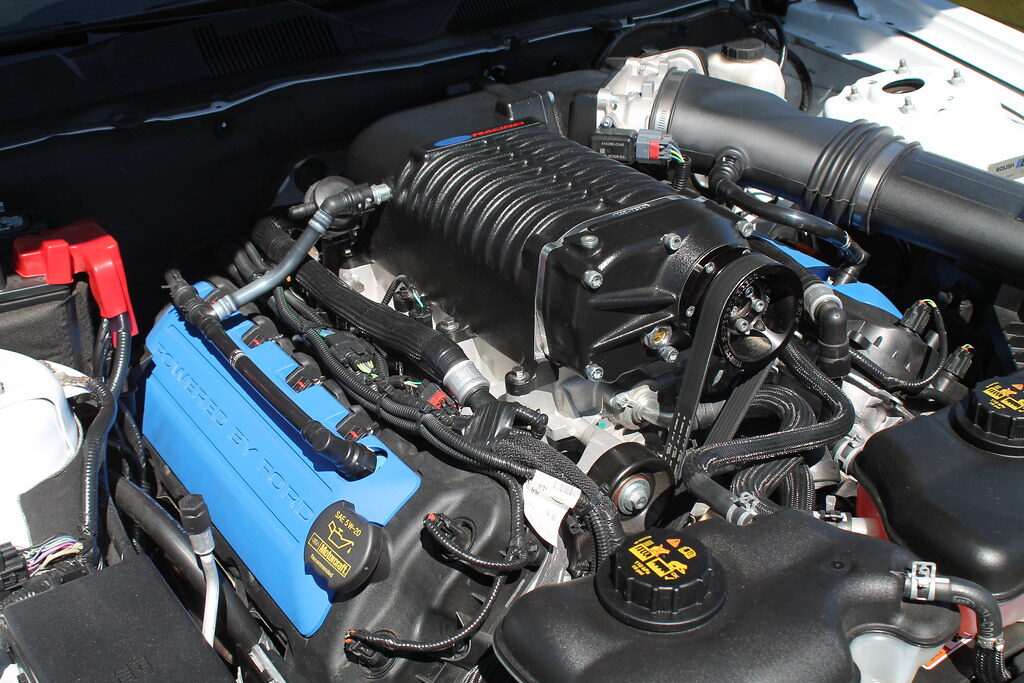
3. Supercharged 5.0-Liter Ford-Based V8
Underneath the De Tomaso P72’s iconic shape resides a supercharged, naturally aspirated 5.0-liter V8 engine derived from Ford. The link with American muscle started in 1970 with the original Pantera, which was powered by a Ford Cleveland V8 for their brute strength, mechanical simplicity, and ease of servicing. The new De Tomaso P72 continues to follow this tradition rather than using a smaller turbocharged V8 or hybrid powertrain by choosing a modern Ford V8-based engine that will hopefully provide, in the words of the manufacturer, the same ‘rugged mechanical character and serious performance’ that put the original De Tomaso on the map.
Ford V8 Powertrain Highlights:
- Supercharged 5.0-liter V8 engine
- Ford-based engine architecture
- Historical Pantera powertrain connection
- American muscle performance philosophy
- More than 700 horsepower
The engine in the P72 is based on Ford’s Coyote platform, but it’s far from off the shelf. Roush has completely reengineered the powertrain for a mid-engine application with special internal components, a dedicated lubrication system, and supercar-quality thermal management. While more than 700 horsepower is easily achieved, the P72’s engine isn’t so much about numbers as it is pure feel. De Tomaso has opted against turbocharging for a supercharger that’s belt-driven in order to provide instant throttle response, direct correlation between pedal position and power on the back wheels.
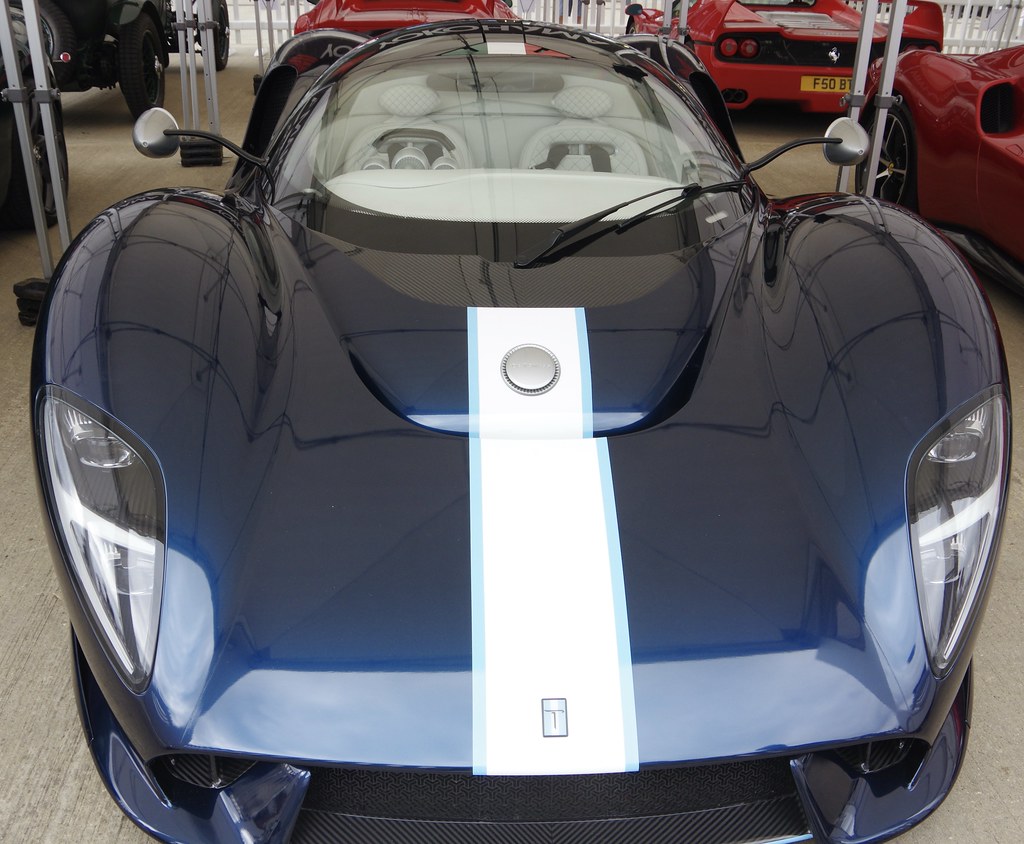
4. Modern Supercar Bodywork and Classic Proportions
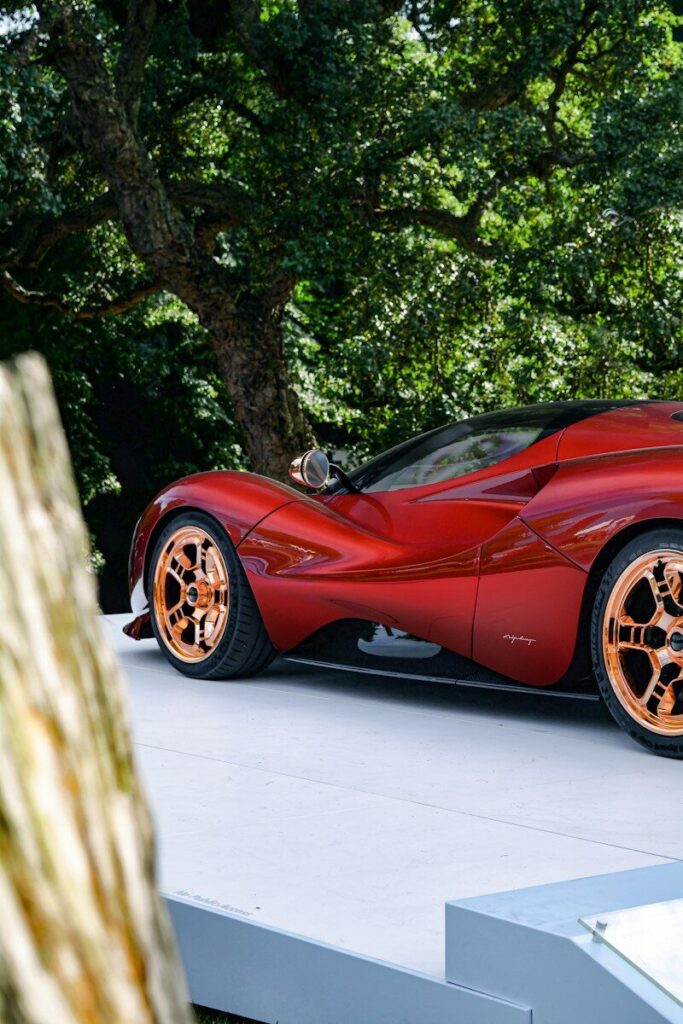
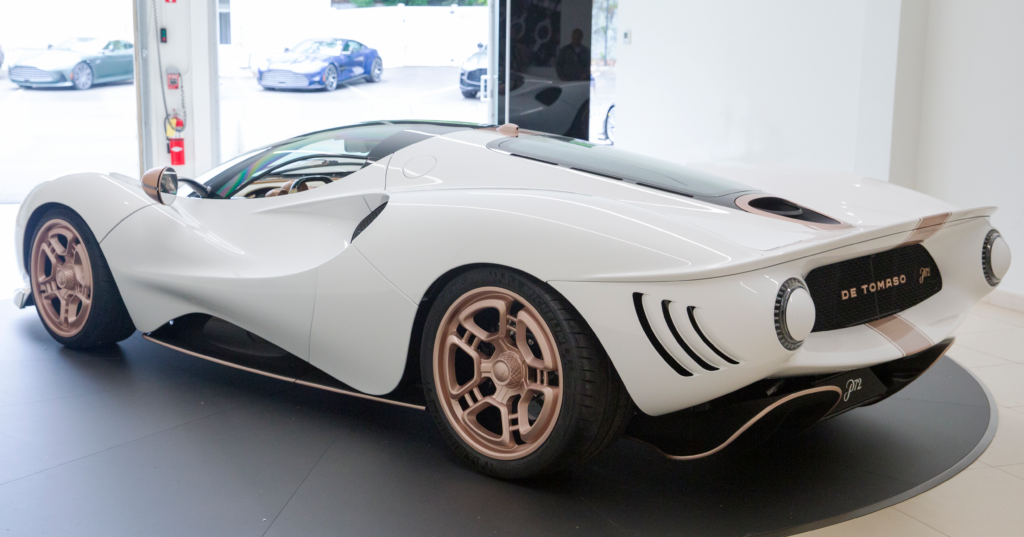
Sitting behind a short dash-to-axle ratio, low cowl and compact engine bay, the vehicle’s figure was key to that sense of authenticity in the design. The P72 draws its cues from its history as a design inspiration, rather than a retro-inspired aesthetic, such as over-sized wings or excessive wheel arches. Its shape was written on its proportions, with sheer surfaces, restrained proportions and good weight distribution, much like a traditional supercar, and the relationship between the surfaces being explored rather than just dressing the shape up with flamboyant elements.
P72 Exterior Design Features:
- Long dash-to-axle proportions
- Low and sculpted cowl
- Tightly wrapped mid-engine packaging
- Flowing carbon-fiber body surfaces
- Classic supercar visual character
The carbon-fiber bodywork on the P72 eschews the angular paneling and complex, sculpted forms we typically see on supercars today. The long flowing surfaces will reflect the light as it is directed across the exterior, displaying the car’s proportions and shape. Aero is built into the bodywork rather than used as a theatrical design element, with the front splitter, side inlets and rear diffuser all function to generate down-force, regulate airflow for cooling, and maintain aerodynamic stability at high speed. The P72 has no active rear wing and no automated aero flap system. Its combination of shape and aero is as fixed and foreseeable as the naturally aspirated V8 engine.
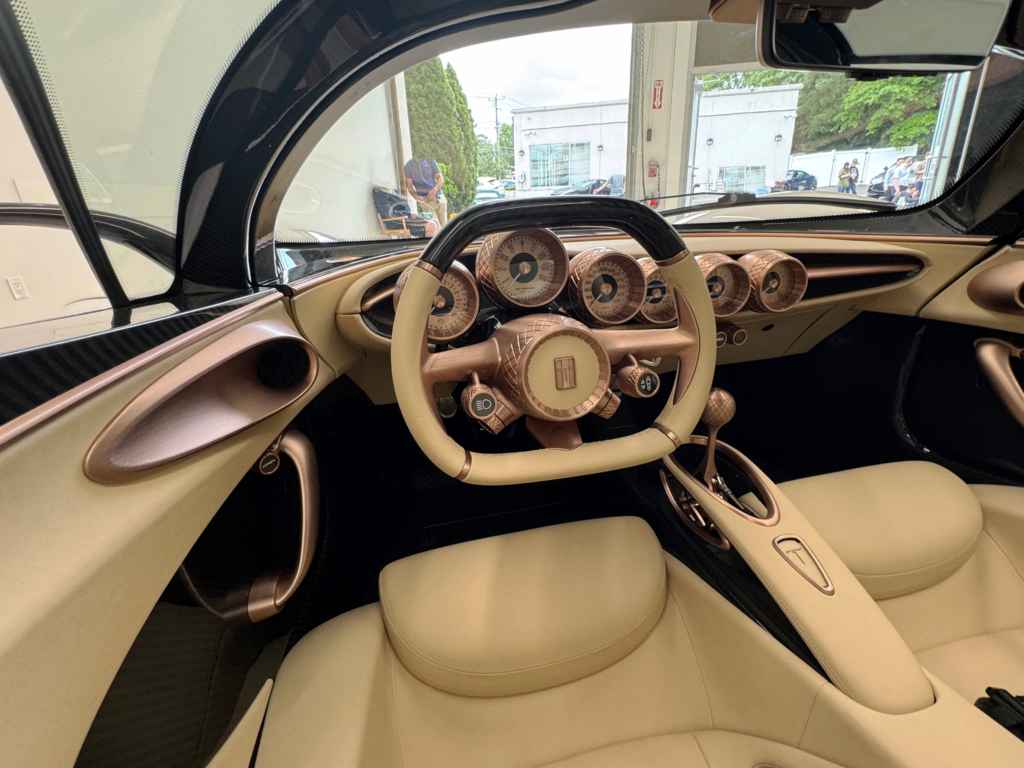
5. Milled Aluminum Center Stack and Analog Interior
Like the exterior, the interior of the P72 embodies the same concept of pushing complex digital technology aside in favor of tactile switches and classic craftsmanship. Behind the dihedral doors is a cockpit that doesn’t feature a multitude of screens and complicated startup animations. Instead, there is a prominently milled aluminum center stack emerging from the transmission tunnel with exposed metal switches and dial-style controls. The gauges are all classic analog with highly visible print for quick legibility. Each switch is also built to be “physical” and provide tactile feedback like current touchscreens are unable to achieve.
Analog Cabin Design Highlights:
- Milled aluminum center stack
- Exposed metal switches and dials
- Fully analog instrument gauges
- Supple leather upholstery throughout
- Visible machined aluminum components
The pursuit of exquisite craftsmanship is evident within the cabin. Soft leather wraps almost every surface, with traditional Italian coachbuilding stitching employed painstakingly throughout. Carbon fiber is not used simply as trim but as a structural element, and many aluminum parts feature the machining marks that let owners see the skills of their craftsmen. The seating position is low and driver-focused, with plenty of visibility through the teardrop-shaped canopy. The latest technologies are present, though they are hidden inside, with the infotainment system kept simple and driver’s aids in check so that electronic assistance never overcomes car passion. The V8, visible through the rear window, remains the spirit of the cabin.
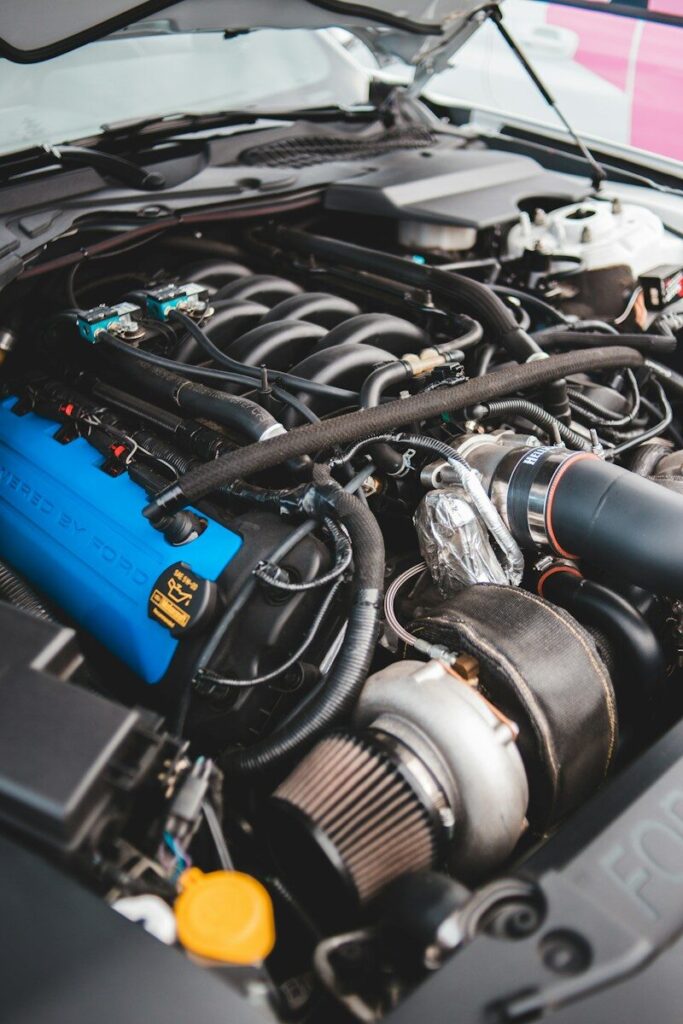
6. P72 Power Delivery and Supercharged V8 Response
The De Tomaso P72′s driveway will be a familiar one, beginning with the notes and the grunt of a supercharged V8. It won’t be piped in via speakers, however the driver will be treated to the real deal, with the engine situated right behind the driver’s shoulders. The sound from the engine itself, which idles, unevenly, right from cold, lends the car a mechanical character when it begins to move. The powertrain develops torque early and builds with rpm, and unlike a turbo engine, which tends to have a lag period before it begins to develop boost, the belt-driven supercharger is instant and more of a linear input-output.
Power Delivery Characteristics:
- Immediate supercharger response
- Strong low-rev torque delivery
- Linear acceleration characteristics
- Direct accelerator-to-wheel connection
- Authentic mechanical engine sound
At the limit, the engine’s power delivery is also inherently predictable not when the driver is only using a third of its potential but all of it. As with any good driver’s car, the acceleration should be relentless and measured not manic and manic. The throttle is sensitive enough to modulate power levels in the end, to make sure the power’s clutch is being felt through the left pedal to give you control over which of the rear tires is the recipient of the torque. Here, the P72 is laid out for you to steer with your legs as well as your hands and lungs and therefore this supercharged V8 is the epicenter of performance, as much as it is of personality.
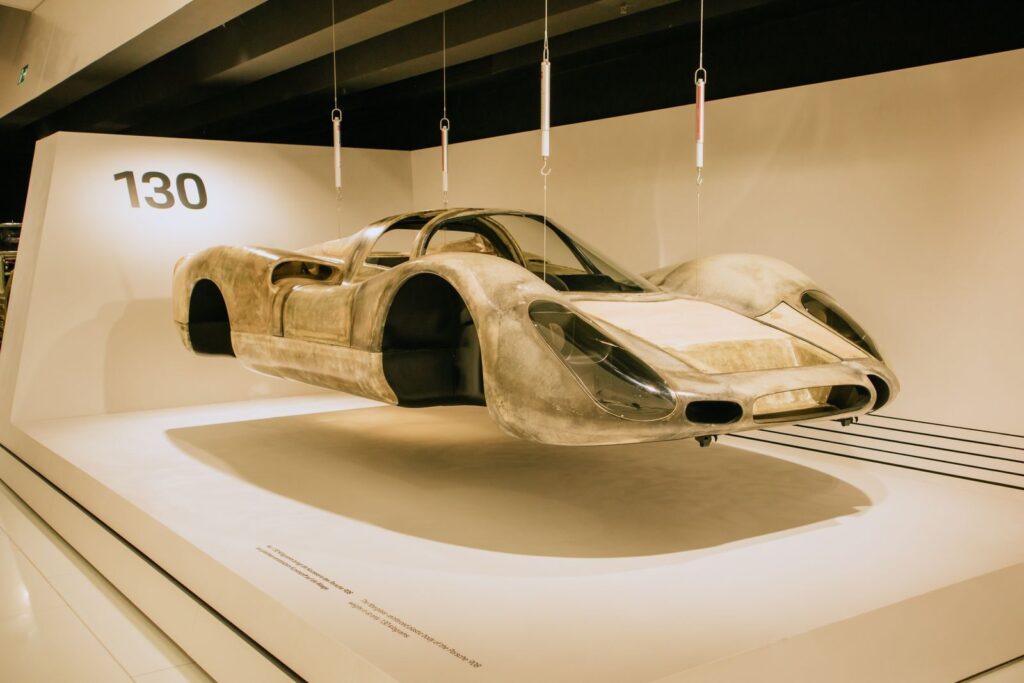
7. Carbon Monocoque and Driver-Focused Handling
The P72 features a carbon monocoque chassis as its base. This carbon chassis offers a stiff and solid base for the suspension and other mechanical components. While lap times and track performance are in the De Tomaso P72’s DNA, the suspension is designed to be balanced so the car remains calm on imperfect roads and provides excellent feedback through the tires to the driver. Its balanced neutral handling chassis is built for proper control and allows the driver to influence the line by throttle input.
P72 Chassis and Handling Features:
- Carbon monocoque chassis structure
- Naturally weighted steering response
- Clear front-tire feedback
- Neutral handling balance
- Road-focused suspension tuning
Steering feedback Another aspect of the P72 experience is the feel to the steering. It develops naturally with speed without any electronic filtering that might rob the driver of information. Turn in and the wheel indicates how much loading is going onto the front tyres (on the way to the available grip) and the car responds delicately to turn-in yet feels well behaved and reliable in character it doesn’t rebound about on bumpy roads like some modern hypercars, but stays alert and composed. The P72 is a car that wants to communicate its capabilities and include the driver on the journey.
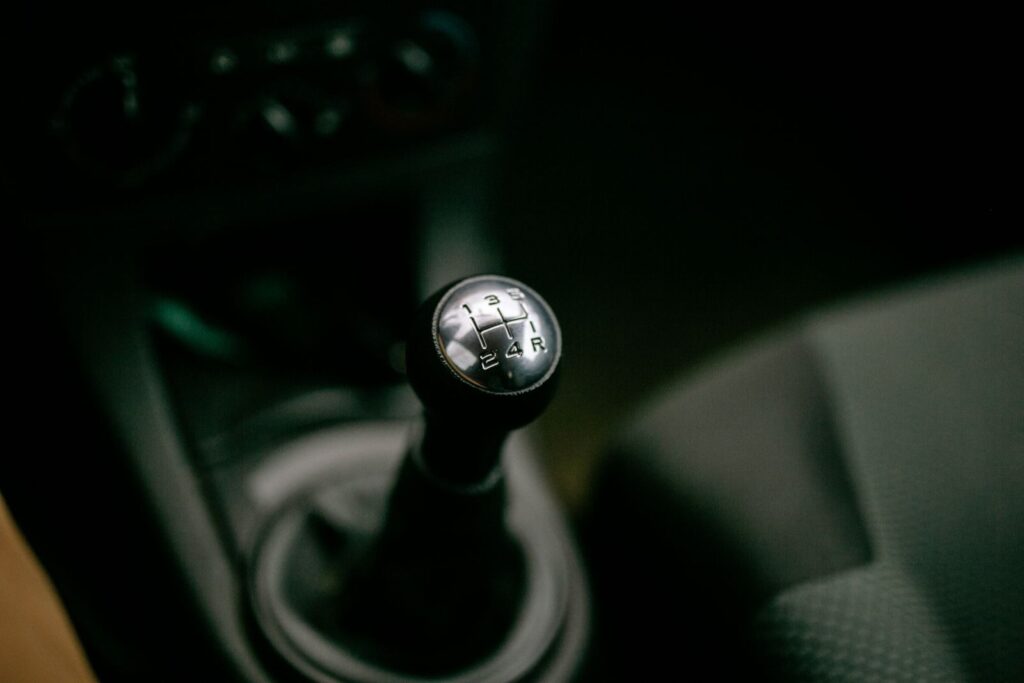
8. Six-Speed Manual Gearbox With Exposed Linkage
The analogy-inspired gearbox in the De Tomaso P72. The De Tomaso P72’s six-speed manual gearbox is another of the clearest embodiments of the company’s analog vision. In a world of supercars increasingly equipped with dual-clutch transmissions, predictive electronics, and shift-by-wire gear controls, De Tomaso’s pairing of a bare-beam shift linkage and six-speed manual gearbox is a return to the basics of a mechanical glove. Gears in, clutch pressed, and gearbox moved, the driver is joined to the drivetrain as they shift gears.
Manual Transmission Highlights:
- Six-speed manual gearbox
- Exposed mechanical gear linkage
- Physical gear engagement feedback
- Direct driver-controlled shifting
- Traditional mechanical involvement
The manual gearbox complements the P72’s lively engine, communicative steering and well-balanced chassis to establish a driving philosophy that is instant and unambiguous. Any input must be met with a mechanical equivalent. Driver assists stay in the background, a backup, rather than as something for the driver to rely on and conform to. This approach offers the opportunity to make some mistakes but also the chance to learn and improve. The P72 isn’t meant to be fast, either. It’s meant to be intimate, to provide the joy that comes from controlling the motor, transmission and chassis directly.
9. A Supercar Focused on Driving Emotions
The De Tomaso P72 is a pure-aiming performance car. It’s not about utility, softness, productivity, overload or multi-purpose capability. It has no interest in coupes and offroaders, agricultural or construction equipment, industrial standards, sports utility vehicles or trucks. This is about leaving behind the machinery that exists to manage a vehicle on behalf of its driver, and packing into one supercar all the magic of engine, punch, feel and sound, all the emotion of steering, acceleration, clutch and brake.
P72 Driving Philosophy:
- Pure performance-focused engineering
- Mechanical rather than digital character
- Driver involvement at every stage
- Craftsmanship over excessive technology
- Emotional connection with driving
This singular focus sets the P72 apart from the competing multi-tasking utility cars it’s up against. It isn’t trying to be your do-all daily driver, or your tools-driven utility vehicle. Its existence exists to take the act of driving and make it an adventure driven by mechanical force and adrenaline. Its supercharged V8, manual transmission, scale-model instrumentation and finely honed chassis are all engineered to reinforce that fundamental pursuit. While others focus on digital menus and distraction-ridden drive modes, the P72 centers on those key pieces that make driving a joy. That’s to deliver a driving experience that feels more personal, immediate, and emotional.
10. De Tomaso P72 as an Anti-Hypercar
By Definition The P72 is a supercar, but not one that follows the current trend of modern hypercar definition. Rather than outdueling the competition with unduly complex electronics, twin-clutch gearboxes and predictive computer algorithms, the P72 excels through craftsmanship, mechanical integrity and balanced performance. With a supercharged Ford-based V8, six-speed manual gearbox, carbon monocoque and an analog cabin, the P72 offers a unique journey for drivers and collectors seeking a simpler yet still exhilarating driver experience. The P72 isn’t defined by specifications. Its identity is derived from the symbiotic relationship between its moving parts.
Why the P72 Stands Apart:
- Analog alternative to modern hypercars
- More than 700 horsepower
- Six-speed manual transmission
- Traditional mechanical driving experience
- Italian craftsmanship and American muscle
The P72 is not the hottest new rolling art piece nor is it the perfect trip down memory lane. Instead, it is De Tomaso’s attempt at reawaken the excitement of a driver-centric supercar that also employs the latest techniques and technologies. While the overall styling is certainly respectful of the brand’s past but is not constricted by it, the Ford V8 engine connects it to the American muscle car legacy of the Pantera. Likewise, the cabin, steering, suspension and five-speed manual gearbox all embody the same notion of keeping things simple, tactile and engaging. If the more digital world of supercar performance leaves you cold, the P72 delivers an emotive, analog experience that drivers and collectors can sink their teeth into.