



Dodge Charger’s Gas-Powered Return: More Power, No V8
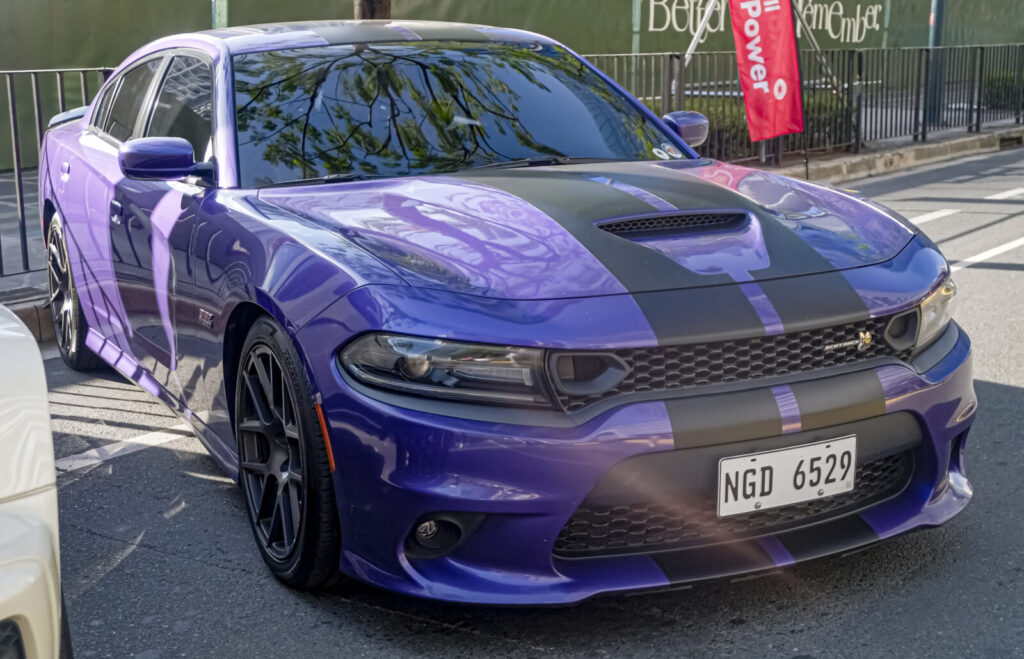
One of the most momentous changes within the modern muscle car segment has been the departure of the Hemi V8-powered Dodge Charger and Challenger. During decades on the scene, both vehicles were a celebration of American power, with distinctive bodywork complementing their roaring V8 heartbeats that brought them a devout following. Their extinction meant that Dodge was heading in an all new, innovative, electric, and more high-tech route.
And the completely electric Daytona was first of the first steps of this shift, bringing muscle performance and making an statement about the company’s future plans. But with all the new features and the super-fast acceleration, for most people accustomed with classic muscle cars it all came down to not really hearing and feel the V8 gas engine heart of the Dodge.
The brand acknowledged this overwhelming passion, choosing a strategy that, in part, rejected pure electrification. Reintroducing a gas engine within the all-new, Hurricane twin-turbocharged inline-six-powered Charger marks a new direction for the nameplate. It steers away from resurrecting the venerable V8 HEMI in favour of something new and technically ambitious while still embodying that Charger character.
1. Dodge Listens to Its Loyal Fans
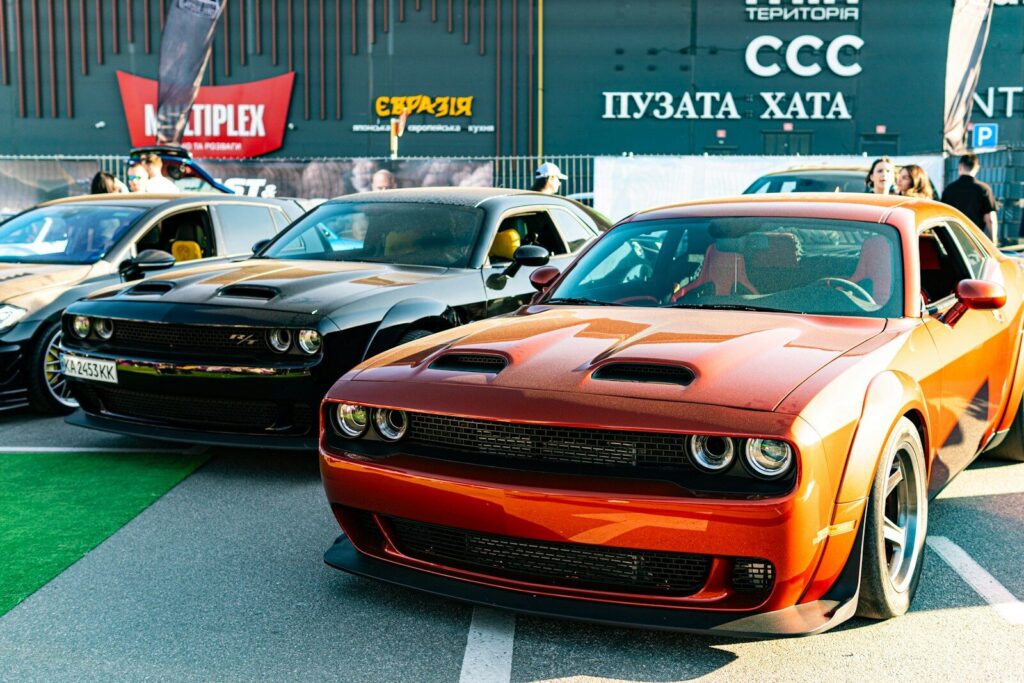
Even when Dodge revealed that the Charger and Challenger HEMI was coming to an end, a lot of fans felt a key era would be put to bed. An electric Charger Daytona will certainly appeal on technological front, but for a number of motorists, a conventional muscle car still had far more soul than plugging in would bring. Engine noise and mechanical characteristics are still on a level par with performance to many fans.
Customer Feedback Shapes Charger’s Return:
- Loyal enthusiasts preferred gasoline power
- Engine sound remained highly valued
- Electric performance had limited appeal
- Customer demand influenced company decisions
- Greater choice for muscle car buyers
The marketplace very quickly picked up on that sentiment. Even with modern features and blistering speed, the Charger Daytona wasn’t flying out of showrooms. So, after having received enough signals from loyal Dodge fans craving that experience of behind-the-wheel of a good old internal combustion-powered musclecar, it was back to the drawing board, so to speak, for Dodge.
But instead of dismissing the customers’ reaction, Dodge chose to bring the V8 engine back to the Charger’s range. A gas-powered model in the lineup is proof the Dodge brand is keen to offer more diversity, without giving up on the muscular soul of this unique nameplate.
2. The Hurricane Engine Becomes the New Performance Hero
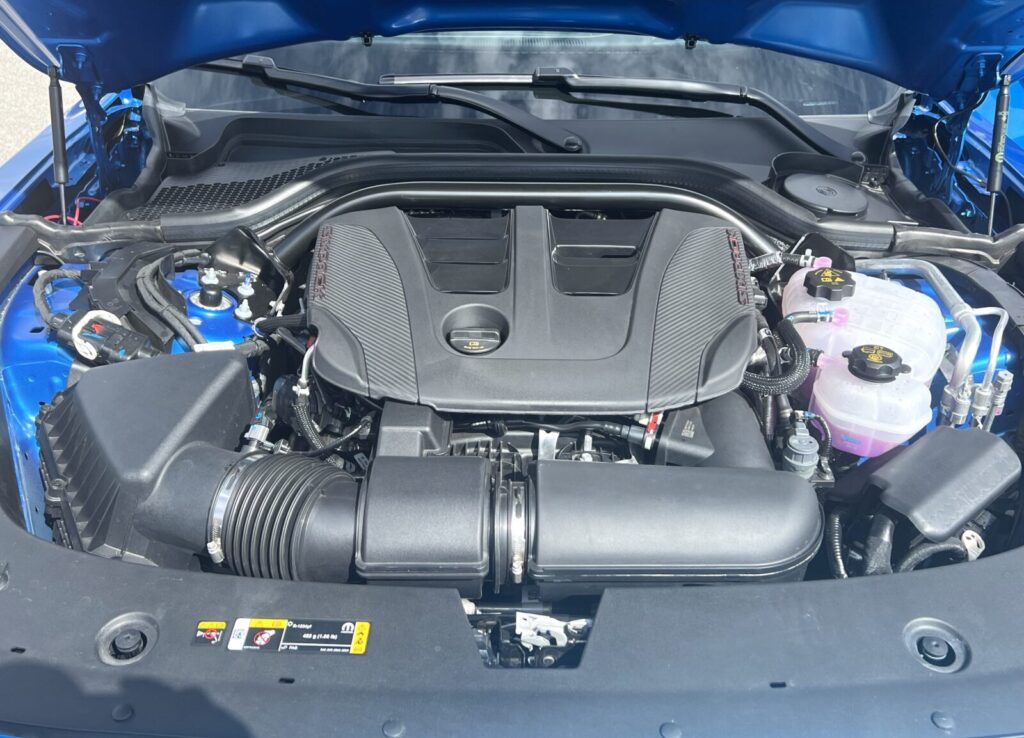
Now let’s address the elephant in the room: the return of the Charger will shed the well-known HEMI V8. This new generation gains a performance system that wasn’t available to it previously: the Hurricane twin-turbo 3.0-liter, inline six. It’s an evolution, not just a reincarnation.
Modern Power Replaces Legendary V8:
- Twin-turbocharged Hurricane inline-six engine
- Revived Sixpack performance heritage
- Modern engineering boosts performance
- Greater power and torque output
- Focus on responsive driving excitement
The Sixpack moniker has been revived once again at Dodge this time for the petrol V6-powered version of the new Charger. You’ll know that, until now, a Sixpack represented a setup of three twin-barrel carburettors which went to represent the best of American performance. The new Sixpack is homage to the six cylinders under the bonnet whilst paying tribute to one of the brand’s much loved past quirks.
If your concern has been that advanced technology cannot add to the fun factor, know that the Hurricane does not take the same direction as past V8 performance engines. It may still fall below multiple prior V8 applications for torque and horsepower numbers, but thanks to its twin-turbo setup and technology that prioritizes driving performance above all else not the cylinder count the Hurricane offers thrills to the driver not quite offered in some past V8 applications.
3. Two Powerful Versions for Different Drivers
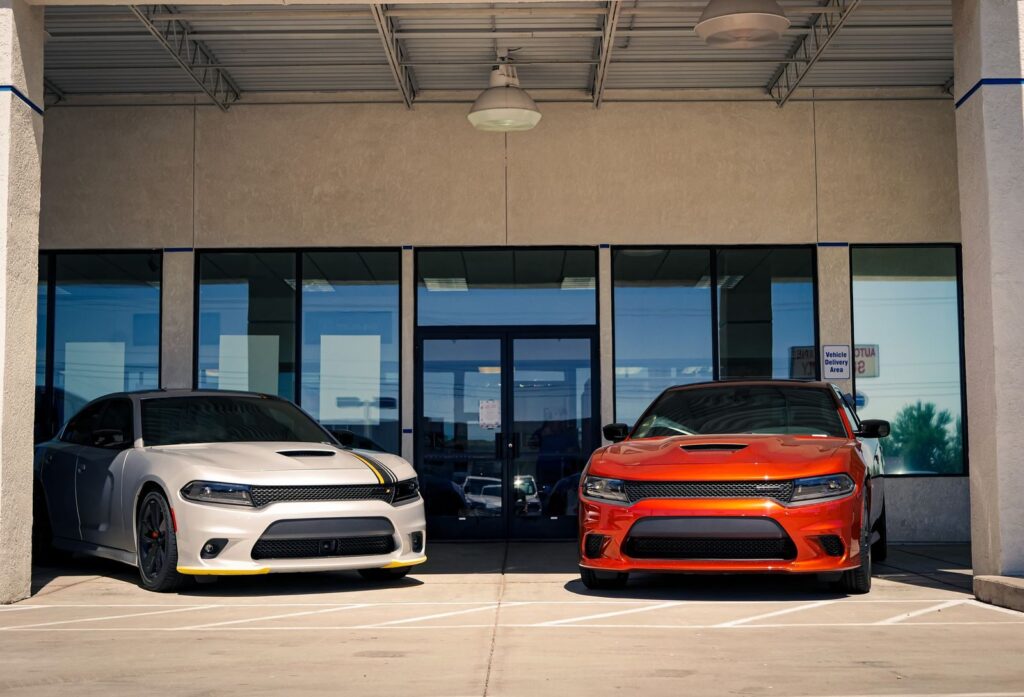
We’re going to get both versions of Dodge’s new Hurricane both 2.7-litre displacements for your consumption and you’ll also get to decide whether an R/T with this motor’s Standard Output (S.O.) is up to snuff to power the new Charger, to produce the claimed 420 HP and 468 lb-ft of torque it also has more both more of and them than a 5.7-litre. This is entry-level gas for the lineup.
Two Hurricane Engines For Performance:
- Standard Output delivers strong performance
- High Output maximises power delivery
- Greater torque across rev range
- Surpasses previous HEMI V8 models
- Options for different driving styles
Alternatively, performance drivers could step up to the High Output (H.O.) flavor of the engine, seen on the new Charger Scat Pack. That powerplant churns out a heady 550 ponies and 531 torques, the highest figures produced so far for a Hurricane engine. Furthermore, it surpasses what the last 6.4-liter V8 Scat Pack offered.
The performance doesn’t just end with the number in the headline. Dodge says that more than 90 percent of peak torque from the engine is available right from 3000 RPM, a fact that translates to acceleration down the entire width of the rev range. Combined this is the sort of muscle car that launches readily and pulls hard with exciting speed inherent in the Dodge name.
4. Performance That Keeps the Muscle Car Spirit Alive
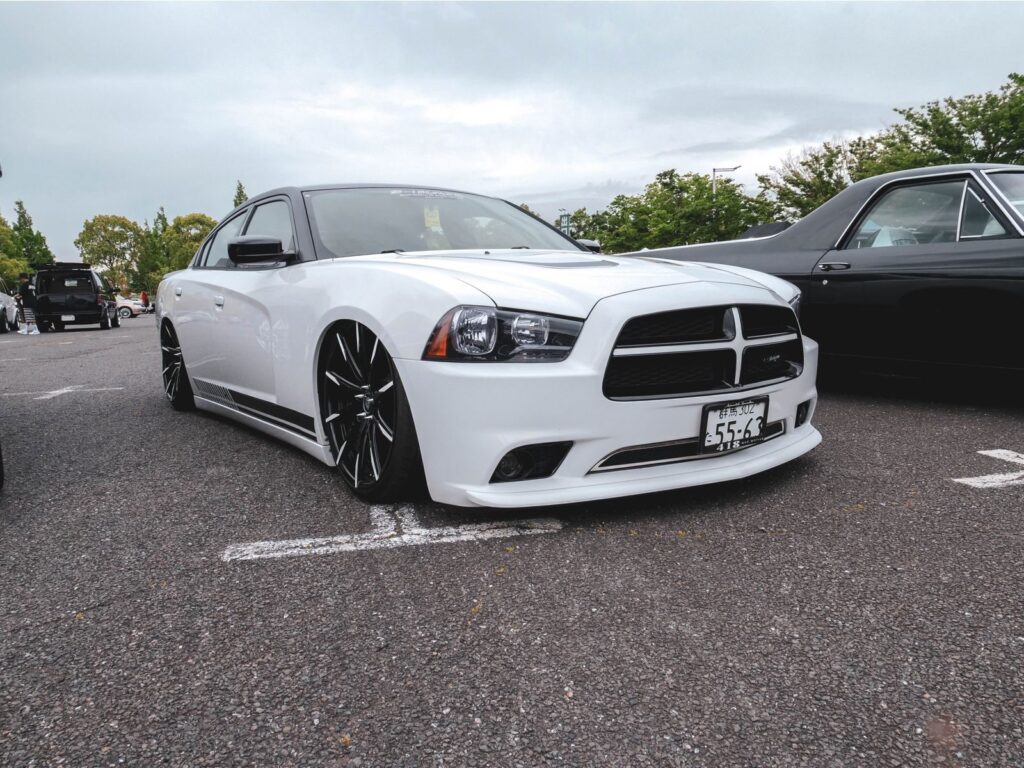
The Hurricane power-plant found on the Charger brings enough credentials to satisfy the muscle car tag. The Scat Pack is anticipated by the folks over at Dodge to accelerate from 0-to-60mph in 3.9 seconds and cover the quarter mile strip in a time of 12.2 seconds. As high as the top speed goes, 177mph; there’s nothing quicker when you’re driving a production Charger.
Modern Performance Meets Muscle Heritage:
- Scat Pack delivers rapid acceleration
- Impressive top speed capabilities
- Charger R/T exceeds previous performance
- Strong torque improves responsiveness
- Muscle car spirit remains intact
There’s quite a bit of performance in even the Charger R/T, entry-level petrol model though. Dodge says it’ll hit 60mph in roughly 5 seconds flat and is topped out at 168mph, which actually makes it faster than many past, and larger displacement V8 Chargers, a true case where clever engineering and smart tuning comes in useful.
However it is not solely in terms of speed that we have to be impressed. Faster sprint capabilities, harder torque action and a much higher responsiveness will be to be noticed on the move, as the new Charger manages to respect the Charger name on so many different ways. Even if the engine type is now different, the fun you had and the trust in an old Dodge muscle car stays all along the ride.
5. Standard All-Wheel Drive Adds Everyday Confidence
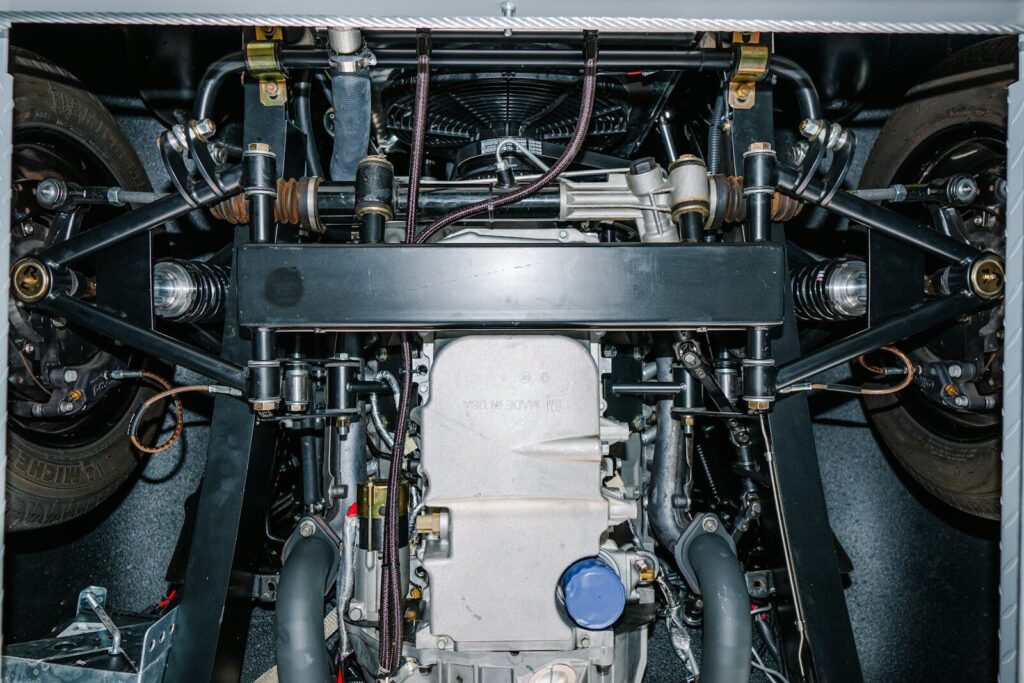
However, many of the key changes to the new Charger Sixpack concern things hidden beneath the car. The first of these? Most models will be All-wheel drive as standard. For decades the Charger has made its home in the rear-drive market but every fuel-burning car in the new range gains that little boost in traction and stability so you can drive it to its full potential on more roads.
All-Wheel Drive Enhances Everyday Performance:
- Standard all-wheel drive capability
- Improved traction in all conditions
- Greater stability during everyday driving
- Better confidence on slippery roads
- Enhanced year-round driving practicality
In the regions where the weather might not be the most favourable all the time all wheel drive makes the Dodge Charger a more competent all weather performance vehicle. Even with wet roads, snowy, icy or even simply slippery conditions not a whole lot seems too intimidating to overcome when it comes to the sheer instant force you expect from a modern muscle vehicle; they really tried to give us accessibility while not sacrificing fun.
Further enhancing driver confidence under normal driving conditions is the addition of an all-wheel drive system. This system helps increase the ability to effectively get power on the pavement when taking off from a dead stop, driving in various weather conditions or the various types of roads you find out in the real world of the all new, more powerful engine in the Charger.

6. Rear-Wheel Drive Fun Is Still Available
While the vehicle comes standard with all-wheel-drive, Dodge hasn’t entirely forsaken drivers that still prefer the engagement of all-wheel-drive. Embedded among the various drive modes is a secret function that permits drivers to disconnect the front axle. A push of a button sends all engine torque to only the rear wheels, providing drivers with a true, vintage muscle car experience.
Classic Muscle Driving Experience Preserved:
- Rear-wheel drive mode available
- Front axle disconnect functionality
- Traditional muscle car handling
- Line Lock enhances driving fun
- Greater control for enthusiasts
This opens up the possibility for drivers to initiate carefully-controlled burnouts and drift with ease where the situation allows. Dodge could easily have ditched the mischievous character of the Charger that had, in past years, distinguished it from many other modern performance models, and added it to the optional list.
In Scat Pack versions, the driving pleasure goes further with the standard equipment of a Line Lock, which makes stationary burnouts easier by keeping the front brakes locked and making the rear wheels burn more readily. This shows that Dodge has lost nothing of the pleasure of driving, typical of muscle car aficionados.
7. Bold Exterior Design with Classic Inspiration
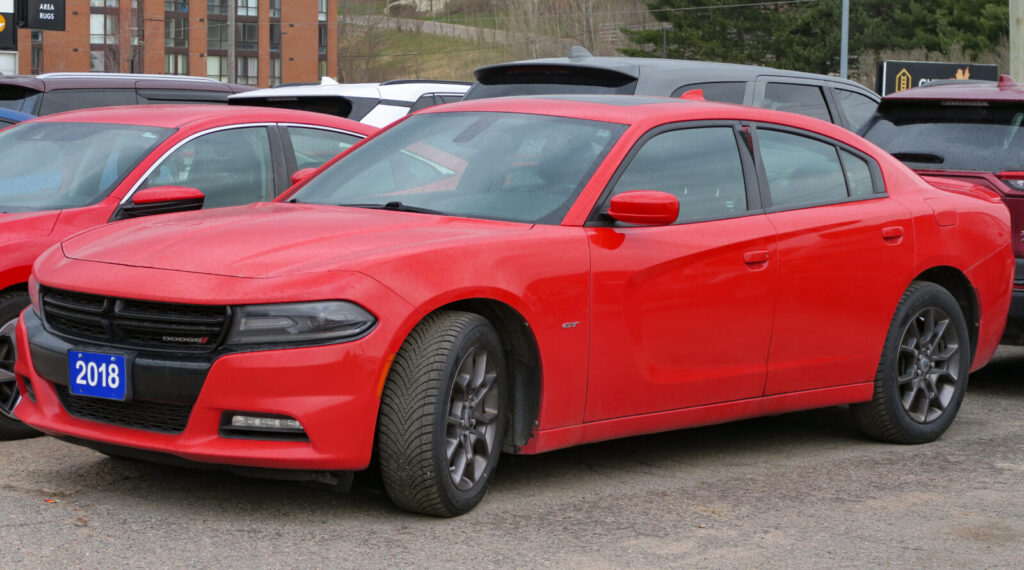
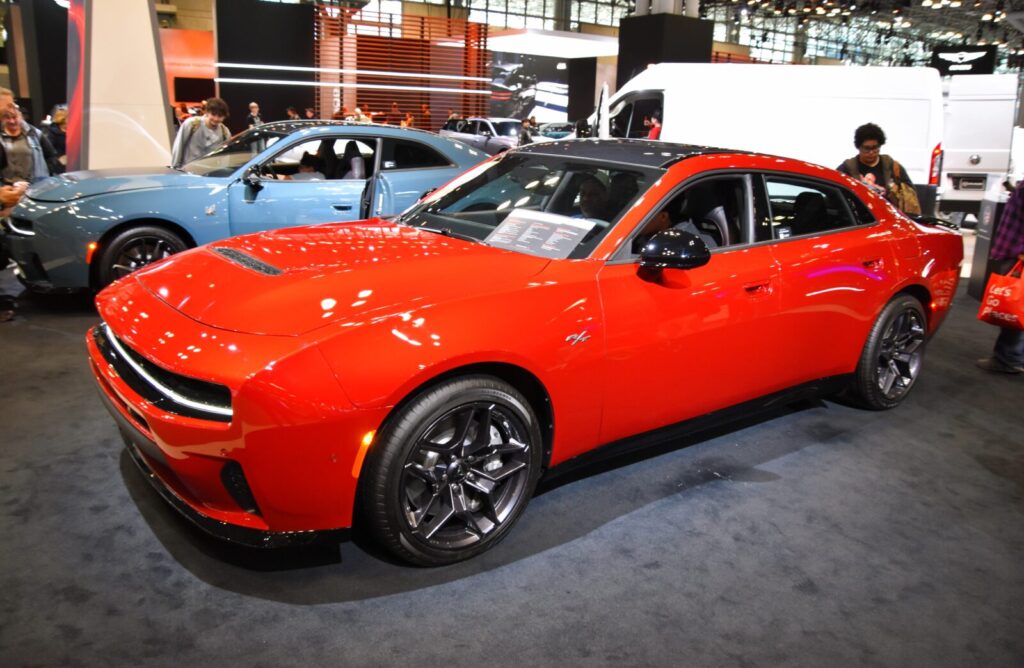
In much the same way as the electric Charger Daytona, the Charger Sixpack has been designed from the ground up for looks, with a modern, aggressive styling that references the traditional. With a large stance and beefy muscles it looks confident without being completely inoffensive, while still carrying the familiar shape the petrol version now includes some differences.
Modern Styling With Heritage Details:
- Wide stance and muscular proportions
- Unique Sixpack front fascia design
- Functional bonnet heat extractor
- Retro-inspired Fratzog logo styling
- Coupe and sedan body choices
For contrast with its electric sibling, the Sixpack has an exclusive front-end treatment, along with a muscular bonnet defined by a pair of forward-facing intake scoops on either side of the retro Fratzog logo. A working heat extractor vent, which redirects air flow from the under-hood and effectively conceals an etched “SIXPACK,” offers a sly wink at Dodge’s performance past.
A more family-oriented choice is available in a stylish four-door sedan, though the Charger maintains the same wheelbase regardless of body style. This four door utilizes smaller, more ergonomically suited front doors, which facilitate access to the spacious back seat and retain the Charger’s striking exterior looks and performance pedigree without creating a lumbering ride.
8. A Modern Cabin with Everyday Practicality
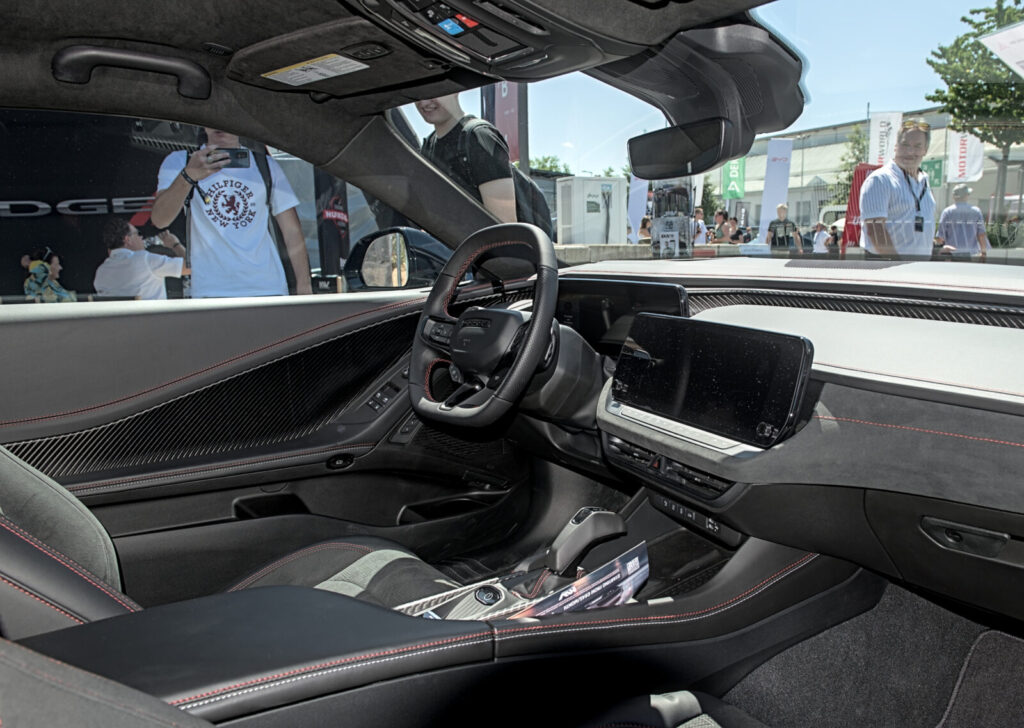
Inside, the Charger blends classic muscle car inspiration with modern technology. The cabin design takes cues from iconic Chargers of the past while incorporating contemporary materials and digital features. A chunky pistol-grip gear selector and a uniquely shaped heated steering wheel reinforce the performance-focused atmosphere.
Modern Technology Meets Everyday Comfort:
- Digital displays enhance driver information
- Uconnect infotainment with touchscreen controls
- Premium seating and upholstery choices
- Ambient lighting creates modern atmosphere
- Spacious cargo area adds practicality
Technology plays a central role in the driving experience. A standard 10.3-inch digital instrument cluster provides essential driving information, while an available 16-inch display offers an even larger view. The dashboard is anchored by a 12.3-inch touchscreen running Dodge’s Uconnect infotainment system, delivering intuitive controls and a wide range of connectivity features.
Comfort has not been overlooked either. Buyers can choose from cloth and synthetic leather upholstery or upgrade to genuine leather with heated and ventilated front seats. The Charger also offers 64-colour ambient lighting and a spacious rear hatch, providing more than 37 cubic feet of cargo capacity with the rear seats folded, making it one of the most practical muscle cars available.
9. Strong Value and a Clear New Direction
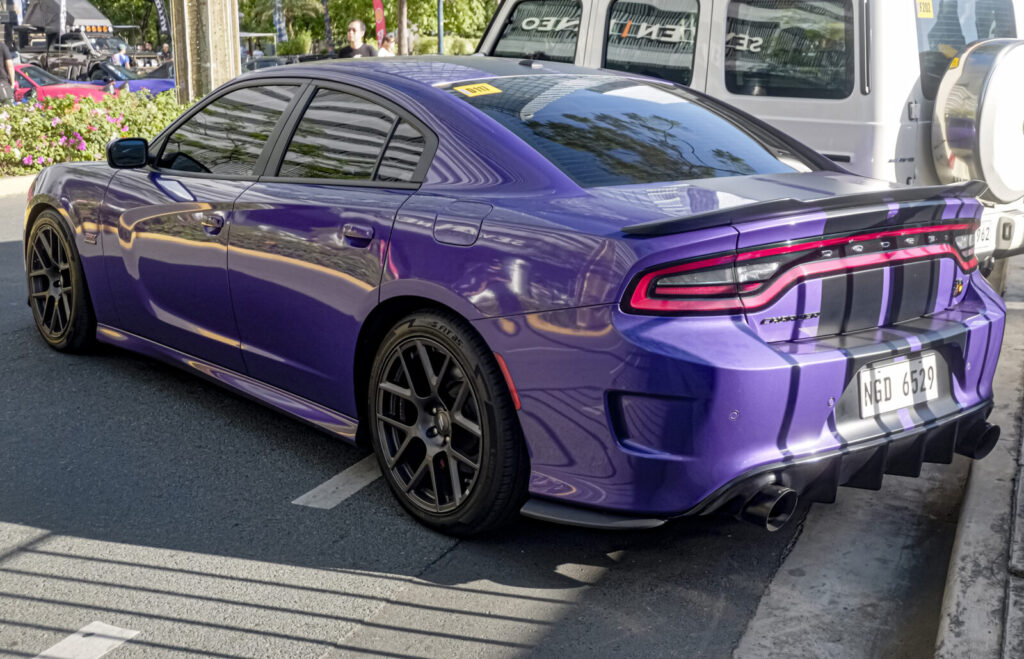
Dodge has priced the Charger Sixpack to compete aggressively within the performance car segment. The two-door 2026 Charger R/T starts at an MSRP of $49,995, while the four-door version begins at $51,995. Both models offer 420 horsepower, standard all-wheel drive, and impressive performance, making them attractive options for enthusiasts seeking everyday usability.
Competitive Pricing With Modern Performance:
- Affordable high-performance model lineup
- Standard all-wheel drive included
- Scat Pack delivers 550 horsepower
- Professional driving experience included
- Greater choice for performance enthusiasts
The higher-performance Scat Pack starts at $54,995 and delivers an impressive 550 horsepower. That makes it one of the highest-horsepower performance cars available at this price point. Dodge further enhances the ownership experience by including a day of professional high-performance driving instruction at the Radford Racing School for every Scat Pack buyer.
The return of the gasoline-powered Charger reflects Dodge’s willingness to adapt to customer demand. Rather than abandoning electrification, the company now offers buyers greater freedom to choose between electric and petrol-powered performance. The Charger Sixpack demonstrates that modern engineering and traditional muscle car excitement can successfully exist together, ensuring the iconic Charger name continues to evolve without losing its identity.
10. The Charger Sixpack Signals a New Era for Dodge
The arrival of the Charger Sixpack shows that Dodge has carefully reconsidered its original EV-only strategy. With only 4,299 electric Chargers sold in the United States during the first half of 2025, it became clear that many buyers still preferred the experience of a gasoline-powered muscle car. Rather than forcing customers to choose one direction, Dodge expanded its lineup to satisfy both traditional enthusiasts and drivers ready to embrace electrification.
A Balanced Future for Muscle Cars:
- Customer demand shaped new strategy
- Petrol and electric models coexist
- Heritage meets modern innovation
- Production begins in Ontario, Canada
- Hurricane engine powers new era
Dodge CEO Matt McAlear summed up this approach by explaining that the Charger lineup now gives customers the freedom to choose the muscle car that best fits their needs without sacrificing performance or attitude. This balanced strategy allows the brand to preserve its heritage while continuing to invest in future technologies. It also demonstrates that listening to customer feedback can shape the evolution of an iconic performance model.
Production of the Charger Sixpack is scheduled to begin at the Ontario, Canada, assembly plant, with the first vehicles reaching dealerships during late 2025 and continuing into 2026. The HEMI V8 may no longer sit beneath the bonnet, but the Charger remains true to its performance roots. Powered by the advanced Hurricane twin-turbocharged inline-six, the new Charger proves that the next chapter of American muscle can still be loud, thrilling, and unmistakably Dodge.