





Genesis G70 Sports Sedan Update Features New Trim Options and Future Hybrid Concept
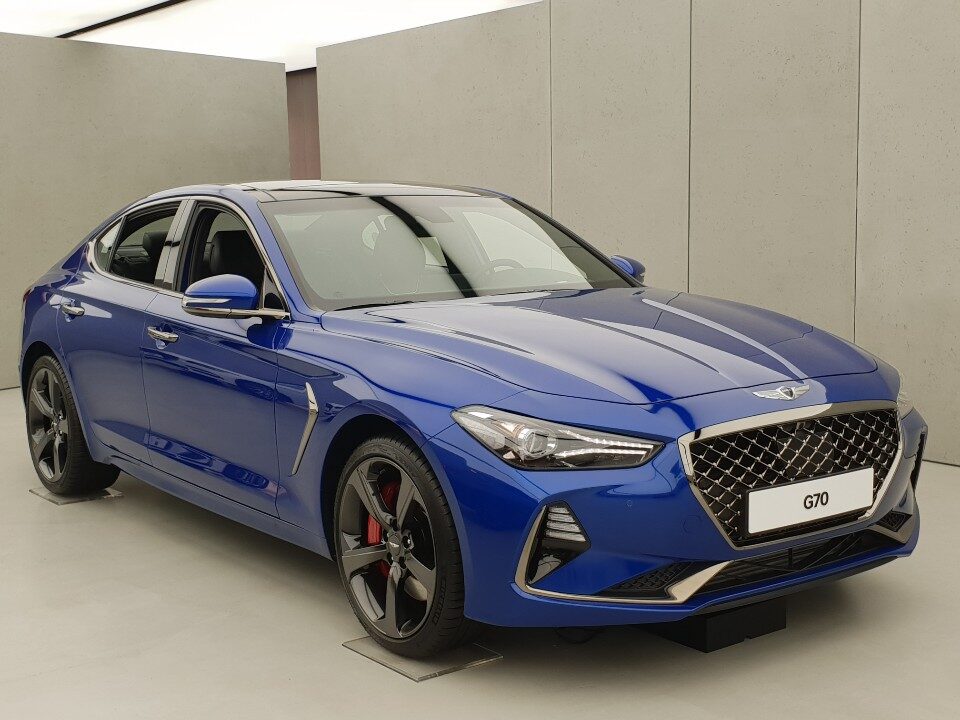
Genesis’s first real stab at challenging established sport sedan heavyweights comes with the 2017 G70, which is looking to knock heads with familiar models like the BMW 3-series, BMW 4-series Gran Coupe, Audi A5, and Mercedes-Benz C-Class. They have a storied history in this segment, but with the G70,Genesis has managed to bring its characteristic high-end look, compelling road manners and sharp price point to the playing field, with ride quality that is sure to be composed on the open road as much as when hustling along twisting two-lanes.
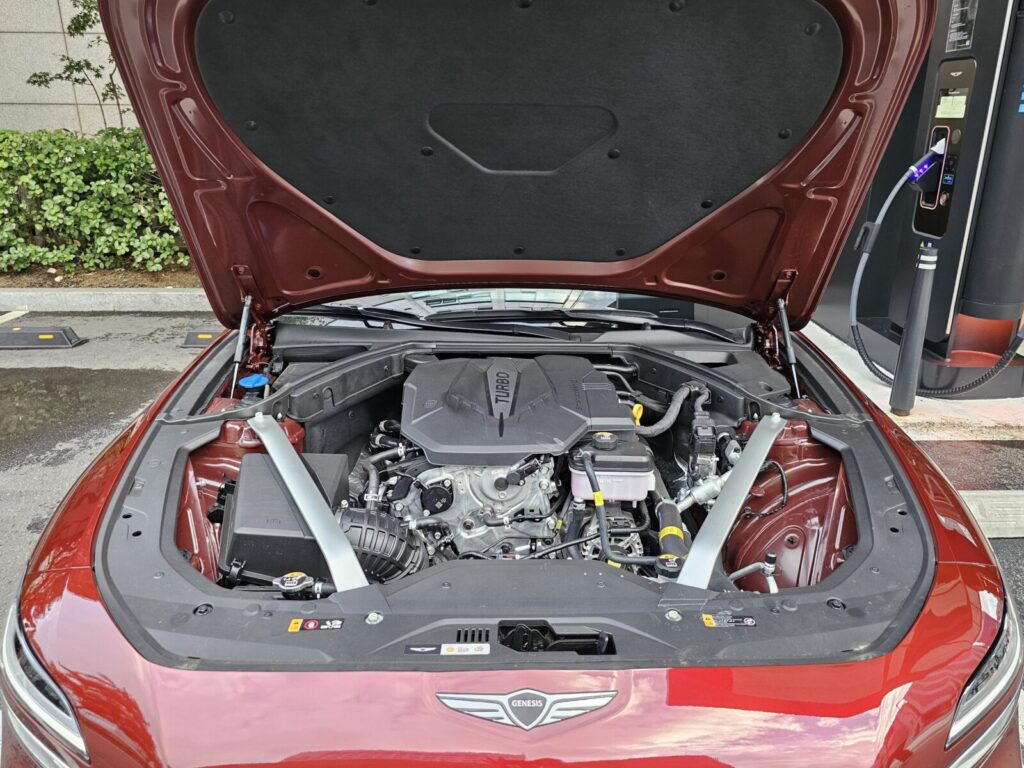
The G70 once again presents buyers with two engine options for any pace. The 2.5T features a turbocharged four-cylinder and an eight-speed automatic that is sure to thrill buyers with 300 hp and 311 lb-ft and of torque. When selecting for more sport and style there is the option of either all or rear-wheel drive and twin-turbocharged V-6 engine which generates 365hp and 376 lb-ft of torque paired with the same 8 speed automatic transmission.
Genesis is removing some G70 option choices for the 2026 model year while adding new appearance and trim options. They are also showing where Genesis might be heading with this sport-focused concept design which blends wild styling with hybrid power. Despite this, the current G70 continues to appeal to enthusiasts, primarily since its twin-turbo V-6 offers a strong foundation for engine tuning and performance modifications.
1. 2026 Genesis G70 Engine and Performance
Within the G70’s two available powertrains, the split is fairly clear between everyday usability and no-holding-back performance. The 2.5T 4-cylinder churns out a respectable 300 hp@ 5,800 rpm and 311 lb-ft torque@ 1,650 rpm, offering a peppy response for every daily excursion. The 3.3T twin-turbo V-6 increases output to 365 hp @ 6,000 rpm and 376 lb-ft@ 1,300 rpm, offering a much more enticing proposition for performance minded shoppers.
Key Performance Highlights of the G70:
- 2.5T engine delivers 300 horsepower
- Twin-turbo V-6 produces 365 horsepower
- AWD 3.3T reaches 60 mph quickly
- V-6 achieves an estimated 160 mph
- Strong braking complements the sedan’s performance
Evidence from the track shows that the figures equate to true speed. A twin-turbo 3.3-litre V6, AWD G70 did the 0-60mph in 4.5 seconds and covered the quarter mile in 13.1 seconds at 109mph. The 2.5T AWD took 5.9 seconds for the 0-60mph dash and completed the quarter mile in 14.4 seconds at 99mph.
Top speed estimates for the V-6 is 160 mph, and the four-cylinder 155 mph. The brakes are equally impressive. The 3.3T comes to a halt from 70 mph in 178 feet, all while hauling around its nearly two-ton curb weight of 3,940 pounds. This further cements the G70’s status as a true sports sedan and not merely a luxobox with an extra bang for its buck.

2. G70 Handling and Track Capability
But linear acceleration is only one dimension on which the G70 shines. Around a figure-eight course, the 3,887-pound G70 logged a 25.2-second lap of the course-nearly a second quicker than the Alfa Romeo Giulia Competizione and slightly quicker than the Cadillac CT4-V, proof of its ability to disguise its considerable weight.
Key Factors Affecting G70 Handling:
- Strong figure-eight performance against rivals
- Michelin tyres influence overall driving character
- Pilot Sport 4 tyres improve traction
- Skidpad testing demonstrates strong cornering grip
- Automatic transmission can hesitate under pressure
The tires used also drastically altered the sedan’s persona. The factory Michelin Primacy Tour A/S tires deliver a pleasant balance of grip and everyday usability. Switching to the optional Michelin Pilot Sport 4 tires improves adhesion significantly under the hammer, but both achieved 0.87 g on the skidpad (with the 2.5T engine) and 0.84 g (with the 3.3T).
The sedan is hardly impervious to criticism under hard driving, either. It gets sloppy with the eighth speed automatic’s lurchiness changing from third to second gear on tight circuits and the V-6 mixes an artificial engine-note with its exhaust. Fuel efficiency isn’t great either on the 3.3T AWD with an EPA of 17 city and 23 highway mpg.

3. 2026 G70 Trim and Exterior Changes
Genesis has pared down the 2026 G70 order sheet quite a bit by doing away with a number of options that were offered for 2025. The G70 is no longer available in either Tasman Blue or Burleigh Blue paint, and both the Gray and Sport interior themes have also been eliminated. While options for upholstery material such as Nappa leather and micro fiber suede headliners are off the menu now as well.
Notable Changes Across the 2026 G70 Lineup:
- Several exterior colour options have disappeared
- Gray and Sport interior themes removed
- Nappa leather choices are now limited
- Power trunk option has been discontinued
- Prestige Graphite trim adds distinctive equipment
An optional power trunk has also been deleted, while the 3.3T Sport Prestige gets its prior adaptive suspension revision for free. The reduced number of trims comes with an increased combination of available styles, interior and feature options.
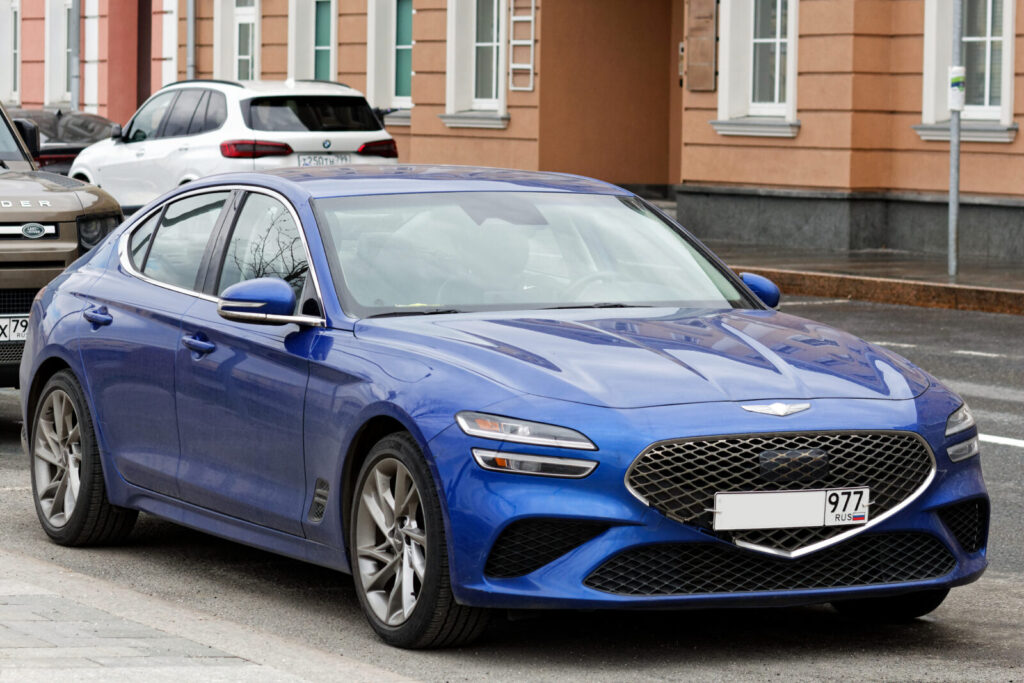
The addition of the Prestige Graphite treatment for the turbo V-6 comes with black chrome around the exterior accents, an unique 19-inch wheels to wrap the Ceres Blue exterior in, a more luxuriously appointed dark blue Napa leather interior and the retuned electronically controlled suspension that hunkers the car down by 0.4 inches.
4. New Colours and Interior Equipment
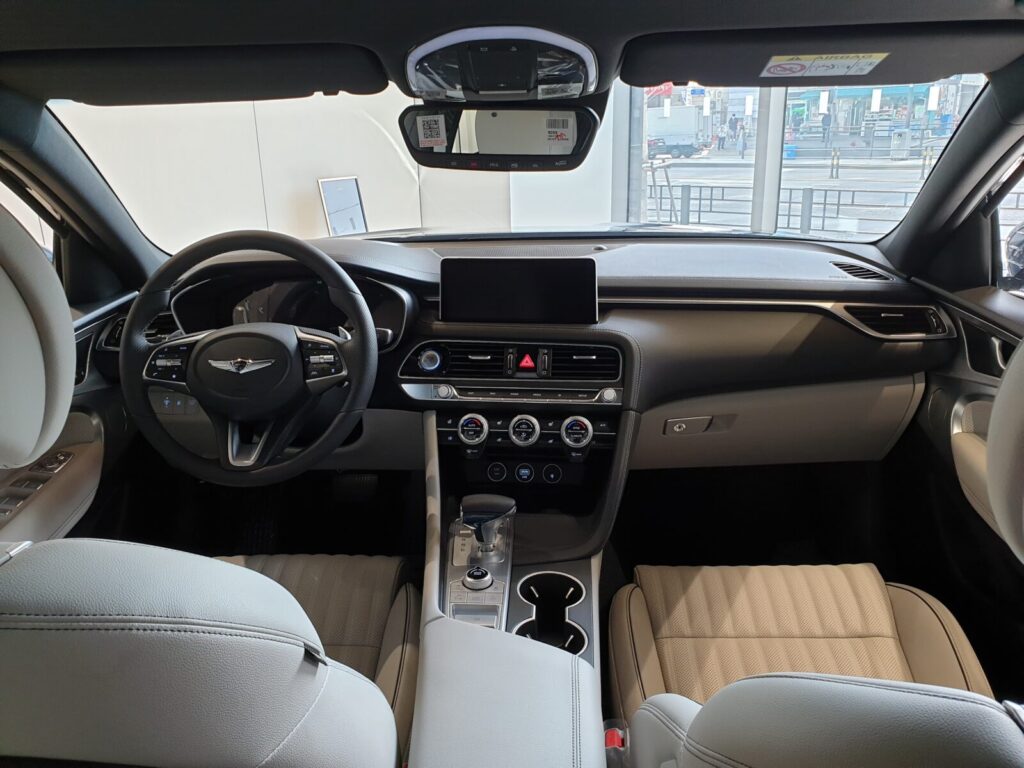
Alongside new Prestige Graphite model the 2026 G70 gets a couple of more minor revisions. The paint options are extended by Capri Blue and a Beige interior colour scheme offers an alternative cabin palette. The heated steering wheel, for winter comfort, comes as a standard feature on AWD 2.5T models and above.
Key Interior and Equipment Updates:
- Capri Blue expands exterior colour choices
- Beige interior adds another cabin option
- Heated steering wheels improve cold-weather comfort
- Updated wheels distinguish the 2.5T Prestige
- Surround-view camera improves visibility and convenience
A redesigned wheel with standard issue aluminium interior trim is also on tap for the 2.5T Prestige. A surround-view camera is a helpful new convenience and safety feature available but comes standard for 3.3T models. All in all, the additions equip the buyers with more gear and little in the way of changes to the G70’s inherent character.
The G70 remains driver-centric for controls in the cabin as well. It features a standard 10.3-inch touchscreen with Apple CarPlay and Android Auto as well as Genesis Connected Services functionality. Wireless charging for smartphones is part of the standard equipment for many models and, in the 3.3T models, the Genesis Digital Key provides smartphone access for starting the car.

5. Cabin Practicality and Safety Features
The G70’s interior at least the G70 interior oozes the luxury quality to be expected from sports sedans (sturdy build quality, well-marked controls and emphasis on the driver), albeit with the trade-offs associated. Entry can be a pain, with the driver in close proximity to the B pillar. The rear seats feel cramped both for legroom, and to place your feet under.
Key Cabin and Safety Considerations:
- Driver entry can feel slightly awkward
- Rear passengers receive limited legroom
- Trunk provides 11 cubic feet
- Folding seats increase available cargo space
- Extensive safety features come standard
While the carrying capacity of 11 cubic feet, which will house up to five carry-on suitcases, can also be described as minimal; given the compromises the G70 was made for a sporty stance, it can be enlarged by another 9 carry-ons by folding the rear seats, giving owners some sort of flexibility.
The selection of safety equipment continues to be well documented across the Genesis lineup. Each new Genesis comes standard with forward automatic emergency braking with pedestrian detection, lane departure warning, lane keeping assist and adaptive cruise control with stop-and-go functionality. Genesis also offers a five-year/60,000-mile limited warranty and a 10-year/100,000-mile powertrain warranty and complimentary scheduled maintenance for three years or 36,000 miles.

6. Future Genesis G70 Hybrid Concept
Genesis has previewed the direction of its future design language in the form of its X Gran concept. The artist’s sketches of a potential successor for the G70 reveal a significantly more aggressive sports sedan, characterized by bright orange bodywork and a pronounced focus on performance. The Genesis double DRLs are clearly present alongside the crest grille at the front, though they are supplemented by stretched horizontal lights for a more visual stance.
Key Design and Hybrid Powertrain Highlights:
- Aggressive styling creates a wider stance
- Dual DRLs reinforce Genesis design identity
- Fastback silhouette emphasises sporty proportions
- Large 21-inch wheels enhance visual presence
- Hybrid powertrain targets around 500 horsepower
The back side is even more extreme with dual taillamps set horizontally and a sharp diffuser incorporating circular dual exhausts all at each end. A slung-roof fastback shape, a long bonnet, short rear overhang, sharply defined body sides, and giant 21-inch wheels are all used to the best affect and create a concept car that looks a mile outside the typical sporty sedan.
The engine configuration of the concept appears to be no less audacious. Genesis envisions a 3,500cc Lambda twin-turbo engine coupled to an electric motor-integrated transmission which is part of a hybrid system expected to develop near 500 hp and nearly 515 lb-ft of torque, a little over 110 hp added to the current 3,500cc Lambda.
7. Improved Rear-Seat Space and Body Design
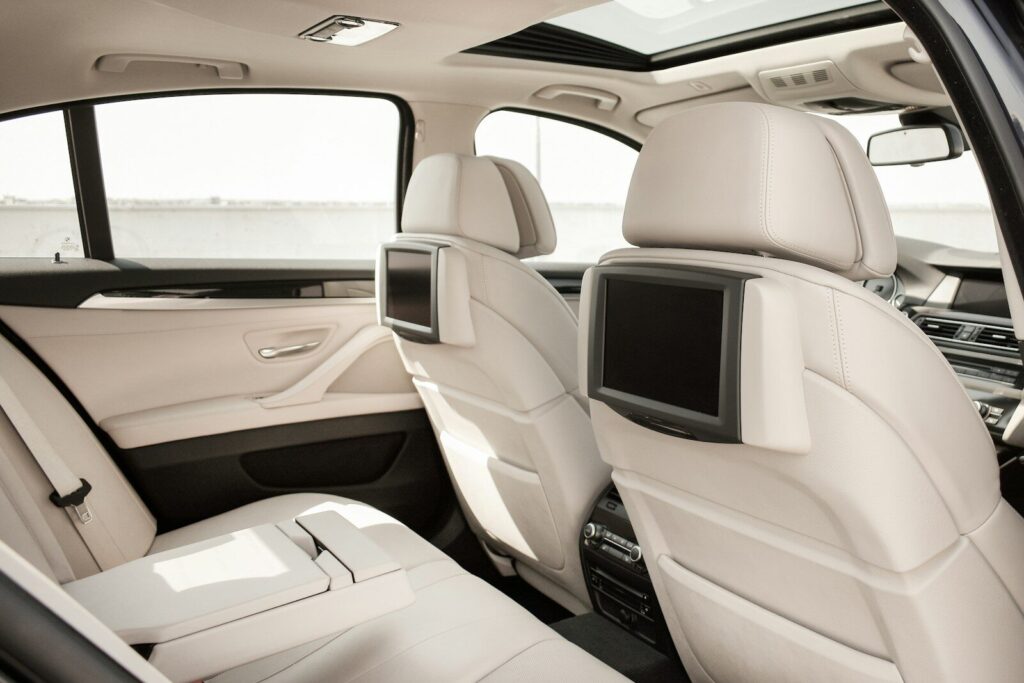
Finally, this next generation design fixes what is probably the biggest flaw of today’s G70: rear seat space. The sedan is already a fun car to drive but passengers are a bit tight in the legroom and can feel a little cramped. With the size increase Genesis can add some comfort while still trying to keep the sporty character.
Key Improvements Expected in the Future G70:
- Larger dimensions should increase passenger space
- Rear-seat legroom could become more generous
- Low roofline preserves the sporty appearance
- Elongated proportions maintain balanced exterior styling
- Practicality improves without losing performance character
It’s anticipated that the big picture structure will allow for more usable passenger space yet maintain the low roof and a long body; this is crucial as G70 has always used visuals to balance the picture and adding utility should still prevent the sedan from appearing as a normal executive sedan.
Future design The approach is to harmonize these two somewhat incompatible goals a more comfortable G70 interior, coupled with a signature classic sports-sedan look thanks to a long bonnet, a low roofline, short rear overhangs and a predatory stance.

8. 500 WHP Tuning Potential
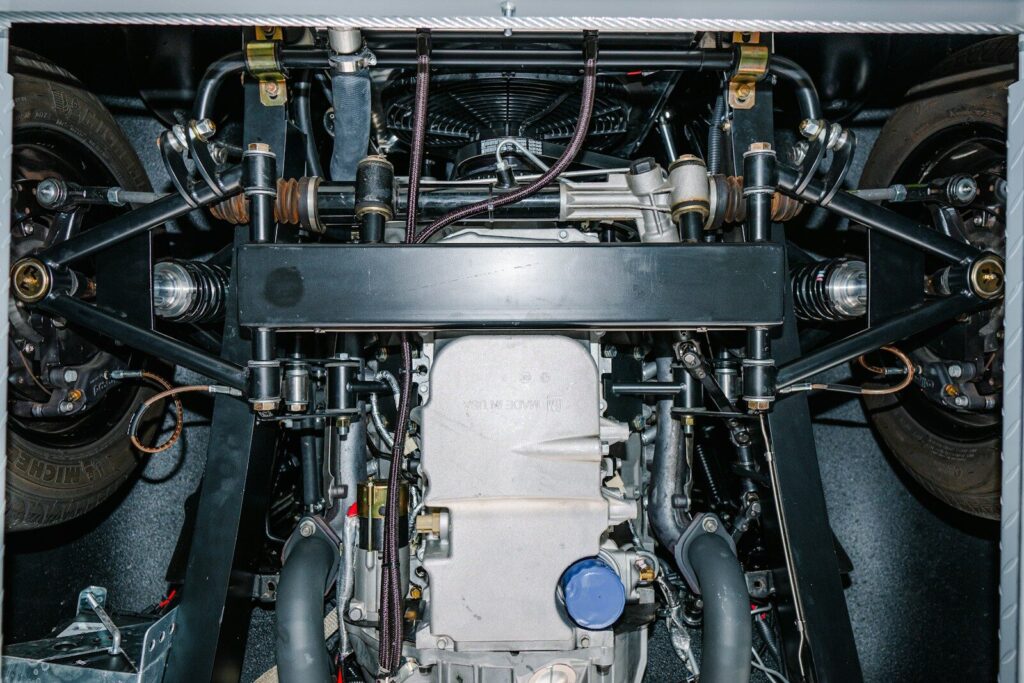
Those looking for more output from the existing car the G70’s 3.3L T-GDI V-6 makes for the perfect starting point. Stock, they produce about 370 hp (varies by trim level), and an estimated 300 to 320 to the ground. With well chosen components and dialed in tuning the platform offers good support for a variety of modification goals.
Key Modifications for Increased G70 Performance:
- Factory V-6 provides strong tuning potential
- Stock turbos can support around 500 WHP
- Colder spark plugs support higher boost
- ECU tuning can significantly increase power
- Proper calibration helps maintain everyday usability
The factory engine is believed to be good for close to 800 WHP, whereas the stock turbochargers and fueling is rated to make about 500 WHP. This implies that strategically implemented, bolt-on parts upgrades can transform the G70 into a much more performance street-car without much loss of the original functionality of the vehicle.
An ECU tune and ignition system will certainly make for part of this build and fitting one step-colder spark plugs over the 500 WHP mark help keep those under increased boost in check. With some of the more extreme, they might have two-step colder spark plugs too. An ecu tune will yield close to 80-90whp and north of 100lb-ft through boost tuning and optimized fuelling.
9. Airflow, Fueling, and Chassis Upgrades
Improving airflow helps the twin-turbo V-6 maintain stronger performance under increased boost. A cold-air intake can improve throttle response, turbo spool, and efficiency while potentially adding 15 to 25 WHP. Upgraded downpipes can reduce exhaust back pressure, with catless versions offering gains of up to 40 WHP and high-flow catted versions providing more than 20 WHP.
Key Upgrades for Power and Consistency:
- Cold-air intakes improve airflow and response
- Upgraded downpipes reduce exhaust back pressure
- Larger intercoolers help control heat soak
- E30 blends can provide additional power
- Fuel upgrades support higher horsepower targets
An upgraded front-mount intercooler is another important modification because repeated hard driving can create heat soak. Higher intake temperatures can reduce power, while a better intercooler helps maintain consistent charge temperatures. The modification can contribute roughly 10 WHP while helping the engine maintain its performance during demanding driving.
Fuel system upgrades become increasingly important as power rises. A low E30 ethanol blend can provide approximately 20 to 25 WHP without requiring upgraded fuel pumps, while full E85 use requires upgraded low and high-pressure fuel pumps and can push output beyond 600 WHP. Charge-pipe injection offers another route, potentially adding 75 to 100 WHP without replacing the existing pumps.
10. Handling Upgrades and Overall G70 Appeal
Producing 500 WHP requires more than engine modifications. Coilovers or upgraded shocks, springs, sway bars, and strut braces can improve body control and reduce roll when the sedan is pushed hard. Stronger brake pads and rotors provide greater resistance to repeated heat, while a big-brake kit offers additional fade protection for more demanding driving.
Key Upgrades for Better G70 Performance:
- Coilovers improve body control and handling
- Upgraded brakes provide greater heat resistance
- Performance tyres maximise available road grip
- Throttle controllers improve perceived pedal response
- Chassis upgrades support higher power levels
Tyres remain one of the most important connections between the engine’s output and the road. High-performance summer tyres can reduce wheelspin and provide the grip needed to make additional horsepower useful. An aftermarket throttle-response controller can also reduce perceived electronic pedal delay, offering multiple response modes and adjustable settings through a smartphone application.
The Genesis G70 continues to combine luxury, performance, and tuning potential in a package that stands apart from more established rivals. The 2026 Prestige Graphite trim adds fresh character to the lineup, while the potential 500-horsepower hybrid direction suggests that Genesis intends to push the sports sedan further. With its capable chassis, twin-turbo V-6, premium cabin, and substantial aftermarket potential, the G70 remains a compelling choice for drivers who want genuine performance without giving up everyday luxury.