







The First Muscle Car: A Family’s Legendary 1964 Pontiac GTO
The 1964 Pontiac GTO wasn’t just another performance car: It came on the scene during a time when American society was going through massive upheaval. In a rapidly changing world fueled by new music, new inventions and changing social attitudes, the GTO tapped into that raw energy with the kind of potent mixture of performance, style and attitude the time was ripe for.
The year 1964 had special significance as well: The Beatles’ historic February 9th performance on The Ed Sullivan Show entertained an estimated 73 million Americans and ignited the British Invasion of American music. In protest of discrimination, Lyndon B. Johnson, as President, had previously passed the civil rights act and Bob Dylan had released the times of change had come this is the attitude of the new era.
But not just politics or music innovation was booming elsewhere. At a movie screen, “Mary Poppins” merged live-action characters with animation like never seen before, the TV-show “Jeopardy!” debuted and began its ascent to American Institution, not to mention advancements in the field of technology with IBM’s System/360 computer, transmitting NASA’s Syncom 3 satellite of the Olympics on Earth or the creation of the BASIC computer-programming languages that made computers accessible to individuals for the first time, changing this to and about car that would be synonymous in America.
1. Pontiac’s Bold Performance Revolution
GM had many internal limitations at the time on how powerful a performance capability the midsize cars could be. Pontiac LeMans’ were limited to the small blocks with rules against GM engineers installing the big blocks to steal thunder from each GM Brand.
Breaking Rules Through Creative Engineering:
- Strict GM performance limitations imposed
- LeMans faced engine restrictions internally
- Pontiac pursued a stronger identity
- Engineers developed a clever solution
- High-performance package changed automotive history
But Pontiac wanted to establish an identity that really centered around performance. Back in 1963, GM forbade any in-house factory-supported competition, and this left the division’s engineers to create a means to engage passionate customers who craved power and performance without technically going against what the higher-ups imposed.
Pontiac had another powerful model, the LeMans-GT. Engineer John DeLorean along with the assistance of others came up with the plan which revolutionized a part of automotive history. DeLorean thought instead of going for an all-new model, it would be easier to install the powerful engine in one existing model that was how the “GT” version of the Pontiac LeMans saw the light of day and successfully went against GM’s standards for a sports car on paper.
2. The Birth of the GTO Name
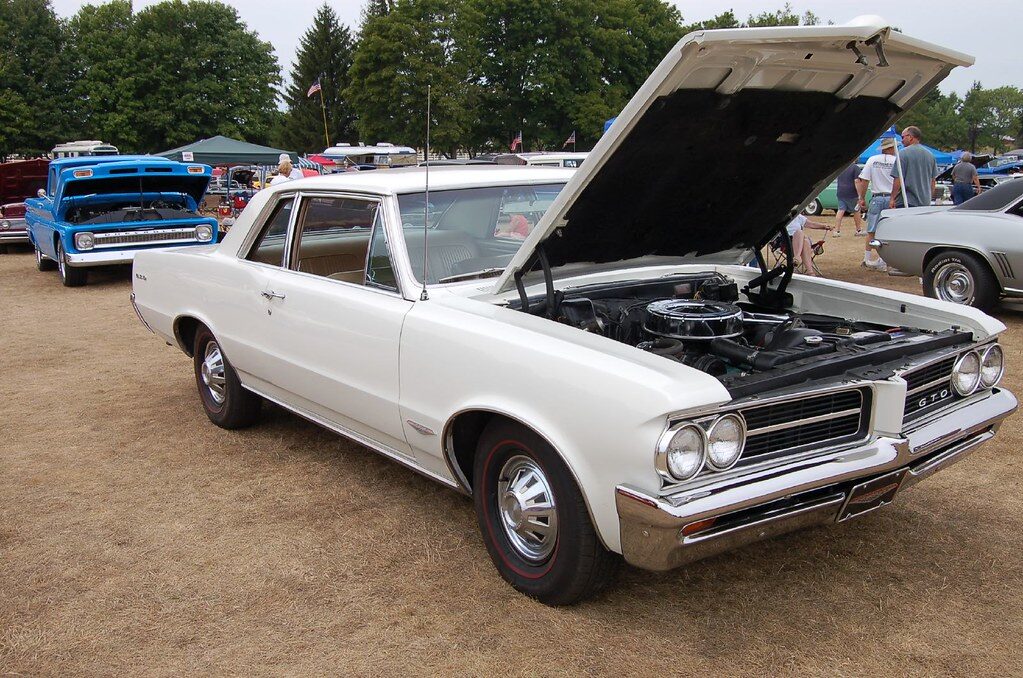
So, the legendary GTO package was basically the biggest engine possible at the time; a huge 389ci V8 from the full sized Grand Prix that they threw into the lightweight Le Mans platform. That brilliant notion was conceived by an engineer named Bill Collins; that the right package of muscle can completely change what your driving experience could ever be.
Creating a New Muscle Car Formula:
- Powerful V8 engine in compact platform
- Enhanced suspension and cooling upgrades
- Aggressive styling with hood scoops
- Affordable performance changed expectations
- Inspired future muscle car generations
It was significantly more than just an increased displacement engine under hood; Pontiac also equipped it with stronger suspension components, more potent cooling apparatus, a dual exhaust that announced its presence and unique hood scoops giving the vehicle a mean look. These are the details, which tell the viewer this was no ordinary vehicle.
GTO this result made automobile fans rethinking what a great-engine automobile need to be A low cost and snappy car with high performance of a bigger motor automobile. The Pontiac GTO ended up being the automobile that reconditioned. What’s A performance car is that it delivered huge-engine thrust in an even size vehicle, and the formula proved irresistible to an ensuing wave of muscle motor automobile. It’s the sort that defines motor automobiles of 60’s.
3. A Family-Owned Piece of Automotive History
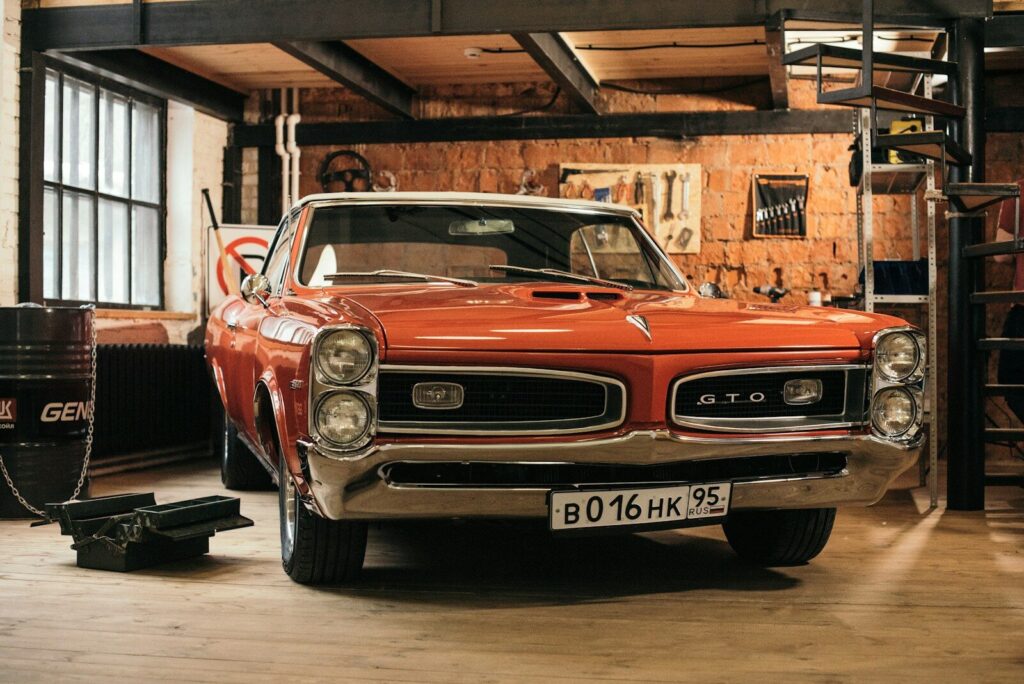
“While the 1964 Pontiac GTO (a vehicle also the impetus behind Jan and Dean’s 1964 smash hit, “G. T. O.”) is a nameplate legendary in every corner of the nation, some are special above and beyond. Not only is this one a classic collector’s gem, but a treasured family Heirloom, owned by the same family as new.
A Legacy Preserved Through Generations:
- Original family ownership since new
- Decades of memories behind ownership
- Personal connection beyond collectibility
- Classic car with emotional significance
- Symbol of automotive passion and freedom
However this GTO’s first chapter did not end when it “retired” from the road for the purposes of becoming just another forgotten classic the GTO was originally purchased for the original seller’s father in New Jersey making the link to this family vehicle one that spans generations.
The vehicle screams the golden age of personal ownership on the road. This was far more than just getting from here to there it was individuality, passion, and pure freedom. And for a family who loved what this gto represented, this was simply the purest definition of an American musclecar.
4. A Legacy Built Through Precision and Care
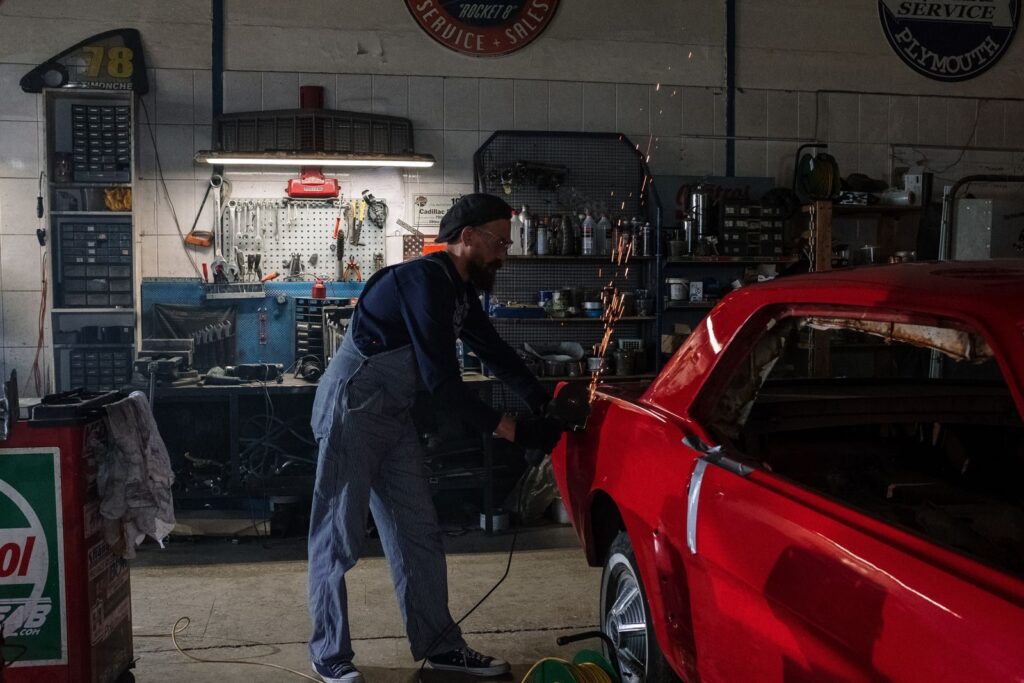
Built by a former Pan Am captain, his influence is obviously seen on the car in the form of meticulous attention to detail, even down to a copy of the vehicle’s extensive logbook. That’s a handy bit of history on a vintage car.
Preserving History Through Detailed Documentation:
- Original ownership records provide authenticity
- Careful preservation reflects owner dedication
- Documentation strengthens collector value
- Personal history enhances classic appeal
- Engineering legacy remains carefully protected
Not only will the mechanical pieces of a cared for classic auto speak for themselves; even in the cosmetics, records, and feelings associated with your classic car, you imbue its presence with its own, non-replicable authenticity that can’t be found in just any used ride.
This GTO is part of documented automotive history. That includes one man’s obsession and love, an entire family’s stories, and American engineering excellence that truly helped mold a motoring segment that will be with us forever: American Muscle Car the legendary GTO.
5. The Legendary 389 Tri-Power V8
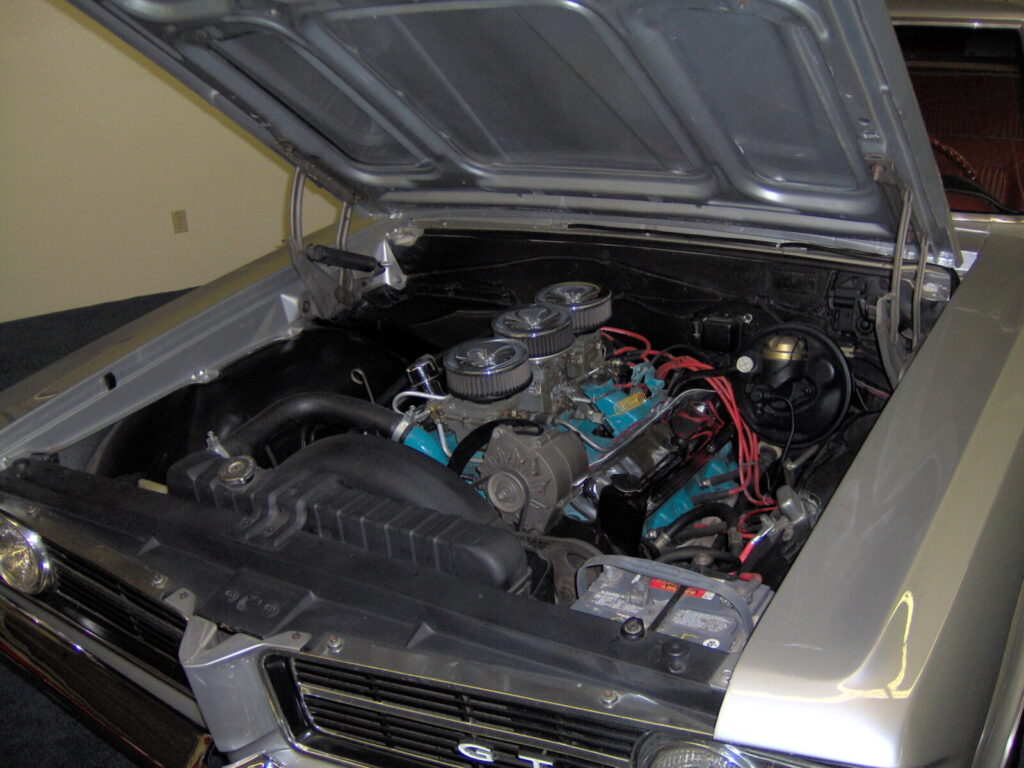
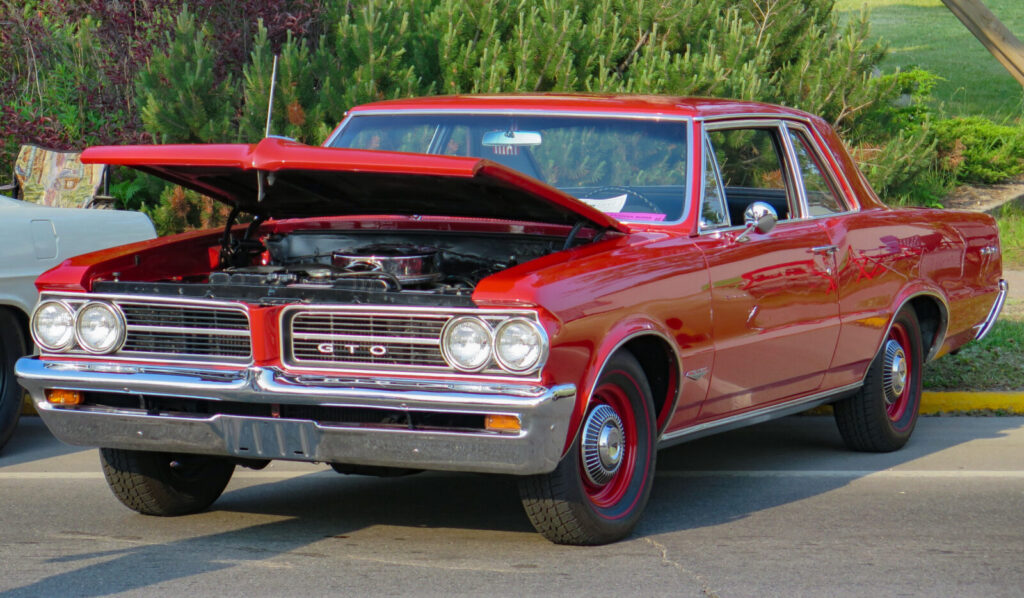
Below that distinctive dual-scoop hood lies the motor that ignited the GTO legend: a 389-cube V8 fed through an extremely rare and very much-in-demand. Tri-Power induction setup that fed a bank of three two-barrel carburetors and output 340 horses and 428 ft-lbs of torque new.
Iconic V8 Performance and Mechanical Character:
- Legendary 389-cubic-inch V8 power
- Three-carburettor Tri-Power induction system
- Four-speed manual transmission setup
- Limited-slip differential enhances performance
- Authentic early muscle car experience
Approximately 25 years ago the engine was refurbished and had some more attention in more recent times, keeping that kind of GTO power! Bolted to that engine is a four-speed manual gear box with Hursts shifter and traditional cueball knob.
In essence, power is transferred to the road through a 3.55:1 Saf-T-Track limited-slip differential to endow the car with the sort of mechanical soul a gearhead cherishes in a vintage road weapon. The ensemble produces that quintessential muscle car experience.
6. A Rare Factory Performance Specification
What this particular GTO excels at is how it was ordered from the factory, the original owner checked off a few key performance-enhancing options that were well more than just looks alone, focusing instead on the actual driving experience the car has to offer.
Factory Options Enhancing Driving Performance:
- Heavy-duty frame improved structural strength
- Quick-ratio steering enhanced handling response
- Upgraded shocks improved vehicle control
- Performance options increased driving capability
- Complete package defined enthusiast engineering
The performance-minded package on the car, as listed above, included a heavy-duty frame with power-assisted quick-ratio steering plus an additional handling package option which upgraded the shocks to give the GTO more planted control and responsiveness to the driver.
For some, a classic nameplate implies nothing more than the name on its engine badge, but that’s far from the reality for this GTO. The way GTOs blend stout factory power, aftermarket upgrades, and cleverly implemented factory options into a complete enthusiasts’ machine this, one the most elusive to encounter.
7. Exterior Design That Defines an Era
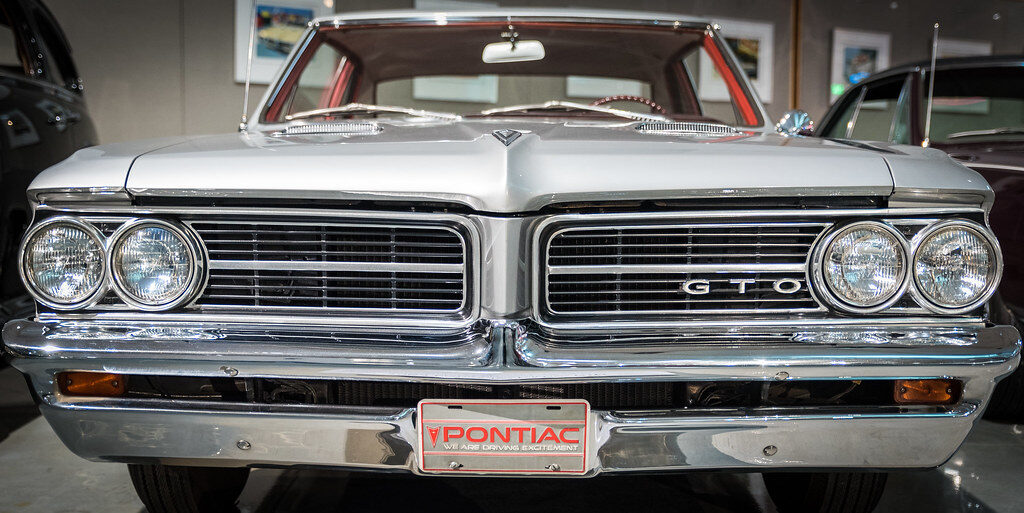
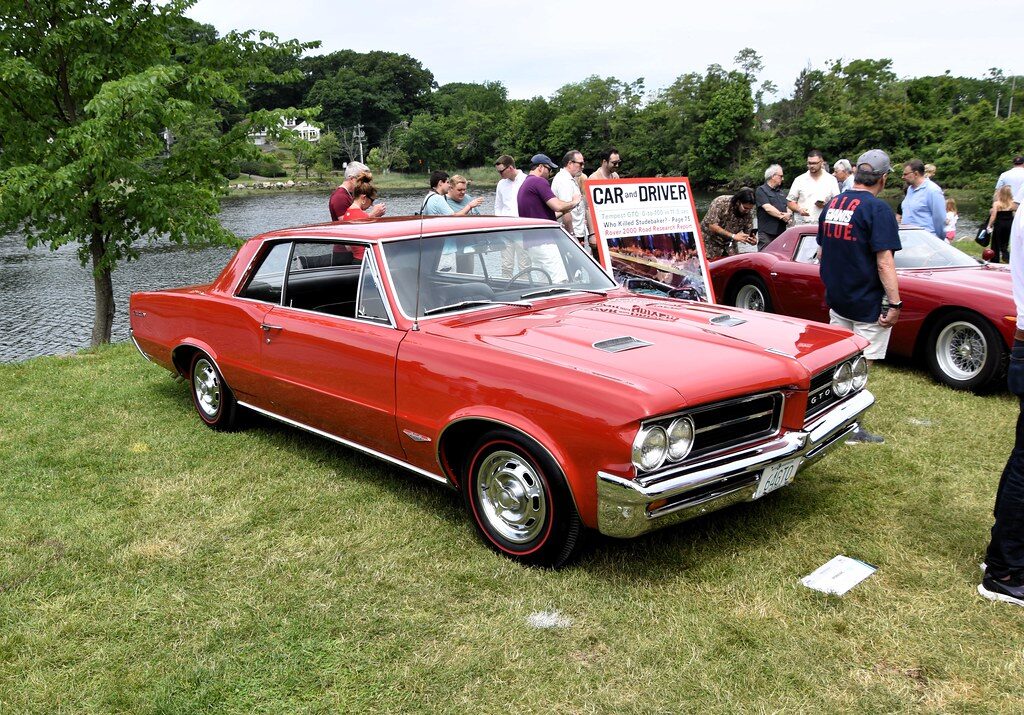
A 2012 restoration returned its paintwork to red in which color it originally sported this period correct, head turning color to compliment the other correct elements that made the GTO a recognizable feature of 60s roads. These include original badging, brightwork, and signature classic Pontiac elements.
Classic Styling Preserved Through Restoration:
- Original Pontiac design elements maintained
- Bold red finish restored carefully
- Traditional wheels preserve historic character
- Authentic details enhance collector appeal
- Minor imperfections reflect driving history
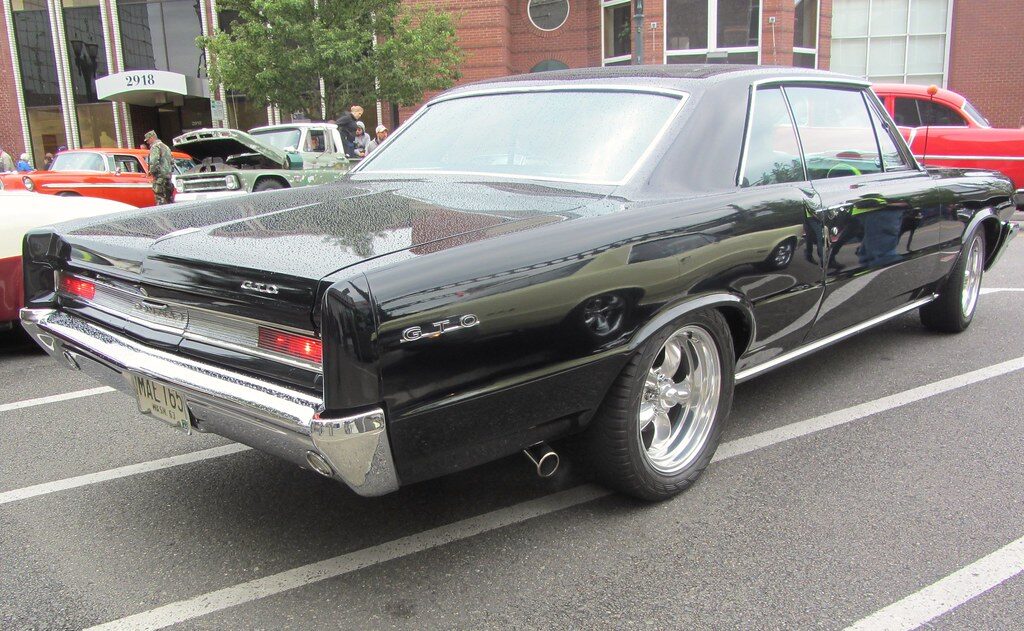
It’s rolling on painted to match 15-inch steel wheels with the original style Pontiac hubcaps so it keeps an appropriate appearance. The car wasn’t built to accommodate new style bolt-on parts but the idea behind the restored GTO was to preserve the look that had always been its trademark feature.
Although I see a few minor scrapes and chips here and there, these are what it is all about. These imperfections indicate to people that this is a car which has been driven and enjoyed, not kept away under a dust sheet to be a museum piece.
8. A Cabin Full of Classic Muscle Car Character
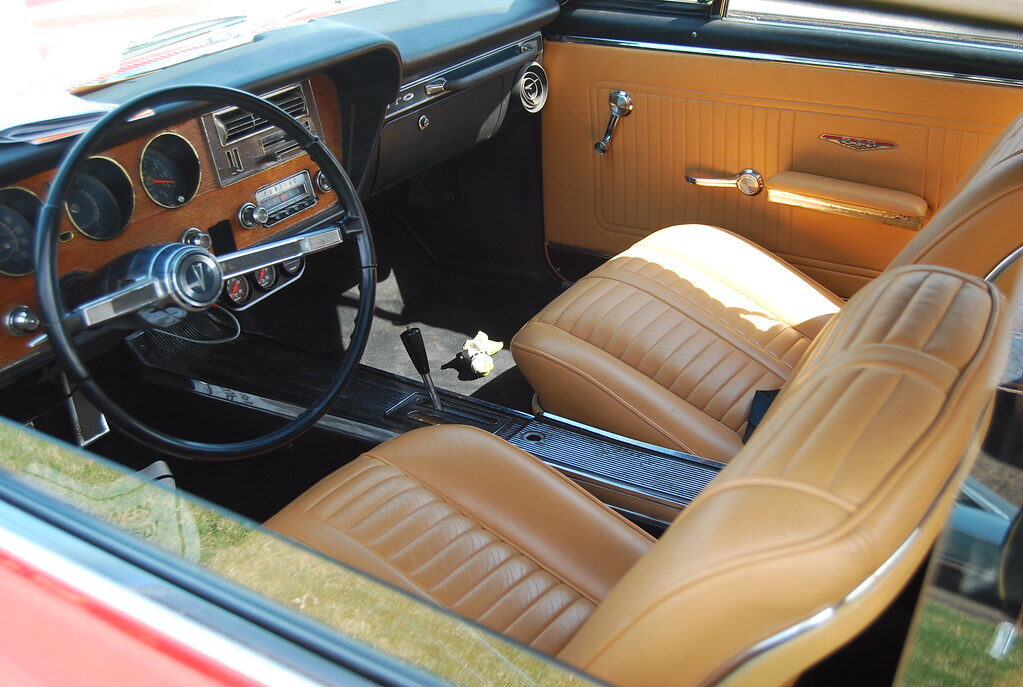
Step inside, though, and it’s all-too-easy to imagine the kind of experience that the original GTO had to offer of the roaring 1960s. The cabin is dressed out in black vinyl bucket seats with a coordinating centre console, and lap seatbelts give an immediate indication that, even if the drivetrain has been updated, the interior clearly remains in the era.
Timeless Interior Reflecting Muscle Heritage:
- Black vinyl seats preserve authenticity
- Classic console design enhances character
- Driver-focused cabin layout remains simple
- Original details maintain period appeal
- Interior reflects decades of memories
The interior is pure function, with nothing wasted. No confusing electronics clutter the space to take away from the experience of driving a purebred American V8. Inside, the theme of this classic, but driver-friendly car carries through with style and history in every seat, dash, and control surface. It’s the type of environment you want to be in, just like the vehicle it lives in, to reflect a life of good times.
9. The Car That Created the Muscle Car Movement
With just one go it redirected the whole automobile industry in as much as it proved people liked powerful engines stuck in small, good looking cars. Other American car companies got the message fast and emulated its recipe, making those cars the glory years for Americans muscle cars.
The Foundation of Modern Performance Cars:
- Powerful engines in smaller vehicles
- Inspired the muscle car movement
- Created a new performance formula
- Represented freedom and driving excitement
- Influenced future performance generations
It did more than just add power. The GTO meant freedom, excitement, and a completely new way to look at driving. The 389 stood for individuality and an attitude at the wheel that appealed to a generation seeking automobiles that weren’t boring white bread.
In this regard, some of the 168-cubic-inch V-8 (2.7 liters, anyone?) has the distinction of displacing nearly the smallest amount of metal for an internally combustible V-8 motor sold in this country, and yet it powered more performance to the people than anything else during the late ‘60s, early ‘70s. The GTO still influences today’s muscle machines, who still, to some extent, chase that same kind of excitement while adding power.
10. A New Owner Becomes Part of the Story
For 1964 the ultimate performance machine in America, nothing could match Pontiac’s latest arrival. Nothing, but history; that it’s a turning point in automotive history is certainly impressive, as was its power for it, meticulous state of preservation, is obviously remarkable.. And then there is the family aspect. And for that matter, you’ll realize the Pontiac GTO has to be.
Continuing a Legendary Automotive Legacy:
- Historic importance meets personal ownership
- Preserving a rare muscle car
- Carrying forward family memories
- Becoming part of automotive history
- Adding new chapters through driving
Anyone that buys this vehicle next would not only get a classic muscle car but would truly take on a bit of car history! This car began the entire “muscle car phenomenon” and is steeped with the memory of all the prior owners’ unforgettable adventures and accomplishments.
This GTO, with its booming V8, obscure factory options, and undeniable charisma, shows the true importance of a car with heart. This is a legend whose story only grows with each driven mile since its introduction in ’64.