Ford Honors Heritage With Open-Air Bronco Roadster Concept for 60th Anniversary
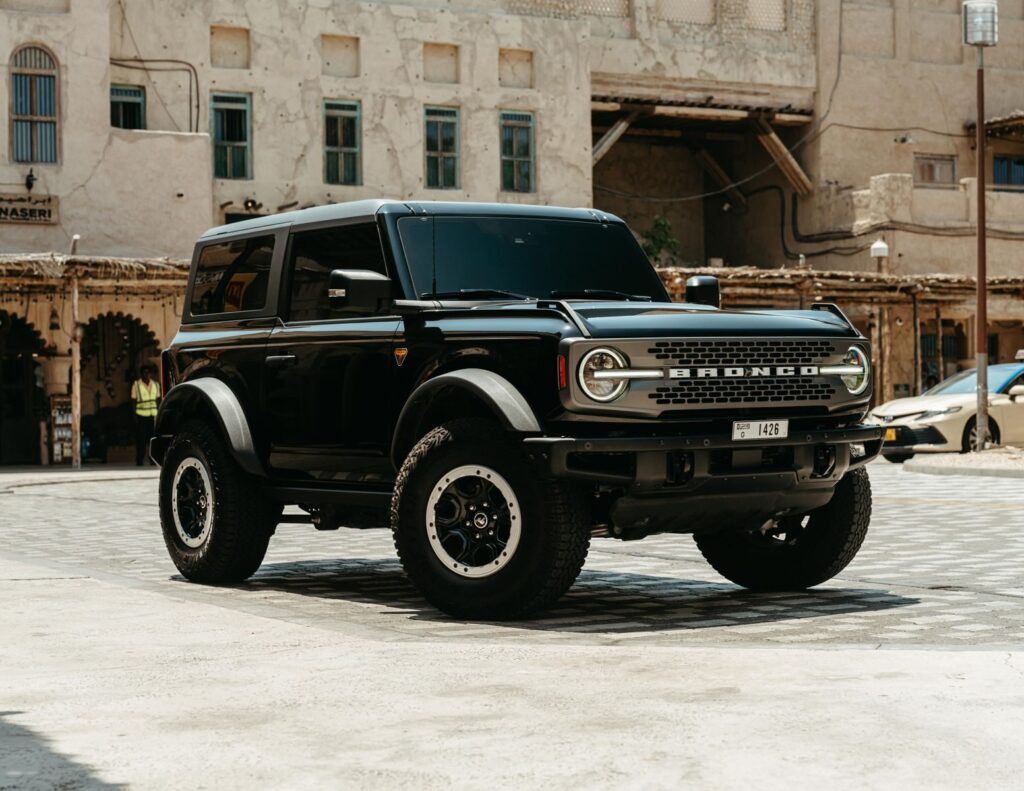
Ford is celebrating six decades of Bronco heritage with a one-of-a-kind Roadster Concept that brings the original model’s open-air spirit into the modern era. First introduced in 1965, the Bronco was presented as “the world’s first four-wheel-drive sports car,” reflecting Ford’s ambition to create an off-road vehicle inspired by the Mustang. Among its original body styles, the U13 Roadster stood out with its completely open design, featuring no roof and no conventional side doors.
For the Bronco’s 60th anniversary, Chief Designer Robert Gelardi and his team revisited this distinctive configuration to explore what made the original vehicle so special. Built on the current Bronco platform, the anniversary concept follows the philosophy of “Turn the 6G into an OG.” Its Wimbledon White paint, vintage-inspired tailgate, silver vinyl seats, and simplified construction pay tribute to the 1966 Roadster. Although Ford has no plans to put this concept into production, its design demonstrates how the Bronco’s original character can continue inspiring enthusiasts and potential future accessories.
1. Ford Celebrates 60 Years of Bronco Heritage With a Unique Roadster Concept
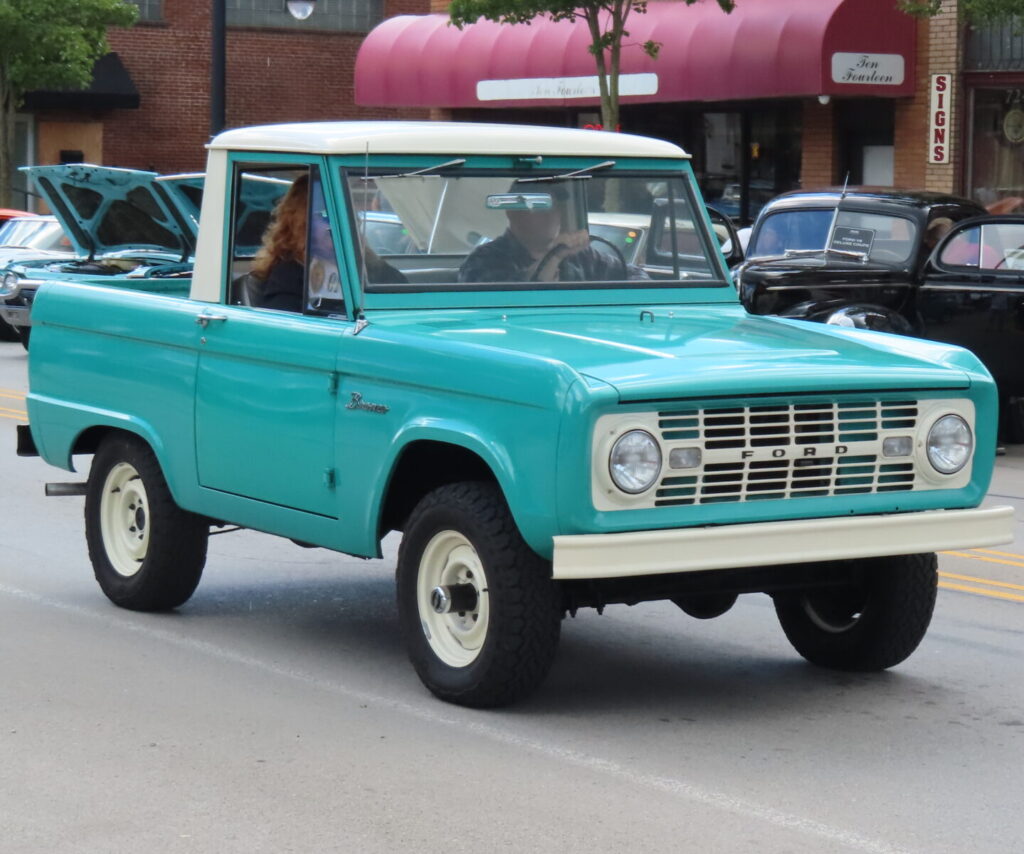
When Ford launched the Bronco in 1965, it described the new off-road vehicle as “the world’s first four-wheel-drive sports car,” as it was meant to be the Mustang of the great outdoors. Buyers could choose between three body styles, the Wanderer (the sensible station wagon), the Half-cab (a pickup truck in appearance) and the U13 Roadster, an open vehicle with no doors and no roof, perfect for going anywhere rough or rugged and for heading where just a simple, daring drive can get you there. Fittingly, Ford is today offering up an anniversary concept that takes the very rowdy Roadster and gives it a fitting throwback anniversary to a generation ago.
Original Bronco Heritage Highlights:
- Introduced in 1965
- Inspired by the original Mustang
- Three distinct body styles offered
- U13 Roadster featured open sides
- Celebrates 60 years of adventure
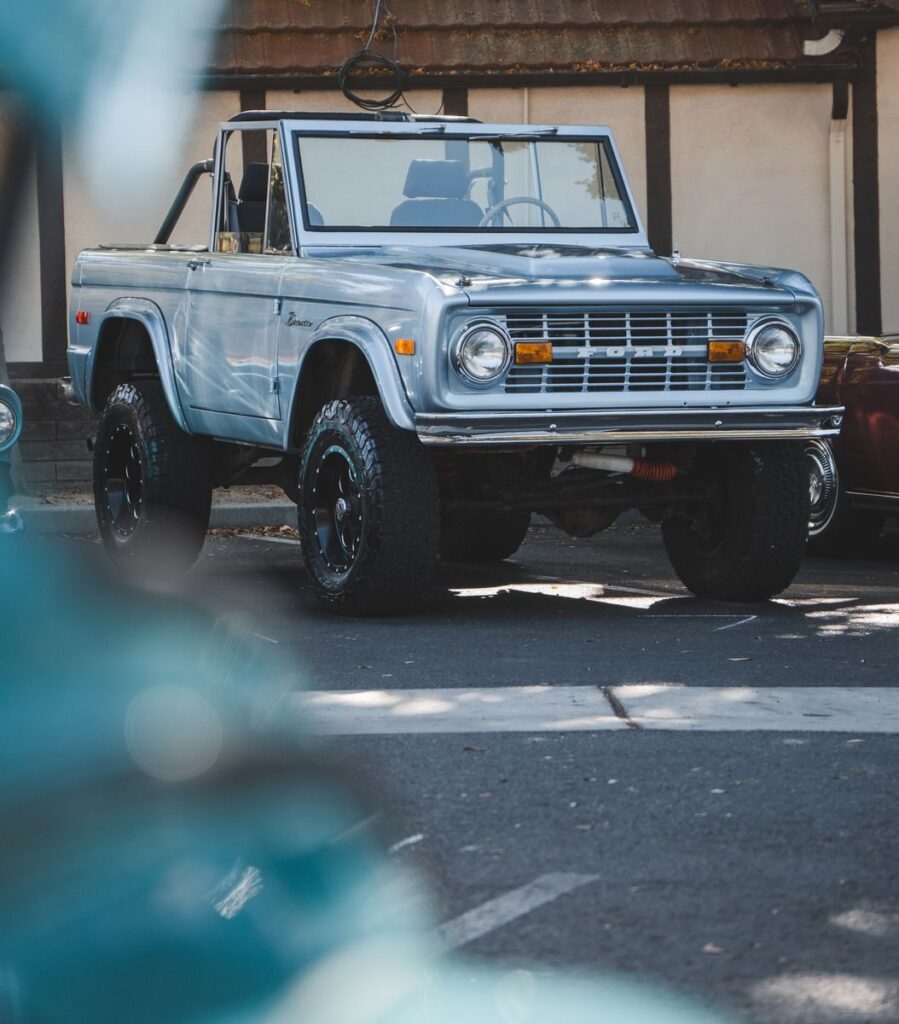
The original U13 Roadster stood out for its stripped-down design, featuring open doorways without traditional doors and no roof. This simple configuration created a direct connection with the outdoors and gave drivers a distinctive off-road experience. Chief Designer Robert Gelardi set out to help his team rediscover what was special about the original Bronco as part of the brand’s 60th anniversary celebration. The creators infused a spirit of the U13 Roadster into the modern Bronco, rather than getting the vintage Bronco. The design pays homage to 60 years of Bronco history, but gives a nod to the basics of rugged durability, simplicity and outdoor fun.
2. The Original 1966 U13 Roadster Inspired the Modern Concept
Modern Bronco Roadster Concept pays homage to first gen Bronco At the time when the modern 2021 Bronco was taking shape, a lot of work was going on behind the scenes with the team led by Chief Designer Robert Gelardi reimagining the history of Bronco. One of those enthusiasts had a pristine 1966 Roadster in Wimbledon White that the design team used as a design benchmark. That pristine rig really helped the designers with reference points on how the scale, profile and unstayed beauty of the original. As the brand prepped for 60 years of Bronco, the design team revisited those reference points and created a one-off Roadster Concept inspired by the current Bronco platform. This iteration of “Turning the 6G into an OG” was in essence transforming the modern sixth-gen Bronco into an homage to the OG first-gen edition.
The Concept’s Design Foundations:
- Inspired by a pristine 1966 Roadster
- Wimbledon White provided the reference
- Connected to 2021 Bronco development
- Built on the current Bronco platform
- Guided by “Turn the 6G into an OG”
It wasn’t just about creating a new look for a vehicle that will go into production; the vintage Roadster helped the design team at Ford take a step back to realize what made the original Bronco so special in the first place. Thanks to the inspiration of a real 1966 truck, the team honed in on its simple design, uncluttered build and relatively simple, unassuming character. Instead of piling on the techie accessories and over-engineering the vintage truck, Ford actually stripped away the modern frills for a more vintage-inspired experience. The iconic Wimbledon White truck laid the foundation for the look, complemented by the sixth-generation Bronco for a modern starting point. This low-tech lean approach proves timeless when it still hits all the right notes.
3. Wimbledon White Paint and Anniversary Details Define the Exterior
The appearance on the outside closely follows the first appearance on the 1966 reference car. Meanwhile the body was dressed in a fresh layer of Wimbledon White in order to restore the iconic look of old Roadster. Instead of being covered in Graphics or straddling in flamboyant lines it was kept low key with a colour scheme to highlight the shape and know-how. A striking unique touch was a strip of dark burgundy red colour with 60th logo. Another crucial feature was the complete removal of the door panels to honour the U13 derivatives and the open sides of the original. The side cut-out areas were finished with a slight slope of the bodywork, similar to the factory cut-outs of the 66 Roadster, thus preserving its open-air aspect and easy access.
Classic Exterior Design Highlights:
- Wimbledon White exterior paint finish
- Burgundy rear anniversary accent panel
- Official 60th anniversary logo displayed
- Modern doors removed completely
- Angled openings replicate original U13
U13 Roadster Concept: Clear homage to past the concept features exterior details that specifically reference the early Bronco, including a classic white paint scheme reminiscent of the original’s finish, offset by a boldly accented anniversary rear colour. By removing the doors to recreate the U13 Roadster’s open-sided body, finished panels further showcase the clean sheet metal body. Instead of over customizing, Ford utilizes a simple set of design details that set the visual tone for the concept. A colour theme with touches of retro Bronco design language and a nod to the past with open-sided carriage design are integrated into a modern Bronco platform that connects directly to its roots.
4. A Custom Drop-Down Tailgate Brings Back Classic Truck Styling
The biggest of several changes to the Bronco Roadster Concept is at the rear. Instead of the modern swing-out tailgate, the concept now features a traditional-looking drop-down truck tailgate, giving the vehicle more of a truck look and making its connection to the early utility vehicles even stronger. The sheet metal surrounding the tailgate has been custom-built, and a new panel with the original FORD stamped into it complements the new tailgate, which is topped off by a dropdown tailgate handle that resembles an original Ford part. Both the front and rear of the concept were fitted with simple steel bumpers, with no attempt to add design elements to them.
Rear-End Design and Hardware:
- Traditional drop-down tailgate replaces swing-out
- Custom sheet metal surrounds the tailgate
- Vintage “FORD” lettering stamped into metal
- Classic-style dropdown handle installed
- Simple steel bumpers front and rear
The custom drop-down tailgate provides the Bronco Roadster Concept with a unique rear-end appearance, while maintaining a nod to the utilitarian design of yesteryear’s pickups. Ford Custom sheet metal ensures a seamless transition from tailgate to surrounding body panels, and a stamped Ford script and shackle hook give the appearance of a period-correct design. Vintage design touches, like utilitarian steel bumpers, reinforce the back-to-the-basics focus of this concept. Instead of adding excessive technology, the concept team combined function and form, using elements that give an aged-in feel without adding frivolous features or equipment.
5. Fifteen52 Wheels Complete the Bronco’s Heritage-Inspired Exterior
Fifteen52 Analog wheels carried on the Roadster Concept’s vintage look, with custom, cleanly machined, matte-finished wheels that evoke the appearance of the production Bronco Heritage wheels. Like the Heritage wheels, the five-spoke analog design keeps visual noise to a minimum while still visually anchoring the vehicle to its silhouette. The wheels, finished in Matte Bronze, combine with Wimbledon White paint, the burgundy anniversary badge, drop-down tailgate, stamped Ford script, and simple steel bumpers to visually forge a connection between the modern Bronco and the original Bronco’s unapologetic truck personality.
Exterior Styling Details That Stand Out:
- Custom Fifteen52 Analog wheels installed
- Clean machined wheel finish
- Inspired by Bronco Heritage trim wheels
- Simple steel bumpers complement styling
- Classic details unify the exterior
Fifteen52 Analog wheels exemplify how refined detail can influence the complete image of the Bronco Roadster Concept. Drastically altered in the execution, even with the removal of the doors and custom tailgate, they still tie in with the broader Bronco family. Their Heritage style look aligns the concept with the current lineup, while also retaining its own unique spirit. The machined finish blends seamlessly with the nostalgic bodywork, providing a level of refinement while not overcomplicating the body. With the help of white paint, gold accents on the rear, and the familiar fold-down tailgate, the wheels serve as finishing pieces, bringing everything back to the core of Bronco DNA while on a modern stage.
6. A Utility-Focused Cargo Bed Replaces the Rear Seating Area
The Bronco Roadster Concept extends its open-air philosophy into the cabin, creating a seamless connection between the passenger compartment and rear cargo area. Ford removed the rear seats, transforming the space into a utility-focused truck bed inspired by early commercial vehicles. This change emphasizes practicality and simplicity rather than the conventional passenger-focused layout of a modern SUV. The redesigned cargo area also required a new spare-wheel arrangement. Since the traditional swing-out tailgate was replaced with a drop-down unit, the spare could no longer be mounted in its usual position. Instead, Ford placed a full-size matching spare inside the open cargo bed, maintaining functionality while supporting the concept’s rugged, pickup-inspired design.
Cargo Area and Utility Features:
- Rear seating structure removed completely
- Open cargo bed replaces rear seats
- Cabin flows into cargo area
- Full-size matching spare carried onboard
- Spare wheel positioned inside cargo bed
The redesigned rear cabin combines practicality with the Bronco Roadster Concept’s classic character. Removing the rear seats creates extra cargo space, while the open roof connects the passenger compartment with the rear bed. The drop-down tailgate enhances its pickup-inspired appearance, and the full-size spare wheel sits inside the cargo area. These modifications reflect the original Bronco’s utility-focused roots, prioritizing storage, simplicity, and open-air driving over additional passenger amenities. By combining traditional design elements with the modern Bronco platform, Ford has created a concept that celebrates the rugged spirit of early off-road vehicles while preserving its distinctive heritage.
7. Silver Vinyl Seats and White Dashboard Accents Recreate a Retro Cabin
The Bronco Roadster Concept’s interior follows the same stripped-down philosophy as its exterior, emphasizing simplicity and classic styling. Ford removed the standard front-seat headrests and reupholstered the seats in eye-catching silver vinyl, which also covers the sturdy grab handles for a consistent appearance. These changes reflect the straightforward character of the original 1966 Bronco rather than the comfort-focused design of modern SUVs. Ford also removed the standard carpeting, exposing the painted surfaces beneath the cabin floor. The dashboard plastics were painted crisp white to complement the exposed steel floors and interior panels, recreating the simple, functional atmosphere of the original truck while giving the anniversary concept a distinctive retro-inspired look.
Retro Interior Design Highlights:
- Silver vinyl front-seat upholstery
- Standard headrests removed from seats
- Matching silver vinyl grabs handles
- Modern interior carpeting removed completely
- White dashboard accents complement painted floors
The Bronco Roadster Concept’s interior reflects a back-to-basics philosophy, removing unnecessary elements to create a simpler driving experience. Silver vinyl seats and matching grab handles add a retro touch, while the absence of headrests reinforces its vintage-inspired appearance. Exposed floor surfaces and a white-painted dashboard connect the cabin to the original 1966 Bronco. Instead of hiding the structure beneath carpeting and modern finishes, Ford highlights painted metal and clean colours for a practical, utility-focused look. These details complement the roofless, doorless exterior, celebrating the original Bronco’s straightforward character and emphasizing driving enjoyment, simplicity, and a closer connection with the outdoors.
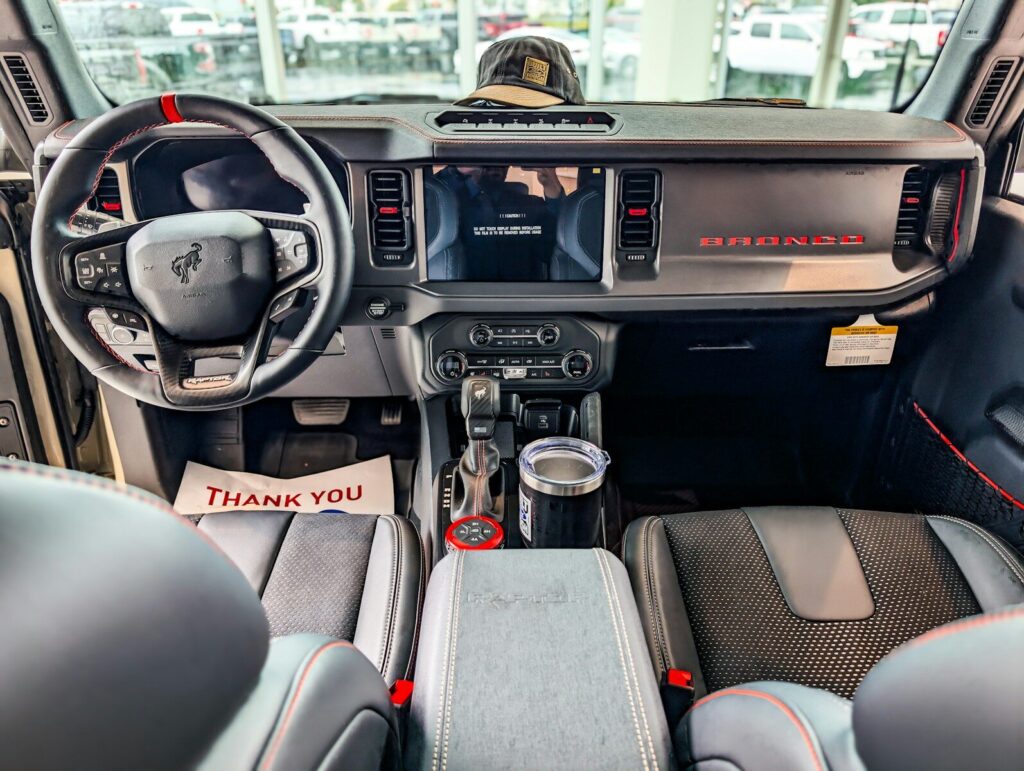
8. A Manual Transmission and Turbocharged Engine Preserve Driving Engagement
The Bronco Roadster Concept combines vintage-inspired styling with mechanical features designed to deliver an engaging driving experience. Its traditional manual transmission and three-pedal setup reflect the project’s back-to-basics philosophy, giving drivers greater control. The manual gearbox is paired exclusively with Ford’s turbocharged 2.3-liter EcoBoost four-cylinder engine. Although Ford has not confirmed whether the engine received any modifications for this special concept, the standard factory version produces 300 horsepower and 325 lb-ft of torque. This combination provides strong performance potential for rugged adventures while complementing the concept’s emphasis on simplicity, driver involvement, and the original Bronco’s adventurous spirit.
Mechanical Features and Performance:
- Traditional manual transmission fitted
- Three-pedal driving configuration retained
- Turbocharged 2.3-liter four-cylinder engine
- Standard output reaches 300 horsepower
- Torque reaches 325 pound-feet
The Bronco Roadster Concept pairs a manual transmission with a turbocharged four-cylinder engine to emphasize driver involvement and simplicity. The manual gearbox offers direct control over gear changes, reflecting the original Bronco’s straightforward character. Its standard 2.3-liter EcoBoost engine produces 300 horsepower and 325 lb-ft of torque, providing strong performance potential for off-road adventures. However, Ford has not confirmed whether the concept’s engine has been modified, so these figures apply to the standard production version. Together, the traditional transmission and familiar engine configuration complement the concept’s vintage styling, demonstrating how driving enjoyment can remain central without unnecessary mechanical complexity.
9. Why Ford Will Not Put the Bronco Roadster Concept Into Production
Despite the excitement surrounding the 60th anniversary concept, Ford has confirmed no plans to sell a production version of the Bronco Roadster. Modern safety requirements present a major obstacle because the open design removes the factory roll cage structure, front head restraints, and standard three-point seat belts. These changes create significant challenges for a road-legal production vehicle. Everyday practicality is another concern, as the lack of doors, side windows, and a solid roof leaves occupants and cargo exposed to rain, harsh weather, and potential theft. While the open-air design delivers a unique driving experience in favourable conditions, it lacks the protection and security most customers expect from a modern SUV.
Why Production Is Not Planned:
- Factory roll cage structure removed
- Front head restraints eliminated completely
- Basic lap belts replace three-point belts
- No roof or side windows
- Cargo remains exposed to weather
The Bronco Roadster Concept highlights the difference between a heritage-inspired design study and a production vehicle built for everyday use. Ford can explore unconventional styling through a one-off concept without meeting every requirement for mass production. However, a road-going version would need to address major safety concerns, including the removal of the factory roll cage, front head restraints, and standard three-point seat belts. The absence of doors, windows, and a solid roof also limits weather protection, security, and everyday practicality. While enthusiasts may appreciate its raw, open-air driving experience, most customers need greater comfort and protection in changing conditions. Consequently, the Roadster Concept remains a special anniversary project rather than a production model available through Ford dealerships.

10. The Bronco Roadster Concept Could Inspire Future Accessories and Designs
Although Ford has no plans to produce the complete Bronco Roadster Concept, its design could still inspire future accessories and special editions. Aftermarket door-frame covers could appeal to owners who regularly remove their factory doors and want a more refined, classic appearance. Ford could also explore retro-inspired interiors featuring silver vinyl upholstery and white dashboard accents. These relatively simple changes demonstrate how vintage styling can give a modern Bronco a distinctive character without requiring extensive modifications. By showcasing these features in a functional concept, Ford can explore enthusiast interest in traditional design elements. However, any future accessories or special editions remain possibilities rather than confirmed product plans.
Potential Ideas for Future Bronco Owners:
- Aftermarket door-frame covers for enthusiasts
- Vintage-themed interior design packages
- Silver vinyl upholstery options
- White-painted dashboard accents
- Heritage-inspired factory accessories
The Bronco Roadster Concept celebrates the original Bronco’s simplicity, adventure, and connection with nature. Its doorless, roofless design creates an open-air driving experience that brings occupants closer to their surroundings. Although the complete configuration may not be suitable for mass production, individual styling elements could inspire future Ford accessories or special editions. Silver upholstery, white dashboard accents, and distinctive door-frame accessories offer potential ways to combine classic styling with modern functionality. However, these possibilities remain unconfirmed and are not official Ford product plans. The concept also reflects Ford’s Built Wild philosophy, emphasizing freedom, exploration, and rugged adventure. Ultimately, it demonstrates how revisiting the original Bronco’s design can inspire fresh ideas while preserving its heritage.