




A Deep Dive into the Redesigned 2026 Toyota RAV4 Lineup and Features
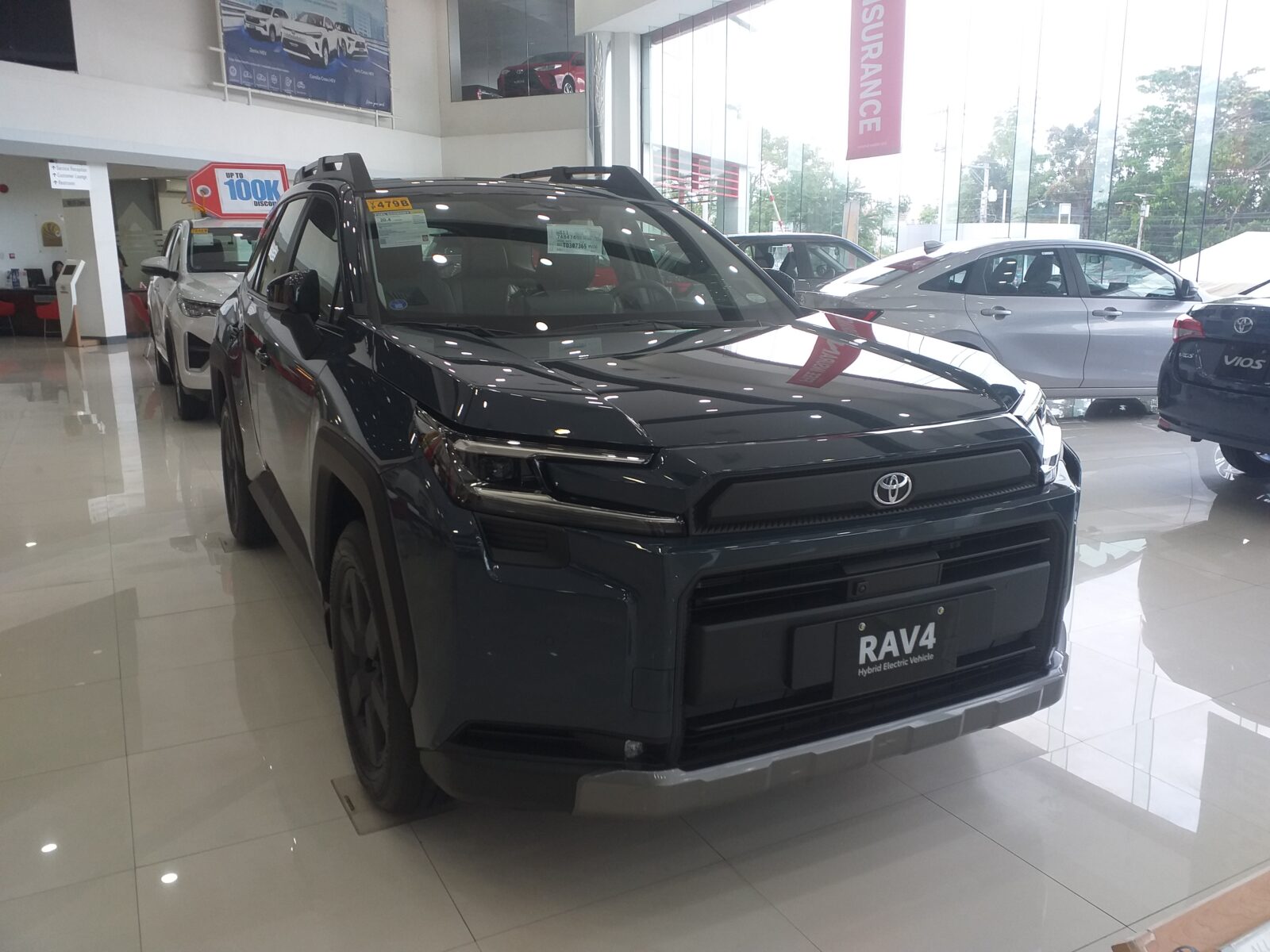
Toyota’s popular compact SUV is changing more than ever in the sixth-generation model, which is scheduled to launch for the 2026 model year. The latest RAV4 is significantly updated outside with new styling and proportions, but also inside where a tech-heavy new cabin complements a new powertrain lineup for North America that swings away from gas-only models and toward traditional hybrids and new plug-in hybrid variants. That means a new assortment of combos of electric miles, horsepower and fuel economy to appeal to a broad range of owners. Toyota will also introduce three new styling variants Core for the practical buyer, Sport for a sportier look, and Rugged, to position the new Woodland grade.
More than just its look, the 2026 RAV4 arrives with significant improvements in efficiency, charging, towing, and interior technology. The base hybrid makes 225 horsepower and front-wheel drive, 236 horsepower with available all-wheel drive, while the plug-in hybrid is rated at 320 horsepower, with an estimated 50 miles of electric range. When properly equipped, the 2026 RAV4 models can tow up to 3500 pounds (ranking varies by model). Inside, a 12.3-inch digital display and 10.5-inch touchscreen, wireless smartphone capabilities, and Toyota Safety Sense help bring the new RAV4 interior into the modern era. This article discusses the RAV4 styling, power and charging estimates, practicality, and interior features so you’ll understand what’s new for 2026.
1. The 2026 Toyota RAV4 Prepares for a Major Redesign
The RAV4 is the most popular vehicle in the U.S. beyond full-size pickup trucks. Thanks to its reputation as an efficient and dependable vehicle, the fifth-generation model has led the pack in sales since 2019, and now Toyota is moving forward with the sixth-generation 2026 RAV4. This new-generation model is a complete redesign that will go up against the growing number of compact crossover competitors and be available in the spring of 2025, following Toyota’s official announce in May 2025 that the redesigned RAV4 will be revealed that month. The RAV4 was expected to hit U.S. dealerships in the latter half of 2025 or in early 2026, with manufacturing likely continuing in the U.S.
RAV4’s Redesign and Market Position:
- Best-selling U.S. vehicle outside pickups
- Fifth generation led sales since 2019
- Sixth generation arrives for 2026
- Official reveal date May 20, 2025
- U.S. production expected to continue
The all-new RAV4 is a significant milestone in Toyota’s plan to preserve the model’s segment-defining position in the compact SUV space. Early production plans had been to import the vehicle, but it has been widely reported that production will likely stay at TMMK to avoid the extra import tariffs. RAV4s are expected to hit the dealer network sometime in the second half of 2025 to early 2026 early enough for owners to consider the next-generation model. For Toyota to succeed, it must preserve the compact SUV’s trade mark efficiency and reliability, and do just enough to stay competitive. The new-outside body, electrified powertrains, and tech-laden cabin all are key elements to achieving that goal.
2. Exterior Styling Introduces Toyota’s Latest Design Language
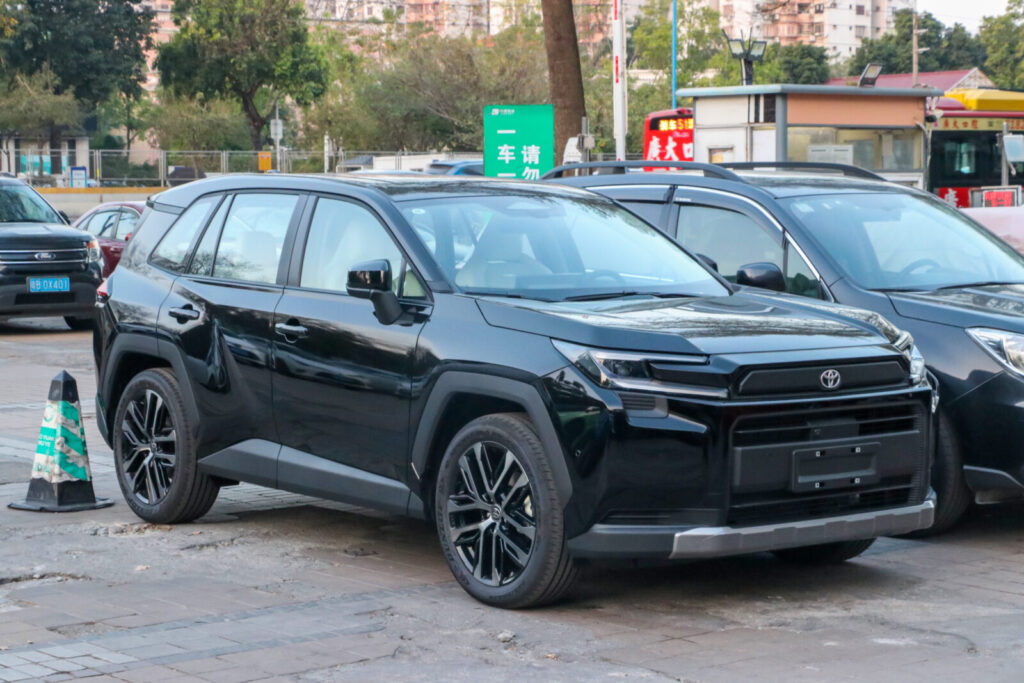
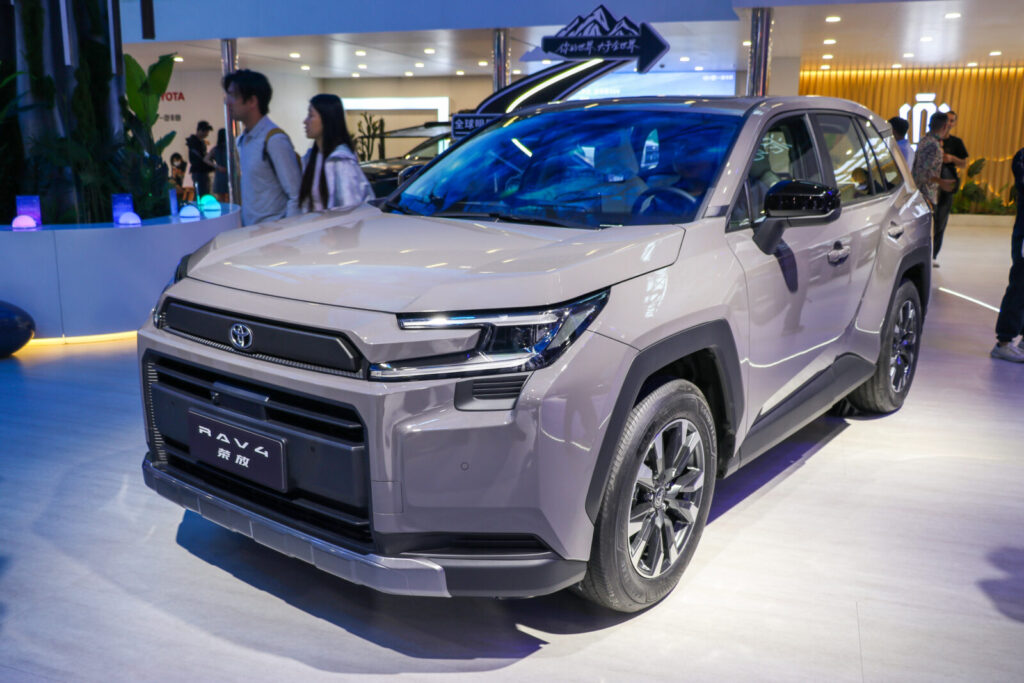
Toyota’s new aesthetic style makes its way to the 2026 RAV4 in the form of a split-headlight setup along with a new C-shaped lighting signature. Those same lighting treatments have been available on the latest Prius and Camry, but the RAV4 uses them on a more square and practical shape while the classier Toyota SUV is styled to look chunkier. A larger grille adds more visual weight to the front end while angled bodyline creases and beveled surface details give the SUV a more dramatic appearance. Segmented taillight graphics and tweaks to the rear bumper finish things off. Instead of having one sole styling theme, Toyota has created three sets of exterior design cues aimed at various trim levels and targeting different driving characteristics.
Key Exterior Design Elements:
- Signature split-headlight arrangement
- Distinctive C-shaped lighting elements
- Blocky, upright front grille
- Sharper creases across bodywork
- Segmented taillights and revised bumper
The new front and rear refreshings are really what changed the sixth-generation RAV4, and they give the crossover a tougher face while still offering all the correct short and tall measurements that a small crossover needs to be practical. The upright grille adds to this rugged aesthetic, but the sharp approach to surface and body lines adds some definition. The three-style approach also allowed Toyota to differentiate between the trims without losing the idea of a common design. Would-be owners can make the RAV4 look more car-like in everyday service, or adopt a more energetic profile with sharp outlines and aggressive detailing, or a more moto truck-inspired design. In this way, styling on the new RAV4 can be a more integral part of how owners experience the crossover.
3. Core and Sport Styles Give Buyers Different Personalities
Styling differences 2026 RAV4 is bringing styling disctintion to the exterior design for 2026. Instead of having the entire 2026 RAV4 lineup wearing the same appearance, Toyota will offer the model in separate styling variants. The Hybrid LE, XLE and Limited grades will be rolling on the Core style with clean appeal to fit normal lifestyle and daily driving use. The styling concept is straightforward and practical, perfect for everyday driving and family-oriented operation. The Hybrid SE and XSE grades will be wearing the more bold Sport style with attention-grabbing body accents and edgy appearance. Slight squared-off front inlets on these models hint at airflow and performance-inspired styling cues.
Distinct Styling Choices Across Trims:
- Core style suits everyday driving
- Hybrid LE receives Core styling
- XLE and Limited use Core
- Sport style adds aggressive accents
- SE and XSE receive Sport styling
The Core and Sport itineraries provide two distinctly different visual concepts within a common family of models. Those attracted to a more subdued, functional look may opt for the Core-style grades while more distinctive styling is available in the SE and XSE grades, which are geared more toward consumers seeking a Sport-oriented look. The more angular, squared-off front inlets and more aggressive lower-body lines distinguish the Sport treatment from the more subdued, cleaner design of the Core style models. With the new RAV4, Toyota can offer consumers more choices within a single vehicle family while avoiding the complexity of differentiating model grades solely through standard equipment.

4. The Rugged Woodland Grade Emphasizes Adventure
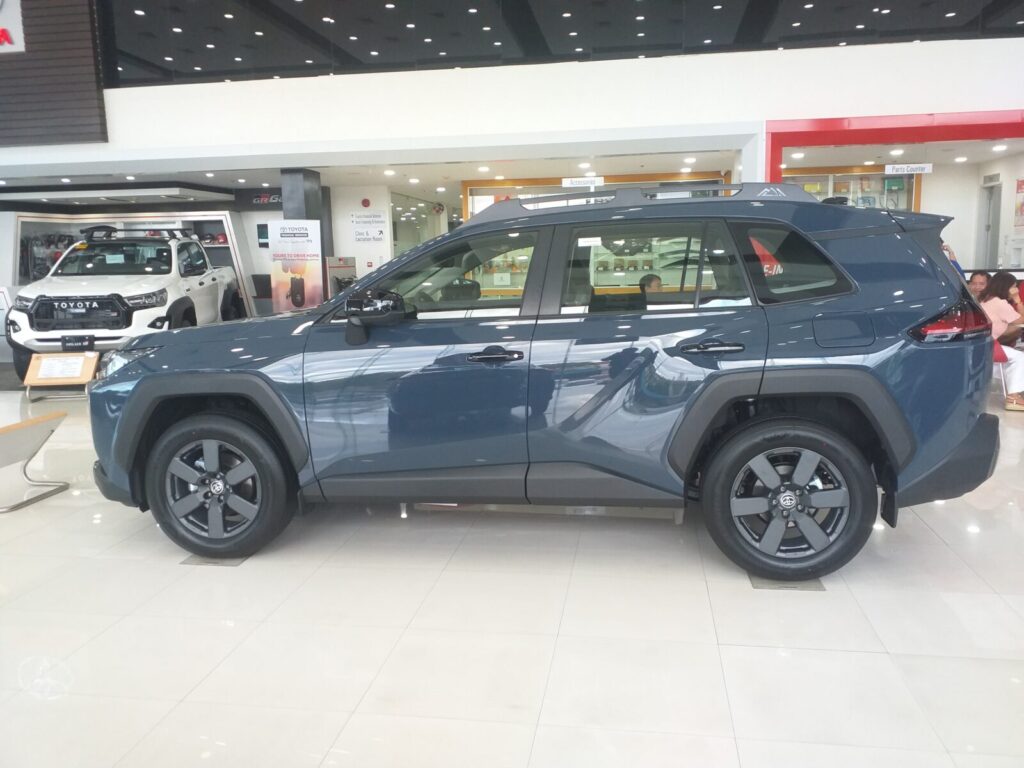
An available Toyota Rugged kit makes the HEV Woodland grade look like a crossover-cum-truck, with a front end inspired by Toyota’s current truck product line-up, which includes the Tacoma, Tundra and 4Runner. The corner-bevelled rectangular grille creates a very truck-like front end and is complemented by a stylistic skid-plate design framing out the lower body of the front air dam. The skid-plate approach continues at the rear, where it “kisses” the bottom of the bumper to the extent that it visually connects the two design elements. The styling cues set the grade apart from the Core and Sport grades, but link the grade visually to Toyota’s full-sized truck and SUV line-up.
Woodland’s Rugged Design Features:
- Exclusive Rugged styling treatment
- Rectangular grille with subtle bevels
- Tacoma-inspired front-end appearance
- Stylistic skid plate frames air dam
- Integrated rear bumper detailing
The Woodland grade is an attempt to appeal to prospective RAV4 buyers seeking more of an outdoor vibe. The ruggedness is evident in the grille treatment (rectangular and encased in beveled edges) that vaguely mirrors the heavy-duty truck family, with flourishes like the ledge-like detailing of the skid-plate accents on the front and rear to underscore the respective personality. The RAV4 effort is expressed in the front and back together and doesn’t lean on a decorative touch like the other design themes do. This is exclusive to the HEV Woodland grade, with many other design themes across the lineup. The Rugged styling theme also illustrates how the redesigned RAV4 can appeal to a variety of tastes, from more subdued everyday, to a bit more outwardly truck-like appearance.
5. The New GR Sport Trim Adds a Performance-Inspired Appearance
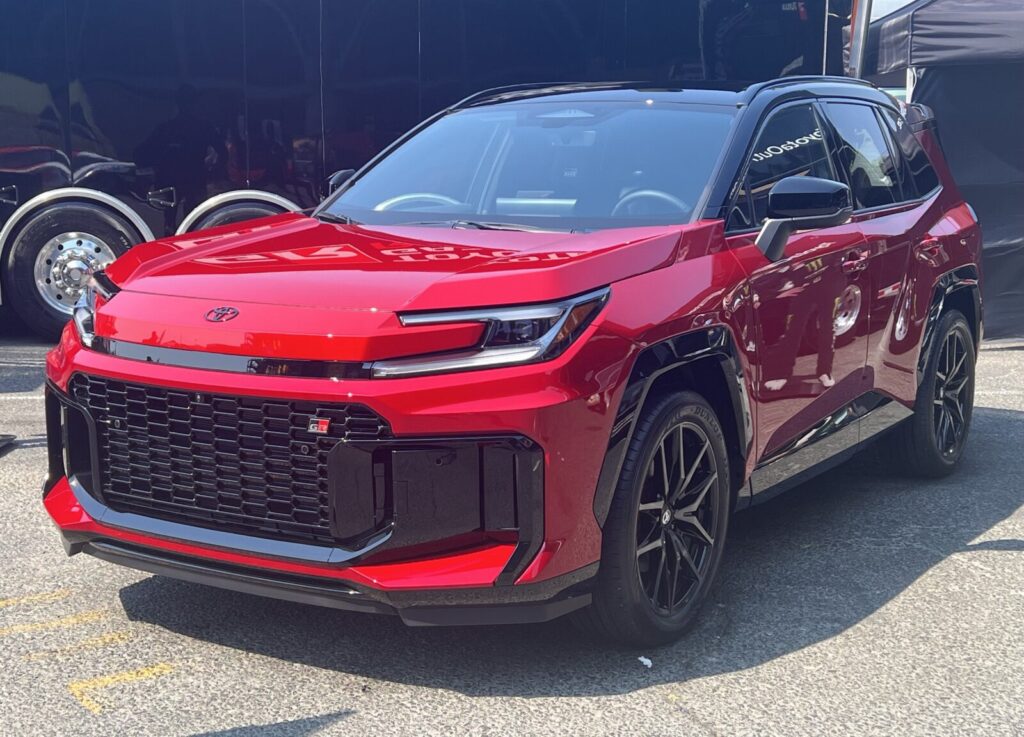
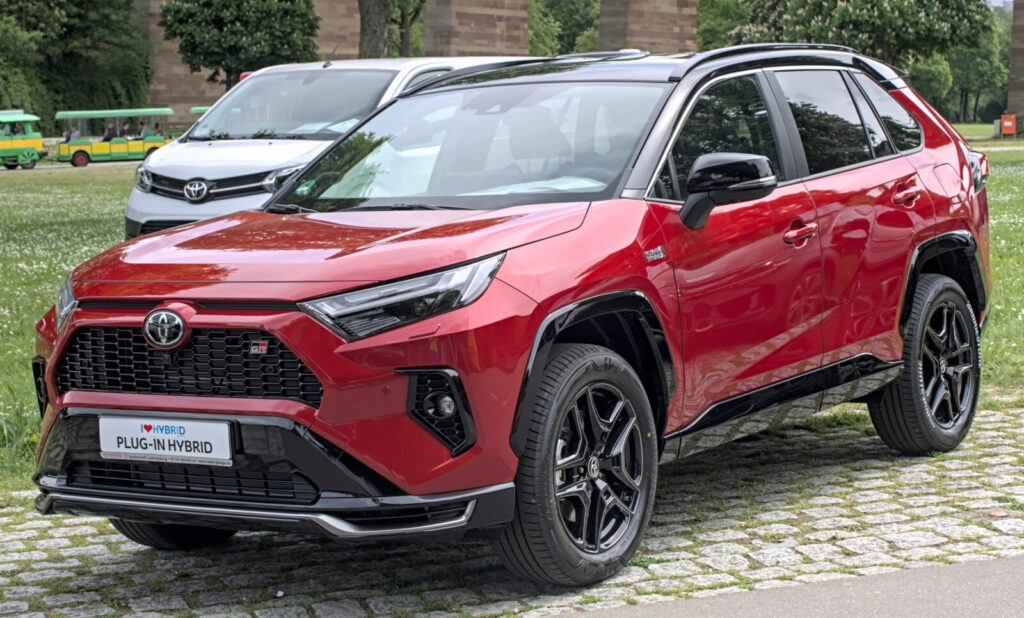
Toyota is also adding a new GR Sport grade to the redesigned RAV4’s two previous grades. Like the other grades, the GR Sport grade will be offered solely as a PHEV with a dedicated cosmetic treatment. According to spy shots and teaser videos, it will feature an enlarged grille up front and an integrated roof spoiler that juts out above the hatch, resulting in a more aggressive stance. The teaser videos also reveal a more upright stance, bigger rear quarter windows, and a flatter overall profile. These styling cues will likely translate to a cabin with increased headroom and cargo capacity, as well as improved visibility.
GR Sport’s Signature Design Details:
- Exclusive plug-in hybrid availability
- Enlarged front grille design
- Large spoiler above rear hatch
- More upright vehicle silhouette
- Larger rear quarter windows
The rugged appearance package on the RAV4 lineup brings a more aggressive look for those customers looking for a performance-inspired SUV. Now, the unmistakable look of the RAV4’s new grill and generous rear spoiler will be available to set the GR Sport package apart from the rest of the lineup. The show-stopping shape of the GR Sport’s pumped-up body lines can be distinguish by the appearance of the upright profile with larger rear quarter windows, a flatter roof shape and stronger stance all contributing to a more aggressive look and packaging advantages that include additional cabin headroom, improved outward visibility, and a larger cargo area. The unique packaging will be paired exclusively with the PHEV powertrain that further sets the GR Sport apart from the Core, Sport and Rugged appearance packages.
6. Electrification Becomes Standard Across the North American Lineup
In 2026, Toyota is doing away with the North American availability of traditional gas-only RAV4 models and will offer only a conventional hybrid electric vehicle (HEV) or a plug-in hybrid electric vehicle (PHEV) in their place. This represents a different core placement from the models of yesteryear as the gas-only cars now offered are removed and positioned as a step-up from the base hybrid models, as the old line-up of gas-only cars was the starting point for the model. The current 2025 Hybrid tops out at $33,695 with the redesigned model set to price higher given the vast exterior changes, redefinition of proportions, and new trim packages it will come with.
Changes to the RAV4 Powertrain Range:
- Gas-only trims removed in North America
- Traditional hybrid powertrain remains available
- Plug-in hybrid joins the lineup
- Previous Hybrid started at $33,695
- Redesigned starting price expected higher
Moving forward, the only powertrain offering will be electrified, which marks one of the biggest updates for the sixth-generation RAV4. Within North America, none of the Powertrain offerings will be the traditional 4-cyl gasoline-only version, and instead, the HEV and PHEV configurations will be the two core offerings. The traditional hybrid will serve as an electrified version that doesn’t require the plug-in charging infrastructure that’s built into the PHEV. The latter also offers a few more miles of electric-only range as well as more torque and output. However, Toyota’s estimated starting price over the 2025 Hybrid’s $33,695 cost means that interested buyers will need to weigh the finances of the updated model lineup.

7. Hybrid Powertrains Deliver More Horsepower
The all-new RAV4 Hybrid offers refreshed hybrid systems with varied power outputs depending on the drive mode. In the front-wheel-drive hybrid system, a 2.5-liter four-cylinder gasoline engine works alongside the hybrid system to generate a combined total of 225 horsepower. This is the first time Toyota has been able to offer the RAV4 hybrid with front-wheel drive and the power train is more powerful than the preceding gasoline powertrain. Customers who are more interested in all-wheel drive will benefit from a combined power output of 236 horsepower and the benefits of that drivetrain type. In this manner, Toyota offers some electrification benefits while also ensuring a degree of variety among hybrid models and wheel drives.
Hybrid Engine and Output Details:
- 2.5-liter four-cylinder gasoline engine
- Front-wheel-drive hybrid produces 225 horsepower
- First RAV4 hybrid with FWD
- All-wheel-drive hybrid delivers 236 horsepower
- AWD adds foul-weather traction
A fifth RAV4 hybrid variant targets entry-level buyers and offers similar output to the AWD hybrid at 225 hp, thanks to its 2.5-liter engine and hybrid components. Given this powertrain’s superior total output compared to the previous generation gasoline engine, the new hybrid variant delivers a far more significant improvement than simply providing an alternative drivetrain layout. AWD hybrid Toyota also boosts hybrid total output to 236 hp to enable confident grip during inclement conditions. These distinctions will give buyers a better idea of how much power they need while also highlighting how the new hybrid powertrain range is not solely a case of having bigger numbers different output levels are accompanied by different traction setups.
8. The Plug-In Hybrid Adds Power, Range, and Faster Charging
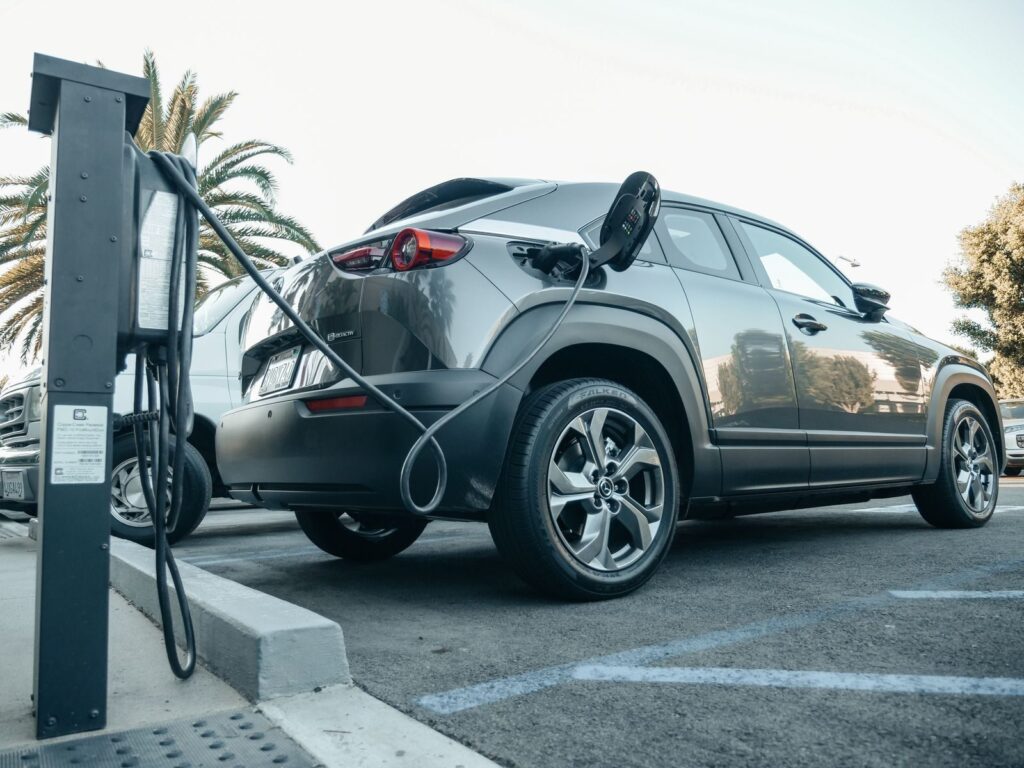
The 2026 RAV4 plug-in hybrid shares a twin-motor hybrid system with the 43 mpg RAV4 hybrid, except that the plug-in system also features a bigger 18-hp combined output (for a total of 320 hp) that results in more haste, less speed. An electric-only range of 50 miles per full battery charge will be offered, an increase over the previous RAV4 PHEV’s 42 miles. The plug-in’s 11-kW AC charging rates at home and work remain comparable to previous-generation hybrid models, while the available XSE and Woodland edition models feature a CCS port for DC fast charging and, Toyota says, can charge up to 80% in 30 minutes up from 42% for the previous PHEV version.
PHEV Power and Charging Specifications:
- 2.5-liter engine with two electric motors
- Combined output reaches 320 horsepower
- Electric-only range reaches 50 miles
- AC charging supports up to 11 kW
- DC charging reaches 10-80% in 30 minutes
The PHEV version offers an enhanced powertrain, both in terms of a higher power rating and a significantly longer claimed electric-only driving range. It produces 320 horsepower, up from the previous RAV4 plug-in hybrid, an increase of 18 horses, and 50 miles of EV range, versus 42. Level 2 AC charging up to 11 kW is available for home or workplace charging and some XSE and Woodland editions will include DC fast charging with a CCS connection. However, the published 30-minute charging time is to raise battery state of charge from 10 to 80%. All in all, if we remember that we are talking about a hybrid vehicle, charging capability will be a differentiator between the gas and plug-in hybrid versions of the all-new RAV4.

9. Towing Capability Preserves the RAV4’s Practical Utility
Despite the more souped-up powertrain options that the latest RAV4 offers, the SUV is still focused on being a practical vehicle, and that rings true when you look at towing capacities. A few RAV4 models are actually capable of towing up to 3,500 pounds, meaning owners can equip the various trims of the redesigned SUV and tow their gear for a weekend trip, all within the rated capacity of the vehicle. But, not every model can tow the full 3,500 pounds and the base LE with standard AWD has a lower capacity at 1,750 pounds, which is worth noting for anyone in the market for the new RAV4.
RAV4 Towing Capacity by Configuration:
- Maximum towing capacity reaches 3,500 pounds
- Proper equipment affects towing capability
- FWD models are capped at 1,750 pounds
- Base LE AWD also reaches 1,750 pounds
- Trim selection affects towing limits
Toyota RAV4 towing ratings show a traditional offering of utilitarian utility in a redesigned model even as the automaker phase out gas-only powertrains from its North American lineup. With up to 3,500 pounds of towing capacity when properly equipped, the low 1,750 pounds of the front-wheel-drive versions and entry-level LE AWD trim is a crucial differentiator. Those who plan to do more than a gentle tow will need to determine the configuration in which they are interested before committing to a new RAV4. The gap in these towing numbers reminds that even trim and powertrain selection also have practical implications. By considering that feature in the overall comparison, future RAV4 owners will be better equipped to see whether a hybrid or plug-in hybrid is right for their needs.
10. The Redesigned Cabin Combines Digital Technology and Safety
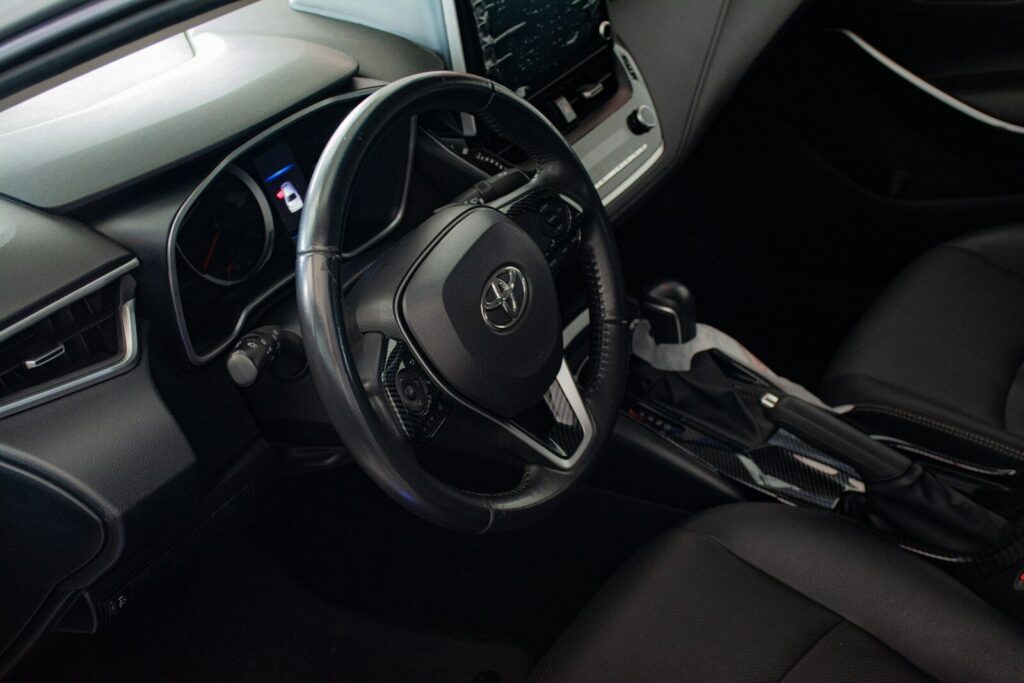
The 2026 RAV4 comes with a heavily revised interior that shares the theme of its exterior design, with the new SUV offering beveled and roughened lines in the cabin as well. The new RAV4 has sharp points on the center console and steering wheel and replaces the hulking shift column with a toggle style shifter to free up console space. Physical climate controls are anchored in the infotainment screen at the bottom of the dashboard. Toyota’s new Arene software platform handles infotainment and safety features, with a 12.3-inch digital instrument cluster and 10.5-inch infotainment screen standard and a 12.9-inch display optional. A head-up display is optional on Limited and XSE models. Wireless Apple Car Play and Android Auto, and software updates over-the-air are included.
Interior Technology and Safety Features:
- Standard 12.3-inch digital instrument panel
- Standard 10.5-inch central touchscreen
- Available 12.9-inch infotainment display
- Wireless Apple CarPlay and Android Auto
- Toyota Safety Sense standard across lineup
Connectivity and entertainment options are carried through the refreshed range of RAV4s. The standard premium audio system features six speakers, while a nine-speaker JBL system is available. The all-new-generation Toyota Safety Sense standard equipment that includes Pre-Collision System with Pedestrian Detection, Lane Tracing Assist, Dynamic Radar Cruise Control and Road Sign Assist. The new Arene software platform with OTA (over-the-air) updates ensures that the entire infotainment and safety-related software is continually getting better during ownership. The head-up display is available on Limited and XSE grade, as the larger 12.9-inch touchscreen provides an augmented display space combined with the new selector, enhanced console and standard wireless smartphone charging, give the all-new RAV4 a tech-savvy interior.