





Audi Halts US Vehicle Exports, Citing New 25% Import Tariff

For a long time the automobile world has relied on a connected global economy in which manufacturers produce cars in one nation, but market them worldwide. Brands used this method for many decades to lower production costs, increase efficiency and deliver more variety of car choices to the market place. However, in more recent years international trade disputes have thrown a wrench into this efficient practice throwing uncertainty onto manufactures, suppliers, dealers and customers.
One major indicator of this global economy shift has been the recent suspension of vehicle deliveries to the U.S. By luxury car maker Audi. It was after the U.S. Imposed a new 25% tax on imported vehicles and automobile parts that the German auto giant cut off deliveries. The U.S. Policy instantly altered how importing cars would work and caused manufactures to look at what they were doing again.
The effects go much farther than the business of major corporations. Stores, workers, suppliers and customers all feel the repercussions when inventory becomes an issue and the price of goods for consumers becomes a question mark. Audi’s actions is an excellent indicator of how trade wars and policies affect everyday businesses and consumers.

1. Audi Suspends U.S. Vehicle Deliveries
Audi has suspended vehicle deliveries to the USA, due to the implementation of new import taxes on imported cars and parts. It is one of the biggest responses from a large international car manufacturer to the new trade atmosphere.
Tariff Pressure Disrupts Vehicle Imports:
- U.S. deliveries temporarily suspended
- New import tariffs affecting operations
- Vehicles held at American ports
- Dealers facing inventory uncertainty
- Strategy review underway
There are also reports of cars that arrived after the tariff implementation being held at the docks and not shipped out to the dealer network. Furthermore, retailers have been told not to accept new imports until the company can assess the impact of the new trade rules and outline a new business plan. This halt is also creating some anxiety within the Audi dealer network throughout the United States, as it needs a steady stream of new vehicles to satisfy customer orders. As the inventory levels dwindle, dealers are sure to begin facing a shortage issue as well as an issue with what the manufacturer will plan in the future regarding the pricing of these automobiles.

2. Existing Inventory Provides Temporary Relief
Even though no more vehicles are being imported, Audi still has quite a few cars currently in the U.S. At around 37,000 cars, they had been delivered to the U.S. Prior to the tariff cut-off and therefore had none of the extra tariff tacked onto them; they will still be sold through the dealer network.
Current Stock Helps Delay Immediate Impact:
- Approximately 37,000 vehicles in inventory
- Stock arrived before tariff implementation
- Dealers continue normal sales operations
- Estimated supply for roughly two months
- Temporary protection against shortages
In the short term, it is estimated that the company’s current stock will be able to satisfy market demand for approximately two months. The dealerships are still capable of selling the available stock while awaiting an outcome of trade policy, price changes, and plans for future imports. However, the current stock is a temporary measure as it does not address the issues arising from suspending imports for an extended time. As stocks fall, dealerships may find it increasingly difficult to keep certain models in stock as a long term tariff solution is still pending.
3. Audi’s Manufacturing Strategy Creates Challenges
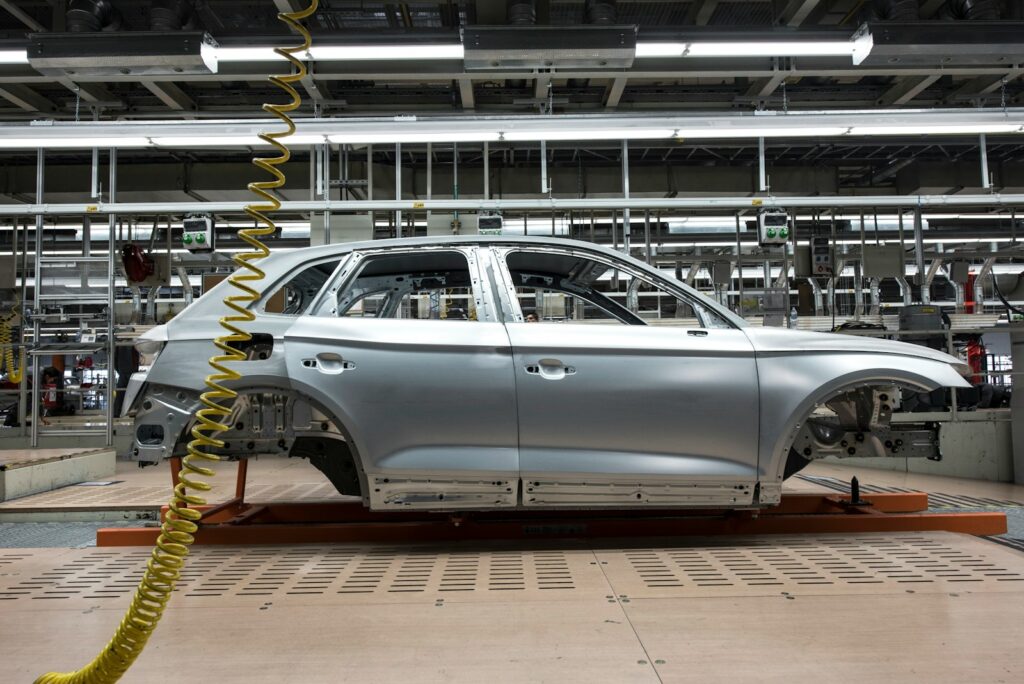
One primary reason why Audi will likely be more affected by the new tariffs, is Audi’s manufacturing footprint. Audi is unlike some of its major luxury competitors in that it does not currently manufacture vehicles domestically in the US and relies almost entirely on imports for its U.S. Customer base.
Import Dependence Increases Tariff Exposure:
- No U.S. vehicle production facility
- Heavy reliance on imported models
- Greater tariff vulnerability
- Competitors benefit from local manufacturing
- Increased pressure on pricing and supply
Many companies, such as BMW and Mercedes-Benz, have substantial manufacturing bases in the US that they can use to build various parts of their product lines in the United States. This not only limits the ability for import tariffs to directly affect a given portion of the model lines, but will also keep supply issues under control. Since virtually all of the vehicles Audi imports to the United States are to be imported after being manufactured outside the U.S., it will be a much more difficult situation as essentially every car that it imports will face the new tariff rules, making its situation much more complicated than competitors with their own production facilities.

4. The Importance of the Audi Q5
The Audi Q5 is Audi’s best selling vehicle in the United States and is one of Audi’s key business drivers in North America. The sales of the Audi Q5 is a key performance indicator across sales volumes, customer acquisition and dealers profits.
Audi’s Key U.S. Model Faces Tariff Pressure:
- Best-selling Audi model in America
- Produced in San José Chiapa, Mexico
- Nearly 57,000 U.S. sales last year
- Directly affected by import tariffs
- Critical to Audi’s U.S. market performance
The Q5 is produced in Audi’s manufacturing plant in Mexico as opposed to in the US. Therefore, it falls under the new tariff schedule, giving one of the company’s biggest-selling vehicles even more trouble.
This problem doesn’t just concern the Q5. The rest of Audi’s vehicles sold in the US are also imported from manufacturing plants in Germany, Hungary and Slovakia. A majority of the company’s vehicles are therefore placed under the new tariff schedule, adding to the complexity of planning inventories, setting prices, and operating in North America long term.

5. Rising Costs and Financial Pressure
The proposed tariff changes pose substantial financial difficulties for Audi through greatly increased import costs to the United States. The new tariff costs add up atop the current import and logistics costs at every step throughout their North American operations.
Balancing Profitability and Market Competitiveness:
- Higher vehicle import costs
- Increased pressure on profit margins
- Potential future price increases
- Competitive challenges in the luxury market
- Difficult strategic trade-offs ahead
Now, Audi faces the tough decision on how to deal with this extra burden. Either absorb the tariff cost and take a decrease in profitability and thus a further financial strain or transfer it to the customer by raising prices which in turn makes their vehicles less competitive.
Striking a balance between the profitability and the price of the vehicle will be key to this decision and all options carry consequences with either less profits, higher prices for consumers, and/or lower sales volume. Ultimately, this may have consequences on how well Audi holds up in the U.S. And how their dealerships and sales volume performs.

6. Tariffs on Auto Parts Expand the Problem
The repercussions of the new trade measures are not limited to imported automobiles. Duties on numerous vehicle components and parts have also been implemented, raising new problems for producers, suppliers and consumers across the auto industry.
Supply Chain Costs Reach Beyond Vehicle Imports:
- Tariffs affect automotive components
- Global supply chains face higher costs
- Increased manufacturing expenses possible
- Potential rise in repair and maintenance costs
- Industry-wide impact beyond luxury brands
Present day vehicle manufacturers rely on a global supply chain for important componentry. Electronics, sensors, engines, transmissions and the myriad of sensors and driver-assistance systems used today are often sourced from a number of foreign countries even in countries with domestic assembly. This can be a situation where manufacturing costs can rise over the industry when import costs are increased. Consumers will, over a period of time see this reflected in the rise in the price of vehicles, rising maintenance and repair costs as well as an extended time frame to obtain certain replacement parts. The overall impact of the tariffs are not simply at the luxury import vehicle level.

7. Other Automakers Are Taking Similar Steps
Audi isn’t the only manufacturer responding to the new tariff regime. Other foreign makers, like Jaguar Land Rover have been taking their own precautionary steps while assessing the affects that tariffs might have on production and pricing.
Industry-Wide Response to Trade Uncertainty:
- Multiple automakers reassessing U.S. operations
- Temporary export pauses announced
- Strategic planning underway across the industry
- Import-dependent brands face greater exposure
- Supply chain models under review
In order to allow itself time to analyze how best to move forward, Jaguar Land Rover stated that it would halt shipments to the U.S. On Monday. Jaguar called the halt a temporary measure while it analyzes strategy and plans for the future.
This example is only one in a series, indicating that this type of change affects several companies simultaneously rather than just one at a time. Several manufacturers have recently taken the step of looking at their imports, their supply chains, their manufacturing practices and long-held business models in an effort to revise how to best adapt their company for business in one of the world’s largest auto markets.

8. Dealerships Face Growing Uncertainty
These effects of Audi’s stoppage of shipments are currently most heavily impacting car dealers across America. Dealers, which are used to seeing the constant arrival of new inventory, need to ready themselves for the possibility of diminished car inventory if the shipment halt is a long one.
Inventory Concerns Create Retail Challenges:
- Potential shortages of key Audi models
- Dealers managing limited inventory levels
- Customer expectations becoming harder to meet
- Sales planning faces increased uncertainty
- Business operations dependent on future supply
With import freezes in effect, it will become harder for customers to buy popular models such as the Audi Q3, Audi Q5, Audi A6, and Audi Q4 e-tron. Dealerships will be looking to manage customer expectations as much as they can and make use of their current vehicle inventory.
Sales, and therefore dealership success will suffer significantly, and as a result long-term business plans, and levels of customer satisfaction, could be heavily impacted. Retailers will spend the coming months trying to balance current stock levels with customer orders, whilst hoping to hear more about future import plans and stock availability for Audi.
9. Effects on Service, Financing, and Used Vehicles
The Audi import pause affects more than just new vehicle sales. Services operations, finance programs, and the used market can all be subject to alterations as the implications of tariffs and the supply squeeze unfold.
Broader Impact Across the Ownership Experience:
- Service departments remain operational
- Replacement parts could become more expensive
- Financing incentives may become less aggressive
- Leasing programs could face adjustments
- Used vehicle demand may increase
For the time being, dealership service departments are carrying on as usual. However, should existing automotive parts tariffs continue, or even be expanded, prices may increase for genuine Audi replacement parts, accessories and maintenance. Owners (present and future) could see higher overall owning and repair costs.
Loan and lease terms could change as a result of decreased inventory. As the market is further restricted, the necessity for manufacturers and dealers to offer large incentives and sales promotions decreases. The used car market, on the other hand, might do even better. As the supply of new models becomes more limited, there may be an even higher demand for certified pre-owned Audis and, subsequently, a spike in the price for used vehicles throughout the luxury segment.

10. Audi’s Long-Term Options and Industry Outlook
Given the fluid nature of the tariff environment, Audi and its parent, the Volkswagen Group, have the ability to analyze the means and measures for reducing future import cost exposure and supply disruption.
Potential Paths Forward for Audi:
- Domestic production under consideration
- Existing U.S. manufacturing resources available
- Significant investment would be required
- Long implementation timeline
- Focus on long-term market stability
One solution is to use the current US manufacturing capabilities of the Volkswagen Group to build certain Audi models here, cutting the number of imports and reducing susceptibility to future trade actions. Implementing this would, however, be expensive and highly complex to plan and execute; even updating the current factories, or building new ones for a new production plan would take years. The impact of the long-term effect of the tariffs is still being discussed in the automotive world as a whole; European leaders, trade groups and industries argue that the tariffs raise costs for manufacturers and consumers, and can disrupt already established supply chains, though some see it as a method of incentivizing US production and investment.