
New Federal Bill Could Outlaw Polaris Slingshot and Autocycles
The world of the three-wheeled autocycle has carved its own space into the automotive landscape in America. These vehicles merge the fun of riding a motorcycle with many of the same controls, conveniences, and comfort you’d find in a standard car. If you drive vehicles like the Vanderhall Carmel, Polaris Slingshot or a Morgan 3-Wheeler, it’s because you crave a roadster feel, but want to steer clear of a traditional two-wheeled motorcycle form factor. Thanks to their distinctive styling and fun performance characteristics, and the specific classification under the law, this niche market is still growing.
However, that particular niche in the market is currently at risk of being dramatically altered. A new piece of legislation in Congress, U.S. House Resolution 3385 (H.R. 3385), aims to fundamentally redefine what it means to own a motorcycle. If enacted, H.R. 3385 would have significant implications for modern autocycle manufacturers, dealers, and tens of thousands of owners, despite its seeming just to modernize legal text.
The legislation could eliminate a classification that makes those vehicles legal in the way they are designed. If it’s adopted, the automotive industry groups contend it would bring uncertainty to owners of the machines, disrupt American manufacturing and reshape an entire part of the powersports industry. More has been drawn out of the debate than the definition of a vehicle, posing bigger issues about how government and American industries foster or restrict specialized transportation and innovation.
1. The Rise of the Modern Autocycle
There’s a “middle ground” being carved out on the automotive scene with modern autocycles, offering a kind of thrill that’s somewhere between a car and a motorcycle. The vehicle’s three wheels and lighter chassis provide a bit of a open-air joy that you just don’t get in a more enclosed vehicle. On the flipside, with a steering wheel, foot pedals, and a two-seater interior in an abreast fashion, it’s not too dissimilar from what people drive today.
A Unique Blend of Car and Motorcycle:
- Three-wheel vehicle design
- Open-air driving experience
- Automotive-style controls
- Lightweight performance
- Growing enthusiast community
Such models as the Polaris Slingshot or Vanderhall Carmel can be considered founders of the current autocycle niche as they are sporty yet are neither fully sports cars nor bikes. Such a combo attracts those looking for the ride that is fun and stylish while at the same time isn’t part of either already existing market segment.
The surge of interest in autocycles have been a boon to American manufacturing and innovation. Manufacturers in this area have built-out engineering talent, manufacturing plants, dealerships, and workforce to keep up with demand and will continue doing so. Because of the interest generated among the car and motorcycle buying public, autocycles are now more mainstream in the marketplace and have a devoted following of riders who value their unique combination of performance, usability and pure fun.

2. Why the Current Motorcycle Definition Matters
To some extent, the flourishing business of the present-day autocycle industry is dependent upon the federal motorcycle standard in use today. As it now stands, the regulation describes a motorcycle as a motor vehicle having an engine as its source of power; a seat or saddle; and not more than three wheels touching the ground.
Regulations That Support Innovation:
- Broad motorcycle classification
- Three-wheel vehicle flexibility
- Encourages innovative designs
- Supports industry investment
- Expands consumer choice
The result of this regulatory setup has allowed companies to create vehicles with a standard of controls, tandem seating, and the 3-wheel layout of a motorcycle. Companies can build this niche under motorcycle regulations and deliver a vehicle with the ride comfort of a car, but the top-open thrills of a motorcycle.
In addition, the current regulations has stimulated the market’s growth, investment and engineering. Rather than mandating that manufacturers satisfy the large body of regulations geared toward a four-wheeled passenger vehicle, our current laws allow for the design of specialized products that have enabled us to continue growing this market while offering more to our enthusiasts.

3. How H.R. 3385 Would Change the Rules
HR 3385 would make changes to the current federal definition of what qualifies as a motorcycle, establishing stricter design standards. The proposed legislation by Representative Derrick Van Orden and its several co-sponsors would swap the broad definition for new criteria that will be related to where the rider sits, how the motorcycle steers and how the vehicle is operated. That’s important for a segment of the autocycle industry that has exploded.
Proposed Changes to Motorcycle Classification:
- Astride seating requirement
- Mandatory handlebar steering
- Traditional motorcycle controls
- Narrower legal definition
- Major impact on autocycles
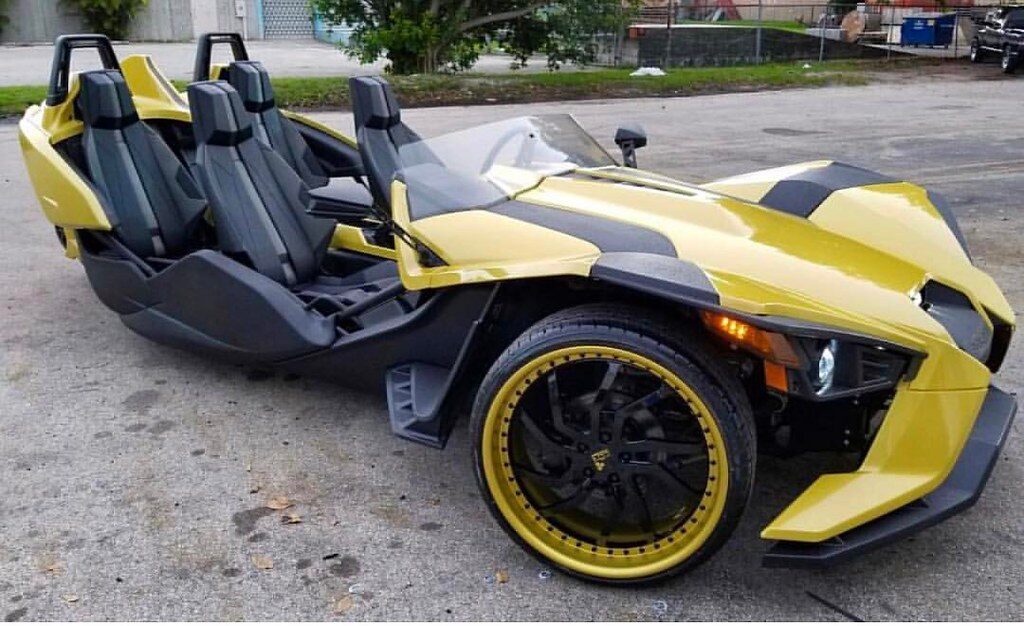
According to the legislation, a motorcycle must have a seat or saddle on which the operator is positioned astride the vehicle; handlebar steering; and traditional motorcycle throttle and braking control, not automotive-like steering wheels and foot pedals. Such measures stand in direct opposition to the engineering behind most of today’s autocycles, which utilize side-by-side seating, steering wheels, and automotive driving controls.
The legislation, critics claim, would go much further than clarifying current regulations. They believe the bill would rewrite the definition of a motorcycle to include almost none of the autocycles currently offered on the US market. By enacting H.R. 3385, regulators could reorder the industry entirely changing the regulatory environment manufacturers currently use.
4. The Vehicles Most Likely to Be Affected
Modern-era autocycles employing the use of a traditional, automotive style control set including foot pedals and steering wheel, rather than the traditional motorcycle handlebars and foot pegs with side-by-side seating, would be the most significantly impacted by the passage of H.R. 3385. Such autocycles remain three-wheeled and distinct in form factor compared to that of a typical passenger vehicle.
Modern Autocycles Facing the Biggest Impact:
- Steering wheel controls
- Side-by-side seating
- Three-wheel configuration
- Automotive-style operation
- Uncertain regulatory future
Perhaps some of the better-known machines to fall under this category are the Polaris Slingshot, and vehicles from Vanderhall Motor Works. Their companies have developed these models upon the motorcycle classification system, thereby developing an exciting driving machine that still brings with it an aspect of the traditional automotive experience. It’s certainly a niche of vehicle that’s gaining quite a following.
Once passed into law, the proposed bill would remove autocycles’ legal designation that enables them to be built, sold, and registered under the present law. Since they weren’t originally intended to be compliant with full federal standards applied to cars, redesigning autocycles to fall under a different category would pose engineering and legal hurdles. It’s quickly become one of the biggest worries for manufacturers, dealers and their customers.

5. Classification Limbo Could Create Major Legal Challenges
One major implication of H.R. 3385 relates to the possible ambiguity it could create. Autocycles in use today were manufactured, designed, engineered and approved based upon existing motorcycle standards, and not based upon the much more rigorous regulations that apply to passenger automobiles. Under the proposed new definition, it’s possible that a wide array of autocycles would exist outside the normal regulatory definitions of motor vehicle types.
Regulatory Uncertainty for the Industry:
- Loss of current classification
- No clear legal category
- Costly redesign requirements
- Registration and sales concerns
- Industry-wide uncertainty
“There is a risk that autocycles would end up in a type of regulatory ‘classification limbo’,” industry officials caution. “If it is no longer a motorcycle, it wouldn’t automatically become a passenger car, since it was never engineered to meet all the crash, safety and certification requirements necessary for a four-wheeled car. It would take considerable engineering redesign, retesting, and costly regulatory approval.”
Nor would it be limited to automakers; an auto-centric dealership could be threatened by a major loss of revenue, and a car buyer could have to make a decision based on how, or even if, the vehicle would be legally registered. “Instead of stimulating innovation,” opponents say the bill could, “in reality, erase a class of vehicles from the marketplace,” by altering the legal regime under which they exist.

6. Existing Owners Could Face Registration Problems
Beyond future motorcycle production, H.R. 3385 could directly impact tens of thousands of autocycle owners across the country. These vehicles were lawfully bought, titled and licensed under federal and state law. A change to the federal motorcycle definition could create a ripple of uncertainty over whether vehicles that were legally obtained and previously licensed for road use will now meet the criteria to be road legal.
Potential Challenges for Current Owners:
- Registration rule changes
- State law complications
- Legal ownership concerns
- Reduced vehicle usability
- Uncertain future regulations
Though not all states have developed their own specific legal definition for autocycles, at least 15 of them like populous states such as Florida and Illinois register and title based on the current federal motorcycle classification, according to recent reports. If H.R. 3385 alters that definition, all those states would likely follow suit.
This understandably brings a host of concerns for current owners. Cars bought perfectly legally and registered under our current system could now have difficulty or even fail registration should any states choose to make the new federal classification automatically applicable. Current owners who invested substantial sums in these specialized vehicles could encounter unexpected legal and financial difficulties despite having purchased their cars in perfect accord with the established regulations of the time.

7. The Motorcycle Industry Council Pushes Back
“The motorcycle Industry Council is a trade association that speaks for hundreds of businesses that supply and sell products to the powersports industry,” an association spokesman told Fox News. “H.R. 3385 far exceeds a mere regulatory adjustment and could wreak havoc on an established part of the American motor vehicle marketplace. We’ve reached out to many in Congress to encourage them to rethink this measure.”
Industry Opposition to H.R. 3385:
- Supports current regulations
- Protects industry innovation
- Opposes narrower definitions
- Safeguards business investment
- Defends autocycle market
The MIC has asserted that “For years, the current federal motorcycle definition has spurred innovation by giving manufacturers room to innovate, create new vehicle concepts, and still fit within that existing definition.” The MIC said that if the definition were drastically restricted, it “would lead to significant legal uncertainty, stifle further investment, and disadvantage responsible companies that have developed their operations within the established regulations.”
“The impacts reach well beyond these particular autocycle vehicles,” warned the powersports industry association leaders. “An entire ecosystem of designers, manufacturers, suppliers, dealerships, engineering firms, aftermarket shops and service centers all relies on this industry continuing to thrive and grow.” The report goes on to cite the broad economic impacts legislation could cause through existing categories, including negative effects for businesses, workers and customers alike.
8. American Manufacturing and Jobs Could Be at Risk
But the debate over H.R. 3385 goes beyond simply deciding whether a product falls within a specific legal definition. The autocycle market creates hundreds of millions in annual sales and fuels a network of manufacturers and their plants, designers, and engineers; dealerships, parts suppliers, service centers and the workers at each. Any severe disruption of that market under this proposed bill could have a ripple effect throughout the power sports industry.
Economic Impact on the Autocycle Industry:
- Manufacturing jobs affected
- Reduced industry investment
- Dealership network challenges
- Supplier business impact
- Slower future innovation
Thousands of Americans are employed in the powersports industry by major manufacturers like Polaris on a variety of product lines. Despite the fact the company has far more than just the Slingshot in production, insiders expect that shedding an already existent autocycle business may lower the level of output, dealership sales and opportunities for related businesses, suppliers and others, creating a financial spillover far larger than a single firm.
Larger dangers face even smaller businesses if their production is nearly exclusively based on autocycles. Some companies like Vanderhall Motor Works has based their company around developing and manufacturing such highly specific, and in some cases, high-end three-wheel machines. If their current method of introducing such models becomes disallowed, the businesses themselves could suffer down the road. Detractors say that it is necessary to remain flexible, not just for current jobs but also to permit the growth of American powersports by continuing to foster future development and investment.

9. Supporters and Opponents Present Different Perspectives
Both Sides Disagree on Whether H.R. 3385 Will Do What They Want For the H.R. 3385 Bill, its supporters feel that the definition of motorcycle has yet to catch up with the diversity of trikes on the market and supporters want a clearer definition for regulators that will apply to motorcycle definitions in the future. Opposers say the proposed definition for motorcycle in H.R. 3385 is vague and could make it easier to classify more vehicles as motorcycles which will allow for a broader array of enforcement options under Federal Motorcycle Laws.
The Debate Over H.R. 3385:
- Supporters seek clarity
- Opponents fear exclusion
- Different vehicle classifications
- Traditional trikes unaffected
- Future industry uncertainty
Those opposing the bill, though, say it does much more than simply clarify definitions, in the process creating stipulations that likely would ban most of the currently offered 3-wheeled autocycles. Since it does mandate a bicycle-like design involving handlebars, astride riding and the standard motorcycle controls and rider configuration, opponents say it will likely strip modern-day automobiles and cars the chance to remain in their current category of motorcycles.
Other industry members say there is also a critical difference between autocycles and regular trikes. It’s possible, they say, that standard trikes made by big motorcycle makers that already are compliant with the legislation (which use motorcycle-type seats and handlebars) will continue to be able to get registered, as would vehicles meeting other existing specifications for three-wheelers. But newer-style autocycles that use steering wheels, foot pedals and parallel seating might be barred. That has been a key sticking point in the H.R. 3385 fight.
10. The Road Ahead for H.R. 3385 and the Future of Autocycles
While H.R. 3385 garnered plenty of buzz in the powersports community, the bill has not yet made its way to becoming law. It sailed through the House Energy and Commerce Subcommittee on Commerce, Manufacturing and Trade, and now the measure has been moved out to further consideration by the Energy and Commerce Committee. The federal legislative process involves many different steps, and there would still be many more before the bill can take effect on a national level.
What Comes Next:
- Bill remains under review
- Industry monitoring developments
- Ongoing legislative process
- Innovation versus regulation
- Future remains uncertain
Automakers, dealers, industry associations and even consumers have kept their eyes on the developments with the bill. Associations like the Motorcycle Industry Council (MIC) had asked their legislators to think again about the bill and how it could harm the autocycle market long term, urging them not to enact legislation that will put innovation, investment and legal stability at risk for business and customers alike.
No matter how the decision goes, however, the debate over H.R. 3385 already sparked a larger debate on how transport regulations should keep pace with a changing car. In considering autocycle legislation, lawmakers would have to weigh road safety, common-sense regulations, freedom of choice for the consumer and the opportunity for the entire industry to innovate as the new classes of cars arrive. Whatever the outcome, it would no doubt have an impact for manufacturers of autocycles today and three-wheelers to come in the USA.