








The Mid-Engine Turbocharged All-Wheel-Drive Honda Z Offers Supercar Layout in a Kei Body
Hundreds of Japanese kei cars get noticed every day just because their tiny dimensions are out of place on contemporary roads. But it is for entirely different reasons that the 1999 Honda Z remains in memory: the drivetrain pack of this tiny city runabout is more befitting of a sports car than a city runabout. Honda managed a mid-mounted engine, turbocharger and four-wheel drive configuration in a truly tiny kei car package, with a boxy three-door hatchback as its silhouette. The result was a humble-looking city runabout with an unusual layout that made it perhaps Honda’s quirkiest kei.
From the outside, the Honda Z makes a lot of sense as a cheap, Japanese city car. Its tall, narrow proportions and squat footprint are more typical of an everyday urban hatch than an exotic racecar. The engine also is a turbocharged inline-three engine, but it’s only 656 cc in total size, sat up front, ahead of the rear wheels, and powering all four wheels through a four-speed automatic transmission Honda officially called the platform UM-4, or Under Midship 4WD. The architecture was primarily a fun, unconventional solution, but was built with borrowed parts and professional engineering solutions, and ended up extremely alien.
The Z also shows the inventiveness of Japanese manufacturers in the kei-car segment. Tighter restrictions on car size and engine size meant that engineers had to think up some clever ways of squeezing maximum utility out of limited space and traction. Honda exploited the packaging freedoms to engineer a vehicle that had a flat floor, useful storage, nearly balanced weight distribution, and four-wheel drive, all within the limits of a kei-car. Its link to the mid-engined Acty trucks and vans meant that the Z was a practical piece of automotive experimentation the story that still makes it interesting to this day.
1. Honda Put a Mid-Engine Layout Inside a Tiny Hatchback
The standout thing about the Honda Z is where the engine sits. Rather than position the powerplant under the front hood, Honda stuck a 656 cc turbocharged three-cylinder in front of the rear axle instead. It thus shifted the power source somewhere between the front and rear wheels in a small hatchback body, an unusual idea that is typically deployed by high-performance sports cars as a way to enhance handling. Honda took the same basic concept and used it to make a diminutive, driver-friendly people mover.
The Mid-Engine Layout:
- Engine sat ahead of rear axle
- Turbocharged three-cylinder powered the car
- Architecture came from Acty hardware
- Front space gained through packaging
- Compact body retained everyday practicality
Honda’s rationale was intimately tied to the underpinnings already familiar to the company’s mid-engined Acty kei-trucks and kei-vans. Instead of designing a completely new platform merely to make the Z unique, Honda had taken an existing layout and utilized it within its kei-car design structure. The positioning of the engine enabled the front of the Z to have a different purpose from a front-engine hatchback as well as driving the Z’s quirky interior and storage layout, all while satisfying the Japanese size regulations.
The result was a vehicle that looked comically unassuming on the outside while concealing a mechanical design that car fanatics would immediately recognize as offbeat. Its profile was tall and upright and utilitarian on the outside, but the mechanism beneath it told a very different story. Mid-mounted turbocharged engine powering all four wheels is a very exotic thing to see on a spec sheet for a car, but the Honda accomplished that in a kei hatchback makes the Z all the more interesting because it shows that mechanical ingenuity doesn’t always require a large body, lots of money, or a large engine.
2. The 656 cc Turbo Engine Delivered Kei-Car-Legal Performance
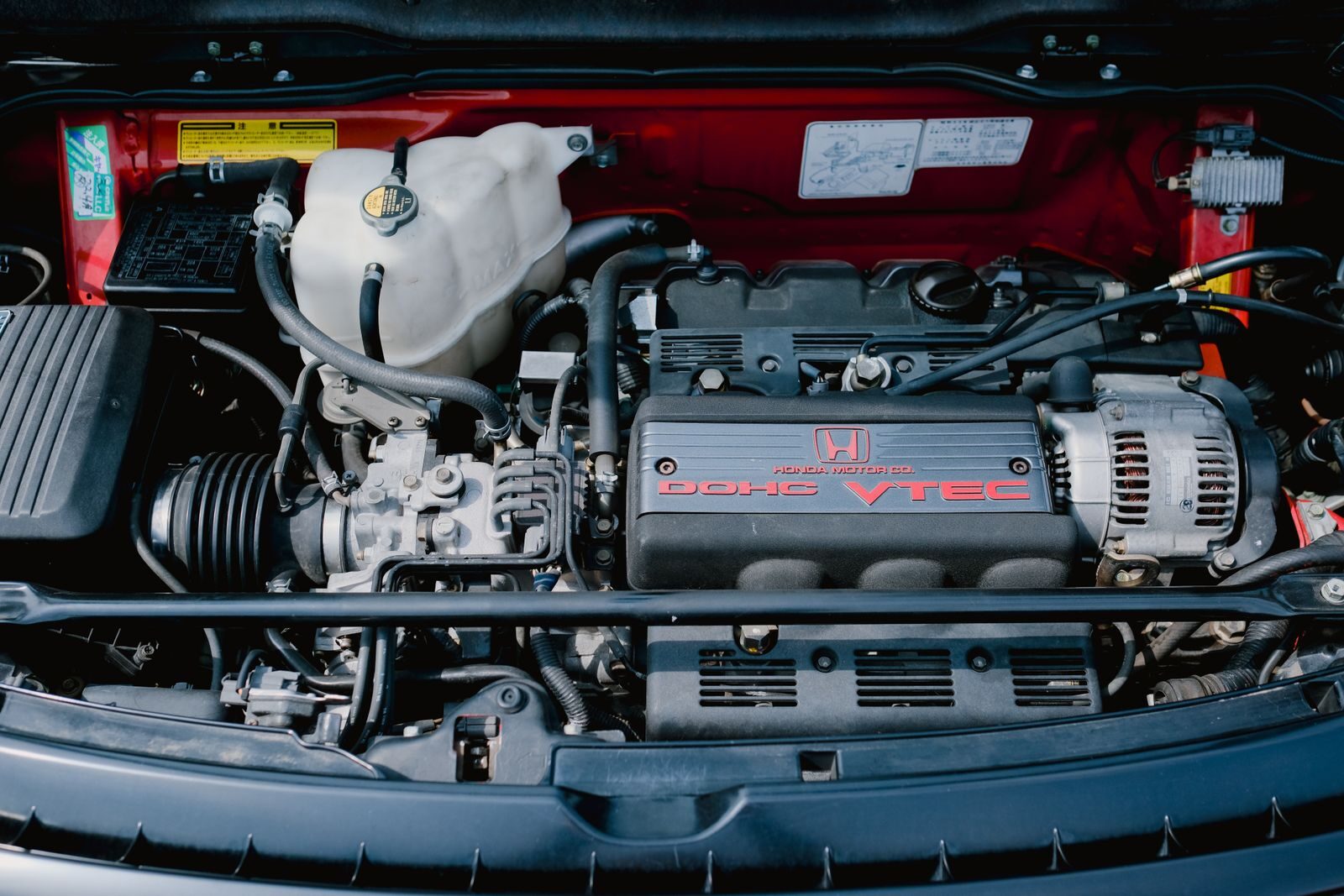
The power came from Honda’s tiny E07Z 656 cc, in-line three cylinder, turbocharged powerplant, placed well behind the driver with a front mid-ship layout. Thanks to Japan’s kei-car regulations, the engine was rated at only about 63 hp (64 PS) and torque of around 69 lb-ft. Compared to the sports cars, those power ratings are at best modest but, as in the case of Honda’s other vehicles, the Z was never designed to be a performance car in the traditional sense where power delivery was concerned. Rather, the tiny engine delivered reasonable performance in a tiny package that also suited Honda’s distinctive layout.
The Turbocharged Powertrain:
- E07Z engine displaced 656 cc
- Turbocharging improved compact-engine performance
- Output reached approximately 63 horsepower
- Torque measured around 69 lb-ft
- Four-speed automatic was standard
That comparatively tiny engine was really a part of what made the Z such a Z. Kei rules heavily constrained displacement, meaning that instead of just trying to wring more out of small engines which is a Japanese engineering specialty, after all you had to find another way. Turbocharging was just one option, and that was what made the Z a very Japanese innovation: working within the limits instead of trying to erase them. Its modest output becomes all the more intriguing in the context of its highly evolved drivetrain.
The Z, however, didn’t have a manual. That was probably for the best, since it came equipped with the standard four-wheel-drive system and a four-speed automatic. That choice confirms the impression that Honda had intended to keep the Z pretty utilitarian and compact, not bare-bones at all, but it did make for an intriguing drivetrain and performance package that could make all the other superlative powertrain cars that much more alluring. As it is, the Z’s strength was not necessarily in its horsepower, but in the amount of complex engineering concepts Honda was able to cram into it.
3. UM-4 Four-Wheel Drive Made the Packaging Even More Unusual
Honda named the Z’s drivetrain The UM-4 which meant Under Midship 4WD. The concept behind the Z’s drivetrain was to place the engine behind the front wheels, but not all the way. Instead, Honda had designed the drivetrain to split power between all four wheels, no matter what. It wasn’t merely an exotic design feature; Honda had used its existing set of mid-engined kei-car parts to power the Z, but with the addition of four-wheel drive, the small chariot could traverse even the worst winter road conditions, without the need for a front engine.
Inside the UM-4 System:
- Engine remained near the vehicle center
- Four-wheel drive was standard
- Viscous differential managed power distribution
- Flat floor improved interior packaging
- Front and rear storage remained available
A viscous center differential came to the rescue in controlling the flow of power to the wheels. This meant the Z could have had grip without the driver having to have to wrestle with a mechanical four-wheel-drive system. It was just the right kind of solution for an automatic kei hatchback, allowing the Z to have the best of both worlds sophisticated running gear with the traffic-taming sophistication of the urban runabout. The viscous center differential was a demonstration of Honda’s skill in adapting existing engineering solutions to satisfy its design ethos within the constraints of the metric design packaging.
The package benefits weren’t simply for traction. With the engine pulled far from the standard front-engine layout Honda had the ability to produce usable space at either end of the car. The Z maintained a relatively traditional rear trunk along with a small “frunk” at the front, while the flat floor and efficient use of space were further benefits. These package details are part of the reason the mid-engine layout was more than just a geekery passion for Honda, and why it was chosen to maximize the limited space of a kei-car.
4. The Z Revived a Historic Honda Name
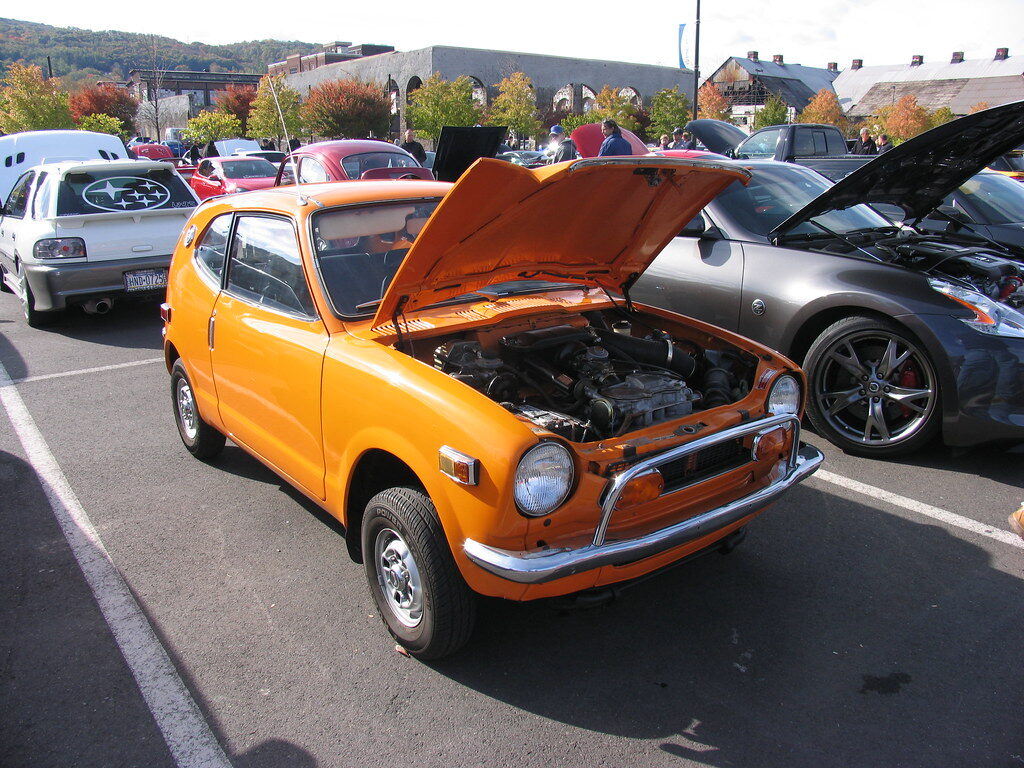
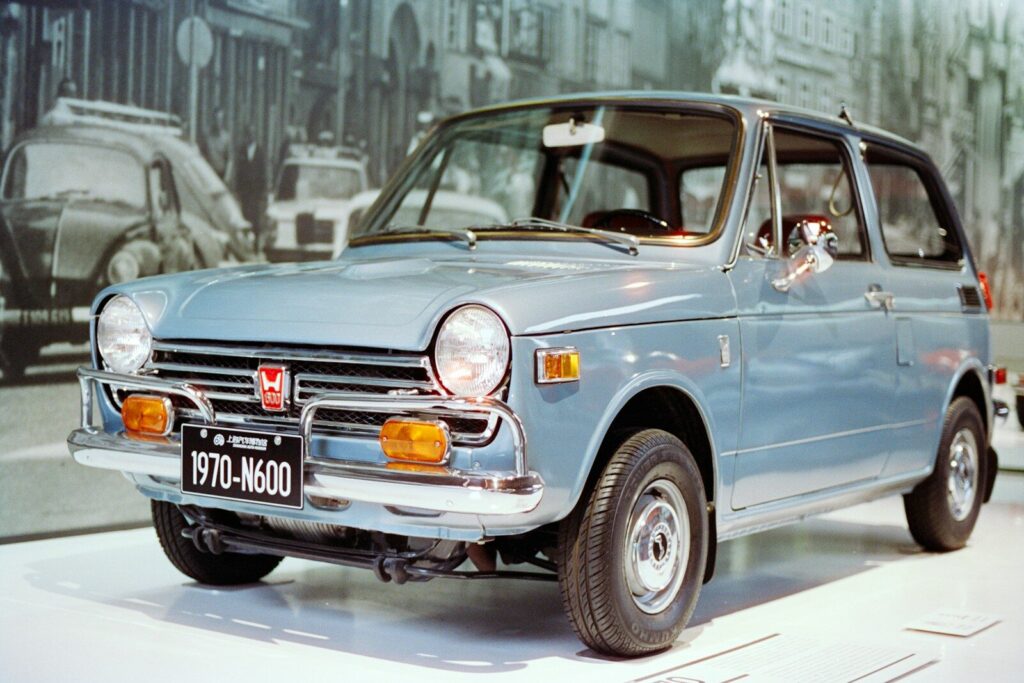
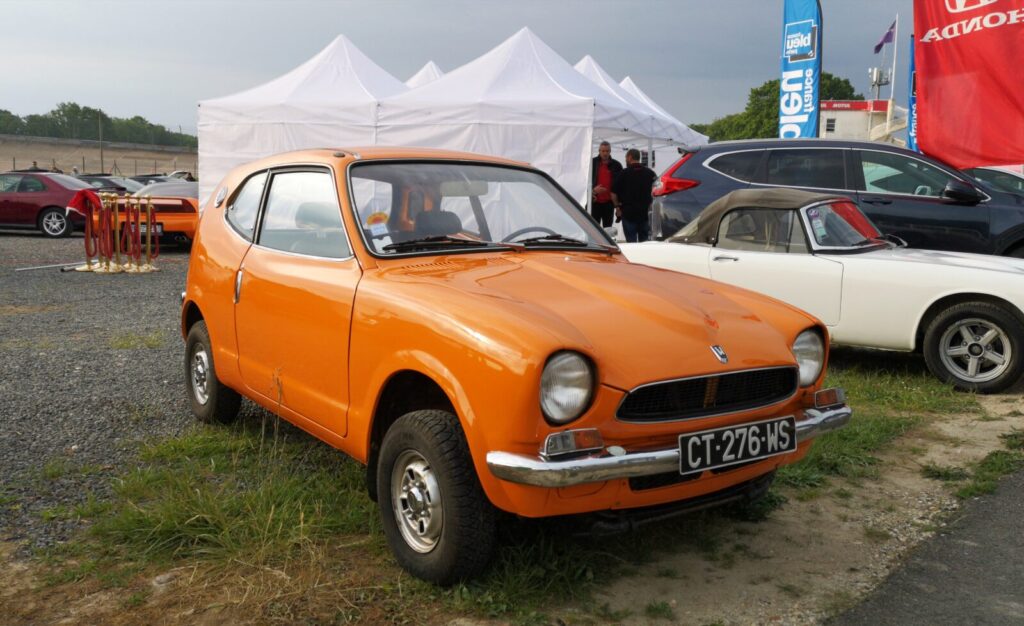
From the late-1990s Honda Z was also associated with a part of Honda’s history. The three-door hatchback was first introduced in 1998 and gave the Z name that Honda had used for its very first microcar from the 1970s. That car had even been export to North America in a limited capacity where it was called the Z600 giving the later model a link back to one of Honda’s first efforts in the mini-car world. Reusing the Z name allowed Honda to make the link between a very modern vehicle that met the then kei criteria and Honda’s history, while still creating a new interpretation of the concept.
The Z Name’s History:
- Original Z debuted during the 1970s
- Z600 reached North American buyers
- New model arrived in 1998
- Three-door hatchback shaped the revival
- Modern engineering replaced earlier concepts
But the new Z would adhere quite closely to the kei car rules, maintaining a miniature body and 656-cc engine that kept it safely in the size and capacity limits while turbocharging delivered valuable performance in a tiny engine. The four-wheel-drive option, and the fact that the four-speed automatic was the standard transmission showed the new Z was more a modern interpretation of Honda’s small-car ethos than a complete clone of the original Z.
Honda recognised the novelty of the car and needed an equally memorable way to introduce it to the masses. The carmaker enlisted ZZ Top to appear in television ads in Japan to tie the Z to the world-famous American rock band. That marketing decision reinforced the Z’s fun-to-drive persona. It was not a typical performance car, but its distinctive form and mechanical specifications provided Honda enough to go on to ensure it was differentiated in the cluttered kei car market.
5. Balanced Weight Distribution Added to the Engineering Appeal
Likewise, the Z’s placement of its mid-mounted engine assisted Honda in realizing almost ideal 50:50 weight distribution. Having a relatively large mechanical piece shift into the middle of a small car was indeed significant when it came to the car’s handling characteristics. The Z wasn’t a true performance machine and always would’ve been fairly sluggish in a straight line but, even so, the fact that it was, in fact, relatively balanced added yet another facet of technical novelty to a car that otherwise appeared to be simply a modest city hatchback.
The Chassis Balance:
- Engine stayed close to chassis center
- Weight distribution approached 50:50
- Four-wheel drive complemented the layout
- Compact dimensions limited overall mass
- Engineering remained focused on practicality
The weight balance is worth considering in the context of the Z’s general design. It was fronted by the engine rather than suspended far behind it, so the powertrain stayed nearer the middle of the chassis. To this was added four-wheel drive, making for a layout that was orders of magnitude more advanced than a simple specialist’s transportation concept. Engineerly priorities were packaging and rationality; the layout itself, however, was inclined to appeal to fans.
That disconnect between looks and engineering is part of what made the Honda Z so unique. The casual glance of a stout, high-roofed hatch makes you think the mechanicals are simple. Anyone crawling under would find a turbocharged 3-cylinder, mid-mounted powertrain, 4WD, viscous center differential, and balanced architecture not bad for a tiny car! There’s nothing necessarily unique about any one part but taken as a whole, it was a package that seemingly set out to deliberately be a little mischievous.
6. Practical Storage Was One of the Mid-Engine Layout’s Benefits
Moving the engine away from the conventional front compartment gave Honda opportunities to use the available space differently. The Z retained a rear trunk, while a smaller storage compartment could be found toward the front. This was an important benefit because the car was still intended to function as a practical everyday vehicle. Honda did not sacrifice utility simply to create an unusual drivetrain. Instead, the unconventional architecture helped engineers make the most of the vehicle’s small overall dimensions. The result was a kei car that combined unusual mechanics with useful everyday packaging.
Packaging Benefits Included:
- Rear trunk remained available
- Front storage added useful capacity
- Flat floor improved cabin packaging
- Compact dimensions preserved city usability
- Drivetrain avoided wasting cabin space
The flat floor was another useful consequence of the packaging strategy. Kei cars are designed around tight dimensional limits, so every part of the interior has to be considered carefully. A conventional drivetrain can consume valuable cabin space, while a cleverly positioned powertrain can free up room for passengers and storage. The Z therefore demonstrates a principle that appears repeatedly in Japanese compact-car engineering: unusual mechanical decisions can produce practical benefits when the available space is extremely limited.
The result was a vehicle that could serve ordinary transportation duties while still providing an engineering story that enthusiasts could appreciate. It was not necessary for the owner to drive aggressively or understand every mechanical detail to benefit from the layout. The flat floor, useful storage areas, compact dimensions, and automatic transmission all supported everyday usability. Beneath those practical features was a drivetrain that gave the Z an identity far beyond that of an ordinary city car. Its unusual engineering was therefore useful rather than merely decorative.
7. Imported Honda Z Turbo Examples Show Why Enthusiasts Love It
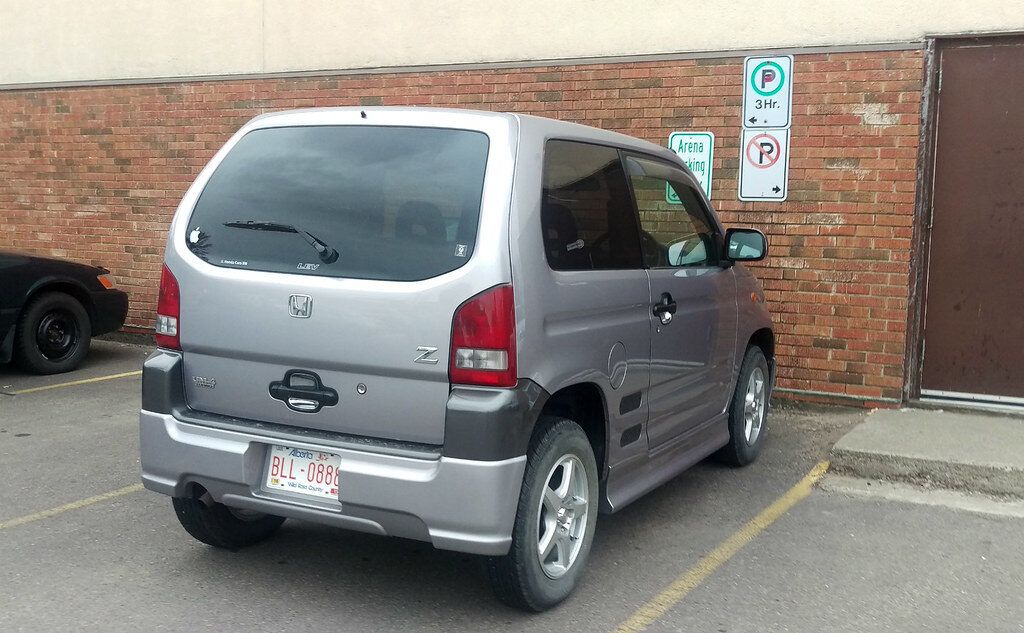
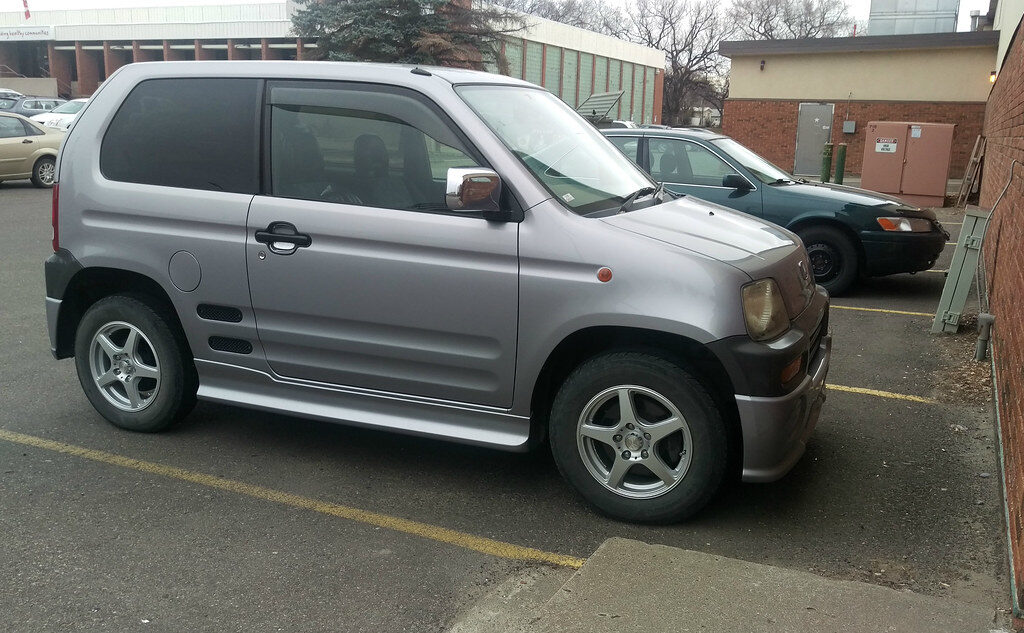
The Honda Z’s unusual specifications have made surviving examples interesting to enthusiasts outside Japan. One featured PA1-generation 1998 Honda Z Turbo example described in the source was imported to the United States in 2024 and finished in Splash Silver Metallic with contrasting gray bumper covers. The car featured details including window visors, rear privacy glass, a rear wiper, and 15-inch tri-spoke alloy wheels. These features reinforced its period character while making the little hatchback look more distinctive than a basic kei commuter. The example also demonstrated why unusual Japanese imports can attract attention decades after production.
Details Found on One Example:
- Splash Silver Metallic exterior
- Contrasting gray bumper covers
- Rear privacy glass was included
- Fifteen-inch tri-spoke alloy wheels
- Rear wiper completed the specification
The interior was similarly equipped for everyday use. Black cloth bucket seats with patterned inserts were joined by folding rear seats, power windows, power mirrors, air conditioning, and period Kenwood CD and cassette equipment. The dashboard included a 140-km/h speedometer, a tachometer with a 7,000-rpm redline, and a fuel gauge. The example reportedly showed approximately 88,000 kilometers, or roughly 55,000 miles, on its odometer. Maintenance history also included a timing belt replacement at approximately 57,000 kilometers, adding useful context for potential enthusiasts examining such a car.
Like many older enthusiast vehicles, the example was not completely free from imperfections. Listing information mentioned cosmetic blemishes, interior wear, minor underbody corrosion, and a cracked windshield. Those details do not necessarily undermine the vehicle’s character; instead, they show what buyers can encounter when searching for nearly three-decade-old imported cars. Another silver example mentioned in the source reportedly had a California title, approximately 84,500 kilometers, a JVC CD changer, and a radio-controlled clock. Surviving examples therefore provide an opportunity to experience an unusual piece of Honda’s kei-car engineering history.
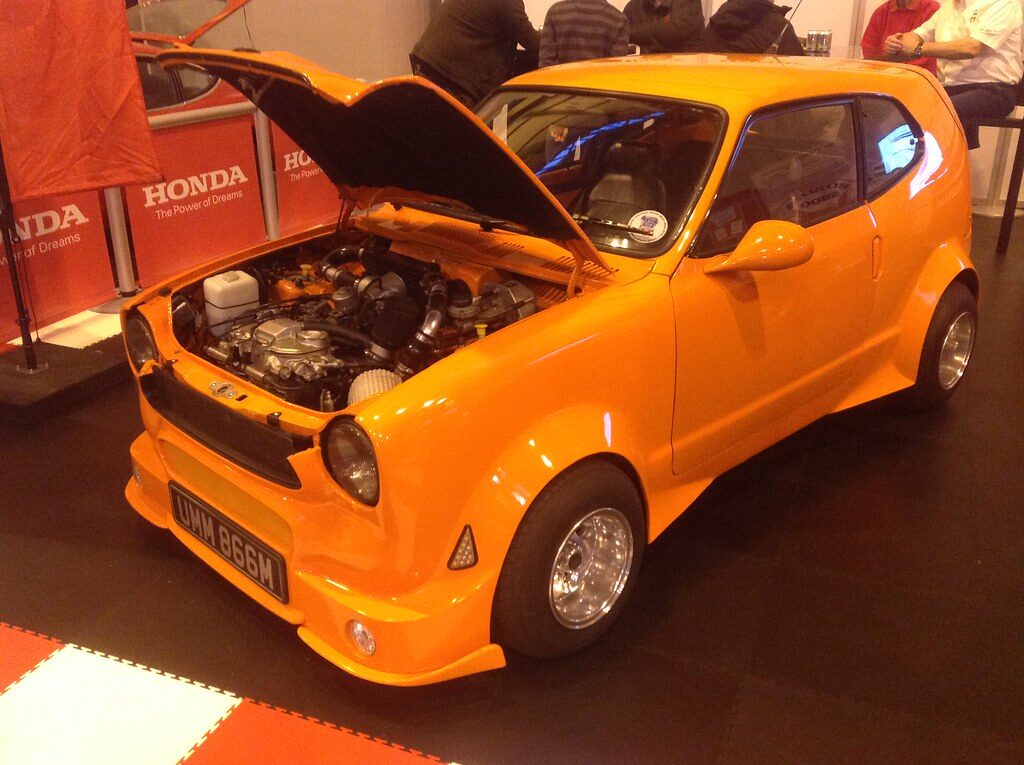
8. The Z600 Connection Gives the Car Extra Historical Significance
The modern Z becomes even more interesting when considered alongside Honda’s earlier small-car history. The original Z600 represented Honda’s attempt to bring a tiny Japanese vehicle to North American buyers, and the later Z revived that name decades afterward. Although the two cars belonged to different eras and used different engineering approaches, both reflected Honda’s willingness to experiment with compact vehicles rather than treating small dimensions as a reason to make cars mechanically boring. The connection gives the later Z additional context beyond its unusual drivetrain.
Honda’s Small-Car Heritage:
- Z600 reached North American markets
- Later Z revived the name
- Both models emphasized compact dimensions
- Engineering approaches differed considerably
- Honda continued experimenting with small cars
The late-1990s Z arrived during an especially interesting period for Japanese kei cars. Manufacturers were finding creative ways to combine tiny engines with turbocharging, four-wheel drive, advanced packaging, and distinctive body designs. The Z fit neatly into that environment while maintaining its own identity. It was not simply another tall hatchback because the mid-mounted engine and UM-4 drivetrain gave it a mechanical character that was difficult to duplicate. Honda’s willingness to work within strict regulations helped make the vehicle distinctive.
That historical context helps explain why the Z remains more interesting than its modest performance numbers might suggest. A car producing roughly 63 horsepower would not normally become a major talking point among performance enthusiasts, but the Z was never about power alone. Its appeal came from the engineering decisions made within strict limits. Honda created something that was small enough for crowded urban environments yet mechanically unconventional enough to become a memorable enthusiast vehicle decades later. The name’s connection to the earlier Z600 adds another layer to that story.
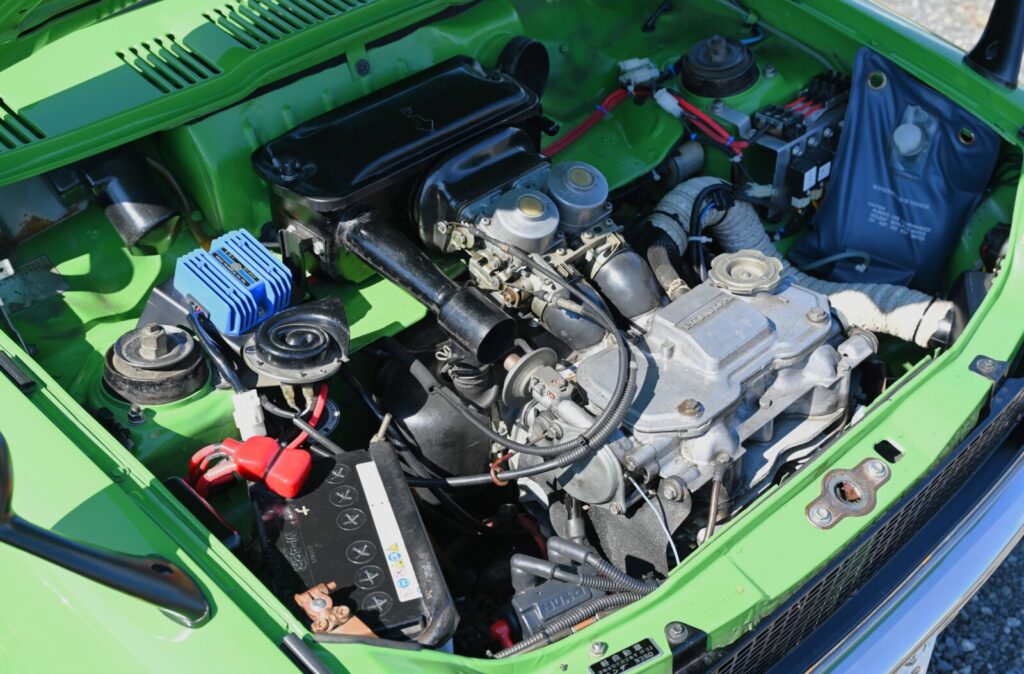
9. Honda’s S660 Continued the Mid-Engine Kei-Car Tradition
Honda later demonstrated that its interest in compact mid-engine vehicles had not disappeared. The S660 followed the spirit of earlier Honda creations such as the mid-engined Beat roadster, combining kei-car dimensions with a rear-mid-mounted turbocharged three-cylinder engine. The S660 measured less than 3.4 meters long and approximately 1.49 meters wide, making it dramatically smaller than a conventional sports car while still focusing heavily on driving dynamics. Although its body style and purpose differed from the practical Z, its mechanical philosophy showed a continuing Honda interest in compact mid-engine engineering.
The S660’s Compact Formula:
- Rear-mid-mounted three-cylinder engine
- Turbocharging remained part of formula
- Kei dimensions kept the car tiny
- Two-seat layout emphasized driving
- Engineering echoed earlier Honda ideas
The S660 used a 660 cc turbocharged three-cylinder engine mounted behind the driver and passenger area, with the powertrain designed around the limitations of the kei category. The source also describes a seven-speed gearbox operated through steering-wheel paddle shifters. This created a very different driving experience from the practical Z, but the engineering philosophy was familiar: take the restrictions imposed by kei regulations and turn them into an opportunity for distinctive vehicle design. Honda again demonstrated how small dimensions could support an unusual and technically interesting vehicle.
There were also reports and rumors surrounding potential higher-performance engine possibilities, including a 1.0-liter turbocharged three-cylinder producing around 105 horsepower. Whether or not such ideas reached production in the form imagined by enthusiasts, the speculation itself demonstrated how strongly drivers responded to the S660’s compact mid-engine architecture. Like the Z, it proved that a very small Honda could inspire disproportionate enthusiasm. The two vehicles approached the idea differently, but both showed how Honda could make kei-car engineering more engaging than their modest dimensions might suggest.
10. The Honda Z Shows How Kei Cars Can Deliver Exotic Engineering Ideas
The Honda Z is memorable because it combines characteristics that normally appear in completely different categories of automobiles. It has the footprint and practical proportions of a kei hatchback, yet it uses a mid-mounted turbocharged engine, four-wheel drive, a viscous center differential, and near-balanced weight distribution. Its modest 656 cc engine means it cannot approach the speed of an exotic supercar, but its basic architecture makes comparisons with far more expensive machinery surprisingly entertaining. Few vehicles combine such practical proportions with such an unusual mechanical layout.
Why the Honda Z Stands Out:
- Tiny body concealed sophisticated engineering
- Mid-engine layout created unusual balance
- Turbocharging enhanced the small engine
- Four-wheel drive improved traction
- Practical packaging remained a priority
The car also demonstrates why Japanese kei vehicles have developed such a devoted following among enthusiasts. Regulations created severe limitations in size and engine displacement, but those limitations encouraged manufacturers to become inventive. Instead of simply making tiny versions of conventional cars, companies developed unusual layouts, clever packaging solutions, turbocharged engines, four-wheel-drive systems, and distinctive bodies. The Honda Z is one of the clearest examples of how those constraints could produce something genuinely memorable. Its engineering was shaped by limitations, but those limitations helped create its identity.
Ultimately, the Z’s charm comes from the gap between what it looks like and what it actually is. From the outside, its tall body can resemble an appliance more than a performance machine. Underneath, however, sits a surprisingly sophisticated drivetrain that places the engine near the center of the chassis and drives all four wheels. That combination gives the Honda Z an identity that remains difficult to replicate. It is a tiny practical hatchback with the kind of engineering story that makes even experienced enthusiasts stop and look twice.


