


Unleashing the Ford GT Mk IV: The 800-Horsepower Track-Only Supercar
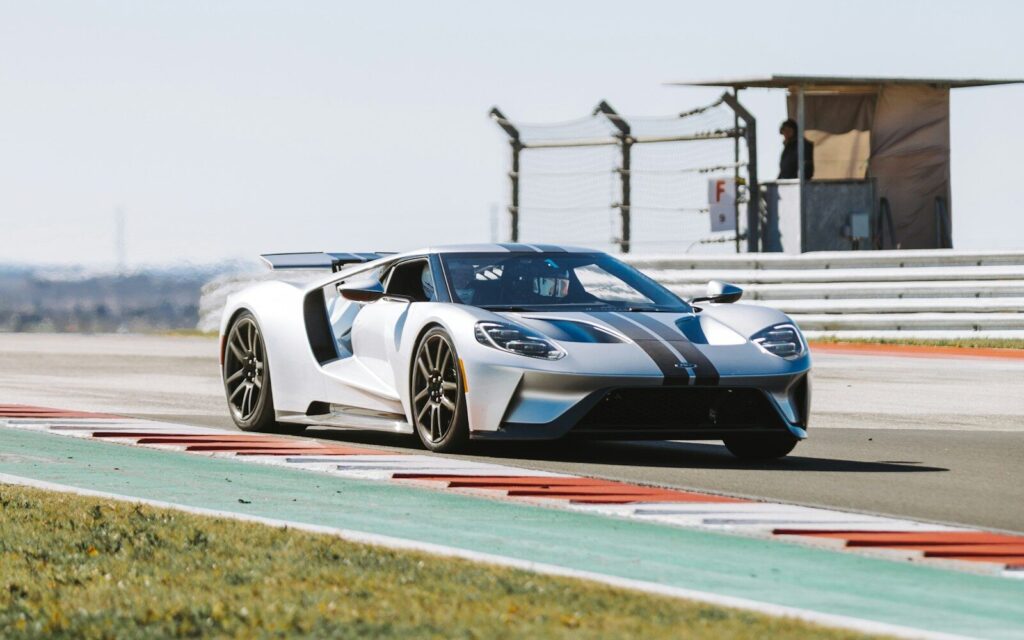
Ford finished off the three-gen production saga of the GT with a vehicle way more intense than a standard, “final” sendoff. The Ford GT Mk IV was designed only for the circuit, its builders absolved of the requirements for highway vehicle safety, and also liberated from the constraints of Balance of Performance that guide class structure in sanctioned competition. Without those fetters, the crew at Ford Performance, Multimatic and Roush-Yates came up with a no-holds-barred hypercar geared towards acceleration, downforce, and braking force and that could take phenomenal cornering speeds at any world’s most fearsome racing venue.
Germany’s Nrburgring Nordschleife saw the capabilities of the Mk IV on display as Belgium’s racing driver Frdric Vervisch crossed the finish line at the 12.9 mile circuit in 6:15.977. The lap time was the best recorded so far by an American vehicle that left the factory in stock specification, making it also the quickest ever gasoline powered vehicle to run the Nordschliefe despite its recorded maximum lap speed being capped at 192mph and only two electrified prototypes have run faster on the German racing circuit.
Both Ford and Multimatic produced just 67 of the Mk IV models and they commanded a starting price somewhere north of $1.7 million. It’s produced in a nod to the actual 1967 24 Hours of Le Mans winning 1967 Ford GT40 Mk IV, and it packs a purpose-built 3.8-liter EcoBoost V6 with twin turbos and over 800 horsepower – mated to the car’s massive amount of downforce, racing slick tires, carbon-carbon brakes, variable dampers and extremely light construction, turning the 2022 Ford GT into a serious track-focused machine.

1. The Mk IV Became the Ford GT’s Final Evolution
Instead of calling it a day with a special commemorative paint job and an eye-catching collector trim level, Ford decided to send off the third generation with a last hurrah that took the existing architecture to its extreme. The Mk IV wasn’t designed to retain the convenience, creature comforts, or on-road usability that characterize the rest of the Ford GT lineup; its engineering was purely designed to claw milliseconds off a lap time and offer experienced hands a machine that feels far more like a modern endurance racer.
Engineering Priorities Behind the Final Evolution:
- Maximum circuit performance guided development
- Road usability received no priority
- Homologation restrictions were completely removed
- Multimatic transformed the existing platform
- Lap-time improvements shaped every decision
This unfettered version of the GT is down toMultimatic. Having partnered with Ford on the street-legal version of the car as well as the manufacturer’s highly successful endurance racing effort, Multimatic engineers are intimately familiar with the GT’s structure, suspension, and aerodynamics. For the Mk IV, they stripped away homologation requirements and constraints dictated by public road use, making it longer, lighter, more potent and able to cope with substantially increased aerodynamic and mechanical loads.
What they created is the uncompromised expression of third-generation Ford GT architecture. This is a vehicle designed without the input of passenger comfort, luggage needs, the demands of emissions regulation, or the desire to easily fit into your garage. The Mk IV exists for one reason and one reason alone – to go racing around closed courses, to exploit its engine, brakes, tires, and aerodynamics within the bounds of safety. Nothing about that is the same as the task given to road-going hypercars, which must fulfill many of the same amazing feats as pure racecars whilst still meeting all of the same criteria as a mundane family sedan, just faster.
2. A Record-Setting Nürburgring Nordschleife Lap
Ford GT Mk IV posted a lap time of 6:15.977 around the Nrburgring Nordschleife to set a new all time mark for an American-manufactured automobile at the famously brutal German circuit. The Nordschleife presents about 12.9 miles of high-speed straights, blind crests, massive elevation changes, hard-braking corners, changing surfaces, etc.. With more than 150 corners, maintaining a fast time relies on a lot more than brute horsepower; it involves predicting grip changes, anticipating unseen hazards, and remaining a stable platform.
Key Details Behind the Historic Lap:
- Lap time reached 6:15.977
- Nordschleife measures approximately 12.9 miles
- Circuit contains over 150 corners
- Frédéric Vervisch completed record attempt
- Cold conditions complicated tire performance
The Mk IV’s helmsman on the record run was Belgium-born Frdric Vervisch whose history includes two winst at the Nrburgring 24 hour race, leaving him well-versed in the tricky rhythm and inherent perils that the circuit presents. Considering his lap was executed on a cool day where it was not the best to get tires up to their optimum temperatures Vervisch found sufficient performance in his mount to break the former records, all thanks to its balance within the air stream as well as its braking, suspension, and power.
However, it proves an obvious test of how much the Mk IV has developed and to what degree Ford and Multimatic have stretched the GT. Nrburgring times never mean that much unless compared and allowances are always necessary, considering a number of variables from weather to tyres to traffic and also to track conditions and timing methodology, but nevertheless a time of 6:15.977 undoubtedly places the Mk IV into one of the quickest cars ever to be tested around the Nordschleife. Keeping up that speed around so much varying circuit does prove its ability is in no way just tied to straight-line acceleration or discrete testing
3. Only Two Electrified Prototypes Have Gone Faster
The Ford’s 6:15.977 lap makes it the quickest gasoline-powered car reported around the Nürburgring Nordschleife. Only the Porsche 919 Hybrid Evo and Volkswagen ID.R have recorded faster times. Porsche’s unrestricted endurance prototype completed the circuit in 5:19.546 during 2018, while Volkswagen’s all-electric ID.R achieved 6:05.336. Both vehicles were specialized engineering projects created around record attempts rather than cars offered to private customers through a limited production program comparable to the Ford GT Mk IV.
Faster Prototypes and Their Recorded Times:
- Porsche recorded a 5:19.546 lap
- Volkswagen completed its lap in 6:05.336
- Both vehicles were specialized prototypes
- Ford remains fastest gasoline-powered vehicle
- Private customers could purchase Mk IV
The Porsche 919 Hybrid Evo was developed from the company’s Le Mans-winning racing prototype after it had been released from normal competition rules. Porsche removed restrictions, increased power, reduced weight, and added greater aerodynamic performance to demonstrate what the underlying platform could achieve. Volkswagen pursued a similarly specialized objective with the electric ID.R. These machines were not expected to accommodate owners, satisfy road regulations, or support a customer production run, allowing engineers to focus almost entirely on achieving remarkable circuit performance.
The Mk IV occupies an unusual position between those one-off prototypes and road-legal production hypercars. It is not licensed for public streets, but Ford offered 67 units to selected private customers rather than building only a record demonstrator. Owners can transport their cars to circuits and experience the same fundamental mechanical package responsible for the Nürburgring result. That accessibility does not make the vehicle conventional, but it gives the achievement a different character from records established by experimental machines retained exclusively by their manufacturers.

4. The Ford Outpaced Several Famous Hypercars
The Ford GT Mk IV completed its Nürburgring lap nearly 14 seconds faster than the street-legal Mercedes-AMG One, which recorded a 6:29.050 lap in 2024. The Mercedes remains a remarkable road car because it combines Formula One-derived hybrid technology with the safety, emissions equipment, lighting, and basic usability necessary for public streets. Comparing the two vehicles directly is imperfect, however, because the Ford carries none of those obligations and can use racing slicks, extreme aerodynamics, and a stripped interior.
Famous Hypercars Outpaced by the Ford:
- Mercedes-AMG One recorded 6:29.050
- Xiaomi prototype completed 6:22.091
- Lotus Evija recorded 6:24.047
- Ford operated with speed restriction
- Cornering performance compensated for limitation
The Mk IV also recorded a quicker time than several highly specialized electric vehicles. The Xiaomi SU7 Ultra Prototype completed the circuit in 6:22.091, while the limited-production Lotus Evija Hypercar recorded 6:24.047. Each vehicle approaches speed through a different engineering philosophy. Electric motors provide immediate torque and sophisticated power distribution, whereas the Ford combines a lightweight structure with a twin-turbocharged combustion engine, racing transmission, and enormous aerodynamic loading. Their times demonstrate that exceptional performance can emerge from several powertrain technologies.
A 192 mph top-speed cap was imposed during the Ford’s official run, making its lap even more impressive. Nürburgring performance depends heavily on cornering, braking, and acceleration rather than maximum speed alone, but restricting the car on faster sections still removes some potential. The Mk IV recovered that lost opportunity through its ability to enter corners quickly, slow with extraordinary force, and accelerate out of bends without wasting time. Its lap illustrates how a balanced track package can outperform vehicles with equally dramatic headline specifications.
5. Production Is Limited to 67 Hand-Built Cars
Ford restricted Mk IV production to exactly 67 examples, linking the modern track car directly to the GT40 Mk IV that won Le Mans in 1967. That historic victory remains one of the most important achievements in Ford’s competition history and followed the company’s famous battle with Ferrari. Using the number 67 gives the modern vehicle a meaningful connection to the original machine rather than treating the Mk IV name as a decorative badge with no relationship to Ford’s endurance-racing heritage.
Production and Ownership Details of Mk IV:
- Production was limited to 67
- Number honors Ford’s 1967 victory
- Base price reaches approximately $1.7 million
- Every vehicle receives hand-built construction
- Ownership requires extensive supporting resources
Each example carries a base price of approximately $1.7 million, placing it far beyond the reach of ordinary performance-car enthusiasts. The price reflects its limited production, hand-built construction, carbon-fiber structure, bespoke powertrain, racing technology, and extensive engineering development. Ownership also requires resources beyond the purchase amount. The car must be transported to suitable circuits, maintained by qualified technicians, supplied with specialized tires and fluids, and operated within an environment capable of safely supporting its performance.
Rarity ensures that most Mk IV examples will enter significant private collections, but Ford designed the vehicle to be driven rather than displayed permanently. Its engineering only becomes meaningful when the engine, transmission, brakes, suspension, tires, and aerodynamics operate together at circuit speeds. Owners willing to use their cars can experience technology derived from Ford’s Le Mans program without entering a professional racing series. The Mk IV therefore combines historical significance and collector exclusivity with the functional purpose of an unrestricted track machine.
6. A Bespoke 3.8-Liter Twin-Turbocharged V6
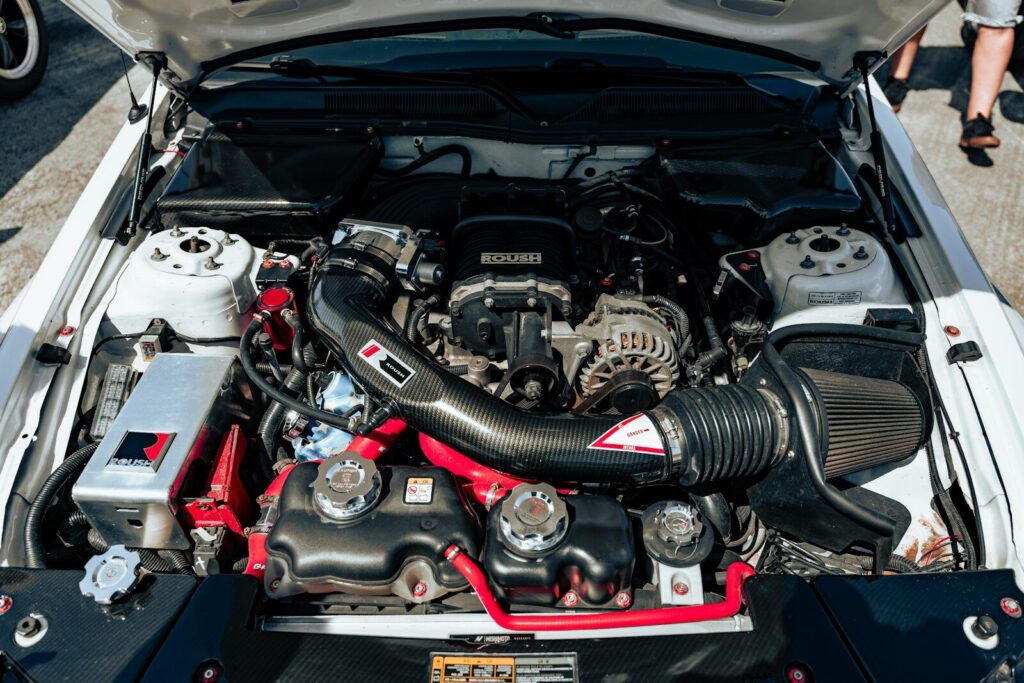
The standard third-generation Ford GT used a 3.5-liter twin-turbocharged EcoBoost V6, but the Mk IV received a bespoke 3.8-liter version developed with Roush-Yates. The larger and more aggressive engine produces more than 800 horsepower, sending its output to the rear wheels through a seven-speed racing sequential transmission. A mechanical limited-slip differential helps distribute torque effectively during corner exits, allowing the driver to accelerate strongly without overwhelming the available traction or creating unpredictable wheelspin.
Powertrain Specifications of the Ford Mk IV:
- Bespoke engine displaces 3.8 liters
- Twin turbochargers support extreme output
- Power exceeds 800 horsepower
- Sequential transmission provides seven speeds
- Mechanical differential manages rear-wheel traction
Multiple power maps allow drivers to select output suited to their experience and track conditions. A lower setting provides approximately 550 horsepower, making the car somewhat easier to learn before the complete performance is unlocked. The highest mode releases more than 800 horsepower for experienced drivers capable of managing the acceleration and speed. This adjustability does not make the Mk IV beginner-friendly, but it gives owners a structured way to become familiar with the chassis before approaching its maximum capabilities.
With its lightweight construction and immense output, the Mk IV can accelerate from zero to 60 mph in approximately 2.5 seconds. That figure captures only one part of its powertrain performance because circuit driving depends on repeated acceleration through several gears rather than a single launch. The sequential transmission delivers rapid shifts, while the turbocharged engine provides sustained force across a broad operating range. Together, these systems allow the Ford to regain speed immediately after heavy braking and carry strong momentum toward the next corner.
7. Aerodynamics Generate Extraordinary Downforce
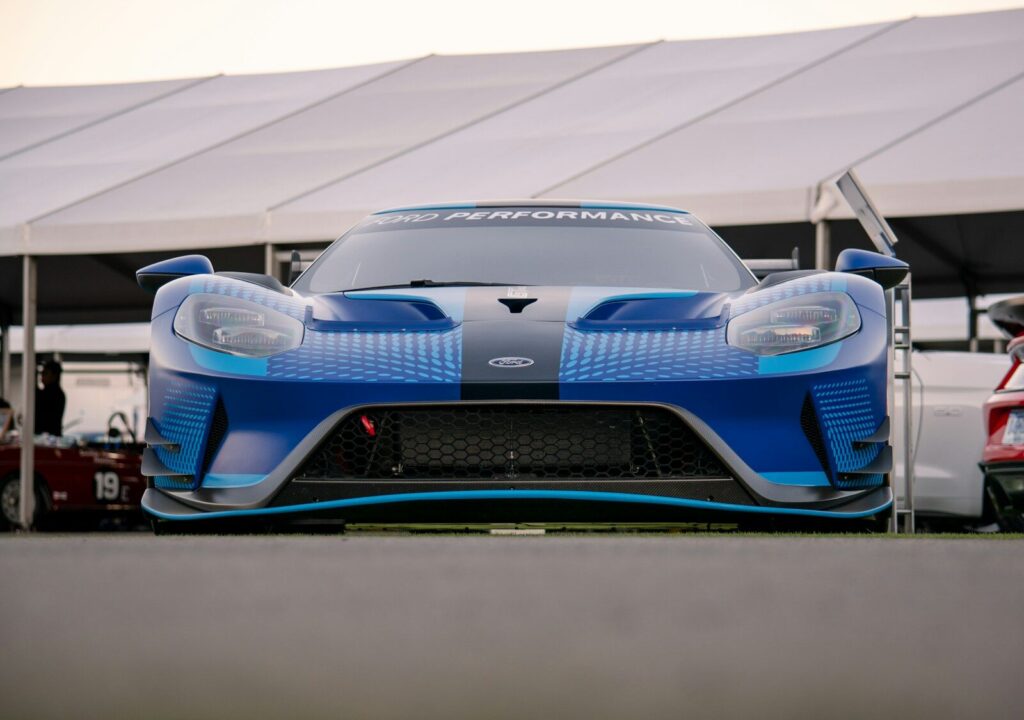
The Mk IV’s bodywork was shaped to create extreme aerodynamic grip rather than satisfy road-car styling or pedestrian-safety requirements. A large rear wing, deep front surfaces, carefully managed airflow channels, and a motorsport-grade diffuser work together to press the vehicle against the track. The car reportedly generates approximately 2,400 pounds of downforce at 150 mph. At 200 mph, that figure rises to around 4,500 pounds, exceeding the vehicle’s own estimated 2,900-pound weight by a considerable margin.
Aerodynamic Features Producing Exceptional Track Grip:
- Large rear wing increases downforce
- Front surfaces manage incoming airflow
- Racing diffuser strengthens aerodynamic stability
- Downforce reaches approximately 4,500 pounds
- Michelin slicks handle enormous loads
Downforce increases the load acting on the tires without adding equivalent static mass, allowing the car to corner faster as speed rises. This effect requires specialized Michelin racing slicks capable of handling enormous forces and operating at high temperatures. The driver must learn to trust that grip because the vehicle becomes more capable as aerodynamic pressure builds. Instincts developed in ordinary sports cars may cause a driver to brake too early or enter high-speed bends far below the Mk IV’s actual limit.
Technical circuit testing demonstrated how the Ford combines strong aerodynamic stability with responsive direction changes. A vehicle producing huge downforce can feel physically demanding or reluctant in slower corners if its chassis is not carefully balanced. Multimatic designed the Mk IV to remain communicative while handling the loads generated at extreme speed. That balance gives experienced drivers confidence to approach the limit progressively instead of fighting a car that behaves differently every time speed, corner angle, or braking pressure changes.
8. Brakes and Suspension Match the Car’s Speed
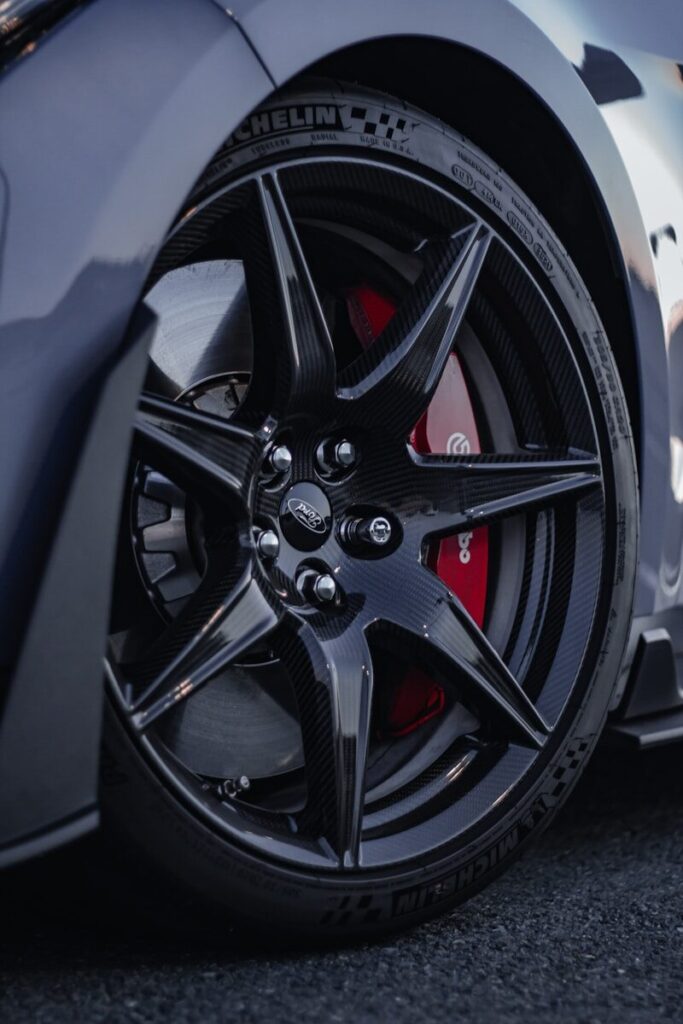
Ford equipped the Mk IV with carbon-carbon brakes and race-specification anti-lock braking technology. Carbon-carbon systems tolerate the repeated heat generated by heavy stops from extreme speeds, making them suitable for demanding circuit sessions. Their performance can make familiar braking references feel unnecessarily cautious because the Mk IV can shed speed much later than conventional exotic road cars. Drivers must recalibrate their timing gradually, as braking too late without understanding the available grip could still produce a serious accident.
Track Hardware Supporting Extreme Vehicle Performance:
- Carbon-carbon brakes tolerate intense temperatures
- Racing ABS supports controlled deceleration
- Adjustable dampers provide five settings
- Extended wheelbase improves high-speed stability
- Steering preserves detailed surface feedback
Multimatic Adaptive Spool Valve dampers provide five suspension settings that can be selected according to the circuit, surface, weather, and driver preference. A smooth, high-speed track may benefit from a different setup than a technical venue with bumps, elevation changes, and aggressive curbing. Adjustable damping allows engineers and owners to refine body control without replacing the entire suspension system. The stretched wheelbase also contributes to stability, helping the car remain composed during rapid transitions, heavy braking, and sustained high-speed cornering.
Steering assistance is intentionally light while preserving detailed feedback from the front tires and track surface. A track car operating near its aerodynamic and mechanical limits must communicate changes in grip clearly enough for the driver to respond. Excessively heavy steering can become tiring during long sessions, while numb steering can hide important information. The Mk IV aims to provide quick response without unnecessary effort, allowing drivers to make precise corrections as tire condition, fuel load, temperatures, and track grip evolve throughout a session.

9. The Mk IV Cannot Be Registered for Normal Road Use
The Ford GT Mk IV was engineered outside the Federal Motor Vehicle Safety Standards applied to road-going cars. It does not include the complete combination of airbags, compliant lighting, crash equipment, pedestrian-protection measures, and other features required for ordinary registration. Adding those systems would increase weight and force changes to its body, structure, electronics, and interior. Ford intentionally avoided those compromises because the vehicle’s purpose was to demonstrate the GT platform’s maximum circuit capability rather than produce another street-legal supercar.
Reasons the Mk IV Remains Track-Only:
- Required road-safety equipment remains absent
- Powertrain lacks necessary emissions controls
- Racing transmission limits public-road suitability
- Legal conversion would compromise performance
- Owners must transport vehicles by trailer
Its 3.8-liter Roush-Yates-developed engine also operates without the catalytic converters and emissions controls needed to satisfy Environmental Protection Agency and California Air Resources Board requirements. Making the powertrain street compliant would require significant exhaust and calibration changes that could affect output, cooling, packaging, weight, and reliability. The car’s racing transmission and track-focused operating characteristics would introduce further challenges. A theoretical conversion would therefore compromise the engineering decisions that distinguish the Mk IV from the regular Ford GT.
Limited registration pathways such as show-and-display exemptions would not transform the Mk IV into a genuinely usable road vehicle. Such programs impose restrictions on annual mileage and do not automatically solve every safety, emissions, insurance, or state-registration problem. Owners must treat the Ford as dedicated competition-style equipment and transport it to events on a trailer. This requirement may seem inconvenient, but it allows the vehicle to remain faithful to its original purpose without carrying systems that would provide little value during high-speed track operation.
10. Daily Driving Would Be Impractical Even if Legal
The Mk IV’s extremely low ride height makes normal roads a serious threat to its carbon-fiber bodywork. Speed bumps, driveway inclines, potholes, drainage channels, and uneven parking entrances could damage the front splitter or floor. Its racing suspension is designed for controlled circuit surfaces rather than broken urban pavement. Even a slow journey across town would require constant attention to obstacles that an ordinary road car could cross without difficulty, turning routine travel into an expensive and stressful exercise.
Everyday Limitations of the Ford Mk IV:
- Low clearance threatens carbon-fiber components
- Racing suspension dislikes uneven pavement
- Cabin lacks normal comfort features
- Racing slicks struggle during rain
- Traffic would create excessive discomfort
Inside, the car lacks the features expected from a $1.7 million road-going luxury vehicle. Climate control, substantial sound insulation, convenient storage, and normal visibility were sacrificed to reduce weight and focus the cockpit around driving. Heat, engine noise, tire roar, and mechanical vibration would become exhausting in traffic. Racing slicks also perform poorly in cold or wet public-road conditions, while the brakes and powertrain may require temperatures and operating procedures unsuitable for short trips or congested streets.
Accepting these limitations is essential to understanding the Ford GT Mk IV. It was never intended to combine racetrack speed with daily convenience. Ford and Multimatic created it to explore what the GT could become when road laws and racing-class restrictions no longer shaped every component. Its Nürburgring record, immense downforce, 800-plus-horsepower engine, and 67-unit production run make it the most extreme expression of the modern Ford GT and one of the most capable American track cars ever offered to private owners.